
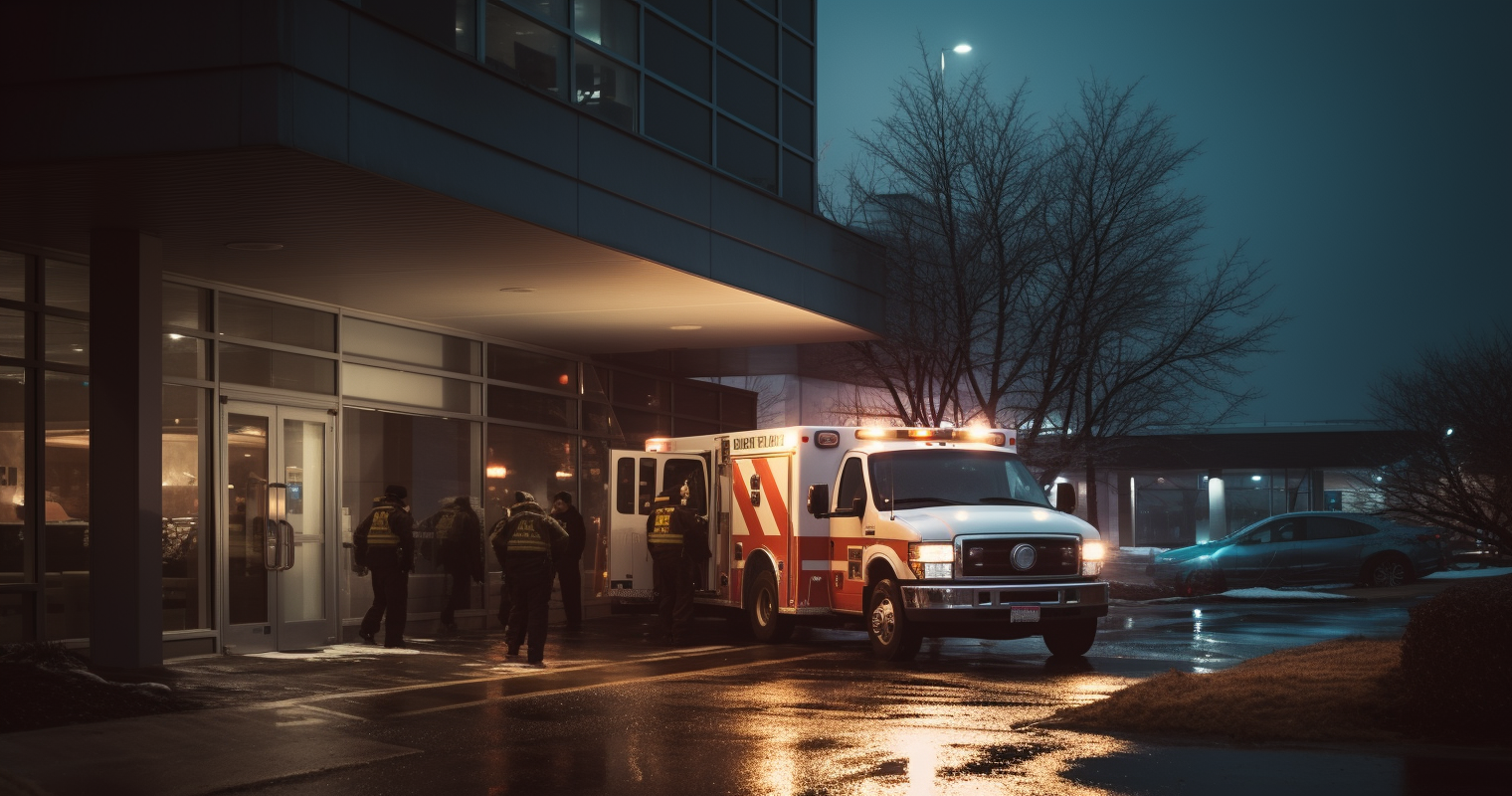
Slovakia uses 112 as its pan-European single emergency number, routing callers to whichever service they need — police, fire, or ambulance. Separate national lines are also maintained: 155 for ambulance, 158 for police, and 150 for fire. Anyone can receive emergency medical treatment in Slovakia, but the question of cost depends heavily on insurance status and nationality — EU citizens carrying a valid EHIC card pay the same modest co-payments as Slovak residents, whereas uninsured visitors may be left with substantial bills to settle.
| Item | Details |
|---|---|
| Single emergency number | 112 (free, 24/7, all services) — as of 2025 |
| Dedicated ambulance line | 155 — as of 2025 |
| Dedicated police line | 158 — as of 2025 |
| Dedicated fire line | 150 — as of 2025 |
| Emergency room co-payment (EHIC holders) | approx. €2.00 per visit (unless hospitalised) — as of 2024; verify with official sources |
| Ambulance call-out without insurance | approx. €120 — as of 2024; verify current figure with official sources |
| Mountain rescue costs | Not covered by public health insurance; potentially thousands of euros |
| Mental health crisis line (IPčko) | 0800 500 333 (free, confidential) — verify current details at ipcko.sk |
What is the single emergency number in Slovakia, and are there separate numbers for each service?
112 is the pan-European emergency number available in every EU member state. It should be dialled whenever there is an immediate threat to life, health, property, or the environment. The line operates around the clock at no charge from landlines, mobile phones, and public call boxes. The Slovak Ministry of Interior confirms 112 as the country’s primary emergency contact point.
Beyond 112, Slovakia maintains a set of dedicated national emergency lines: 112 for general emergencies, 150 for the fire brigade, 155 for ambulance, 158 for the national police, and 159 for the municipal police. These lines are particularly useful when you already know which service is required, as the operators staffing them are specialists in their respective areas.
Dialling 112 from any mobile handset — even one without an active SIM card — connects the caller to an integrated rescue coordination centre. Dispatchers there can send whichever service the situation demands and can transfer calls to the appropriate specialist line. When in doubt about which service to request, 112 is always the right starting point. Always verify current numbers through the Slovak Ministry of Interior website.
How do you call for emergency medical assistance in Slovakia, and what should you expect when you call?
To summon an ambulance, call either 112 or the direct ambulance line 155. The latter connects immediately to emergency medical dispatch. For those enrolled in state or commercial health insurance, ambulance services are provided at no extra cost, and vehicles are generally well equipped for a range of medical situations.
When the call connects, the dispatcher will ask for your location, a description of the situation, and a callback number. Remaining calm and following any instructions given while waiting for help to arrive is important. Although 112 offers multilingual assistance, the level of language support can vary at a local level, so having a Slovak-speaking person nearby to assist can make a real difference if you are not fluent.
Emergency medical care will be provided whenever a person experiences a sudden change in health that immediately threatens life or a basic life function, when a delay in treatment would cause serious harm, when sudden and unbearable pain occurs, or when abrupt changes in behaviour place the individual or those around them in immediate danger.
Doctors and emergency facilities are legally obliged not to turn away a patient requiring urgent care. This is a vital safeguard: whatever your insurance situation, you will not be denied treatment when there is a genuine risk to life or safety. Any financial reckoning may come afterwards, but care itself will be provided without delay.
What should you do in a mental health crisis in Slovakia?
Slovakia does not operate a single, nationally standardised psychiatric emergency telephone line in the way some other countries do. However, a number of free crisis support services are available. IPčko runs a crisis helpline on 0800 500 333, offering confidential support covering crisis intervention, suicide prevention, and psychological counselling. Always confirm the latest contact details at ipcko.sk.
The League for Mental Health runs an anonymous support line called “Nezábudka” — the Linka dôvery Nezábudka — which provides remote psychological and social counselling as well as crisis intervention. Both services operate primarily in Slovak, which can present a barrier for expats who are not fluent; having a trusted Slovak-speaking contact who can help facilitate communication is worthwhile.
Where there is an immediate risk to the life of the person in crisis — whether through self-harm or danger to others — the correct action is to call 112 without delay. A sudden and dramatic change in behaviour that puts someone or those around them in immediate danger qualifies as a medical emergency, and both ambulance and police can be dispatched. You may also go directly to the emergency department of a public hospital, where psychiatric assessment can be arranged, including when helplines are unavailable.
Where can you go for emergency medical treatment in Slovakia?
In an emergency, you can proceed directly to the emergency unit of a contracted hospital. Slovakia’s public hospital network spans the country, with larger facilities concentrated in major cities including Bratislava, Košice, Banská Bystrica, Žilina, and Prešov. Public hospitals run emergency departments — referred to as “pohotovosť” — that remain open around the clock for serious cases.
Outpatient emergency services operate Monday to Friday from 16:00 to 22:00, and on Saturdays, Sundays, and public holidays from 07:00 to 22:00. After 22:00, only hospital-based emergency departments remain open. This distinction matters practically — outside those hours, an outpatient clinic will not be available and attendance at a hospital emergency department will be necessary.
Fully private healthcare providers that have no contract with any health insurance company also exist in Slovakia. Attending such a provider means bearing the full cost yourself. Cities such as Bratislava, Banská Bystrica, and Košice are home to modern private facilities whose staff may speak additional languages.
The Otvorenalekaren.sk app can help you locate the nearest urgent care clinic or dental emergency service, along with current opening hours. The e-VUC.sk portal provides regional emergency contact listings. In any life-threatening situation, always call 112 or 155 rather than attempting to make your own way to a facility.
Is emergency medical treatment free in Slovakia, or is there a charge?
Slovakia’s healthcare system provides free treatment to citizens and residents enrolled in the mandatory public health insurance scheme. Those covered pay only small co-payments. For an outpatient emergency or dental emergency visit, the insured person is charged €2.00, unless they are immediately admitted for inpatient care. (As of 2024; verify current figures with official sources.)
For an outpatient emergency call-out to the patient’s home or another location, the fee is €10.00. Medicines and care provided during a hospital admission are not separately charged, meaning that if your condition is serious enough to warrant hospitalisation, the inpatient treatment itself is covered — the small co-payments apply only at the point of initial attendance.
If you lack private health insurance, an ambulance will still respond to an emergency call, but you will be billed around €120 for the call-out. (As of 2024; always confirm current fees with official sources.) Expats and tourists without insurance coverage are expected to settle their bills directly after receiving treatment.
Rescue operations, first aid, and medical transport in Slovakia’s mountain regions are not reimbursed under the public health insurance scheme. These costs fall entirely to the individual and can reach thousands of euros — making dedicated private insurance strongly advisable for anyone planning to spend time in mountainous terrain.
Do expats need travel or health insurance to access emergency care, and what happens if they turn up without insurance?
Healthcare in Slovakia operates on a paid basis. As a general principle, anyone without health insurance must personally cover the cost of services received. Where insurance exists — state or commercial — the insurance provider covers costs in full or in part. This means that while a genuine emergency can never result in a refusal of care, individuals without insurance face potentially significant financial exposure.
Expats who have been resident in Slovakia for more than a year and who, along with their employer, are contributing to the national insurance system will be eligible for state healthcare on the same basis as local residents. Until that threshold is reached, or for short-term visitors, reliance on travel insurance or an EHIC card (where applicable) will be necessary.
It is important to note that the EU Health Insurance Card (EHIC) is not a substitute for comprehensive travel or medical insurance and does not cover ongoing treatment. Commercial health insurance is the appropriate solution for those who cannot yet enter the compulsory health insurance system — the extent of cover will be whatever is agreed with the insurer. Arranging such insurance before arriving in Slovakia is strongly advised.
If a patient arrives at a hospital without insurance or without the means to pay, treatment in a genuine emergency will proceed regardless. However, the full cost of care will remain the patient’s liability and may be pursued through debt recovery if not settled. Carrying evidence of insurance at all times — whether an EHIC card, a commercial policy document, or your insurer’s emergency contact details — can streamline the administrative side of any hospital visit considerably.
Are there bilateral health agreements entitling some foreign nationals to reduced-cost or free emergency treatment?
Holders of a valid European Health Insurance Card (EHIC) are entitled to medically necessary treatment during a temporary stay in Slovakia. Medically necessary treatment is defined as treatment that cannot reasonably wait until the person returns home — as would arise, for example, following a sudden illness or an accident. This entitlement extends to nationals of all EU and EEA member states and Switzerland who hold a current EHIC.
The EHIC does not guarantee free treatment; the cardholder pays the same rates as Slovak residents. In practice this means the modest co-payments described above — approximately €2.00 for an emergency outpatient attendance, as of 2024 — apply, but the cardholder is protected from being billed at the full uninsured rate. If an EHIC is absent or not accepted, the individual must pay directly for the treatment received.
Slovakia does not appear to maintain separate bilateral healthcare agreements outside the EU/EEA framework that would automatically grant non-EU nationals equivalent reciprocal entitlements. Unlike certain arrangements between Commonwealth countries, or agreements that existed between specific non-EU states, Slovakia’s access framework is built primarily around EU social security coordination rules. Citizens of countries such as the United States, Canada, or Australia should therefore arrange comprehensive travel or health insurance before visiting or relocating to Slovakia. The Slovak Ministry of Foreign Affairs and your home country’s embassy are the best sources for confirming whether any specific bilateral arrangement applies to your nationality.
How does Slovakia’s emergency healthcare system compare to systems expats may be familiar with?
Following the decentralisation and privatisation processes of the 1990s, Slovakia moved away from a centralised state-run health model towards a health insurance-based system supplemented by a degree of public investment. This mixed model shares structural similarities with those in Germany, France, or the Netherlands, where mandatory health insurance forms the backbone of the system — in contrast to purely tax-funded models such as the NHS in the United Kingdom or Ireland’s public healthcare system.
The key pillars of Slovakia’s healthcare system are universal population coverage, mandatory health insurance, a defined package of basic benefits, and selective contracting of healthcare providers. Every citizen and resident contributes to the system through insurance premiums deducted directly from their salary. This will feel familiar to those from countries such as Germany or Belgium, but represents a meaningful contrast with systems where healthcare is financed entirely through general taxation.
Unlike the NHS model — where attending an accident and emergency department costs nothing regardless of immigration or insurance status — Slovakia operates on the explicit principle that healthcare is a paid service and that those without insurance are personally responsible for covering costs. That said, co-payments for insured individuals remain very low, and emergency care cannot lawfully be refused. Public hospitals face challenges around staffing levels and funding, and many long-term expats choose to add a private plan on top of their public cover for this reason.
What emergency services exist beyond medical — how do police and fire services work in Slovakia?
The national police can be reached on 158, the fire brigade on 150, and the municipal police on 159. All three services are also accessible via 112, which will route the call to the appropriate responder. The municipal police (mestská polícia) operate within city limits and deal with lower-level matters including public order, parking enforcement, and minor disturbances. The national police (Polícia SR) handle criminal investigations, road accidents, and serious incidents.
If you have been the victim of a crime, report it to the national police — either by calling 158 or by attending a local police station in person. In Bratislava, the city police can also assist when a vehicle has been towed: calling 159 and asking whether the vehicle appears in the towed vehicles register will confirm its location.
Expats should be aware that the majority of police interactions in Slovakia will take place in Slovak. Officers at larger stations in Bratislava may have some knowledge of other languages, but this cannot be relied upon. Storing the address of your nearest police station in advance and learning a handful of key phrases — “Potrebujem pomoc” (I need help) and “Zavolajte políciu” (Call the police) — can prove genuinely useful in a stressful situation. Slovak law enforcement officers are entitled to ask for identity documents, so carrying ID at all times is advisable.
Are there country-specific emergency risks in Slovakia — such as natural disasters, extreme weather, or endemic diseases?
Slovakia’s National Risk Management Strategy identifies the country’s principal hazards and outlines risk management frameworks coordinated at governmental level. The most significant natural risks include flooding — particularly in river valleys — and severe winter conditions, including heavy snowfall and avalanche danger in mountainous areas.
The Flood Plan is the most widely prepared crisis document in Slovakia. Drawn up at municipal level, it contains detailed maps, response capacities, key contacts, and both prevention and response measures. Expats living near major watercourses — including the Danube, which flows through Bratislava — should make themselves familiar with local flood warning systems and the provisions of their municipality’s flood plan.
Mountain rescue and air evacuation from ski slopes are not covered under the public health insurance scheme, and the EHIC cannot be used for these services. When purchasing travel insurance for a ski or high-altitude hiking trip, confirm that the policy explicitly covers mountain rescue. Slovakia’s Tatras region attracts large numbers of hikers and skiers each year, and altitude-related incidents and trail accidents are not uncommon. Mountain Rescue Slovakia (Horská záchranná služba) can be reached via 112 or through contact details displayed in mountain accommodation.
Public communication of risks is an ongoing priority, with the Ministry of Interior serving as the lead authority. Slovakia is a stable EU member state, and significant civil unrest is not considered a routine risk for residents. Tick-borne encephalitis (TBE) is present in forested areas, especially during spring and summer months, and vaccination is recommended for those planning outdoor activities in such environments. Before and during any stay in Slovakia, it is advisable to consult current health and travel advisories published by your home country’s foreign ministry.
What should expats do to prepare for emergencies before they arise in Slovakia?
Advance preparation is the most effective way to reduce the impact of any emergency. The following steps are strongly recommended for anyone intending to live in or visit Slovakia for a significant period:
- Register with your embassy or consulate. Many countries run registration programmes — such as the UK FCDO’s “LOCATE” service, the US State Department’s STEP programme, or equivalent schemes — enabling your government to contact you during a crisis. Most embassies are located in Bratislava’s Old Town or villa districts; some states maintain their Slovak accreditation from Vienna, Prague, or Budapest. An up-to-date list of embassies and their contact details is available at mzv.sk.
- Save emergency numbers in your phone. Store 112, 155 (ambulance), 158 (police), and 150 (fire) as named contacts. It is also advisable to save the number of a trusted person to be contacted in an emergency, labelled with the internationally recognised acronym ICE (In Case of Emergency).
- Carry your insurance documentation at all times. Whether you rely on an EHIC card, a travel policy, or a private health plan, having documentary proof of your coverage to hand can considerably speed up the treatment and billing process at a hospital.
- Register with a GP if you are a resident. Without a GP registration, entitlement is limited to emergency care only — so make a point of enrolling with a local practice once you are settled in Slovakia to access the full scope of public healthcare.
- Know your address in Slovak. Being able to provide your exact address — street name and town — when speaking to emergency dispatch significantly reduces the time it takes for help to reach you.
- Arrange appropriate insurance. If you are not yet eligible to join the compulsory health insurance system, obtain commercial health insurance before arriving in Slovakia. Ensure your policy includes mountain and winter sports cover if you plan to ski or hike.
- Familiarise yourself with civil protection guidance. The Ministry of Interior cooperates with state authorities, regions, municipalities, and other bodies on rescue operations and evacuations under the Civil Protection Act. Review local emergency plans via the Ministry of Interior website to understand what procedures apply where you live.
Where can expats get official and up-to-date emergency information for Slovakia?
The most reliable sources of current emergency information for Slovakia are official government and international bodies. Key resources include:
- Slovak Ministry of Interior — Emergency Numbers and Civil Protection: minv.sk — the lead authority for emergency numbers, civil protection, and crisis management across Slovakia.
- Slovak Government Portal — Slovensko.sk: slovensko.sk — the official portal covering everyday life situations in Slovakia, including healthcare access and emergency services.
- Ministry of Health of the Slovak Republic: health.gov.sk — for information on the healthcare system, hospital directories, and public health notices.
- European Commission — EHIC in Slovakia: European Commission EHIC Slovakia page — authoritative guidance on how the EHIC operates in Slovakia, including applicable co-payment rates.
- European Civil Protection — Slovakia Country Profile: EC Civil Protection Slovakia — an overview of Slovakia’s national disaster management framework.
- IPčko Crisis Helpline (mental health): ipcko.sk — free crisis support line (0800 500 333; confirm current details on the website before you need them).
- Your home country’s foreign ministry travel advice: Most governments publish regularly updated travel advisories for Slovakia, including emergency contact details for their citizens abroad.
Fees, procedures, and operational details change over time. Always cross-reference any figures or information in this article against the official sources listed above before making decisions that depend on them.
Frequently asked questions: emergencies in Slovakia
What is the most important emergency number to know in Slovakia?
112 is the single pan-European emergency number, active in all EU member states. Dial it any time there is an immediate threat to life, health, property, or the environment. The line is free, operates around the clock, and connects callers to whichever emergency service — police, ambulance, or fire — the situation requires. As of 2025, the dedicated ambulance line is 155, the police line is 158, and the fire brigade line is 150.
Will an ambulance come even if I have no insurance?
Yes — an ambulance will respond to an emergency call regardless of insurance status, and emergency medical care will be provided. However, calling out an ambulance without any insurance will result in a charge of around €120. (As of 2024; verify the current figure with official sources.) Treatment will not be withheld in a genuine emergency, but liability for the costs will remain with the patient afterwards.
Can I use my EHIC card for emergency treatment in Slovakia?
A valid European Health Insurance Card (EHIC) entitles the holder to medically necessary treatment during a temporary stay in Slovakia — meaning treatment that cannot be deferred until the person returns home. The EHIC does not mean treatment is entirely free; the cardholder pays the same rates as Slovak residents, typically a co-payment of around €2.00 for an emergency attendance (as of 2024). The EHIC cannot be used to cover mountain rescue services.
Is mountain rescue in Slovakia covered by public health insurance?
No. Rescue operations, first aid, and medical transport in Slovakia’s mountain regions are excluded from public health insurance coverage. The full cost falls to the individual, and it can amount to thousands of euros. Anyone planning to ski or hike in mountainous areas such as the High Tatras should take out private insurance that explicitly includes mountain rescue and winter sports.
What should I do in a mental health emergency in Slovakia?
If there is an immediate threat to life, call 112 without delay. For crisis support that falls short of a life-threatening situation, IPčko operates a free and confidential helpline at 0800 500 333, covering crisis intervention, suicide prevention, and psychological counselling. The League for Mental Health’s anonymous Nezábudka helpline also provides crisis support. Public hospital emergency departments can arrange psychiatric assessment when needed. Verify all contact details at ipcko.sk and dusevnezdravie.sk before you need them.
Do I need to register with a doctor to access healthcare in Slovakia?
Without registering with a GP, your entitlement is limited to emergency care only. Once you are settled in Slovakia, enrolling with a local practice opens up the full range of public healthcare services. In an emergency, however, you may always attend a hospital emergency department directly, regardless of whether you have a GP.
What are the biggest natural or environmental risks in Slovakia for expats?
The main environmental hazards are flooding near major rivers, severe winter weather and avalanche risk in mountain areas, and tick-borne encephalitis (TBE) in forested regions during spring and summer. The Flood Plan — prepared at municipal level with detailed maps, key contacts, and response procedures — is the most commonly activated crisis document in Slovakia. Contact your local municipality for area-specific guidance and follow the Ministry of Interior’s official communications during severe weather events.
Where can I find a list of hospitals and urgent care clinics in Slovakia?
The Otvorenalekaren.sk app allows you to find the nearest urgent care clinic or dental emergency service along with current opening hours. The e-VUC.sk portal provides regional healthcare contact listings. The Ministry of Health’s website at health.gov.sk also catalogues registered healthcare providers across the country. In any life-threatening situation, always call 112 or 155 rather than trying to locate a facility independently.