
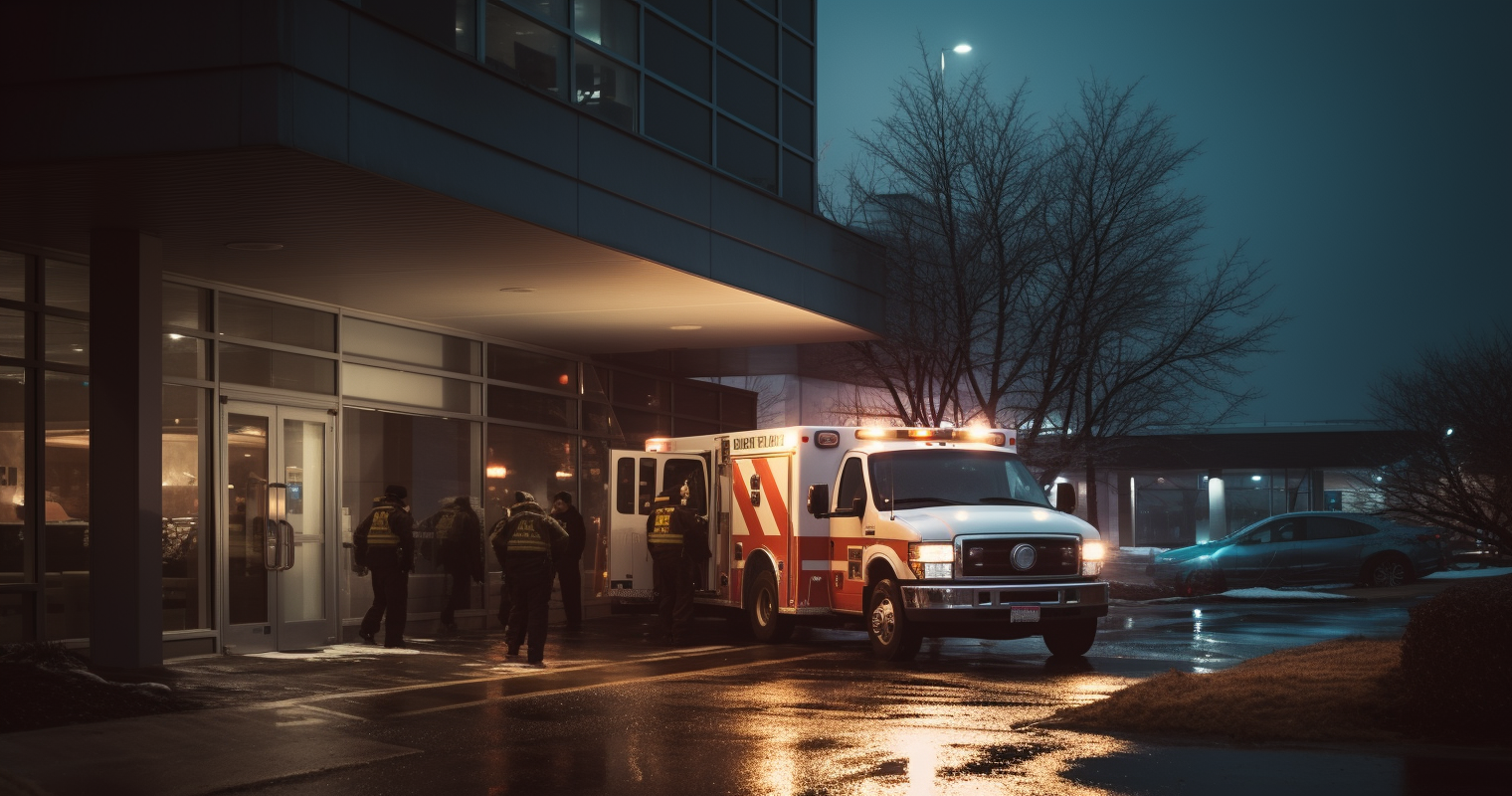
South Africa lacks a single all-purpose emergency number, but 112 (mobile phones) reaches all emergency services, while dedicated lines serve police (10111), ambulance (10177), and fire (10177). No one can legally be denied emergency treatment on the grounds of inability to pay, though billing follows treatment and costs vary considerably — foreigners and tourists are typically charged at full public hospital tariff rates, making robust health insurance a practical necessity for expats.
| Item | Details |
|---|---|
| Mobile emergency number | 112 (connects to all services; as of 2025) |
| Police | 10111 (as of 2025) |
| Ambulance / Fire | 10177 (as of 2025) |
| Private ambulance (Netcare 911) | 082 911 (as of 2025) |
| Private ambulance (ER24) | 084 124 (as of 2025) |
| Emergency treatment withheld for inability to pay? | No — legally prohibited; billing may follow treatment |
| Cost for foreign tourists at public hospitals | Full UPFS tariff rate (as of 2024/25) |
| Suicide / Mental health crisis line | 0800 567 567 (24-hour, toll-free; as of 2025) |
What is the main emergency number to call in South Africa, and does it cover police, fire, and ambulance — or are there separate numbers for each service?
South Africa currently has no unified emergency number that covers all services under a single dial, which can catch people off guard when they arrive from countries with simpler systems. Rather than a single line such as 999 in the UK or 911 in the United States — both of which connect callers to whichever service is needed — South Africa uses a combination of a mobile catch-all number and separate dedicated lines.
Dialling 112 from any mobile phone in South Africa will put you through to a call centre that can direct you to the most appropriate emergency service for your situation. This is as close as South Africa comes to a universal emergency number and is the single most useful number to have memorised. Although many people believe 911 is a globally recognised emergency number, in South Africa the correct mobile emergency number is 112.
In addition to 112, the dedicated national emergency lines as of 2025 are as follows:
- Police (SAPS): Dialling 10111 from any South African phone connects you to a call centre where operators take your details and dispatch a Flying Squad vehicle or alert the nearest police station.
- Ambulance and Fire: 10177 handles all non-crime emergencies, encompassing medical incidents, rescues, and fires.
- Cape Town (landline): Residents and visitors in Cape Town can dial 107 for any emergency.
Several South African provinces also maintain their own additional emergency contact numbers. Always check the specific number for the area in which you are staying, and save those numbers in advance. Confirm all numbers are current through official sources before you depend on them.
How do you call for emergency medical assistance in South Africa, and what should you expect when you call?
When seeking urgent medical help in South Africa, you can choose between the government ambulance service and private providers. The state ambulance line is 10177, while two prominent private emergency medical operators — Netcare 911 (082 911) and ER24 (084 124) — typically offer quicker responses across many urban areas, though their services carry charges for those without insurance cover. Verify these numbers are current before travelling.
Private emergency providers such as Netcare 911 and ER24 are equipped to handle fast-response crises; these organisations deploy ground ambulances, air ambulances, and helicopters, making them particularly valuable for reaching patients in remote areas such as game reserves and safari destinations.
When calling emergency services in South Africa, be prepared to provide your name and telephone number, the exact location where assistance is required, a clear description of what is happening and whether the situation is ongoing, the number of people affected, and whether weapons or hazardous materials are involved. If you are in a residential complex or gated estate, have your access code ready to give to responders. Providing precise location details — including nearby landmarks and GPS coordinates where possible — is especially critical in rural settings where formal street addresses may not exist.
Speak clearly and stay as composed as possible. Keep the telephone line open and do not disconnect until emergency services have reached the scene.
In rural areas, police and ambulance response times can be significantly delayed or, in some cases, unavailable. If you plan to spend time in remote locations, find out in advance whether a private air ambulance service operates in that region — many medical insurance policies include wilderness evacuation as a standard benefit.
What should you do in a mental health crisis in South Africa — is there a dedicated mental health emergency line, and can you go to a hospital emergency department?
South Africa provides a range of mental health and crisis support services, and hospital emergency departments are also able to assess and admit patients presenting with psychiatric emergencies. The key contact numbers to be aware of, as of 2025, are listed below — always verify these through official sources before relying on them.
- Suicide Crisis Line: 0800 567 567 — available 24 hours a day, toll-free.
- Cipla Mental Health Helpline: 0800 456 789 — a 24-hour mental health support line.
- SADAG (South African Depression and Anxiety Group): 011 234 4837 — operating hours apply; consult the SADAG website at sadag.org for current details.
- Akeso Netcare Psychiatric Response Unit: 0861 435 787 — Akeso Netcare’s round-the-clock psychiatric response service can assist with crisis containment and access to emergency psychiatric care.
- Pharmadynamics Police & Trauma Line: 0800 20 50 26 — available for trauma-related support.
Akeso’s 24-hour crisis helpline offers assistance to anyone who needs emergency psychiatric support, crisis stabilisation, or information about mental health resources available in South Africa.
Where someone is at immediate risk of harming themselves or others, calling 10177 or 112 to request an ambulance is the appropriate course of action. Both public and private hospital emergency departments are equipped to handle psychiatric presentations and can arrange admission or onward referral where required. If you or someone you know is in crisis, act without delay — call one of the lines above or proceed directly to the nearest hospital emergency department. Verify all contact numbers with official sources before relying on them.
Where can you go for emergency medical treatment in South Africa — are there public hospitals, private hospitals, urgent care clinics, or other facilities, and how do you find the nearest one?
South Africa’s healthcare landscape is divided between government-funded public facilities and a well-established private sector. This dual structure has meaningful cost implications for expats, and understanding it in advance helps avoid confusion during a crisis.
The public healthcare system serves roughly 80% of the South African population and is primarily financed through government funding. Major public hospitals — such as Groote Schuur Hospital in Cape Town and Chris Hani Baragwanath Hospital in Johannesburg — offer specialist services and trauma care. While costs at public facilities are often low, visitors should be prepared for longer waiting times for non-urgent conditions.
The private healthcare sector is highly developed and enjoys international recognition. Facilities such as Netcare Christiaan Barnard Memorial Hospital and Mediclinic Sandton offer advanced equipment, modern infrastructure, and well-trained clinical staff, with considerably shorter waiting times even for less urgent presentations. The largest private hospital groups operating nationally are Netcare, Life Healthcare, and Mediclinic — all of which maintain emergency departments.
Emergency care is available around the clock at both public and private hospitals. To locate the nearest facility, consult the South African Department of Health website or search through the major private group websites. In an unfamiliar location, dialling 112 and asking the operator to direct you to the nearest emergency department is also a practical option.
Is emergency medical treatment free in South Africa, or is there a charge — and does this differ for residents versus tourists or short-term visitors?
The legal framework is unambiguous: no person may be refused emergency medical treatment, including on the basis of an inability to pay. This means that while you may receive a bill after emergency treatment has been provided, you cannot lawfully be required to settle any payment before care is given. This right is grounded in the South African Constitution.
However, the legal prohibition on withholding treatment does not make that treatment free. Actual costs depend on several factors, the most significant of which is whether you are treated at a public or private facility. Emergency care at public hospitals is generally free or low-cost for eligible categories of patients, though non-South Africans may be subject to fees.
Charges at public hospitals are determined by the Uniform Patient Fee Schedule (UPFS), which applies across categories of patients including foreign nationals treated at state facilities. The UPFS provides a consistent and transparent billing framework for both inpatients and outpatients. Fees were revised upward by 4.9% for 2024/25, as announced by the Gauteng Department of Health — verify current tariffs at the national Department of Health website.
Patients who do not fall within exempted categories — which includes most foreign tourists — are charged at the full UPFS rate. Individuals from SADC countries, refugees, and asylum seekers are generally assessed under the same means-testing framework applied to South African nationals at public hospitals.
At private hospitals, a visit to the emergency room typically costs between R1,500 and R5,000 depending on the nature and severity of the presenting condition (as of 2024). Hospitalisation can cost R3,000 to R5,000 per night in a general ward, with intensive care units attracting significantly higher charges. These figures should be verified directly with hospitals, as they are subject to change.
Do expats in South Africa need travel or health insurance to access emergency care, and what happens if they turn up without insurance or without the ability to pay?
Although emergency treatment cannot legally be withheld for financial reasons, the cost of being uninsured in South Africa can be substantial — particularly where private ambulances have been used or treatment has taken place in a private hospital. Expats who plan to reside in South Africa on a long-term basis are strongly advised to join a registered South African medical aid scheme or secure international health insurance before arrival.
Expats and visitors frequently face upfront payment requirements, especially at facilities that do not offer direct billing to insurers. Where travel health insurance is in place, the usual arrangement involves paying for treatment at the point of care and then submitting a reimbursement claim. It is important to review your policy carefully to understand what is covered and what the claims process entails.
The costs involved with private emergency transport can be significant: ground ambulance services typically start at around R3,000, while air evacuation costs range from R15,000 to R50,000 depending on the distance and clinical complexity of the case (as of 2024). Without cover, these amounts can accumulate very rapidly. Always verify current figures directly with providers, as costs change frequently.
Arriving at a public hospital without insurance and without means to pay does not prevent you from receiving emergency care, but you will subsequently be invoiced at the UPFS tariff applicable to your patient category. Carry your passport and any insurance documentation whenever you seek medical attention.
Are there bilateral health agreements between South Africa and other countries that entitle some foreign nationals to reduced-cost or free emergency treatment?
Unlike the European Health Insurance Card (EHIC) system — which entitles EU and EEA citizens to healthcare at reduced or no cost when visiting other participating states — South Africa does not operate a comparable system of broad reciprocal healthcare agreements with most countries outside the SADC region.
South African health policy has historically treated refugees, asylum seekers, and undocumented migrants from Southern African Development Community (SADC) member states — particularly those from Lesotho, Mozambique, and Zimbabwe — on the same footing as South African citizens when it comes to accessing hospital care. This means they are subject to means-testing rather than being automatically charged at the full foreign-national rate.
Beyond SADC-related arrangements, no broad bilateral health treaties have been publicly confirmed between South Africa and major countries in Europe, North America, or Australasia that would grant visitors subsidised emergency care at the point of use. The situation may evolve as the National Health Insurance (NHI) Act — enacted on 15 May 2024, though requiring additional legislation before full implementation — is progressively introduced. Expats should check with their own country’s embassy in South Africa and the South African Department of Health for the latest developments. Never assume a reciprocal arrangement applies to you without verifying this through official channels.
How does the emergency healthcare system in South Africa compare to systems expats may be familiar with?
South Africa’s healthcare model is best described as a mixed public-private system characterised by a pronounced divide in quality and resources between the two sectors. The public system serves approximately 80% of the population through government funding, but many facilities operate under considerable strain.
This differs markedly from a fully state-funded model such as the NHS in the United Kingdom, where emergency care is free at the point of use for all residents, and where overseas visitors are generally treated before any payment discussion takes place. In South Africa, foreign nationals at public hospitals are billed at the full UPFS tariff once care has been delivered. However, unlike systems in certain countries where insurers must authorise treatment before it is given — as is sometimes the case in the United States — South African law explicitly prohibits upfront payment demands for emergency care.
The private sector closely resembles systems in countries where insurance coverage is the norm: hospitals are well-equipped, staffed by highly trained professionals, and provide notably shorter waiting times alongside higher standards of amenity. Expats who hold valid medical aid membership or comprehensive international health insurance can access this private tier on advantageous terms.
In early 2024, the National Health Insurance Bill was signed into law. The legislation aims to ensure that all people living in South Africa can access healthcare regardless of their income. The NHI will be implemented in phases, and full rollout may be many years away. The eventual implications for expats remain to be seen, and monitoring official communications is advisable.
What emergency services exist beyond medical — how do police and fire services work in South Africa, and are there any important differences in how to contact or interact with them compared to what expats may be used to?
The South African Police Service (SAPS) is responsible for law enforcement across the country. To report an emergency involving crime, dial 10111 from any South African phone or 112 from a mobile phone. Call 10111 when a crime is actively taking place or someone faces immediate danger. As of 2025, these remain the primary police contact numbers — verify current details with the SAPS website.
Response times differ considerably across provinces and incident types, though they have been improving at the national level. In wealthier residential areas, private security firms are frequently used as a first line of response to crime-related incidents. Many expats residing in gated estates or urban complexes find that their development has a dedicated private security response number that reaches them faster than SAPS. It is advisable to save this number wherever you live.
The South African Fire Service attends fires nationwide, with 10177 serving as the national fire emergency line. Municipalities also maintain their own fire brigade contact numbers, and provincial, district, and local firefighting contacts exist throughout the country — identify and save the relevant number for your specific location. An anonymous crime-reporting line is also available: Crimestop, reachable at 08600 10111 (as of 2025; verify current details with SAPS).
When interacting with police, carry identification — your passport or a certified copy — at all times, as you may be asked to produce it. South African law requires drivers involved in a road accident to remain at the scene and report the incident to the police.
Are there any country-specific emergency risks in South Africa — such as natural disasters, extreme weather, civil unrest, or endemic diseases — and what official alert or warning systems exist?
Expats relocating to or visiting South Africa should familiarise themselves with a set of emergency risks that are particular to this country. These include crime, severe weather events, infrastructure disruptions — most prominently load shedding, the system of rolling electricity outages — periodic civil unrest, and certain endemic infectious diseases.
From a natural disaster perspective, parts of South Africa are susceptible to flash flooding (most notably in KwaZulu-Natal), wildfires (especially in the Western Cape and Gauteng during dry seasons), and storm surges along some coastal stretches. The National Disaster Management Centre (NDMC) is the principal government body for disaster preparedness and response, and its website carries official warnings and advisories.
Disease risks also warrant attention. Malaria is endemic in parts of Limpopo, Mpumalanga, and KwaZulu-Natal — particularly low-lying regions near the Kruger National Park — and prophylactic medication is strongly recommended before travelling to or settling in these areas. HIV/AIDS remains a significant public health concern across the country. The National Institute for Communicable Diseases (NICD) publishes disease outbreak alerts and health advisories relevant to South Africa.
South Africa has one of the strongest mobile network infrastructures on the African continent, which supports emergency communication, though coverage in rural and wilderness areas can still be patchy. Expats spending time in game reserves or isolated regions should consider carrying a satellite communication device and confirming whether their medical insurance policy includes wilderness evacuation cover.
Regarding crime risk, numerous foreign government travel advisories rate South Africa as a destination requiring a high degree of caution. Consult your own government’s travel advisory service for the most current risk assessments, and register with your embassy upon arrival.
What should expats do to prepare for emergencies before they arise in South Africa?
Taking practical steps before a crisis occurs is the most effective way to protect yourself and those around you. The following measures are recommended for all expats living in or visiting South Africa:
- Register with your embassy or consulate. Most countries offer a voluntary registration service for citizens living abroad. In the event of civil unrest, a natural disaster, or a situation requiring consular assistance, registration allows your embassy to reach you and provide support. You can find your country’s embassy in South Africa via the South African Department of International Relations and Cooperation (DIRCO) website.
- Arrange comprehensive health insurance. Secure international health insurance or join a registered South African medical aid scheme before or immediately after arriving. Make sure your policy covers emergency evacuation and repatriation. Keep your policy number, your insurer’s emergency contact, and your membership card within easy reach at all times.
- Save emergency numbers before you need them. Programme 112, 10111, 10177, the number of your nearest hospital, your local private security provider, your insurer’s emergency line, and your embassy’s 24-hour consular number into your phone before any emergency arises.
- Identify your nearest public and private hospital. Do this for your home area and for every location you plan to visit. Knowing the route in advance can save critical time during an emergency.
- Understand load shedding and plan accordingly. South Africa’s electricity supply is subject to both scheduled and unscheduled outages. Keep a torch, a portable phone charger, and cash on hand, since ATMs and card payment terminals may be non-functional during power cuts.
- Check malaria risk for your region. If you are living in or travelling through a malaria zone, consult a travel health specialist ahead of your arrival and ensure you have appropriate prophylaxis and insect repellent.
- Monitor official advisories. Sign up for alerts from the NDMC and the NICD, and regularly check your own government’s travel advisory service for changes to South Africa’s risk classification.
- Keep important documents accessible. Carry a certified copy of your passport and visa at all times, and store digital copies in secure cloud storage. Keep your insurance documents and blood type information somewhere easily retrievable in an emergency.
Where can expats get official and up-to-date emergency information for South Africa?
Official sources should always be your first port of call for emergency information. Fees, contact numbers, and procedures in South Africa can change over time, so bookmarking the following resources is a sensible precaution:
- South African Police Service (SAPS): saps.gov.za — for police emergency numbers and crime reporting procedures.
- South African Department of Health: health.gov.za — for public hospital information, UPFS tariff schedules, and policy developments including updates on the NHI rollout.
- National Disaster Management Centre (NDMC): ndmc.gov.za — for disaster risk information, official warnings, and preparedness guidance.
- National Institute for Communicable Diseases (NICD): nicd.ac.za — for disease outbreak alerts and public health advisories.
- South African Depression and Anxiety Group (SADAG): sadag.org — for mental health crisis resources and current helpline numbers.
- Western Cape Government (emergency contacts): westerncape.gov.za — a useful example of provincial emergency contact pages; other provinces maintain similar resources.
- Your home country’s embassy in South Africa: Locate contact details through your own government’s foreign ministry website — consular emergency lines operate around the clock for genuine emergencies.
Always confirm phone numbers and fee information directly with official sources, as these can be updated without notice. Do not rely solely on third-party websites for numbers you intend to use in a real emergency.
Frequently asked questions
What is the most important emergency number to remember in South Africa?
If you can only remember one number, it should be 112 — this works from any mobile phone on any network in South Africa and puts you through to an operator who can direct you to the relevant emergency service, whether that is police, ambulance, or fire. As of 2025, this remains the most broadly useful single number to have memorised. Always verify it is current before relying on it.
Will I be turned away from a South African hospital if I can’t pay for emergency treatment?
No. South African law and the Constitution together guarantee that nobody — irrespective of nationality, documentation status, or financial means — can be refused emergency medical treatment. That said, being unable to withhold treatment is not the same as providing it free of charge. A bill based on the Uniform Patient Fee Schedule (UPFS) is likely to follow your care. As of 2024/25, foreign tourists are generally charged at the full applicable UPFS rate.
Do I need a South African medical aid scheme, or will international travel insurance cover me?
Both options are viable, but they function differently in practice. A South African medical aid scheme handles local billing and direct payment to healthcare providers; international health insurance typically requires you to pay at the time of treatment and then submit a reimbursement claim. For short-stay visitors, comprehensive travel insurance that includes emergency medical cover and evacuation is strongly recommended. Expats on long-term visas should seriously consider joining a registered South African medical aid scheme. Always confirm whether private ambulance services such as Netcare 911 or ER24 are included in your cover.
Is there a reciprocal healthcare agreement between South Africa and my country?
South Africa does not operate a reciprocal healthcare arrangement broadly comparable to the European EHIC system. Citizens of SADC member states benefit from equivalent status to South African nationals for means-testing purposes at public hospitals, but most other foreign nationals — including those from Europe, North America, and Australasia — are billed at the full UPFS rate. Check with your government’s embassy in South Africa and the South African Department of Health to establish whether any arrangement applies specifically to your nationality. Never proceed on the assumption that reciprocal coverage exists without confirming it through official channels.
What should I do if I have a mental health crisis in South Africa?
Contact one of the 24-hour toll-free helplines: the Suicide Crisis Line (0800 567 567) or the Cipla Mental Health Helpline (0800 456 789). For psychiatric emergencies that require a physical response, the Akeso Netcare psychiatric response unit (0861 435 787) provides round-the-clock crisis assistance. Going directly to the nearest hospital emergency department is also an option — staff there can assess the situation and arrange admission or referral as needed. Always confirm these numbers are current with official sources before relying on them.
Is private security important in South Africa, and should I save a private security number?
Yes. Expats living in urban and suburban parts of South Africa frequently find that private security companies reach them faster than the South African Police Service (SAPS) when responding to crime-related incidents. If you reside in a gated estate or residential complex, save your development’s private security response number alongside the SAPS emergency number (10111). For serious crimes in progress, always contact SAPS as well.
What are the biggest health risks for expats in South Africa that could lead to an emergency?
The most significant country-specific health risks include malaria (in Limpopo, Mpumalanga, and parts of KwaZulu-Natal), road traffic accidents — South Africa has a notably high road fatality rate — and waterborne illnesses in some areas. HIV/AIDS is a major national public health issue. Heat exhaustion can affect people spending extended time outdoors during summer in inland regions. Ensure your vaccinations are up to date, take appropriate malaria prophylaxis when living in or visiting endemic zones, and consult the NICD website for current disease advisories.
Where should I register to ensure my embassy can reach me in an emergency?
Register with your home country’s embassy or consulate in South Africa on arrival or before you travel. Most countries offer a free voluntary registration service for citizens living abroad — for example, the UK operates the LOCATE scheme, the US offers the Smart Traveler Enrollment Program (STEP), and Australia maintains the Smartraveller registration system. These schemes enable your embassy to contact you in the event of a national emergency, natural disaster, or situation requiring consular support. Find your embassy’s contact details and registration link through the DIRCO website or your own government’s foreign ministry portal.