
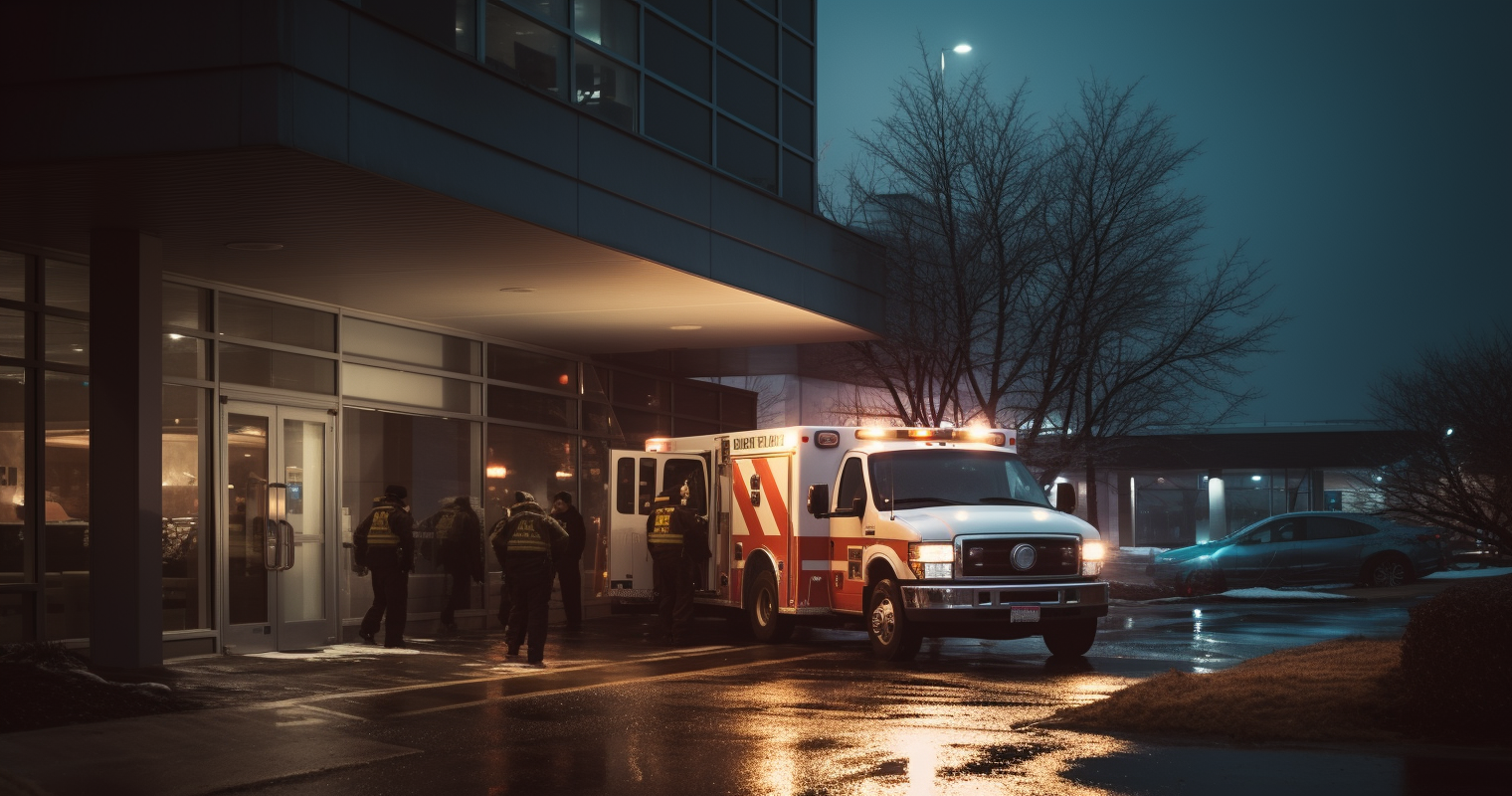
Spain’s universal emergency number is 112 — free to dial from any telephone, it provides access to police, fire, and medical services throughout the entire country. Registered residents receive emergency medical treatment at public hospitals at no charge, and EU/EEA visitors holding a valid European Health Insurance Card (EHIC) can access care free of charge or at reduced cost. Those visiting from outside the EU are advised to carry private travel insurance, as they may receive a bill for any treatment provided.
| Item | Details |
|---|---|
| Main emergency number | 112 (free, covers police, fire, ambulance — as of 2025) |
| Medical emergency number | 061 (ambulance/medical emergencies — as of 2025) |
| Suicide prevention line | 024 (free, 24/7, staffed by experts — as of 2025) |
| Emergency care cost (residents) | Free at public hospitals under the SNS |
| Emergency care cost (EU/EEA visitors) | Free or reduced cost with valid EHIC/GHIC |
| Emergency care cost (non-EU visitors without insurance) | Billed in full; private travel insurance strongly recommended |
What is Spain’s single emergency number, and does it cover all services?
Throughout Spain, as in every other European Union member state, police, fire, and medical emergency services are all reachable through the single number 112. Calls are free from any phone — landline, mobile, VoIP device, or public payphone. Even a mobile phone with no credit or one locked to a foreign network will still be able to place the call.
When you dial 112, the operator functions as a central coordination point. They assess the nature of the incident and route the call to whichever emergency department is appropriate — whether that is the local police, the National Police, the Guardia Civil, medical teams, fire crews, mountain rescue, maritime rescue, or civil protection units responding to environmental or weather-related crises. A single number genuinely covers every scenario.
While 112 is the only number you need to commit to memory, a number of direct lines are also available for specific services. 091 is the dedicated emergency number for the National Police. 062 connects to the Guardia Civil. 092 reaches the Local Police, whose responsibilities include security and public order within municipalities, as well as traffic management and enforcement of local regulations. 061 is the specific line for medical emergencies in Spain; while 112 automatically routes medical calls through to 061, you may dial this number directly when facing a serious medical emergency that does not require the involvement of security forces.
Calling 112 from a mobile phone activates Spain’s advanced geolocation system, which transmits your position automatically to the operator — a feature that dramatically cuts response times, particularly in outdoor incidents, road accidents, rural emergencies, or situations where the caller cannot give a precise address.
Spain stands out across Europe for the accessibility of its emergency line to foreign callers: operators are able to communicate in more than 50 languages, including English, German, French, Chinese, Arabic, Romanian, and Russian. This is a considerable advantage over calling service-specific numbers such as 091 or 062, where staff may only be able to speak Spanish.
Dedicated accessibility routes also exist for those who are deaf, hard of hearing, or unable to communicate verbally: an SMS to 679 436 200 is monitored 24 hours a day. Alternatively, the Spanish government’s official AlertCops app allows users to send a silent alert or a text-based emergency notification without placing a voice call.
How do you call for emergency medical assistance in Spain?
If you are facing a medical emergency, dial 112 or 061. Both lines will dispatch an ambulance if one is needed, and both are entirely free to call. Dialling 112 is usually the better choice if you are uncertain which service you require, whereas 061 can be called directly when you are certain you need an ambulance or immediate medical guidance.
Once connected to 112, the operator will ask a brief series of questions: what has happened, where you are (with geolocation activated if you are calling from a mobile), and how many people are involved. This information allows the right resources to be allocated efficiently. Speaking calmly and answering as clearly as possible — even in basic Spanish — will help speed up the response. Multilingual operators are available if you need assistance in another language.
If you need an ambulance, you can call 112 — the pan-European emergency number — or go directly to a hospital’s Urgencias department if that is more practical. Urgencias is the equivalent of an Accident and Emergency (A&E) or Emergency Room (ER) — walk-in access is available without any appointment for genuine emergencies.
Ambulance provision is primarily government-operated, though some regions also have private ambulance services. Response times naturally vary by location, with urban areas typically served more quickly than remote or rural parts of the country. For current response time expectations, consult the health authority of the relevant autonomous community.
What should you do during a mental health crisis in Spain?
In recent years, Spain has made substantial investment in mental health crisis support. The Ministry of Health has established the 024 Suicide Prevention Helpline, which operates around the clock, every day of the year. This free line is staffed by trained professionals who support individuals experiencing suicidal thoughts, along with their families and those close to them.
The 024 line is free, immediate, and confidential. It is also integrated with the emergency services of the various autonomous communities and cities, so a caller who is in immediate danger can be referred directly to 112. The service includes a video interpreting facility in sign language as well as a telephone interpreting service that enables real-time communication with callers who speak other languages, with the goal of providing equal, non-discriminatory access for all.
For broader emotional support and crisis assistance — not limited to suicidal crises — Teléfono de la Esperanza (Telephone of Hope) can be reached on 717 003 717. This confidential line is staffed by trained volunteers and is available to anyone in emotional distress. Samaritans in Spain runs a separate English-language helpline that offers free support, reachable by calling 900 525 100.
If you or someone nearby is in immediate physical danger as a result of a mental health crisis, call 112 rather than 024. Hospital Urgencias departments are also equipped to assess and stabilise mental health crises — no appointment or prior referral is required in an emergency. Spain’s Mental Health Strategy of the National Health System 2022–2026 identifies mental health in childhood and adolescence as a national priority, reflecting a broader institutional commitment to expanding access to crisis care.
As of 2025, the 024 line operates primarily in Spanish. If you are not yet comfortable communicating in the language, the Samaritans line (900 525 100) or the interpreting service embedded within 024 are both viable options. Always check official sources for the most current information on language availability before relying on any helpline.
Where can you go for emergency medical treatment in Spain?
Spain has an extensive network of both public and private hospitals, but only public facilities provide free treatment. During a medical emergency, the options available to you will depend on where you are and your particular circumstances.
- Public hospital Urgencias (A&E/ER): The emergency department of any public hospital. Walk-in access is available without a referral for genuine emergencies. Free for registered residents and EU/EEA visitors carrying a valid EHIC or GHIC.
- Private hospitals and clinics: These often have shorter waiting times and more multilingual staff, but you will be expected to show proof of insurance or pay directly. A basic consultation at a private hospital may cost between €100 and €250, while more involved treatments or surgical procedures can range from several hundred to several thousand euros.
- Centros de Salud (primary health centres): Not emergency facilities in the conventional sense, but able to handle urgent non-life-threatening conditions during opening hours and direct you onward if necessary.
- Farmacia de guardia (on-duty pharmacy): Every area has an on-duty pharmacy for after-hours needs, identifiable by a lit green cross outside. These can advise on minor health concerns and point you towards the appropriate service.
Because certain hospitals offer both public and private care, it is important to let staff know which system you are using. Presenting your public health card or EHIC directs you into the public pathway; arriving without documentation at a mixed facility may result in you being registered as a private patient, with the associated costs that entails.
To locate your nearest public hospital or urgent care centre, visit the Spanish Ministry of Health website or contact the health authority of your autonomous community. Healthcare in Spain is decentralised, meaning services and facilities can differ considerably from one region to another.
Is emergency medical treatment free in Spain, or is there a charge?
Whether emergency treatment is free depends on your status in Spain. Spain operates a universal healthcare system funded through taxation — a contributory model in which the SNS (Sistema Nacional de Salud) guarantees coverage for all residents, regardless of employment status.
Foreign nationals who are registered residents receive exactly the same entitlements as Spanish citizens. They are assigned a social security affiliation number and issued a health card, providing free access to primary care, specialist consultations, emergency treatment, and hospital admission.
All EU and European Economic Area (EEA) nationals visiting Spain on a short stay are entitled to free or reduced-cost emergency medical care at public hospitals and clinics, provided they present a valid European Health Insurance Card (EHIC). This reciprocal arrangement covers emergency treatment within the public sector only, and does not extend to medical repatriation — the EHIC should therefore never be considered a substitute for private travel insurance.
British travellers can access emergency and necessary healthcare through the Global Health Insurance Card (GHIC), which was established following Brexit and fulfils the same function as the EHIC for visits to Spain for tourism or short stays.
All Spanish public hospitals are obliged to provide life-saving care to any patient admitted with a life-threatening condition, regardless of their ability to pay. However, non-EU tourists will typically be billed for treatment unless they hold valid travel insurance covering emergency care. While public hospitals will not decline to stabilise someone in a critical condition, visitors should not assume all treatment will be free — particularly for follow-up care or extended hospitalisation.
Do expats need travel or health insurance to access emergency care?
To satisfy residency requirements in Spain, expats must hold either public or private health coverage. Those who do not qualify for the public system — for example, non-working residents, retirees without an S1 form, or applicants for certain visa categories — are typically required by law to hold private health insurance. This requirement applies particularly when making visa applications, and ensures comprehensive medical coverage while living in Spain.
Expats may choose between public healthcare (if eligible) or a private insurance plan. For retirees and long-term residents not eligible for free public coverage, the Convenio Especial provides access to the public system in exchange for a monthly contribution. Private insurance policies are widely available and generally offer benefits such as quicker access to specialists and elective procedures.
Regarding what happens if you present at a hospital without insurance or funds: Spain will not turn away anyone in a life-threatening emergency, including foreign nationals without coverage. However, an uninsured non-EU visitor who receives treatment or is admitted to a Spanish public hospital will be responsible for the full cost of that care, which can be substantial. The risk of significant financial exposure makes comprehensive travel or international health insurance an essential consideration before any journey to or relocation within Spain.
As of 2025, private insurance premiums range from approximately €50 to €200 per month, though the actual figure varies widely depending on age, health profile, level of cover, and provider. Compare policies carefully and confirm current pricing directly with insurers.
Are there bilateral health agreements entitling some foreign nationals to reduced-cost or free emergency treatment?
In addition to the EU/EEA arrangements, Spain has concluded bilateral healthcare agreements with a number of non-EU countries. These agreements include countries such as Peru, Paraguay, Ecuador, Chile, Brazil, and Andorra. Nationals of these countries may be entitled to free medical treatment in the event of a medical emergency or accident. Citizens of other countries are advised to hold private medical insurance when travelling to Spain.
If you are from certain countries such as Andorra, Brazil, Chile, Ecuador, or Peru, there is a possibility that you may receive free emergency care during a short stay in Spain. Spain has signed relevant agreements with specific countries, and you can confirm whether your country is included by contacting the Spanish embassy in your home country. If no such agreement is in place, you will need to arrange private health coverage.
These bilateral agreements broadly resemble the reciprocal healthcare arrangements that function between EU countries under the EHIC scheme, or the S1 mechanism that enables pensioners from EU member states to access healthcare in their country of residence. However, the precise scope, conditions, and coverage of each individual bilateral agreement can differ considerably. Always verify your entitlement directly with the Spanish Ministry of Health or your country’s embassy in Spain before travelling. Do not assume coverage is automatic — carry documentation of any entitlement and consider supplementary travel insurance regardless.
How does Spain’s emergency healthcare system compare to systems expats may be familiar with?
Spain’s public health system — the Sistema Nacional de Salud (SNS) — is free or low-cost for residents and EU citizens holding a valid EHIC or GHIC. In this respect it operates as a fully public model, comparable in principle to the NHS in the United Kingdom or Medicare in Australia, in that eligible patients are not required to pay upfront for emergency care.
The SNS is internationally recognised for its efficiency in certain areas, notably organ transplantation and preventive medicine. That said, the system has acknowledged weaknesses, including lengthy waiting times for non-urgent procedures and limited coverage for dental and optical care. The waiting-time dynamic will be familiar to users of other public healthcare systems, although the emergency pathway is generally well-resourced.
In contrast to countries where emergency services are predominantly privately operated — such as the United States, where calling an ambulance and attending an emergency room can generate bills of thousands of dollars regardless of outcome — Spain’s public emergency system does not charge registered residents at the point of care. Spain’s private sector complements the public SNS by offering faster access and multilingual staff, though at considerably higher cost.
Many expats choose to maintain both forms of coverage: registering with the public system for emergency access and major hospital treatment, while also holding a private policy for routine consultations, specialist referrals, and dental care. This dual approach is common in Spain and echoes how mixed systems function in other countries, such as Australia, where people may simultaneously hold a Medicare card and private hospital insurance.
What emergency services exist beyond medical — how do police and fire services work in Spain?
Spain has three distinct police forces: the National Police (Policía Nacional), the Local Police (policía local), and the Civil Guard (Guardia Civil). The National Police has the broadest jurisdiction, covering matters such as organised crime, national security, and counter-terrorism. The Local Police, operating at the municipal level, deal with issues such as theft, traffic offences, and local disputes. The Civil Guard is Spain’s oldest police body, runs under military authority, and operates primarily in rural areas and on major roads.
In any situation requiring police assistance, dialling 112 will connect you to the appropriate force. The 112 emergency number is the only one you need to remember — operators handle all types of emergency and can communicate in multiple languages. For non-emergency matters such as reporting a minor theft, 092 connects to the Local Police, who handle traffic issues, lost property, low-level crime, and neighbourhood concerns.
The AlertCops system, developed by the Ministry of the Interior, is among the most advanced public safety tools in Europe. It connects directly with the National Police and the Guardia Civil, is available in several languages, and with a single tap allows users to report theft, harassment, assault, hate crimes, missing persons, or suspicious activity. This app is particularly valuable for those not yet confident communicating in Spanish by telephone.
The fire brigade in Spain can be reached by calling 112 or 080. Spain’s firefighters take on a wide range of tasks beyond firefighting, including rescues and safety inspections. In some regions, 085 is also used for fire services — check which number applies in your area. Response times in urban areas are generally quick; Madrid’s fire service, for example, aims to reach the scene of an urban fire within ten minutes of receiving the call.
Victims of gender-based violence can call 112 for emergency assistance. Dedicated support is also available on 016 or 900 116 016, lines that provide guidance and referrals to specialist services.
Are there country-specific emergency risks in Spain?
Spain’s varied geography and climate give rise to a range of natural hazards that expats should be aware of. Wildfires are a serious seasonal threat, particularly during summer months across southern and central Spain and in parts of Catalonia, Valencia, and the Canary Islands. Flash floods — known as gota fría or DANA events — are a significant risk in eastern coastal areas, especially around Valencia and Murcia, and can develop with very little warning. Earthquakes occur in parts of southern Spain, most notably in the areas around Granada and Murcia, though major seismic events are relatively uncommon. In coastal zones, strong rip currents and sudden storms pose maritime hazards.
Spain’s national civil protection authority — Protección Civil — coordinates the national response to major disasters, publishes public safety guidance, and maintains alert systems. The 17 autonomous communities each run their own civil protection services in parallel. Weather warnings are issued by Spain’s national meteorological agency, AEMET (Agencia Estatal de Meteorología), using a four-level colour-coded system (green, yellow, orange, and red) to convey the severity of risk.
The AlertCops app can also be used during civil emergencies to connect with the National Police and Guardia Civil. Many autonomous communities operate their own emergency alert apps and SMS notification systems — find out what is available in your region of residence. Registering for local alert notifications is strongly advisable, particularly if you live in an area susceptible to flooding, wildfire, or extreme heat.
How should expats prepare for emergencies before they arise in Spain?
The most valuable thing you can do is prepare before an emergency ever occurs. The following steps are strongly recommended for anyone living in or relocating to Spain.
- Register with your home country’s embassy or consulate in Spain. Most countries operate a traveller or resident registration scheme that enables your government to contact you in the event of a national emergency, evacuation, or major crisis. Visit your foreign ministry’s website for the relevant registration portal. The UK, US, Australia, Canada, and many other nations offer this service free of charge, and registration takes only a few minutes.
- Obtain the correct health documentation before you need it. EU/EEA nationals should apply for an EHIC card before departing for Spain. UK nationals should apply for a GHIC. Those registering as residents should apply for a Tarjeta Sanitaria (Spanish health card) through their local health centre as soon as they are eligible. Applications are made at your local primary healthcare centre (centro de salud), and the TSI card is typically delivered to your home address within two to three weeks.
- Take out comprehensive private health or travel insurance. Even if you are entitled to public healthcare, a private policy provides faster access to specialists, broader coverage, and — critically — repatriation cover. Make sure your policy includes emergency evacuation, which public coverage does not. The EHIC covers medical emergencies but does not cover repatriation to your home country, so it must not be used as a replacement for travel insurance.
- Save emergency numbers to your phone. Add 112, 061, 024, and the contact details for your nearest public hospital to your phone’s contacts. Also save the emergency line for your embassy or consulate and your insurance provider’s 24-hour assistance number.
- Download the AlertCops app. This is the official mobile application launched by the Spanish government to improve response times and support evidence gathering for the National Police and the Guardia Civil. It is free, available in multiple languages, and allows users to send silent alerts or written reports without making a voice call.
- Register with AEMET and local alert systems. Sign up for weather alerts at AEMET and find out whether your autonomous community operates its own emergency alert platform. Familiarising yourself with the colour-coded warning levels (green, yellow, orange, red) will help you respond appropriately when extreme weather strikes.
- Keep copies of key documents. Store digital copies of your passport, residency documents, health card, insurance policy, and emergency contacts in a secure cloud-based location so they can be retrieved from any device, even if your physical documents are lost or stolen.
Where can expats find official and up-to-date emergency information for Spain?
When researching emergency procedures in Spain, always prioritise official government and institutional sources over blogs or general forums. The following are the key resources to consult:
- Spanish Ministry of Health (Ministerio de Sanidad): sanidad.gob.es — for information on healthcare entitlements, the 024 helpline, public hospital listings, and health card guidance.
- Spanish Ministry of the Interior: interior.gob.es — for police services, the AlertCops app, and civil security information.
- Protección Civil (National Civil Protection): proteccioncivil.es — for disaster risk information, evacuation procedures, and emergency preparedness guidance.
- AEMET (Agencia Estatal de Meteorología): aemet.es — for weather alerts and the national weather warning system.
- Your autonomous community’s health authority: Each of Spain’s 17 autonomous communities manages its own healthcare services. Search for your region’s health department website for local hospital listings and regional emergency guidance.
- Your home country’s embassy or consulate in Spain: Embassy websites publish emergency consular contacts, registration schemes, and country-specific travel advice. Check the official foreign ministry or FCDO website of your home country for Spain-specific guidance.
- EU Citizens’ Rights Portal: administracion.gob.es — for information on emergency numbers and healthcare rights for EU citizens in Spain.
Specific figures, phone numbers, costs, and procedures are subject to change. Always verify any detail against an official source before relying on it, and make a note of when you last checked so you have a clear record of how current your information is.
Frequently asked questions about emergencies in Spain
What is the emergency number in Spain?
Throughout Spain, as across the European Union, emergency services — including health, police, and fire — are reachable via the single number 112. Calls are free from any phone, the service operates nationwide, and operators can communicate in more than 50 languages. If you specifically need an ambulance or medical guidance, you can also dial 061 directly.
Can I call 112 if I don’t speak Spanish?
Spain’s emergency call system is among the most accessible in Europe for foreign callers. Operators are available in more than 50 languages, including English, German, French, Chinese, Arabic, Romanian, Russian, and many others. You do not need any Spanish to get assistance. If you cannot speak at all, you can also send an SMS to 112 or use the AlertCops app to request help silently.
Will I be charged for going to a Spanish hospital emergency department?
Emergency treatment will not be refused regardless of insurance status. Care is free under the public system for those who are entitled to it, but private hospitals may bill you if you are uninsured. EU/EEA visitors presenting a valid EHIC or GHIC are entitled to emergency treatment at public hospitals at no or reduced cost. Visitors from outside the EU who do not hold insurance may be invoiced for treatment received.
What should I do if I’m having a mental health crisis in Spain?
The Ministry of Health’s 024 Suicide Prevention Helpline is available 24 hours a day, seven days a week, staffed by qualified professionals who support individuals in suicidal crisis as well as their families. Samaritans in Spain also runs an English-language helpline offering free, confidential support — reachable on 900 525 100. If there is an immediate risk to physical safety, call 112 or go directly to the nearest hospital Urgencias department.
Does Spain have reciprocal health agreements with non-EU countries?
Spain has signed bilateral healthcare agreements with a number of non-EU countries, including Peru, Paraguay, Ecuador, Chile, Brazil, and Andorra. Nationals of these countries may be entitled to free emergency medical treatment in Spain. If you are from a country not covered by such an agreement, you should hold private travel or health insurance when visiting Spain, and verify your entitlements with the Spanish Ministry of Health or your embassy before travelling.
Is private health insurance required to live in Spain?
Those who are not eligible for Spain’s public healthcare system — such as non-working residents, retirees without the S1 form, or students — are generally required to hold private health insurance, particularly when applying for residency visas. This ensures comprehensive medical coverage and is frequently a legal condition of residency approval. Once you are registered and contributing to social security through employment, you may become eligible for the public SNS instead.
What natural disaster risks should expats be aware of in Spain?
The primary environmental risks in Spain include wildfires — especially during summer months in southern and central regions and the Canary Islands — flash floods caused by the gota fría phenomenon, which most commonly affects the eastern coast, and occasional earthquakes in southern Spain. AEMET issues colour-coded weather alerts ranging from green to red. Monitoring aemet.es regularly and signing up to local civil protection alert systems is strongly recommended, especially for those living in areas prone to these hazards.
How do I find my nearest public hospital emergency department in Spain?
Spain’s public hospital network is administered at the autonomous community level. The most straightforward approach is to visit your region’s health authority website or search for “hospital público Urgencias” along with your town or region name. Your local centro de salud (health centre) can also direct you to the nearest public emergency hospital. The Ministry of Health website provides links to each autonomous community’s health services. In a genuine emergency, calling 112 will result in help being dispatched or the operator directing you to the closest appropriate facility.