

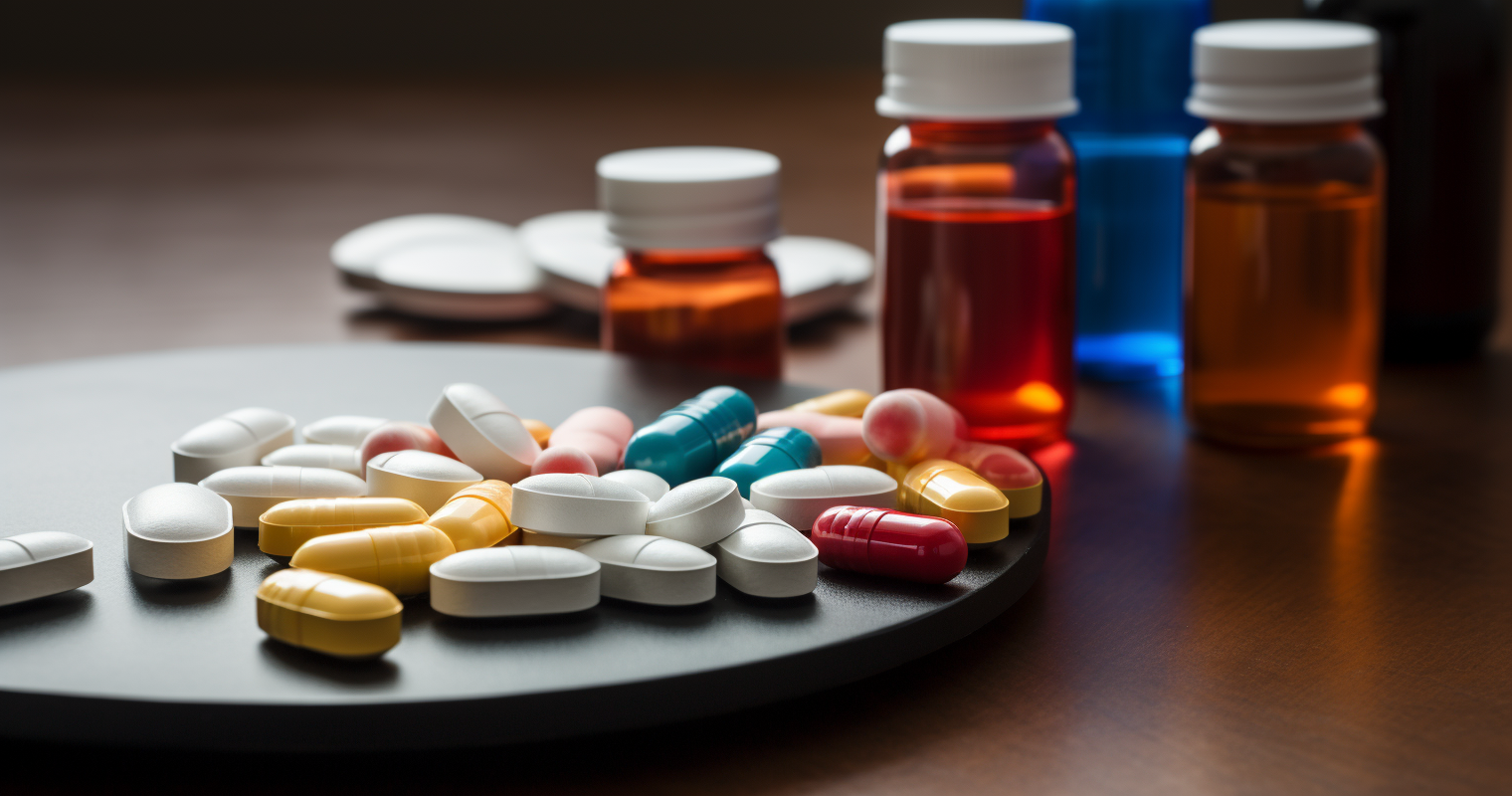
Denmark operates a well-structured pharmacy network centred on licensed outlets known as apoteker (singular: apotek). Doctors and specialists issue prescriptions electronically, feeding directly into a nationwide digital record. A tiered reimbursement programme helps bring down the personal cost of most prescription drugs. Anyone relocating to Denmark should register with a local GP, secure a CPR number, and carry appropriate documentation for any medicines they transport across the border.
| Item | Details |
|---|---|
| Word for pharmacy | Apotek (plural: apoteker) |
| Pharmacy sign | Green lowercase “a” on a white or green background |
| Prescription type | Electronic (via the national Shared Medication Record) |
| Maximum annual patient co-payment (2025) | DKK 4,735 — after this the state covers 100% of reimbursable medicines (as of 2025; check Danish Medicines Agency for current figures) |
| After-hours pharmacy surcharge | Approx. DKK 20 outside regular opening hours (as of recent years; verify locally) |
| Emergency medical helpline | 1813 (Capital Region) / 112 (life-threatening emergencies) |
What are pharmacies called in Denmark, and how do I recognise one?
The Danish term for a pharmacy is apotek. When searching for one on the street, look for signage bearing the word “Apotek” together with a green cross. The most immediately recognisable identifier, however, is a distinctive lowercase green “a” — derived from the word apotek itself. This symbol is the standardised national emblem for every licensed pharmacy in the country and appears prominently on shopfronts and above entrance doors.
Once a doctor has issued a prescription, it can be collected at any pharmacy of your choosing. Danish law grants licensed apoteker the exclusive right to sell prescription-only medicines directly to the public, ensuring that patients receive professional supervision when obtaining their treatments. You will not come across prescription drugs in supermarkets or general health retailers — only in an authorised apotek. To serve communities in more remote regions, some pharmacies also maintain small satellite branches or collection points.
On entering a pharmacy, you take a numbered ticket and wait to be called to the counter. Qualified pharmacists are on hand to listen to your concerns and provide genuine clinical guidance — not simply to hand over medication. Their training is extensive, and they are a valuable first point of contact for health queries. In central Copenhagen and other major urban areas, the majority of pharmacy staff speak English confidently.
What are pharmacy opening hours in Denmark?
Most Danish pharmacies are open Monday to Friday, generally from around 9:00 AM to 5:30 PM, with reduced hours on Saturdays. The majority are closed on Sundays and public holidays, apart from designated duty pharmacies. Hours differ from branch to branch, so it is always worth confirming before making a special trip, particularly outside larger towns and cities.
Certain pharmacies operate between 6 AM and midnight. Between midnight and 6 AM, the majority of branches across the country are closed. In bigger cities, pharmacies with extended hours help bridge this gap. Aarhus Løve Apotek, for instance, is open every day from 6 AM to midnight. Copenhagen has a single pharmacy that operates around the clock: Steno Apotek on Vesterbrogade, where both prescriptions and medicines are available at any hour.
Outside major urban centres, after-hours coverage is provided on a rota by designated duty pharmacies (apoteker med døgnvagt), which can be difficult to locate without local knowledge or digital resources. The website apoteket.dk lists locations and opening times for pharmacies throughout the country. Residents of the Capital Region can also call 1813 to be directed to an open pharmacy nearby.
A surcharge of DKK 20.65 applies when purchasing over-the-counter products or prescription medicines outside standard opening hours (as of recent years; confirm current figures locally). If pharmacies are closed and you urgently need medicine, you can contact the Medical Helpline by telephone at (+45) 70 11 07 07.
Which medications can I buy over the counter in Denmark, and which require a prescription?
The range of medicines available without a prescription is narrower in Denmark than in many other countries, and pharmacists may frequently recommend consulting a doctor to obtain a prescription rather than relying on self-treatment. Standard pain relief, cold and flu remedies, and basic allergy medications can be purchased without a prescription, but the selection is more restricted than in numerous other healthcare systems. Antibiotics and the majority of other medicines require a valid prescription, and pharmacists adhere strictly to EU medicinal product regulations.
A wide variety of medications is legally obtainable in Denmark when accompanied by a prescription from a licensed physician. Several products that are freely sold in pharmacies — or even supermarkets — elsewhere in the world, including certain higher-dose antihistamines, codeine-based preparations, and hormonal treatments, are prescription-only in Denmark. If you are uncertain about a particular medicine, the pharmacist can advise whether a doctor’s appointment is necessary.
Online pharmacies are permitted under Danish law but are subject to rigorous regulation. The Danish Medicines Agency (DKMA) oversees all medicinal products, including the authorisation and inspection of pharmaceutical companies and distributors. Only licensed online pharmacies — identifiable by the EU common logo displayed on their website — are legally permitted to sell medicines to consumers online. Buying prescription medicines from unlicensed overseas websites is both illegal and potentially hazardous. Always verify an online pharmacy’s authorisation through the Danish Medicines Agency website.
How does the prescription system work in Denmark?
GPs sit at the heart of the Danish healthcare model, delivering care free at the point of use and acting as gatekeepers to specialist services. They often continue overseeing treatment once a specialist has established a diagnosis. For this reason, the vast majority of prescriptions in Denmark are issued by GPs. Specialists may also prescribe directly, particularly in connection with hospital-based treatments. This gatekeeping approach broadly mirrors the NHS model in the United Kingdom, where a GP referral is usually required before a patient sees a consultant.
Denmark’s Shared Medication Record stands as a flagship example of the country’s commitment to e-health. This electronic register gives both citizens and healthcare professionals full access to an up-to-date record of each person’s current prescription medications. The platform was first developed in 2011 and fully embedded within the existing electronic medical record system by 2015. When your doctor issues a prescription, it is transmitted electronically straight to this national database — there is no need to carry a paper document to the pharmacy.
Every time a prescription is filled at a pharmacy, an electronic entry is created capturing details about the patient, the prescribing clinician, the dispensing pharmacy, and the medicine provided. Sundhed.dk, Denmark’s official e-health portal, serves as the primary online gateway for accessing public health services. It enables citizens to view healthcare data drawn from national health registers, including medical records, laboratory results, and medication histories, while also facilitating communication between patients and healthcare providers.
For patients on stable long-term treatments, a three-month supply is typically dispensed at a time — equivalent to packs of 100 tablets for drugs taken once daily. Repeat prescriptions for well-managed chronic conditions are commonplace and can often be renewed via telephone or online through the GP practice without a full appointment. While repeat prescription systems exist in countries such as Australia and Canada, Denmark’s fully digital infrastructure makes the process particularly efficient.
How much do prescriptions and medications cost in Denmark?
A dedicated authority — the Reimbursement Committee — determines whether a given medicine qualifies for reimbursement, and all eligible medicines are covered under a publicly funded drug subsidy scheme. Rather than applying a flat charge — such as the fixed fee used in England for NHS prescriptions — Denmark operates a sliding-scale model in which the share of costs met by the state rises in proportion to the total amount spent on medicines over a rolling twelve-month period.
Medication reimbursement is essentially a state contribution towards the price of eligible prescription medicines. It is calculated on the basis of cumulative annual spending and is ordinarily deducted automatically at the point of purchase in the pharmacy. The reimbursement is always worked out against the price of the cheapest available equivalent product, and pharmacies are obliged to present patients with this most affordable option.
The maximum annual personal contribution in 2025 is DKK 4,735 (as of 2025). The greater your expenditure on reimbursable medicines, the higher the subsidy you receive within any given year. The precise level of reimbursement is also influenced by whether you are under or over 18 at the beginning of the reimbursement period. From 2026, the maximum annual cap is set to rise to DKK 4,850 — once this threshold is reached, the state meets all further costs for the remainder of that reimbursement year (as of 2026; always verify the current cap at the Danish Medicines Agency reimbursement thresholds page).
In certain circumstances, reimbursement eligibility is contingent on having a specific medical condition or belonging to a defined patient group — an arrangement referred to as conditional reimbursement. The Danish Medicines Agency specifies which conditions and groups qualify. The treating doctor will assess whether a patient meets the relevant criteria and, if so, will note “reimbursement” on the prescription. People who are terminally ill and choose to remain at home or in a hospice during their final days may have all prescription medicine costs fully reimbursed.
As a general principle, entitlement to medicine reimbursement is linked to coverage under the Danish health insurance system. Individuals living in Denmark who are registered in the Civil Register are ordinarily covered. Expats who establish residency and obtain a CPR number will therefore generally become eligible for the reimbursement scheme from the point at which their insurance coverage begins. For queries about eligibility, contact your local municipality or visit borger.dk.
Will my home-country prescription be accepted in Denmark?
Prescriptions originating in another EU/EEA member state can generally be filled at a Danish pharmacy, provided they contain all the required information. As a rule, the prescription must be presented in its original paper form or transmitted to the pharmacy by fax directly from the issuing doctor, dentist, or veterinarian. Cross-border electronic prescription sharing between EU member states is not yet possible. Equally, a verbal prescription communicated by telephone to a pharmacy is not accepted — the document must be physical or sent by fax.
For a foreign prescription to be honoured, it must include certain personal and clinical details. These are: the patient’s surname, first name, and date of birth; the date on which the prescription was issued; the prescribing clinician’s surname, first name, professional qualification, contact details, work address, and signature; and either the INN (international nonproprietary name) of the active substance or the brand name of the prescribed medicine.
Medicines containing euphoric or narcotic substances — such as opioids including morphine — cannot be dispensed on the basis of a foreign prescription. If you are staying in Denmark and require such medication, you will need to consult a Danish doctor, dentist, or veterinarian. For prescriptions from countries outside the EU/EEA, a consultation with a local doctor will generally be necessary. If you are arriving from a non-EU/EEA country with ongoing medication requirements, registering with a Danish GP at the earliest opportunity is strongly advisable. Further guidance is available at apoteket.dk.
Can I bring my medications into Denmark?
From 1 January 2026, revised rules govern how private individuals may bring medicines into Denmark. You are permitted to bring medicines for personal use provided they were lawfully purchased in the country of origin. This applies both when travelling to Denmark in person and when receiving medicines through the post. Separate rules cover antibiotics, narcotic substances, and doping agents.
You must be able to demonstrate that the medicines are intended for your own use — for example, by producing a prescription or a purchase receipt. When entering Denmark in person, you may bring medicines containing narcotic substances from lists B, C, D, or E for personal use, up to a maximum of 30 days’ supply. Medicines containing narcotic substances may never be sent to you by post — this prohibition applies whether the parcel originates from an EU/EEA country or a third country. A prescription is required as supporting documentation.
Medicines containing doping substances sourced from EU/EEA countries may be brought into or received by post for personal use if they have been prescribed by a doctor. For medicines containing doping substances from countries outside the EU/EEA, you may only bring them when physically entering Denmark — and only with a prescription, for a maximum of three months’ supply. Receiving such medicines by post from non-EU/EEA countries is not permitted.
If you need to carry a larger quantity for an extended stay, you must apply for an exemption from the Danish Medicines Agency before departing. Supporting documentation — such as a doctor’s prescription or a formal medical declaration — will be required. The agency no longer processes exemption applications from foreign nationals seeking to bring routine medicines from their home country for longer stays in Denmark, making it essential to plan ahead and register with a local GP promptly. Always consult the most recent guidance at the Danish Medicines Agency import page, as regulations are subject to change.
How do expats access prescription medications through health insurance in Denmark?
Denmark’s tax-funded welfare model guarantees universal access to healthcare, education, and social services free at the point of delivery. Once you have established residency — evidenced by a CPR number and a yellow health insurance card — you become entitled to use the public healthcare system, including the prescription medicine reimbursement scheme. Eligibility for reimbursement is contingent on being recorded in the CPR register and holding a valid yellow health insurance card.
The Danish system provides partial reimbursement of the majority of prescription medicines. Rather than being determined by income, the subsidy is tied to cumulative annual spending on medicines and increases as that spending rises. This differs from arrangements in some other countries where particular groups — such as pensioners or those on low incomes — pay a reduced flat rate regardless of their total expenditure. In Denmark, the sliding scale means that those facing the highest medicine costs benefit most, with the state ultimately meeting the entire bill once the annual cap is reached.
Expats who have not yet registered in the civil register, or who are in Denmark on a short-term basis without resident status, do not automatically qualify for reimbursement. In these circumstances, prescription medicines are charged at their full market price. Private health insurance policies taken out before or upon arrival in Denmark may include some form of prescription coverage; it is important to review your policy carefully, as the scope of cover varies considerably between plans. Some policies reimburse a fixed percentage of medicine costs, while others impose per-prescription or annual limits.
If you purchase prescription-only medicines in another EU/EEA country, you are generally entitled to reimbursement under the same rules that apply to purchases made at a Danish pharmacy — provided you are already enrolled in the Danish system. In such cases, you can submit a reimbursement claim to the Danish Medicines Agency. For the most current information on eligibility and the claims process, visit laegemiddelstyrelsen.dk or contact your regional health authority.
Frequently asked questions about prescriptions and medications in Denmark
What should I do if I run out of medication in Denmark?
If your prescription is already stored in Denmark’s electronic system, a pharmacy can dispense an additional supply. If you have no active local prescription, make an appointment with your registered GP — or seek out-of-hours medical care if the matter is urgent — as soon as possible. For advice when your surgery is closed, call the 24/7 emergency medical advice line on 1813, which is staffed by trained nurses around the clock. In a genuine life-threatening emergency, dial 112.
Are brand-name medicines available in Denmark?
Multiple manufacturers may produce medicines sharing the same active ingredients, and they compete on price. Reimbursement is always calculated against the cost of the cheapest equivalent product, and pharmacies are required to offer you that most affordable option. Brand-name products are generally available, but if you specifically request one, you will be expected to pay the difference between its price and the cheapest alternative.
How do I find a pharmacist who speaks a language other than Danish?
English is widely spoken among pharmacy staff throughout Denmark, particularly in city centres. Smaller pharmacies in rural areas may have fewer staff with strong English-language skills. In Copenhagen and other major cities, language is rarely a barrier to receiving good advice. The apoteket.dk pharmacy locator can help you identify branches in your vicinity, and staff can often assist you by telephone as well.
What happens in a medical emergency and I need medication urgently?
If the physician on the 1813 helpline concludes that you have an acute need for medical treatment, they will issue a prescription for the necessary medicine. You can then collect it from Steno Apotek — the 24-hour pharmacy located in Vesterbro, Copenhagen — or from your local pharmacy when it reopens the following day. Always dial 112 first in any situation that poses an immediate threat to life.
Can I order medicines online in Denmark?
Yes, licensed online pharmacies are legally permitted to operate. You can use apoteket.dk to search for authorised pharmacies and explore the services they offer; the platform is available in English and kept up to date. Only purchase from pharmacies that display the EU common logo, which confirms their legal authorisation. Ordering prescription medicines from unlicensed websites abroad is illegal and carries significant health risks.
Do children pay the same co-payments as adults for prescription medicines?
No — the level of reimbursement depends in part on whether you are under or over 18 at the start of the reimbursement period. Children below the age of 18 receive more favourable terms from the outset, benefiting from a 60% reimbursement on eligible medicines immediately. Adults, by contrast, must first reach certain spending thresholds before progressing to higher reimbursement tiers. Current thresholds can be found at the Danish Medicines Agency.
What is a CPR number and why do I need it to access medicines?
The CPR number is the unique personal registration identifier assigned to everyone born in Denmark or immigrating to the country. It connects you to the national health insurance system and to the Shared Medication Record. Without a CPR number, you are unable to access the reimbursement scheme and your prescriptions cannot be stored or retrieved electronically. You should register at your local Citizen Service Centre (Borgerservice) as soon as you arrive in Denmark.
Is there a special process for bringing controlled substances such as strong painkillers into Denmark?
If you are travelling within the Schengen Area carrying medicines that contain narcotic substances, you should obtain a Schengen certificate — sometimes called a pill passport — from your pharmacy before you travel. This document provides legally valid proof that the medication has been prescribed by a doctor and is intended for personal use. For journeys originating outside the Schengen Area, the applicable rules vary depending on your country of departure — always check with the Danish Medicines Agency well in advance of travelling.
Latest: Expat Focus International Healthcare Update September 2026 →