
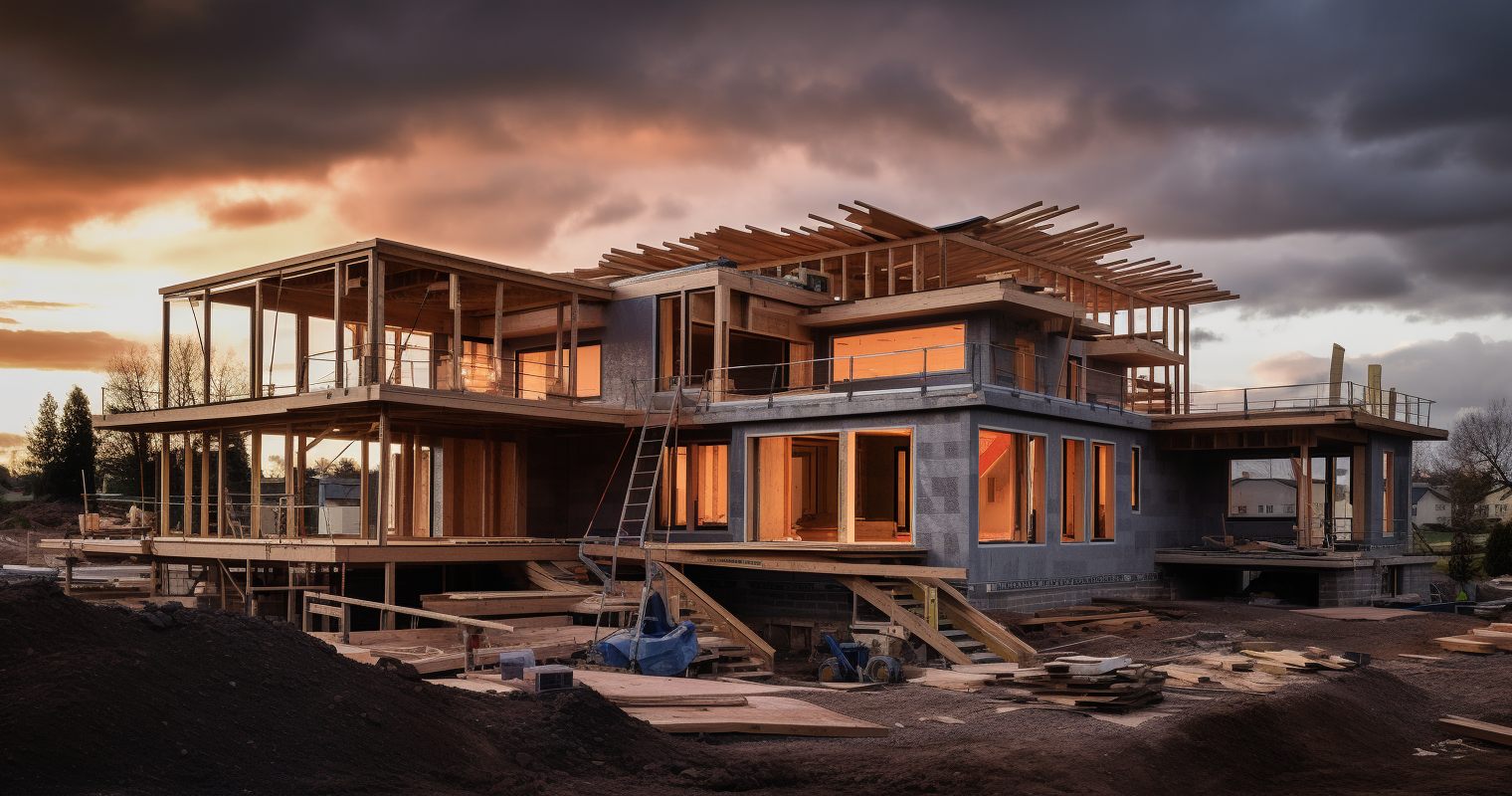
Foreign nationals can absolutely build or renovate property in Bulgaria, but doing so means navigating a tightly regulated environment governed primarily by the Spatial Development Act (ZUT). Almost every form of meaningful new construction or substantial renovation requires formal planning permission, which is granted by the chief architect of the relevant municipality. Land ownership restrictions apply to non-EU nationals, the construction sector operates under a formal licensing framework, and obtaining professional legal, architectural, and building advice before launching any project is not optional — it is essential.
| Item | Details |
|---|---|
| Primary legislation | Spatial Development Act (ZUT) and Cultural Heritage Act (2009) |
| Planning permission issuer | Chief Architect of the relevant municipality |
| Permit application fee (as of 2024) | Approx. €50–€200 (varies by municipality); technical examination fee typically 0.1–0.3% of building value |
| Design visa processing time (as of 2024) | 14–30 days from application submission |
| Building permit validity (as of 2024) | 3 years from date of issue; construction must commence within this period |
| Land ownership for non-EU nationals | Non-EU nationals cannot directly own land; must register a Bulgarian company (as of 2025) |
Do you need planning permission to build or renovate a property in Bulgaria?
The Spatial Development Act governs how land may be used, how investment design and construction are conducted, and what restrictions apply to development across Bulgaria. In practical terms, this means that virtually any significant building activity — whether erecting a new residence or adding a substantial extension to an existing one — demands formal authorisation before a single foundation stone is set.
The law is clear: construction is only lawful when the appropriate permission has been obtained. A building permit, issued by the municipal chief architect, forms the legal foundation for commencing any construction works. Proceeding without going through the proper channels means the work will be deemed illegal, and you will bear the full cost of any required demolition.
Certain limited works are exempt from full planning approval. Agricultural economic constructions with an agricultural designation may not require approval of investment designs. On regulated plots designated for low-density or villa-type development, secondary structures — such as summer kitchens, lightweight storage sheds, wells, fountains, septic tanks, and temporary toilet facilities — may be erected within specific height and boundary constraints defined in the Act. Retaining walls under 1.2 metres in height and renewable energy installations of up to 30 kW are also among potentially exempt works, but you should always verify the up-to-date exemption list with your municipal architect before proceeding.
Bulgarian construction permits are divided into categories according to project complexity. Category 1 encompasses large-scale infrastructure and buildings exceeding 15 metres, which require state-level approval. Category 2 includes residential buildings of four storeys or more, schools, and healthcare facilities, with regional administration involvement in the approval process. Category 3 covers residential buildings up to three storeys and most commercial buildings processed through the standard municipal route — the category that applies to the vast majority of private home construction projects.
The step-by-step process for obtaining a building permit is as follows:
- Confirm land status and zoning. Before applying for building permits, land ownership documentation must be in order. Check that the plot is covered by a valid Detailed Development Plan (PUP) and that your intended use is compatible with its zoning classification.
- Obtain a Design Visa (Visa za Proektirane). The design visa is a copy of the effective detailed development plan covering the land property and the neighbouring properties, with specified existing buildings and permitted height, density, and intensity of development. The visa is issued by the chief architect of the municipality within 14 days of the submission of the application. In practice, processing takes 14–30 days (as of 2024).
- Commission an investment project. You must contract with a licensed design firm or architect for the preparation of an investment project, which includes architecture, construction, electrical, plumbing, fire safety plan, a safety and health plan, geodesy, and a management plan for construction waste.
- Obtain utility coordination letters. Obtain coordination from utility companies. These letters confirm connection availability and technical requirements. You must sign preliminary contracts with water and electricity companies once the project is ready.
- Submit the application to the municipal chief architect. The application for approval of the development project design is filed in writing and addressed to the chief architect of the respective municipality, who can approve or reject the designs.
- Receive the permit and wait out the appeal period. Work can begin only once the building permit is in force, the appeal period is over, and everyone knows who is doing the design, supervision, and site safety.
Permit fees vary by municipality but typically include: an application fee of €50–€200 (varies by municipality); a technical examination fee based on building value, typically 0.1–0.3%; and utility coordination fees of €50–€150 per utility. These are figures as of 2024 — verify current fees with your local municipality before budgeting.
Building permits remain valid for three years from the date of issue. Construction must commence — defined as the start of foundation work — within that window. Unlike some planning systems, such as those operating in Canada or Australia, which may include a deemed-approval or “silent consent” mechanism when authorities fail to respond within a prescribed period, Bulgaria’s system depends on explicit written permissions and formal confirmations at each stage.
From initiating preliminary steps to receiving a construction permit, the process typically requires a minimum of six to seven months when all goes smoothly. Factor in realistic allowances for delays and incorporate this timeline into your project planning from the outset.
What are the rules around listed buildings, conservation areas, and heritage protection in Bulgaria?
Bulgaria operates a formal system of heritage protection that broadly parallels listed building and conservation area regimes found across Europe, though its administrative structures and enforcement record have their own distinct characteristics.
The Cultural Heritage Act (2009), adopted by the National Assembly in February 2009, replaced one of the country’s most outdated legislative instruments: the Law on Cultural Monuments and Museums (1969). This legislation introduced a fresh, integrative framework for cultural heritage and established a new national system addressing its protection, administration, and sustainable use. It acknowledges that both the state and society bear responsibility for safeguarding Bulgaria’s cultural heritage for current citizens and future generations alike.
Beyond the seven UNESCO-recognised monuments of world significance located in Bulgaria, the country holds nearly 40,000 cultural properties across all other categories. Notably, not all 14,780 declared architectural monuments have been formally evaluated to confirm they genuinely meet that designation — making careful due diligence especially important before acquiring any older property.
The Ministry of Culture is the principal authority overseeing the National Register of Immovable Cultural Heritage. Its responsibilities include adopting the National Strategy for Cultural Development, approving conservation and management plans for immovable cultural properties, granting concessions on such properties, and establishing state cultural institutes. The Minister of Culture works alongside other competent state and municipal bodies to implement national policy in this sphere.
Where a property or its surrounding land carries a designation as an immovable cultural property, any construction, renovation, or modification requires specific authorisation from the Ministry of Culture over and above the standard building permit process. Requirements for coordinating conservation and management plans, development plans, and specific rules governing intervention in heritage-protected areas are all regulated under the Cultural Heritage Act.
Responsibility for cultural heritage protection is distributed across numerous bodies at national and regional level, including regional governors, municipal authorities, the Minister of Culture, the Minister of Environment, and the Ministry of Regional Development and Public Works — an arrangement that can make navigating the system genuinely complex. It is also worth noting that no defined protection regime has yet been established for 93 per cent of sites holding the status of immovable cultural property, meaning the absence of a formally published protection regime does not guarantee that a property is free of all constraints.
Before purchasing any older property or plot within a historic area — particularly in towns such as Plovdiv, Nessebar, Koprivshtitsa, or Veliko Tarnovo — search the National Register of Immovable Cultural Heritage maintained by the Ministry of Culture and consult a local lawyer with experience in heritage law. Violations of heritage protection rules can lead to demolition orders, substantial fines, and potential criminal liability.
What permits and licences are required when building or renovating in Bulgaria?
A building permit represents only one element of a broader administrative journey. Several further approvals are required at different stages of any construction project in Bulgaria, and failing to secure them can prevent you from lawfully occupying the completed building.
Bulgaria uses three key protocol stages within the construction process: Act 14 (confirming completion of the structural shell), Act 15 (confirming all construction and installation works are complete), and Act 16 (commissioning and granting permission for occupation). Each stage requires a formal sign-off, and they must be obtained in sequence.
New construction must obtain Act 15 (the building completion certificate) and Act 16 (the occupation permit) before the building can be legally used. Properties without these permits cannot be occupied, insured, or readily sold — making verification of this permit chain a critical step before making any final payment, not only for those commissioning new builds but for anyone purchasing a newly built or recently renovated property.
Before any excavation or earthworks begin, the investor or their representative is legally required to give written notification to the municipality and the regional construction control authority — typically the Directorate for National Construction Control or its local branch. This is a statutory obligation, not a procedural formality.
Beyond the core construction permits, the following approvals are typically required at various points in the process:
- Environmental permit: Required where a project may have a significant environmental impact — for instance, on ecologically sensitive land or in proximity to protected natural areas. The Ministry of Environment and Water (moew.government.bg) is responsible for overseeing environmental impact assessments.
- Fire safety sign-off: All residential and commercial buildings must satisfy fire safety regulations. Relevant approvals are issued by the Fire Safety and Civil Protection Directorate within the Ministry of Interior.
- Utility connection permits: Preliminary contracts with water and electricity suppliers must be signed once the investment project is finalised. Formal connection permits are then issued separately by each utility provider.
- Site opening notification: A signboard must be displayed at the site entrance showing the permit number, date, investor, designer, supervisor, and principal contractor. A construction logbook must be opened and maintained on site from the first day of works.
All architects and engineers responsible for preparing construction designs must be registered with the Chamber of Architects and the Chamber of Engineers in the Investment Design respectively. Only licensed professionals may sign off on the technical documentation required for permit applications — there is no way around engaging qualified practitioners.
Always confirm the current fee schedule and any procedural updates directly with the Ministry of Regional Development and Public Works and your local municipal authority, as both requirements and fees are subject to regular change.
How do you find a reliable, trustworthy builder in Bulgaria?
Bulgarian law prohibits the same individual or entity from participating in the construction process in both the designer and contractor roles simultaneously, which means that any project will always involve at least two distinct professionals: an architect for the design phase and a separate contractor for the construction work. Understanding this division from the outset is important.
A reputable contractor is generally expected to ensure that sufficient qualified personnel are available and that everyone engaged on site holds the necessary professional credentials, knowledge, and practical experience. Reliable contractors should be in a position to demonstrate their registration status, licences, and a portfolio of successfully completed projects.
The Bulgarian Chamber of Builders (ksb.bg) is the principal professional body for contractors in Bulgaria. It maintains the Central Professional Register of Builders, and any contractor undertaking significant construction work should be listed in this register. The register can be searched on their website to confirm whether a contractor is officially licensed for the category of works you are commissioning. Contact details for the Chamber of Builders: Address: 16A Positano Street, Sofia 1000; Tel: +359 2 80 87 200; Email: [email protected]; Website: www.ksb.bg.
Practical steps for vetting a contractor include:
- Verify registration. Search the Chamber of Builders’ central register at ksb.bg to confirm the company holds a licence covering the type and category of work you are commissioning.
- Check references. Request references from at least three recently completed projects and, wherever possible, visit those sites in person. Speak directly with former clients rather than relying on testimonials provided by the contractor.
- Require a written contract. Always insist on a detailed written contract in both Bulgarian and your own language, covering the full scope of works, materials specifications, payment schedule, completion timeline, and penalties for delays. Verbal agreements offer very limited legal protection in Bulgaria.
- Use staged payments. Arrange for payments to be released in stages against agreed milestones — such as completion of foundations, roofing, or interior fit-out — rather than paying large sums upfront. Bank guarantees or escrow arrangements significantly reduce your financial exposure.
- Verify insurance. Confirm that the contractor holds current professional liability (third-party) insurance and request documentary evidence of this before signing any contract.
- Appoint an independent supervisor. For any project of meaningful scale, consider engaging a licensed independent technical supervisor (строителен надзор) to oversee quality of works on your behalf. For Category 1–4 buildings, this is a legal requirement in any case.
The most frequently encountered scams in Bulgaria include properties sold without proper completion permits (missing Act 15 or Act 16), forged or fraudulent powers of attorney, hidden encumbrances such as undisclosed mortgages or outstanding tax liabilities, fraudulent misrepresentation of the seller’s identity, and resort plots with ambiguous zoning or access rights. When commissioning new work, exercise particular caution with contractors who quote unusually low prices, demand large upfront cash payments, or show reluctance to provide written contracts or proof of insurance.
How do you find a qualified local architect in Bulgaria?
Every architect involved in preparing construction designs in Bulgaria must hold current registration with the Chamber of Architects. Practising architecture without this registration is unlawful, so verifying an architect’s registration before appointing them is an absolute prerequisite, not a box-ticking exercise.
The Chamber of Architects in Bulgaria (КАБ — Камара на Архитектите в България) serves as the official regulatory and professional body for architects in the country. It maintains a publicly accessible register of all licensed architects and architectural practices, which can be searched online to verify that a particular individual or firm holds a valid current licence. Contact details: Address: 11 Krakra Street, Sofia 1504; Tel: +359 2 846 44 36; Email: [email protected]; Website: www.kab.bg.
Architects and engineers who qualified in EU member states, EEA states, Switzerland, or third countries may practise in Bulgaria provided their professional qualifications are formally recognised. An architect who trained elsewhere within the EU may therefore be eligible to work in Bulgaria, but must first undergo a formal qualifications recognition process administered by the Chamber — a requirement broadly comparable to professional recognition procedures operated by architectural institutes in other EU member states.
When selecting an architect for a project in Bulgaria, the following practical considerations are worth bearing in mind:
- Verify Chamber registration. Use the public register at kab.bg to confirm that your chosen architect currently holds a full licence (пълна проектантска правоспособност).
- Look for local experience. An architect who has previously obtained approvals from the specific municipality where your project is situated will bring familiarity with local planning rules and working relationships with the local chief architect’s office — advantages that can save considerable time and effort.
- Confirm language capability. There is no legal requirement for architects to communicate in any language other than Bulgarian. For expat clients, finding an architect or architectural practice willing to communicate in a mutually understood language — or through a trusted interpreter — is strongly advisable from the very start, to avoid costly misunderstandings in the brief.
- Agree a clear written contract. The architect’s appointment letter or contract should specify the full scope of services, fees, deliverables, and procedures if the design is rejected by the municipality and requires revision or resubmission.
All approved architectural designs are considered works of copyright. The natural person who created the designs retains full authorship rights over them. Your contract should therefore clearly address how the designs may be used, modified, or transferred in the event that you change architect during the course of the project.
What are the common pitfalls when buying land to build on in Bulgaria?
Purchasing land for development in Bulgaria carries a distinct set of risks that go well beyond the standard due diligence applicable to any property transaction. Many of the most expensive mistakes are entirely avoidable with early and thorough investigation.
Confirm that planning permission can realistically be granted before you buy. If a plot is unregulated — for example, land situated close to a village but not included within the village layout plan — this issue must be resolved before a construction permit can even be applied for. Always verify the zoning status and Detailed Development Plan (PUP) coverage of a plot prior to committing to purchase, not afterwards.
Establish land boundaries with care. The standard procedure for confirming boundaries before purchase is to obtain an official cadastral sketch (“skitsa”) from the Geodesy, Cartography and Cadastre Agency (AGKK), which shows the property’s unique identifier and legally registered boundaries. Documents to review include the cadastral sketch, the cadastral map excerpt, and any surveyor’s reports reconciling the physical boundary markers on the ground with the officially registered boundary lines.
Investigate encumbrances and ownership history thoroughly. Common pitfalls include bypassing independent legal due diligence and overlooking unpaid utility bills or property taxes that will transfer to the new owner on completion. A search at the Bulgarian Registry Agency will disclose registered mortgages, encumbrances, and the full ownership history of the plot.
Understand environmental designations and flood-risk constraints. Coastal land is not automatically off-limits for foreign buyers, but coastal plots frequently overlap with environmental protection zones, strict development controls, and a higher incidence of misleading marketing in resort areas. Plots near rivers or wetlands may additionally be subject to flood-risk restrictions. Check with the Ministry of Environment and Water before purchasing any land in ecologically sensitive locations.
Verify utility availability before exchanging contracts. Access to mains water, electricity, and sewerage is far from guaranteed — particularly for rural plots. Always obtain written confirmation from the relevant utility providers before contracts are exchanged, as connecting a remote plot to existing utility networks can add very significantly to total project costs.
Be alert to properties sold without complete permit chains. Missing Act 16 permits represent the most widespread issue affecting foreign property buyers in Bulgaria, with sellers marketing buildings that cannot be legally occupied or insured. Always insist on seeing the full chain of permits — from the design visa and building permit through to Act 15 and Act 16 — before completing any purchase of an existing building.
Appoint a qualified notary and an independent lawyer. Property transfers in Bulgaria must be completed before a notary (нотариус), but the notary acts as a neutral facilitator in the transaction rather than your personal legal adviser. Always instruct an independent qualified lawyer to carry out comprehensive due diligence on your behalf. The Bulgarian Notary Chamber maintains a register of all registered notaries.
What are the rules around foreign ownership and financing for construction projects in Bulgaria?
The rules governing foreign land ownership in Bulgaria are among the most fundamental things to understand before embarking on any building or renovation project, and they differ substantially depending on your nationality and the category of land you wish to acquire.
Foreign land ownership in Bulgaria is subject to strict regulations that vary considerably based on citizenship status and land type. The legal framework draws a clear distinction between EU/EEA nationals and non-EU citizens, and applies different restrictions across regulated urban land, agricultural land, and forest areas.
EU and EEA citizens have been able to purchase regulated urban land directly without restriction since 2012. This covers building plots within municipal boundaries and areas zoned for residential, commercial, or industrial development under applicable local plans.
A significant development regarding agricultural land occurred in January 2024, when the EU Court of Justice ruled that Bulgaria’s five-year residency requirement for EU citizens wishing to purchase farmland was incompatible with EU law. This requirement has therefore been abolished, and any articles or guides that still reference the five-year rule are no longer current.
Non-EU nationals cannot directly own any category of land in Bulgaria. They are prohibited from purchasing agricultural land, forest land, and regulated urban plots in their personal capacity. Non-EU foreigners may purchase apartments directly, but acquiring any property that includes land requires establishing a Bulgarian company, adding approximately €500 to €1,000 in company formation costs.
Once land or a building has been lawfully acquired, there are no general restrictions on foreign nationals commissioning construction works. The same permit framework and regulatory requirements apply regardless of the owner’s nationality.
Financing: As of early 2026, Bulgarian banks do extend mortgage lending to foreign nationals for home purchases, though EU citizens and residents with documented EU income tend to have a more straightforward approval process than non-residents with complex or overseas income sources. Construction-specific finance (as distinct from standard mortgage products) is less readily available through Bulgarian banks and generally requires a more established local financial presence. Many expats funding self-build projects in Bulgaria combine personal savings, remortgaging of assets held in their home country, and phased construction to manage cashflow without depending on local lending.
For the most current guidance on investment rules and procedures, consult the Bulgarian Investment Agency and the Bulgarian National Bank (the financial regulator), as well as a local property lawyer.
What official sources should you consult when planning to build or renovate in Bulgaria?
Bulgaria’s regulatory environment for construction and property involves multiple bodies operating at national, regional, and municipal levels. Always go directly to official sources for current information — rules, fees, and procedures change regularly, and third-party websites (including this article) can become outdated.
| Body | Role | Website |
|---|---|---|
| Ministry of Regional Development and Public Works (MRRB) | Policy oversight for spatial planning, construction regulation, and building standards | www.mrrb.bg |
| Ministry of Economy and Industry | Guidance on construction permits and investment procedures | www.mi.government.bg |
| Directorate for National Construction Control (DNSK) | Supervises construction compliance, issues stop-work orders, and oversees the commissioning process | www.dnsk.mrrb.government.bg |
| Geodesy, Cartography and Cadastre Agency (AGKK) | Maintains the national cadastral map and property register; issues cadastral sketches and boundary documentation | www.cadastre.bg |
| Bulgarian Registry Agency | Property Register — search for title, encumbrances, and ownership history | www.registryagency.bg |
| Ministry of Culture — National Register of Immovable Cultural Heritage | Heritage property designations, conservation area rules, and protection status | www.mc.government.bg |
| Chamber of Architects in Bulgaria (КАБ) | Register of licensed architects; professional standards | www.kab.bg |
| Chamber of Builders in Bulgaria (КСБ) | Central Professional Register of Builders; licensed contractors | www.ksb.bg |
| Bulgarian Notary Chamber | Register of notaries for property transactions | www.notary-chamber.org |
| Ministry of Environment and Water (MOEW) | Environmental permits, protected natural areas, flood risk | www.moew.government.bg |
| Your local municipality (Община) | Issues design visas, building permits, and local planning approvals; fees vary by municipality | Search for your municipality at www.namrb.org |
In March 2024, a bill amending and supplementing the Spatial Development Act was submitted to the Bulgarian Parliament, aimed at streamlining and accelerating the permitting process, the approval of investment designs, and the issuance of building permits. Bulgaria is actively digitising its construction permitting system, so consult official websites regularly for the latest digital services and online submission portals.
Frequently asked questions
How much does it typically cost to build a house in Bulgaria?
Construction costs in Bulgaria vary considerably depending on region, specification, and site conditions. As of 2025, a basic residential build in a rural location can start from approximately €400–€600 per square metre, while higher-specification projects in urban or coastal areas typically fall in the range of €700–€1,200 per square metre or above. These figures exclude the cost of land acquisition, professional fees for architects, engineers and supervisors, permit costs, utility connections, and landscaping. Always obtain multiple detailed written quotations from licensed contractors before finalising your budget.
How long does the full building process take in Bulgaria, from buying land to moving in?
For a standard private residential build, a realistic minimum timeframe from land purchase to obtaining the Act 16 occupation permit is 18–24 months, assuming no significant complications arise. The pre-permit phase alone — covering zoning checks, the design visa, commissioning the investment project, and utility coordination — commonly accounts for six to seven months of that total. The permit approval itself then takes a further one to three months. Construction duration varies widely with project size and complexity. Budget generously for delays at every stage of the process.
Are there language barriers when dealing with Bulgarian planning authorities?
Yes, and this is a very real practical challenge. All official applications, permit documentation, and correspondence with municipal authorities must be submitted in Bulgarian. Government websites and official registers are primarily in Bulgarian only. Engaging a bilingual architect, a licensed local lawyer, or a professional translator from the very start of your project is strongly recommended. Do not rely solely on machine translation for legal or technical documents, as errors in permit applications can cause costly rejections and delays.
What happens if I build or renovate without the required permits in Bulgaria?
Bulgarian law is unambiguous: construction is only lawful where the appropriate permissions have been secured. Building without a permit results in the work being classified as illegal, and you may be compelled to remove it at your own cost. Beyond demolition orders, unauthorised construction can attract substantial fines, render the building impossible to occupy or insure legally, and create serious obstacles if you later wish to sell the property.
Are construction qualifications or building standards from other countries recognised in Bulgaria?
Architects and engineers who qualified in EU member states, EEA states, Switzerland, or third countries may practise in Bulgaria subject to formal recognition of their professional qualifications. However, technical building standards from countries outside the EU — such as those used in the United States, Canada, or Australia — are not automatically valid in Bulgaria. All construction must comply with Bulgarian technical norms and the requirements of the Spatial Development Act, regardless of where the designs originated. Designs should always be reviewed and certified by a Bulgarian-registered professional before submission.
What should I do if I have a dispute with my contractor in Bulgaria?
Your first step should be to raise the dispute formally in writing, referencing the specific terms of your contract. If this does not lead to a resolution, you can file a complaint with the Chamber of Builders (ksb.bg) if the contractor is registered there — the Chamber has disciplinary authority over its members. For financial or contractual matters, Bulgarian courts have jurisdiction, and you will likely need to instruct a Bulgarian lawyer. Mediation and arbitration are also available routes. This is precisely why agreeing a detailed written contract in both Bulgarian and your own language before any work begins is so important.
Can I renovate a Bulgarian property without being a resident or having a Bulgarian company?
EU/EEA nationals who directly own a Bulgarian property can commission renovation works without needing Bulgarian residency or a company structure — the same planning and permitting rules apply to all property owners irrespective of where they reside. Non-EU nationals who own a building (with the land held through a company) can similarly commission works. In both cases, all permit applications must be submitted by a licensed professional on your behalf, and all contracts should be governed by Bulgarian law. If you are managing the project remotely from abroad, appointing a trusted local representative — whether a lawyer or a professional project manager — is strongly advisable.
Are there any grants or incentives for renovating older properties in Bulgaria?
Bulgaria has participated in EU cohesion fund programmes that have included energy-efficiency renovation grants for residential properties, with a particular focus on multi-family apartment buildings. Under Bulgaria’s National Recovery and Resilience Plan (2022–2026), funding streams have been made available for building renovation work with an energy-efficiency focus. Grants aimed at individual private properties are less common, but it is worth checking what schemes are currently open with your local municipality and with the Ministry of Regional Development and Public Works (www.mrrb.bg), as programmes open and close on a rolling basis. Properties holding an immovable cultural heritage designation may also qualify for separate funding streams administered by the Ministry of Culture.