
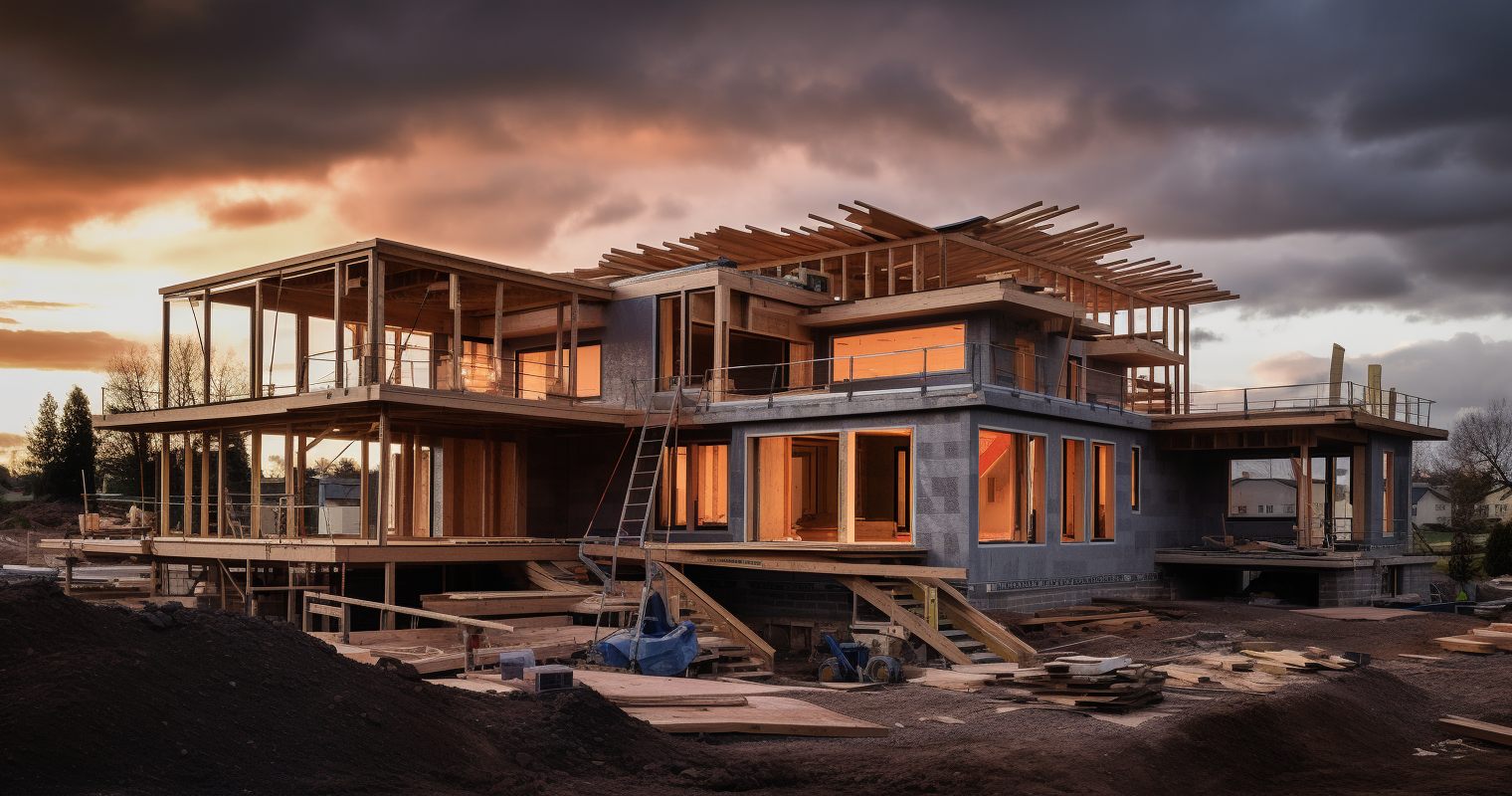
Anyone wishing to build or renovate property in Iceland will need planning permission in virtually every case, with approval granted by the relevant local municipal authority. The construction sector operates under strict national legislation and is overseen by the Housing and Construction Authority (HMS). Foreign nationals face particular ownership rules depending on where they are domiciled, and Iceland’s exceptional geology, heritage legislation, and sustainability obligations mean that careful preparatory research is indispensable before any work begins.
| Item | Details |
|---|---|
| Planning permission required? | Yes, in almost all cases — issued by local municipal authority |
| Key regulatory body | Housing and Construction Authority (HMS) — www.hms.is |
| Processing time (building permit) | Several weeks to several months depending on complexity (as of 2025) |
| LCA requirement (new builds) | Mandatory life-cycle assessments for most new building permits from September 2025 |
| Foreign ownership restrictions | Non-EEA/EFTA nationals domiciled outside Iceland generally require Ministry of Justice authorisation |
| Heritage protection trigger | Automatic protection for structures aged 100+ years; scheduled buildings require special consent for alterations |
Do you need planning permission to build or renovate a property in Iceland?
Obtaining planning permission is a requirement for building or renovating property in Iceland. In contrast to some other countries where minor works such as small outbuildings or modest extensions may proceed without formal consent, Iceland’s framework demands official approval for nearly all construction activity. Planning matters span everything from the National Planning Strategy down to individual local authority plans, each of which constitutes a binding proposal governing how land within that jurisdiction is to be used and developed.
Local plans determine how streets and plots are arranged and establish rules governing individual buildings — specifying the permitted number of storeys, approved construction materials, roof type, and number of dwellings. This means that the architectural and structural character of a new building may already be defined by the applicable local plan before a single design drawing is produced. Reviewing the relevant municipal plan thoroughly before finalising any design is therefore essential.
Responsibility for planning and construction policy sits with the Ministry for the Environment and Natural Resources, and the institutions that carry out this work are the National Planning Agency and the Iceland Construction Authority. Day-to-day decisions on individual permits are taken at municipal level — in Reykjavík, for instance, building matters and construction oversight fall under the Building Commissioner.
The permit application process generally follows these steps:
- Contact the local planning department to establish the specific requirements applicable to your location.
- Assemble the standard application file, which must include completed forms, architect’s drawings (covering the site plan, floor plans, cross-sections, and elevations), structural calculations, a geotechnical study, a fire strategy, technical network diagrams, energy performance and accessibility documentation, and professional liability declarations from the architects and engineers involved.
- Lodge the permit application with the municipal planning department, usually through an online portal — in Reykjavík, applications are submitted through the Housing and Construction Authority’s platform.
- Following submission, the application undergoes scrutiny at a formal permit review meeting.
- Inspections at defined stages throughout construction are compulsory, culminating in the issue of a certificate of completion (occupancy permit) once full compliance has been confirmed.
How long the process takes depends on the complexity of the project and how promptly the applicant responds to any queries raised by the municipality, and can range from a few weeks to several months. Fee schedules are set and updated by individual municipalities — Reykjavík published a revised Building Commissioner fee schedule that took effect on January 1, 2024 — so always confirm current charges directly with your local authority.
Compared to countries such as Canada or Australia, where resource consent and building consent are clearly separated procedures, Iceland integrates land-use planning and construction control more directly through its municipal plan system. Plans are legally binding, and no building permit can be granted for a project that does not conform to the zoning plan in force at the time of application.
A significant new obligation takes effect from September 2025: Iceland is introducing a requirement for life-cycle assessments (LCAs) covering a substantial proportion of new building permits, as part of the country’s wider strategy to reduce the environmental footprint of its construction sector. Certain smaller structures — including sheds, agricultural buildings, modest holiday cabins, and limited extensions — fall outside this requirement. If you are planning a new home or significant development, consult your architect and HMS to establish whether your project must include an LCA.
What are the rules around listed buildings, conservation areas, and heritage protection in Iceland?
Iceland operates a formal heritage protection system that has broad parallels with listed building regimes in other countries, though it contains some important local characteristics. Beyond the automatic protection that applies to any cultural heritage that has reached the age of 100 years, heritage authorities have powers to schedule buildings and register sites or areas of exceptional importance.
The Cultural Heritage Agency of Iceland (Minjastofnun Íslands) is entrusted with the stewardship of all archaeological and architectural monuments and sites across the country, operating within the remit of the Ministry of Education, Science and Culture. The agency’s website can be found at www.minjastofnun.is. Before acquiring any older property, it is advisable to check with this agency whether any heritage designation applies.
If you are contemplating the renovation of a property constructed before the early twentieth century, it may already be automatically protected under Icelandic law. Protected buildings cannot be demolished without permission. Altering the external appearance, materials, or structural fabric of a scheduled building typically requires consent from the Cultural Heritage Agency, and this obligation applies regardless of whether a standard building permit from your municipality is also needed.
An Architectural Heritage Fund exists to allocate grants for the upkeep and repair of buildings and other built structures that are protected by virtue of their age or are listed for their heritage significance, and also for areas of the built environment subject to special protection. Grants may additionally be allocated for the maintenance of other structures of cultural, scientific, or aesthetic value. If you own or are purchasing a protected building, this fund may offer financial support for compliant renovation work.
Properties situated within conservation areas may be subject to supplementary regulations governing materials, window designs, roof forms, and even external colours. Ignoring these rules can trigger enforcement action requiring you to reinstate the property to its former condition at your own expense, in addition to potential financial penalties. Always consult both the Cultural Heritage Agency and your local municipal planning office before committing to any work on an older property.
Iceland also contains internationally recognised protected landscapes. Three Icelandic sites appear on the UNESCO World Heritage List: Þingvellir National Park, inscribed in 2004; Surtsey, added in 2008; and Vatnajökull National Park, inscribed in 2019. Private construction is not possible within these designations, and the surrounding buffer zones also carry substantial development restrictions. If your land lies near any national park or protected natural area, clarify the position with local authorities before proceeding.
What permits and licences are required when building or renovating in Iceland?
Securing planning permission is only the first step. A construction project in Iceland will typically require a succession of further approvals at different stages of the work. The underlying legislation and regulations governing construction are designed to ensure that buildings are safe and pose no threat to human life, health, property, or the environment, while also promoting durability, cost-efficiency, and fitness for Icelandic conditions.
The principal permits and licences you are likely to need include:
- Building permit: Issued by the local building authority, this is the primary construction consent and must be in place before any work commences.
- Electrical permit: Issued by the Electrical Safety Authority. All electrical installation work must be carried out by a licensed electrician and approved by this authority.
- Plumbing permit: Issued by the local building authority, covering water supply, drainage, and sanitation connections.
- Fire safety compliance: Icelandic legislation contains detailed provisions on fire prevention in buildings, fire inspection, and the flammability of construction materials, and active fire departments are required throughout Iceland. Your building must satisfy fire regulations and may require inspection before an occupancy certificate is granted.
- Life-cycle assessment (LCA): From September 2025, a new obligation requires a life-cycle assessment to be carried out for a large number of new building permit applications. This tool measures carbon emissions across the full lifespan of the building, though sheds, agricultural structures, modest holiday cabins, and limited extensions are exempt.
The Housing and Construction Authority of Iceland (HMS) is responsible for accurate property registration, the fulfilment of essential construction requirements, and the coordination of oversight across fire safety, construction regulation, electrical safety, and market surveillance. The HMS website at www.hms.is is the central reference point for construction regulations, permit requirements, and property registration. Note that most online services are presently available in Icelandic only, making it strongly advisable to work with a bilingual architect or legal professional.
Sustainable development must be a guiding principle in design and construction, universal accessibility must be ensured, and energy efficiency in building operation must be given particular weight. These obligations are embedded in the technical regulations that accompany the planning and building permit process. Verify all current fees and technical requirements with HMS or your local municipality before starting work, as both regulations and fee schedules are revised on a regular basis.
How do you find a reliable, trustworthy builder in Iceland?
Iceland’s construction sector is regulated at national level, and service providers — including builders, electricians, and plumbers — are required to hold appropriate licences under Icelandic legislation and regulations on the licensing of service providers. The foundational purpose of this framework is to ensure that buildings are safe and do not endanger human life, health, property, or the environment. Always ask any contractor to show evidence of their licence before entering into a contract.
When looking for reputable builders, the following professional and trade bodies are your primary starting points:
- The Icelandic Construction Association (Samtök byggingarframkvæmda): www.bygg.is — the main trade body representing construction companies in Iceland.
- The Federation of Icelandic Industries — Construction and Housing Division (Samtök iðnaðarins): www.si.is — covering the wider construction and housing industry sector.
Both bodies can provide referrals and may help you confirm whether a particular company holds current membership in good standing. Using an organisation affiliated with these bodies offers a degree of assurance that the contractor adheres to recognised industry standards.
When assessing any builder, apply the following practical checks:
- Verify licence status and membership: Request the contractor’s registration number and cross-check it with the relevant authority. Confirm that the licence specifically covers the type of work you require.
- Obtain references: Ask for contact details of at least two or three recent clients and follow up with them directly. Where possible, arrange to visit a completed project in person.
- Insist on a written contract: Every agreement must be set out in writing, clearly specifying the scope of work, materials to be used, timelines, payment stages, and the procedure for handling delays or disagreements. If you are not fluent in Icelandic, have the contract professionally translated before signing.
- Confirm insurance cover: Reputable builders carry professional liability insurance and public liability cover. Request up-to-date certificates before work begins.
- Structure payments to milestones: Avoid making large advance payments. Tie payment instalments to defined project milestones — for example, completion of foundations, completion of the structural frame, and completion of fitting out — rather than releasing substantial sums before work is finished.
- Treat unusually low quotes with caution: Iceland’s construction market is competitive but costs are genuinely high. Quotes that are substantially below market rate may indicate the use of unlicensed labour, substandard materials, or a contractor who intends to request significant additional payments once work is underway.
As a foreign property owner or expat, you may be particularly exposed to contractors who assume you have limited familiarity with local standards or prevailing prices. Always obtain at least three separate quotes and do not allow yourself to be pressured into signing anything quickly. A local architect or legal adviser can be invaluable in reviewing contracts and maintaining oversight of the project on your behalf.
How do you find a qualified local architect in Iceland?
To use the title “architect” in Iceland and to carry out design work that requires a building permit, an individual must hold a valid licence. Licensing is administered through the Association of Icelandic Architects in conjunction with the Housing and Construction Authority. From September 1, 2025, all applicants for a licence to use the title “architect” are charged a processing fee of ISK 35,000 by the Association of Icelandic Architects (AÍ), and the application for licensing as a building designer is submitted through the HMS “My Pages” platform.
The professional body to approach when seeking a qualified architect is:
- Association of Icelandic Architects (Arkitektafélag Íslands — AÍ): www.arkitekt.is. The association maintains a directory of licensed architects and can help match you with a practitioner whose experience aligns with your project type. Contact details including address and telephone numbers are available on their official website.
When consulting the directory, look specifically for architects with a track record in the kind of project you have in mind — whether that is a new self-build, the renovation of an older property, or a rural retreat. Architectural practices vary considerably in their areas of specialisation, and not every architect will be equally well-suited to every project type.
Foreign nationals and expats should be aware of a few additional practicalities. All official planning documentation in Iceland is in Icelandic, and permit applications must be submitted in that language. A competent local architect will handle this process on your behalf, but it is important to discuss communication expectations clearly at the start of the engagement. Some architects working with international clients are happy to correspond in English or other languages — ask about this when making initial contact.
It is also worth establishing whether your preferred architect has direct experience working with the municipality in which your property is located, since local plan requirements can differ markedly between Reykjavík and rural authorities. An architect who already has a working relationship with a particular local authority will generally be better placed to anticipate what is required and avoid unnecessary hold-ups.
The standard permit application file requires architectural drawings covering the site plan, floor plans, cross-sections, and elevations, together with structural calculations, a geotechnical report, a fire strategy, technical network diagrams, energy performance and accessibility documentation, and professional liability declarations from those involved. Engaging a licensed Icelandic architect from the earliest stage of the project is not merely advisable — in practice, it is indispensable for progressing a permit application successfully.
What are the common pitfalls when buying land to build on in Iceland?
Acquiring land with the intention of building on it carries risks that are not always immediately visible, especially for buyers who are new to the Icelandic market. The following issues deserve careful investigation before any purchase is concluded.
Zoning and planning status: Before committing to any land purchase in Iceland, it is essential to confirm that the land carries planning permission for your intended use. Agricultural land, for instance, cannot simply be converted to residential use without a formal change of zoning, which is a time-consuming process with no guaranteed outcome. Local authority plans are binding legal instruments that govern how land may be used. Always obtain a copy of the relevant municipal plan and secure written confirmation from the planning department that your intended development is permitted before contracts are exchanged.
Boundaries and title: The precise boundaries of the land should be verified and physically confirmed on the ground. Boundary disagreements are not unusual in rural Iceland, where older landholdings may have poorly defined or informally recorded demarcations. The Real Estate Registry maintained by HMS contains information on all properties in Iceland, including property value and fire insurance valuations. A full title search from the land registry should be obtained before proceeding. Gathering financing documents, a mortgage status report, an extract from the land registry, and documentation relating to the building — including plans, the history of building permits, and compliance certificates — is all necessary due diligence.
Utilities availability: Do not assume that utilities such as water, electricity, or sewerage are available to a plot, particularly in rural areas. Around 90% of buildings in Iceland benefit from geothermal heating, which is a renewable energy source, but access to a geothermal supply or district heating network on any given rural parcel still needs to be independently confirmed prior to purchase.
Environmental and geological risks: Iceland occupies an active volcanic zone and is exposed to seismic activity, lava flows, glacial flooding (jökulhlaup), and various forms of ground instability. Commissioning a geotechnical survey before purchasing land or starting construction is essential, and you should check with local authorities concerning flood risk, volcanic hazard designations, and any environmental classifications that could restrict development. These hazards are genuine and can render land effectively impossible to build on.
Foreign buyer restrictions: Under Act No. 19/1966 on the Ownership and Use of Real Property and the Land Act, individuals and legal entities domiciled outside the EEA or EFTA are subject to restrictions on property investments in Iceland and are generally not permitted to invest in real property. The Minister may grant permission where an individual or entity needs to acquire ownership or rights over real property for direct use in its business activities, or where an individual is regarded as having a strong connection with Iceland. Clarify your eligibility before embarking on any purchase process.
Using a qualified legal professional: At the point of final signing, the Notarius Publicus verifies the validity of the deeds, confirms the capacity of the parties, and oversees the transfer of funds, ideally via an escrow arrangement. Completing a purchase without engaging a local notary or solicitor who is qualified in Icelandic property law is a false economy — their fee represents meaningful protection against costly errors.
What are the rules around foreign ownership and financing for construction projects in Iceland?
Iceland applies a graduated system of property ownership rights depending on an individual’s residency status. Establishing where you stand within this framework before beginning any purchase is essential. The general rules are set out in Law No. 19/1966 on the ownership and use of real estate, significantly amended in 2022, together with regulations specifying the rights of nationals from European Economic Area (EEA) countries and elsewhere. Icelandic law establishes a clear order of entitlement.
Icelandic citizens may acquire real estate without any particular restrictions. This freedom extends broadly to foreign nationals who are legally domiciled in the country — being “domiciled” in the Icelandic sense means holding a kennitala (civil identification number). If you have established legal residence in Iceland, the restrictions that apply to non-residents will generally not be relevant to you.
To purchase property in Iceland, you will need a valid passport, proof of address, and a kennitala — the Icelandic identification number that is required for administrative, banking, and tax purposes. EEA citizens must provide proof of legal domicile in Iceland, while nationals from outside the EEA may need authorisation from the Ministry of Justice along with evidence of their ties to the country or the professional nature of their intended use.
Legal entities that hold land in Iceland and are established outside Iceland, or that are more than one-third owned directly or indirectly by foreign parties, must report annually to the Icelandic Taxation Authority on their direct and indirect ownership structure, their beneficial owners, and the identity of their directors and senior management. This reporting requirement applies whether you hold property through a company or any other legal vehicle, so seek advice from a local lawyer on the most appropriate ownership structure before proceeding.
Regarding the financing of construction, the principal commercial banks — Íslandsbanki, Arion Bank, and Landsbankinn — along with the Housing and Construction Authority (HMS), offer mortgage lending, including to foreign nationals, though eligibility is heavily influenced by residency status, income reliability, and credit history. Banks typically finance up to 80% of the purchase price for a primary residence, but some lenders restrict their loan-to-value ratio to between 50% and 70% for non-residents or those not well established within the Icelandic system.
Iceland’s interest rate environment tends to come as a surprise to those accustomed to European norms. The central bank’s policy rates began falling from late 2024, but borrowing costs remain considerably higher than in many neighbouring countries. In early 2025, the most competitive non-indexed loans showed variable rates of approximately 9.5–9.75% and fixed rates of around 8–8.3%. Indexed loans carried lower nominal rates of roughly 4–5%, but the real cost of indexation must be calculated carefully. Always compare the products on offer and obtain independent financial advice before committing to any mortgage in Iceland. The Government of Iceland’s official page on foreign nationals’ real property rights provides the most up-to-date guidance on this topic.
What official sources should you consult when planning to build or renovate in Iceland?
Because planning rules, fees, and procedures are revised on a regular basis, all requirements should be checked directly with official sources. The table below sets out the key bodies and websites to consult:
| Body | Role | Website |
|---|---|---|
| Housing and Construction Authority (HMS / Húsnæðis- og mannvirkjastofnun) | Overarching construction regulation, real estate registry, fire safety, LCA compliance, building designer licensing | www.hms.is |
| National Planning Agency (Skipulagsstofnun) | National planning strategy, advice to local authorities, strategic planning oversight | www.skipulag.is |
| Government of Iceland — Planning and Construction | Legislative framework, ministry-level guidance | www.government.is |
| Cultural Heritage Agency of Iceland (Minjastofnun Íslands) | Heritage designations, listed buildings, archaeological protection | www.minjastofnun.is |
| Association of Icelandic Architects (Arkitektafélag Íslands) | Architect licensing and directory | www.arkitekt.is |
| Icelandic Construction Association (Samtök byggingarframkvæmda) | Builder trade body and referrals | www.bygg.is |
| Government of Iceland — Foreign Nationals’ Real Property Rights | Ownership restrictions for non-residents | www.government.is |
| Reykjavík Building Commissioner | Building permits and fees for Reykjavík municipality | reykjavik.is |
The Real Estate Registry maintained by HMS holds information on every property in Iceland and is the natural starting point for any title or valuation search. Be aware that the planning portal through which current regional, master, and local plans can be accessed is currently available in Icelandic only. If you do not read Icelandic, the assistance of a bilingual architect, legal professional, or qualified translator is essential for navigating these documents effectively.
Frequently asked questions
How long does a building permit application typically take in Iceland?
The time required to process a building permit application can range from a few weeks to several months, with the principal variables being the complexity of the project and how quickly the applicant responds to queries raised by the municipality. Straightforward renovations or modest extensions tend to move through the process more quickly, whereas large new builds — particularly those involving environmental assessments, geotechnical investigations, or heritage consultations — can take considerably longer. Submitting the most complete possible application file from the outset is the single most effective way to minimise delays.
How much does it cost to get a building permit in Iceland?
Building permit fees are determined by individual municipalities and revised periodically. Reykjavík issued an updated Building Commissioner fee schedule that came into force on January 1, 2024. Fees are generally calculated with reference to the size and value of the project. You should always obtain the current fee schedule from your local authority before drawing up a budget, since charges differ between municipalities and are updated from year to year. Do not rely on any third-party source for specific fee figures.
Are qualifications or building standards from other countries recognised in Iceland?
Iceland works in close alignment with other Nordic nations on building standards and has been pursuing harmonisation with European technical regulations. However, professional qualifications obtained abroad — whether for architects, engineers, or skilled tradespeople — are not recognised automatically. Individuals seeking a licence to use the title “architect” must apply through the Association of Icelandic Architects, with the building designer licensing application submitted via the HMS platform. Foreign-trained professionals should contact HMS and the relevant professional body to understand the recognition pathway before assuming they are entitled to practise in Iceland.
What happens if planning rules or building regulations are breached in Iceland?
The consequences of breaching planning or building regulations in Iceland can be serious. The local building authority has powers to issue enforcement notices compelling unauthorised work to be stopped, modified, or demolished, with all associated costs falling on the property owner. Additional penalties attach to breaches of heritage protection rules. A building that does not comply with the applicable regulations will not receive an occupancy certificate, meaning it cannot legally be inhabited. If you acquire a property where unlawful work has been carried out by a previous owner, the enforcement obligation may transfer to you, which makes reviewing a property’s full permit history an essential step in any purchase.
Can I build in Iceland without speaking Icelandic?
All official planning documentation, building permit applications, and communications with regulatory bodies are conducted in Icelandic. The planning portal and its associated consultation tools are currently accessible in Icelandic only. In practice, most foreign buyers and developers work through a licensed Icelandic architect who manages all official correspondence on their behalf. A number of architects and legal professionals in Iceland are willing to work in English. Agree on language arrangements at the very start of the engagement, and allow for translation costs in your budget if required.
Can I get a mortgage to finance a construction project in Iceland as a foreign national?
The main commercial banks — Íslandsbanki, Arion Bank, and Landsbankinn — together with HMS, extend mortgage lending to foreign nationals, though the terms offered depend significantly on residency status, income stability, and credit history. Some lenders apply a loan-to-value ceiling of 50–70% for non-residents. Mortgage rates in Iceland are substantially higher than those prevailing in much of the rest of Europe, so it is important to compare all available options thoroughly and seek independent financial advice before making a commitment.
What should I do if I have a dispute with my builder in Iceland?
When a disagreement arises with a builder, the first step is to seek resolution in writing, with explicit reference to the terms of the signed contract. If that approach does not succeed, the Icelandic Construction Association (Samtök byggingarframkvæmda, www.bygg.is) may be able to assist with mediation or offer guidance where the builder holds membership. Disputes that cannot be settled informally may need to be referred to the Icelandic courts or pursued through a formal arbitration process. Instructing a local lawyer who specialises in construction disputes at an early stage gives you the strongest prospect of achieving a cost-effective resolution — and underlines once more why a detailed written contract from the outset is so important.
Are there any risks specific to building in Iceland that I would not face elsewhere?
There are. Iceland’s geological character presents hazards that are uncommon elsewhere in the world. The island lies on an active volcanic zone, and significant parts of the country face exposure to lava flows, seismic events, geothermal ground instability, and glacial outburst flooding. A geotechnical survey before purchasing any land or commencing construction is not optional — it is essential — and local authorities should be consulted about the volcanic and flood hazard designations that may affect your specific plot. Insurance requirements for construction projects and completed buildings can also be more stringent in higher-risk areas. Beyond geological hazards, Iceland’s climate — characterised by powerful winds, heavy rainfall and snowfall, and sustained freeze-thaw cycles — imposes specific and demanding requirements on construction materials and methods, all of which must be fully reflected in your design and specification from the earliest stages.