
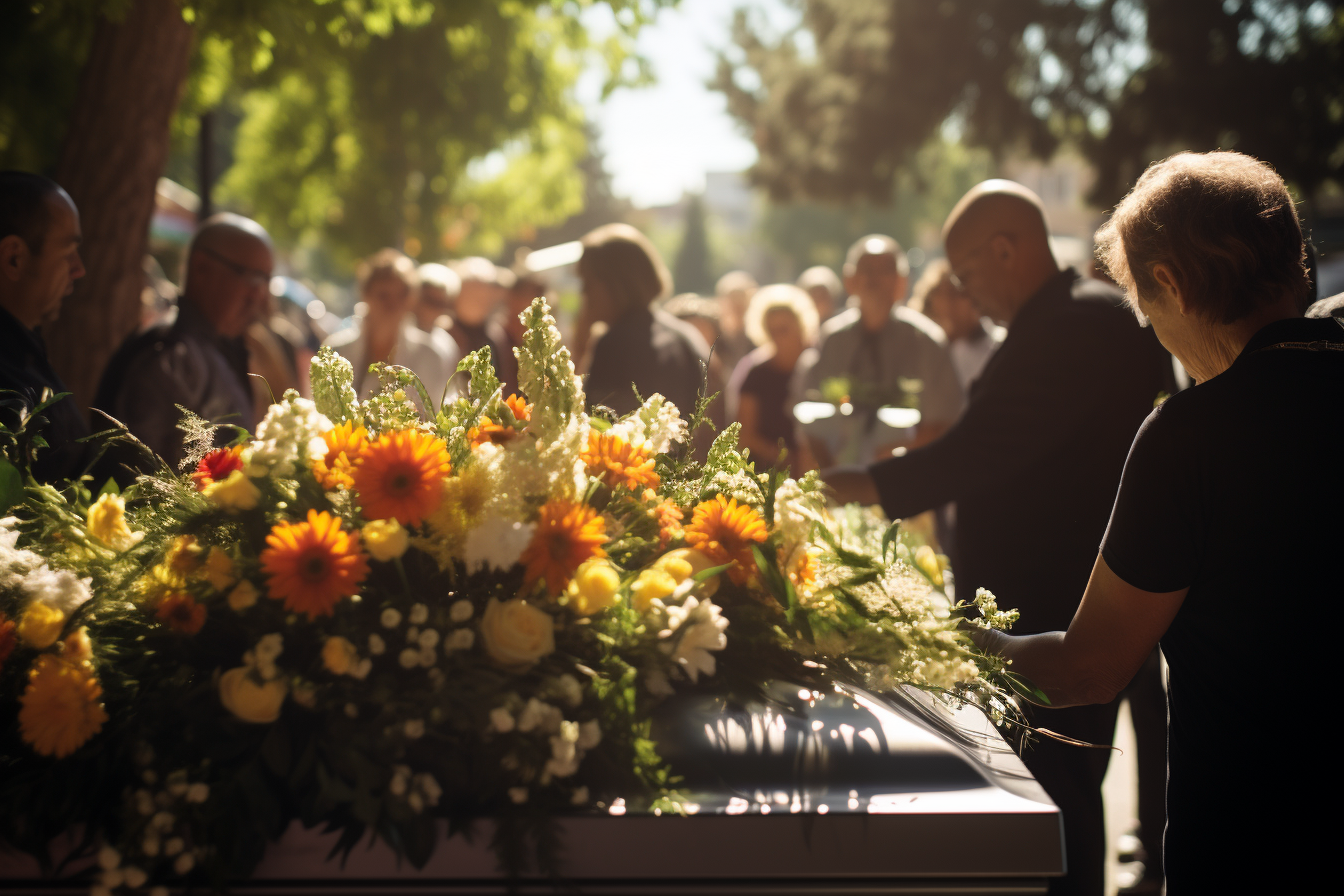
Iceland maintains a universal, publicly funded healthcare system that encompasses palliative and end-of-life care, with the primary specialist facility being the Palliative Care and Hospice Unit at Landspítali National University Hospital. Following a death in Iceland, an attending physician issues a death certificate, which is routed to the District Commissioner and the National Registry. Expats are strongly encouraged to prepare essential legal documents — including an advance directive and power of attorney — well in advance of any need arising, and to contact their home country’s consulate without delay if a foreign national passes away in Iceland.
| Item | Details |
|---|---|
| Main hospice/palliative facility | Palliative Care and Hospice Unit, Landspítali National University Hospital, Reykjavík |
| Death certificate issuer | Attending medical doctor; forwarded to District Commissioner and National Registry |
| Death certificate cost (as of 2023) | Approx. 1,900 ISK from the National Registry |
| Euthanasia/assisted dying | Not legal in Iceland |
| Advance directives | Recognised in Iceland; should be documented with your doctor and placed in your medical record |
| Inheritance tax | Iceland abolished general inheritance tax; estate administration handled through District Commissioner |
What end of life care options are available in Iceland, and how does the system work?
Iceland operates a universal, publicly financed healthcare system — broadly comparable in approach to the Scandinavian models found in Sweden and Norway — under which end-of-life care forms an integral part of the national health service. Once a person receives a serious or terminal diagnosis, care may be provided in a hospital, a dedicated palliative unit, a nursing home (hjúkrunarheimili), or in the patient’s own home with support from community health professionals. The treating physician takes responsibility for coordinating care across all of these settings.
Healthcare delivery in Iceland falls under the oversight of the Directorate of Health (Embætti landlæknis) and the Ministry of Health. Health centres (heilsugæslustöðvar), which are distributed throughout the country, serve as the initial point of contact for patients entering palliative or end-of-life care pathways. Where clinical needs are more complex, patients can be referred to Landspítali — the National University Hospital in Reykjavík.
Home-based care at the end of life is achievable in Iceland, especially within Reykjavík and the surrounding capital region, where community nursing teams and specialist palliative professionals are able to visit patients in their homes. In more remote or rural areas, options tend to be narrower, and inpatient care in a hospital or nursing home often becomes the most practicable arrangement. Expats residing outside the capital should raise care planning with their GP (heimilislæknir) as early as possible.
What is palliative care in Iceland, and who is eligible for it?
Palliative care in Iceland is centred on enhancing the quality of life for individuals living with serious, life-limiting conditions by managing physical symptoms, supporting psychological wellbeing, and addressing social concerns. It can be introduced at any point following a serious diagnosis — not solely in the final stages of life — and can run in parallel with treatments aimed at cure or disease control. This approach aligns with the framework defined by the World Health Organization.
Access to specialist palliative care in Iceland is determined by clinical need rather than a specific diagnosis. Historically, people with cancer have represented the largest group of palliative care recipients, but individuals living with advanced heart failure, chronic obstructive pulmonary disease, neurological conditions such as motor neurone disease, and advanced dementia are equally eligible. A referral from the patient’s GP or hospital consultant is the typical route of entry.
All persons registered with Iceland’s national health service — including legally resident foreign nationals — are entitled to receive publicly funded palliative care. Expats who hold legal residency in Iceland and are enrolled with Sjúkratryggingar Íslands (Icelandic Health Insurance) should have equivalent access to that of Icelandic citizens. Those without national health registration may need to rely on private health insurance or travel insurance arrangements. You should verify your registration status directly with Sjúkratryggingar Íslands at sjukra.is.
Are there hospices in Iceland, and how do you access them?
The principal hospice facility in Iceland is the Palliative Care and Hospice Unit at Landspítali, Iceland’s National University Hospital in Reykjavík. This unit offers specialist palliative care to patients with life-limiting illnesses and extends psychological and practical support to their families. Services include both inpatient admission and outpatient care.
Admission to the hospice unit is arranged through a referral from a GP or hospital specialist. Patients do not need to be in their final hours to qualify for inpatient care; admission for symptom management is possible, after which patients may return home once their condition has stabilised. The multidisciplinary team at the unit typically brings together physicians, nurses, social workers, chaplains, and psychologists who attend to the needs of both patients and their loved ones throughout the process.
Beyond the capital region, dedicated hospice services are scarce. Patients in outlying areas may be able to access palliative support through local health centres or nursing homes that hold palliative care beds. For families in rural locations, the GP represents the primary point of contact for coordinating care and, when specialist input is required, for organising transfer to Reykjavík. Further information about the national health service can be found at landlaeknir.is.
Is palliative or hospice care covered by public health insurance or the national health system in Iceland, or does it need to be funded privately?
Iceland’s national health insurance scheme, administered by Sjúkratryggingar Íslands, meets the costs of palliative and hospice care delivered within the public system. This includes inpatient stays at Landspítali’s palliative unit, appointments with palliative care specialists, and community nursing visits to patients at home. People registered with the national health service should not face charges for core clinical care in these settings, though modest co-payments may apply to certain services.
In contrast to countries such as the United Kingdom, where many hospices are operated by charities that depend on independent fundraising, Iceland’s specialist palliative services are largely embedded within the publicly funded hospital and community health system. As a result, families in Iceland are generally not required to make separate charitable donations in order to access inpatient palliative care at Landspítali.
For expats who have not registered with the national health insurance system — such as those on short-term visas or those whose registration is incomplete — private health insurance may be required to meet care costs. Before relocating to Iceland, it is essential to examine the terms of any international health insurance policy carefully, particularly with regard to coverage for terminal illness, palliative care, and repatriation of remains. Sjúkratryggingar Íslands can offer guidance on registration and eligibility at sjukra.is.
What legal documents should expats have in place before the end of life in Iceland — such as a living will, advance directive, power of attorney, or healthcare proxy — and how do these work?
Icelandic law acknowledges the validity of an advance directive (lífstestamente or framkvæmdafyrirmæli), a document in which a person sets out in advance their wishes regarding medical treatment in the event that they later lose the capacity to communicate those wishes. This can cover instructions relating to resuscitation, life-sustaining interventions, and the level of medical involvement desired. Preparing such a document is strongly recommended for all residents of Iceland, expats included.
A power of attorney (umboð) enables a trusted individual to act on your behalf — whether in relation to healthcare decisions, financial affairs, or both. In Iceland, a lasting power of attorney covering personal and financial matters can be formalised through a notary (sýslumaður) or solicitor. This is particularly important for expats who lack family members nearby, with close relatives potentially living in another country entirely. Without this document, medical staff may be left with no clear legal authority to turn to if you lose the capacity to make decisions for yourself.
A standard last will and testament (erfðaskrá) should also be drawn up and ideally lodged with the relevant District Commissioner (sýslumaður). Organ donation preferences can be recorded separately through the Directorate of Health. Best practice is to keep copies of all legal documents with your GP, in your hospital file, and with a trusted family member or legal representative. Iceland’s official service portal at island.is provides access to legal and administrative resources.
Are documents such as advance directives or powers of attorney made in another country legally recognised in Iceland?
Iceland is a signatory to the Hague Convention of 1961, which means that official documents issued in other member states — including legal instruments such as powers of attorney — can be validated by means of an apostille, rendering them acceptable for use in Iceland without requiring full consular legalisation. Documents originating in Iceland are similarly certified with an apostille in line with the Hague Convention of 1961, and are recognised across all member states without any further form of authentication.
When foreign documents are submitted for registration at Registers Iceland, they must generally be legally confirmed — either legalised or authenticated. Original documents are required, and any document not written in English or a Nordic language must be accompanied by a certified translation before it can be used in Iceland. This means that an advance directive or power of attorney drafted in another language will need professional translation prior to use.
From a practical standpoint, an advance directive prepared in another country and rendered into Icelandic or English carries considerable moral and ethical weight with Icelandic medical professionals, even if its precise legal standing may need to be evaluated on a case-by-case basis. If you hold such a document from your country of origin, inform your GP in Iceland, provide a translated copy, and request that it be given a prominent place in your medical records. For formal legal purposes such as estate administration, a qualified Icelandic solicitor (lögmaður) should be consulted about the steps required to have foreign documents formally recognised.
What are the laws around euthanasia or assisted dying in Iceland?
Euthanasia and assisted dying are both unlawful in Iceland. Icelandic law does not permit a healthcare professional to take active steps to end a patient’s life, even where the patient has clearly and explicitly requested this. No legislation currently in force in Iceland permits physician-assisted suicide or voluntary euthanasia, and as of 2025, Iceland has not enacted any law comparable to those operative in the Netherlands, Belgium, or Canada, which allow such practices under strictly defined conditions.
What is permitted — and carried out — in Iceland is palliative sedation and the withdrawal of life-sustaining treatment in clinically appropriate circumstances, in accordance with the patient’s documented wishes and the principle of enabling a natural death. Decisions to withhold or discontinue treatment are reached through consultation involving the patient (where this is possible), family members or their legal representative, and the clinical team, drawing on any advance directive the patient may have prepared.
Expats who come from jurisdictions where assisted dying is legally permitted should understand that these services cannot be accessed in Iceland. Any provisions relating to assisted dying that appear in a foreign advance directive will not be enforceable under Icelandic law, though full palliative care and comfort-centred treatment remain available. For information about patients’ rights, consult the Directorate of Health at landlaeknir.is.
What are the local customs, traditions, and religious practices around death and dying in Iceland?
Iceland has a predominantly Christian heritage, with the majority of the population historically belonging to the Church of Iceland (Þjóðkirkjan), a Lutheran denomination. Traditional funeral customs have therefore followed Lutheran Christian practice, including a church service, prayers, and burial or cremation. However, Iceland has grown increasingly secular in recent decades, and non-religious or humanist ceremonies are widely accepted and readily available.
Funerals in Iceland often incorporate religious or cultural elements, such as a Lutheran or Catholic service. Careful planning is important — this includes selecting a venue, arranging transportation, and coordinating with any religious or cultural figures who will take part in the ceremony.
A wake (líkkvöldurinn or útfararkvöld) holds a meaningful place in Icelandic mourning customs. Families may choose to hold the wake at home or at a funeral home, and it is customary to provide food and refreshments for those who attend. The body is typically prepared and made available for viewing before the funeral, giving family and friends an opportunity to pay their final respects.
Flowers, detailed newspaper obituaries — which tend to be notably comprehensive in Iceland — and communal gatherings are all established customs. Expats from minority religious backgrounds — Muslim, Jewish, Hindu, Buddhist, or others — are encouraged to seek out the relevant religious community in Reykjavík at an early stage, as facilities catering specifically to these traditions may be more restricted outside the capital. The island.is guide on losing a loved one provides helpful practical information in English.
What must you do when someone dies in Iceland? Who do you notify, how quickly, and in what order?
Following a death in Iceland, the process is coordinated primarily through the attending doctor, the District Commissioner’s office, and the National Registry. Prompt action is essential, as the death must be officially registered before burial or cremation can take place. The step-by-step process is set out below:
- Call emergency services or a doctor immediately. If the death is sudden or unattended, dial 112 — Iceland’s emergency number. If the death was anticipated — for instance, in a hospice setting or at home following a terminal illness — contact the attending GP or the relevant hospital. A qualified medical doctor must be present to certify the death and begin the process of issuing a death certificate.
- The doctor issues a death certificate. A medical doctor shall write a death certificate for each person who dies in Iceland, according to the law on death certificates, autopsies, etc. The death certificate must be written on a form prepared by the Directorate of Health and based on World Health Organization guidelines. A death certificate is, in part, a legal document and a prerequisite for registering a death in the national register and issuing a permit to perform a funeral.
- The death certificate is sent to the District Commissioner. The death certificate must be notified to the District Commissioner as soon as possible after the certificate is issued. An electronic death certificate will automatically be sent to the District Commissioner, the National Registry, and the Directorate of Health. If the certificate is on paper, a family member must collect it and take it to the District Commissioner’s office.
- The family formally reports the death. A family member can report the death electronically to the District Commissioner or attend the District Commissioner’s office in person. The next working day after receiving an electronic death certificate from the District Commissioner, the family member receives a letter in their island.is mailbox with further instructions.
- Notify next of kin and close contacts. Family members and friends should be informed of the death as promptly as possible. This may be done by telephone, text message, or through social media.
- If the deceased is a foreign national, notify their home country’s embassy or consulate. The relevant embassy or consulate in Reykjavík — or the nearest accredited representation — should be contacted as soon as possible. Consular staff can assist with notifying relatives abroad, advising on repatriation, and liaising with Icelandic authorities.
- Contact a funeral director (útfararþjónusta). After someone has died, the family can contact a funeral director, a priest, or a representative of another religious or life-stance affiliation for guidance regarding the next steps. The funeral director will assist with preparation of the body, arranging the service, and obtaining the burial or cremation permit from the relevant authority.
- Arrange the funeral and begin estate administration. Contact the District Commissioner regarding estate administration (dánarbú), particularly where the deceased held assets in Iceland. If a will is in existence, ensure it is located and submitted to the relevant authority without delay.
How is a death officially registered in Iceland, and what documents are needed?
The District Commissioner transmits the death certificate to the National Registry of Iceland, which enters the deceased person’s details into the national records. This registration constitutes the official record of the death in Iceland and underpins all subsequent legal and administrative steps, including estate administration, cancellation of pensions, and the production of official death certificate documents for use externally.
Birth, marriage and death registrations have been maintained on a national register since 1953. Records predating 1953 are held by local churches. Certificates for births, marriages and deaths are available in both Icelandic and bilingual (Icelandic and English) formats. The bilingual option is particularly useful for expats who require the document for official purposes in their country of origin.
The essential document needed to register a death is the medical death certificate issued by the attending physician. If the certificate is issued electronically, no separate application from the family is required, as it is transmitted automatically to the District Commissioner. Where a paper certificate is used, a family member must collect it from the healthcare institution concerned and deliver it to the District Commissioner’s office in person. Certified copies of the official death certificate may be requested from the National Registry (Þjóðskrá Íslands) at skra.is.
What happens if a foreign national dies in Iceland — what are the specific steps for notifying their home country’s embassy or consulate, and what role does the consulate play?
When a foreign national dies in Iceland, the standard domestic death registration process applies — a physician certifies the death, and the certificate is forwarded to the District Commissioner and the National Registry. In addition, the deceased’s home country must be informed so that the death can be recorded in its national records and so that practical matters — among them repatriation of the remains and administration of the estate — can be managed across borders.
The family or next of kin should contact the deceased’s home country embassy or consulate as quickly as possible. Iceland hosts a number of embassies in Reykjavík, while many other countries maintain accreditation to Iceland through embassies based in Copenhagen or other Nordic capitals. The relevant contact details can be found on your foreign affairs ministry’s website. The Icelandic Ministry for Foreign Affairs can also assist families in identifying the appropriate consular representative.
The consulate’s role typically encompasses: issuing an emergency travel document or assisting with identification where necessary; informing relatives abroad of the death if they have not yet been notified; supplying a list of local funeral directors and legal professionals; assisting with the documentation required for repatriation of the remains; and helping to obtain certified and apostilled copies of the Icelandic death certificate for use in the home country. In Iceland, apostilles are issued by the Ministry for Foreign Affairs. While the consulate is generally unable to cover costs, it can provide invaluable guidance and coordination at an exceptionally difficult time.
How are funerals typically arranged in Iceland, and what are the usual options for burial or cremation?
Funerals in Iceland are generally organised through a licensed funeral director (útfararþjónusta), who manages the practical aspects including preparation of the body, transportation, the funeral ceremony itself, and burial or cremation. The family contacts the funeral director after the death has been reported to the District Commissioner, since a burial or cremation permit must be granted before the funeral can proceed.
Both burial and cremation are available options in Iceland. The Church of Iceland administers the majority of the country’s cemeteries (kirkjugarðar), though these are accessible to people of all faiths and of no faith. Major towns and Reykjavík itself also maintain municipal cemeteries. Cremation facilities exist throughout Iceland and represent an increasingly popular choice; ashes may be interred in a cemetery, kept by the family, or scattered in nature subject to applicable regulations.
After someone has died, it must first be established whether the deceased had recorded any particular wishes about their final arrangements. Those wishes take precedence over the preferences of surviving family members. This underlines why it is so important to document end-of-life wishes in writing — whether in an advance directive, a will, or a separate letter of wishes — before death occurs. Funeral directors in Iceland are generally well versed in working with families from diverse cultural backgrounds and can provide guidance on non-standard requests.
What are the approximate costs of a funeral in Iceland, and are there any state or insurance-based funds that can help cover them?
Iceland is a comparatively high-cost country, and funeral expenses reflect this reality. A standard funeral — encompassing funeral director fees, a straightforward ceremony, and burial — typically falls within the range of 300,000–600,000 ISK or more as of 2024, though costs vary according to the type of service chosen, the funeral home selected, and whether burial or cremation is preferred. Cremation tends to be less expensive than burial. Expats should approach several funeral directors in Reykjavík or the relevant locality for up-to-date pricing, and verify current figures directly with those providers.
The Church of Iceland may levy separate charges for the use of its church buildings, for a priest’s participation in the service, and for grave plots in church-managed cemeteries. Non-religious ceremonies are available and can be conducted by humanist or civil officiants. Cemetery fees (grafreiturgjald) for the grave plot are set by the relevant municipality and differ from one location to another.
Iceland does not operate a dedicated state funeral grant equivalent to the Funeral Support Payment in Scotland or the Social Fund Funeral Expenses Payment in England and Wales. However, certain collective wage agreements and pension funds in Iceland include a death benefit (dánarbætur) that may contribute toward funeral costs. Private life insurance policies commonly provide a lump-sum death benefit available for funeral expenses. Expats should carefully review their employment contracts, pension arrangements, and insurance policies to understand what provision is in place. The island.is portal provides access to pension and insurance-related authorities.
What is the process for repatriating the remains of a foreign national from Iceland to another country?
Repatriating human remains from Iceland requires coordination between Icelandic authorities, the home country’s embassy or consulate, and a funeral director with international experience. Depending on the destination country, the documentation needed, and whether an autopsy was conducted, the process may take anywhere from a few days to several weeks. Starting without delay and engaging a funeral director familiar with international procedures is strongly recommended.
The principal steps in repatriation generally involve: obtaining a certified copy of the Icelandic death certificate, apostilled by the Ministry for Foreign Affairs; obtaining a permit for the transport of remains (útflutningsleyfi) from the appropriate Icelandic authority; having the body embalmed and placed in a hermetically sealed coffin as mandated by international transport regulations; arranging carriage with an airline or specialist carrier; and ensuring that all documents required by customs and immigration authorities in the destination country are complete and in order.
When a person dies abroad, issues arise that would not normally be encountered when a death occurs within Iceland — for example, how to engage funeral directors in a foreign country or how to arrange transportation of the body back to Iceland. The Ministry for Foreign Affairs provides assistance when a death occurs abroad. Note that funeral directors abroad usually have the most current and precise information and can offer detailed guidance through the process. The same principle applies in the reverse situation when a foreign national dies in Iceland: the Icelandic Ministry for Foreign Affairs and the home country’s consulate are the key contacts. Many international insurance providers also include repatriation assistance as a component of travel or expat health insurance policies.
What happens to the estate of someone who dies in Iceland — how does probate or estate administration work, and are there inheritance taxes?
Estate administration in Iceland is managed through the District Commissioner (sýslumaður) for the area in which the deceased was resident. The process is referred to as skipti á dánarbúi (distribution of the deceased’s estate). Family members or legal representatives are required to notify the District Commissioner of the death and to supply the relevant documents, including the death certificate and any will (erfðaskrá). The District Commissioner then oversees the formal administration process.
There are broadly two routes through which an estate may be administered: private settlement (einkaskipti), in which the heirs manage the estate among themselves under certain qualifying conditions — typically where a valid will exists and all heirs are in agreement — and formal or judicial settlement (opinber skipti), in which the District Commissioner assumes a more hands-on role, particularly where disputes have arisen, debts are present, or the estate is complex. In practice, a considerable number of estates in Iceland are settled privately, with legal support from a solicitor.
Iceland abolished its general inheritance tax (erfðafjárskattur) in 2016, meaning that heirs have not been subject to tax on inherited assets since that date. Capital gains tax may, however, apply to certain inherited assets when they are subsequently disposed of, and any debts of the estate must be discharged before the remaining assets are distributed to heirs. Expats with assets spread across multiple countries should seek advice from a solicitor with expertise in international succession law, as Iceland’s rules will interact with those of the home country. The official information portal island.is offers further detail on estate administration procedures.
If an expat dies without a will in Iceland, what happens to their assets under local intestacy laws?
When a person dies intestate — that is, without leaving a will — in Iceland, the estate is distributed in accordance with Iceland’s Act on Inheritance (erfðalög). The legislation establishes a defined hierarchy of beneficiaries. A surviving spouse or registered partner inherits alongside the deceased’s children, if any exist. Where there are children of the relationship, the spouse ordinarily receives a share of the estate and the remainder is divided among the children. If there are no children, the spouse inherits a larger proportion, with other relatives — parents, siblings — potentially entitled to a share depending on the specific circumstances.
Where the deceased leaves no surviving spouse, partner, or direct descendants, the estate passes to the deceased’s parents and, if they have predeceased, to siblings and their issue. In the absence of any qualifying relatives whatsoever, the estate ultimately passes to the Icelandic state. Registered cohabiting partners (sambúðarmaki) may also hold inheritance rights in certain situations under Icelandic law, though this is a more nuanced area in which legal advice should be sought.
For expats, intestacy introduces additional complexity because it may not be immediately clear which country’s laws govern the estate — particularly where the individual held assets in more than one country. Under EU Succession Regulation 650/2012 — with which Iceland, as an EEA state, is broadly aligned in principle — the law of the country in which the deceased was habitually resident at the time of death typically governs the estate as a whole, though the application of this rule is not always straightforward in practice. Any expat living in Iceland is strongly encouraged to make a valid Icelandic will to guarantee that their assets are distributed according to their intentions. Qualified Icelandic solicitors (lögmaður) can be located through the Icelandic Bar Association (Lögmannafélag Íslands) at lmfi.is.
Frequently asked questions
Is foreign health insurance accepted for palliative care in Iceland?
Foreign private health insurance may cover palliative and end-of-life care in Iceland, but coverage depends entirely on the terms of the individual policy. Many international health insurance plans include provisions for inpatient care and specialist consultations, yet not all extend to terminal care, hospice stays, or repatriation of remains. It is essential to examine the details of your policy thoroughly before relocating, and to contact your insurer directly to verify coverage. Nationals of EEA countries should also investigate whether an EHIC or an equivalent document entitles them to use the Icelandic public health system.
Are advance directives in English valid in Iceland?
English is widely spoken and understood in Iceland, and a document written in English will generally be comprehensible to medical staff. However, for formal legal validity and for use in official proceedings, documents that are not in Icelandic or a Nordic language may need to be accompanied by a certified translation. The safest course is to have your advance directive translated into Icelandic and to ensure that your GP holds a copy on file. Discuss the document’s standing with a local solicitor to confirm that it satisfies Icelandic requirements.
How long does it typically take to repatriate remains from Iceland?
The repatriation process generally takes between one and three weeks from the date of death, though actual timescales vary according to the destination country, whether an autopsy is required, and the speed with which documentation can be assembled and apostilled. Engaging a funeral director experienced in international transfers promptly can substantially reduce delays. The consulate of the deceased’s home country can also assist in accelerating paperwork. Repatriation costs can be considerable, so it is worth checking whether your travel or expat insurance policy includes a repatriation benefit.
What bereavement support is available to families in Iceland?
Traumatic events like the death of a loved one can cause a lot of emotional distress. When death is caused by a fatal accident, crisis counselling is given to those in distress, but in other cases options are also available to the bereaved. Emergency crisis counselling is available at Landspítali, the National University Hospital, but priests, psychologists, and psychiatrists can also help. In addition, good advice, information and support can be found through The Red Cross helpline, 1717. The Icelandic grief centre also provides resources online.
Does Iceland have a public register where I can file my advance directive?
Iceland does not maintain a single centralised national register for advance directives, comparable to — for example — the Power of Attorney register in Scotland. The most practical approach is to provide a copy to your GP for inclusion in your medical records, retain a copy with your solicitor, and give further copies to any healthcare proxy or trusted family member. Ensure that the document can be easily located — some people carry a note in their wallet indicating that an advance directive exists and specifying where it is held.
Can a non-Lutheran religious or non-religious funeral be arranged in Iceland?
Yes. Iceland acknowledges religious plurality and both non-Lutheran and non-religious funerals are accepted and available. Humanist or civil ceremonies can be conducted by non-religious officiants. Reykjavík is home to communities representing a range of faith traditions, and funeral directors are accustomed to accommodating requests for different religious rites or entirely secular services. The majority of public cemeteries in Iceland are open to people of all beliefs and none, allowing families to choose the form of ceremony and the officiant that best honours the wishes of the person who has died.
What happens if there is a dispute among heirs over an estate in Iceland?
Disputes over estates in Iceland are handled initially by the District Commissioner and, where necessary, referred to the courts. If the heirs are unable to reach a consensus on how the estate should be divided, the District Commissioner may appoint an administrator (skiptastjóri) to manage the process on their behalf. Legal representation from a qualified solicitor is advisable in any contested case. A clearly drafted, properly executed will — ideally prepared with the assistance of an Icelandic solicitor — substantially reduces the risk of disputes arising and ensures that the deceased’s wishes are legally enforceable.
How do I find a solicitor or legal adviser in Iceland to help with estate or end-of-life planning?
The Icelandic Bar Association (Lögmannafélag Íslands) maintains a searchable directory of qualified solicitors at lmfi.is. A great many Icelandic solicitors are English-speaking and are able to advise on wills, powers of attorney, advance directives, and cross-border estate matters. For general administrative matters such as registering an estate, the District Commissioner’s office (sýslumaður) in the district where the deceased was resident is the primary official point of contact. The island.is portal also offers a clear overview of relevant services and authorities in English.