
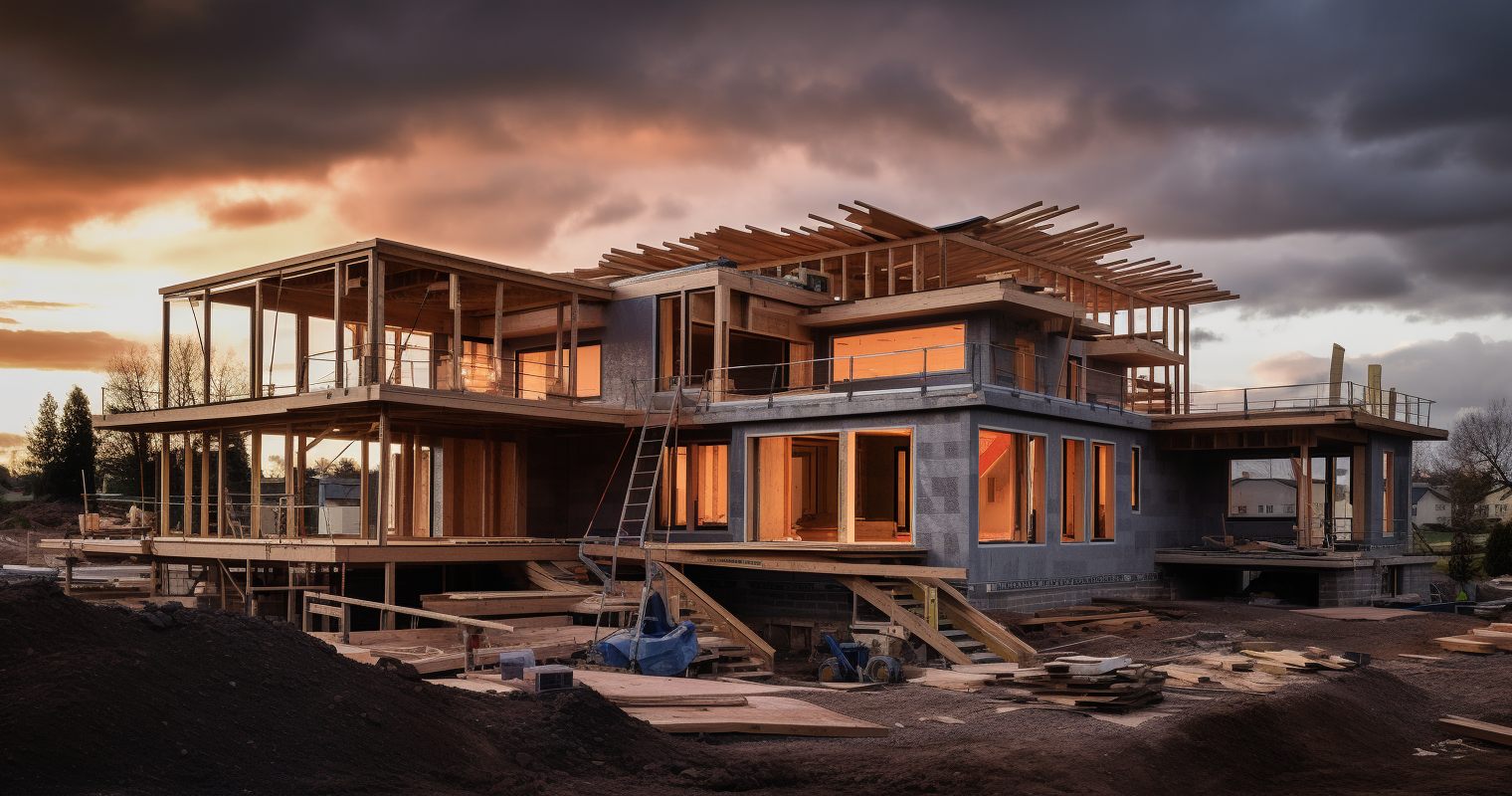
Anyone looking to build or renovate property in India must obtain a building permit — formally known as a building plan sanction — from the relevant local municipal authority before undertaking virtually any new construction or substantial alteration. The approval process differs considerably from state to state, the construction industry is subject to oversight under RERA and the Architects Act, and foreign nationals encounter significant legal constraints on property ownership under FEMA and RBI regulations. Obtaining qualified legal and architectural guidance before any work commences is not optional — it is essential.
| Item | Details |
|---|---|
| Building permit authority | Local municipal corporation, nagar nigam, or development authority (varies by state) |
| Typical permit processing time (as of 2025) | 3–6 months for residential projects; larger projects can take 12–24 months |
| Heritage protection body | Archaeological Survey of India (ASI) — asi.nic.in; State Archaeology Departments for state-listed sites |
| Prohibited zone around ASI monuments | 100 metres — no construction permitted; 100–300 metres requires ASI clearance |
| Key construction industry regulator | Real Estate Regulatory Authority (RERA) — rera.gov.in; state-specific RERA portals |
| Foreign land ownership restrictions | Foreign nationals of non-Indian origin generally cannot purchase immovable property without RBI approval; agricultural land is prohibited for all non-residents including NRIs/OCIs |
Do you need planning permission to build or renovate in India?
Building plan approval — variously referred to as building plan sanction or building permit — is the formal authorisation issued by your local municipal authority (nagar nigam, municipal corporation, development authority, or gram panchayat) permitting you to build on a plot of land. This requirement applies to new residential, commercial, and industrial structures, as well as to substantial additions or changes to existing buildings. Unlike systems in some other countries that separate planning consent from building regulations approval, India’s process consolidates most of these checks into a single municipal sanction, though the precise arrangements differ considerably from one state to another.
The authority scrutinises whether your proposed development adheres to local building bylaws, including setback distances, Floor Area Ratio (FAR/FSI), height ceilings, parking provisions, road width norms, and zoning classifications. Proceeding without this sanction renders the construction unauthorised under Section 433A of the Indian Municipal Act and its state equivalents, with consequences ranging from financial penalties to sealing or outright demolition.
A building permit is required when commencing new residential construction, carrying out significant extensions, changing a building’s designated use, or making structural alterations. Minor cosmetic works — such as repainting interiors or swapping out fixtures — generally fall outside the permit requirement, but you should always confirm this with your local municipal body since rules differ across states and municipalities.
Several states have introduced auto-approval pathways for lower-risk buildings. UP’s Model Building Bylaws 2025, for instance, allow automatic plan approval for residential plots of up to 300 sq metres where the design conforms to standard templates provided by the authority — a meaningful time saving for small-scale house construction.
Step-by-step: applying for a building permit in India
- Hire a registered architect or licensed engineer. This step is non-negotiable. Under the Architects Act, 1972, all building plans must be prepared and certified by a registered architect or licensed engineer. Your architect will design the building in accordance with local bylaws — covering FAR, setbacks, and height restrictions — and produce all required technical documentation.
- Check land use and obtain conversion if needed. If revenue records classify your plot as agricultural land, you will need a Non-Agricultural (NA) conversion order before a building permission application can proceed. Submitting an application without this will result in rejection at the document verification stage.
- Gather required documents. A standard application typically requires the title deed, property PID number, city survey sketch, architectural drawings, recent tax receipts, and a land use certificate.
- Apply for NOCs in parallel. A Fire NOC, airport authority NOC, and water board NOC each have their own processing timelines — often two to four weeks. Rather than waiting for the municipal body to request them, submit all applicable NOC applications simultaneously with your plan preparation.
- Submit the application to the local authority. Most major cities now operate wholly or partially online municipal portals. Plans and supporting documents can be submitted digitally or in person at the town planning office, depending on the city.
- Await scrutiny and site inspection. An official may carry out a detailed on-site examination to verify the accuracy of information provided. A zoning inspector will review construction plans, confirm land use, and assess compliance with local zoning regulations.
- Pay permit fees and collect the sanctioned plan. Building permit fees are set by each local authority. One commonly cited indicative rate is ₹2 per square metre of total covered area (as of 2024 — always verify current rates with your local authority, as fees vary widely by city and state). In Bengaluru, for example, BBMP plan approval charges for 2024 are calculated at 0.5% of the guidance value per square metre of the property.
- Obtain a Commencement Certificate before breaking ground. Before any physical construction activity begins, the local development authority must issue a Commencement Certificate. This document formally authorises the start of building work and must be in hand before even foundation work commences.
The typical timeline for securing residential building permission ranges from three to six months depending on location and project complexity. Larger commercial projects may require between twelve and twenty-four months to obtain all necessary approvals. Always verify current timescales and fee schedules directly with your local municipal authority, as both are subject to regular revision.
What are the rules around listed buildings, conservation areas, and heritage protection in India?
India operates a structured heritage protection system, though its workings differ from the listed building and conservation area frameworks used in countries such as the UK or Australia. Responsibility is split between the national and state tiers, with the Archaeological Survey of India (ASI) serving as the central authority for monuments designated as being of national importance.
The Central Government has declared 3,679 monuments and archaeological sites as nationally important under the Ancient Monuments and Archaeological Sites and Remains Act, 1958. State Governments and Union Territories have separately designated monuments of state importance under their own legislation. INTACH (the Indian National Trust for Art and Cultural Heritage) has additionally compiled an inventory of India’s built heritage, cataloguing notable structures aged fifty years or more that carry architectural, historical, archaeological, or aesthetic significance.
A Prohibited Area applies within 100 metres of any heritage site — no construction of any kind is permitted within this zone. Beyond this, a Regulated Area extends from 100 to 300 metres from the site boundary, within which construction may only proceed with ASI clearance. Any development proposed within the regulated zone must first be supported by a Heritage Impact Assessment (HIA). For nationally protected monuments, the ASI is the competent authority; for state-listed sites, approval must be sought from the relevant State Archaeology Department.
India’s heritage grading system ranks buildings and sites as Grade I*, I, II, and III in descending order of significance. No alterations to Listed Heritage Buildings or Listed Precincts may be carried out without prior approval from the Heritage Conservation Committee. That said, listing does not restrict change of ownership or a change of use — so long as any new use remains compatible with the heritage character of the property.
Section 30 of the Ancient Monuments and Archaeological Sites and Remains Act, 1958 establishes penalties for damaging or misusing protected monuments. These include demolition orders, financial penalties, and criminal prosecution. Before purchasing a property or commissioning any works, always check the ASI national register and your local State Archaeology Department’s records. The ASI monument database is accessible at asi.nic.in.
What permits and licences are required when building or renovating in India?
The building permit is only the first in a sequence of approvals required before, during, and after construction in India. The complete chain of certificates is critical — without them, connecting utilities, registering the property, or legally occupying the completed building may prove impossible.
- No Objection Certificates (NOCs): Applicable NOCs include one from the Airport Authority of India where construction falls within an airport zone; environmental clearance for developments exceeding 20,000 sq.m. of built-up area; Fire Department clearance for buildings taller than five floors or exceeding 15 metres in height; and State Development Authority approval for schemes covering more than five acres.
- Commencement Certificate: Issued by the local development authority, this certificate is a prerequisite for commencing any construction activity. No physical work — including laying foundations — may begin until it has been obtained.
- Intimation of Disapproval (IOD) / Building Permit: The IOD establishes the conditions that must be met across the various stages of a construction project. In some jurisdictions this document is referred to simply as the Building Permit.
- Service and Utility Installation Approvals: Separate approvals from the local municipal body are required for the installation of electricity, gas, and water supply services, all of which must comply with applicable building regulations.
- Completion Certificate: Once all construction is finished, the builder must formally apply to the local municipality for a Completion Certificate. This document certifies that the building has been constructed in full conformity with the approved plans and without unauthorised deviations. It is a mandatory precondition for property registration and for obtaining water and electricity connections.
- Occupancy Certificate (OC): No part of a building may be occupied — even temporarily — before an Occupancy Certificate is issued. This legal document confirms that the structure is safe and fit for use, having met all applicable safety requirements and regulatory standards.
- Environmental Clearance: Large-scale developments require environmental clearance from either the State Environment Impact Assessment Authority (SEIAA) or, for projects above certain thresholds, the Ministry of Environment, Forest and Climate Change (MoEFCC) at national level. Current thresholds are published on the MoEFCC website at moef.gov.in.
- Land Use Conversion: Where agricultural land is to be brought into construction use, formal approval for a change of land use must be obtained from the Commissioner of the Land Revenue Department and the State Ministry of Urban Development before any building work can proceed.
Some states are simplifying these requirements through integrated systems. Andhra Pradesh, for instance, introduced a single-window building permission platform in December 2024, removing the need to seek approvals from separate departments individually. Check whether your state offers a comparable integrated online mechanism, as this can substantially shorten overall processing times. Always confirm current fees and expected timescales directly with the relevant local authority.
How do you find a reliable, trustworthy builder in India?
India’s construction industry is principally regulated by the Real Estate (Regulation and Development) Act, 2016 — universally known as RERA. This legislation governs the marketing, sale, and development of real estate projects across the country, with each state operating its own RERA office to administer and enforce the rules locally: MahaRERA in Maharashtra, UP-RERA in Uttar Pradesh, and TNRERA in Tamil Nadu are prominent examples.
Any residential or commercial project covering 500 sq. metres or more, or comprising more than eight apartments, must be registered with the relevant state RERA portal before it may be advertised or sold. A developer inviting bookings for an unregistered qualifying project is doing so in breach of the law. You can confirm a builder’s RERA registration through your state’s dedicated portal or via the central gateway at rera.gov.in.
Under RERA, if structural defects or quality failures come to light within five years of handover, the builder is obliged to rectify them within thirty days at no charge to the buyer. From April 2025, builders are also prohibited from advertising, launching, or accepting bookings without first obtaining a RERA compliance certificate, which confirms that they hold title to the land, have secured the necessary approvals, and satisfy environmental requirements.
Practical tips for vetting a contractor or builder
- Check RERA registration: Confirm the builder’s registration on the relevant state RERA portal. Engaging an unregistered builder on a qualifying project exposes you to legal and financial risk.
- Request references and site visits: Ask for a portfolio of completed projects and contact former clients directly. Where practicable, visit finished sites to assess the standard of construction first-hand.
- Use written contracts: Insist on a comprehensive written contract that covers scope of work, materials specifications, milestone schedule, payment terms, and defect liability provisions. Verbal agreements provide very limited legal recourse.
- Use staged payments: Under RERA, a builder may not legally collect more than 10% of the total project cost as advance or application fees. Structure all subsequent payments against verified, completed milestones rather than disbursing large sums at the outset.
- Verify insurance: Satisfy yourself that the builder holds current public liability and workmen’s compensation insurance. Request copies of certificates before any work commences.
- Beware of common pitfalls: Foreign owners are sometimes targeted with inflated quotations, demands for large upfront cash payments, substitution of cheaper materials than those specified, and assurances about permits that have not actually been granted. Always verify planning and permit status independently before committing any substantial payment.
The Confederation of Real Estate Developers’ Associations of India (CREDAI) is the national representative body for private real estate developers. CREDAI membership is a positive signal, though it is not in itself a guarantee of quality. CREDAI can be reached at: credai.org, CREDAI Bhawan, Plot No. 11, Sector 4, Dwarka, New Delhi – 110078; Tel: +91-11-28081634.
How do you find a qualified local architect in India?
The Architects Act, 1972 requires that all building plans submitted for permit approval be prepared and endorsed by a registered architect or licensed engineer. For any project that requires a building permit, engaging an architect who holds a valid Certificate of Registration from the Council of Architecture (COA) — the statutory regulator of the architectural profession in India — is therefore a legal requirement, not a matter of preference.
The COA maintains a comprehensive register of all architects lawfully entitled to practise in India. Only those holding a current COA Certificate of Registration may legally use the title “Architect” or submit signed building plans to local authorities. An architect’s credentials can be confirmed directly through the COA’s official website.
Council of Architecture (COA)
Website: coa.gov.in
Address: India Habitat Centre, Core 6A, 1st Floor, Lodhi Road, New Delhi – 110003
Tel: +91-11-24648415 / 24654172
Email: [email protected]
The Indian Institute of Architects (IIA) is the national professional association for the architectural community and maintains a membership directory. IIA membership indicates active professional engagement, though the legally operative qualification for signing building plans is COA registration rather than IIA membership. The IIA can be contacted at: iia-india.org, Prospect Chambers Annex, 317/321 Dr D N Road, Fort, Mumbai – 400001; Tel: +91-22-22048411.
Expats commissioning a construction project should pay particular attention to several factors: selecting an architect with a track record of working with overseas clients and managing communication across time zones; ensuring your chosen architect has direct, current experience in the specific state or city where the project will be built, as bylaws differ substantially between jurisdictions; and confirming whether the architect has handled projects under a Power of Attorney arrangement, which is frequently necessary when the property owner is residing abroad.
What are the common pitfalls when buying land to build on in India?
Acquiring land in India demands careful navigation of complex documentation, zoning classifications, and historical ownership verification. Even experienced domestic buyers regularly encounter difficulties in this process, and the risks are considerably greater for those without familiarity with Indian property law.
Title and ownership verification
Disputed ownership, fraudulent documentation, and unregistered transfers remain among the most frequent causes of property litigation in India. An unencumbered title must be independently verified through a thorough title search before any purchase commitment is made. Commission a qualified property lawyer to conduct a title search covering at least thirty years of ownership history and obtain an Encumbrance Certificate to confirm the property is free of outstanding debts or legal charges.
Land use and zoning
Where revenue records classify a plot as agricultural land, an NA (non-agricultural) conversion order is required before a building permission application can be lodged. Prior to purchase, check the land’s classification in the local Master Plan — residential, commercial, industrial, green belt, and agricultural designations each carry distinct and strictly enforced use limitations. Buying land without first confirming its zoning status is one of the most common — and costly — errors made by property purchasers.
Confirming buildability before purchase
Never accept a vendor’s assurances that planning permission can readily be obtained. Before signing any sale agreement, commission your architect to carry out a preliminary buildability assessment covering FAR limits, required setbacks, height restrictions, and proximity to heritage-protected sites. Additionally, confirm that any project or plot is registered under RERA, which provides both transparency and legal protection for purchasers.
Boundary disputes and survey issues
Disputes over land boundaries are extremely prevalent in India. Arrange for a licensed surveyor to conduct a current boundary survey and cross-reference the physical boundaries against both the title deed and the records held at the relevant Sub-Registrar’s office. Discrepancies between actual occupation and paper title are a significant and recurring source of litigation.
Utility availability
Before finalising any purchase, establish that water supply, electricity, sewerage, and road access are available at the site and at what connection cost. In peri-urban and rural locations particularly, these services may be entirely absent or disproportionately expensive to install. Local municipal body approval is required for the connection of electricity, gas, and water services, adding further time and cost to the process.
Agricultural land and foreign buyers
Agricultural land, plantation land, and farmhouse properties are generally off-limits to foreign buyers — including NRIs and OCIs — under standard FEMA and RBI guidelines. This is a firm legal restriction, not an administrative formality. Do not rely on informal arrangements or nominee ownership structures, which may themselves be unlawful and which can generate serious legal and financial consequences.
Use a qualified professional
Always retain a qualified local property lawyer and, where valuations are required, a registered property valuer. India does not operate a unified national land registry comparable to those found in some other countries — property records are maintained at state and district level through Sub-Registrar offices. All property transactions must be registered at the Sub-Registrar’s Office and accompanied by payment of stamp duty and registration fees, which vary from state to state. Verify all records at the relevant Sub-Registrar’s office before executing any agreement.
What are the rules around foreign ownership and financing for construction projects in India?
Foreign ownership of land and property in India is closely regulated, principally through the Foreign Exchange Management Act (FEMA) and guidelines issued by the Reserve Bank of India (RBI). The rules that apply to you depend significantly on your residency status and nationality.
NRIs and Overseas Citizens of India (OCIs)
NRIs and OCIs may acquire residential and commercial immovable property anywhere in India without requiring prior RBI approval. However, under general permission rules they are prohibited from purchasing agricultural land, plantation land, or farmhouse properties. Property may be acquired through purchase, gift, or inheritance (for non-agricultural property). All payments must flow through legitimate banking channels — not through foreign currency notes — or from funds held in NRE, NRO, or FCNR accounts.
Foreign nationals of non-Indian origin
A foreign national of non-Indian origin who is resident outside India is generally not permitted to purchase immovable property in India. Such individuals may, however, inherit property or receive it as a gift subject to prescribed conditions, and may lease property for a period not exceeding five years without requiring advance approval. Foreign nationals who are resident in India and who satisfy FEMA’s conditions for being treated as “resident” may in certain circumstances be permitted to purchase property, except where specific prohibitions apply.
Citizens of certain countries — including Pakistan, Bangladesh, Sri Lanka, Afghanistan, China, Iran, Nepal, and Bhutan — face additional constraints: even if resident in India, they must obtain prior RBI approval before acquiring any immovable property.
Financing and mortgages
NRIs and OCIs will require an NRE (Non-Resident External) or NRO (Non-Resident Ordinary) bank account for property transactions and fund transfers. NRE accounts facilitate repatriation of funds to the account holder’s country of residence. NRIs and OCIs can apply for home loans from Indian banks and housing finance institutions, though applicable terms, maximum loan-to-value ratios, and eligibility criteria vary by lender. Foreign nationals lacking Indian residency or NRI/OCI status will find access to domestic mortgage financing considerably more restricted and should take specialist financial advice.
The RBI FEMA Amendment of 2025 introduced mandatory reporting of cross-border property transactions through the Single Master Form on the RBI FIRMS portal, requiring NRIs to record property purchases or sales within thirty days of completion. Failure to comply can result in significant legal consequences. Always consult current guidance from the Reserve Bank of India at rbi.org.in and the Ministry of Housing and Urban Affairs at mohua.gov.in before proceeding with any transaction.
What official sources should you consult when planning to build or renovate in India?
India’s regulatory landscape for construction and property involves multiple national ministries, state-level agencies, and specialist bodies. The key official sources to consult are listed below. Given that rules, fees, and procedures are regularly updated, always confirm that you are working from the most current version of any regulation before taking action.
| Body | Responsibility | Website |
|---|---|---|
| Ministry of Housing and Urban Affairs (MoHUA) | National policy on urban development, housing, and building standards; National Building Code | mohua.gov.in |
| Archaeological Survey of India (ASI) | Protection of nationally important monuments; heritage zones and prohibited/regulated areas | asi.nic.in |
| National Monuments Authority (NMA) | Heritage bye-laws for prohibited and regulated areas around centrally protected monuments | nma.gov.in |
| Real Estate Regulatory Authority (RERA) — state portals | Registration of builders and real estate projects; consumer protection; complaints | rera.gov.in |
| Council of Architecture (COA) | Regulation and registration of architects under the Architects Act, 1972 | coa.gov.in |
| Reserve Bank of India (RBI) | FEMA guidelines; foreign national property purchase rules; NRE/NRO account regulations | rbi.org.in |
| Ministry of Environment, Forest and Climate Change (MoEFCC) | Environmental clearances for large construction projects | moef.gov.in |
| National Government Services Portal | Directory of state-level building permit and NOC services | services.india.gov.in |
| Local Municipal Corporation / Nagar Nigam / Development Authority | Building permits, layout approvals, commencement and occupancy certificates, zoning maps | Varies by city/state — search “[city name] municipal corporation building permission” |
| Sub-Registrar’s Office (state-level) | Property title registration, encumbrance certificates, sale deeds | Varies by state |
| INTACH (Indian National Trust for Art and Cultural Heritage) | Inventory of heritage buildings; conservation advice | intach.org |
Frequently asked questions
How much does it typically cost to build a house in India?
Building costs in India vary widely depending on location, the choice of materials, and the level of specification. As a general indicator, basic residential construction in smaller cities tends to fall in the range of ₹1,500 to ₹2,500 per sq. ft., whereas premium construction in major metropolitan areas can surpass ₹4,000–₹5,000 per sq. ft. (as of 2025). None of these figures account for land acquisition, permit fees, architect fees, or interior fitout. Always gather multiple written quotations from RERA-registered contractors and cross-check all cost estimates with local professionals before finalising your budget.
How long does the full building and permit process take from start to finish?
Securing residential building permission typically takes three to six months depending on location and project type. On top of this, the time required for design development, contractor procurement, and actual construction — usually twelve to twenty-four months for a mid-sized residential build — must be added. For larger or more technically complex projects, the entire journey from land acquisition to issuance of an occupancy certificate can span three to five years. Build in adequate contingency time, as delays within the Indian permitting system are not uncommon.
Do I need to speak Hindi or a local language to manage a building project in India?
Official documents, permit applications, and legal instruments are typically issued in the regional language of the relevant state, though some national-level correspondence is conducted in English. Many architects, lawyers, and engineers working in larger cities are comfortable operating in English, but submissions to local municipal bodies may need to be in the regional language. Appointing a local architect and property lawyer capable of managing both the linguistic and bureaucratic dimensions of the process on your behalf is strongly recommended for anyone not fluent in the relevant regional language.
Are building standards or qualifications from other countries recognised in India?
No. Building plans lodged with Indian authorities must comply with the National Building Code of India (NBC) and with state-specific bylaws, and must be drawn up and signed by an architect or engineer registered under Indian law with the Council of Architecture or an equivalent recognised professional body. Overseas qualifications are not automatically accepted as equivalent. Foreign architects wishing to practise in India must obtain a Certificate of Registration from the Council of Architecture. All structural, safety, and environmental standards are governed by the NBC and relevant state bylaws — these are not interchangeable with the standards or codes of other countries.
What happens if planning rules are breached or construction goes ahead without a permit?
Any construction that proceeds without the required building approval is classified as unauthorised under Section 433A of the Indian Municipal Act and the corresponding legislation in each state. Local authorities are empowered to issue stop-work notices, seal the building, levy substantial fines, and — in serious cases — order demolition of the unauthorised structure. Beyond these direct penalties, construction without approval makes it impossible to obtain a Completion Certificate or Occupancy Certificate, which in turn blocks legal utility connections, property registration, and any future sale.
What should I do if I have a dispute with my contractor?
Where the project concerns a RERA-registered development, complaints can be submitted to the relevant state RERA authority. If the outcome from RERA is unsatisfactory, the matter can be escalated to the Appellate Tribunal. Disputes involving non-RERA projects or individual contractors must generally be pursued through the civil courts at district level, or through the Consumer Forum where the services were engaged for personal use. Including a clearly worded dispute resolution clause in your contract from the outset is advisable. Consulting a local property lawyer at the earliest sign of a dispute — before the situation escalates — is strongly recommended.
Can I manage a building project in India remotely from overseas?
Remote management is feasible but presents real challenges. Many property owners based outside India oversee construction projects through a trusted local representative operating under a Power of Attorney (PoA). A PoA executed abroad must typically be notarised and apostilled in the country of signing and subsequently adjudicated in India. Clear lines of authority and defined responsibilities should be established for your architect, lawyer, and project manager respectively. Independent site inspections by a suitably qualified supervisor — carried out at regular intervals — are strongly advisable to monitor construction progress and material quality. Overseas project management carries inherently higher risk due to the practical difficulties of maintaining close oversight.
Are there any restrictions on renovating a property I have inherited in India?
Foreign nationals may inherit immovable property in India subject to certain conditions. Once legal succession has been established through the appropriate procedures, renovation of the property is subject to exactly the same permit requirements as for any other owner — including building permits, applicable NOCs, and compliance with local zoning rules. If the inherited property is a listed heritage structure or is situated near a protected monument, additional heritage protection requirements will also apply. Engage a local property lawyer to verify the title transfer and clarify any restrictions before committing to renovation works, and confirm that any contractor you appoint is RERA-registered where required.