

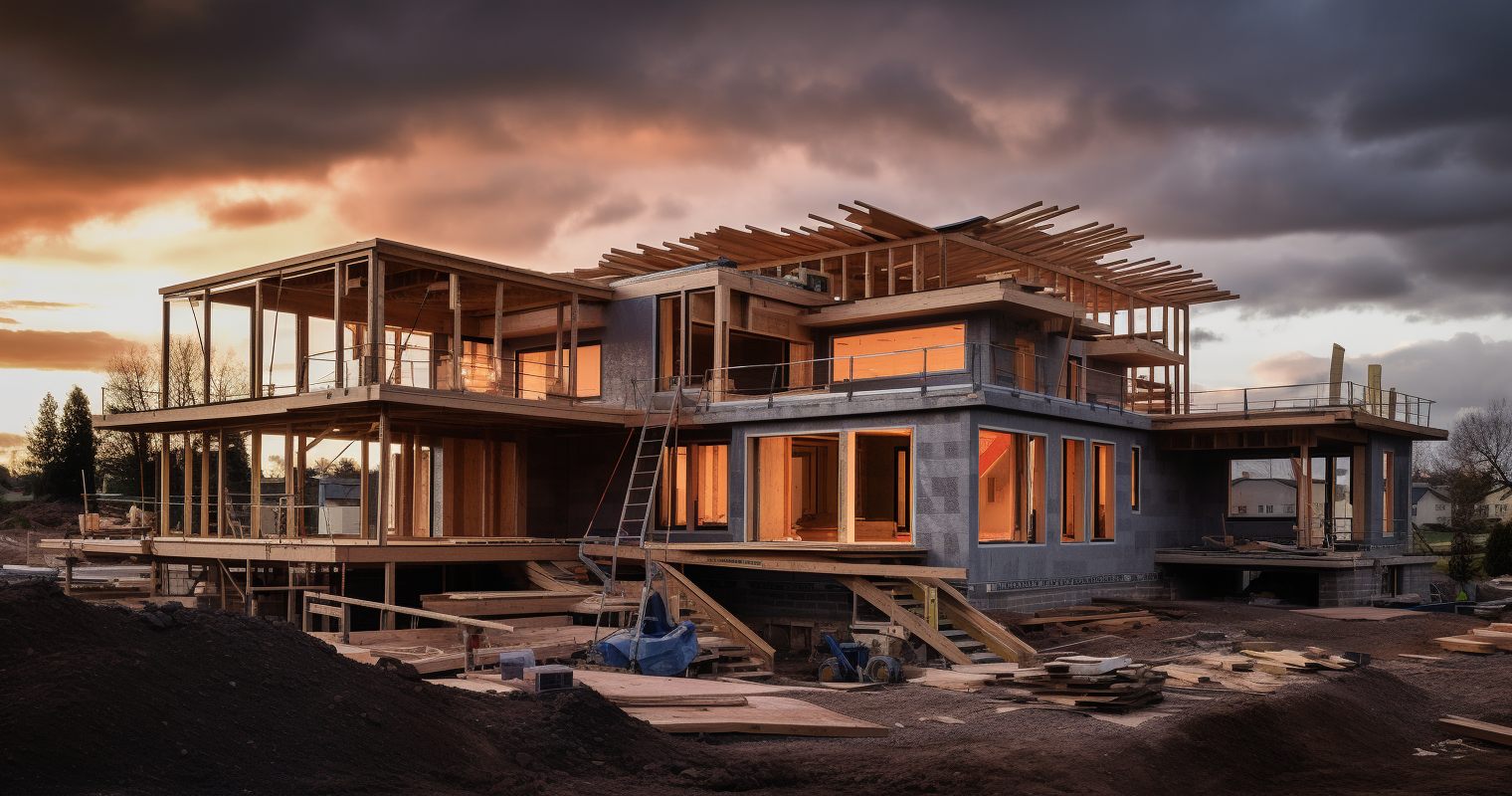
Anyone looking to build or renovate in Indonesia must work through a structured but demanding permit framework. A Building Approval Permit (PBG) is a legal obligation for essentially all new construction and substantial renovation projects, submitted through a centralised national online system. The sector is closely regulated, and foreign nationals encounter firm restrictions on land ownership — the majority must operate through a PT PMA corporate structure or secure long-term leasehold arrangements in order to build within the law.
| Item | Details |
|---|---|
| Main building permit | PBG (Persetujuan Bangunan Gedung) — required for all new construction and significant renovation (as of 2021) |
| Post-construction certificate | SLF (Sertifikat Laik Fungsi) — Certificate of Functionality required before occupancy; residential validity 20 years (as of 2021) |
| Permit fees | Up to IDR 50,000,000 depending on location and building size (as of 2025); verify current figures with local authority |
| Processing time | Typically several weeks to several months depending on project complexity (as of 2025) |
| Foreign land ownership | Foreigners cannot hold Hak Milik (freehold); main route is PT PMA company holding HGB title, or Hak Pakai/Hak Sewa for individuals |
| Heritage protection law | Law No. 11 of 2010 on Cultural Heritage; Government Regulation No. 1 of 2022 on National Register of Cultural Heritage |
Do you need planning permission to build or renovate a property in Indonesia?
As of 2025, any person or entity intending to erect or substantially alter a structure in Indonesia is legally obliged to obtain a PBG (Persetujuan Bangunan Gedung). This permit replaced the previous IMB (Izin Mendirikan Bangunan) framework and now sits at the heart of the national construction regulatory system under Government Regulation No. 16 of 2021. The shift represents a meaningful modernisation of Indonesia’s approach to construction oversight, bringing the country into closer alignment with permit models seen in nations such as Australia or Canada, where a unified approval gateway governs most building activity.
The Building Approval (PBG) is a government-issued permit enabling property owners to construct, alter, extend, reduce, and/or maintain buildings in accordance with applicable technical building standards. A PBG is mandatory for both entirely new builds and for significant renovations that alter the structural configuration or intended purpose of an existing building. Minor works may fall outside the PBG requirement, but the prudent course is always to consult the relevant local authority to confirm whether your particular project requires one.
Unlike the IMB, which functioned principally as a pre-build authorisation, the PBG reflects a full lifecycle compliance model that encompasses everything from initial planning and active construction through to modification, change of use, and eventual demolition. This contrasts with, for instance, the UK approach, where planning permission and building regulations are largely administered as two distinct processes. In Indonesia, the PBG framework merges both concepts into a single lifecycle instrument.
The regulation applies equally to private individuals, domestic companies, foreign investors, PT PMA entities, and government bodies. Since 2021, every PBG application must be lodged through the OSS RBA (Online Single Submission – Risk-Based Approach) platform. Submitting applications in person or by post is no longer an accepted option.
The step-by-step application process is as follows:
- Register on SIMBG: Open your browser and go to the SIMBG application page at https://simbg.pu.go.id. Fill in your email address and a password, and register as a “pemohon” (applicant) for PBG/SLF/SBKBG/RTB.
- Register via OSS: The project is registered through the Online Single Submission (OSS) system, Indonesia’s central electronic portal for all business licensing, to obtain a Business Registration Number (NIB).
- Submit technical documents: The formal application is filed through the SIMBG portal, where all technical documents — certified architectural, structural, and MEP plans, soil test results, etc. — are uploaded for review.
- Verification and expert review: Government officials verify the administrative and technical documents. The plans are then reviewed in a “hearing” (consultation) with the TPA (Tim Profesi Ahli / Team of Professional Experts), who give the final technical recommendation for approval.
- Pay the retribution levy: Once approved, a SKRD (Regional Levy Decree) is issued. This is the official government invoice for the permit, calculated using a formula based on your building’s size, function, and location. Fees can reach up to IDR 50,000,000 depending on location and property size (as of 2025). Always verify current figures with your local authority.
- Obtain the PBG: Once payment is made and all conditions are satisfied, the PBG is formally issued, authorising construction to proceed.
- Apply for the SLF after construction: Once construction is complete, the next crucial step is obtaining the Sertifikat Laik Fungsi (SLF), or Certificate of Functionality. This certificate confirms that your villa or commercial property is safe, suitable, and ready for its intended use.
The duration of the PBG process depends on the scale and complexity of the project, the thoroughness of the documents submitted, and the responsiveness of local authorities. In practice, applicants should allow anywhere from a few weeks to several months for the process to conclude (as of 2025). This lead time must be factored into your overall project schedule and financial planning from the start.
Proceeding without a PBG constitutes a breach of Indonesian building law and may trigger a range of escalating legal consequences under Article 346 of Government Regulation No. 16 of 2021. These sanctions are designed to uphold public safety, enforce regulatory compliance, and protect environmental standards. Structures erected without a valid PBG, or built in deviation from approved plans where safety is at risk, may be subject to compulsory demolition or dismantling orders.
What are the rules around listed buildings, conservation areas, and heritage protection in Indonesia?
Indonesia maintains a formal national heritage protection system, though it functions quite differently from comparable frameworks in countries such as the UK, with its Listed Building Consent regime, or France and its Monuments Historiques classification. Rather than a single tiered register administered by one central body, Indonesia distributes authority across central government, provincial government, and local regency or city administrations.
The foundational legal instruments are Law No. 11 of 2010 on Cultural Heritage and Government Regulation No. 36 of 2005, which specifically governs the protection of heritage buildings. These are complemented by Government Regulation No. 1 of 2022 on the National Register and Preservation of Cultural Heritage.
In administering the designation and conservation of cultural heritage, the Indonesian Government delegates its powers to relevant ministries and to local governments in the field of culture. In practical terms, this means that restrictions on a heritage property in Yogyakarta may be materially different from those applied in Surabaya or Denpasar. It is therefore imperative to consult the relevant local government authority directly before undertaking any works on a building that is older or of potential historical importance.
Projects situated in areas of historical, archaeological, or cultural significance may attract heightened scrutiny during the approval process. Where construction would threaten to disturb or damage cultural heritage sites, a PBG application may be refused outright. Thorough preliminary research and early consultation with heritage preservation bodies is strongly advisable before lodging applications in such areas.
In Bali, a further layer of locally specific architectural requirements applies. Traditional Balinese building forms are governed by the Regional Regulation of the Province of Bali Number 5 of 2005 concerning Architectural Requirements for Buildings. All construction on the island must comply with local zoning provisions, Balinese architectural design guidelines, and the island-wide 15-metre height limit. These local rules operate in addition to national heritage legislation and must be thoroughly examined before any design work is commenced.
At the national level, responsibility for cultural heritage sits with the Ministry of Education, Culture, Research and Technology (Kemendikbudristek), which oversees the National Cultural Heritage Register (Registrasi Nasional Cagar Budaya). To determine whether a specific property or site carries a heritage designation, contact your local government’s cultural heritage office (Dinas Kebudayaan) or reach the ministry directly at kebudayaan.kemdikbud.go.id. Violations of heritage protection provisions can attract heavy fines, mandatory restoration orders, or criminal liability under Law No. 11 of 2010.
What permits and licences are required when building or renovating in Indonesia?
A construction project in Indonesia will typically require a number of approvals beyond the PBG itself. In certain circumstances, additional clearances from other government departments — such as the fire authority for fire safety compliance or the environmental agency for ecological protection — must be secured before the PBG can be granted in its final form.
The key permits and certificates to be aware of are:
- SLF (Sertifikat Laik Fungsi — Certificate of Functionality): The SLF is an official certificate confirming that a completed building satisfies the required standards of safety, health, comfort, and accessibility, making it lawful for occupancy. For residential buildings, the SLF typically carries a validity of 20 years, while commercial and other building categories are generally valid for 5 years and must be renewed accordingly (as of 2021).
- Environmental Impact Assessment (AMDAL or UKL-UPL): This assessment evaluates the potential environmental consequences of a proposed construction project, covering impacts on local fauna, water resources, and air quality. A weak or inadequate assessment, or one that identifies significant negative impacts without proposing credible mitigation measures, may lead to rejection of the PBG application.
- ITR (Informasi Tata Ruang — Zoning Confirmation): The ITR is a foundational document confirming that the proposed land use is consistent with both the local spatial plan (RTRW) and the detailed spatial plan (RDTR). Together with the PBG and SLF, it forms one of the non-negotiable pillars of any lawful and commercially sound property investment.
- SBKBG (Proof of Building Ownership): The SBKBG is a formal document establishing the right to ownership of a building and is obtained through the SIMBG platform as part of the same process as the PBG.
- Utility connection permits: Separate approvals from utility providers — PLN for electricity and PDAM for piped water — are needed to establish connections. These are normally applied for once the SLF has been obtained.
The SLF is issued by local governments as a general rule, except in the case of buildings with special functions, for which the Central Government retains authority. Administrative penalties may be imposed on building owners, users, construction service providers, professional experts, supervisors, and technical reviewers who fail to meet their respective obligations. Such sanctions can range from formal written warnings and restrictions on ongoing construction activities to temporary or permanent suspension of construction works and cessation of building use.
All applications are processed through the national SIMBG portal at simbg.pu.go.id. Fees and turnaround times vary according to the region and the nature of the project; always confirm current requirements directly with the relevant local government office (Dinas Pekerjaan Umum or DPMPTSP) in your area at the time of planning.
How do you find a reliable, trustworthy builder in Indonesia?
Indonesia’s construction sector is regulated at the national level through the Lembaga Pengembangan Jasa Konstruksi (LPJK) — the Construction Services Development Board — which is responsible for certifying both construction companies and individual professionals. The LPJK operates under the authority of the Ministry of Public Works and Public Housing (PUPR). Reputable contractors should hold a valid SBUJK (Sertifikat Badan Usaha Jasa Konstruksi) — the Business Entity Certificate for construction services — as well as current individual professional certificates (SKK Konstruksi) covering their workforce.
A contractor’s licence can be confirmed through the OSS RBA system and through the LPJK’s official database. Contact details for the LPJK and Ministry of Public Works are as follows:
- Website: www.pu.go.id (Ministry of Public Works and Public Housing)
- LPJK portal: lpjk.pu.go.id
- Address: Jl. Pattimura No. 20, Kebayoran Baru, Jakarta Selatan 12110, Indonesia
When assessing any prospective contractor, the following practical steps are strongly recommended:
- Request to see their SBUJK certificate and confirm it remains current and encompasses the relevant category of work.
- Ask for a minimum of three references from projects of comparable size that have been completed, and visit those sites where feasible.
- Ensure that a written contract (kontrak kerja) is in place, clearly setting out the scope of work, materials to be used, a staged payment schedule, and a mechanism for resolving disputes. All contracts should be prepared or reviewed by a qualified Indonesian notary or legal practitioner.
- Structure payments in clearly defined stages (pembayaran bertahap) linked to verifiable milestones, rather than releasing substantial sums in advance. This mirrors the retention-based approach commonly used in construction contracts in countries such as Australia and Canada.
- Verify whether the contractor carries insurance covering third-party liability and worker compensation.
- Exercise caution toward contractors who submit unusually low bids, are reluctant to commit anything to writing, or press you to begin work ahead of permits being secured.
Numerous investors have suffered serious financial and legal consequences by building on agricultural or environmentally protected land. In 2024, more than 40 villas in Bingin were razed following confirmed violations of zoning regulations and permit requirements. Dishonest contractors may tell foreign clients that permits are not needed or that an existing structure is already fully authorised — you must verify these claims independently through official channels. Similarly, nominee arrangements — where an Indonesian citizen holds a land title on behalf of a foreigner, often in breach of Indonesian law — should be avoided entirely. Unlike such arrangements, a properly constituted PT PMA structure is entirely lawful, transparent, and afforded protection under Indonesian investment legislation.
How do you find a qualified local architect in Indonesia?
Practising as an architect in Indonesia requires a valid licence. All drawings submitted as part of a PBG application must bear the signature of a professional holding a current SIPB (Surat Izin Praktik Badan). This licence confirms that the individual producing your design documentation is duly certified to do so under Indonesian law. Submitting plans prepared by an unlicensed practitioner will result in your PBG application being refused.
The professional association representing Indonesia’s architecture community is the Ikatan Arsitek Indonesia (IAI) — the Indonesian Institute of Architects. The IAI maintains a searchable register of accredited members and is well placed to help identify suitably qualified practitioners working in your region.
- Website: iai.id
- Email: [email protected]
- Address: Jl. Utan Kayu Raya No. 67, Matraman, Jakarta Timur 13120, Indonesia
The PBG framework explicitly requires building owners, developers, and investors to work with certified professionals — including building planners, architects, and engineers — to prepare technical documentation such as the Building Technical Plan (RTB), and to secure validation through the Online Building System (SIMBG). Engaging a licensed architect is therefore not merely good practice — it is a statutory requirement for obtaining your permit.
Foreign clients are strongly advised to select an architect with a proven track record of working with international clients and sound familiarity with the PBG process as it operates in your specific region. Bali and Jakarta in particular offer a larger concentration of architects with experience on internationally commissioned projects. While no legal requirement mandates that an architect speak any particular language, accurately conveying your design vision and project requirements is absolutely critical — consider appointing a bilingual project manager or legal adviser to bridge any communication gap throughout the design and permitting stages.
Many expatriates find it beneficial to engage an architect capable of taking on a project management role as well, coordinating with local contractors and overseeing the permit application process directly on their behalf. This dual function can substantially reduce the administrative burden on overseas clients unfamiliar with the local regulatory environment.
What are the common pitfalls when buying land to build on in Indonesia?
Acquiring land in Indonesia as a foreign national involves multiple layers of legal complexity that have no equivalent in many other real estate markets. A thorough understanding of these risks before committing to any transaction is not optional — it is essential.
Zoning and land-use classification: Land use restrictions are one of the most frequently underestimated aspects of buying property in Indonesia. Local government regulations determine what activities are permissible on any given parcel of land. Parcels may be designated for agricultural, residential, commercial, or tourism use, among other categories, and a building permit will only be granted where the proposed activity is consistent with the designated zoning. Always obtain an ITR (Zoning Confirmation) from the local government before proceeding with any purchase.
Verifying title and ownership history: Indonesia’s land registration system is administered by the Badan Pertanahan Nasional (BPN) — the National Land Agency. Land certificates take various forms, including Hak Milik (freehold), HGB (Right to Build), and Hak Pakai (Right to Use). Older or unregistered documents such as Girik must be converted to a certified title (SHM) by February 2026 to retain legal validity (as of 2025). Instructing a qualified local notary (PPAT — Pejabat Pembuat Akta Tanah) to conduct comprehensive due diligence on the full title history is an indispensable step before any purchase.
Nominee arrangements: A common but legally precarious practice involves using an Indonesian citizen as a “nominee” to hold Hak Milik title on behalf of a foreign buyer. This approach requires absolute trust in the individual concerned, as under Indonesian law that person is the recognised legal owner regardless of any private agreement reached between the two parties. Such arrangements are treated as legally unenforceable and are coming under increasing scrutiny from Indonesian authorities.
Environmental and flood risk: Indonesia lies along the Pacific Ring of Fire and is regularly exposed to flooding, volcanic events, and seismic activity. Before purchasing any land, commission an independent environmental and geotechnical assessment. Coastal and low-lying areas may also be subject to statutory building height restrictions and mandatory setbacks from the shoreline.
Utilities availability: It is unwise to assume that connections to electricity (PLN), piped water (PDAM), or sewerage infrastructure are readily available or inexpensive to establish. In remote or rural settings, off-grid solutions may be the only realistic option, with potentially significant cost implications. Confirm the availability and estimated cost of connections with local utility providers before committing to a purchase.
Land boundary disputes: Overlapping or contested land boundaries occur with some regularity in Indonesia, particularly in rural regions and on islands beyond Java. Always engage a licensed surveyor through the BPN to carry out a physical verification of boundaries against the official cadastral map (peta bidang tanah) before signing any sale and purchase agreement (PPJB).
The BPN’s official land registration and property information portal is accessible at www.atrbpn.go.id.
What are the rules around foreign ownership and financing for construction projects in Indonesia?
Under Indonesia’s Basic Agrarian Law, outright land ownership through Hak Milik is reserved exclusively for Indonesian citizens. Foreign nationals must therefore pursue alternative legal structures, such as long-term lease arrangements or property held through a PT PMA company. This is a foundational and non-negotiable feature of Indonesian property law, with direct practical consequences for who can lawfully commission construction works.
The main ownership structures available to foreign nationals are:
- PT PMA (Perseroan Terbatas Penanaman Modal Asing) with HGB title: Direct acquisition of property — whether land, villas, or residential dwellings — is not permitted for foreigners as private individuals. However, by establishing a PT PMA, it becomes possible to legally hold property under a Right to Build (Hak Guna Bangunan / HGB) or Right to Use (Hak Pakai) title. HGB title is initially granted for a 30-year period, extendable for a further 20 years and subsequently renewable for an additional 30 years, giving a potential cumulative duration of up to 80 years. The standard minimum capital requirement for a PT PMA is IDR 10 billion (approximately USD 700,000), with at least 25% required to be paid up at the time of establishment (as of 2025).
- Hak Pakai (Right to Use) for individuals: Hak Pakai entitles a foreign national to use a parcel of land for a defined purpose for up to 25 years, with the possibility of a 20-year extension. This route is primarily available for residential use and is accessible to foreign individuals who hold a valid Indonesian residency permit (KITAS or KITAP).
- Hak Sewa (Right to Lease): Hak Sewa permits the leasing of property for up to 25 years, with potential extensions available. This is the most accessible pathway for those who do not wish to incorporate a company but still require a long-term right of use over a property.
A foreigner holding a standard leasehold arrangement generally cannot submit a PBG application in their own name. The permit must be sought by an Indonesian legal entity. For the majority of foreign investors, this means structuring the investment through a PT PMA, which can legally hold an HGB title and serve as the official applicant for the PBG.
Financing and mortgages: Indonesian banks will not extend mortgage finance to property owners whose title status is limited to Hak Pakai, as this does not meet the collateral requirements for secured lending. Since foreign nationals are unable to hold Hak Milik, they have traditionally been excluded from accessing domestic bank loans for property purchases in Indonesia. Construction finance is therefore typically self-funded or arranged through overseas financing channels, though some international banking institutions active in Indonesia may offer structured finance solutions for assets held within a PT PMA framework. For current guidance on financial products available to foreign investors, consult the Otoritas Jasa Keuangan (OJK) — Indonesia’s Financial Services Authority — at www.ojk.go.id.
The national investment authority, BKPM (Badan Koordinasi Penanaman Modal / Indonesia Investment Coordinating Board), is the primary point of contact for establishing a PT PMA. Further information on registration requirements and procedures is available at www.bkpm.go.id or through the OSS portal at oss.go.id.
What official sources should you consult when planning to build or renovate in Indonesia?
Regulations, fees, and administrative procedures in Indonesia are subject to periodic revision. The official sources listed below should be consulted before committing to any land purchase, design brief, or construction activity:
| Authority | Responsibility | Website |
|---|---|---|
| Ministry of Public Works and Public Housing (PUPR) | Building standards, PBG/SLF system, national construction policy | www.pu.go.id |
| SIMBG (Building Management Information System) | PBG, SLF, SBKBG permit applications and tracking | simbg.pu.go.id |
| OSS RBA (Online Single Submission) | Business licensing, NIB registration, integrated permits | oss.go.id |
| Badan Pertanahan Nasional / ATR-BPN (National Land Agency) | Land titles, cadastral registry, land certificate verification | www.atrbpn.go.id |
| BKPM (Indonesia Investment Coordinating Board) | PT PMA registration, foreign investment rules | www.bkpm.go.id |
| Ministry of Education, Culture, Research and Technology (Kemendikbudristek) | Cultural heritage designation and conservation | kebudayaan.kemdikbud.go.id |
| LPJK (Construction Services Development Board) | Builder and contractor licensing | lpjk.pu.go.id |
| IAI (Indonesian Institute of Architects) | Architect licensing and member directory | iai.id |
| OJK (Financial Services Authority) | Banking, mortgages, financial products for investors | www.ojk.go.id |
| Local DPMPTSP (One-Stop Integrated Service Office) | Regional permits, zoning, local planning authority | Varies by regency/city |
Beyond the national portals listed above, it is essential to visit the relevant local government office — specifically the Dinas Pekerjaan Umum and/or DPMPTSP — in the precise regency or city where you plan to build. Local rules, particularly in culturally and historically sensitive locations such as Bali, Yogyakarta, and Lombok, impose requirements above and beyond what national legislation mandates and must be checked independently before work begins.
Frequently asked questions
How much does it typically cost to build a house in Indonesia?
Building costs vary considerably across different regions, material specifications, and finish levels. As a general indication (as of 2025), basic construction in areas outside Bali and Jakarta may begin from approximately IDR 3,000,000–5,000,000 per square metre, while premium builds in high-demand locations can exceed IDR 10,000,000 per square metre. These figures exclude the cost of land, permit fees, architect charges, and utility connections. It is advisable to obtain a minimum of three written quotes from licensed contractors and to have the pricing independently reviewed by a quantity surveyor or experienced project manager.
How long does the entire building process take in Indonesia, from buying land to moving in?
The duration depends heavily on the location, scale of the project, and the speed at which permits are processed. For a mid-sized residential development, a realistic end-to-end timeframe — covering land due diligence, PT PMA formation where necessary, PBG application, the construction phase, and SLF issuance — generally falls somewhere between 18 months and 3 years. Delays attributable to permit processing, material procurement, and contractor availability are routine. Building adequate contingency time into your schedule from the outset is strongly recommended.
What happens if I build without a PBG permit in Indonesia?
The consequences of proceeding without a permit are not theoretical — they are an established reality for a growing number of investors. Significant financial penalties, construction stoppages that can halt a project indefinitely, and the complete destruction of an investment through forced demolition are all documented outcomes. In 2024, more than 40 villas in Bingin were demolished as a direct result of zoning and permit violations. Building without a PBG is not a manageable risk — it is a course of action that has resulted in total financial loss for foreign investors.
Are building qualifications or standards from other countries recognised in Indonesia?
No. Indonesia applies its own national building standards (Standar Nasional Indonesia / SNI) and stipulates that all technical documentation must be prepared and endorsed by professionals holding valid Indonesian licences — SIPB for architects and SKK Konstruksi for engineers and skilled tradespeople. Overseas qualifications carry no direct equivalency and cannot be used in place of Indonesian certification. Any architect or engineer involved in your project must hold current Indonesian accreditation, regardless of where they received their professional training.
Can I communicate with contractors and architects in a language other than Indonesian (Bahasa Indonesia)?
In well-established expat locations such as Bali, Jakarta, Lombok, and Surabaya, it is generally possible to find architects and contractors willing to conduct business in English or other languages. However, all formal documentation — including permits, contracts, and any submissions to government bodies — must be in Bahasa Indonesia. Having a bilingual lawyer or notary independently review and explain all contracts before signing is strongly advised. Engaging a bilingual project manager is equally valuable if you do not have a working command of Indonesian. Never append your signature to a document that has not been translated and fully explained to you by someone you trust.
What should I do if I have a dispute with my builder or contractor in Indonesia?
Begin by reviewing the dispute resolution provisions within your written contract. Construction agreements in Indonesia commonly specify mediation or arbitration as the initial mechanism before any recourse to litigation. The Badan Arbitrase Nasional Indonesia (BANI) — the Indonesian National Arbitration Board at www.baniarbitration.org — is the primary institution for resolving commercial construction disputes. Smaller claims may be heard by a local District Court (Pengadilan Negeri). Appointing a qualified Indonesian advocate from the outset is critical; attempting to navigate disputes informally and without legal counsel rarely produces a satisfactory result.
Are there restrictions on what I can build in Bali specifically?
Yes. Every construction project in Bali must comply with local zoning requirements, the island’s established Balinese architectural design guidelines, and a universal building height restriction of 15 metres. These obligations derive from the Regional Regulation of the Province of Bali Number 5 of 2005 concerning Architectural Requirements for Buildings. Properties situated near temples, rivers, coastlines, and rice terraces are subject to additional mandatory setback distances. Working with a Bali-based architect who has thorough knowledge of these local rules is indispensable before any design plans are drawn up.
How do I check whether a piece of land is legally clear and safe to buy in Indonesia?
Retain a qualified PPAT notary (Pejabat Pembuat Akta Tanah) to cross-check the land certificate against the BPN’s official cadastral records at www.atrbpn.go.id. Verify the applicable zoning classification by requesting an ITR (Zoning Confirmation) from the local government. Appoint a licensed surveyor to carry out a physical verification of land boundaries on the ground. Establish that the seller possesses the legal authority to transfer the land, and confirm that no outstanding mortgages, charges, or registered disputes are associated with the title, and that the land is not designated as agricultural or environmentally protected — on which no building permit would be granted. None of these steps should be omitted, and all should be undertaken through qualified local professionals before any purchase agreement is signed.