

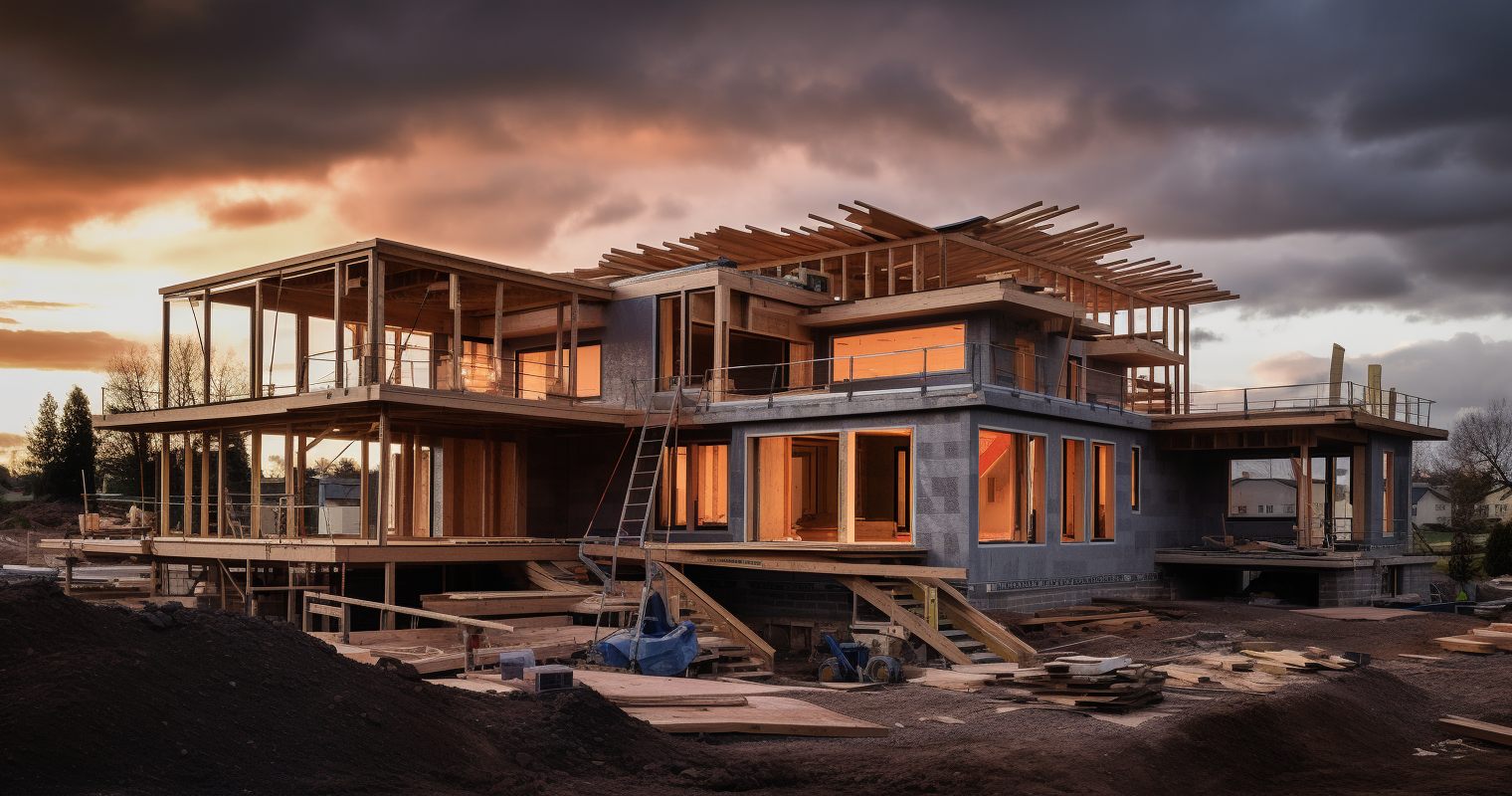
Building or renovating property in Israel means engaging with a well-structured but demanding regulatory system underpinned by the Planning and Building Law of 1965. A formal building permit — called a Rishuy Bniyah in Hebrew — is required for virtually every type of construction and most substantial renovation work, and the application must be prepared and submitted by a licensed professional. While foreign nationals are legally permitted to purchase and develop private land in Israel, it is worth noting that the overwhelming majority of land across the country is state-owned and carries its own specific constraints.
| Item | Details |
|---|---|
| Planning permission system | Governed by the Planning and Building Law 1965; permit called Rishuy Bniyah |
| Permit application portal | Rishuy Zamin online system (national digital platform) |
| Standard permit decision timescale | Up to 45 working days (without relaxations); up to 90 working days where deviations from the master plan are involved (as of 2025) |
| Purchase tax for foreign buyers | 8% on first NIS 6,055,070; 10% above that threshold (as of 2024) |
| Mortgage LTV for non-residents | Typically capped at 50% (as of 2026) |
| Private land available to foreign buyers | Approximately 7% of total Israeli territory |
| VAT on professional services | 18% (as of January 2025) |
Do you need planning permission to build or renovate a property in Israel?
All aspects of urban planning, land development, building permits, and zoning in Israel fall under the Planning and Building Law enacted in 1965. This legislation makes it compulsory to secure a building permit before initiating any construction, expansion, or significant renovation. Permits serve to confirm that proposed works meet zoning requirements, structural safety standards, fire prevention measures, environmental protection obligations, heritage preservation criteria, and accessibility guidelines.
Known in Hebrew as a Rishuy Bniyah, a building permit is a formal authorisation issued by the local planning and construction committee. It is mandatory for any alteration to an external structure — this encompasses new construction, housing extensions, new balconies, pergolas, lifts, and comparable works. A permit is also required when changing the designated use of a property.
As a general principle, purely internal renovations do not require a building permit unless they affect the exterior of the building — such as modifications to windows or doors — or alter the division between residential and service space. Some minor works may qualify for exemption under Regulation 101 of the Planning and Building Law. Even so, it is always prudent to check with your local planning committee before proceeding, to confirm whether an exemption genuinely applies and to ensure full compliance with all relevant guidelines.
Every plot of land in Israel is subject to national and municipal zoning plans referred to by their Hebrew acronym “Taba.” The applicable Taba determines how a property may be developed and what limitations apply. The extent of permissible development is expressed as a percentage of the total plot area — a concept known as achuzei bniyah — which defines the total volume of building rights attached to any given piece of land.
In contrast to planning systems in countries such as the UK, the US, Canada, or Australia — where applicants often deal directly with a local authority — Israel requires that only certified professionals submit building permit applications. Eligible professionals include licensed architects, engineers, building technicians, and practical engineers. This means engaging a qualified local professional is not merely advisable but absolutely necessary from the earliest stages of any project.
The building permit application process follows a defined sequence of steps:
- Gather property data: Assemble comprehensive information about your property, including its dimensions, ownership records, maps, and any existing plans.
- Request permit information (Tofes Meida): Submit a request to the local planning and construction committee through the Rishuy Zamin online system. Permit information is typically issued within 30 working days, with an initial review taking up to 5 working days. This information remains valid for two years from the date it is issued.
- Prepare detailed plans: Your appointed architect or engineer will produce comprehensive architectural plans designed to comply with local zoning regulations and the relevant master plan.
- Submit the permit application: The application must be lodged by a registered architect, engineer, or practical engineer through the Rishuy Zamin online system.
- Public notification: Copies of the application must be served on neighbouring properties and other affected parties, who are entitled to submit objections for consideration by the local planning and construction committee.
- Spatial control check: A thorough examination is conducted to verify that the proposed works comply with all applicable zoning laws and planning regulations.
- Committee decision: The local planning and construction committee considers the application and issues a decision to approve, reject, or conditionally approve the permit. In straightforward cases this takes up to 45 working days; where deviations from the master plan are required, the decision may take up to 90 working days (as of 2025).
- Design control: An engineering review is carried out to confirm that the design satisfies safety and quality standards. This stage may take up to 30 working days and can involve additional inspections by specialist control institutes.
- Permit issuance and commencement: Once the building permit has been issued — and any conditions attached to it have been satisfied, including payment of taxes and fees to the local authority — construction may begin.
If your application is refused or granted subject to conditions you wish to contest, you are entitled to appeal to the Appeal Committee. Fees associated with permit applications vary between municipalities and depend on the scale of the project — always check with your local planning and construction committee for up-to-date figures, as these are subject to regular revision.
What are the rules around listed buildings, conservation areas, and heritage protection in Israel?
Israel’s planning framework incorporates provisions for environmental conservation and heritage preservation, protecting significant ecological areas and sites of historical importance. The country maintains formal heritage protection designations that are broadly analogous to listed building status in the UK or entry on the US National Register of Historic Places, though the terminology and underlying mechanisms differ considerably.
Heritage protection in Israel operates within the wider planning hierarchy. Master plans — known as “Taba” — form the foundation of urban planning under the Planning and Building Law, defining land use categories, zoning rules, construction density, infrastructure requirements, and permitted building specifications. Conservation designations may be incorporated into national, district, or local Taba plans, meaning a property or area can be afforded protection at any tier of the planning system.
The Israel Antiquities Authority (IAA) — www.antiquities.org.il — is the national body with responsibility for archaeological sites and historic artefacts. Buildings of architectural or historical significance may be designated for conservation under local Taba plans, restricting alterations to their external appearance or structural fabric. In cities such as Tel Aviv — especially the White City UNESCO World Heritage area — and Jerusalem, conservation designations are particularly extensive and are rigorously enforced by the relevant local planning committees.
Taba plans are publicly accessible, enabling neighbours and members of the public to review proposed developments and submit objections or observations. Before acquiring or undertaking any work on a property that may be of heritage significance, you should examine the relevant local Taba plan through your municipality or via the Planning Administration’s iplan portal (www.iplan.gov.il) to identify any existing conservation designations or restrictions.
Proceeding with construction or renovation without the required permits carries serious consequences, including financial penalties imposed by local planning authorities. Where a heritage-listed building is involved, the repercussions can extend to mandatory restoration at the owner’s expense and, in the most serious cases, criminal liability. It is essential to commission a thorough legal due-diligence review before purchasing any property, with specific attention paid to conservation status and the history of permits previously obtained or refused.
What permits and licences are required when building or renovating in Israel?
Depending on the nature and scope of your project, you may need to secure permits and licences beyond the primary building permit. These might include authorisations for excavation, demolition, electrical installations, plumbing works, and other specific activities. Your architect or builder should be able to advise on precisely which additional permits are required for the work you intend to carry out.
Israel’s environmental legislation covers a range of statutory prohibitions on environmental nuisances, including measures against air, noise, water, and marine pollution. The Planning and Building Law 1965 establishes a framework for environmental planning considerations. For larger-scale construction projects, environmental impact assessments may be required and must be submitted as part of the planning application.
Beyond the Planning and Building Law 1965, other legislation also has a direct bearing on the construction industry — most notably the Law of Registration of Contractors for Construction Engineering Works, 1969 and the regulations made under it. This law governs which parties are permitted to carry out building works and defines the oversight obligations that apply on site.
Depending on the nature of the works and the size of the workforce on site, a minimum number of mandatory safety personnel is required by law. For example, an employer with 50 or more workers on a site will generally be required to engage a certified safety engineer. Additional positions that may be required in particular circumstances include safety supervisors, occupational health doctors, safety representatives, fire safety engineers, and fire prevention officers.
On completion of a project, the local authority will issue a certificate confirming that construction was carried out in accordance with the permit granted (Tofes 4) and, subsequently, a certificate confirming that construction has been fully completed (Tofes 5). These completion certificates are indispensable — without them, a new building cannot legally be occupied or connected to utilities, and cannot be registered in the Land Registry. Always ensure that your builder and architect build these final stages into the overall project programme. Fees and timescales for individual sub-permits differ between municipalities; confirm current requirements directly with the relevant local authority before commencing work.
How do you find a reliable, trustworthy builder in Israel?
The Law of Registration of Contractors for Construction Engineering Works, 1969 sets out the framework for contractor registration in Israel. Under this law, builders and contractors engaged in construction engineering works are required to hold registration with the Contractors Registration Bureau, which operates under the Ministry of Construction and Housing. Registration is categorised by trade and by the scale of projects a contractor is authorised to undertake — verifying that any contractor you engage holds a current and valid registration is essential before work begins.
Selecting a builder in Israel requires careful research to identify reputable, properly licensed professionals. Consider builders who hold membership in recognised professional bodies such as the Israel Builders Association or the Israel Association of Construction and Infrastructure Engineers. These organisations can be useful resources for identifying thoroughly vetted professionals and for pursuing complaints should any problems arise.
Key professional bodies and resources for locating registered builders include:
- Contractors Registration Bureau (Ministry of Construction and Housing): www.gov.il/en/departments/ministry_of_construction_and_housing — the official register of licensed contractors operating in Israel.
- Israel Builders Association (Hitachdut HaBoneh): The principal trade association for construction contractors in Israel. Contact details and member directories are accessible through the Ministry of Construction and Housing portal above.
Practical steps to vet any contractor before signing a contract include:
- Confirm their contractor registration number with the Contractors Registration Bureau.
- Request a minimum of three verifiable references from recently completed projects of a comparable size and type.
- Obtain copies of their public liability and professional indemnity insurance certificates and confirm these are current and adequate for the scope of work.
- Use a written contract in Hebrew — with a certified translation into your own language — that clearly defines the scope of work, specifications, payment schedule, penalties for delay, and the mechanism for resolving disputes.
- Avoid paying large sums upfront. Structure payments in stages tied to the verified completion of agreed milestones, and for larger projects consider using an escrow arrangement through your lawyer.
Labour shortages in Israel’s construction sector have prompted many projects to collaborate with international companies; developers with established international partnerships may be worth prioritising. Foreign property owners should be aware that proceeding without a formal written contract — or making cash payments without receipts — leaves them with very limited legal recourse in the event of a dispute. The use of unlicensed contractors operating informally is a recognised problem, particularly in areas where demand for renovation work is high.
How do you find a qualified local architect in Israel?
To practise architecture in Israel, a professional must hold an accredited architectural degree, then work under a licensed architect for a period of three years, before applying for formal registration. Only once registered may an architect sign permit applications or operate their own practice.
Architects and engineers are required to hold valid certification from the Israeli Ministry of Labor, Social Affairs, and Social Services. The formal registration body is the Office for Registration of Engineers and Architects (Yechida L’Rishum Mehandasim v’Adrichalim), which operates under the Ministry of Economy. The Ministry of Economy’s Occupations Registration and Licensing Division has also produced a comprehensive English-language handbook containing guidance on registration and licensing in Israel — the Licensing Handbook for Practical Engineers, Architects and Electricians.
The leading professional association representing architects and engineers in Israel is:
- The Association of Engineers, Architects and Graduates of the Technological Sciences in Israel (AEAI): The AEAI (Lishkat HaMehandesim HaAdrichalim VeHaAcademai’im BaMiktzo’ot HaTechnologi’im BeYisrael) represents the majority of engineering and architecture professionals practising in Israel. Website: www.engineer.org.il
- Israeli Association of United Architects: Website: www.auai.org.il — provides a searchable directory of registered architects.
It is possible to operate at a certain level in Israel with limited Hebrew, since a number of local architects have studied or worked internationally. However, anyone intending to practise privately or take on a senior role will find that fluency in Hebrew is effectively essential — colleagues, consultants, and counterparts will typically be Israeli. Expats commissioning construction or renovation work should look for an architect with a demonstrable track record of working with international clients and with the specific local planning committees relevant to their area; familiarity with the Taba plans of a particular municipality is especially valuable.
A recent reform referred to as the “Licensed for Permit” model allows certain senior architects to approve permits directly, which can substantially reduce processing times. When speaking with prospective architects, it is worth asking whether they hold this additional accreditation.
What are the common pitfalls when buying land to build on in Israel?
Israel’s land ownership structure differs fundamentally from most Western property markets and introduces risks that are easy to overlook if you are unfamiliar with the local system. Developing a thorough understanding of how land tenure works in Israel before committing to any purchase is essential.
Land ownership and state-controlled land: The remaining 93% of Israeli territory consists of state-owned land administered by the Israel Land Authority (ILA) and land managed by the Jewish National Fund (JNF). Under the Basic Law: Israel Lands, state land is nationally owned and can only be leased rather than sold outright. Those who acquire interests in state land therefore hold lessee’s rights rather than full ownership rights. Such land is commonly leased to private individuals on long-term leases of up to 99 years. The ILA retains considerable administrative influence, particularly when a lease is transferred from one party to another or when changes in land use or registration are required.
Verifying planning permission potential: Before any construction plans are drawn up, it is vital to understand the zoning classification and building rights that apply to the property in question. These factors govern what you are and are not permitted to build. Never assume that a plot available for purchase will automatically attract a building permit. Consult a local architect or planning lawyer to establish buildability — ideally before exchanging any form of purchase agreement.
Illegal construction history: Even unauthorised construction consumes achuzei bniyah (building rights) and can prevent a legitimate building permit application from succeeding, even where that application is properly prepared. If unlawful additions are found to be irremediable, the situation becomes complicated. While it is generally still possible to complete a purchase and transfer title, the risk persists that the municipality may identify the unauthorised works and require the property to be reinstated to its previously lawful condition or that a retrospective permit be obtained.
Land Registry verification: A common and costly mistake made by foreign buyers in Israel is treating a signed contract as equivalent to secure ownership without first verifying the position in the Land Registry (Tabu). The legal transfer of land is only complete when a deed is executed and registered at the Israel Land Registry Bureau (also referred to as Tabo or Tabu). Under the Torrens title system, the Land Registry provides an absolute guarantee of title, enabling relatively secure and transparent land transactions.
Foreign documents and contracts: Contracts in Israel must be executed in Hebrew, though English translations are routinely provided for foreign clients. Any foreign documents used in the transaction must be properly translated into Hebrew and may require apostille certification depending on the buyer’s country of origin.
Utility availability: In rural and semi-urban locations, always independently verify the availability and anticipated cost of connecting to mains water, electricity, and sewerage before purchasing land. Your local municipality and the relevant utility providers will be able to confirm connection availability and provide estimated connection costs.
Always engage a qualified Israeli real estate lawyer before committing to any agreement. For foreign buyers, legal representation is mandatory in order to handle Hebrew-language contracts and ensure full compliance with local legal requirements.
What are the rules around foreign ownership and financing for construction projects in Israel?
Foreign nationals — including those with no Israeli residency status — are legally permitted to buy property in Israel. There are no nationality-based restrictions on acquisition, though the ownership rights available depend on the type of land title attached to the property.
Foreign buyers are restricted to purchasing private land in Israel, which accounts for approximately 7% of the country’s total land area. This private land is concentrated primarily in major urban centres including Tel Aviv, Jerusalem, Haifa, and Be’er Sheva. The remaining 93% of Israeli land is administered by the Israel Land Authority and is effectively inaccessible to non-Jewish buyers for outright purchase, though long-term leases may occasionally be granted in exceptional circumstances.
Israel does not operate a “golden visa” or property-linked residency scheme, which means that acquiring real estate confers no automatic right to residency or citizenship. Any application for residency must be pursued independently through established immigration pathways.
Purchase tax for foreign buyers: Foreign purchasers are liable for a purchase tax of 8% on the first NIS 6,055,070 of the purchase price and 10% on any amount above that threshold, in accordance with the 2024 Purchase Tax Update. Foreign buyers must register their acquisition with the Israel Tax Authority and settle the purchase tax within 60 days of signing. To complete this process, they will need to obtain an Israeli tax identification number.
VAT: The VAT rate in Israel rose to 18% with effect from January 2025, affecting legal fees, agent commissions, and other professional service costs payable at completion.
Mortgages and construction financing: As of early 2026, securing mortgage finance in Israel is considerably more challenging for non-residents than for residents, primarily because the Bank of Israel’s supervisory rules impose stricter lending constraints on non-resident borrowers. Israeli residents purchasing a primary home can typically borrow up to around 70–75% of the property’s value, while non-residents are generally limited to approximately 50%. Construction loans for foreign nationals are available from Israeli banks but are subject to comparable loan-to-value restrictions and typically require substantial documentation of income and financial status.
Israel’s property system incorporates several layers of buyer protection: mandatory legal representation for all parties, a publicly accessible and transparent land registry (Tabu), escrow requirements ensuring that funds are safeguarded until registration is complete, and a legal requirement for written contracts — verbal agreements carry no legal force.
For official guidance on investment and financial regulation, consult the Bank of Israel and the Israel Land Authority.
What official sources should you consult when planning to build or renovate in Israel?
Regulations, fees, and procedures within Israel’s planning and construction system are subject to frequent change. Always verify current requirements directly with the relevant official authority before committing to any course of action. The following bodies and online portals are the principal official sources of information:
| Body | Role | Website |
|---|---|---|
| Planning Administration (Ministry of the Interior) | National planning authority; oversees the Taba plan system and Rishuy Zamin portal | www.gov.il/en/departments/planning_administration |
| iplan National Planning Portal | Searchable database of all national, district, and local Taba plans; check zoning and conservation designations | www.iplan.gov.il |
| Rishuy Zamin (Online Permit Portal) | National online system for submitting and tracking building permit applications | www.rishuyzamin.gov.il |
| Israel Land Authority (ILA) | Manages state-owned land; leases and land use rights | www.gov.il/en/departments/israel_land_authority |
| Israel Land Registry Bureau (Tabu) | Official land title register; verify ownership and encumbrances before purchase | www.gov.il/en/departments/israel_land_registry_bureau |
| Ministry of Construction and Housing | Oversees contractor registration, housing policy, and construction standards | www.gov.il/en/departments/ministry_of_construction_and_housing |
| Israel Antiquities Authority (IAA) | Heritage protection for archaeological sites and historic buildings | www.antiquities.org.il |
| Ministry of Economy – Occupations Registration and Licensing | Registration of architects and engineers | www.gov.il/en/departments/ministry_of_economy_and_industry |
| Israel Tax Authority | Purchase tax, VAT, and tax identification numbers for foreign buyers | www.gov.il/en/departments/israel_tax_authority |
| Local Municipal Planning Committees | Issue building permits and provide permit information (Tofes Meida) at the local level | Contact your relevant municipality directly (e.g. Jerusalem Municipality) |
As of January 2025, the Planning and Building Law 1965 is anticipated to undergo its 159th amendment, which remains under active discussion in the Knesset. This highlights just how frequently the legal and procedural landscape can evolve — always seek the most current guidance directly from the relevant official body before taking any steps.
Frequently asked questions: building and renovating in Israel
How long does it typically take to get a building permit in Israel?
The permit information stage is generally completed within 30 working days. The committee’s decision on the main permit application takes up to 45 working days for uncomplicated projects, or up to 90 working days where deviations from the master plan are involved (as of 2025). The design control review can add a further 30 working days. In practice, more complex projects or those situated in tightly regulated areas may take considerably longer from start to finish.
How much does building or renovating a property in Israel typically cost?
Construction costs in Israel vary considerably depending on location, the type of project, and the specification of materials and finishes. Labour and materials tend to be significantly more expensive in urban centres such as Tel Aviv and Jerusalem than elsewhere. Ongoing inflationary pressures and supply-chain disruptions continue to push project budgets upward, making realistic contingency planning essential from the outset. Always obtain a minimum of three detailed written quotations from registered contractors before proceeding, and confirm current permit fee levels with your local municipality.
Are foreign building qualifications or standards recognised in Israel?
Foreign qualifications are not automatically recognised for the purposes of practising as an architect or submitting permit applications in Israel. Even with an accredited architectural degree obtained abroad, a professional must work under a licensed Israeli architect for three years before applying for local registration — only after which are they entitled to sign permits or operate independently. Equally, foreign building standards such as UK Building Regulations or the US International Building Code are not applicable in Israel — all construction must comply with the standards established by the Standards Institute of Israel (SII) and the requirements of the Planning and Building Law.
What happens if I build or renovate without planning permission in Israel?
Carrying out construction or renovation without the necessary permits can result in significant financial penalties imposed by local planning authorities. Failure to comply with national and municipal zoning regulations may also lead to enforcement action, including a requirement to demolish unauthorised structures. In addition, unlicensed works consume building rights, which may prevent future legitimate development on the same plot from receiving approval.
Can I manage a building project in Israel remotely from abroad?
Managing a project from overseas is feasible, but requires a notarised and apostilled Power of Attorney authorising a local representative to act on your behalf. This document must satisfy specific Israeli legal requirements. It is strongly recommended that you appoint both a qualified local lawyer and a local project manager or architect capable of making regular site visits and maintaining direct communication with the planning committee and contractors throughout the project.
What is the role of a “Tofes 4” and “Tofes 5” certificate?
Once construction of a new apartment or building has reached the appropriate stage, the local authority issues a Tofes 4 certificate confirming that the works have been carried out in accordance with the permit granted. A subsequent Tofes 5 certificate is then issued to confirm that construction has been fully completed. Without a Tofes 4, a building cannot lawfully be occupied or connected to utilities. Without a Tofes 5, the building cannot be registered in the Land Registry (Tabu). Both certificates represent critical milestones that should be carefully tracked when overseeing any build project in Israel.
Are there language barriers I should be aware of when building in Israel?
All official planning and construction processes in Israel are conducted in Hebrew. Permit applications, contracts, zoning plans, and correspondence with authorities are all in Hebrew. Real estate contracts must be executed in Hebrew, although English translations are commonly provided for foreign clients. It is essential to work with professionals who can communicate fluently in Hebrew on your behalf, and to have any translated documents reviewed by your lawyer prior to signing. While professionals in major cities are often accustomed to dealing with international clients, this cannot be assumed in smaller towns and should not be taken for granted anywhere.
What should I do if I have a dispute with a contractor in Israel?
If a dispute with a contractor arises, your first course of action should be to seek resolution in writing, with reference to the terms set out in your signed contract. If direct resolution fails, disputes in Israel may be taken to the regular courts or resolved through arbitration proceedings. For lower-value consumer disputes, Israel’s dedicated consumer courts (Batei Mishpat L’Tavioth Kesfonioth) can offer a more accessible route. Always include a clear dispute resolution clause in your contract from the outset, and seek advice from your Israeli lawyer on the most appropriate forum given the nature and value of the dispute. Avoid making any payments beyond the agreed contractual schedule while a dispute remains unresolved.
Does buying property in Israel give me the right to live there?
No. Israel does not operate a golden visa or any form of property-linked residency programme, so purchasing real estate confers no automatic right of residency or citizenship. Any application for legal residency must be pursued separately, whether through family reunification, employment-based visas, the Law of Return for those with Jewish heritage, or other established immigration channels. For guidance tailored to your specific circumstances, consult the Israeli Ministry of the Interior or a qualified immigration lawyer.