
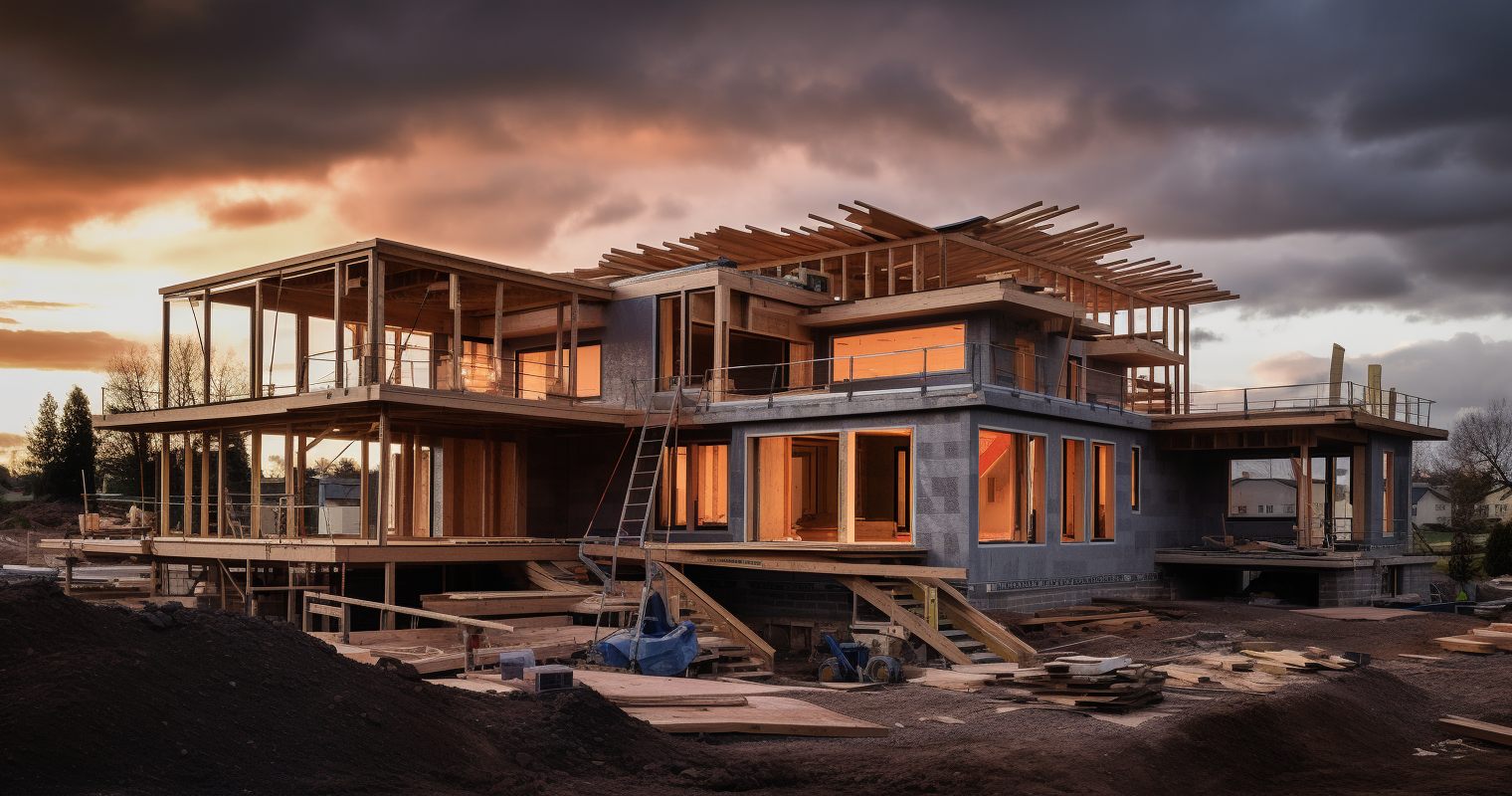
Foreign nationals face no restrictions on land ownership in Italy, making it entirely possible to build or renovate property there — but the process is heavily regulated and differs considerably from one municipality to the next. Substantial construction or renovation work almost always requires prior authorisation, and the rules governing heritage protection are particularly far-reaching. Bringing a local architect, geometra (surveyor), and notary into your team from the very beginning is the surest way to avoid expensive legal and administrative mistakes.
| Item | Details |
|---|---|
| Main permit types | CILA (minor works), SCIA (structural works), Permesso di Costruire (new build / major changes) |
| Permesso di Costruire timescale | Typically 60–90 days for municipality approval (as of 2025) |
| SCIA review window | Work may begin immediately; municipality has 30 days to raise objections (as of 2025) |
| CILA fine for non-compliance | €1,000–€10,000 depending on municipality (as of 2025) |
| Heritage authority | Soprintendenza Archeologia, Belle Arti e Paesaggio (39 regional offices across Italy) |
| Architect registration body | Consiglio Nazionale degli Architetti, Pianificatori, Paesaggisti e Conservatori (CNAPPC) — cnappc.it |
| Land/cadastral registry | Agenzia delle Entrate – Catasto — agenziaentrate.gov.it |
| Foreign ownership restrictions | None for EU citizens; non-EU citizens may purchase subject to reciprocity agreements |
Do you need planning permission to build or renovate a property in Italy?
In almost every case involving work beyond purely cosmetic changes, the answer is yes. Italian law and local municipal regulations make clear that significant renovation and construction activities are subject to authorisation. The framework is built around three principal permit categories, each calibrated to a different level of intervention. Choosing the wrong category can trigger fines, forced work stoppages, and serious complications when the time comes to sell.
Ordinary maintenance — no permit required. Known in Italian as “manutenzione ordinaria,” this category covers work that refreshes a building’s appearance without altering its dimensions or structural integrity. Repainting walls, replacing light fixtures, or patching minor leaks all fall into this category. No permit is needed for such work, though if you have any doubt about a specific job, it is always worth checking with your local municipality.
CILA (Comunicazione Inizio Lavori Asseverata) — for minor works. The CILA was designed to cut red tape for minor building works that do not touch the structure, the building’s footprint, or its designated use. Typical examples include rerouting existing drainage, rearranging internal spaces by moving non-load-bearing partitions, installing false ceilings, repositioning doors and window fittings, and upgrading electrical, plumbing, heating, or air-conditioning installations. A key advantage of the CILA is that work can begin as soon as the notice is filed — there is no waiting period.
SCIA (Segnalazione Certificata di Inizio Attività) — for structural works. The SCIA applies to more complex interventions than those covered by the CILA — specifically work that affects a property’s structure, safety, or intended use. Like the CILA, it permits an immediate start once the paperwork has been submitted, but the local municipality retains the right to review the filing and raise objections within 30 days. Removing or altering load-bearing walls, adding an external staircase or balcony, and rebuilding a roof are all examples of work requiring a SCIA.
Permesso di Costruire — for new builds and major changes. This is Italy’s most comprehensive construction authorisation and is mandatory for any work that significantly affects a property’s size, structure, footprint, or designated purpose. Unlike the CILA and SCIA — which are self-certified declarations — the Permesso di Costruire must receive formal approval from the local municipality before a single brick can be laid. The process is more involved and takes longer, but it ensures full alignment with zoning rules, environmental protections, and building codes.
How does this compare with other systems? Italy’s three-tier structure differs considerably from, for example, the unified planning permission regime in the UK, where a single local authority assessment covers most significant works. It also differs from Australia’s Development Approval system, where a council assessment must be completed before work starts on any project. Under the SCIA and CILA tracks, work can proceed immediately — but at the risk of receiving a stop order from the municipality within 30 days. This distinction makes professional judgment about the correct permit category particularly important.
Who grants permission, and how? It is the individual municipalities that hold authority over the use and development of land parcels within their territory. They may issue or refuse building titles and require amendments to submitted plans. Any permission granted must comply with local regulatory instruments — land-use plans and structural plans — as well as national, regional, and municipal legislation. This means a rule unique to one municipality, such as a specific minimum floor-to-ceiling height, can apply in one town but nowhere else — making local knowledge indispensable.
Step-by-step: applying for a Permesso di Costruire. The following outlines the standard process, though steps may vary by region and municipality:
- Appoint a qualified professional. The property owner must submit plans prepared by a registered professional — such as an architect or engineer — who is enrolled with the relevant professional board and is able to describe the technical specifications of the proposed works in full.
- Prepare architectural plans. Your appointed technician produces detailed drawings showing both the existing state of the building and the proposed modifications, together with a planning statement explaining how the project satisfies local urban planning requirements.
- Gather supporting documents. You will need proof of ownership (title deeds or notarial authorisation if you are not the sole owner), environmental and landscape assessments where construction is planned in protected areas or near heritage sites, and structural calculations certified by a qualified engineer.
- Submit to the municipal office (Comune). The completed application goes to the municipality in which the property is situated. Applications are processed in order of receipt. The relevant municipal officer may request supplementary documentation or call for amendments to the plans within the statutory timeframe.
- Await approval. The municipality typically takes between 60 and 90 days to issue the permit (as of 2025 — confirm current timescales with your local Comune). No work may commence during this waiting period.
- Commence work and notify completion. When construction is finished, a completion certificate signed by the engineer, designer, or other qualified technician must be submitted to confirm that all works carried out are consistent with the approved plans.
Consequences of non-compliance. Proceeding without the correct authorisation results in administrative penalties and, in serious cases, criminal liability. Failure to file a CILA can attract fines of between €1,000 and €10,000 depending on the municipality (as of 2025). Unauthorised alterations can also derail or invalidate a future sale, especially once a notary undertakes the legally required compliance checks.
What are the rules around listed buildings, conservation areas, and heritage protection in Italy?
Italy operates one of the most comprehensive heritage protection systems anywhere in the world. While the underlying principle — protecting historically and architecturally significant places — is shared with systems in many other countries, the Italian framework is administered through a dedicated national code and enforced by a specialist government body with considerable powers over both publicly and privately owned assets.
The legal framework. The foundation of Italian heritage law is the Cultural Heritage and Landscape Code (Codice dei Beni Culturali e del Paesaggio), enacted as Legislative Decree No. 42 of 2004. This legislation recognises as cultural heritage both movable and immovable things — whether in public or private ownership — that possess artistic, historical, archaeological, or ethno-anthropological significance. The Italian concept of the vincolo storico (heritage restriction) extends beyond individual buildings and can encompass entire landscapes and areas, making it broader in scope than listed building designations found in many comparable legal systems.
The Soprintendenza. The Ministry of Culture was entrusted in 2004 with the task of safeguarding Italy’s extraordinary cultural legacy. It discharges this responsibility through 39 regional branch offices — the Soprintendenze Archeologia, Belle Arti e Paesaggio — distributed strategically throughout the country. Each Soprintendenza exercises direct oversight over archaeological sites and collections, historic monuments and buildings in both public and private ownership, works of art, and urban and natural landscapes.
What restrictions apply? Where a property falls within the scope of Legislative Decree 42/2004 — including those subject to a vincolo storico — the Soprintendenza’s consent must be secured before any works are undertaken. This applies not only to major structural renovations but also to interventions affecting facades, roofs, windows, and interior elements of historical significance. Even where an owner intends to preserve original terracotta floors, exposed wooden beams, or vaulted ceilings, changes to layouts or materials cannot proceed without prior authorisation.
How long does Soprintendenza approval take? Obtaining authorisation is rarely a quick process. Depending on the region and the significance of the property, approval can take several months, and particularly important architectural assets may be subject to an even more detailed review. Always incorporate realistic timescales and cost allowances for this process when drawing up your project plan.
The state’s right of pre-emption. A matter of crucial importance for prospective buyers is the diritto di prelazione. The Ministry of Culture holds a statutory right to intervene after a sale deed is signed and, within a defined window, to acquire the heritage property on the same terms agreed between the original parties. This risk does not arise when purchasing a modern property and must be carefully considered when buying any building subject to heritage protection.
How to check whether a property is protected. Before purchasing or commissioning any works, the property’s heritage status should be checked via the Ministry of Culture (Ministero della Cultura) at beniculturali.it. Your notary, architect, or geometra can also conduct cadastral and heritage searches on your behalf. Where a building is classified as having special architectural or historical merit, or is located in an area of historical or environmental importance, a range of controls and limitations will apply in accordance with Legislative Decree No. 42/2004.
State support for heritage properties. There is a positive dimension to heritage ownership: Articles 31, 35, 36, and 37 of the Cultural Heritage and Landscape Code set out how owners of cultural assets — and, in some cases, tenants or managers undertaking conservation works — may apply for public financial support. Contact the Soprintendenza responsible for your region to find out what forms of assistance may be available to you.
What permits and licences are required when building or renovating in Italy?
In addition to the core planning authorisations — CILA, SCIA, and Permesso di Costruire — a project may require a number of further permits and approvals depending on its nature and location. Failing to obtain any of these can bring construction to a halt, void your insurance cover, and generate legal complications at the point of sale.
Certificato di Agibilità (Fit-for-Use Certificate). For new construction, a fit-for-use certificate (certificato di agibilità/abitabilità) must be obtained from the competent municipality, with silent approval applying if no response is received within the statutory period. This certificate confirms that the building is structurally safe and suitable for occupation, and is a legal prerequisite for using or selling a newly constructed property.
Environmental permits. Depending on how the property is to be used, environmental authorisations may be needed — for example, wastewater discharge consent, air emissions clearance, or a fire safety certificate. Where construction works relate to a defined project, that project may be subject to an environmental impact assessment (VIA), the primary purpose of which is to give the authorities a complete picture of the environmental consequences of the project and the manner in which it will be carried out.
Landscape and hydrogeological authorisations. Where land is affected by public restrictions — such as landscape designations or hydrogeological constraints — prior authorisation from the relevant public authority must be obtained before any works begin. Italy has extensive territories classified as being at risk from flooding, landslides, or seismic activity, each carrying its own building constraints or outright prohibitions. Consult the ISPRA (Istituto Superiore per la Protezione e la Ricerca Ambientale) national risk maps at isprambiente.gov.it and the relevant Regional Authority (Regione) for detailed hydrogeological information before purchasing or developing rural or coastal land.
Demolition permits. Clearing an existing structure prior to new construction may itself require a separate demolition permit from the local Comune, distinct from any permit obtained for the new build.
Tree felling permits. Removing trees or clearing green areas may require a separate permit. In zones subject to landscape protection or regional forestry regulations, this can represent a significant constraint on site preparation. Always check requirements with your municipality before clearing any vegetation.
Structural and seismic notifications. Italy is a seismically active country, and structural works in earthquake-risk areas require additional notifications and sign-offs from a qualified structural engineer under the national building regulations (Norme Tecniche per le Costruzioni). A qualified engineer takes responsibility for structural integrity, seismic compliance, and reinforced concrete, steel, and timber elements, as well as the SCIA strutturale.
VAT implications of correct documentation. Securing the right permit has direct financial consequences beyond mere legal compliance. To qualify for the reduced 10% VAT rate on renovation works rather than the standard 22% rate, a correctly filed CILA or SCIA is generally required. Without the proper documentation, the tax authority treats the works as ordinary maintenance, and the standard rate applies throughout. On a €50,000 renovation project, this difference amounts to €6,000. (As of 2025 — confirm current VAT rates directly with the Agenzia delle Entrate.)
How do you find a reliable, trustworthy builder in Italy?
Italy’s construction sector is regulated, but it lacks the degree of national standardisation found in some other countries. There is no single national register of approved contractors equivalent to Australia’s Master Builders Association licence system or the UK’s Construction Industry Training Board framework. This makes thorough due diligence before engaging any contractor all the more important.
Industry regulation and qualifications. Construction companies and individual tradespeople operating in Italy must be registered with the local Chamber of Commerce (Camera di Commercio) and hold a valid VAT number (Partita IVA). Larger construction firms may also be affiliated with ANCE (Associazione Nazionale Costruttori Edili), the national association of building contractors:
- Website: ance.it
- Address: Via Guido d’Arezzo 2, 00198 Roma
- Phone: +39 06 85 67 1
A further relevant body is CNA Costruzioni (Confederazione Nazionale dell’Artigianato e della Piccola e Media Impresa — Costruzioni), which represents smaller building firms and skilled tradespeople:
- Website: cna.it
- Address: Via Degli Scipioni 179, 00192 Roma
- Phone: +39 06 44 18 81
Practical vetting steps. When selecting a builder, work through the following checks:
- Request the contractor’s Partita IVA (VAT number) and confirm it is active on the Agenzia delle Entrate website.
- Verify that they are enrolled with the Camera di Commercio in the relevant province — the national register can be searched at registroimprese.it.
- Ask for references from recent comparable projects and follow these up personally — whenever possible, visit a finished project rather than relying solely on photographs.
- Confirm that the contractor holds adequate liability and employer’s insurance (assicurazione di responsabilità civile) — request the policy certificate and check its expiry date.
- Insist on a comprehensive written contract (contratto d’appalto) that specifies the scope of works, materials to be used, payment schedule, start and completion dates, and penalties for delay. Have a bilingual version prepared if your Italian is limited.
- Structure payments as staged instalments (pagamenti a stati avanzamento lavori — SAL) linked to verified stages of progress rather than large upfront sums. Never pay the full project value before work begins.
- Ensure all invoices are properly issued with a fiscal receipt (fattura), since unreceipted cash transactions carry no legal weight in any future dispute.
Common pitfalls and scams. It is well documented that a significant proportion of properties purchased in Italy require some degree of renovation, construction, or restoration. Building regulations for restoration projects in Italy are notably different from those in other countries — a reflection of Italy’s exceptionally rich and varied architectural legacy. Foreign owners can be especially vulnerable to contractors who underquote to win a deposit, then delay work or simply vanish. Always source contractors through professional referrals — from your architect or geometra — rather than anonymous recommendations, and never allow work to begin without a signed contract. Be wary of any suggestion to proceed “informally” without permits, as this exposes you to serious legal liability and can render your property impossible to sell.
How do you find a qualified local architect in Italy?
Architecture is a regulated profession in Italy. Practising as an architect requires a recognised university degree, successful completion of a state examination, and formal registration with the appropriate professional order. This is broadly comparable to mandatory professional licensing requirements for architects in countries such as France, Germany, and Canada, where registration is a non-negotiable condition of practice.
Registration requirements. When submitting a building licence application, the property owner must present technical plans drawn up by a registered professional — such as an architect or engineer — enrolled with the relevant professional board. Architects hold a university degree and a state examination qualification, carry full design authority for layouts, facades, extensions, and interiors, and can file a Permesso di Costruire, though structural and seismic elements of any project require the involvement of a qualified engineer.
The national professional body. The regulatory and representative authority for architects in Italy is the Consiglio Nazionale degli Architetti, Pianificatori, Paesaggisti e Conservatori (CNAPPC):
- Website: cnappc.it
- Address: Via Santa Maria dell’Anima 10, 00186 Roma
- Phone: +39 06 32 65 181
- Email: [email protected]
Each region and province maintains its own Ordine degli Architetti (Order of Architects). A searchable national register of qualified architects is available through the CNAPPC website, enabling you to identify a licensed practitioner in your specific area.
The role of the geometra. Italy has a distinctive professional category that does not have a direct equivalent elsewhere — the geometra. This is a technical surveyor whose expertise centres on planning applications, permits, cadastral matters, and administrative procedures. Geometri are adept at navigating local bureaucratic requirements and are indispensable for any renovation project. However, a geometra’s legal competence is confined to modest civil works, and they cannot sign off on structural or seismic design. For larger projects or heritage properties, you will typically need both a geometra and a registered architect or engineer working in parallel.
Considerations for expats. There is no legal requirement for your architect to speak any language other than Italian, but for expatriate clients it is strongly advisable to engage a practitioner with demonstrable experience working with international clients and the ability to communicate with you clearly throughout the project. Many architects practising in popular expat destinations — Tuscany, Umbria, Puglia, Sardinia, and Sicily — have precisely this background; ask about it directly during your first consultation. Architects qualified in other EU member states may be permitted to practise in Italy under mutual recognition of professional qualifications rules — check the current position with the CNAPPC before involving a non-Italian EU architect in your project.
What are the common pitfalls when buying land to build on in Italy?
Acquiring land for development purposes is among the most intricate property transactions you can undertake in Italy. The risks are considerable, and several are specific to the Italian legal and administrative environment. Taking qualified professional advice before signing anything is not a precaution — it is an absolute necessity.
Verify buildability before you buy. Not every plot of land in Italy can be built upon, regardless of what a vendor might imply. All land is subject to zoning classifications under the Piano Regolatore Generale (PRG) or its regional equivalent, which govern what may be constructed there. Land designated as agricultural (terreno agricolo) is subject to particularly strict limitations. Your legal team must examine zoning regulations, building restrictions, and local planning instruments to confirm that your intended project is legally viable before any purchase agreement is signed. Any offer to purchase should be made conditional on formal confirmation that the proposed use is permitted.
Check title, boundaries, and ownership history. A number of formal and substantive requirements concerning building permits must be satisfied when purchasing property in Italy to ensure the deed is legally sound, tax obligations have been met, and that neither party is exposed to misunderstandings arising after completion. Crucially, the mere existence of building permits does not guarantee that what was actually constructed corresponds to what was approved. Tax authority property records and town planning office records are maintained separately, and correcting one does not automatically update the other — except in limited parts of northern Italy that inherited a unified record-keeping system from former Austrian administration.
Unpermitted works — a common and serious issue. It is not uncommon for a foreign buyer to discover after the fact that a seller carried out a bathroom renovation without filing a CILA. This creates delays in the notarial deed process and necessitates retroactive compliance — sometimes at penalty rates. Always instruct a geometra or architect to conduct a thorough planning and cadastral compliance check (conformità urbanistica e catastale) before contracts are exchanged.
Environmental and flood risks. Large areas of Italy are classified as being at risk from flooding, landslides, or seismic activity, and these designations impose additional building restrictions or outright prohibitions on development. Consult the ISPRA national risk maps at isprambiente.gov.it and verify hydrogeological constraints with the relevant Regional Authority (Regione) before purchasing land in rural or coastal locations.
Utilities availability. Do not take it for granted that mains water, electricity, gas, or sewerage are available to a rural plot. Connecting a remote site to public services can be prohibitively expensive, and in some cases may not be technically feasible. Establish availability and obtain realistic cost estimates from utility providers and the local Comune before completing any purchase.
Always use a notary. Italian law requires all property transactions to be completed before a notaio (notary public), who is legally obliged to verify the lawfulness of the transaction on behalf of both parties. However, the notary does not act as your personal legal adviser. Appoint a separate Italian property lawyer (avvocato) or conveyancer experienced in Italian property transactions to represent your interests from start to finish.
Inheritance and ownership structure. Italy’s forced heirship rules (legittima) mean that certain close relatives are legally entitled to a share of your estate under Italian law, regardless of the provisions of your will. If you are purchasing in your own name, seek specialist cross-border succession advice before completing the transaction — particularly if you intend the property to pass through your family over the long term. Purchasing through a corporate structure may be worth considering in some circumstances, but this too demands expert legal and tax guidance.
What are the rules around foreign ownership and financing for construction projects in Italy?
Italy takes a broadly open approach to foreign property investment. There are no blanket prohibitions on foreign nationals buying land or property, though certain conditions apply according to your nationality and residency status.
EU and EEA citizens. Nationals of EU and EEA member states enjoy identical rights to Italian citizens when it comes to purchasing land, acquiring property, and commissioning construction work in Italy. No special ownership structures, local partnerships, or additional licences are required.
Non-EU citizens. Non-EU nationals can generally purchase property in Italy under the principle of reciprocity — meaning Italy permits the purchase if the buyer’s home country reciprocally allows Italian nationals to buy property there. In practice, most countries have such arrangements in place with Italy, but it is advisable to confirm your particular situation with a qualified Italian property lawyer before proceeding. Non-EU buyers do not need to be resident in Italy to complete a purchase.
Mortgages and construction financing. Expatriates can access Italian mortgage products (mutui) and, in certain circumstances, construction loans (mutuo fondiario di costruzione), although eligibility criteria differ from one bank to another. Italian lenders typically advance up to 70–80% of the property value to non-residents (as of 2025 — verify current lending criteria with individual banks). Applications will require documentation of income, existing assets, and identity. Construction loans are generally disbursed in tranches tied to verified stages of build completion, similar to self-build mortgage products available in the UK and Germany. A stable, evidenced income backed by tax returns from your country of residence will carry significant weight.
Tax identification number (Codice Fiscale). Any foreign national purchasing property, opening a bank account, or engaging professionals in Italy requires an Italian tax identification number (Codice Fiscale). This can be obtained from the Agenzia delle Entrate or from an Italian consulate in your home country before you travel.
Key authorities. For guidance on investment and financial regulation, consult the Banca d’Italia (Italy’s central bank and financial regulator) at bancaditalia.it and the Agenzia delle Entrate (Italian Revenue Agency) at agenziaentrate.gov.it.
What official sources should you consult when planning to build or renovate in Italy?
Rules, fees, and procedures in Italy are subject to regular revision — particularly following legislative simplification initiatives such as the 2024 Decree-Law No. 69, which entered into effect on 30 May 2024 and introduced significant changes to Italy’s building and urban planning regulations. Always verify the most up-to-date requirements directly with the relevant official authority before committing to plans or expenditure. The key official bodies and resources are listed below:
| Body / Register | Purpose | Website |
|---|---|---|
| Comune (local municipality) | Issues all building permits and licences (CILA, SCIA, Permesso di Costruire); holds local planning (PRG) documents | Search via governo.it |
| Agenzia delle Entrate – Catasto | National land and property registry (cadastre); cadastral maps; property records | agenziaentrate.gov.it |
| Ministero della Cultura | Heritage protection; lists of protected properties and areas; access to regional Soprintendenze | beniculturali.it |
| ISPRA | National environmental and hydrogeological risk maps; flood and landslide risk data | isprambiente.gov.it |
| CNAPPC | National register of licensed architects; find a registered architect by region | cnappc.it |
| Camera di Commercio / Registro Imprese | Company and contractor verification; confirm builder’s registration and VAT number | registroimprese.it |
| ANCE | National association of building contractors; industry guidance; find member firms | ance.it |
| Ministero delle Infrastrutture e dei Trasporti (MIT) | National policy on construction, housing, and urban development; building codes (Testo Unico dell’Edilizia) | mit.gov.it |
| Banca d’Italia | Financial regulation; guidance on mortgages and lending in Italy | bancaditalia.it |
Frequently asked questions about building and renovating in Italy
How much does it typically cost to renovate a property in Italy?
The cost of renovation varies widely according to the location, the condition of the property, and the extent of the works planned. As a broad indication, straightforward renovation covering kitchens, bathrooms, and flooring tends to cost between €500 and €1,000 per square metre, while a full structural renovation of a rural property can run to €1,500–€2,500 per square metre or beyond. Properties subject to Soprintendenza oversight typically involve higher fees for professionals and specialist materials. Always obtain a minimum of three written quotes and ask your architect to review them before entering into any contract. Fees are not set at a national level, so check prevailing market rates with local practitioners.
How long does a typical renovation or self-build project take in Italy?
Project timelines depend on the permit route chosen, the workload of the relevant municipality, and the scale of the build. A CILA allows work to begin immediately upon filing; a SCIA likewise permits an immediate start, subject to a 30-day window during which the municipality may raise objections; a Permesso di Costruire normally requires 60–90 days for approval (as of 2025). The physical construction phase for a full renovation or self-build can range from six months to several years. Heritage authorisations from the Soprintendenza can add further months to the programme. Build in generous contingency time, especially in rural areas where tradespeople may have longer availability lead times.
Do I need to speak Italian to manage a building project in Italy?
All permits, official documents, and contracts are drawn up in Italian. Although many architects, geometri, and lawyers working in popular expatriate areas are comfortable in other languages, every legal document must be executed in Italian and will need a certified translation for use abroad. It is strongly advisable to engage a bilingual project manager, or to make certain your architect can communicate effectively with you in your preferred language throughout the project. Never put your signature to any document that has not first been independently translated and fully explained to you.
What happens if planning rules are breached in Italy?
Commencing construction without the required building permit, or failing to submit the mandatory certified notice of commencement, carries legal penalties. Consequences range from administrative fines to demolition orders compelling you to restore the property to its original condition at your own cost. In certain circumstances, criminal sanctions may apply, and properties with unauthorised modifications may become legally impossible to sell. Starting work without the correct authorisation can ultimately mean being required to undo everything you have built.
Are qualifications or building standards from other countries recognised in Italy?
No. Italian building regulations — principally the Testo Unico dell’Edilizia (Presidential Decree 380/2001) and the associated technical standards — are specific to Italy and do not automatically incorporate or recognise foreign construction norms. All work carried out must comply with Italian law irrespective of the nationality of the owner or the contractor involved. Architects and engineers from EU member states may be permitted to practise in Italy under the EU mutual recognition of professional qualifications framework, but must verify this with the relevant Italian professional order (CNAPPC for architects) before commencing any activities. Professionals from outside the EU are not automatically recognised.
Can I dispute a decision by my contractor or builder in Italy?
Yes. Where a written contract exists, you have the basis for a civil claim through the Italian courts (tribunale civile) or through an alternative dispute resolution mechanism. The recommended first step is to serve a formal written notice (diffida) through a lawyer setting out your grievance. Because civil proceedings in Italy can be protracted, prevention is significantly preferable to litigation — thorough vetting, a detailed contract, and a staged payment structure remain your most effective safeguards. Many expat property owners find it prudent to retain a bilingual Italian property lawyer throughout the project for precisely this reason.
Can I appeal if my planning application is refused?
Yes, there is a right of appeal against a municipality’s refusal of planning permission. An appeal is lodged by petitioning the Regional Administrative Tribunal to overturn the municipality’s decision. Should the Tribunal’s ruling be unfavourable, a further appeal may be brought before the Council of State, which acts as the supreme court for administrative matters. Appeals in this area are legally complex and require specialist representation by an Italian administrative lawyer (avvocato amministrativista). Act promptly, as strict time limits govern the filing of such appeals.
What is a geometra and do I need one?
A geometra is a trained technical professional whose work centres on permit applications, property surveys, cadastral matters, and administrative procedures. Uniquely Italian, the role combines aspects of a building surveyor and a planning agent, and geometri are invaluable when dealing with local bureaucracy, filing CILA and SCIA applications, and ensuring the accuracy of your property’s cadastral records. On most renovation projects, you will engage both a geometra — for permits and administration — and an architect for design. Any work involving structural or seismic elements will additionally require a qualified engineer. Your geometra is usually the ideal first point of contact and can often introduce you to reliable local architects, engineers, and builders.