
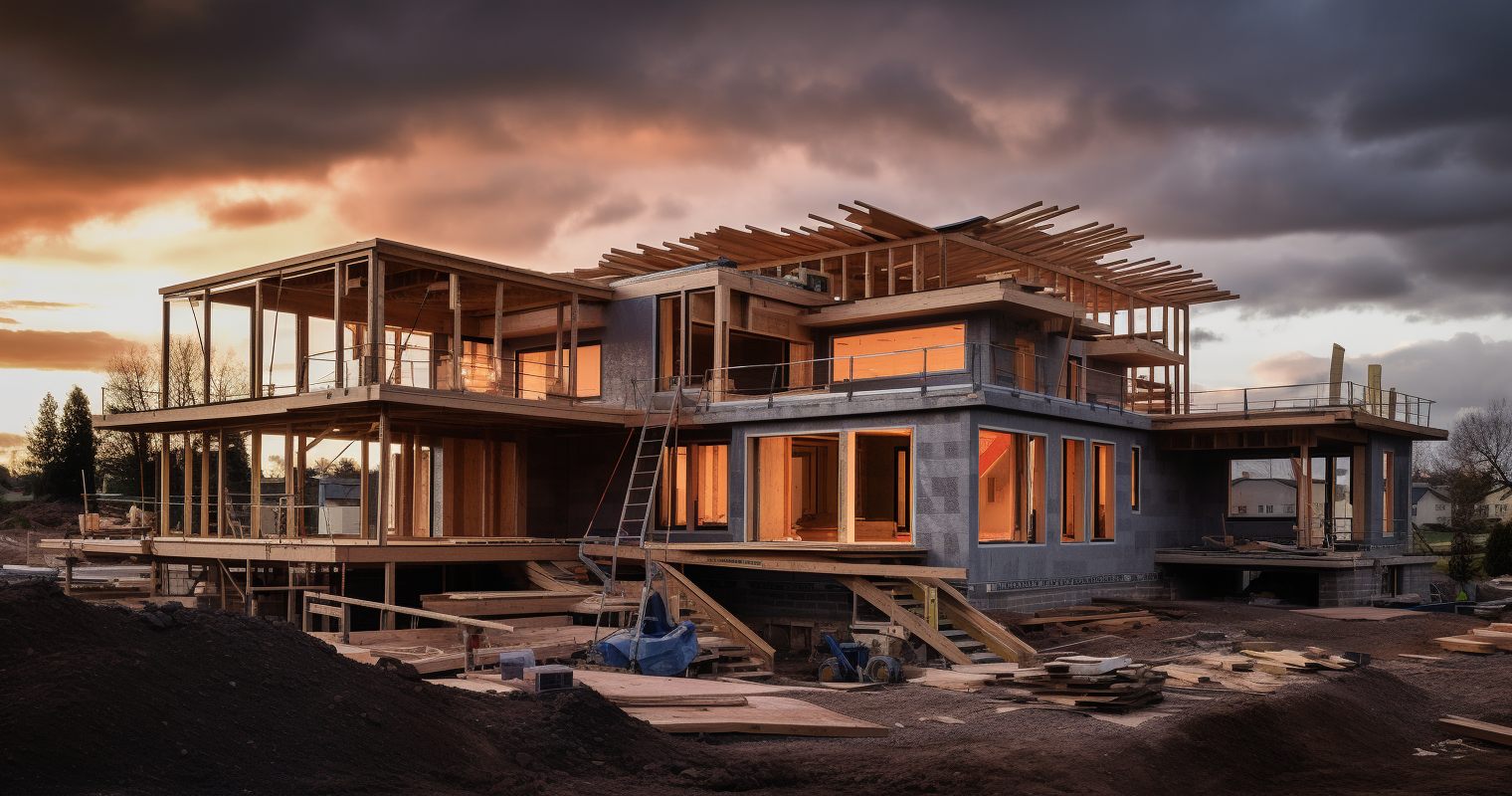
Constructing or renovating a property in Ireland is a well-regulated process that is fully open to foreign nationals. Planning permission is necessary for most new builds and substantial alterations, although a range of minor works falls outside this requirement. The construction sector operates under rigorous building regulations, and only those registered with the statutory professional body may use the title of architect. There are no blanket restrictions preventing overseas nationals from acquiring land or undertaking construction projects in Ireland.
| Item | Details |
|---|---|
| Planning permission decision timescale | Typically 8 weeks from valid application (as of 2025) |
| Planning permission validity | 5 years (full); 3 years (outline) — as of 2025 |
| Rear extension exemption limit | Up to 40 sq m to the rear without permission (conditions apply) — as of 2025 |
| Appeal body | An Coimisiún Pleanála — 4-week window to appeal a decision |
| Architect registration | Mandatory — RIAI (Royal Institute of the Architects of Ireland) |
| Foreign land ownership restrictions | None — foreign nationals may purchase land and commission construction freely |
Do you need planning permission to build or renovate a property in Ireland?
Planning permission is needed for any development or building works that do not fall within the category of “exempted development.” In essence, the planning system exists to ensure that new development is appropriate for its surroundings and consistent with the relevant county or city development plan and associated guidelines. For virtually all new builds, major extensions, and changes in land use, a formal application to the local authority is obligatory.
Smaller-scale works and minor alterations to a home are generally classified as exempted developments and are subject to specific qualifying conditions. Exempted development typically covers works of a minor character, such as internal alterations and improvements, or changes that have no material effect on the outward appearance of a structure.
Domestic extensions to the rear of a house — including conservatories — do not require planning permission provided the total increase in the original floor area does not exceed 40 square metres, taking into account any previous extensions regardless of whether permission was granted for them. For terraced and semi-detached properties, tighter restrictions apply to extensions above ground floor level.
Outbuildings such as garages, carports, sheds, greenhouses, or pet kennels may be erected without permission provided they do not project beyond the front building line and do not exceed 4 metres in height for tiled or slated pitched roofs, or 3 metres for any other roof form. The maximum floor area for such structures under the exempted development provisions is 25 square metres.
It is important to note that even where works are exempt from the planning permission requirement, they must still comply with building regulations and any other applicable legislation. If the property in question is a Protected Structure or lies within a designated conservation area, additional constraints will apply regardless of exemption status.
Where there is genuine uncertainty about whether a proposed project qualifies as exempt, homeowners can apply to their local planning authority for a Section 5 declaration, which provides a formal confirmation of exemption status. This is a sensible precautionary measure before committing to any significant project.
Where planning permission is required, the procedure is as follows:
- Public notification: Prior to lodging an application, you are required to give public notice of your intentions. This involves placing a notice in a local newspaper and erecting a clearly legible site notice at the property.
- Submit application: The planning application must be received by your local authority within 2 weeks of the newspaper notice being published. It must include drawings, site maps, and all necessary supporting documentation.
- Decision: The local planning authority will assess the application and issue a decision within 8 weeks (as of 2025).
- Appeal period: Any party wishing to challenge the decision has a four-week window in which to lodge an appeal with An Coimisiún Pleanála.
- Permission granted: If no appeal is lodged within that period, planning permission takes effect. Full permission is ordinarily valid for five years unless the planning authority specifies a different timeframe.
Planning application fees are prescribed by national regulations and vary according to project type and floor area. You should verify the current fee scale directly with your local authority before applying, as rates are updated periodically by legislation. The correct fee must accompany the application — applications submitted with an incorrect fee will be returned as invalid.
By comparison with planning systems in countries such as Canada or Australia — where development approval processes can differ markedly between provinces or states — Ireland operates under a nationally standardised framework established by the Planning and Development Act and administered at local authority level. Unlike in the United States, where zoning and building permits are frequently handled by separate municipal bodies, Ireland integrates planning permission and local authority oversight within a single local authority process. Applications can be submitted online through the national planning portal at myplanning.ie in most areas.
Note: The Government has indicated that revised proposals to relax planning requirements for minor extensions and renovations are expected to be published in Spring 2026, with a four-week public consultation to follow. It is therefore essential to confirm current rules with your local authority before commencing any works, as the exempted development provisions may be amended in the near term.
What are the rules around listed buildings, conservation areas, and heritage protection in Ireland?
Ireland maintains a formal system for protecting its built heritage that broadly parallels the listed building and conservation area frameworks found in the UK, though it operates under its own distinct legislation and terminology. The central concept is that of the Protected Structure.
A “Protected Structure” is a structure that a planning authority considers to be of special interest on architectural, historical, archaeological, artistic, cultural, scientific, social, or technical grounds and which is recorded in its Record of Protected Structures (RPS). A structure may qualify by virtue of its architectural or artistic quality, its setting, or its association with commercial, cultural, economic, industrial, military, political, social, or religious history.
Every planning authority is legally required to maintain an RPS listing structures of special interest within its area. This register forms part of the county or city development plan. Local authorities must include all structures they regard as being of special interest and may add or remove structures when reviewing their development plan or at any other time.
Once a structure is entered on the Record of Protected Structures, carrying out works to it is only exempt from planning permission where those works do not materially affect the character of the structure or the particular elements that give it its special interest. As a result, where the interior of a building is among its protected elements, the general exemption that would ordinarily apply to internal works no longer operates in relation to those protected features.
The owner and occupier of a protected structure are under a legal obligation to ensure the structure is not endangered through neglect, damage, or deterioration. These maintenance duties are a statutory requirement, not merely a recommendation.
In addition to the protection of individual structures, Ireland designates Architectural Conservation Areas (ACAs). Local authorities carry statutory responsibilities under the Planning and Development Act, 2000 (as amended) for the protection, enhancement, and adaptive reuse of protected structures and buildings situated within ACAs. Works that would alter the external character of a building within an ACA may require planning permission even where they would otherwise be exempt — an arrangement comparable to conservation area controls in the UK.
To establish whether a property is a Protected Structure or falls within an ACA before proceeding with a purchase or project, the following resources are available:
- The National Inventory of Architectural Heritage (NIAH) is a state programme established on a statutory footing to identify, record, and assess the post-1700 architectural heritage of Ireland. NIAH survey findings form the basis for recommendations to planning authorities regarding inclusion of structures in their Record of Protected Structures. The NIAH database can be searched at buildingsofireland.ie.
- Each local authority’s planning department holds the RPS applicable to its area. You may also consult the Historic Environment Viewer on the Department of Housing, Local Government and Heritage website for a national overview.
- Your local Architectural Conservation Officer (ACO) can advise on whether a building is a protected structure, a proposed protected structure, or has been the subject of a Ministerial Recommendation.
The owner or occupier of a protected structure may apply to the planning authority for a declaration specifying whether particular proposed works would materially affect the character of the structure. The authority must respond within 12 weeks and must take account of guidelines issued by the Department of Housing, Local Government and Heritage.
All planning applications relating to works on a Protected Structure must be accompanied by an Architectural Heritage Impact Assessment, which should be prepared by an accredited conservation architect or equivalent professional. The RIAI Conservation Accreditation System recognises different levels of expertise for this purpose and assists those seeking to carry out works to a protected structure in identifying an architect with the appropriate skills. The RIAI Skills Matrix for Conservation Projects sets out the different competency levels of RIAI Conservation Accredited Architects, ranging from Grade 3 to Grade 1.
The consequences of carrying out unauthorised works to a protected structure can be severe. Enforcement action under planning law may result in substantial fines or, in serious cases, imprisonment. Unauthorised works also create significant difficulties when attempting to sell the property. Always seek professional advice and obtain formal declarations before beginning any works on a potentially protected building.
What permits and licences are required when building or renovating in Ireland?
Planning permission and compliance with building regulations are separate legal requirements in Ireland, and both must be satisfied. Receiving planning permission does not automatically mean that the proposed works meet building regulation standards — the two are entirely distinct obligations.
Building Regulations and Commencement Notices: Under the Building Control Acts, all new construction and most substantial works must comply with the Building Regulations, which set out minimum standards for structural integrity, fire safety, energy performance, accessibility, and related matters. Before commencing most building works, a Commencement Notice must be submitted to the local Building Control Authority (BCA) — a function carried out by the local authority. For larger or more complex projects, a full Building Control Management System (BCMS) submission is required, incorporating documentation from the assigned certifier (typically a registered architect or chartered engineer) and the appointed builder.
While Irish building regulations apply to the majority of renovation projects, certain minor works may be exempt from full compliance requirements or from specific provisions of the regulations. These exemptions typically concern works that have no bearing on the structure, safety, or energy performance of the building. It remains important to understand, however, that an exemption from planning permission does not automatically mean that building regulations requirements can be set aside.
Fire Safety Certificates: For most new commercial buildings and apartment developments, a Fire Safety Certificate must be obtained from the BCA before construction commences. This document confirms that the building design satisfies Part B (Fire Safety) of the Building Regulations. Individual private dwellings are generally not required to obtain a Fire Safety Certificate, but all dwellings must nonetheless meet the fire safety standards contained in the regulations.
Disability Access Certificates: Certain categories of building — including new commercial premises and apartment blocks — also require a Disability Access Certificate prior to construction, confirming that the design complies with Part M (Access and Use) of the Building Regulations.
Utility Connections: Connecting to the public water and sewerage networks requires approval from Irish Water (water.ie). Applications for electricity connections are made to ESB Networks (esbnetworks.ie), and gas connections are arranged through Gas Networks Ireland (gasnetworks.ie). These applications should be initiated well ahead of construction, as connection lead times can vary considerably, particularly in rural locations.
Environmental and Waste Permits: If the proposed works are located near water bodies, wetlands, or protected habitats, an Environmental Impact Assessment (EIA) or consent under the Habitats Directive may be required. All construction site waste must be managed and disposed of in accordance with applicable waste legislation; consult your local authority or the Environmental Protection Agency (EPA) for relevant guidance.
Completion Certificates: Upon completion of building works, an Opinion on Compliance or Certificate of Compliance on Completion is submitted to the BCA by the assigned certifier. This document is essential for future property transactions and should be carefully preserved.
Always confirm current requirements and applicable fees with your local Building Control Authority, as these may be subject to change. Contact details for all local authorities are available at gov.ie.
How do you find a reliable, trustworthy builder in Ireland?
The building industry in Ireland is regulated through a combination of building control legislation, trade body membership, and contractual frameworks. There is no single mandatory personal licensing regime requiring every individual builder to hold a licence (unlike, for example, the licensed contractor systems operating in some Australian states). However, the Building Control (Amendment) Regulations require builders undertaking certain categories of work to be registered, and professional accountability is reinforced through the BCMS documentation system described above.
The principal trade body representing the construction sector in Ireland is the Construction Industry Federation (CIF):
- Website: cif.ie
- Phone: +353 (0)1 406 6000
- Email: [email protected]
- Address: Construction House, Canal Road, Dublin 6, D06 E8H4, Ireland
The Construction Industry Federation maintains a register of specialist Heritage Contractors at www.cif.ie. More broadly, the CIF’s member directory enables you to search for registered contractors by trade and location — a useful first step when evaluating prospective builders.
For renovation and home improvement work in particular, schemes such as the CIF’s Registered Contractors programme provide a degree of assurance. When engaging any builder, the following practical steps are strongly recommended:
- Verify registration and insurance: Request the builder’s tax registration number (relevant to the Revenue Online Service, ROS), their current public liability insurance certificate, and employers’ liability insurance documentation. Any reputable contractor will supply these without hesitation.
- Take up references: Before appointing a contractor, ask to see examples of comparable completed work and request contact details for former clients. Speak to those clients directly and, wherever possible, arrange to view finished projects in person.
- Insist on a written contract: A comprehensive written contract must be agreed and signed before any work begins. Both the RIAI and the CIF publish standard form contracts for domestic and commercial projects. The contract should clearly define the scope of works, materials to be used, programme, payment schedule, and the procedure for dealing with disputes or delays.
- Use staged payments: Never pay the full contract sum in advance. Structure payments in tranches linked to verified completion of defined milestones — for example, an initial payment on commencement, further instalments at structural completion and first fix, and a final payment upon satisfactory completion and sign-off.
- Retain a percentage: Standard practice in Ireland is to withhold a percentage — typically 5–10% — of the contract value for an agreed period following practical completion, providing a reserve against defects that may emerge during early occupation.
Common pitfalls and scams: Foreign property owners and expatriates can be targeted by unregistered or itinerant tradespeople — sometimes referred to as “rogue traders” — who offer unusually low quotations, demand large upfront cash payments, and produce substandard or incomplete work. Key warning signs include: the absence of a fixed business address, reluctance to provide a written contract, pressure to start work immediately, and insistence on full payment in cash before any work is undertaken. Always obtain a minimum of three written quotations for any significant project and verify that any contractor you propose to engage can be identified through the CIF membership directory, Revenue records, or another credible register.
If you are undertaking a major construction project while residing outside Ireland, seriously consider appointing a local project manager or clerk of works to oversee the work on your behalf. Managing a building project from a distance substantially increases the risk of delays, budget overruns, and quality failures.
How do you find a qualified local architect in Ireland?
In Ireland, the RIAI serves as the statutory registration body for architects. The professional title “Architect” is protected under Section 18 of the Building Control Act 2007 and may only be used by those who are registered with the RIAI. This provides meaningful consumer protection: unlike some jurisdictions where the title is unregulated, in Ireland you can be confident that anyone presenting themselves as an architect has met nationally recognised standards and is subject to professional oversight.
The Royal Institute of the Architects of Ireland (RIAI) is the regulatory and support body for architects practising in Ireland. Support services are also extended to Architectural Technologists.
Contact details for the RIAI:
- Website: riai.ie
- Phone: +353 (0)1 676 1703
- Email: [email protected]
- Address: 8 Merrion Square North, Dublin 2, D02 EK84, Ireland
The RIAI operates a publicly accessible Find an Architect directory on its website, which can be searched by location, area of specialisation, and language. The institute recognises several categories of membership for architects and architectural technologists: Fellowship, Membership, Architectural Technologist membership, Architectural Graduate membership, and Student membership. Practitioners in the first three categories are entitled to use the post-nominal designations FRIAI (Fellows), MRIAI (Members), and RIAI Arch.Tech. (Architectural Technologist members). Always check for these credentials when assessing a prospective practitioner.
For projects involving protected structures or heritage buildings, you should specifically seek an architect who holds RIAI conservation accreditation. The RIAI Conservation Accreditation System recognises varying levels of conservation expertise. The RIAI Skills Matrix for Conservation Projects is designed to assist property owners in understanding the different competency levels of RIAI Conservation Accredited Architects, from Grade 3 through to Grade 1. The RIAI publishes lists identifying architects accredited at each grade.
There is no requirement for architects in Ireland to communicate in any language other than the state’s two official languages, Irish and English. Many practices — particularly in Dublin and other urban centres — have considerable experience working with international clients. If you are planning a project from overseas, it is advisable to ask specifically about a prospective architect’s track record in managing remote client relationships and in liaising with planning authorities on behalf of clients who are not based in Ireland. Most established practices handle this routinely.
Architects in Ireland work under the RIAI Client/Architect Agreement, which sets out the terms of engagement, professional responsibilities, and fee arrangements. It is strongly advisable to use this standard agreement rather than informal arrangements. Fees are not regulated and may be structured as a percentage of project cost, a fixed sum, or an hourly rate — always agree the basis of the fee in writing before the engagement begins.
What are the common pitfalls when buying land to build on in Ireland?
Purchasing land with the intention of building in Ireland presents specific risks that differ from buying an existing property. Professional advice at every stage is indispensable. The following are the most significant issues to investigate before committing to any purchase:
Planning feasibility: Planning permission is required for any development or building work not classified as exempted development, and the planning system requires that development be consistent with the relevant county or city development plan. The fact that a parcel of land is offered for sale does not guarantee that permission to build on it will be forthcoming. Before exchanging contracts, consult your local authority’s planning department to confirm whether the land is zoned for residential use. In rural Ireland, applications for one-off houses are subject to additional policy tests — such as demonstrating “local need” or a functional connection to the rural area — that can present substantial obstacles for those without prior ties to the locality. Always obtain a professional pre-planning opinion before proceeding to contract.
Land registry and title: Ireland operates a dual system of property registration. The Property Registration Authority of Ireland (PRAI) (prai.ie) maintains the Land Registry for registered titles and the Registry of Deeds for older unregistered titles. Your solicitor must undertake a thorough title investigation to confirm the seller’s good title, identify any outstanding charges or encumbrances, and verify that the boundaries on the ground correspond to those shown on the register. Boundary disputes are more prevalent in rural areas, and historic Land Registry maps may not accurately reflect the current position.
Zoning and land use: Each county and city council publishes a Development Plan that classifies land according to use categories — residential, agricultural, industrial, amenity, and so on. Agricultural land is not generally available for residential development and cannot be rezoned at an individual purchaser’s request. Always review the zoning map for any plot before committing to purchase.
Environmental and flood risk: The Office of Public Works (OPW) publishes flood risk mapping at floodinfo.ie. Development proposals within flood-risk zones will face significant planning resistance and the completed building may be difficult or impossible to insure. Additionally, check for potential soil contamination — particularly on former industrial or agricultural land — protected natural habitats, and proximity to archaeological sites (consult the National Monuments Service database at archaeology.ie), as any of these factors can halt a project or substantially increase its cost.
Utilities availability: In rural Ireland, connection to mains water, electricity, and foul drainage cannot be assumed. Where public utility connections are unavailable, private alternatives — including a drilled well, a septic tank system (subject to EPA standards and planning permission), and a standalone electricity connection — may be required, adding appreciably to both costs and project timescales. Before committing to purchase, confirm availability and indicative connection costs with Irish Water, ESB Networks, and Gas Networks Ireland.
Legal structure of the purchase: Unlike conveyancing systems in some other jurisdictions — such as Scotland’s binding missives system or the French notarial process — Ireland uses a two-stage contract structure: an initial booking deposit paid to the estate agent (which is not legally binding), followed by formal exchange of contracts (which is binding on both parties). Neither party is legally committed until signed contracts are exchanged. Once exchanged, however, both buyer and seller are bound. Always engage a qualified solicitor for the conveyancing process — not just an estate agent or financial adviser. The Law Society of Ireland (lawsociety.ie) maintains a public directory of solicitors.
Stamp duty: Stamp duty is payable on land and property acquisitions in Ireland. As of 2025, the standard residential rate is 1% on the first €1 million of the purchase price and 2% on any amount above that. Non-residential land, including agricultural land, attracts a higher rate — verify the current applicable rate with the Revenue Commissioners at revenue.ie, as rates are subject to change.
What are the rules around foreign ownership and financing for construction projects in Ireland?
Ireland imposes no general restrictions on foreign nationals wishing to purchase land or property, and there are no barriers to overseas individuals commissioning construction work. Unlike some countries, Ireland does not require non-resident buyers to adopt a local corporate structure, enter into a joint venture arrangement, or obtain special government approval by reason of their nationality alone. This openness to international investment is a long-established characteristic of Irish property law.
EU citizens enjoy full free movement of capital rights within the EU/EEA, meaning no additional obstacles arise for those purchasing property or land from within the bloc. Non-EU nationals are equally free to acquire Irish property, though they should note that property ownership does not of itself confer any entitlement to residency or a visa. Those intending to live in Ireland while overseeing a construction project must hold an appropriate immigration permission — consult the Irish Naturalisation and Immigration Service (INIS) at irishimmigration.ie for information on available residency permissions.
Mortgages and construction finance: Non-resident foreign nationals may in principle apply for a mortgage from an Irish lending institution, but in practice this is considerably more difficult than for Irish residents. Most mainstream Irish lenders — including AIB, Bank of Ireland, and Permanent TSB — will typically require borrowers to be resident in Ireland or to demonstrate a strong connection to the country. Self-build or construction mortgages (referred to in Ireland as “stage payment mortgages”) are available through certain lenders, but the eligibility criteria are usually more stringent than those for a conventional purchase mortgage. Lenders will typically require detailed planning permission, building contracts, and professional certification before releasing funds. Interest rates and lending criteria change frequently — consult a qualified Irish mortgage broker for current product availability.
Tax considerations: Foreign nationals owning Irish property — irrespective of whether they reside in Ireland — are subject to Irish tax obligations including Local Property Tax (LPT) administered by the Revenue Commissioners, and potentially Capital Gains Tax (CGT) on any subsequent disposal. Rental income generated by Irish property is taxable in Ireland regardless of the property owner’s country of residence. Expatriates should obtain independent advice from an Irish-registered tax adviser and explore any applicable provisions under double taxation treaties between Ireland and their home country.
Inheritance: Irish Capital Acquisitions Tax (CAT) applies to inheritances of Irish-situated property regardless of the nationality or domicile of either the deceased or the beneficiary. If you are acquiring land in Ireland with any intention that it will form part of your estate, seek specialist advice on cross-border succession planning, as the interaction between Irish and foreign inheritance laws can be complex.
For official guidance on property registration, contact the Property Registration Authority of Ireland at prai.ie, and for broader guidance on Ireland’s investment and legal framework consult IDA Ireland at idaireland.com.
What official sources should you consult when planning to build or renovate in Ireland?
Given that rules, fees, and procedures in Ireland are subject to frequent revision — with significant planning legislation updates introduced as recently as 2024 and 2025 — always verify current requirements with authoritative official sources before proceeding. The key bodies and registers to consult are set out below:
| Body / Resource | Role | Website |
|---|---|---|
| Your local authority planning department | Planning permission applications, exemptions, zoning, development plans | gov.ie — Local Authorities |
| An Coimisiún Pleanála | Independent planning appeals body | pleanala.ie |
| Office of the Planning Regulator (OPR) | Oversight of planning authorities; planning guides and leaflets | opr.ie |
| MyPlanning.ie | National online planning application portal | myplanning.ie |
| Property Registration Authority of Ireland (PRAI) | Land Registry, Registry of Deeds, title searches | prai.ie |
| National Inventory of Architectural Heritage (NIAH) | Heritage building survey and Protected Structures database | buildingsofireland.ie |
| Royal Institute of the Architects of Ireland (RIAI) | Architect registration, Find an Architect directory | riai.ie |
| Construction Industry Federation (CIF) | Builder/contractor directory and heritage contractors register | cif.ie |
| Department of Housing, Local Government and Heritage | Building regulations, heritage policy, planning legislation | gov.ie/housing |
| Environmental Protection Agency (EPA) | Environmental permits, waste regulations, water quality | epa.ie |
| Office of Public Works (OPW) — Flood Info | Flood risk maps and assessments | floodinfo.ie |
| Law Society of Ireland | Find a Solicitor directory | lawsociety.ie |
| Citizens Information | Plain-language guides to planning, building, and property rights | citizensinformation.ie |
| Revenue Commissioners | Stamp duty, LPT, CGT, and tax obligations for property owners | revenue.ie |
Official sources should always be consulted for the most current requirements. Fees, thresholds, and procedural rules within the Irish planning and building control system are regularly amended by legislation, and information published on third-party websites — including this article — may not reflect the most recent changes.
Frequently asked questions
How long does it typically take to build a new home in Ireland from start to finish?
From the point of deciding to build through to moving in, the process typically spans two to four years for a self-build on a rural or suburban site. Securing planning permission alone takes a minimum of 12 weeks — 8 weeks for a decision plus a further 4 weeks for the appeal window to expire — and pre-planning preparation, detailed design, contractor procurement, and the construction phase itself can each add several months. Utility connections and building control sign-off may introduce further delays. A realistic timeline from initial site acquisition to occupying a completed new-build is 18 to 36 months, depending on the complexity of the project and the responsiveness of authorities and contractors.
What happens if I breach planning rules in Ireland?
A retrospective (retention) planning application carries a fee three times that of a standard application, and you may also be required to demolish, alter, or make good any unauthorised works at your own expense. Prosecution for planning law breaches can result in substantial fines or, in serious cases, imprisonment. Unauthorised works can also make a property extremely difficult to sell. Anyone purchasing a property should verify that the building and any extensions or alterations comply with planning requirements, as liability for enforcement action may pass to the new owner.
Are overseas building qualifications or standards recognised in Ireland?
All building materials and construction methods used in Ireland must comply with Irish and EU building standards, irrespective of where the builder or designer received their training. Architects who qualified outside the EU/EEA may apply to the RIAI for recognition of their overseas qualifications, but must satisfy Irish competence requirements and register with the RIAI before using the title “Architect” in Ireland. The technical standards referenced in Irish building regulations are broadly aligned with EU norms but diverge in specific respects from the standards applied in the US, Canada, or Australia — overseas builders and designers cannot simply transpose foreign-market specifications without first confirming compliance with Irish requirements.
How much does it typically cost to build a new home in Ireland?
Build costs vary considerably depending on location, specification, and prevailing market conditions. As a general indication, construction costs for a new residential dwelling typically range from approximately €2,000 to €3,500 or more per square metre as of 2025, with Dublin and other major urban centres at the upper end of that range. These figures exclude land acquisition, professional fees (architect, structural engineer, quantity surveyor), planning costs, utility connection charges, and VAT, which applies at 13.5% on new residential construction. A detailed cost plan from a qualified quantity surveyor is essential before finalising a project budget. Up-to-date guidance on construction costs is published by the Society of Chartered Surveyors Ireland (SCSI) at scsi.ie.
Can I manage a building project in Ireland remotely from abroad?
It is possible to manage an Irish building project from overseas, but doing so carries significant practical risks. Planning applications and building control submissions can be handled by professionals appointed in Ireland on your behalf, and much routine communication can take place remotely. However, physical presence on site is essential — work that goes uninspected can readily depart from approved drawings and specifications, giving rise to quality problems or regulatory non-compliance that are costly to remedy after the fact. If regular visits are not feasible, appoint a locally based project manager, clerk of works, or your architect to carry out frequent site inspections and report to you. Factor these additional professional fees into your budget from the outset.
What should I do if I have a dispute with a builder in Ireland?
If a written contract is in place — as it should be — the first course of action is to follow whatever dispute resolution procedure that contract sets out, typically a formal written notice of the issue followed by a defined period for negotiation. If an informal resolution cannot be reached, the Construction Contracts Act 2013 gives any party to a construction contract a statutory entitlement to refer payment disputes to adjudication, which offers a faster and less costly alternative to court proceedings. For disputes arising on domestic consumer projects, the Competition and Consumer Protection Commission (CCPC) at ccpc.ie can provide practical guidance. As a last resort, claims may be pursued through the Circuit Court or High Court, though legal costs make litigation appropriate only for disputes of significant financial value. The CIF also operates a complaints procedure for disputes involving its member contractors.
Do I need to speak Irish or have Irish language documents translated?
All official dealings with Irish authorities — including planning applications and building control submissions — are conducted in English (or in Irish, as both are the official languages of the state). You are not required to speak Irish or to have any documentation translated into Irish. Planning application forms, building control submissions, and guidance materials from bodies such as the Office of the Planning Regulator, Citizens Information, and local authorities are all available in English. If you need assistance interpreting complex legal or planning documents, a qualified Irish solicitor or architect can explain the relevant process clearly.
Is Ireland’s planning system similar to the UK system?
There are recognisable parallels: both systems require planning permission for the majority of new builds and significant alterations, both incorporate a category of permitted or exempt development, and both provide for formal heritage protection. However, Ireland and the United Kingdom have been separate legal jurisdictions since 1922, and their planning systems have evolved independently over the intervening century. Notable differences include Ireland’s dedicated appeal body (An Coimisiún Pleanála), its use of the Record of Protected Structures rather than the UK’s graded listed building system, its distinct rural housing policy with additional requirements for one-off rural dwellings, and the ongoing application to Ireland of EU planning and environmental directives — which no longer apply in the UK following Brexit. If you have prior experience with the UK planning system, treat Ireland’s framework as a related but distinct regime and always confirm requirements directly with the relevant Irish authorities.