

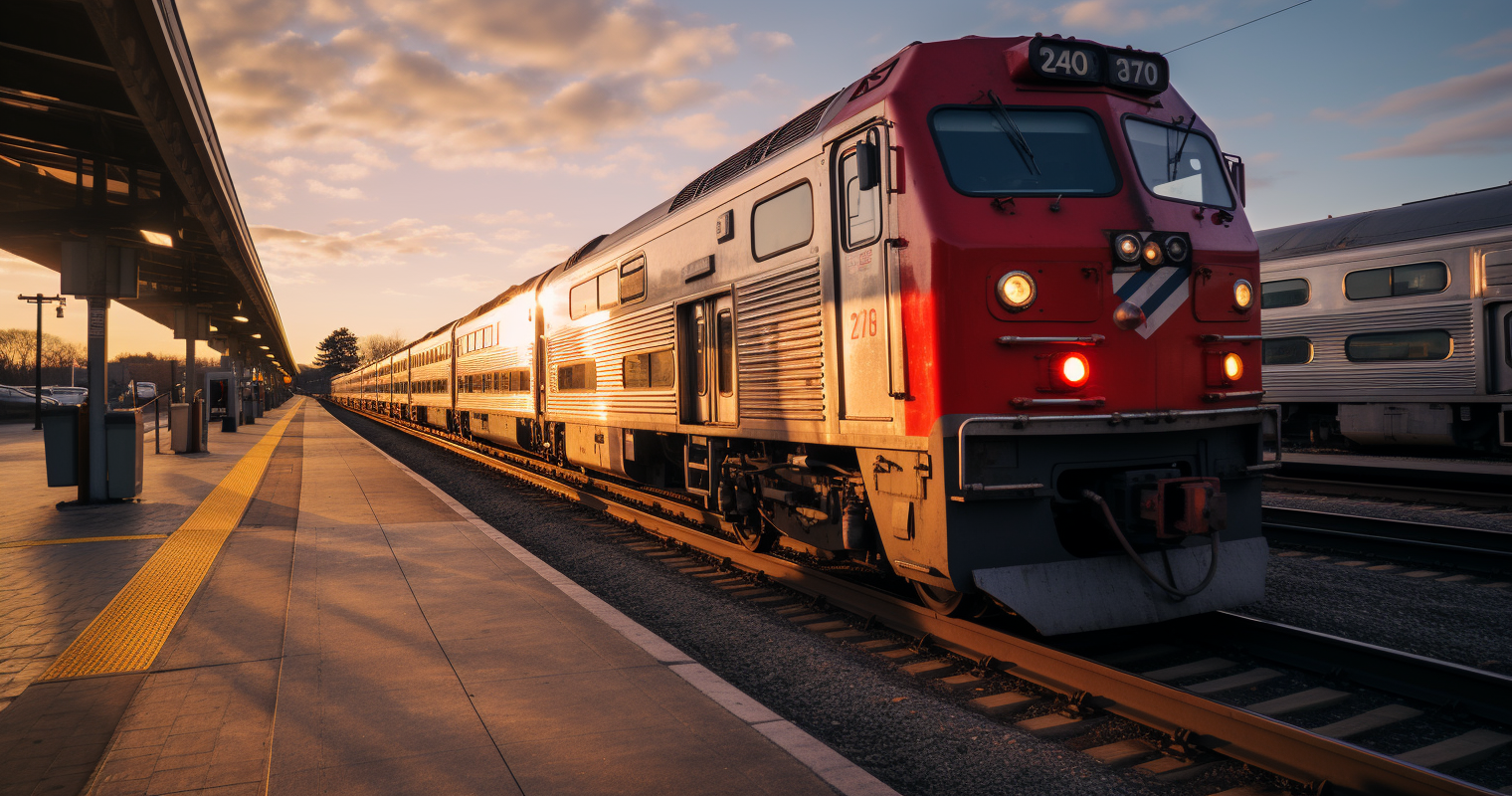
Belgium’s rail network ranks among the most concentrated in the world, run by the national operator SNCB/NMBS. Spanning more than 3,700 km of track and serving over 600 stations, the network connects all major urban centres and is well equipped for both regular commuters and occasional travellers. A sweeping overhaul of the fare structure in October 2025 has streamlined pricing and reduced costs for a significant proportion of passengers.
| Item | Details |
|---|---|
| National rail operator | SNCB/NMBS (belgiantrain.be) |
| Network size | 3,733 km of track; 621 stations (as of 2024) |
| Annual passengers | 245 million (as of 2024) |
| Maximum standard 2nd class fare (adult) | €20.90 one-way; with Train+ card capped at €14 peak / €12.50 off-peak (as of October 2025) |
| Train+ discount card cost | €6/month or €48/year for adults (26–64); €4/month or €32/year for youth/seniors (as of 2025) |
| Children under 12 | Travel free when accompanied by a paying adult (max. 4 per adult) |
What is the overall standard of rail travel in Belgium?
Rail sits at the very heart of everyday life in Belgium. The country’s network is among the most concentrated anywhere in the world, and the Brussels North–South tunnel — with roughly 1,200 trains passing through each day — holds the distinction of being the world’s busiest rail tunnel. This single statistic conveys just how deeply embedded trains are in Belgian society.
The network extends across 3,733 km, of which 3,286 km are electrified. In 2024, SNCB/NMBS transported 245 million passengers — a volume that reflects the system’s central role in daily mobility. Belgium’s track density per square kilometre significantly exceeds that of much larger countries such as Germany and France, meaning most towns can be reached by rail without needing a car.
Frequent intercity services link Brussels, Antwerp, Ghent, Bruges, Liège, Namur, and Charleroi, while regional and local trains extend coverage to smaller communities. Punctuality can be affected by maintenance works or severe weather — challenges familiar to many European rail systems — but for everyday commuting purposes the network functions reliably.
During 2024, SNCB expanded both its suburban and national services, and new international connections were added. Belgium is also directly linked to France, the Netherlands, Germany, and other destinations via high-speed and cross-border services, making the country an excellent base for expats who travel regularly across Europe.
What classes of rail travel are available in Belgium, and what are the differences between them?
SNCB/NMBS trains are divided into two travel classes: standard (second class) and first class. The overwhelming majority of passengers use second class, which offers comfortable seating on modern stock and is perfectly suited to commuting and leisure trips alike.
First class provides more generous seating, quieter surroundings, and — on newer trains — often power sockets and additional legroom. A price premium applies, and whether this is worthwhile depends on journey length and individual priorities. On short urban trips the difference is barely noticeable; on longer intercity routes the additional comfort may justify the extra cost.
Local (L) trains link smaller communities to the wider intercity network and to major cities, stopping at every station. They carry both first and second class passengers and include bicycle compartments. Some models are fitted with air conditioning, power sockets, and equipment for passengers with reduced mobility. Seat reservation is not available on these services.
Peak-hour reinforcement trains (P trains) operate across many Belgian lines during rush periods. They generally offer both travel classes, with characteristics similar to regional trains, and like local trains they do not permit seat reservation.
S-trains (Réseau Express Régional / Gewestelijk Expresnet) serve the greater Brussels area at regular intervals and include bicycle compartments. Modern S-train cars feature air conditioning, power sockets, and reduced-mobility equipment. Seat reservations are not accepted on S-trains.
On international services such as those operated by Eurostar and TGV, premium classes with meals and enhanced amenities are available, though these are governed by the respective international operators rather than by SNCB directly. SNCB publishes fare information for adults (aged 26–64), youth (12–25), seniors (65+), and those with preferential reimbursement status, covering both first and second class travel.
Where can you find rail timetables and ticket prices in Belgium?
The authoritative starting point for timetables and fares is the official SNCB/NMBS website at belgiantrain.be. It features a journey planner, live disruption updates, and comprehensive fare information, and is offered in Dutch, French, German, and English. Since prices are revised periodically, this should always be your primary reference for up-to-date costs.
The SNCB/NMBS app delivers real-time travel information and details about connecting services operated by De Lijn (Flemish buses), STIB/MIVB (Brussels urban transport), and TEC (Walloon buses). Free to download on iOS and Android, it quickly becomes the most practical daily travel companion once you are living in Belgium.
For multi-operator journey planning across all Belgian public transport, the Floya app is also worth noting. Floya lets users plan, book, and pay for multiple modes of transport within Brussels, covering all four public transport operators — STIB/MIVB, De Lijn, TEC, and SNCB/NMBS trains — within a single platform.
Third-party platforms such as Trainline also list SNCB services and can be useful for comparing options or combining cross-border bookings in a single transaction. That said, the official SNCB website or app remains the most reliable source for domestic routes and the latest timetables. Schedules are typically revised with each seasonal update — usually in December — so always confirm departure times before you travel.
How do you buy rail tickets in Belgium, and can you book in advance?
Tickets for the Belgian rail network can be purchased through several channels. For most domestic journeys, booking in advance is not compulsory, but it is always possible and frequently convenient. The following is a step-by-step overview of the available purchase options:
- Online via the SNCB website: Visit belgiantrain.be to search for journeys, review prices, and complete your purchase. Tickets can be stored digitally in your account or printed at home. Buying online is quick, secure, and removes the need to queue at a station.
- Via the SNCB/NMBS app: Download the official app (iOS/Android), register a free “My SNCB” account, and buy tickets directly within the app. Train+ and other products are available immediately and linked to your account. The app also displays real-time departure boards and live service alerts.
- At ticket machines in stations: Automated machines are installed at all staffed stations and many smaller ones. They accept debit and credit cards, and cash is accepted at some locations. New machines are scheduled to be installed across the station network between 2025 and 2026.
- At staffed ticket offices: Most larger stations have a counter open during staffed hours, where staff can recommend the most suitable fare and help with complicated or multi-leg itineraries. Smaller rural stations may not have a staffed office on site.
- Via third-party mobility apps: Applications such as Olympus Mobility and, for Brussels journeys, Floya, also facilitate ticket purchases and automatically determine the best available price for each trip.
The majority of domestic tickets are open — not tied to a specific departure time — meaning you can board any train on the route throughout the day of travel. However, under the pricing system introduced in October 2025, peak and off-peak fares differ, so the time at which you begin your journey determines what you pay. Tickets are generally issued digitally as a QR code for display on your phone or as a printable document — there is no need to collect a physical ticket when purchasing online or via the app.
For international services (Eurostar, ICE, TGV), advance booking is strongly advisable because these trains operate with reserved seating and prices climb as departure approaches. Bookings can be made through the relevant operator’s website or through B-Europe (SNCB International).
What types of rail tickets are available in Belgium, and are there discount schemes?
October 2025 saw Belgium’s most far-reaching fare restructuring in three decades. SNCB introduced a new pricing model designed to make travel more affordable for a broad range of passengers. Anyone planning to live in Belgium should understand how this new structure works.
Standard per-kilometre fares: Prices are now calculated on a per-kilometre basis, with a cap applied at 120 kilometres — reduced from the previous threshold of 150 kilometres — representing a 20% price cut for longer trips. The maximum one-way second-class fare for an adult aged 26–64 is €20.90 (as of October 2025).
Weekend and off-peak discounts: A 30% reduction applies on Saturdays, Sundays, public holidays, and designated “bridge days” specified by SNCB, now also available on single-journey tickets. Children under 12 travel at no charge when accompanied by a paying adult, with a maximum of four children per adult.
Train+ discount card: This is the flagship product of the reformed fare system. The Train+ card costs €4 per month or €32 per year for young people under 26, seniors aged 65 or over, and beneficiaries of preferential reimbursement status, and €6 per month or €48 per year for adults aged 26–64 (as of 2025). Cardholders receive 40% off fares when travelling off-peak or at weekends. The maximum per-journey price in second class is capped at €14 during peak hours, €12.50 off-peak, and €8.80 on weekends (as of 2025). Always verify current figures at belgiantrain.be.
Youth (under 26) and senior (65+) discounts: Passengers in these age brackets receive a 40% reduction on standard fares at all times of day. Combining this with Train+ brings further savings off-peak and at weekends. For youth and senior Train+ holders, the second-class fare is capped at a maximum of €5.50 per journey regardless of when you travel (as of 2025).
Group discounts: Groups of four or more passengers qualify for a 40% reduction, while groups of 15 or more benefit from a 60% discount on advance bookings. Refer to the SNCB website for full booking conditions.
Season tickets for commuters: Frequent travellers can buy monthly or annual season tickets (abonnements) for a fixed route, yielding substantial savings on daily journeys. These were not affected by the October 2025 reforms and remain valid for existing holders as before.
Discontinued products (as of October 2025): From 15 October 2025, the Standard Multi, Youth Multi, Local Multi, Youth Holidays, and 10-identical-journeys cards were withdrawn from sale and replaced by the Train+ card and the new per-kilometre pricing structure. The official SNCB website should always be checked for the current product range.
How accessible is the rail network in Belgium for disabled passengers?
Accessibility across the Belgian rail network has been on an upward trajectory, though the overall picture is mixed. Major intercity stations and newer rolling stock provide strong facilities, while certain older rural stations and older train models present greater challenges — a situation broadly comparable to similarly aged European rail systems.
SNCB/NMBS has unveiled the first of 130 new train cars, marking a significant milestone as these are the first autonomously accessible vehicles in the country’s history. The aim is to fit every Belgian intercity (M7) train with an autonomously accessible car. Produced by Alstom, these M7 double-decker cars are equipped with automatic sliding ramps to assist passengers with reduced mobility when boarding. Additional features include wider doorways, lower-positioned door-open buttons, handrails, adapted toilets, and an intercom allowing wheelchair users to request assistance.
For passengers requiring personal assistance at stations, SNCB operates a dedicated support service. Requests can be submitted when booking through the SNCB website or by contacting the SNCB accessibility helpline. Booking at least 24 hours ahead is advised, particularly at smaller stations where staffing levels may be limited. Full details are at belgiantrain.be/en/travel-info/accessibility.
On the Brussels urban transit network, staff are on hand to assist passengers in wheelchairs when boarding and alighting metro trains. Ramps are available on request, and assistance can be arranged in advance by calling +32 2 515 23 65 or by completing a form on the STIB/MIVB website. Because not all metro stations are permanently staffed, response times can vary and passengers should allow additional time when planning their journey.
Despite sustained improvement efforts, a notable proportion of public transport stops across Belgium has yet to achieve full accessibility, though this varies considerably by mode. Underground metro stations are generally better equipped than surface tram or bus stops. When planning a trip, using the accessibility filter within the SNCB app or consulting the STIB/MIVB network map — which highlights routes accessible to passengers with reduced mobility — is a helpful practical step. The STIB/MIVB network map can be found at stib-mivb.be.
Are there metro or urban rail systems in Belgium’s cities?
Belgium’s principal cities are served by urban transit networks, with Brussels offering the most extensive system. Each city’s services are administered by a separate regional body, but all networks integrate with SNCB national rail.
Brussels — STIB/MIVB: The STIB/MIVB network comprises metro, tram, and bus services. At the time of recent research, it included four underground metro lines, 17 tram lines, and 66 bus lines including 12 overnight routes. Metro services generally run from around 06:00 to midnight, with night buses bridging the remaining hours. The STIB/MIVB website is at stib-mivb.be.
Travelling on the STIB/MIVB network requires either a personal or Basic MOBIB card — a reloadable smart card that enables seamless travel across Brussels. Contactless bank card payment is also accepted: every STIB bus, tram, and metro station is equipped with a contactless payment reader supporting any card bearing the contactless symbol.
Integrated ticketing in Brussels: The Brupass ticket grants access to trains, trams, buses, and metro services in Brussels and within an extended zone of 11.5 km beyond the 19 Brussels municipalities. The Brupass is accepted across STIB, TEC, De Lijn, and SNCB services — including trains, buses, trams, and underground lines — within the Brupass zone, making it an excellent option for residents who combine national rail with local transport. SNCB also offers combined train + STIB/MIVB season ticket options for regular commuters.
Antwerp and Ghent — De Lijn: In Antwerp, De Lijn runs an extensive pre-metro system using tram tunnels beneath the city centre, alongside surface trams and buses. Ghent is served by a surface tram network. Both fall under De Lijn (delijn.be), the Flemish regional transport authority.
Liège — new tramway: A new 12 km standard-gauge tramway opened in Liège on 28 April 2025, representing a major enhancement for a city that had previously lacked a modern light rail line. Wallonia’s bus and tram services are operated by TEC (infotec.be).
S-train suburban network around Brussels: Beyond the metro, the S-train network (Réseau Express Régional / Gewestelijk Expresnet) serves the broader Brussels metropolitan area with trains running at regular intervals. In December 2025, Brussels local route S81 was upgraded and extended to Denderleeuw and Aalst as part of planned service improvements. S-trains operate under the national SNCB ticketing system and are fully integrated with the wider rail network.
What should expats know about using the rail network day-to-day in Belgium?
Languages and signage: Belgium recognises three official languages — Dutch (Flemish), French, and German — and this is reflected throughout the station network. Brussels stations are bilingual (for example, “Brussel-Centraal / Bruxelles-Central”), stations in Flanders appear in Dutch only, and those in Wallonia in French. Announcements on major intercity services are made in Dutch and French, with English added at key interchanges such as Brussels-Midi, Brussels-Central, and Brussels-North. The SNCB app and website are fully available in English, which considerably eases navigation for newly arrived residents.
Seat reservations: On the vast majority of domestic SNCB services, reservation is neither required nor possible — passengers simply board and choose any available seat. This applies to local and peak-hour trains in particular. On international services such as Eurostar, TGV, and ICE, reservation is compulsory and included in the ticket price.
Peak and off-peak travel: Off-peak periods on weekdays run from midnight to 06:00, from 09:00 to 16:00, and from 18:00 to midnight. Peak hours apply Monday to Friday between 06:01 and 08:59 and between 16:01 and 17:59. If your schedule is flexible, travelling off-peak with a Train+ card produces noticeably lower fares.
Bicycles: Bikes can be taken on designated bicycle compartments aboard local and S-trains, subject to available space. A bicycle ticket is required in addition to your standard fare. Bicycle carriage may be restricted on certain services during rush hours. Check the SNCB website for the current rules before setting out with your bike.
Luggage: There are no specific restrictions on hand luggage dimensions or weight for domestic SNCB services, and no surcharge applies for bringing bags on board. Overhead racks and dedicated luggage areas are provided on most trains. For international services, consult the relevant operator’s baggage policy.
Validating your ticket: Paper tickets and multi-journey products must be validated by stamping them in the yellow machines on the platform before boarding. Digital tickets displayed as QR codes via the app do not require stamping. Travelling without a properly validated ticket may result in an on-the-spot fine.
Cultural norms: Train travel in Belgium is generally quiet and orderly. Making phone calls in designated quiet areas is considered poor etiquette, and headphones are the standard approach for listening to music or watching video. Priority seating near the doors is reserved for elderly passengers, people with disabilities, pregnant women, and those travelling with young children — these conventions are broadly respected. Boarding etiquette is informal but courteous; allowing passengers to disembark before getting on is the accepted practice.
Disruptions and real-time information: The SNCB/NMBS app provides live travel data and information on connections with De Lijn, STIB, and TEC services. During disruptions, SNCB also publishes alerts on its website and social media channels. Installing the app before you begin using the network is strongly recommended for all residents.
Frequently asked questions
Is the Belgian rail network suitable for daily commuting?
Yes. With one of the densest railway networks anywhere in the world, Belgium offers frequent services to all major cities and many smaller towns. Season tickets for fixed routes deliver strong value for money, and the system is heavily used by commuters nationwide. The SNCB app keeps passengers informed of delays or disruptions in real time.
How much does a typical train journey cost in Belgium?
Under the standard per-kilometre fare introduced in October 2025, a second-class single journey for an adult aged 26–64 costs no more than €20.90. With the Train+ card, that ceiling falls to €14 during peak hours and €12.50 off-peak. Shorter trips cost proportionally less, and the minimum second-class fare is €2.50 (as of 2025). Always confirm current prices at belgiantrain.be.
What is the Train+ card and is it worth getting?
The Train+ card entitles holders to reduced fares and a capped maximum price per journey. Cardholders receive 40% off tickets when travelling during off-peak hours or at weekends. For adults it costs €6 per month or €48 per year (as of 2025) and is available through the SNCB website or app. For anyone who travels by train with any regularity — particularly off-peak or at weekends — it is likely to pay for itself quickly.
Do children travel free on Belgian trains?
Yes. Children under 12 travel at no charge when accompanied by a paying adult, up to a maximum of four children per adult. This applies across all standard domestic SNCB services. Children aged 12 and over pay the youth fare — a 40% reduction on the adult standard fare, applicable at all times.
Can I use my train ticket on Brussels metro, trams, and buses?
The Brupass ticket covers trains, trams, buses, and metro services in Brussels and within an 11.5 km extended zone around the 19 Brussels municipalities. SNCB also provides combined train + STIB/MIVB season ticket options for regular commuters. For occasional journeys, separate tickets are needed for national rail and Brussels urban transit unless you hold a Brupass.
Is it easy to get assistance at stations if I have a disability or reduced mobility?
SNCB is progressively fitting every intercity (M7) train with autonomously accessible cars, and the rollout of new accessible rolling stock is currently underway. Personal assistance at stations can be arranged in advance through the SNCB website. For Brussels urban transit, assistance can be booked by calling +32 2 515 23 65 or by submitting a form on the STIB/MIVB website. Advance booking is strongly recommended, especially at smaller or unstaffed stations.
Are train announcements and signs available in English in Belgium?
At major stations and on busy intercity routes, English-language announcements accompany those in Dutch and French. The SNCB app and website are fully available in English, and digital departure boards at larger stations typically display information in multiple languages. At smaller regional stations, signs and announcements may appear only in the local language — Dutch or French — so becoming familiar with bilingual station names is a useful step when settling in.
Where can I find the official sources for Belgian rail information?
The main official sources are: SNCB/NMBS national rail at belgiantrain.be; SNCB International for cross-border bookings at b-europe.com; Brussels urban transit at stib-mivb.be; Flemish regional transport at delijn.be; and Walloon regional transport at infotec.be. Fares and timetables are updated regularly, so always consult official sources before travelling.