

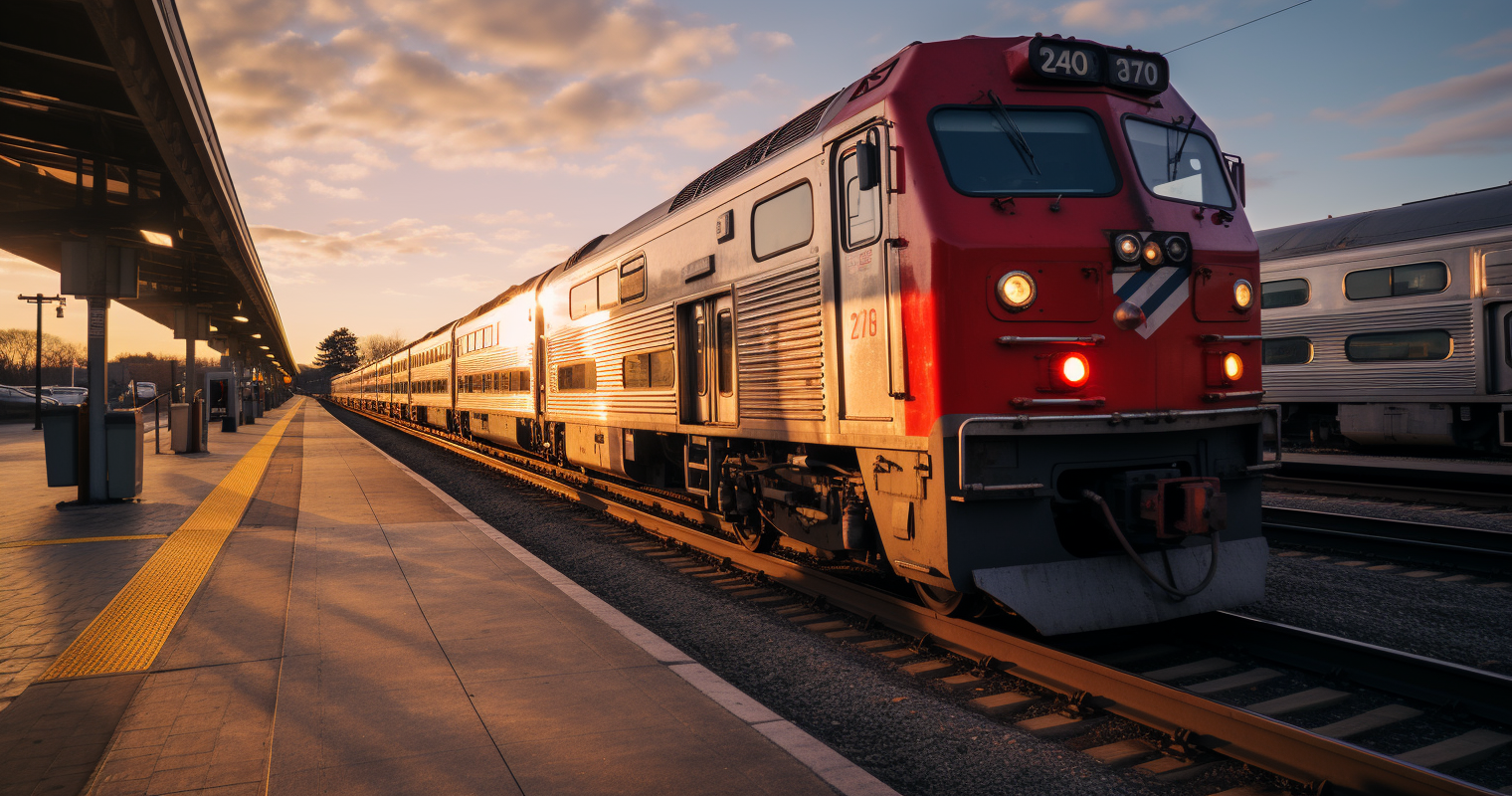
Rail travel in Brazil presents two remarkably distinct realities. The national network is overwhelmingly devoted to freight, with only two remaining long-distance passenger routes — both run by mining giant Vale — alongside a small number of scenic tourist lines. For everyday needs, newcomers to the country will depend on the urban metro and commuter rail systems found in cities like São Paulo, Rio de Janeiro, and other major urban centres, which are considerably more developed and suited to regular use.
| Item | Details |
|---|---|
| Long-distance passenger train routes | 2 routes only (as of 2025), both operated by Vale S.A. |
| Urban rail network (São Paulo metro + CPTM) | Over 300 km of integrated lines — largest in Latin America (as of 2025) |
| São Paulo metro/CPTM single fare | R$5.70 per trip (as of 2024) — verify current figure at metro.sp.gov.br |
| Vale long-distance ticket booking | Must be purchased at least one day before travel; same-day tickets not available |
| Discount categories (Vale trains) | Seniors, disabled passengers, low-income youth (as of 2024) |
| Urban metro regularity | 97.6% regularity and 98.6% reliability recorded in 2023 (ANPTrilhos) |
What is the overall standard of rail travel in Brazil?
The overwhelming majority of Brazil’s railways serve freight or urban commuter purposes. Just two intercity passenger routes remain in operation: the Carajás Railway, linking Pará and Maranhão, and the Vitória-Minas Railway, connecting Espírito Santo and Minas Gerais, both run by Vale S.A. This stands in sharp contrast to nations like Germany, Japan, or France, where comprehensive national passenger rail networks connect towns and cities of all sizes. For anyone relocating to Brazil, the absence of an intercity passenger rail system is one of the most immediately noticeable differences from many other parts of the world.
Although Brazil possesses one of the world’s most extensive rail networks by total length, it is built almost entirely around the movement of goods rather than people. Until the mass privatisation programme of 1996–1999, passenger trains were operated by state-owned enterprises. By that point, tracks and rolling stock had fallen into severe disrepair, and the incoming private operators closed virtually all regional and long-distance services within a few years. That situation has not materially changed as of 2025.
Today, heavy freight dominates the network completely. The electrification infrastructure that once supported intercity passenger services on broad-gauge lines in São Paulo state has been dismantled entirely, and many of the old station buildings have been left to decay. For anyone arriving from a country where intercity trains are the primary mode of getting between cities, this represents a fundamental shift in how travel must be planned.
Brazil’s densely settled coastal and southeastern regions would theoretically support viable passenger rail operations, and demand for regional and intercity rail connections — particularly around the expanded metropolitan zone north and east of São Paulo — is very high. In practice, domestic flights cover most longer distances, while coaches remain the affordable option for those on tighter budgets. For residents going about their daily lives, the urban metro and commuter rail systems are where rail genuinely matters.
The Brazilian government has signalled an intention to shift this freight-dominated picture over the longer term. Rail investment accelerated sharply between 2023 and 2025, with around 40 billion reais committed — roughly 60% more than the 25 billion reais spent between 2019 and 2022. However, the vast majority of this spending targets expanded freight capacity and urban mobility improvements rather than the restoration of long-distance passenger services in the near term.
What classes of rail travel are available in Brazil, and what are the differences between them?
Because Brazil’s passenger rail network is so restricted in scope, the question of travel classes takes on a very different meaning from what you might be accustomed to in countries with well-developed national rail systems. On the two Vale long-distance services and on scenic tourist railways, passengers can generally choose between standard and premium seating. On urban metro and commuter networks, a single fare class applies to everyone regardless of the type of journey.
Vale is principally a mining company that also happens to run long-distance passenger trains in certain parts of the country, primarily serving tourist demand. On both the Vitória-Minas and Carajás routes, two broad travel categories are available: a standard economy class and a more comfortable executive option. Economy seats are basic reclining chairs adequate for a long journey, while executive carriages offer wider, better-padded seats with more legroom and a calmer carriage environment. For current class configurations and pricing on each route, consult the Vale passenger train website directly, as details can change.
On scenic tourist railways such as the Serra Verde Express running between Curitiba and Morretes, class distinctions are more varied and elaborate. The Serra Verde Express offers everything from a basic tourist class through to a panoramic glass-roofed carriage that maximises views of the surrounding mountain landscape — at a considerably higher price. These premium offerings genuinely enhance the scenic experience, but they are leisure attractions rather than functional commuter services.
Both São Paulo and Rio de Janeiro operate extensive rapid transit and commuter rail systems. While neither city’s network is as expansive as the size of the population might warrant, both are almost entirely electrified and largely equipped with modern air-conditioned electric multiple units. These urban networks use a flat-fare, single-class model — all passengers travel in the same carriages regardless of what they have paid. No first-class upgrade exists on metro or CPTM lines.
Where can you find rail timetables and ticket prices in Brazil?
Locating timetables and fare information in Brazil means consulting different sources depending on whether you are looking at Vale’s long-distance services, an urban metro network, or a scenic tourist railway. There is no single national rail portal of the kind found in countries with unified passenger networks.
For Vale’s two long-distance passenger routes, the main authoritative source for both timetables and fares is the Vale passenger trains website. Schedules are published at vale.com/passenger-train. Unlike airline tickets or some European rail fares, Vale’s prices are fixed rather than dynamically priced, making it straightforward to budget for your journey. Always check the official site for the most current information, since freight operations on shared lines can occasionally affect passenger service schedules.
For urban rail in São Paulo, the two key operators each maintain their own information portals. The São Paulo Metro (Metrô SP) publishes line maps, service hours, and current fares at metro.sp.gov.br. The CPTM commuter rail network has its own timetables and service information at cptm.sp.gov.br. Together, the two systems form a 382 km network accessible through a single integrated ticket.
In Rio de Janeiro, metro information is available at metrorio.com.br, while the SuperVia commuter rail network — reaching out into Rio’s broader metropolitan region — publishes its timetables at supervia.com.br. For other Brazilian cities, each system has its own dedicated operator website. The ANPTrilhos (National Association of Passenger Rail Operators) offers a helpful overview of all urban rail systems operating across Brazil, together with links to individual operators.
Journey planning apps Moovit and Google Maps both deliver real-time service information for urban rail across Brazil’s major cities and are extensively used by everyday commuters. The dedicated Metrô SP and Rio Metro apps also provide real-time schedules and are worth installing if you commute regularly.
How do you buy rail tickets in Brazil, and can you book in advance?
The process of purchasing tickets differs substantially between Vale’s long-distance services and urban rail networks. Knowing how each system works before you travel will prevent unnecessary confusion, particularly on the longer routes.
Buying tickets for long-distance Vale trains
- Go to the official Vale passenger train website at vale.com/en/passenger-train to review the current schedule and complete your booking online.
- Choose your route (either Vitória-Minas or Carajás), your preferred travel date, and the class of travel you want.
- Bear in mind that tickets must be purchased no later than one day before the date of travel — same-day tickets are simply not available. Allow at least 48 hours when planning to avoid being caught out.
- Tickets may alternatively be bought at the station ticket office on the day before travel, subject to remaining availability.
- Non-Brazilian travellers are required to present their passport to board. This is the only accepted document, with the exception of passengers from Mercosul member countries.
- Collect or display your ticket — whether digital or printed — at the station prior to boarding. Check the Vale website for current guidance on digital ticketing, as the available options may be updated over time.
Buying tickets for urban metro and commuter rail
Urban metro and commuter rail systems throughout Brazil operate on a tap-in, tap-out model using rechargeable smart cards rather than pre-booked paper tickets. In São Paulo, the Bilhete Único card is indispensable. It can be purchased at any metro station and topped up with credit, and it works across the metro, CPTM, and municipal bus services — making it the obvious choice for daily commuters.
In Rio de Janeiro, the Riocard plays the same role, enabling seamless transfers and removing the need to buy a separate ticket for each leg of a journey. Cards can be topped up at stations, convenience kiosks, supermarkets, or through mobile apps. Contactless payment via bank card or smartphone is increasingly accepted at certain stations. Advance booking has no place in this system — simply keep your smart card loaded with sufficient credit and tap in as needed.
What types of rail tickets are available in Brazil, and are there discount schemes?
The range of ticket types in Brazil is relatively simple compared with the complex fare structures found in countries like Germany or Japan, a direct consequence of the country’s limited intercity passenger network.
For Vale’s long-distance services, available ticket types include Normal Tickets, Elderly Person’s Tickets, Disabled Person’s Tickets, and Low-Income Youth Tickets. The most reduced fares apply to people with disabilities, children, pensioners, and young people on low incomes. Because prices are fixed rather than variable, forward planning is made considerably easier. Always confirm current fares on the Vale passenger train website, as these are subject to change.
Discount schemes on urban metro and commuter rail networks are more extensive. Students, seniors aged 60 and above, and people with disabilities can receive discounts of up to 50% on standard fares with the appropriate supporting documentation (as of 2024). The precise documents required — such as proof of student enrolment or an official disability certificate — differ between cities and operators, so it is worth checking with the relevant operator before your first discounted journey.
In São Paulo (as of 2025), the Bilhete Único card is accepted on buses, the metro, and the CPTM train network. Contactless payment by debit or credit card is available on selected bus lines and metro stations. Time-based and monthly pass options are also on offer. Monthly passes offer particularly good value for regular commuters; check current pricing at metro.sp.gov.br or cptm.sp.gov.br for up-to-date figures, as fares are periodically revised.
The Bilhete Único integration system allows passengers to combine bus and rail travel within defined time windows at a single integrated fare. For instance, when using a combined bus-plus-metro journey, you may board up to three different buses within a three-hour window and make one rail trip within the first two hours — providing both flexibility and cost savings across multiple modes of transport.
There are no national rail passes equivalent to Interrail or Eurail available in Brazil, which is an unsurprising reflection of the country’s lack of a national passenger rail network. Interrail and Eurail passes carry no validity in Brazil.
How accessible is the rail network in Brazil for disabled passengers?
Accessibility across Brazil’s rail network varies considerably, depending on whether you are using a modern urban metro system or older infrastructure. The overall picture is broadly consistent with that seen in many developing-world cities: recently built stations and lines conform to contemporary accessibility standards, while older installations can be unreliable in the facilities they provide.
Ramps and designated seating are found across the network but with varying degrees of consistency between locations. In the larger cities, accessibility on newer metro lines has improved meaningfully. São Paulo’s metro system, for example, was the first in Latin America to introduce platform screen doors at a station, and Lines 4 and 15 are fully automated using communications-based train control — features that also benefit passengers who require a more predictable and controlled boarding environment.
Light Rail Transit (VLT) systems in Salvador and Fortaleza are modern, electrically powered, and low-floor in design — built specifically with accessibility and ease of boarding in mind. Low-floor vehicles allow wheelchair users and those with mobility impairments to board without the step height that affects older rolling stock, placing these systems on a par with the low-floor tram networks now standard across much of Europe.
On Vale’s long-distance services, concessionary fares exist for disabled passengers (see the ticket types section above), and onboard space for wheelchair users is provided. That said, some of the stations served by these routes are in remote locations where facilities can be limited and variable. Anyone with particular accessibility requirements is strongly advised to contact Vale directly before travelling to establish what arrangements are in place at their specific departure and arrival stations.
Accessibility for passengers with reduced mobility remains uneven across Brazil’s public transport infrastructure as a whole. The regulatory authority overseeing rail and transport concessions — the National Land Transport Agency, known as ANTT (Agência Nacional de Transportes Terrestres) — establishes accessibility standards that concession holders must meet. Passengers with disabilities should also refer to individual operator websites for the most current information on assistance services at particular stations.
Are there metro or urban rail systems in Brazil’s cities?
For new residents, Brazil’s urban rail systems are where the real day-to-day rail experience is found. With a combined network stretching 1,133.4 km across 48 lines and 631 stations, urban rail serves city populations in every location where these systems exist. Brazil’s subway, urban train, Light Rail Vehicle, and people-mover systems collectively recorded a 6% rise in passenger numbers in 2023, reaching 2.48 billion journeys.
São Paulo has by far the most extensive urban rail network in the country. The São Paulo Metro — commonly referred to as the Metrô — is one of several rapid transit operators serving the city, alongside CPTM, ViaQuatro, ViaMobilidade, and TIC Trens; together, these five operators form the largest metropolitan rail transport network in Latin America. The metro system alone carries approximately 4,200,000 passengers each day. The CPTM metropolitan rail network spans 281 km across 7 lines and 100 stations, transporting around 3 million passengers daily. When combined with the metro, the integrated network exceeds 300 km in total. The primary apps for navigating this network are Metrô SP for metro lines and the dedicated CPTM app.
Rio de Janeiro operates the MetrôRio underground system, which covers the city centre along with key residential and tourist zones, complemented by the SuperVia commuter rail network, which fans out into the wider metropolitan region. SuperVia connects a range of neighbourhoods to the city centre and provides access to many of Rio’s most iconic destinations. Visit metrorio.com.br and supervia.com.br for maps, timetables, and fare details.
Other cities with commuter train systems include the Cariri region, João Pessoa, Maceió, Natal, and Teresina. Full metro systems also operate in Belo Horizonte, the Federal District (Brasília), Fortaleza, Porto Alegre, Recife, and Salvador. Each of these operates independently under state or municipal governance.
Brazil’s metro networks are decentralised — every major city manages its own system under local or state control, with differing standards, technologies, and funding arrangements. No single card or app functions nationally across all cities. When settling in a new city, you will need to become familiar with the local operator and their specific ticketing arrangements. The ANPTrilhos website maintains a directory of all urban rail operators across Brazil.
The urban metro sector as a whole maintains a regularity rate of 97.6% and a reliability rate of 98.6% (as recorded in 2023), figures that compare well with many urban rail systems around the world and make these networks a dependable option for daily commuting.
What should expats know about using the rail network day-to-day in Brazil?
For newcomers settling into life in Brazil, adjusting to the local rail environment means recognising a number of practical realities that differ from rail systems elsewhere in the world.
Language: Station signage and announcements are almost exclusively in Portuguese, with little or no English-language information available in most locations. Unlike many Western European metro systems where multilingual support is standard, Brazilian stations typically cater only to Portuguese speakers. Building a basic vocabulary of transport-related Portuguese terms — or keeping a translation app within easy reach — is strongly recommended. Some newer stations on more recently built lines in São Paulo and Rio de Janeiro do provide bilingual signage.
Smart cards are essential for urban travel: Cash is not accepted on most metro systems — a rechargeable smart card such as the Bilhete Único, or its local equivalent, is required. Obtaining your city’s smart card should be among your first priorities on arrival. Topping it up is straightforward once you are settled, with options including station machines, kiosks, supermarkets, and mobile apps.
Peak hour crowding: If your schedule allows, try to avoid travelling during the morning rush (7–9 AM) and the evening peak (5–7 PM). Urban trains in Brazil are in heavy demand during commuting hours. On São Paulo’s CPTM network in particular, carriages can become intensely crowded. Persistent overcrowding and occasional delays — especially on bus and commuter train services — are well-documented features of the system.
Navigation tools: Moovit and Google Maps are both widely relied upon by regular commuters for planning journeys and checking real-time service updates. Using a prepaid smart card is more convenient and secure than purchasing individual tickets, and both apps can help you time your trips to avoid the worst of the peak-hour rush.
Security: Exercise the same awareness you would in any busy urban environment. Keep personal belongings close and avoid drawing attention to phones, jewellery, or cameras. The metro systems in São Paulo and Rio de Janeiro are generally regarded as safe, but sensible precautions remain advisable at all times.
Long-distance trains — identity documents required: If you travel on a Vale long-distance service, non-Brazilian passengers are required to present their passport to board — this is the sole accepted document, except for travellers from Mercosul member countries. Always carry your passport or a legally valid identity document on these journeys.
Intercity travel alternatives: Given the near-complete absence of intercity passenger trains, most residents rely on intercity coaches (known as ônibus rodoviário) — which are widespread, affordable, and frequently comfortable — or on domestic flights for longer distances. More than 3 million people live along the 450 km corridor between São Paulo and Rio de Janeiro, yet no passenger rail service connects the two cities; the air bridge between them is consequently one of the busiest shuttle air routes in the world.
Frequently asked questions about rail travel in Brazil
Is there a national passenger rail network in Brazil that I can use to travel between cities?
No. Brazil’s national rail network is devoted almost entirely to freight. Only two intercity passenger routes remain — the Carajás Railway and the Vitória-Minas Railway — both operated by Vale S.A. For travel between cities, most residents rely on long-distance coaches or domestic flights.
What is the best way to get around by rail in São Paulo?
The Bilhete Único card ties together the metro and CPTM commuter train networks, making boarding and transferring between services seamless. Pick up a Bilhete Único card at any metro station when you arrive, load it with credit, and use it across metro, CPTM, and bus services. The Metrô SP and CPTM apps both offer real-time journey planning.
How much does it cost to use the metro in São Paulo?
As of 2024, a single trip on the metro or CPTM costs R$5.70 (approximately USD $1.15). The Airport Link on Line 13 carries a premium fare of R$13.50. Always verify the current fare at metro.sp.gov.br before travelling, since fares are revised periodically.
Can I travel by train between São Paulo and Rio de Janeiro?
No long-distance passenger train connects the two cities. There is no rail passenger service between São Paulo and Rio de Janeiro, and the air bridge linking them ranks among the world’s busiest short-haul routes. Intercity coaches via the rodoviária network provide a more affordable ground-level alternative.
Are there any scenic train journeys worth taking in Brazil?
Yes. The Serra Verde Express, which winds through mountain scenery between the southern cities of Curitiba and Morretes, is the most celebrated. Vale’s Vitória-Minas Railway is the only daily service in Brazil linking two state capitals — Vitória in Espírito Santo and Belo Horizonte in Minas Gerais. The Carajás Railway carries both iron ore and passengers across 892 km between Parauapebas and the port city of São Luís in northern Brazil.
Do I need to book long-distance train tickets in advance in Brazil?
Yes. Tickets for Vale’s long-distance services must be purchased no later than one day before the date of travel — it is not possible to buy a same-day ticket. Booking via the Vale website several days ahead is strongly recommended, particularly around public holidays when demand increases. Urban metro and commuter rail services require no advance booking.
Which other Brazilian cities have metro or urban rail systems?
Beyond São Paulo and Rio de Janeiro, commuter train systems serve the Cariri region, João Pessoa, Maceió, Natal, and Teresina. Full metro systems operate in Belo Horizonte, the Federal District (Brasília), Fortaleza, Porto Alegre, Recife, and Salvador. Every city runs its own independent system with its own ticketing arrangements and apps.
Is the Brazilian urban rail network accessible for wheelchair users?
Accessibility features including ramps and designated seating are present across the network, but their availability and quality is inconsistent from one location to another. Recently built lines and stations — particularly in São Paulo and on the modern VLT systems in cities like Fortaleza and Salvador — conform to contemporary accessibility standards. Older stations may be less well equipped. Contact your city’s rail operator directly, or consult the ANPTrilhos website, for accessibility details specific to your route and destination.