

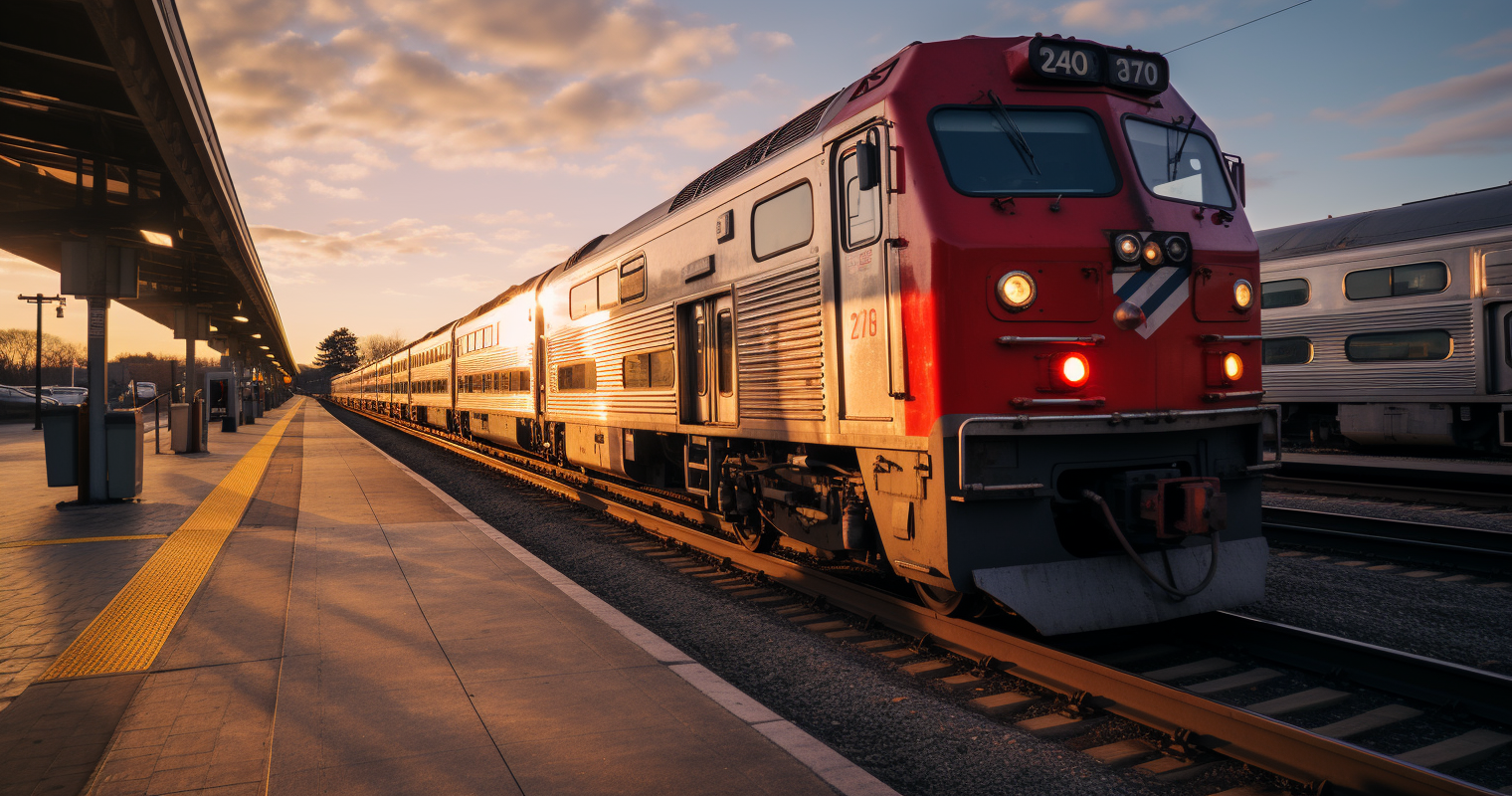
Japan’s rail network ranks among the very best on the planet — remarkable for its precision, cleanliness, safety, and sheer scale. High-speed Shinkansen bullet trains link every major city, while a sprawling web of express and local lines extends service deep into regional and rural corners of the country. For anyone making Japan their new home, the rail system swiftly becomes an essential feature of everyday life.
| Item | Details |
|---|---|
| Network operator structure | Privatised — six regional JR companies plus 100+ private operators (as of 2025) |
| Average Shinkansen delay | Approximately 20 seconds per train (as of 2024) |
| Shinkansen top speed | Up to 320 km/h in regular service; Maglev planned at 500 km/h |
| IC card deposit (Suica/PASMO) | ¥500 refundable deposit plus top-up amount (as of 2025) |
| Seat classes available | Ordinary, Green Car (first class), Gran Class (select routes) |
| Key timetable/booking sources | japan-guide.com, jrpass.com, individual JR company websites; check official sources for current fares |
What is the standard of rail travel in Japan?
Rail travel occupies a central role in Japanese life, serving as the primary means of moving people across cities and between them. Whether for high-speed intercity journeys or daily urban commuting, the network has earned a global reputation for dependability, cleanliness, and frequency — and that reputation holds up to scrutiny.
The statistics database Statista has ranked the Japanese rail system as the world’s most reliable, awarding it a score of 6.8 out of 7. Shinkansen trains average a delay of just 20 seconds, while trains operated by other companies average around 50 seconds — both figures well under a minute. To appreciate what this means in practice, consider that in 2024 only 62.5% of long-distance Deutsche Bahn trains in Germany departed or arrived on time, and Germany’s high-speed ICE service achieved punctuality of just 64.6% in early 2025.
Timetables in Japan are engineered to the second, ensuring that trains not only keep to their scheduled times but also maintain optimal frequency even across the country’s most congested corridors. A departure is considered on time only if it falls within 15 seconds of the stated time — no earlier, no later. For those accustomed to rail systems where a five-minute delay barely warrants an apology, this level of exactitude can take some getting used to.
The privatised network operates with considerable efficiency, requiring minimal state subsidy. More than 100 companies provide rail services across Japan, including six regional companies within the Japan Railways Group (JR). Unlike Germany’s predominantly state-owned Deutsche Bahn, Japan’s rail industry is almost entirely in private hands and distributed across numerous operators — yet the overall system functions with a degree of coordination that many unified networks would envy.
In practical terms, trains reach virtually every destination you are likely to need. That said, privatisation has led to the closure of a number of financially unviable but socially important lines, and very remote rural areas — particularly in Hokkaido and Shikoku — may find their local services reduced or discontinued altogether. Expats settling away from major urban centres would be wise to investigate their local rail connections before committing to a particular area.
The Shinkansen’s safety record is nothing short of extraordinary: more than 20,000 days of service have passed without a single passenger fatality on board. This achievement reflects both the engineering excellence behind the trains themselves and the rigorous safety culture that characterises Japan’s rail industry as a whole.
Are there different classes of rail travel in Japan, and what are the differences?
Most trains in Japan offer two tiers of accommodation: ordinary class and Green Car, which functions as a first-class equivalent. On a select number of Shinkansen services, a third and even more premium option called Gran Class is also available. The terminology may be unfamiliar to those used to European intercity trains, but the underlying principle — standard versus premium — is the same.
Ordinary Class is the default on Shinkansen trains and delivers a thoroughly comfortable experience. Japan’s high standards of cleanliness and maintenance apply throughout the train, meaning ordinary seats are far from spartan. Passengers can expect electrical outlets for charging devices, overhead luggage storage, coat hooks, and reversible reclining seats. Given that Shinkansen routes cover considerable distances, ordinary seats are designed with more generous cushioning and legroom than you would find on a typical urban commuter train.
Green Car offers a noticeably more spacious and refined experience. Seating on the Shinkansen is arranged four abreast in Green Car carriages, compared with five in ordinary class. Seats recline to a greater degree — up to 40 degrees — and the upholstery is softer and more supportive. Personal reading lights and power sockets are standard, and some services include an Oshibori hot towel as a complimentary amenity. The quieter atmosphere in Green Cars also makes them popular with business travellers.
Gran Class made its debut on the Tohoku Shinkansen between Tokyo and Aomori in 2011. It represents the pinnacle of rail travel in Japan, with just three seats across each row arranged in a 2+1 configuration. Gran Class seating surpasses even Green Car in terms of comfort and recline, and on certain services complimentary alcoholic and non-alcoholic beverages and light meals are included. Gran Class is currently available on the Tohoku and Hokkaido Shinkansen (Series E5 and H5), the Hokuriku Shinkansen (Series E7 and W7), and the Joetsu Shinkansen (Series E7).
It is worth emphasising that ordinary class on Japanese trains is already of a standard that many countries reserve for premium travel. Green Car is worth considering if extra space or a calmer environment is important to you. Because each of the JR regional companies operates its own fleet, onboard facilities and interior layouts can vary between routes and train series — always confirm the specific amenities available on your planned service with the relevant operator.
Where can I find rail timetables and ticket prices for Japan?
Japan does not have a single national rail portal covering all operators. With more than 100 companies running services across the country, finding timetable and fare information typically means consulting several sources — though a number of reliable platforms aggregate this information helpfully.
The following are the main official and widely trusted resources:
- JR Group official websites: Each of the six regional JR companies maintains its own website. Key English-language portals include JR East, JR Central, and JR West, all offering timetable and fare details for their respective regions.
- Japan Rail Pass official site: The Japan Rail Pass official website (japanrailpass.net) covers JR Pass pricing, validity periods, and the routes and services it encompasses.
- Hyperdia / Japan Transit Planner: NAVITIME for Japan Travel and comparable services provide end-to-end route planning, timetables, and fare estimates spanning both JR and private operators.
- Japan Guide: japan-guide.com is a well-established independent reference trusted by both expats and visitors, covering train types, fares, and practical booking guidance.
For direct assistance, JR East operates an English-language helpline and staffed travel service centres at major stations including Tokyo, Shinjuku, and Narita Airport. JR Central and JR West also provide English-language enquiry forms on their websites. Rail fares and timetables are updated periodically, so always verify current information directly with the relevant operator or official source before travel.
Language barriers are rarely a significant obstacle at major stations. Signage, platform displays, and departure boards are provided in both Japanese and English. At larger stations, dedicated English-speaking service windows are available, and JR ticket office staff are generally able to assist with most ticketing questions.
How and where can I buy rail tickets in Japan?
Purchasing tickets in Japan is straightforward, and for most day-to-day urban journeys the IC card system — covered in detail in the section below — eliminates the need to buy individual tickets at all. For Shinkansen and longer-distance travel, the following options are available:
- Ticket vending machines at stations: Found at virtually every station across Japan, these machines accept cash and, with increasing frequency, credit cards. Machines at major stations include English-language menus. You can use them to purchase single-journey tickets, reserved seat supplements, and IC card top-ups.
- Staffed ticket offices (Midori-no-madoguchi): JR’s staffed counters — identified by their distinctive green branding — handle reserved seat bookings, pass purchases, and more complex multi-leg itineraries. Staff at larger stations typically have sufficient English to assist with standard requests.
- Online via official or authorised third-party platforms: The website baolau.com is a reliable agency which sells Japanese train tickets and can book Hikari, Sakura, and Kodama trains as well as Nozomi and Mizuho trains. Klook and other authorised agents also sell Shinkansen tickets online for collection at station machines.
- Mobile apps and e-tickets: Mobile IC cards are available for smartphones. After downloading and setting up the mobile Suica or PASMO app, you can tap in with your phone, and charging can also be done through your phone.
- IC card tap-in for local and urban travel: Holders of a Suica or compatible IC card can bypass the ticket machine entirely for most urban journeys. Simply hold your card against the reader at the ticket gate and the applicable fare is automatically deducted from your balance. IC cards are accepted on trains, subways, buses, and monorails.
Unlike certain European rail markets where buying in advance unlocks substantially lower fares, Japan’s pricing model is largely distance-based rather than driven by dynamic yield management. Walk-up and advance fares for ordinary Shinkansen seats are generally identical. That said, some budget express services and operator-specific internet promotions do offer modest reductions — it is worth checking with the specific operator. Seat reservations in ordinary class are optional but strongly advisable during busy periods. During major travel seasons — Spring Break (late March to early April), Golden Week (April 28th to May 6th), and New Year (December 29th to January 2nd) — unreserved carriages can become extremely crowded, and standing for the entire journey is a real possibility.
What types of rail tickets are available in Japan, and are discounts available?
Japan provides a broad selection of ticket types designed to accommodate different journey patterns and lengths of stay. Knowing which option suits your circumstances can save both money and effort.
IC cards (Suica, PASMO, ICOCA, and others) are the most practical choice for residents. Japan’s ten most widely used IC cards — including Suica, PASMO, ICOCA, and seven others — became mutually compatible in 2013, enabling passengers to travel on almost all trains, subways, and buses across Japan’s largest cities using a single card. Fares are paid by touching the card against a reader for approximately one second. The Suica card operates on the same principle as London’s Oyster card, South Korea’s T-money, or Hong Kong’s Octopus card — a model that will be familiar to anyone who has used integrated transit cards elsewhere in the world. IC cards can be purchased at ticket machines and staffed counters of the issuing railway companies. The initial cost comprises a refundable deposit of 500 yen together with an initial credit load, typically 1,500 yen (as of 2025).
Commuter passes (teikiken) offer significant advantages for residents with a regular daily route. These time-based passes cover a fixed origin-to-destination route and are available for periods of one, three, or six months. Loaded onto an IC card, they deliver considerable savings for daily users compared to paying individual fares. As of 2025, precise costs depend on the route and operator — consult your specific operator for current rates.
The Japan Rail Pass (JR Pass) is a well-known option for visitors and recently arrived expats planning to explore the country extensively within a defined period. Available in 7-day, 14-day, and 21-day versions in both ordinary and Green (first class) formats, it grants unlimited travel across more than 20,000 km of JR rail, bus, and ferry services, including the majority of Shinkansen bullet trains. Note that the Japan Rail Pass underwent a significant price increase in October 2023, and it is worth calculating carefully whether a pass offers genuine value compared with purchasing individual tickets for your planned itinerary. Always confirm current pricing at the official Japan Rail Pass website before committing to a purchase.
Regional passes are tailored to specific geographic areas and can represent excellent value for expats whose travel is concentrated within a particular part of the country. Options include the JR Kansai Pass (covering Osaka, Kyoto, Kobe, and Nara) and dedicated passes for Hokkaido or Kyushu. Check the relevant JR regional company website for current availability and pricing.
Discount schemes: Children aged 6–11 typically travel at half the adult fare on JR services (as of 2025 — verify current eligibility with your operator). Structured senior discounts are less uniform than in some other countries, but group rates, seasonal promotional fares, and operator-specific internet-only discount tickets (called tokudane) are offered from time to time. In the Kansai region, ICOCA includes local reward programmes featuring off-peak and frequent-rider points — it is worth investigating the loyalty schemes of operators on your regular routes. Contact the relevant rail operator or the Ministry of Land, Infrastructure, Transport and Tourism (MLIT) for up-to-date information on discounts and eligibility.
How suitable is the rail network in Japan for disabled passengers?
Japan has made substantial investment in accessibility across its rail network, and provision at major stations is generally of a high standard. However, the quality of facilities is not entirely consistent across the country, and smaller rural stations may lag behind.
At major JR and private railway stations, passengers can typically expect lifts between street level and platforms, boarding ramps for step-free access, accessible toilet facilities, tactile paving to guide visually impaired travellers, and priority seating areas in every carriage. Staff assistance schemes operate at many stations — passengers with additional needs can notify staff in advance or on arrival, and assistance will be provided with boarding, alighting, and navigating the station environment. On Shinkansen services, designated accessible seats are available in ordinary class carriages and can be reserved through ticket offices.
Audio and visual information systems are widely deployed throughout the network. Bilingual announcements in Japanese and English are standard on Shinkansen and most urban rail services, and on-screen displays showing the next station are a consistent feature. Tactile maps and Braille signage are present at larger stations.
Compared to systems such as the London Underground — where a considerable proportion of stations remain inaccessible to wheelchair users — Japan’s newer and recently refurbished stations tend to offer more consistent step-free access from street to platform. That said, with over 100 operators maintaining their own infrastructure, accessibility standards do vary between companies and regions. Older rural stations may lack lifts or other adapted facilities entirely.
For the most current and detailed accessibility information, consult the relevant JR regional company website directly. The Ministry of Land, Infrastructure, Transport and Tourism (MLIT) publishes accessibility guidelines and broader transport policy documentation. JR East, for example, provides a dedicated Barrier-Free Guide covering major stations on its website at jreast.co.jp.
Are there metros, underground trains, or urban rail systems in Japan?
Japan is home to some of the most comprehensive urban rail networks anywhere in the world. Multiple cities operate metro or subway systems that run alongside overground JR and private rail lines, creating dense, tightly integrated transit networks.
Tokyo boasts the most extensive urban rail network on earth, combining the Tokyo Metro (13 lines), the Toei Subway (4 lines), JR commuter services, and dozens of private railways. Spanning everything from sleek Shinkansen bullet trains to intricate underground subway corridors, Tokyo’s rail network stands as a global benchmark for innovation and operational excellence. The Tokyo Metro and Toei Subway together cover the entire 23-ward area, with services running from approximately 05:00 to midnight. During the busiest parts of the morning and evening rush, trains on major lines arrive every two to three minutes.
Osaka is served by the Osaka Metro (eight lines), along with the JR Osaka Loop Line and a range of private railways including Hankyu, Hanshin, and Kintetsu. Nagoya operates the Nagoya Municipal Subway across six lines. Fukuoka runs the Fukuoka City Subway on three lines, and Sapporo, Kyoto, Yokohama, Kobe, and Sendai each maintain their own metro or rapid transit systems.
Urban rail in Japan is defined by its exceptional frequency and immaculate condition. Safety standards are rigorous; most major station platforms feature screen doors that prevent passengers from falling onto the tracks. Operating hours on most lines span from around 05:00 until shortly after midnight — there is no 24-hour service on the majority of lines, which distinguishes Japan’s networks from systems such as the London Underground’s Night Tube or New York City’s round-the-clock subway.
Suica, PASMO, ICOCA, and most other IC cards were made mutually compatible in 2013, meaning a single card can be used seamlessly across almost all trains, subways, and buses in Japan’s major cities. In Tokyo, for example, one IC card covers the Tokyo Metro, Toei Subway, JR commuter lines, and the majority of private railways — a degree of ticketing integration that remains out of reach for many cities worldwide.
The JR Pass is not valid on private subway systems, municipal buses, or non-JR railways such as the Tokyo Metro or Osaka Metro. To avoid being held at ticket gates when moving between networks, keep a charged IC card readily available — it handles almost all non-JR transit with a single tap. Using the JR Pass for long-distance intercity travel and an IC card for urban and private-line journeys is the most practical approach to navigating Japan’s layered rail system.
What practical tips should expats know about using the rail network in Japan?
Japan’s rail culture comes with its own set of unwritten rules and conventions. Familiarising yourself with these before you begin commuting will make the experience considerably smoother and help you integrate into the rhythms of daily train travel.
- Trains run on time — plan accordingly: Schedules are compiled to the second, and the published timetable can be trusted. Aim to be on the platform before your train’s stated departure time rather than arriving at the last moment.
- Delay certificates exist: When a delay of five minutes or more occurs, the conductor makes an announcement and the operator may issue a formal delay certificate (遅延証明書). Many employers accept these as proof that a late arrival was caused by a train disruption — a small but telling illustration of how seriously punctuality is taken in Japanese society.
- Queue at the platform markings: Stations mark boarding zones on platforms showing precisely where each carriage door will stop. Passengers queue in neat, orderly lines, standing aside to allow alighting passengers to exit before boarding themselves. Pushing ahead in the queue is considered highly disrespectful.
- Mobile phone etiquette: Phones should be switched to silent mode on most trains. Conducting phone calls in carriages is strongly discouraged by both signage and social convention. Designated quiet carriages — referred to as “S Work” cars on certain Shinkansen services — are increasingly available for passengers who require a particularly calm environment.
- Tipping is not done: Tipping rail staff is not a custom in Japan. Offering a tip may cause awkwardness or confusion and should be avoided.
- Female-only carriages: A growing number of railway operators designate specific carriages as female-only, typically during morning peak hours and late-night services, usually on the first or last car of the train. Check carriage markings carefully before boarding.
- Luggage forwarding (takuhaibin): For long-distance trips involving large bags, Japan’s takuhaibin courier forwarding services are widely used by residents. Sending suitcases directly to your hotel or destination the day before you travel costs a modest fee and removes the hassle of managing bulky luggage on trains. Note that while passengers may bring up to two full-size suitcases aboard the Shinkansen, oversized luggage must be pre-booked into a dedicated storage space.
- IC card top-up: When your IC card balance runs low, it can be recharged at machines found both in the station concourse and on the platform side of the fare gates at most locations.
- Rural areas may need separate tickets: Some stations in less urban areas do not yet support IC card readers, and paper tickets may be required. If you are living outside a major metropolitan area, confirm in advance whether your local lines and stations are IC-compatible.
- Strikes are very rare: Industrial action affecting Japan’s rail network is extremely uncommon. Weather-related disruptions — particularly from typhoons or heavy snowfall — do occur periodically, but operators communicate updates promptly through station displays, official websites, and apps. Refund and rebooking procedures in these circumstances are generally uncomplicated.
Frequently asked questions about rail travel in Japan
Is the Japan Rail Pass worth buying as a long-term resident rather than a visitor?
The Japan Rail Pass is designed primarily for tourists and newly arrived expats who plan to cover a great deal of ground in a concentrated period. For established residents travelling a fixed daily route, a monthly or six-monthly commuter pass (teikiken) loaded onto an IC card will almost certainly offer far better value. The JR Pass justifies its cost if you anticipate making multiple long-distance Shinkansen journeys within a short window — for instance, when exploring the country immediately after arriving. Always compare your projected itinerary against the current pass price before purchasing; as of 2025, prices are substantially higher than they were in previous years.
How do I get a refund if I need to cancel a rail ticket in Japan?
For reserved seat tickets bought at a JR ticket office or vending machine, refunds are generally possible before the scheduled departure, subject to a cancellation fee (typically around ¥340 per ticket as of 2025 — verify the current figure with your operator). The cancellation fee rises as the departure time approaches. IC card balances can be refunded at station ticket offices when you return the card, with a small processing charge deducted (approximately ¥220 as of 2025). Welcome Suica cards are not eligible for refunds. Always review the terms applicable to your specific ticket type with the issuing operator before travel.
Are trains in Japan safe to use late at night?
Yes. Night-time travel on Japan’s trains is safe, and crime on the rail network is extremely low by any international measure. However, it is important to be aware that most urban metro and local train lines cease running around midnight. Missing the last train is a genuine concern in Japanese city life — doing so means either waiting for the first morning service (from around 05:00) or taking a taxi. Last-train departure times are displayed prominently at major stations, and apps such as the official Tokyo Metro app make it easy to check when the final service departs.
How does Japan’s rail system handle severe weather or natural disasters?
Japan’s geographical location makes it susceptible to earthquakes, and rail operators have installed sophisticated seismic monitoring systems capable of automatically stopping trains when tremors are detected. Typhoons and heavy snowfall — particularly in Hokkaido and on exposed coastal routes — also cause periodic disruptions. When services are suspended or curtailed, operators update station departure boards, official websites, and mobile apps in real time. Downloading your regional operator’s app is strongly advisable before travelling during severe weather. Refund and rebooking arrangements during weather-related cancellations are generally handled straightforwardly at ticket offices.
Can I use a single IC card across all train companies in Japan?
Since 2013, Japan’s ten principal IC cards — including Suica, PASMO, ICOCA, and others — have been made interoperable across one another’s networks. A single card of any of these types will allow you to board virtually any train or bus from Hokkaido to Kyushu that supports IC card payment. Exceptions include a handful of rural lines and older systems that have not yet installed IC card readers. For most residents living in or near a major city, one Suica, PASMO, or ICOCA card is sufficient to cover the overwhelming majority of daily journeys.
Do trains in Japan have Wi-Fi?
Wi-Fi is available to both ordinary and Green Car passengers on Shinkansen services where the facility has been installed. Provision on local and commuter lines varies considerably between operators and routes. Many urban metro networks offer station-level Wi-Fi but do not extend connectivity to moving trains. If reliable internet access while travelling is a priority, a mobile data SIM card or pocket Wi-Fi device remains the most dependable solution for consistent connectivity regardless of the train type.
What happens if I accidentally board the wrong train or miss my stop?
If you are travelling with an IC card, simply exit at the nearest staffed station and explain the situation to the gate staff — they can adjust the exit fare recorded on your card and help you continue your journey. For Shinkansen trips on reserved seat tickets, boarding the wrong train or missing your scheduled departure will require you to purchase a new seat reservation supplement for the next available service, though the underlying base fare remains valid. Staff at ticket offices in larger stations are experienced at resolving these situations and English assistance is usually available at major hubs.
Are there luggage storage facilities at Japanese railway stations?
Coin-operated lockers (coin rokka) are available at virtually every JR station and most private railway stations throughout the country. Sizes range from small through to extra-large to accommodate different types and volumes of luggage. Payment is accepted in cash or, at more modern machines, by IC card. At major stations such as Tokyo, Kyoto, and Osaka, staffed left-luggage counters (tegata azukarijo) are also available for oversized items or extended storage. During peak travel seasons, lockers at busy stations can fill up quickly — if this happens, the station information desk will be able to point you towards nearby alternatives.