
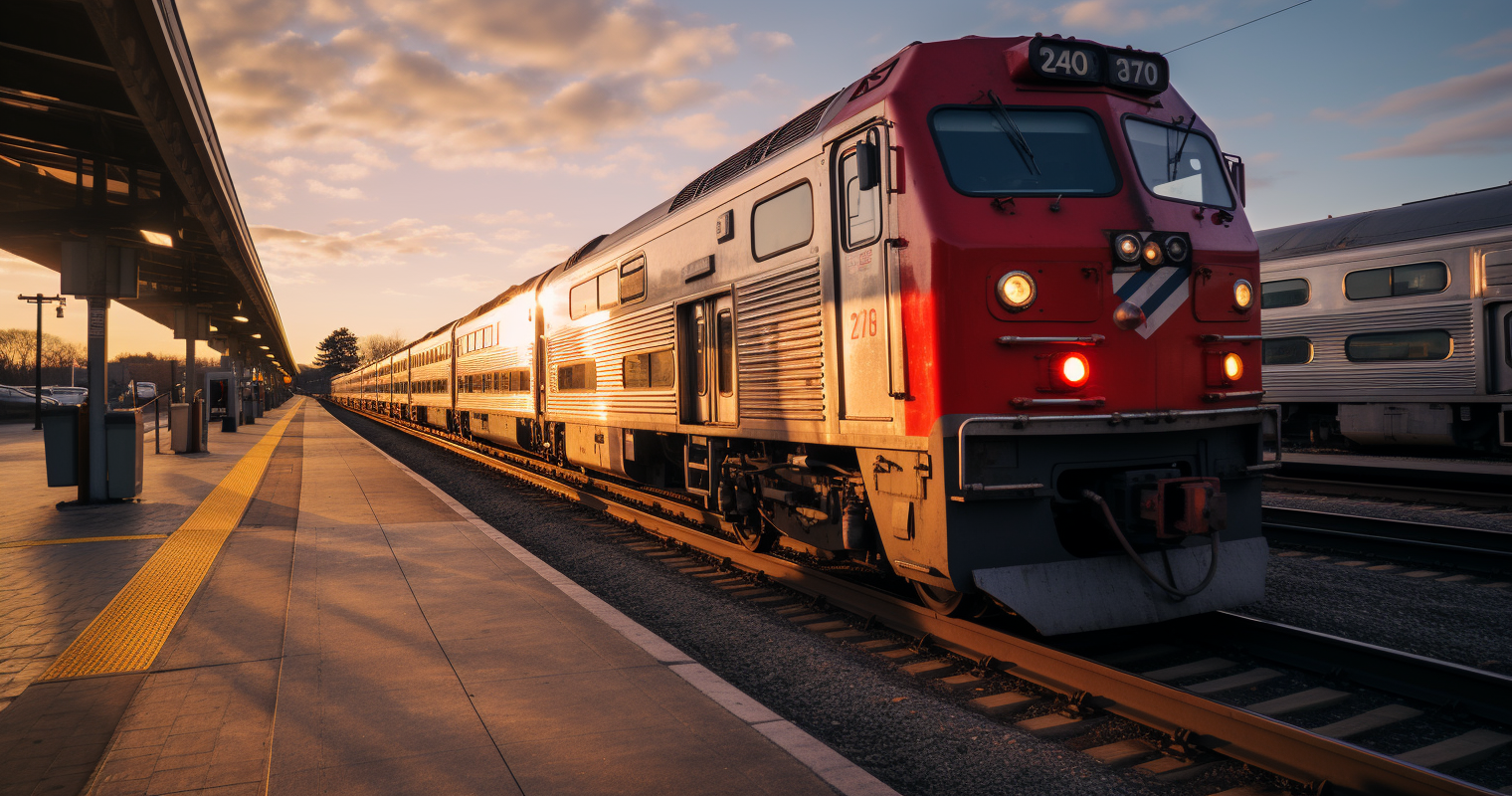
Rail travel in the Philippines is concentrated almost entirely within Metro Manila, where three urban light rail and metro lines carry millions of passengers every day. Beyond the capital, the national network is severely restricted — the Philippine National Railways (PNR) mainline was taken out of service in 2023–2024 to accommodate major infrastructure development. While the network is in the midst of a significant transformation, rail currently functions as a commuter tool rather than a means of long-distance travel.
| Item | Details |
|---|---|
| Main urban rail lines | LRT-1, LRT-2, MRT-3 (all in Metro Manila) |
| Beep Card cost | ₱100 (includes ₱30 loadable balance + ₱70 refundable deposit), as of 2024 |
| LRT-1 max single fare (full price) | ₱55 (as of April 2025 fare adjustment) |
| Discount for seniors, PWDs, students | 50% off single-journey tickets on LRT-1, LRT-2, MRT-3, valid until 2028 (as of 2025) |
| PNR Metro Commuter Line status | Suspended since March 2024 for NSCR construction |
| Major upcoming project | North–South Commuter Railway (NSCR): 147 km, 36 stations, under construction |
What is the overall standard of rail travel in the Philippines?
By international benchmarks, the Philippine rail network is modest in scale. After years of chronic underinvestment and neglect, the system shrank dramatically from its pre-Second World War peak of over 1,100 route kilometres, leaving rail service largely confined to the Manila metropolitan area. Nations such as Germany or Japan offer dense national networks with frequent intercity connections between cities and towns — the Philippines currently has nothing comparable outside the capital.
Because rail infrastructure is almost entirely limited to Metro Manila, it functions primarily as a commuter resource. Moving people and freight across long distances on land depends overwhelmingly on road transport. For the vast majority of Filipinos living outside Manila, rail simply has no role in everyday life. Buses, jeepneys, and ferries are the backbone of interisland and interprovincial movement.
In February 2023, the Department of Transportation announced that PNR operations would be suspended for five years to allow construction of the North–South Commuter Railway (NSCR), with the final Metro Manila segment ceasing operations in March 2024. PNR currently runs only in Laguna, Quezon province, and the Bicol Region — infrequent, slow services addressing highly localised travel needs rather than a functioning national route.
On the positive side, substantial investment is now actively under way. The NSCR will be a 147 km elevated railway with 36 stations, connecting New Clark City in Capas, Tarlac to Calamba, Laguna — and it will be the country’s first electrified main line. Upon completion, it will represent a genuine leap forward in the commuter experience along Luzon’s north–south corridor.
What classes of rail travel are available in the Philippines?
In contrast to European or East Asian rail networks where passengers can choose from multiple fare tiers — such as first class, business, or standard — rail travel in the Philippines operates exclusively on a single-class basis. All three Metro Manila urban lines (LRT-1, LRT-2, and MRT-3) carry every passenger in identical carriages, with no premium-class option on offer.
Carriages are air-conditioned and feature bench-style seating, though trains become severely crowded during rush hours. Since 2019, a formal policy designates the first and last cars on LRT-1, LRT-2, and MRT-3 as “women and children only” during peak periods (6–9 AM and 5–8 PM). This rule is enforced by station personnel rather than being merely a cultural convention — something newcomers to the network should keep in mind.
On the PNR’s remaining services in the Bicol Region, trains run with older rolling stock and basic seating arrangements. As of 2024, the Naga–Legazpi Line operates 8300-class coaches hauled by an INKA CC300 locomotive, while the Naga–Sipocot Line uses the 8000-class DMU. These are utilitarian services with no class distinctions — functional regional transport rather than anything resembling an express intercity offering.
The forthcoming NSCR is expected to mark a considerable improvement in comfort, using modern rolling stock on electrified elevated track. However, specific details regarding any class arrangements for the new line have yet to be confirmed. The official Department of Transportation (DOTr) website remains the best source for updates as construction progresses.
Where can you find rail timetables and ticket prices in the Philippines?
Each of Metro Manila’s three urban rail lines is administered by a government body that publishes fare information through official channels. The Light Rail Transit Authority (LRTA) manages LRT-1 and LRT-2 and maintains fare details on its website. Both lines use an Automated Fare Collection System (AFCS) based on contactless smart card technology. The DOTr MRT-3 website covers schedules and fares for MRT-3.
For PNR’s remaining regional operations in Laguna, Quezon, and the Bicol Region, the Philippine National Railways (PNR) website is the authoritative source for timetables and pricing. It is worth noting that PNR schedules — particularly for the Bicol services — can shift with limited advance notice, so verifying details directly with PNR or at the relevant station before travelling is always advisable.
Fare matrices for the urban lines are displayed at station ticketing counters and on information boards throughout stations. Philippine metro fares are among the most affordable in Asia, though they have been subject to revision — the DOTr approved a fare increase for LRT-1 effective April 2, 2025, lifting the maximum single-journey fare from ₱45 to ₱55. Always consult official sources for up-to-date fare information, as these figures can change.
The DOTr acts as the overarching transport policy authority and is a useful starting point for information on all rail services and projects: www.dotr.gov.ph.
How do you buy rail tickets in the Philippines, and can you book in advance?
Purchasing tickets for Metro Manila’s urban rail lines (LRT-1, LRT-2, MRT-3) is a simple process handled entirely at the station. No advance booking exists for these services — you purchase a ticket or use a stored-value Beep Card on the day of travel at the station itself. This is comparable to urban metro systems in cities like Singapore or Paris, where passengers pay per journey rather than reserving seats ahead of time.
- Get a Beep Card: Purchase a Beep Card from any station ticketing booth or kiosk. The card costs ₱100, comprising a ₱30 loadable balance and a ₱70 refundable card deposit (as of 2024). A single Beep Card is valid across all three urban rail lines.
- Load credit onto your Beep Card: Top-ups are available at station kiosks, 7-Eleven convenience stores, and through the GCash app. As of 2024, GCash allows remote reloading via the app, though you still need the physical card to tap through the turnstile.
- Buy a Single Journey Ticket (SJT) if needed: Passengers without a Beep Card can obtain single-journey tokens from ticketing machines and booths at every station. These are bought immediately before travel and cover one trip only.
- Tap in at the turnstile: Press your Beep Card or SJT token against the contactless reader at the entry gate to have the fare automatically deducted.
- Tap out or insert at destination: Upon arrival, tap your Beep Card at the exit gate or insert the SJT token. Any remaining balance on a single-journey token is non-refundable.
For PNR regional services in Bicol and Laguna/Quezon, tickets are sold at the station ticket window on the day of travel or shortly before departure. There is currently no online booking platform for PNR — confirm the latest arrangements directly with the relevant station or through the PNR website at pnr.gov.ph.
The Beep Card is accepted across all three operational urban lines (LRT-1, LRT-2, MRT-3) as well as at select convenience stores and parking facilities. For anyone based in Metro Manila who uses rail regularly, it is the most practical payment method, eliminating the need to queue for single-journey tokens at the start of every trip.
What types of rail tickets are available, and are there discount schemes?
The Metro Manila urban rail lines offer two core ticket options: the reusable Beep Card — a stored-value contactless smart card — and Single Journey Tickets (SJTs), which are one-use tokens valid for a single trip. There are no weekly or monthly passes, no flexible or open tickets, and no rail card equivalent granting unlimited travel. The system operates purely on a pay-per-journey basis.
That said, the Philippines has established meaningful fare concessions for priority groups, which represent genuine savings for those who qualify. Senior citizens and persons with disabilities (PWDs) are entitled to a 50% fare discount on LRT-1, LRT-2, and MRT-3 — an increase from the previous 20% discount, with the Department of Transportation implementing the new rate in July 2025. Like the student discount, this concession applies every day including weekends and public holidays, and remains valid until 2028.
As of June 20, 2025, the DOTr raised the student fare discount from 20% to 50% across all three major lines. This applies to students from elementary through to high school and college level, including postgraduate students enrolled in master’s and law school programmes, according to the DOTr. A valid school ID for the current academic year or a certificate of enrolment must be presented to claim the discount.
Dedicated concessionary Beep Cards for students, PWDs, and senior citizens are available at all stations on MRT-3, LRT-1, and LRT-2, and automatically apply the 50% fare reduction for cardholders. To obtain a concessionary Beep Card, seniors and PWDs should collect and complete the application form at any train station, bring a photocopy of the relevant ID (senior citizen’s ID or PWD ID), submit the form and ID copy at the station, and pay the ₱30 concessionary card fee.
For concrete examples of discounted fares (as of 2025): on LRT-1, the minimum fare at 50% discount is ₱10, with a maximum of ₱28 for an end-to-end journey; on LRT-2, the minimum is ₱8 and the maximum ₱18; on MRT-3, the minimum is ₱6 and the maximum ₱14 for an end-to-end trip. Always verify current figures through the LRTA tickets and fares page or the MRT-3 official website, as figures are subject to adjustment.
How accessible is the rail network for disabled passengers?
Accessibility on Metro Manila’s rail lines has improved in recent years, though the standard varies considerably across the network. Newer stations — particularly those along LRT-1’s Cavite Extension — have been designed with accessibility requirements in mind, incorporating elevators, tactile paving for visually impaired passengers, and ramps. Older stations dating from the original 1984-era infrastructure are more inconsistent, with elevator availability patchy and escalators occasionally out of service.
All stations on LRT-1, LRT-2, and MRT-3 maintain dedicated priority lanes and ticketing windows for passengers with disabilities, senior citizens, pregnant women, and those accompanied by young children. Station staff are generally on hand to offer basic help, though the level of proactive assistance is not standardised to the same degree as on systems such as the UK’s National Rail, where passengers can pre-book support through a centralised service.
Since 2019, the first and last cars on LRT-1, LRT-2, and MRT-3 have been reserved for women and children during peak hours. Priority seating within carriages is also designated for elderly passengers, PWDs, and pregnant women — though observance of this relies on the goodwill of fellow passengers rather than active enforcement.
For PNR’s Bicol regional services, accessibility provisions are considerably more limited. Older rolling stock and regional station facilities do not generally match the standards of the Metro Manila urban lines. Passengers with significant mobility requirements intending to use PNR should contact them in advance via pnr.gov.ph to establish what assistance is available.
The DOTr has indicated that the NSCR and other new infrastructure projects are being built to contemporary accessibility standards, which should substantially improve the situation for passengers with disabilities on major corridors once these lines open. For current accessibility queries across all lines, the DOTr and LRTA are the appropriate official points of contact.
Are there metro or urban rail systems in Philippine cities?
Two rapid transit systems serve passengers in Metro Manila: the Manila Light Rail Transit System and the Manila Metro Rail System. Together they operate three lines — LRT-1, LRT-2, and MRT-3 — which form the foundation of the capital’s rail-based public transport network. For anyone living or working in Metro Manila, these are the rail services that matter most in everyday life.
MRT-3 runs along EDSA from North Avenue Station in Quezon City to Taft Avenue Station in Pasay City, providing the fastest route through the heavily congested EDSA corridor. LRT-1 stretches from Fernando Poe Jr. Station in Quezon City to Dr. Abad Santos Station in Parañaque, linking with LRT-2 and MRT-3 via pedestrian transfer points. LRT-2 connects Recto Station in Manila to Antipolo Station in Rizal, making it the primary option for east–west travel and reaching the University Belt area.
The LRT-1 Cavite Extension entered revenue service on 16 November 2024, pushing the line further south and enhancing access for residents in the southern suburbs. The Beep contactless smart card covers all lines, making it the single card worth obtaining for anyone using the urban rail network on a regular basis.
Transfers between lines are possible but require some effort. The only direct interchange is between EDSA Station (MRT-3) and Libertad Station (LRT-1), which involves a short walk. Connecting between LRT-2 and MRT-3 requires exiting and walking to North Avenue Station. No free transfers currently exist — a notable contrast with fully integrated systems like those in Tokyo or Seoul, where single-card transfers between lines are seamless and automatic.
Several major projects currently under construction will reshape the network considerably. The Metro Manila Subway (MMS) is an underground rapid transit line under active development; Phase 1 covers 33 km and 17 stations, including a branch to NAIA Terminal 3, and is designed to carry up to 519,000 passengers daily. MRT Line 7 is another rapid transit line under construction that, when complete, will span 22.8 km across 14 stations. Outside Metro Manila, no other Philippine city currently operates a metro or light rail system, though 2025 saw land acquisition begin for a 102 km railway between Tagum City and Digos City on the island of Mindanao.
The official websites for Metro Manila’s urban lines are: Light Rail Transit Authority (LRTA) for LRT-1 and LRT-2, and DOTr MRT-3 for MRT-3.
What should expats know about using the rail network day-to-day?
For new residents in Metro Manila, the three urban rail lines offer a genuinely valuable way to get around — especially given the city’s notorious road congestion, which the 2025 TomTom Traffic Index ranked among the worst in the world. Trains bypass surface traffic entirely, and despite the discomfort of peak-hour crowding, they are frequently far quicker than road-based alternatives for journeys along the rail corridors.
Station signage and in-train announcements on LRT-1, LRT-2, and MRT-3 are displayed and broadcast in both English and Filipino (Tagalog), which makes navigation straightforward for new residents who have not yet become fluent in the local language. Destination boards, route maps, and passenger information throughout the station network are bilingual — a practical advantage compared to some other Southeast Asian urban rail systems where signage is predominantly in the local script.
Most rail passengers combine a train leg with another form of road-based transport — buses, jeepneys, or tricycles — to reach their final destination. Planning a complete door-to-door trip in Metro Manila typically means mixing modes, and apps such as Google Maps and Moovit are widely relied upon for mapping multi-modal routes across the city.
Station entry queues can stretch considerably during the morning and evening rush hours (roughly 7–9 AM and 5–8 PM), and trains during these periods are often intensely crowded. Travelling just before or after the peak window, where your schedule permits, makes for a notably more comfortable experience. There are no seat reservations on any urban line — boarding is entirely on a first-come, first-served basis.
Luggage policies on the urban lines are not strictly codified, but bringing large or unwieldy bags aboard during peak hours is generally discouraged out of consideration for other passengers. Security screening — including X-ray checks of bags — is conducted at station entrances, so it is worth allowing a little extra time for this. Eating and drinking inside train carriages is not permitted.
The Beep Card is indispensable for regular rail users and can also be used at select convenience stores and car parks. Keep sufficient credit on the card at all times — if your balance is depleted, you will be unable to exit through the turnstile and will need to resolve the matter at the customer service window. Reload kiosks are available at most stations, and topping up via the GCash mobile app has become an increasingly popular option.
Frequently Asked Questions
Is it possible to travel by train from Manila to other regions of the Philippines?
The PNR Metro Commuter Line that previously served Metro Manila was fully suspended by March 2024 to clear the way for NSCR construction. PNR now operates only in Laguna and Quezon province, and in the Bicol Region, and there is no through rail connection from Manila to any of these areas at present. Travel between regions depends on buses, domestic flights, or ferries — particularly for destinations in the Visayas and Mindanao.
How much does a typical metro trip cost in Metro Manila?
From April 2025, the maximum single-journey fare on LRT-1 is ₱55 for an end-to-end trip, with shorter journeys costing less on a distance-based scale. MRT-3 and LRT-2 each have their own fare matrices; consult the LRTA and DOTr MRT-3 websites for current figures, as fares are subject to periodic revision.
Do I need to book a seat in advance on the LRT or MRT?
No advance booking is required or available for Metro Manila’s urban rail lines. Simply go to the station, load your Beep Card or purchase a Single Journey Ticket, and board the next train. Services run frequently throughout operating hours, and there are no reserved seats on any of the lines.
What is the Beep Card and how do I get one?
The Beep Card is a contactless smart card, introduced in 2015, that is accepted across all three operational urban rail lines — LRT-1, LRT-2, and MRT-3 — as well as at select convenience stores and car parks. Cards are available at any station ticketing booth and cost ₱100 (as of 2024), comprising a ₱30 loadable balance and a ₱70 refundable deposit.
Are there discounts for senior citizens and people with disabilities?
Senior citizens and persons with disabilities are entitled to a 50% fare discount on LRT-1, LRT-2, and MRT-3. The concession applies every day including weekends and public holidays, and is valid until 2028 (as of 2025). Eligible passengers must apply for a concessionary Beep Card at a train station — the LRTA website provides details of the application process.
When will the North–South Commuter Railway (NSCR) open?
The NSCR is a 36-station, 147 km elevated railway that will link New Clark City in Capas, Tarlac with Calamba, Laguna. Construction is ongoing, with individual segments progressing at different rates. The project has experienced delays; refer to the DOTr website for the most current information on completion timelines, as these remain subject to change.
Is English widely used on the rail network?
Yes. Signage, announcements, and passenger information displays on LRT-1, LRT-2, and MRT-3 are provided in both English and Filipino. Station staff are generally able to communicate in English, making Metro Manila’s rail network relatively straightforward to navigate for residents who have not yet learned Filipino.
Are there trains connecting Metro Manila to the airport?
At present, no direct rail link to Ninoy Aquino International Airport (NAIA) exists. The nearest stations — MRT-3 Taft Avenue and LRT-1 EDSA — still require onward road transport to the terminals. Notably, the NSCR will include the Philippines’ first airport rail shuttle, cutting travel time between Clark International Airport and Makati City to approximately one hour. A dedicated rail connection to NAIA is also incorporated into the Metro Manila Subway plans.