

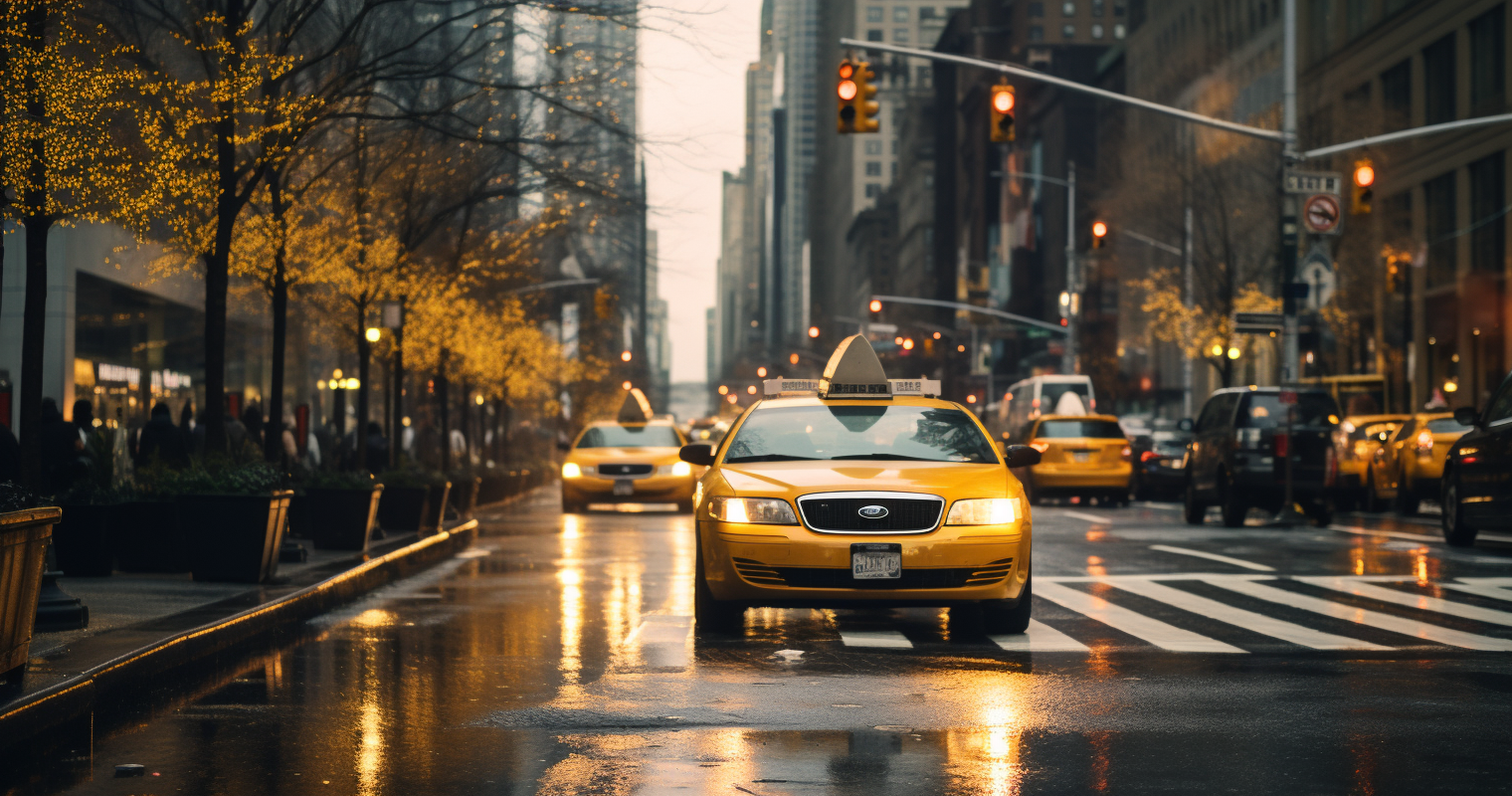
For expats living in the Bahamas, taxis represent the go-to option for on-demand travel, with government-set fares applying across Nassau, Freeport, and the Family Islands. Global platforms like Uber and Lyft have no presence in the country, though a handful of locally developed app-based services have begun to fill the gap. Taxis are plentiful and convenient in the main urban centres, but those heading to smaller islands should factor in some extra planning.
| Item | Details |
|---|---|
| Fare structure | Government-regulated fixed zone fares (not metered), as of 2024 |
| 2024 fare increase | 10% increase across the Bahamas gazetted in March 2024 |
| Airport to downtown Nassau | Approx. BSD $36 for two passengers, as of 2024–2025 |
| Uber/Lyft availability | Not available in the Bahamas |
| Local ride-hailing apps | Bahamas Ride (MyRide app), Let’s Go Bahamas, Kroozzy |
| Jitney bus fare (Nassau) | From BSD $1.25; operates approx. 6 AM–7 PM daily |
How do taxis work in the Bahamas, and are they safe and reliable for expats?
Rather than relying on running meters, taxi fares throughout Nassau are fixed by the government and structured around zones and distances. This contrasts with systems in countries like Australia or Germany, where metered rates are standard practice for every trip. In the Bahamas, the price you pay depends on your route, the time of day, how many passengers are travelling, and the amount of luggage you have — not a ticking meter.
Both Nassau and Freeport have an ample supply of taxis that can be flagged down on the street or called by phone. Dedicated taxi ranks are conveniently positioned outside most major hotels, and on the Family Islands, taxis remain the principal form of local transport, though they typically need to be summoned by radio or telephone rather than hailed on the roadside.
In Nassau, licensed taxis are easily identified by their white bodywork, yellow licence plates, and rooftop “TAXI” sign. A particularly useful indicator is the “BahamaHost” emblem — usually displayed on the window as a blue circle — which signifies that the driver has been certified by the Bahamas Ministry of Tourism and has undergone training in local history, attractions, and island knowledge.
Licensed and regulated drivers make taxi travel generally safe for expats. One important rule: always settle on a fare before you get in, not after. Long-term residents often find that building a rapport with a dependable driver, or booking through one of the available local apps, is the most sensible approach to daily transport needs.
Which ride-hailing apps work in the Bahamas, and how do I use them?
Uber and Lyft are not available anywhere in the Bahamas. The primary reason is the influence of a well-organised taxi drivers’ union, which has successfully argued that international ride-hailing platforms would undermine the livelihoods of licensed, unionised drivers. This is a situation echoed in a number of other Caribbean island destinations and parts of Southeast Asia, where local taxi industries have resisted the entry of global platforms.
In place of Uber, several Nassau-based app services allow you to book rides from your smartphone. The leading option is Bahamas Ride, developed in partnership between the Bahamas Taxi Cab Union and the Ministry of Tourism. This official backing matters — it guarantees that Bahamas Ride connects passengers exclusively with licensed drivers operating within the government-regulated fare structure.
Bahamas Ride runs through the MyRide app, which is available across all major Bahamian islands. After downloading the app from your device’s app store and completing a brief registration, you can set your pickup location and book immediately or schedule a ride in advance. The app displays your driver’s details and vehicle information before arrival, and also lets you share your journey with a trusted contact.
Kroozzy is another option, positioning itself as a Caribbean equivalent of Uber. It provides a price estimate before you confirm the ride, shows driver details, and includes a panic button for added peace of mind. Let’s Go Bahamas is a further alternative, offering both instant and advance bookings across categories including standard Taxi, Business, and VIP. It features GPS tracking, an upfront fare quote, a photo of your assigned driver, and flexible pre-scheduling.
Other smaller services that have emerged to meet local demand include Bahrezy, though none of these platforms match the scale or coverage of Uber or Lyft as found in other countries. For expats based in Nassau, combining phone-booked taxis with the MyRide or Let’s Go Bahamas apps gives the most reliable app-based transport experience currently on offer. Before using any app, always confirm that it routes bookings through properly licensed drivers.
Where can I find taxis and book rides in the capital city and major expat areas?
In Nassau, taxis are a constant presence at Lynden Pindling International Airport, where they line up outside the arrivals terminal ready to take passengers onward. Taxi ranks are also found in front of major shopping centres and at resort complexes including Atlantis and Baha Mar. Government-set zone fares apply to all these journeys.
For telephone bookings in Nassau, two well-established dispatch services are:
- Meter Cabs — Davis Street, Nassau. Tel: +1 (242) 323-5111
- Bahamas Taxi Cab Union — Nassau Street. Tel: +1 (242) 323-4555
As the central body of the industry, the Bahamas Taxi Cab Union can connect callers with licensed drivers across New Providence. For pre-arranged transfers, the official Bahamas tourism site at bahamas.com lists approved transport providers, while fare schedule updates are published through the government portal at bahamas.gov.bs.
In Freeport, taxis offer direct and private transport and are reliably found at the airport, hotels, and the main tourist and commercial areas. For journeys at times or to destinations not covered by jitney buses, taxis are the practical choice. No single ride-hailing app currently dominates Grand Bahama, so telephone bookings and hotel-arranged taxis continue to be the primary method there.
Taxi stands are present at the airport and main shopping areas in both Nassau and Freeport, making it straightforward to pick up a ride. On the Family Islands — including Eleuthera, the Exumas, and Abaco — availability is considerably more limited, particularly outside the windows when flights arrive. Contacting your accommodation in advance to arrange a taxi pickup is strongly recommended when travelling to these islands.
How much does a taxi or ride-hailing trip cost in the Bahamas?
In March 2024, Minister of Energy and Transport JoBeth Coleby-Davis announced a 10% uplift in taxi fares across the Bahamas — the first adjustment in more than six years. This was formalised as the Taxi-Cab Maximum Fares (Amendment) Regulations, 2024, and all figures below reflect that updated schedule. For the most current rates, consult the official Bahamas legislation portal or reach out directly to the Road Traffic Authority.
The base rate is $3 for the first quarter mile, followed by 40 cents for each subsequent quarter mile — these rates apply equally to standard cabs, vans, and stretch limousines. Fares are organised by zone: trips within downtown Nassau cost $6, Paradise Island to downtown runs $9, and the Cable Beach to Paradise Island route is $18 including the bridge toll. These figures incorporate the 2024 uplift, so it is worth verifying the precise gazetted amounts for any route you travel regularly.
Airport transfers are among the most frequent journeys for expats and their visiting guests. From Lynden Pindling International Airport, the rate to downtown Nassau is approximately $36, to Cable Beach around $30, and to Paradise Island roughly $45 plus the bridge toll. These fares are calculated for two passengers, with additional charges applying for extra travellers and luggage.
Each passenger beyond two is charged $3 extra. Excess baggage carries an additional fee of approximately BSD $2, and bridge tolls may apply on certain routes. Tipping taxi drivers 15% is customary. Expats who need to run multiple errands across Nassau in a single outing often find it useful to hire a car or small van by the hour — a typical rate is around $50 per hour.
Apps such as MyRide and Let’s Go Bahamas display an upfront fare estimate before you confirm your booking, giving you the pricing clarity that street-hailed taxis do not always provide. Importantly, there is no surge pricing mechanism in the Bahamian app ecosystem — all fares remain anchored to the government-regulated schedule regardless of demand.
Are there any common scams or safety issues with taxis in the Bahamas that expats should know about?
The taxi industry in the Bahamas is well regulated, especially in Nassau and Freeport, and the country generally experiences fewer scams compared with many other Caribbean destinations. That said, some drivers may inflate fares or deliberately take circuitous routes to increase the final bill — a risk familiar to expats in tourist-heavy cities across the world, and one that calls for the same basic precautions.
If a driver claims the meter is faulty or refuses to activate it, either insist it is switched on or simply exit and find another taxi. Watch for meters that appear to tick over unusually fast, as this may indicate you are being overcharged. Checking with your hotel or researching the approximate fare for your route beforehand puts you in a much stronger position.
To guard against unnecessarily long routes, open Google Maps or a comparable offline navigation app and track the journey as you go. If the driver deviates from the most direct path, calmly direct them back by pointing to your screen. This straightforward measure discourages detours without confrontation.
Be alert to unlicensed drivers — sometimes called “hackers” — who operate without displaying their credentials and may not hold a valid licence at all. Every legitimate taxi in the Bahamas carries a special licence plate identifying it as such, and in Nassau these vehicles are typically white with yellow plates and a rooftop “TAXI” sign. If a vehicle lacks these identifiers, do not get in.
Because taxis operate on zone-based fares rather than live meters, agreeing on the price before you board is the single most effective way to prevent end-of-journey disputes. When travelling alone, sharing your driver’s name and taxi number with a trusted contact is a sensible precaution — one worth practising wherever you are in the world.
How do I pay for taxis and ride-hailing services in the Bahamas — cash, card, or app?
The majority of taxis in the Bahamas operate on a cash-only basis, so carrying smaller denominations will help avoid complications when settling the fare. The Bahamian Dollar (BSD) is pegged at a 1:1 rate with the US Dollar, which means USD cash is just as widely accepted as BSD in taxis. Keeping a supply of both currencies is a sensible habit for expats managing daily expenses.
A minority of taxis do have card readers, but this is far from universal, particularly for rides hailed on the street away from the main tourist zones. Do not assume card payment will be an option unless you have confirmed it with the driver before the journey begins. Where card facilities are present, foreign-issued Visa and Mastercard are generally processed without difficulty, though it remains wise to ask in advance.
App-based services offer more payment flexibility. Bahamas Ride connects passengers with vetted drivers and accepts both card and cash payment, making it a useful choice when you want to avoid a cash transaction. Corporate accounts are also accommodated, with invoicing available and corporate credit cards accepted. The Let’s Go Bahamas app similarly allows you to commit to payment within the booking process, removing any ambiguity about the fare at the end of your trip.
For everyday expat use, the most practical approach is to keep BSD or USD cash on hand for street-hailed or phone-booked journeys, while reserving app-based services for occasions when you want a confirmed price and the option to pay by card before you step into the vehicle.
Are there alternatives to taxis and ride-hailing for getting around the Bahamas as an expat?
The jitney bus is Nassau’s most widely used form of public transport and, by far, the most affordable way to get around the island. Fares vary by distance and typically range between $1 and $3 per journey. Jitneys have no fixed timetable — you simply wave one down when you see it approaching. There is no equivalent of the metro systems found in cities like Singapore or Paris; the Bahamas has no urban rail network of any kind.
Nassau’s jitney network is made up of privately operated buses that follow defined city routes, running roughly from 6 AM to 7 PM daily. The minimum fare is $1.25, and drivers require exact change. For those new to the system, the number 10 bus — which links west Nassau with the downtown area — is widely considered the most straightforward route to start with. Marked stops are rare, so buses pull over frequently along the roadside. For expats commuting during standard working hours on regular routes, jitneys represent an extremely cost-effective option.
In Freeport, jitneys are likewise the backbone of public transport for residents and visitors alike. They are inexpensive and serviceable for daytime journeys but stop running in the evening. An expat living in central Freeport, within walking distance of key amenities, can manage day-to-day life without a car. Those wanting to access more remote parts of the island, however, will find having a vehicle considerably more practical.
Water taxis are an enjoyable and distinctly Bahamian way to travel, most commonly used between Paradise Island and the Nassau waterfront. Ferry boats and water taxis cross Nassau Harbour, offering scenic views of the shoreline as you go. Tickets are available at the tour desk at Woodes Rogers Wharf.
Scooters and ATVs can be hired in Nassau, Freeport, and on some Family Islands, providing a flexible option for shorter trips in fine weather. Car rental is offered at Lynden Pindling International Airport and at various Nassau locations. For expats who plan to move frequently beyond the central areas, owning or renting a car is likely to prove more convenient and economical over time. One important note: traffic in the Bahamas keeps to the left, which will require adjustment for those accustomed to driving on the right.
What do expats say about using taxis and ride-hailing services day-to-day in the Bahamas?
The broad expat view is that transport in the Bahamas works, but demands more advance thought than in app-dominated cities across North America, Europe, or Southeast Asia. One of the first things newcomers to Nassau discover is that Uber, Lyft, and comparable international platforms simply do not exist there. Getting around relies on licensed taxis, hotel shuttles, tour operators, and a small selection of locally sanctioned services. Those who arrive from cities where Grab, Bolt, or Uber are the norm tend to find the shift noticeable at first.
Airport transfers are a particular pressure point during Nassau’s high season, when increased flight volumes and cruise passenger numbers create heavy demand for available taxis. Competing with a wave of fellow travellers for limited vehicles after a long international flight is a stressful experience. Expats consistently recommend pre-booking airport transfers, especially during the busy winter tourism months.
Long-term Nassau residents report getting around comfortably by taxi and jitney, with a general sense of personal safety. Common-sense awareness and a preference for drivers who appear approachable and professional go a long way. Jitneys offer genuine local colour, and a knowledgeable taxi driver can be an invaluable source of insider information about the city. Many expats settle early on a reliable driver from their first airport journey and keep that person’s number saved for future trips — a straightforward workaround for the lack of a dominant ride-hailing platform.
In Freeport, expats report that a car-free lifestyle is achievable with good planning, particularly for those living and working close to the central areas well served by jitneys and taxis. Those needing to range further afield on a regular basis will find a vehicle makes life considerably easier. Communication is no obstacle — Bahamian taxi drivers work in English and are widely noted for their warmth and willingness to talk.
On the Family Islands, the transport reality shifts markedly. Taxis are scarce outside of airport arrival times, and most residents depend on their own cars or pre-arranged rides with drivers they know personally. Expats relocating to islands such as Eleuthera, Exuma, or Abaco are strongly advised to sort out a vehicle or scooter rental upon arrival and to establish local contacts well before they find themselves needing an urgent ride.
Frequently Asked Questions
Does Uber operate in the Bahamas?
No, neither Uber nor Lyft operates in the Bahamas. Their absence is primarily the result of regulatory restrictions and the strength of local transportation laws. Established taxi companies have expressed serious concerns about the threat that ride-sharing services pose to their industry, and these concerns have translated into firm regulations preventing such platforms from entering the market. Local alternatives include the Bahamas Ride (MyRide) app, Kroozzy, and Let’s Go Bahamas.
How do I get from Nassau’s Lynden Pindling International Airport to the city by taxi?
Taxis queue outside the arrivals terminal at Lynden Pindling International Airport and are ready to depart as soon as you reach them. From the airport, the approximate fare to downtown Nassau is $36, to Cable Beach around $30, and to Paradise Island roughly $45, with the bridge toll added on top — all figures as of 2024–2025. Always agree on the fare with your driver before getting in. For a confirmed fixed price, you can also pre-book through the MyRide app or a dedicated transfer service ahead of your arrival.
Is it safe to take a taxi alone at night in the Bahamas?
Travel in licensed taxis is generally considered safe, as drivers are subject to licensing and regulatory oversight. Always look for taxis displaying yellow licence plates and a rooftop “TAXI” sign. When travelling alone at night, it is a good idea to text your driver’s name and taxi number to a trusted contact. Use reputable, licensed operators, steer clear of unmarked vehicles, and pre-book where possible. Jitney buses stop running at around 7 PM, leaving licensed taxis and pre-booked services as the only independent options for evening travel.
How do I avoid being overcharged by a taxi driver?
Agreeing on the fare before you board is the most reliable way to prevent a dispute when you arrive. The Road Traffic Department publishes a fare chart listing prices between common destinations, and these figures represent the maximum a driver is permitted to charge — fares can be negotiated downward. Using an app such as MyRide or Let’s Go Bahamas, which provide upfront pricing at the point of booking, eliminates ambiguity entirely. Always pay with smaller bills and avoid handing over large notes before a fare has been confirmed.
What should I do if a driver refuses to use the meter?
If a driver claims the meter is not working or declines to switch it on, insist that it be used or exit and choose a different taxi. Given that many Nassau taxis operate on fixed zone rates rather than live meters, the more critical step is confirming the fare before the journey begins. If you are uncomfortable, step back, check the official fare schedule, and select another driver. Overcharging can also be reported to the Bahamas Taxi Cab Union (Tel: +1 242-323-4555) or the Road Traffic Authority.
Are there ride-hailing apps that only use licensed taxi drivers in the Bahamas?
Yes — Bahamas Ride, operating through the MyRide app in Nassau, connects passengers solely with licensed and vetted drivers. The service was developed as a joint initiative between the Bahamas Taxi Cab Union and the Ministry of Tourism, making it the most officially endorsed app-based option available. When using any ride-hailing app in the Bahamas, always verify that bookings are routed through properly licensed drivers to ensure you benefit from insurance and regulatory protections.
Do taxis in the Bahamas accept credit cards?
A small number of taxis accept card payments, but this is not the norm, and you should always check with the driver before assuming this option is available. Most taxis deal exclusively in cash. Both the Bahamian Dollar and the US Dollar are accepted, thanks to their 1:1 peg, making USD cash equally practical. For a guaranteed card payment experience, opt for an app-based service such as Bahamas Ride (MyRide), which explicitly supports card transactions. Corporate bookings can also be invoiced, which is a useful feature for expats with business travel requirements.
What is the cheapest way to get around Nassau as an expat on a daily basis?
The jitney bus is the most affordable transport option on Nassau, with fares typically ranging between $1 and $3 depending on distance, and a base rate of $1.25 (exact change required). Jitneys run from approximately 6 AM to 7 PM daily and operate without a fixed timetable — you flag one down as it passes. For journeys outside these hours or on routes not covered by jitneys, taxis are the most convenient alternative. Over the longer term, expats who need regular flexibility often find that owning or renting a car is the most economical solution overall.