

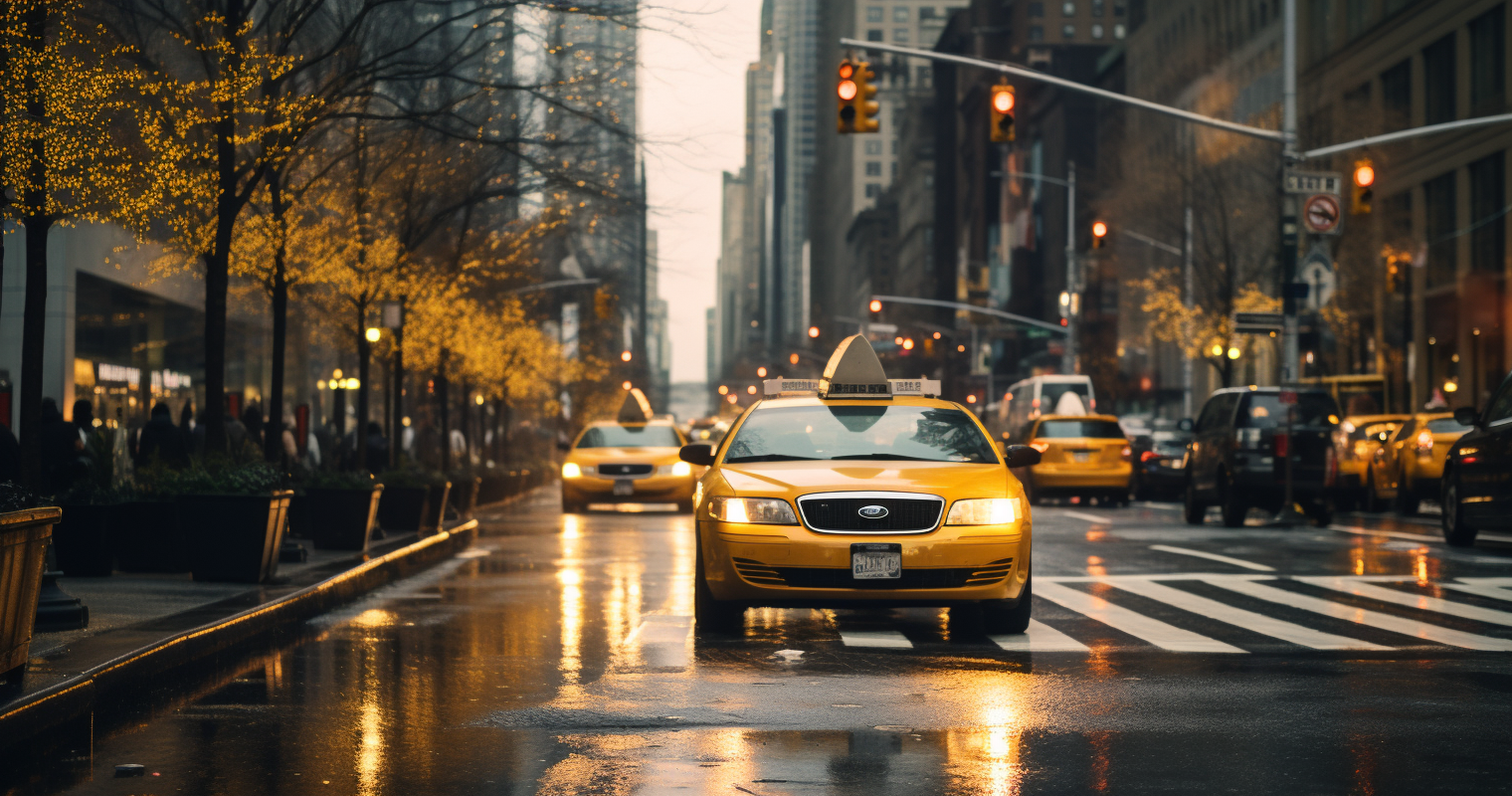
Singapore operates one of the most comprehensively regulated point-to-point transport systems anywhere in Southeast Asia. All licensed taxis run on calibrated meters, safety standards are high, and vehicles are available throughout the entire city-state. While Uber has no presence here, Grab commands the dominant share of the ride-hailing market, with Gojek, TADA, and Ryde offering competitive alternatives. For expats managing daily life, pairing ride-hailing apps with Singapore’s exceptional public transport network is enough to handle virtually any journey.
| Item | Details |
|---|---|
| Taxi fare structure | Metered: flag-fall + distance + time + surcharges (as of 2025) |
| Standard flag-fall rate | S$3.20–S$4.50 depending on taxi type (as of 2025) |
| Peak-hour surcharge | 25% of metered fare (weekday mornings/evenings); 50% midnight–6am (as of 2025) |
| Changi Airport surcharge | S$3 standard; S$5–S$8 Fri–Sun evenings (as of 2025) |
| Dominant ride-hailing app | Grab (Uber does not operate in Singapore) |
| Key regulatory body | Land Transport Authority (LTA) |
How do taxis work in Singapore, and are they safe and reliable for expats?
Taxi fares in Singapore are determined by a metered system that accounts for the flag-fall charge, distance covered, and time spent stationary or in slow-moving traffic. The overall fare structure breaks down into four core elements: the flag-down charge, distance- and time-based increments, applicable surcharges, and any booking fees. Unlike cities where drivers negotiate prices or operate on fixed zones, every licensed taxi in Singapore must comply with a government-set tariff — meters are officially calibrated and inspected to ensure this.
For standard taxis as of 2025, the flag-down rate covers the initial kilometre (S$3.20–S$3.90), after which distance charges of S$0.22 apply per 400 metres for the first 10 kilometres and S$0.22 per 350 metres thereafter. When the vehicle is stationary or crawling, a waiting charge of S$0.22 per 45 seconds is added. Always confirm the latest figures on the LTA website, as rates are subject to periodic revision.
Premium and executive taxis carry higher flag-down rates of S$3.90–S$5.00 and distance charges of S$0.33 per 400 metres. Operators such as ComfortDelGro Premier and Strides Premier run vehicles in this category. Across all taxi types, the fare structure encompasses flag-down charges, distance- and time-based increments, booking fees, and surcharges — and it is the surcharges in particular that can have a noticeable effect on the final amount displayed on the meter.
Regulation of the industry is robust. Singapore’s Point-to-Point (P2P) Regulatory Framework is designed to protect both passengers and drivers and covers transport operators managing fleets of 800 or more taxis or private hire cars. Taxis and private hire vehicles work alongside the bus and rail network, giving commuters a more direct, car-like travel option without the need for private vehicle ownership. This level of regulatory rigour makes Singapore’s taxi sector measurably more consistent and dependable than equivalents in many other Asian cities.
Passengers can flag down a taxi on the street when the rooftop light signals availability, join an orderly queue at a taxi stand, telephone a dispatcher, or use a smartphone app. App-based bookings have become increasingly standard — they carry a modest booking fee but provide a confirmed vehicle and an upfront fare estimate, which many passengers prefer.
Which ride-hailing apps work in Singapore, and how do I use them?
Uber has no presence in Singapore. Despite the company maintaining its regional headquarters in the city, it ceased operations here in 2018 following a merger with Grab. Expats relocating from markets where Uber is the standard option will need to transition fully to local alternatives — fortunately, those alternatives are very capable.
Grab is the foremost ride-hailing and taxi platform in Singapore, connecting passengers with private hire vehicles, metered taxis, and coaches. Its intuitive interface and broad geographic reach — the app functions across eight Southeast Asian countries — make it especially practical for expats who travel regionally. Service tiers include standard GrabCar, shared ride options, premium vehicles, family-oriented trips with child seats, and GrabTaxi for hailing metered cabs. International phone numbers are accepted at registration, and payment by card is fully supported.
Gojek frequently undercuts Grab on price and covers a comparable range of services, including GoCar for standard trips, GoCar XL for larger groups, GoCar Premium for a more upmarket experience, and GoCar Kids with booster seats for young passengers. Payment can be made by card, cash, or local digital wallet. The app serves both Indonesia and Singapore, so no additional platform is needed when crossing between the two countries.
TADA operates across Singapore, Cambodia, Vietnam, and Thailand and distinguishes itself through a zero-commission model. Because drivers retain a greater share of each fare, prices for riders are often lower than on competing platforms. Installing TADA as a backup is particularly worthwhile during peak demand periods when Grab’s surge pricing kicks in.
ComfortDelGro (CDG) is a long-established taxi operator whose CDG Zig app enables bookings for both metered taxis and private hire vehicles. The app supports immediate and advance bookings, multiple pick-up and drop-off points, fare estimates, and in-app push notifications — retaining the functionality that regular CDG customers expect.
Ryde provides on-demand mobility options including private hire (RydeX and RydeXL), carpooling (RydePOOL), taxi hailing (RydeTAXI), and parcel delivery (RydeSEND), and has a loyal following among carpooling users. For those who want to compare prices across multiple platforms simultaneously, SPUR — described as Southeast Asia’s first taxi aggregator — pulls together fare estimates from Grab, ComfortDelGro, and Gojek within a single interface.
All major apps are available on both the Apple App Store and Google Play. Setting up an account requires only an email address and phone number; international numbers work without issue. It is worth configuring your preferred payment method before you need the app in earnest, rather than scrambling to do so on arrival at the airport.
One important distinction for those arriving from Bangkok, Jakarta, or Ho Chi Minh City: Singapore has no motorbike taxis for passengers. “GrabBike” in Singapore refers solely to personal e-scooter hire, not passenger motorcycle trips. This is a meaningful difference from the ride-hailing landscape in several neighbouring cities.
Where can I find taxis and book rides in Singapore and major expat areas?
Because Singapore is a single, compact city-state, the transport infrastructure is uniformly available across the island — there are no regional gaps in app coverage or taxi operator reach. The principal expat residential neighbourhoods, including Orchard Road, Holland Village, Buona Vista, Novena, Tanjong Pagar, the East Coast, Jurong, and Woodlands, are all well served by both taxis and ride-hailing platforms.
Designated taxi stands are located outside major shopping centres, MRT stations, hotels, hospitals, and transport interchanges. Street hailing remains permitted where signage allows it, though the sight of someone waving down a cab at the roadside is increasingly uncommon now that app bookings have become the default. During peak commuting hours or heavy rain, stands may develop queues, making an advance app booking the more efficient choice.
The principal licensed taxi operators in Singapore, together with their contact information and booking platforms, are:
- ComfortDelGro (CDG): Singapore’s largest taxi fleet. App: CDG Zig (iOS and Android). Website: cdgtaxi.com.sg. Phone: 6552 1111.
- Trans-cab: Website: transcab.com.sg. Phone: 6788 7777. Bookable via Grab and CDG Zig.
- Strides Premier (formerly SMRT Taxis): Website: stridespremier.com.sg. Phone: 6555 8888. Reliable service with a well-regarded app and integration with public transport data.
- Prime Taxi: Bookable through Grab and CDG Zig apps.
- GrabCab: Metered taxis bookable directly within the Grab app.
At Changi Airport, metered taxis depart from dedicated taxi bays at Terminals 1, 2, 3, and 4. No advance booking is required; passengers simply join the queue. Ride-hailing pickups via Grab and Gojek are facilitated from clearly marked dedicated zones within each terminal. Grab is fully operational at Singapore’s airport — once you land, booking through the app is a straightforward and dependable way to reach the city centre.
In high-footfall areas such as Marina Bay, Orchard Road, and Sentosa, taxis are generally readily available at hotel forecourts and major attractions. Location-specific surcharges apply to journeys originating from certain destinations, including Changi Airport, Seletar Airport, and Singapore Zoo. Check your app’s fare estimate or confirm with the driver before departure if you are uncertain about which surcharges may apply.
How much does a taxi or ride-hailing trip cost in Singapore?
The fare for a metered taxi trip is built from the flag-down charge, distance covered, and time spent waiting or in slow traffic. Beyond these core components, a range of surcharges can come into play depending on the time of day, pickup location, and vehicle type. Getting a clear picture of this structure upfront prevents any unpleasant surprises when the journey ends — particularly for those who have just arrived in Singapore.
As of 2025, the following fare components apply to standard taxis:
| Component | Rate |
|---|---|
| Flag-fall (standard taxi) | S$3.20–S$4.50 |
| Flag-fall (premium/luxury taxi) | S$4.50–S$6.00+ |
| Distance rate (first 10 km) | S$0.22 per 400 m |
| Distance rate (beyond 10 km) | S$0.22 per 350 m |
| Waiting time | S$0.22 per 45 seconds |
| Peak hour surcharge (weekday mornings/evenings) | 25% of metered fare |
| Late-night surcharge (midnight–6am) | 50% of metered fare |
| CBD pickup surcharge (5pm–midnight daily) | S$3 |
| Changi Airport surcharge (standard hours) | S$3 |
| Changi Airport surcharge (Fri–Sun, 5pm–midnight) | S$5–S$8 |
To put these figures into practical context: a daytime taxi from Changi Airport to Orchard Road, a journey of roughly 18–20 km, will generally cost between S$25 and S$40 depending on traffic conditions. The same trip late at night will be noticeably more expensive once the 50% midnight surcharge is factored in. Taxis are considered reasonably priced given that Singapore ranks among the more expensive cities in the world overall.
Apps such as ComfortDelGro, Grab, and Gojek typically present an all-inclusive fare estimate — surcharges already incorporated — before you confirm a booking, which makes planning straightforward. Grab and Gojek both apply dynamic surge pricing when demand is elevated. During such periods, a metered taxi can sometimes work out cheaper than a Grab booking, so comparing both before committing is a worthwhile habit. Booking apps flag any “Peak Surcharge” clearly in the price breakdown and show a confirmed total before the ride is accepted.
Always cross-check current fares using the LTA taxi fares page or the individual operator websites, as rates are revised from time to time.
Are there any common scams or safety issues with taxis in Singapore that expats should know about?
Singapore is widely regarded as one of the world’s safest countries, and both its licensed taxi and ride-hailing sectors operate under tight regulatory control. Problems such as meter tampering or aggressive price gouging — concerns that travellers face in some other markets — are rare within the licensed sector. Nevertheless, there are particular issues that expats should keep in mind.
The most thoroughly documented risk involves unlicensed cross-border ride-hailing drivers. Illegal operators have been found transporting passengers into Singapore and continuing to offer point-to-point services on the island without a valid licence, including actively soliciting customers near tourist sites. Authorities have made clear that enforcement action targets drivers who lack appropriate licensing and insurance, noting that “such services put passengers at risk.” Always use a licensed app or a clearly identified taxi rank to avoid any exposure to this problem.
Since July 2025, the LTA has inspected over 2,700 vehicles as part of enforcement operations aimed at protecting passenger safety, impounding 152 vehicles in the process. Drivers caught providing illegal ride-hailing services face fines of up to S$3,000, imprisonment of up to six months, or both, together with possible vehicle forfeiture.
To confirm that a taxi is properly licensed, look for the following:
- A yellow-on-black taxi licence plate
- The operator’s branding and livery clearly displayed on the vehicle exterior
- A driver’s vocational licence mounted visibly on the dashboard
- A functioning, sealed taximeter
- The vehicle’s licence plate number visible from inside the passenger compartment
For private hire vehicles booked through Grab, Gojek, or similar platforms, driver licensing is verified by the app itself. Before entering any vehicle, check that the licence plate number and driver photo displayed in the app correspond to the actual vehicle and driver in front of you. If there is any discrepancy, cancel the booking immediately and report it through the app.
Should you wish to lodge a complaint about overcharging or misconduct by a licensed taxi driver, contact the Land Transport Authority on 1800-CALL-LTA (1800-2255-582). LTA will investigate or refer the matter to the relevant taxi company in line with its disciplinary procedures. You will need to supply the taxi’s licence plate number along with the date, time, and a brief account of the incident. Unlicensed ride-hailing activity can also be reported directly through the LTA website.
How do I pay for taxis and ride-hailing services in Singapore — cash, card, or app?
Singapore functions as a largely cashless society, and both metered taxis and ride-hailing apps accommodate a wide variety of payment methods. Understanding which options carry additional fees can make a meaningful difference to what you spend over the course of months or years.
Most taxis in Singapore accept three standard forms of payment: cash, credit cards, and NETS. Each comes with different cost implications. Cash is the most straightforward — you pay exactly what the meter shows, with no additional charge. Credit card payments are convenient but attract a 10% surcharge on top of the metered total. Paying by NETS incurs a flat administrative fee of S$0.30 per transaction.
A range of digital wallets — including NETS, NETSPay, NETS Flashpay, DBS PayLah!, OCBC PayAnyone, UOB TMRW, Alipay, and WeChat Pay — are also accepted in many taxis, though a S$0.30 administrative charge applies. These are local platforms, meaning visitors or recently arrived expats without Singapore bank accounts will generally rely on cash or an international credit or debit card (with the 10% surcharge applying to the latter).
Within ride-hailing apps, payment is processed entirely in-app. Both Grab and Gojek accept international Visa and Mastercard credit and debit cards in addition to local digital wallets, so there is no requirement for a Singapore bank account to use these services. It is worth noting that while in-app cashless payment is the default, many Grab drivers still prefer to be paid in cash and may check this with you before confirming the pickup — so keeping a modest amount of Singapore dollars on hand is always sensible.
Carrying S$20–S$50 in cash provides a reliable fallback for situations where cashless payment is impractical or unavailable, such as late-night travel or journeys through areas with unreliable mobile connectivity.
Are there alternatives to taxis and ride-hailing for getting around Singapore as an expat?
Singapore’s public transport network is genuinely world-class and is the primary means of daily travel for the great majority of residents, expats included. Taxis and private hire vehicles serve a complementary role alongside buses and trains rather than replacing them — for most routine trips, public transport is quicker, cheaper, and more consistent during peak commuting periods.
The main alternatives worth knowing about are:
- MRT (Mass Rapid Transit): The spine of Singapore’s transport network — efficient, spotlessly clean, and linking all major parts of the island. Average MRT fares range from S$0.92 to S$2.20 per journey (as of 2025), representing a fraction of the equivalent taxi cost for most trips. Direct services connect the network to Changi Airport and cover all principal expat neighbourhoods.
- Public Buses: Buses fill the gaps left by the rail network, reaching districts not directly served by train. Bus stops display real-time arrival information electronically, and route details are readily accessible via apps including MyTransport.SG. When using the same payment card, transfers between MRT and bus are free within a two-hour window.
- EZ-Link / SimplyGo cards: These contactless cards function across the entire MRT and bus network — broadly comparable in concept to London’s Oyster card or Sydney’s Opal card. Buses accept EZ-Link, NETS FlashPay, SimplyGo cards, and contactless credit cards.
- Cycling: Singapore has an expanding network of dedicated cycling paths and park connectors threading across the island. Bike-sharing services such as Anywheel and SG Bike operate island-wide and are accessible through their respective apps.
- Car rental: Rental vehicles are available but expensive by most international standards — both rental rates and the underlying cost of car ownership in Singapore rank among the highest in the world. Most expats find that public transport and ride-hailing together render a private car unnecessary.
Unlike numerous other Southeast Asian cities, Singapore has no motorbike taxis carrying passengers, and neither tuk-tuks nor rickshaws feature in everyday transport. The overall landscape is orderly, regulated, and easy to navigate — qualities that most expats find reassuring from the outset.
MRT and bus journeys carry no peak-hour surcharges and represent the budget-conscious choice during busy periods. For airport transfers in particular, the MRT offers outstanding value when travelling light — for those based near the city centre, it is clean, fast, and typically saves S$20 or more compared with a taxi or ride-hailing fare.
What do expats say about using taxis and ride-hailing services day-to-day in Singapore?
Among expats, the general view of transport in Singapore is strongly positive. The city’s compact size, dense connectivity, and the combination of capable ride-hailing apps with excellent public transport mean that virtually any journey can be handled with ease. Communication with drivers rarely poses a challenge — English is one of Singapore’s four official languages and the primary language of business and everyday interaction.
For trips to and from the airport, both metered taxis and Grab are consistently used and trusted. Fares are considered acceptable given the broader cost of living in Singapore. The principal trap to avoid is timing: collecting a taxi at Changi late on a Friday or Saturday evening means the late-night surcharge and the elevated airport surcharge stack on top of one another, producing a noticeably higher total than an equivalent daytime journey.
Having multiple taxi and ride-hailing apps installed is widely recommended as a contingency for peak periods or wet weather. Heavy afternoon thunderstorms — a near-daily occurrence during certain seasons — are the single most consistent source of transport frustration among Singapore residents. With Grab, Gojek, and TADA all available on your phone, you have a much stronger chance of securing a ride quickly when demand spikes across all platforms simultaneously.
Since Uber’s exit from the market, Grab has become the default choice for most expats, offering a comprehensive platform spanning ride bookings, food delivery, financial services, and more. Those arriving from cities where Uber is standard — whether New York, London, Sydney, or elsewhere — tend to find Grab immediately familiar, as the core booking experience is virtually identical.
TADA is reported to undercut Grab on price roughly 80% of the time, making it worth running both apps and comparing before each booking. Many long-term residents check two or three platforms before confirming any ride — a minor habit that accumulates into meaningful savings over time.
The overall verdict from the expat community is that Singapore’s taxi and ride-hailing environment is among the most pleasant they have encountered anywhere. Drivers are professional, vehicles are air-conditioned and well-maintained, and the regulatory framework means disagreements are uncommon and straightforwardly resolved when they do arise.
Frequently Asked Questions
Does Uber operate in Singapore?
No, Uber is not available in Singapore. The company ceased operations there in 2018 following a merger with Grab. Expats seeking an equivalent service should download Grab as their primary app, with Gojek, TADA, Ryde, and the CDG Zig app from ComfortDelGro as useful supplements.
How do I get from Changi Airport to the city centre by taxi or ride-hailing?
Both options are reliable and easy to use. Metered taxis wait at dedicated bays at each terminal — no booking is needed, simply join the queue. Grab operates at the airport, and ride-hailing pickup zones are clearly signposted throughout all terminals. A metered taxi to Orchard Road or the CBD will typically cost approximately S$25–S$45 (as of 2025, before applicable surcharges). The MRT is also an excellent low-cost option for travellers carrying manageable luggage.
Is it safe to take a taxi alone at night in Singapore?
Yes. Singapore regularly places among the safest cities globally, and travelling alone by taxi or private hire vehicle at night is considered safe for all passengers. All licensed taxi drivers and app-registered private hire drivers undergo vetting, and app-based journeys generate a digital record for every trip. The main financial consideration is the 50% late-night surcharge applied to metered taxis between midnight and 6am daily.
What should I do if a taxi driver refuses to use the meter?
Every licensed taxi in Singapore is legally obliged to run the meter. If a driver declines to do so or proposes a flat fare above what the meter would likely show, you are fully entitled to exit the vehicle without paying. The incident can be reported to the LTA on 1800-CALL-LTA (1800-2255-582) — supply the taxi’s licence plate number along with the date and time. Booking through a ride-hailing app removes this concern entirely, since the fare is confirmed in advance.
How do I avoid being overcharged by a taxi or ride-hailing driver?
Booking through official platforms — Grab, Gojek, CDG Zig, or TADA — is the most reliable protection, as all display a fare estimate before the journey is confirmed. For metered taxis, fares are set by regulation and the meter cannot lawfully be manipulated. Familiarise yourself with legitimate surcharges covering peak hours, the airport, the CBD, and late-night travel, as these can add substantially to the base fare. The Land Transport Authority (LTA) website and individual operator pages carry the most current information on surcharge timings and applicable policies.
Are foreign credit cards accepted in taxis and ride-hailing apps?
Yes. International Visa and Mastercard credit and debit cards are accepted across all major ride-hailing apps — Grab, Gojek, and TADA — and no Singapore bank account is required. In metered taxis, foreign credit cards are also accepted, though a 10% administrative charge on top of the metered total applies to credit and charge card transactions, and the prevailing GST is chargeable on that administrative fee. Paying in cash when travelling by metered taxi avoids this surcharge entirely.
Are there any apps that compare fares across all ride-hailing services at once?
SPUR, described as Southeast Asia’s first taxi aggregator app, consolidates fare estimates from Grab, ComfortDelGro, and Gojek within a single interface and is available on the App Store and Google Play. Alternatively, opening Grab and Gojek side by side takes no more than a moment and frequently reveals a worthwhile price difference, particularly during periods of elevated demand.
Can I pre-book a taxi for an early-morning airport departure?
Yes — advance bookings are supported by all major operators. CDG Zig, Grab, and Gojek each allow you to schedule a pickup ahead of time, which is strongly advisable for early-morning flights when securing a vehicle at short notice can be difficult. Some platforms charge a small advance booking fee; review the details in the app at the time of scheduling to confirm what applies.