
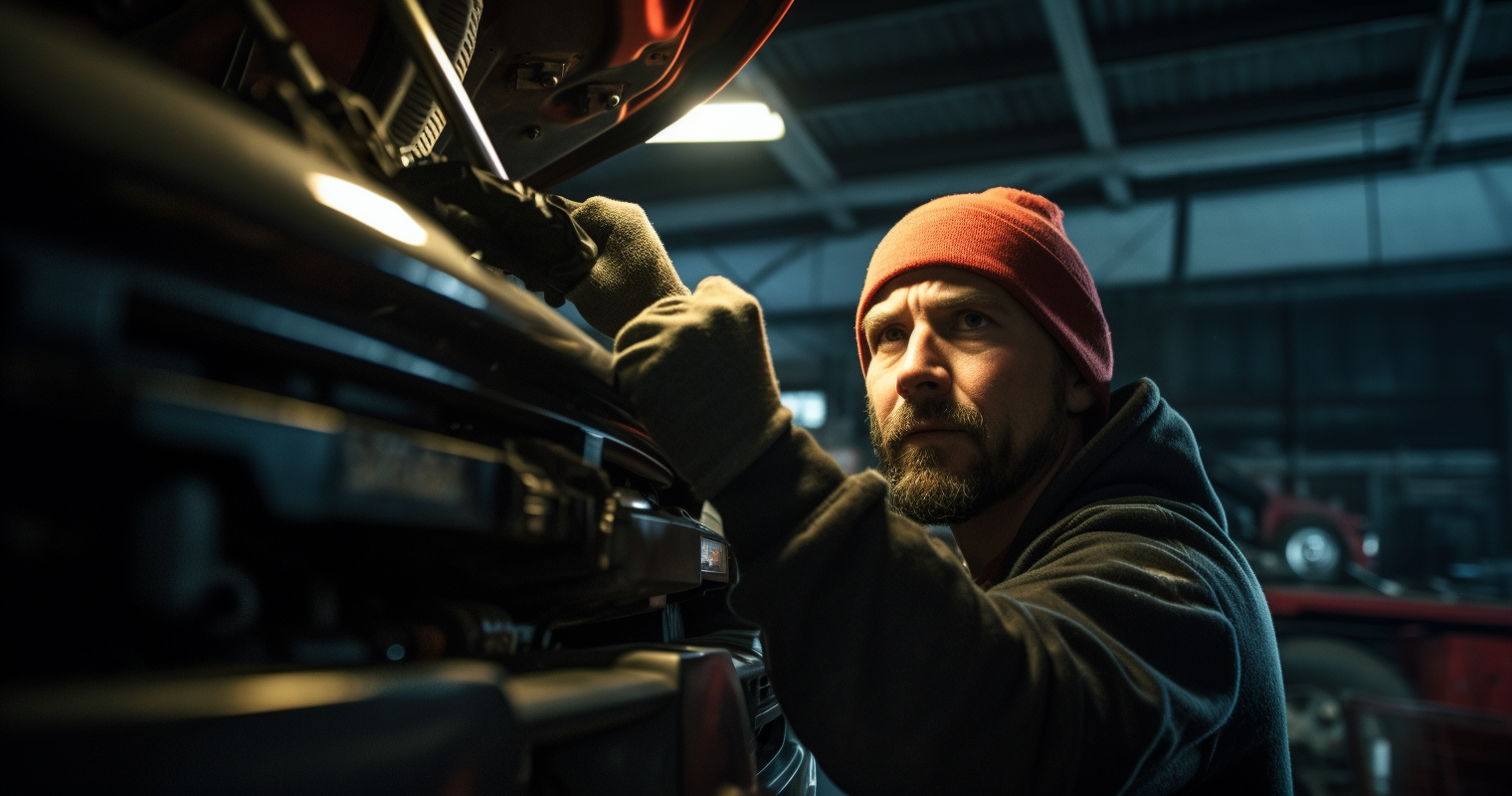
All private vehicles in Qatar are subject to a compulsory roadworthiness programme called Fahes, administered by national fuel company WOQOD, with annual inspections required from the fourth year of ownership. Roadside assistance and breakdown recovery are handled by a number of privately run operators offering either subscription-based membership or one-off call-out services. The intense heat of Qatar’s climate is by far the greatest challenge for vehicle upkeep, and expatriates should anticipate servicing their cars more regularly than they would in cooler countries.
| Item | Details |
|---|---|
| Inspection scheme name | Fahes (WOQOD Vehicle Inspection) |
| Testing authority | WOQOD, authorised by Qatar’s Traffic Department / Ministry of Interior |
| Inspection frequency — private cars | Exempt for first 3 years; annually from year 4 onwards (as of 2025) |
| Inspection frequency — commercial vehicles | Annually from year 1, regardless of age (as of 2025) |
| Motorcycle inspection fee | QR 100 per inspection (as of 2025 — verify at fahes.com.qa) |
| Penalty for no valid Fahes report | Fines up to QR 300 and possible vehicle confiscation (as of 2025) |
| Re-inspection window | 30 days from first paid inspection; first re-inspection free of charge |
| Official Fahes website | fahes.com.qa |
Does Qatar have mandatory vehicle inspections, and how do they work?
Qatar enforces a compulsory vehicle safety testing system called Fahes — a name drawn from the Arabic word “فحص”, which translates as examination or inspection. Fahes is the sole company authorised by the Traffic Department to conduct mandatory periodic vehicle inspections across the country. It is run by WOQOD, Qatar’s state-owned fuel retailer, which operates an extensive network of filling stations throughout the country. In terms of its overall purpose, Fahes is comparable to the UK’s MOT or Germany’s TÜV — a structured annual assessment that every eligible vehicle must pass before its registration can be renewed.
One distinction from the UK’s MOT system, which applies from a vehicle’s third year, is that Qatar grants a short reprieve for newer privately owned cars. Newly registered private vehicles are not required to be tested for the first three years, while previously owned private vehicles must pass annual inspections every year. From the fourth year of registration, the Fahes test becomes a yearly requirement tied to the renewal of the vehicle registration card, known in Qatar as the Istimara. Commercial vehicles — covering taxis, rental fleets, and corporate transport — face annual Fahes inspections regardless of how old they are, and certain specialist vehicles such as heavy goods vehicles and construction machinery may be subject to even more frequent assessments.
During each inspection, qualified technicians examine key mechanical and safety components including brakes, tyres, lights, emissions output, steering systems, and overall structural condition to confirm the vehicle is roadworthy. A documentary check is also carried out to ensure the vehicle’s paperwork is properly in order. The technical standards applied during the inspection are set by the Traffic Department of the Ministry of Interior (MOI) and the General Committee of Standardization and Metrology (GCSM).
The Fahes system encompasses a broader range of inspection categories beyond the routine annual test. These include inspections linked to registration renewal, change of ownership, export certification, post-accident assessment, and checks for modified or classic vehicles. If a vehicle has undergone substantial accident-related repairs, the relevant authorities may insist on a fresh Fahes inspection to confirm that it has been restored to a safe and roadworthy condition.
The procedure following a failed inspection has been designed to be practical rather than punitive. When a vehicle does not pass, the SMS notification sent to the owner will identify each specific defect. From the date of the first paid inspection, the owner has 30 days to complete the entire inspection cycle. If the vehicle still has not passed within that window, the cycle resets and a fresh main inspection covering all criteria must be carried out from the beginning. The first re-inspection within the 30-day period is provided free of charge; a second re-inspection is charged at the standard rate, and subsequent re-inspections within the cycle alternate between paid and free. For motorcycles, an annual inspection fee of QR 100 applies after initial registration (as of 2025). For all other vehicle categories, the current fee schedule should be confirmed on the fahes.com.qa website, as rates are subject to revision.
Scheduling an appointment is a straightforward process. Certain Fahes stations require advance booking, while others admit vehicles on a walk-in, first-come basis. Where advance booking is required, this can be arranged through the WOQOD mobile application, which is available on both iOS and Android platforms. Inspection results are communicated digitally: an SMS containing a link to a full printable inspection report is sent to the mobile number on record.
Failing to hold a valid Fahes certificate carries meaningful penalties. Drivers without a current report face fines of up to QR 300 and risk having their vehicle temporarily confiscated (as of 2025). Always confirm the latest fees and penalties directly through the official Fahes website or Qatar’s Ministry of Interior, as these details may be updated over time.
What is the standard of vehicle repair and maintenance in Qatar?
Qatar’s automotive repair industry is well established, especially in the greater Doha area. The country’s sustained economic expansion and the high volume of vehicles on its roads — including a significant proportion of premium and luxury marques — have created strong demand for technically proficient mechanics and well-equipped workshops. Every major international vehicle manufacturer maintains an authorised dealership in Qatar, and these operations typically adhere to their respective manufacturer’s own service protocols, offering a level of consistency that expatriates accustomed to franchised dealer networks will find reassuring.
Independent workshops are widespread, particularly in the Industrial Area district of Doha, where garages tend to congregate in clusters. The quality of service across these independents can vary quite considerably, however. It is not difficult to find experienced independent mechanics who have built reputations for expertise in specific vehicle origins — European, Japanese, American, or Korean — and many skilled expatriate technicians who have made Qatar their home have contributed to raising the overall standard of the trade. That said, there is no single national accreditation or licensing framework governing independent mechanics in Qatar comparable to, for instance, IMI certification in the UK or ASE credentials in the United States. While the Fahes inspection process is governed by technical standards administered by the Traffic Department and the General Committee of Standardization and Metrology, independent repair businesses operate outside any mandatory quality certification regime.
For expatriates arriving in Qatar with vehicles sourced from beyond the GCC region, sourcing specific parts can sometimes be a complication. Vehicles that are widely sold in Qatar — prominently Japanese, American, and Korean models, alongside popular European makes — are generally well supported by both official distributors and a broad grey-market supply chain. However, owners of less common models or vehicles not officially distributed in the Gulf may find that certain parts must be imported, introducing delays and additional expense into any repair. It is sensible to investigate the parts supply situation for your particular vehicle before making the move.
Language is not typically a significant obstacle when dealing with garages in central Doha. Most workshops in the capital draw their staff from South Asian, Southeast Asian, and Arab backgrounds, and basic communication in English is usually workable. However, written estimates and invoices may be produced in Arabic, and confusion about the precise scope of repair work does occasionally arise. Obtaining a written cost estimate before giving the go-ahead for work, and requesting that any replaced components be retained for your inspection, are both worthwhile precautions.
Service quality is noticeably more variable in smaller towns and outlying areas beyond Doha. Expatriates based outside the capital should take the time to identify a reputable garage in the nearest city rather than depending entirely on whatever workshop happens to be closest to hand.
Who provides breakdown recovery and roadside assistance in Qatar?
Qatar has no single dominant national motoring body equivalent to the AA or RAC in the United Kingdom or the ADAC in Germany. Breakdown and recovery services are instead delivered by a range of privately operated companies, some of which offer structured membership programmes and others that function exclusively on a pay-per-incident basis. This sector has expanded considerably in recent years, and coverage throughout Qatar — particularly in the Doha metropolitan area — is generally reliable.
The following are among the notable providers operating in Qatar:
- AAA Qatar (aaaqatar.com) — a 24/7 emergency roadside assistance and vehicle support company in Qatar, offering breakdown, towing, battery, flat tyre, annual Istimara registration, insurance claims, and auto personal assistance services. AAA provides automobile registration and renewal services to Club and Gold Cover members, including pick-up and drop of vehicles from the member’s location within Doha City Limits for statutory checkups and registration formalities with the Transport Authority. This membership model is the closest equivalent in Qatar to the tiered membership plans of motoring clubs such as the AA or RAC.
- AAQatar Roadside Assistance (aaqatar.com) — supported by a trained response team and modern service vehicles, AAQatar delivers fast, reliable coverage across Doha and all major areas of Qatar. It provides 24/7 roadside assistance, handling breakdowns, towing, battery issues, and tyre emergencies.
- MBS Qatar (mbsqatar.com, tel: +974 55884880) — a provider of professional roadside assistance and towing services, specialising in vehicle breakdowns, emergency towing, accident recovery, and on-the-spot roadside solutions for all types of cars and commercial vehicles. Services are available throughout Qatar, including Doha, Al Rayyan, Al Wakra, Al Khor, and Umm Salal.
- Bin Eassa Trading & Services (bineassa.com) — a company with nearly three decades of industry experience, providing emergency roadside assistance 24 hours a day. Bin Eassa is the authorised breakdown service provider to several dealer companies and also provides breakdown service to Gulf Assist, one of Qatar’s major insurance providers.
- Qatar Car Towing (qatarcartowing.com, WhatsApp: +974 31041144) — with over a decade of experience in car towing and roadside recovery in Qatar, offering towing, fuel delivery, battery jump-start, replacement, lockout services, and flat tyre repair.
- Guls Roadside Assistance (gulsapp.com) — an app-based service offering on-demand towing, flat tyre repair, battery charging, and fuel delivery, with real-time tracking so you can watch assistance coming to your location on your phone.
- Qatar Assist (qatar-assist.com) — provides 24/7 roadside assistance and breakdown recovery services at affordable prices with guaranteed fast and professional service.
- Rapido Recovery Services (rapidorecoveryservices.com) — based on Salwa Road, Doha, offering towing, battery replacement, accident recovery, and roadside assistance across Qatar.
In contrast to well-established motoring organisations such as the AA, RAC, or the American AAA, most breakdown providers in Qatar do not operate a widely recognised, standardised tiered membership scheme. The most clearly structured membership offering currently available in Qatar is through AAA Qatar, which provides Club and Gold Cover tiers with different levels of entitlement. For newly arrived expatriates, it is a sensible precaution to register with one or more of these providers before requiring their assistance, rather than scrambling to find help in the midst of a breakdown.
A number of car insurance policies available in Qatar — including those offered by Qatar Insurance Company (QIC), Qatar General Insurance and Reinsurance Company, and Gulf Assist — incorporate roadside assistance either as a standard feature or as an optional enhancement. When arranging your vehicle insurance in Qatar, it is worth establishing whether this benefit is included and understanding the procedure for calling it out.
Can expats use international breakdown cover or existing membership in Qatar?
Qatar does not participate in any of the reciprocal assistance arrangements that connect motoring organisations across Europe and certain other parts of the world. Unlike the system within Europe, where members of organisations such as the AA or ADAC can access equivalent roadside assistance through partner clubs when travelling abroad, no comparable reciprocal network extends to Qatar. Holding membership with the AA (UK), RAC, ADAC, AAA (US), NRMA (Australia), or any similar body will not entitle you to local breakdown assistance in Qatar through an affiliated partner.
The practical implication for expatriates relocating to Qatar is that they need to put new arrangements in place from the outset. Those in the early stages of settling in — for instance, still in temporary accommodation or between vehicles — may find that pay-per-use services from providers such as MBS Qatar, Qatar Car Towing, or Guls offer a convenient interim solution while more permanent cover is arranged. For those establishing themselves on a longer-term basis, signing up for a membership plan such as those offered by AAA Qatar, or ensuring that a locally issued insurance policy incorporates roadside assistance, is the more advisable route.
Before departing your home country, it is still worth contacting your existing motoring organisation to confirm the position — coverage arrangements do occasionally evolve, and some premium international policies offered through insurers or credit card providers may incorporate worldwide breakdown protection. Any such policy should be examined carefully, paying particular attention to geographic exclusions and the precise scope of cover, for example whether towing to a garage is included or whether assistance is limited to repairs carried out at the roadside.
What do expats need to know about driving a foreign-registered vehicle in Qatar?
Expatriates intending to bring a vehicle into Qatar from outside the Gulf Cooperation Council (GCC) will find that registration requirements and roadworthiness checks apply from day one. Any vehicle imported from a country outside the GCC must pass a Fahes inspection before it can be legally registered in Qatar. Vehicles arriving from other GCC member states — Bahrain, Kuwait, Oman, Saudi Arabia, or the UAE — are exempt from this requirement, as their registration documentation is recognised within Qatar.
Vehicles imported from outside the GCC must first clear Qatar Customs and have their import documentation in order. When presenting such a vehicle for a Fahes inspection, the customs and import paperwork must be brought along. The vehicle will be assessed against Qatar’s technical and safety standards, which may in practice necessitate modifications — for instance, adjustments to lighting configurations — or repairs before it can pass the Fahes test and proceed to full local registration.
There is no officially published transitional period during which a foreign-registered vehicle may be driven on Qatari roads before local registration becomes mandatory, and the applicable rules can change. In practice, expatriates who arrive with a vehicle from another country are generally expected to complete the registration process without significant delay. Current requirements should be verified directly with Qatar’s Ministry of Interior (moi.gov.qa) or the Traffic Department before travelling, given that the regulations in this area are subject to revision.
Once registered in Qatar, the vehicle must carry a valid Istimara (the Qatari registration card) and be covered by a valid Qatari insurance policy. Insurance issued in another country is not accepted for local registration purposes. Every vehicle driven on Qatari roads is required to hold at minimum a valid third-party liability insurance policy issued by an insurer licensed to operate in Qatar.
Should you subsequently decide to take your vehicle out of Qatar permanently, an export inspection will be required to obtain the necessary legal permission to remove the vehicle from the country, adding a final procedural step before departure.
How do Qatar’s road conditions and climate affect vehicle maintenance?
From a vehicle maintenance perspective, Qatar’s operating environment ranks among the most challenging anywhere on the planet. The combination of ferocious summer temperatures, coastal humidity, pervasive desert dust, and the wear associated with urban stop-start traffic in Doha means that standard servicing schedules designed for temperate climates frequently need to be compressed — in some cases substantially.
Extreme heat: Temperatures across Qatar in summer routinely climb beyond 40°C (104°F) and can occasionally reach 50°C (122°F), with intense solar radiation adding a further thermal burden. These conditions dramatically hasten the breakdown of engine oil, coolant, brake fluid, rubber hoses, belts, seals, and tyres. Cooling systems are placed under severe strain, and overheating is among the most common causes of roadside breakdowns during the warmer months. Vehicle batteries are particularly vulnerable — a battery with a lifespan of five years in a temperate environment may require replacement after just two or three years in Qatar’s heat. Many long-standing residents choose to replace batteries proactively rather than waiting for an unexpected failure.
Air conditioning: Air conditioning in Qatar is an essential rather than a comfort feature, running almost continuously throughout much of the year. This imposes a constant burden on the engine, drive belts, and the compressor unit of the A/C system itself. Regular inspection of the A/C system, periodic re-gassing, and more frequent replacement of cabin air filters than standard service schedules recommend are all advisable.
Dust and sand: Desert conditions expose vehicles year-round to fine particulate matter, with periodic shamal events — the powerful northwesterly dust storms that affect Qatar — delivering more concentrated exposures. Air filters become clogged more quickly and require earlier replacement, while sand and dust can infiltrate braking systems, electrical connections, and paintwork over time. Regular washing of the exterior, including the underside of the vehicle, helps limit the cumulative damage.
Road conditions: The main road network in Qatar is of a generally high standard, particularly within Doha and along the principal intercity corridors, reflecting the substantial infrastructure investment of recent decades. However, roads in some suburban fringes and rural areas, as well as zones adjacent to ongoing construction activity, can feature uneven surfaces, scattered debris, and potholes. Tyre damage is a real risk, and keeping a spare tyre in sound condition is strongly recommended. Qatar’s landscape is predominantly flat desert, so there are no mountainous roads and no altitude-related mechanical concerns.
Sandstorm visibility: During shamal events, visibility can deteriorate rapidly and the quantity of debris and loose material on road surfaces increases considerably. Following any significant sandstorm, it is prudent to check that your vehicle’s air intake, windscreen wipers, and lighting are unobstructed and fully functional before undertaking any longer journey.
Fuel quality: All fuel in Qatar is dispensed through WOQOD’s network of petrol stations and maintains a consistent standard. Petrol is subsidised by the state, making Qatar’s fuel prices among the most affordable in the world, which eliminates any financial temptation to use lower grades than recommended. Always use the fuel grade specified for your vehicle, as higher-performance engines in particular require premium-grade petrol.
Frequently asked questions
How do I book a Fahes inspection in Qatar?
Certain Fahes stations operate on an appointment-only basis to manage waiting times. Advance bookings can be made through the WOQOD mobile app, which is available on both iOS and Android. Other stations operate on a walk-in basis and accept vehicles as they arrive. A full list of current station locations and the option to book online are available at the official Fahes website.
What happens if my car fails the Fahes inspection?
A vehicle that does not pass the inspection will trigger an SMS notification listing each defect that caused the failure. The owner then has 30 days from the date of the first paid main inspection to resolve the issues and complete the inspection cycle. If the vehicle has not passed within those 30 days, the process resets and a full new main inspection must be undertaken. The first re-inspection within the cycle is free of charge; any second re-inspection is charged at the standard rate.
Do I need a Fahes inspection when buying a used car in Qatar?
A valid, current Fahes certificate is a prerequisite for transferring vehicle ownership in Qatar, and the vehicle must have passed. Before purchasing any used vehicle, prospective buyers can verify its inspection history online through the Fahes website by entering the plate number and chassis number.
Is there a membership-based breakdown recovery scheme in Qatar like the AA?
There is no single national motoring organisation in Qatar equivalent to the AA, RAC, or ADAC. However, AAA Qatar offers a structured 24/7 roadside assistance and vehicle support service on a membership basis, with Club and Gold Cover tiers providing differing levels of benefit. Roadside assistance is also available as a standard or optional component of many Qatar car insurance policies — it is worth reviewing your policy when arranging cover.
Can I drive in Qatar on my existing home-country vehicle registration and insurance?
Any vehicle brought into Qatar from outside the GCC must pass a Fahes inspection before it can be legally registered locally. Vehicles originating from GCC countries are exempt from this requirement. Once resident in Qatar, legal driving requires a valid Istimara (local registration card) and a locally issued insurance policy. For the latest rules on transitional arrangements for newly arrived residents, consult the Qatar Ministry of Interior directly.
How often should I service my car in Qatar compared to elsewhere?
Qatar’s extreme temperatures accelerate the deterioration of engine oil, coolant, rubber components, and batteries. Most vehicle manufacturers and local mechanics recommend shortening standard service intervals when operating in high-heat environments. As a general guide, oil changes, air filter inspections, and coolant checks should be scheduled more frequently than you would in a temperate climate. Consult your vehicle’s owner’s manual for hot-climate servicing guidance, and seek specific advice from a local dealer or reputable garage shortly after arriving in the country.
Are spare parts readily available in Qatar for imported vehicles?
Components for vehicles widely sold in Qatar — including mainstream Japanese, American, Korean, and European models — are generally well stocked through official dealer networks and aftermarket suppliers. For less common makes or models that are not distributed in the GCC, parts may need to be sourced internationally, potentially adding several days or more to repair times. If you plan to bring a specialist or unusual vehicle to Qatar, it is advisable to investigate parts availability in advance of your move.
What should I do if my car breaks down on a Qatar highway?
Where possible, steer your vehicle onto the hard shoulder or emergency lane, activate your hazard lights, and move yourself and any passengers to a safe distance from moving traffic. Qatar’s emergency services number is 999, covering police, ambulance, and fire. For breakdown recovery, contact your insurance provider’s assistance line or reach one of the private operators directly — for example MBS Qatar (+974 55884880), Qatar Car Towing (+974 31041144 via WhatsApp), or AAA Qatar. Saving the contact details of at least one breakdown provider in your phone before you ever need them is a sensible precaution.