

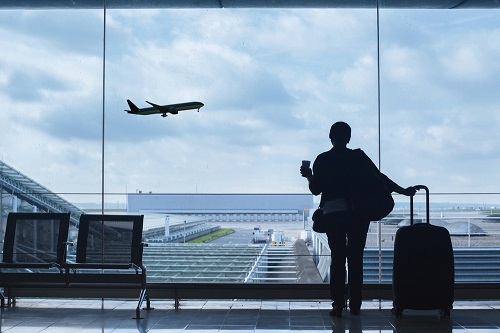
Finland’s aviation infrastructure is well established, with Helsinki-Vantaa Airport serving as the nation’s primary international hub. Domestically, Finnair together with its regional arm Norra links Helsinki to destinations spread across the country, including the remote reaches of Lapland — a region where air travel is frequently the only realistic option. As a member of the European Union, Finland is covered by the robust passenger protections guaranteed under EU Regulation 261/2004.
| Item | Details |
|---|---|
| Total airports (Finland-wide) | Around 20 airports, of which 17 handle domestic routes (as of 2025) |
| Total passengers (2024) | 19.8 million through Finnish airports (Statistics Finland, 2024) |
| Dominant domestic airline | Finnair (approx. 88% of domestic flights), operating via subsidiary Norra |
| Main international gateway | Helsinki-Vantaa Airport (HEL) — handles approx. 83% of all passengers |
| Airport to Helsinki city centre | ~20 km; ~30 min by train or car |
| Passenger rights framework | EU Regulation 261/2004 — compensation up to €600 for delays/cancellations |
What is domestic air travel like in Finland, and which routes and destinations are covered?
Finland’s size is considerable and its population thinly spread, yet moving around the country is generally straightforward. Air, rail, road, and ferry services all contribute to a transport system that functions reliably across the seasons. Even so, aviation occupies a uniquely important position when it comes to reaching the north, where overland alternatives demand far more time and endurance.
Across Finland’s roughly 20 airports, a total of 42 domestic routes keep the country connected. Airports currently handling scheduled traffic include Helsinki, Joensuu, Jyväskylä, Kajaani, Kokkola-Pietarsaari, Kuopio, Mariehamn, Oulu, Pori, Savonlinna, Tampere-Pirkkala, Turku, and Vaasa. In Lapland, the served airports are Ivalo, Kemi-Tornio, Kittilä, Kuusamo, and Rovaniemi.
The furthest north is Ivalo Airport in Lapland, positioned roughly 250 kilometres beyond the Arctic Circle. For anyone living in or making their way to Lapland, flying makes an overwhelming case for itself: the drive from Helsinki to Rovaniemi stretches to eight or nine hours, while the same journey by air takes approximately ninety minutes.
Finland’s winters bring heavy snowfall, treacherous road conditions, and very limited hours of daylight. Even in the more forgiving warmer months, long surface journeys can wear on the traveller. Domestic flights offer a dependable year-round alternative that sidesteps weather-related disruptions and delivers passengers to their destination in far better shape for whatever awaits them.
Measured against large aviation markets like the United States or Australia, Finland’s domestic network is naturally modest — the population simply does not generate comparable demand. Within the Nordic context, however, coverage is strong, mirroring the approach taken elsewhere in Scandinavia, where air services bridge the gap between scattered communities that trains and roads alone cannot efficiently serve.
One development worth noting is that certain short southern routes have been retired in favour of ground-based alternatives. In March 2023, Finnair announced the discontinuation of its domestic flights between Tampere and Helsinki, and between Turku and Helsinki, citing insufficient demand and the short distances involved, with coach services taking over. On these particular corridors, the train or bus is the sensible way to travel.
Which airlines fly domestic routes in Finland, and are budget carriers an option?
Finnair Plc, Finland’s flag carrier and largest full-service airline, is headquartered in Vantaa on the grounds of Helsinki Airport, which also serves as its primary hub. The airline commands both the domestic and international markets in Finland, with the Finnish state holding a majority stake of 55.8% of shares.
Established in 1923, Finnair ranks among the world’s oldest airlines still in continuous operation and regularly appears on lists of the globe’s safest carriers. Its membership of the Oneworld alliance offers frequent flyers the ability to earn and spend miles across a broad network of partner airlines.
Norra — Nordic Regional Airlines — is Finnair’s regional subsidiary and carries out a significant portion of domestic and regional flying on the parent carrier’s behalf. Based at Helsinki Airport and structured as a joint venture in which Finnair holds a stake, Norra’s flights are booked directly through Finnair’s channels. In practice, many domestic departures shown on Finnair’s website are physically operated by Norra’s smaller regional aircraft.
SAS also participates in the Finnish domestic market alongside its Scandinavian and wider European operations, including intercontinental routes to destinations such as Canada and Asia. Norwegian offers a limited presence on Finnish internal routes, along with economically priced package travel throughout Finland, Scandinavia, and Europe.
With Finnair responsible for around 88% of domestic flights, genuine fare competition on most internal routes is scarce. Travellers accustomed to heavily deregulated markets — such as Spain or Italy, where multiple budget carriers compete fiercely — may find Finnish domestic fares higher than they anticipate. Norwegian and occasional other operators do introduce some pricing pressure on specific routes, but the broader domestic landscape remains far less competitive than many international aviation markets.
How do you book a domestic flight in Finland, and which platforms are most useful?
The overwhelming majority of flight tickets in Finland are purchased online. Comparison platforms that aggregate fares from multiple carriers simultaneously can surface deals that would be harder to find by visiting each airline’s website individually. For schedules and the widest selection of fare classes and ancillary options, booking directly through Finnair’s website is generally the most reliable starting point.
Rantapallo is a Finnish-language flight search tool that scans fares from a range of airlines and travel agents for both domestic and international routes, presenting results in a way that makes it straightforward to identify either the cheapest or the quickest option. It is widely used by residents in Finland and is particularly handy for rapid fare comparisons.
Internationally recognised platforms such as Google Flights, Kayak, Skyscanner, and Booking.com all cover Finnish domestic routes and provide easy side-by-side fare comparison. For real-time departure and arrival data once you are on Finnish soil, the official resource is Finavia’s website, operated by the national airport authority — the definitive reference for live flight status information across all Finnish airports.
When planning travel well into the future, the airline’s own website will always carry the most accurate and up-to-date schedule information. Booking ahead is especially important during the Lapland winter season — roughly December through March — when tourist demand surges and seats on popular routes to Rovaniemi and Kittilä are snapped up quickly. Outside peak periods, last-minute availability on most domestic corridors is generally reasonable, particularly on the busy Helsinki–Oulu route with its frequent daily services.
What do domestic flights typically cost in Finland, and how should expats plan their budget?
Domestic fares in Finland fluctuate considerably based on the route in question, the lead time on the booking, and the season of travel. As is standard practice across yield-managed aviation markets, purchasing well in advance tends to produce the most competitive prices, while bookings made at short notice or during high-demand periods carry a significant premium.
As of 2025, travellers who plan ahead can find one-way economy fares on routes such as Helsinki–Oulu or Helsinki–Rovaniemi beginning at around €40–€70. Flexible tickets or last-minute purchases frequently land in the €100–€180+ range. During the Lapland winter holiday window — covering Christmas, New Year, and February half-term — fares can climb steeply as tourism demand peaks. Always verify the latest prices directly on Finnair’s website or through a comparison tool, as fares shift constantly.
Because Finnair controls around 88% of domestic capacity, the absence of meaningful competition on many routes tends to keep base fares elevated relative to what travellers from multi-carrier markets might consider normal. Finnish domestic aviation operates on a market-driven basis rather than with the subsidies seen in a small number of other countries — a model that supports the industry’s capacity to invest in quality and service continuity.
Expats should also account for baggage charges when estimating travel costs. Finnair’s entry-level economy fares generally cover only a compact cabin bag, with hold luggage billed as a separate item. Fees vary by fare type and route, and the policy is updated from time to time, so it is worth consulting Finnair’s website for the current baggage rules before completing any booking.
What are Finland’s main international airports, and which matter most to expats?
Helsinki-Vantaa International Airport (HEL) is Finland’s principal gateway to the world, accounting for 83% of all passenger traffic at Finnish airports in 2024. It consistently draws praise for its passenger-friendly layout, clean environment, and understated Nordic aesthetic. Beyond its role as Finland’s busiest hub, Helsinki Airport has carved out a reputation as a favoured connection point for travel between Europe and Asia, owing to its compact configuration that keeps transit times to a minimum.
The airport sits approximately 20 kilometres from Helsinki city centre. The P and I commuter trains make the journey in around 30 minutes, and tickets can be purchased through the HSL mobile app or at platform vending machines. Bus services cover the same route in roughly 40 to 50 minutes, while taxis and ride-hailing options are available directly outside the arrivals area and typically take around 25 minutes depending on traffic.
Twenty-one airlines currently operate out of Helsinki, among them Aegean, Air Baltic, Air France, China Southern, Emirates, Eurowings, Finnair, Icelandair, JAL, Juneyao Airlines, KLM, Lufthansa, Norwegian, Pegasus, Ryanair, SAS, and Turkish Airlines. As of March 2026, direct flights connect Finland to 151 airports across 48 countries.
Several regional airports also maintain international links. Oulu Airport, positioned in northern Finland, is a pivotal domestic hub and sustains a year-round international connection to Munich via Lufthansa. Turku Airport offers scheduled services to Rome, Gdańsk, Riga, Stockholm, and Mariehamn, while Vaasa Airport strengthens its ties to Stockholm.
In Lapland, both Rovaniemi Airport (RVN) and Kittilä Airport (KTT) carry direct international flights. Rovaniemi set a passenger record of 948,000 travellers in 2024, representing a 29% jump on the previous year. Expats living in northern Finland benefit greatly from these direct European connections, particularly in winter. Ground transport from Rovaniemi Airport to the city centre, Santa Claus Village, and other Lapland destinations is provided by buses and taxis.
What rules, restrictions, and practical considerations apply at Finnish airports?
All Finnish airports are operated by Finavia, the state-owned airport authority, which maintains consistently high standards of efficiency and cleanliness across its network. For international departures, arriving at least two hours before your scheduled flight is advisable; for domestic travel, one hour before departure is the general recommendation.
Identification requirements for domestic flights differ according to your background. Finnish citizens and nationals of other Scandinavian countries may present a photographic ID card, a Kela card, or a driving licence. Travellers from all other countries must produce a valid passport. Expats outside the Nordic community should make a habit of carrying their passport whenever flying domestically, even on short-haul routes, to avoid any complications at the boarding gate.
International arrivals into Finland are governed by Schengen Area rules. As a Schengen member, Finland has no passport controls at its borders with other Schengen states. Passengers arriving from outside the Schengen zone pass through standard immigration and customs procedures on arrival. Those bringing goods into Finland from non-EU countries are subject to EU customs limits — the Finnish Customs (Tulli) website is the authoritative source for current rules, which can change.
Finavia provides complimentary wireless internet access at virtually all its airports, keeping passengers connected throughout their wait. Self-service check-in kiosks are broadly available, streamlining the pre-departure process. Online check-in typically opens 36 hours before departure, while airport check-in counters generally close 45 minutes prior to the scheduled departure time. Always confirm the specific deadlines with your airline, as they can vary between carriers and routes.
Baggage rules follow standard airline policy. Economy light fares from Finnair and comparable carriers normally cover a cabin bag only, with hold luggage representing an additional cost. Oversized items and sports equipment require prior arrangement. Anyone travelling with a pet should contact their carrier well in advance, as regulations differ considerably from one airline to another.
How does Finland’s air connectivity shape everyday expat life?
For expats settling in the Helsinki capital region or in major southern cities such as Tampere, Turku, or Oulu, domestic air travel is unlikely to feature prominently in daily routines. Rail and road links between these centres are mature and comfortable, with trains in particular offering a relaxed and affordable way to travel. Aviation becomes genuinely significant for two categories of expat: those who live in or regularly visit Lapland, and those whose professional or personal lives require frequent international travel.
In 2024, 1.8 million passengers moved through Finavia’s Lapland airports — a 19% increase on 2023 figures. Rovaniemi, Kittilä, and Ivalo all recorded notable passenger growth. This upward trend translates into practical benefit for expats in northern Finland; without dependable air services, a trip from Ivalo to Helsinki would consume an entire day in each direction.
For those whose families or social circles lie abroad, Finland’s international connectivity takes on real importance. With direct flights available to 151 airports across 48 countries as of March 2026, reaching the majority of the world’s significant cities — either directly or via a single connection — is achievable from Helsinki. The busiest international flows run to and from Germany, Sweden, Spain, and the UK, meaning expats with ties to these popular European countries will find solid year-round options.
Expats based in smaller regional cities with limited direct international services will typically need to route through Helsinki for most long-haul or intercontinental journeys. Helsinki Airport’s role as a Europe-Asia transit hub — where many connections can be made in as little as 45 minutes — means that onward travel once you reach the capital is generally efficient.
Integrating multiple forms of transport is central to how regional connectivity functions in Finland. Purposeful development of seamless links between air, train, bus, and other road services is actively promoted by Finavia and the country’s transport authorities. The Finavia website and the Perille journey planning tool are both practical resources for combining flights with surface transport options.
What do expats need to know about travel insurance and passenger rights when flying in Finland?
As an EU member state, Finland sits within one of the most protective passenger rights regimes in the world. EU Regulation 261/2004 covers travellers on all flights operating across the 27 EU nations, including Finland. Under this framework, passengers who experience denied boarding, a cancelled flight, or a significant delay are entitled to compensation of between €250 and €600 per person, depending on the distance of the route affected.
The scope of EU Regulation 261/2004 is broad: it applies to all flights departing from airports in the European Union, the UK, Switzerland, Norway, and Iceland, as well as flights arriving in the EU when operated by an EU-based carrier. Whether your disrupted flight is an international service from Helsinki to London or a domestic leg between Helsinki and Oulu, the regulation provides cover — a notably stronger position than that offered by the equivalent US Department of Transportation framework, which historically extends fewer automatic compensation entitlements to passengers facing delays.
Finnair’s published passenger rights notices are grounded in Regulation (EC) No 261/2004 of the European Parliament and of the Council. Where delays are severe, airlines are obliged to supply passengers with meals and refreshments. To be entitled to these protections, passengers must have completed check-in at least 45 minutes before the scheduled departure. If a disruption arises from circumstances beyond the airline’s control — extreme weather, for instance — EU261 compensation may not apply.
It is important to note that EU261 is currently under review. The European Commission has put forward the first substantial revision of the regulation since its original introduction in 2004, and the Council of the EU approved draft amendments in June 2025. Until any revised text is formally adopted and enters into force, the existing rules remain fully applicable. Expats are advised to monitor developments through official EU sources or via the Finnish Transport and Communications Agency (Traficom), which acts as the national body responsible for enforcing passenger rights in Finland.
Notwithstanding the strength of the EU261 framework, comprehensive travel insurance is strongly advisable for expats flying to and from Finland. Statutory compensation addresses flight disruption but leaves significant gaps: medical emergencies abroad, lost luggage beyond the thresholds set by the Montreal Convention, trip cancellations triggered by personal circumstances, and extended accommodation costs during prolonged disruptions are all outside its scope. Good travel insurance fills these gaps and is particularly worthwhile for long-haul or multi-leg international journeys.
Frequently Asked Questions: Air Travel in Finland for Expats
Do I need a passport for domestic flights in Finland?
The answer depends on your nationality. Finnish citizens and nationals of other Nordic countries may use a photographic ID card, a Kela card, or a driving licence when flying domestically. Expats from outside the Nordic region are required to carry a valid passport even on domestic routes. Keeping your passport on you at all times when flying eliminates the risk of complications at security or the boarding gate.
How do I get from Helsinki Airport to the city centre?
The P and I commuter trains run regularly between the airport and Helsinki city centre, completing the journey in approximately 30 minutes. Bus services take around 40 to 50 minutes along the same corridor. Taxis and ride-hailing vehicles are available outside the arrivals exit and typically reach the city centre in about 25 minutes, subject to traffic. Train and bus tickets can be bought through the HSL mobile app or from vending machines at the station.
Which is the best airline for flying domestically in Finland?
Finnair is by far the dominant domestic carrier, operating multiple daily services across the country’s internal route network. On most domestic corridors, it will be your only realistic choice. Norwegian does fly on a limited selection of routes and may occasionally offer sharper pricing on those specific connections. Before booking, it is worth checking fares on both Finnair’s own website and on aggregator tools such as Skyscanner or Rantapallo to ensure you are getting the best available price.
Is Lapland well connected by air, and how do I get there?
Lapland’s airports — Ivalo, Kemi-Tornio, Kittilä, Kuusamo, and Rovaniemi — are all accessible by domestic flights from Helsinki. Rovaniemi and Kittilä additionally receive direct international flights during the winter season. Rovaniemi in particular saw record passenger numbers of 948,000 in 2024, a year-on-year rise of 29%. Anyone planning winter travel to Lapland should book as early as possible, as seats sell out well in advance of the peak season.
Are there low-cost carriers flying within Finland?
Budget competition on domestic routes is very limited. Finnair and its subsidiary Norra account for the large majority of internal flights, with Norwegian providing services on a handful of routes. The picture is more varied for international travel: 40 airlines in total offer direct flights to Finland, including 15 low-cost carriers, giving expats reasonable budget options for cross-border journeys even if the domestic market remains concentrated.
What are my rights if my flight in Finland is delayed or cancelled?
Finland’s EU membership means passengers are protected by EU Regulation 261/2004, which entitles travellers to compensation of up to €600 per person in the event of denied boarding, cancellation, or significant delay. The regulation applies to all flights departing from Finnish airports, irrespective of which airline is operating. If the airline does not resolve your claim satisfactorily, you can refer the matter to Traficom, Finland’s designated national enforcement authority for passenger rights. The current rules remain fully in force until any formally adopted revisions take effect.
How far in advance should I book domestic flights in Finland?
For well-served routes such as Helsinki–Oulu, booking a few weeks ahead is usually adequate, and last-minute fares are not always prohibitively high. For Lapland routes during the winter tourist season — December through March — or around major Finnish public holidays, securing your seats two to three months in advance is strongly recommended, both to guarantee availability and to lock in a reasonable fare. The airline’s own website is always the most reliable source for current pricing and seat availability.
Can I fly internationally from airports outside Helsinki?
Yes. Regional Finnish airports collectively offer scheduled international services to 13 destinations across Europe. Oulu maintains a year-round connection to Munich via Lufthansa, Tampere-Pirkkala links to several European cities on a seasonal basis, and both Rovaniemi and Kittilä in Lapland operate direct winter services to a number of European destinations. Consult Finavia’s website for the current seasonal route map and schedule details.