

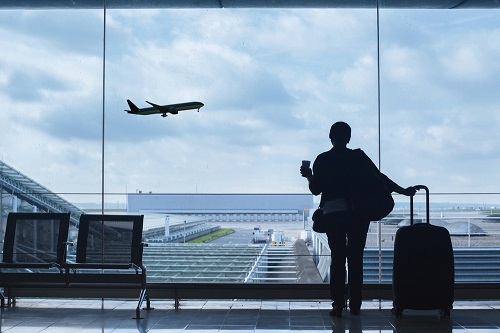
Singapore is a city-state with no domestic air routes whatsoever — the entire island is served by a single, internationally acclaimed airport: Changi. For expats, this means that flying is an exclusively international affair, yet the scale and quality of connectivity available is remarkable. As of 2025, Changi links Singapore to more than 170 cities across 50 countries, cementing its reputation as one of the most well-connected aviation gateways on earth and making it an outstanding base for both regional hops and intercontinental journeys.
| Item | Details |
|---|---|
| Domestic flights | None — Singapore is a city-state with no internal air routes |
| Main international airport | Singapore Changi Airport (SIN) |
| Airlines at Changi (as of 2026) | ~100 airlines; over 7,300 weekly scheduled flights |
| Destinations served (as of 2026) | 170+ cities in 50 countries and territories |
| Annual passenger traffic (2025) | ~69.98 million — a record high |
| Ground transport to city centre | MRT (East West Line, approx. 30–40 min); taxi approx. S$20–30 (as of 2025) |
What is the standard of domestic air travel in Singapore like, and which routes are served?
While nations such as Australia, the United States, or Canada depend on extensive domestic aviation networks to connect communities spread across enormous distances, Singapore has no domestic air travel at all. As a city-state occupying just over 700 square kilometres, there is no second metropolis, no far-flung island settlement, and no remote inland territory that necessitates an internal air link. A single airport serves the entire landmass, and all travel within the country is handled through a highly developed network of roads, buses, and Mass Rapid Transit (MRT) lines.
This is not an oversight or shortcoming in Singapore’s aviation infrastructure — it is simply a product of geography. Expats arriving from countries with busy domestic flight networks will quickly realise that the very idea of internal air travel does not apply here. What Singapore provides instead is outstanding international connectivity. The absence of a domestic network is more than compensated for by the breadth, frequency, and quality of international services at Changi.
For expats who previously relied on domestic routes — short flights within Europe, internal journeys across India or Australia, or regional hops within the United States — adapting to Singapore is generally painless. The time and expense that would have gone towards domestic travel in a larger country is simply redirected here towards brief international trips: quick flights to Kuala Lumpur, Bangkok, Jakarta, or Bali serve much the same practical purpose as domestic routes do elsewhere.
Which airlines operate in Singapore, and are any low-cost carriers available?
The centrepiece of Singapore’s aviation market is the national flag carrier, Singapore Airlines (SIA), which is headquartered at Changi Airport and consistently ranks among the finest carriers in the world. Operating from its Changi hub, Singapore Airlines reaches 120 international destinations across 46 countries — a remarkable footprint for an airline based in a city-state.
While Singapore Airlines is a full-service premium carrier, travellers watching their budgets are well catered for through its low-cost subsidiary, Scoot, which runs budget services throughout the Asia-Pacific region and on some longer-haul corridors. For travel across Southeast Asia, Jetstar Asia — affiliated with the Qantas-linked Jetstar Group — provides low-cost point-to-point options, while budget carrier AirAsia links Singapore to numerous Malaysian and regional destinations at highly competitive fares on popular short-haul routes.
As of January 2026, around 100 airlines collectively operate more than 7,300 weekly scheduled flights at Changi, connecting passengers to over 170 cities in 50 countries and territories. Strong competition among carriers on high-traffic corridors — such as Singapore to Kuala Lumpur, Bangkok, and Hong Kong — keeps fares relatively affordable on those routes. On more specialised or long-haul services, Singapore Airlines and its alliance partners typically command premium pricing, though Scoot offers a budget alternative on a number of the same corridors.
A broad roster of international carriers also operates regular scheduled services through Changi, including Emirates, Qatar Airways, Cathay Pacific, British Airways, Lufthansa, Air France, Japan Airlines, ANA, and many others, providing expats with a wide selection of airlines and alliance networks for travelling to their home countries.
How do you book flights in Singapore — what are the options and booking platforms?
Booking a flight from Singapore is a straightforward process, broadly equivalent to booking from any major aviation hub. Airline websites remain the primary booking channel for most residents — particularly Singapore Airlines, Scoot, Jetstar Asia, and AirAsia — and tend to offer the keenest fares, access to promotional deals, and full loyalty programme integration.
Global online travel agencies are widely used and operate exactly as they do in other markets. Platforms such as Skyscanner, Google Flights, Expedia, and Kayak are popular for comparing fares across multiple airlines in one place. Singapore-based options — including Zuji (historically well-used in Singapore) and established local travel agency chains such as Chan Brothers Travel and CTC Travel — are also commonly consulted, especially for bundled holiday packages. Grab, the super-app that dominates Singapore’s digital ecosystem, does not sell flights directly but its prominence means many residents begin their travel planning through mobile-first platforms tied to that ecosystem.
Given Singapore’s exceptionally high smartphone penetration and digital fluency among the population, booking via airline apps is extremely common. Most carriers operating from Changi provide fully functional mobile applications covering booking, check-in, and boarding pass management. For high-demand routes — particularly around school holiday periods, Chinese New Year, and the festive season at year-end — booking at least four to six weeks ahead is advisable. During quieter periods, last-minute seats on competitive short-haul routes such as Singapore to Kuala Lumpur or Bangkok are generally available, especially through low-cost carriers.
What do flights typically cost from Singapore, and what should expats budget for?
Because there are no domestic routes, every flight from Singapore is an international fare. Despite this, the intense competition at Changi means that short-haul regional tickets can be remarkably cheap. As of 2025, one-way budget fares on the Singapore to Kuala Lumpur route — a flight of roughly 55 minutes — can be found from as little as S$30 to S$60 with low-cost carriers such as AirAsia or Scoot during quieter travel periods, though prices climb steeply around school breaks and public holidays. Always check airline websites directly for current pricing, as fares change constantly.
For medium-haul regional destinations — Bangkok, Bali, Manila, Ho Chi Minh City, and similar — economy fares with budget carriers typically fall in the range of approximately S$80 to S$200 one-way (as of 2025), depending on how far in advance you book, the time of year, and whether you include checked baggage. It is important to note that most budget carriers price baggage, meals, and seat selection separately, so the advertised fare seldom reflects the full cost of travel. Adding a 20 to 25 kg checked baggage allowance can add S$20 to S$60 or more on top of the base fare.
Long-haul fares follow market rates broadly comparable with other major Asian aviation hubs. Return economy tickets from Singapore to Europe or Australasia typically fall somewhere between S$800 and S$2,000 or more, while premium economy and business class command considerably higher prices. On Singapore Airlines’ busiest corridors, operating as many as nine flights daily on certain routes, the frequency of service can help maintain competitive pricing even at the premium end of the market.
The busiest and most expensive travel windows in Singapore are the June and December school holidays, Chinese New Year (falling in late January or February), Deepavali, and Hari Raya. Fares on popular regional routes can multiply two or threefold during these periods. Expats intending to travel regularly — for work or visits home — should account for this variability and look to secure key trips several months ahead. For current pricing, check Singapore Airlines, Scoot, or comparison tools such as Skyscanner directly.
What are the main airports in Singapore, and which are most relevant for expats?
Changi Airport (IATA: SIN) is Singapore’s principal international airport and one of the most strategically significant aviation gateways in the entire Asia-Pacific region. Located in the Changi planning area at the eastern end of the island, it sits approximately 24 km from Singapore’s Central Area. For the overwhelming majority of expats arriving in or departing from Singapore, Changi is the only airport they will ever need to use.
The terminal complex comprises four passenger terminals, with Terminals 1, 2, and 3 directly connected to Jewel Changi Airport — a striking mixed-use development housing retail outlets, dining venues, and entertainment facilities within the airport precinct itself. Since opening, Changi has accumulated more than 700 awards, including 28 “Best Airport” accolades in 2025 alone. Expats familiar with the congestion and operational frustrations of larger, busier hubs such as London Heathrow, Dubai International, or Frankfurt will generally find Changi’s efficiency, facilities, and passenger experience a considerable step up.
A secondary airport, Seletar Airport, sits in Singapore’s north and caters principally to general aviation, charter operations, and a limited number of regional turboprop services to peninsular Malaysian destinations such as Kota Bharu and Ipoh. Most expats will rarely, if ever, use Seletar, but it is worth knowing it exists for charter travel or small-aircraft services.
Getting between Changi and the city centre is both easy and inexpensive. The airport is directly linked to the Mass Rapid Transit (MRT) network via a spur off the East West Line from Tanah Merah station, with stops at Expo and Changi Airport, the latter situated underground between Terminals 2 and 3. The MRT journey into central Singapore takes approximately 30 to 40 minutes and costs just a few Singapore dollars. By taxi, the trip takes around 20 to 30 minutes and typically costs S$20 to S$30 (as of 2025), with additional night-time surcharges pushing fares towards S$30 to S$45. Grab ride-hailing is widely used and generally comparable in price to metered taxis. Eight public bus services also serve the airport, looping through Terminals 1, 2, and 3.
Looking to the longer term, construction of Terminal 5 began in May 2025. When it opens in the mid-2030s, the new terminal is expected to add capacity for a further 50 million passengers annually, underscoring Singapore’s commitment to maintaining its aviation leadership well into the future.
Are there rules, restrictions, or practicalities at Singapore’s airports expats should know?
Because Singapore operates no domestic routes, every departing flight from Changi is international, and every arriving passenger passes through full immigration and customs formalities. A valid passport is required for all air travel — Singapore does not use a national identity card system for aviation purposes.
All travellers — whether Singapore Citizens, Permanent Residents, Long-term Pass Holders, or Foreign Visitors — must submit an electronic Health Declaration Card (eHDC) through the SG Arrival Card (SGAC) e-Service before clearing immigration. The SGAC can be submitted up to three days prior to arrival and is a mandatory step for entry into Singapore. Expats should make a habit of completing this before every return trip to the country. The submission portal is the ICA e-Service portal.
From January 2026, Singapore’s Immigration and Checkpoints Authority (ICA) introduced a new No-Boarding Directive (NBD) regime. With effect from 30 January 2026, the ICA issues No-Boarding Directive notices to airline operators at Changi and Seletar Airports, preventing undesirable or prohibited individuals and those who do not satisfy Singapore’s entry requirements from boarding inbound flights. This is an upstream border security mechanism and poses no concern for expats who hold valid residence passes or visas and are travelling in the ordinary course.
Regarding carry-on luggage, restrictions apply to Liquids, Aerosols and Gels (LAGs) in hand-carried baggage; containers exceeding 100ml will not be accepted, even if only partially filled. This aligns with the international aviation security standards observed across the EU, UK, and most major airports globally. Electronic cigarettes have long been prohibited in Singapore, and expats should be fully aware that attempting to import vaping devices into the country can result in severe penalties. These penalties were further strengthened from 1 September 2025; offenders may face fines and imprisonment, and future entry to Singapore may in some cases also be denied.
Customs controls on arrival are equally strict. Defined limits apply to tobacco, alcohol, and certain food items, and biosecurity regulations are rigorously enforced. For the most current information on controlled and prohibited goods, consult Singapore Customs and the Immigration and Checkpoints Authority (ICA) before travelling.
Changi Airport advises passengers to check in at least two hours before scheduled departure, and most airline check-in desks open at minimum two hours prior to the flight. For long-haul services or travel during peak periods, arriving at the airport with additional time is a sensible precaution. Online check-in is available across virtually all major carriers operating from Changi.
How does air travel connectivity in Singapore affect day-to-day expat life?
For people living and working in Singapore, the country’s status as one of the world’s great aviation hubs is among its most tangible practical advantages. Changi Airport’s top five passenger markets in 2025 were China, Indonesia, Malaysia, Australia, and India — a spread that reflects the diverse national backgrounds of Singapore’s resident population. Whether an expat originates from South Asia, East Asia, Southeast Asia, Europe, Australasia, or the Americas, there is almost always a direct or single-stop connection to their home country available.
Unlike expats who relocate to countries where certain regions feel genuinely cut off due to weak transport links, Singapore’s compact footprint and world-class MRT system ensure that every resident lives within straightforward reach of Changi. There are no remote corners, no communities poorly served by air access — the entire population enjoys the same convenient proximity to one of the planet’s premier international airports.
For expats whose work involves regular travel — to regional offices throughout Southeast Asia, to corporate headquarters in Europe or North America, or to clients scattered across Asia — Singapore represents an exceptional operational base. On the busiest international corridors, Singapore Airlines operates as many as nine flights daily, making flexible and even last-minute booking viable even on premium routes. The high frequency of departures to major regional cities such as Jakarta, Kuala Lumpur, Bangkok, and Hong Kong means that brief business trips — and in some cases even same-day return journeys to neighbouring capitals — are entirely workable.
Family-oriented expats who place a high priority on easy access to their home countries will also find Singapore’s connectivity compelling. London Heathrow is served with four daily flights, and Singapore Airlines launched daily flights to London Gatwick from March 2025, substantially increasing UK-bound capacity. Non-stop long-haul services to the United States — including daily departures to New York JFK, Los Angeles, San Francisco, Seattle, and Newark — mean North American expats can reach home without transiting through an intermediate hub. In 2025, Changi also recorded a landmark year for network expansion, with 13 new city connections added to its global roster.
The one consideration worth flagging is cost: while regional short-haul fares can be very attractive, the cumulative expense of multiple long-haul return trips to Europe, the Americas, or Australasia each year represents a significant line item. Expats planning several home visits annually should incorporate flight costs carefully into their financial planning ahead of the move.
What should expats know about travel insurance and passenger rights when flying in Singapore?
Singapore does not operate a statutory passenger rights framework comparable to the EU’s Regulation 261/2004 — among the most robust consumer protection regimes in global aviation, which entitles passengers to mandatory compensation of €250 to €600 for substantial delays and cancellations on flights departing from or arriving at EU airports. Nor does Singapore have a system analogous to the US Department of Transportation (DOT) rules, which require cash compensation for involuntary denied boarding on American carriers.
In Singapore, passenger rights in cases of delays, cancellations, or denied boarding are governed principally by individual airline conditions of carriage, the terms of the Montreal Convention — to which Singapore is a signatory, and which covers liability for passenger injury or death and for lost or damaged baggage on international flights — and general consumer protection principles under Singapore law. Passengers are strongly advised to read the conditions of carriage published by their chosen airline before booking, as compensation entitlements and care obligations differ considerably between full-service carriers and low-cost operators.
Given this more limited regulatory framework compared with what many expats may have been accustomed to in the EU or UK, travel insurance is strongly advised for anyone flying regularly from Singapore. A comprehensive policy should cover flight delay and cancellation, missed connections, baggage loss or damage, and medical evacuation — particularly given the long distances many routes involve. For guidance on evaluating travel insurance options in Singapore, the Monetary Authority of Singapore (MAS) regulates the insurance industry, and its CompareFirst portal enables residents to compare regulated insurance products side by side. The Civil Aviation Authority of Singapore (CAAS) is the national aviation regulator and publishes guidance on matters relevant to air passengers.
Expats who travel frequently with Singapore Airlines should be aware that the carrier, as a full-service premium airline, generally applies more generous service recovery practices than budget operators — including rebooking assistance, hotel accommodation, and meal vouchers during significant disruptions — even where no statutory obligation exists. Scoot and other low-cost carriers based at Changi typically offer more limited remedies under their conditions of carriage, which makes comprehensive travel insurance especially valuable when flying on budget fares.
How do you clear arrival at Changi Airport as a new expat?
- Complete the Singapore Arrival Card (SGAC): Before your flight lands, submit the SGAC via the ICA e-Service portal. This can be done up to three days before arrival and is mandatory for all non-citizen passengers.
- Disembark and proceed to immigration: Follow signs to the immigration hall in your terminal. Changi’s four terminals are large; allow sufficient time to walk to immigration, especially in Terminals 1 and 3.
- Clear immigration: Present your passport and any required entry documentation (visa, employment pass approval letter, etc.) at the immigration counter or automated lane if eligible. Long-term Pass Holders should have their pass documentation ready.
- Collect checked baggage: Proceed to the baggage reclaim hall. Changi’s baggage handling is efficient and most bags arrive quickly, but allow 20–30 minutes for busy widebody flights.
- Pass through customs: Follow the red channel if you have goods to declare or the green channel if you do not. Check Singapore Customs before travelling to confirm your allowances for alcohol, tobacco, and other goods.
- Collect ground transport: Exit through the arrivals hall. The MRT station is located between Terminals 2 and 3 (underground). Taxi stands and Grab pick-up points are clearly signposted outside all terminals. Public buses depart from the basement bus bays.
Frequently asked questions about air travel in Singapore
Does Singapore have any domestic flights?
No. As a city-state, Singapore has no internal air routes of any kind. Every commercial flight that departs from or arrives into Singapore is an international service. For all movement within the country, residents use the MRT, buses, taxis, and ride-hailing apps. Domestic aviation is simply not a concept that applies to Singapore’s scale or geography.
Which airport should I fly into when moving to Singapore?
Almost all commercial international flights use Singapore Changi Airport (IATA code: SIN). Seletar Airport handles a small number of turboprop charter and regional services to destinations in peninsular Malaysia, but plays no role in most international travel. When arranging your relocation flight, Changi will almost certainly be your arrival airport.
How do I get from Changi Airport to the city centre?
The MRT (East West Line) runs from Changi Airport to the city centre in roughly 30 to 40 minutes for just a few Singapore dollars. Taxis cover the same journey in around 20 to 30 minutes at a fare of approximately S$20 to S$30 (as of 2025), with higher surcharges applicable at night. Grab ride-hailing is popular and typically similar in price to metered cabs. Hotel shuttle services are also available from the arrivals hall of all terminals.
What airlines fly from Singapore, and are there budget options?
Approximately 100 airlines operate from Changi Airport. Singapore Airlines is the national flag carrier. Budget travellers are well served by Scoot (the low-cost arm of Singapore Airlines), Jetstar Asia, and AirAsia, all of which offer affordable fares across Southeast Asia and some longer-haul routes. Most major international carriers also serve Changi, giving passengers a broad range of airline and alliance options.
Do I need to complete any paperwork before arriving in Singapore by air?
Yes. Every passenger must submit the Singapore Arrival Card (SGAC) through the ICA’s online portal prior to clearing immigration. This can be completed up to three days before your arrival date. Not submitting the SGAC beforehand may cause delays at immigration. Long-term Pass Holders and those travelling on employment or dependant passes should also have their pass documentation on hand when approaching the immigration counter.
Is travel insurance necessary when flying from Singapore?
It is strongly recommended. Singapore does not have a statutory passenger compensation regime equivalent to EU Regulation 261/2004 or US DOT rules, meaning that your entitlements in cases of delays, cancellations, or denied boarding depend primarily on individual airline policies and general contract law. A solid travel insurance policy covering flight disruption, baggage loss, and medical expenses provides meaningful financial protection, particularly on long-haul routes. The MAS-regulated CompareFirst portal at comparefirst.sg is a useful starting point for comparing available policies.
What items are prohibited or restricted when flying out of Changi Airport?
Standard international aviation security rules apply to liquids, aerosols, and gels in carry-on baggage — individual containers must not exceed 100ml, and all must fit within a single one-litre transparent resealable bag. Electronic cigarettes and vaping devices are banned in Singapore; bringing them into or out of the country can result in serious legal consequences. Firearms, sharp objects, and dangerous goods are not permitted in cabin baggage. For the most up-to-date guidance, consult the Changi Airport security and baggage restrictions page before your flight.
How far in advance should I book flights from Singapore?
On popular short-haul regional routes such as Kuala Lumpur, Bangkok, or Bali, last-minute availability can be reasonable during off-peak periods, though fares are typically best when booked several weeks ahead during promotional windows. For long-haul travel to Europe, Australasia, or North America, and for any journey during Singapore’s school holidays in June and December or around major public holidays such as Chinese New Year, Hari Raya, or Deepavali, booking at least six to twelve weeks in advance is strongly advisable. Premium cabin seats on sought-after long-haul routes warrant even earlier reservation.