
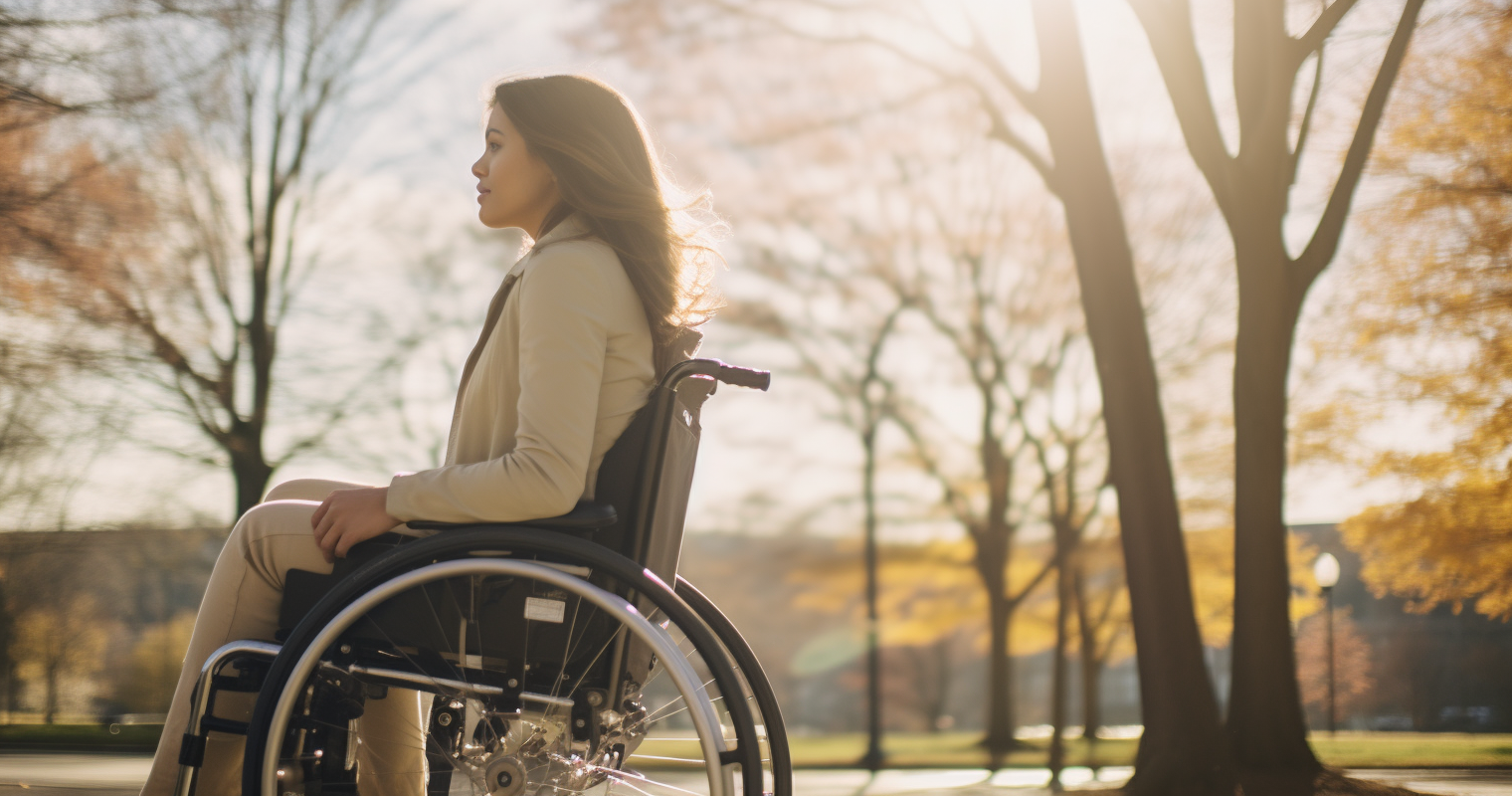
Disability in Bermuda is an evolving issue. While the Human Rights Act 1981 provides some legal protection against discrimination on the grounds of physical and mental disability, Bermuda does not yet have a dedicated Disability Act. Accessibility in public spaces and on public transport remains limited, though the government has committed to legislative reform, a new Disability Unit, and a National Disability Register launched in 2024.
| Item | Details |
|---|---|
| Primary legislation | Human Rights Act 1981 (amended multiple times); no standalone Disability Act yet, as of 2026 |
| National Disability Register | Launched April 2024 by the Ministry of Youth, Social Development and Seniors |
| UN Convention ratification | Bermuda became the first British Overseas Territory to adopt the UN Convention on the Rights of Persons with Disabilities |
| Public bus accessibility | Bermuda’s public buses do not have wheelchair access, as of 2026 |
| Disability Unit | New government Disability Unit announced in March 2026 budget debate; to be established under the Ministry |
| Human Rights Commission contact | 32 Victoria Street, Hamilton; Tel: 441-295-5859; [email protected] |
What are common attitudes to disability in Bermuda?
In the early 20th century, people with disabilities in Bermuda, as elsewhere, often lived apart from community life with limited opportunities and few supports. However, determined families and advocates began challenging these conditions, laying essential foundations for change. By the 1970s and 1980s, stronger advocacy had emerged, led by figures such as Kathleen Margaret Carter, whose work helped expand accessible transport options, open residential facilities, and secure legal protections through the amendment of the Human Rights Act to include disability in 1988.
Despite this history, attitudes towards disabled people continue to remain antiquated among many members of the public at large — both towards those with visible and hidden disabilities. The Human Rights Commission (HRC) has stated that societal pressure and barriers faced by people with disabilities need to be addressed, since some respondents to its public consultation reported being met with “punitive, dismissive and discriminatory treatment and attitudes.”
A government minister acknowledged that some people look at disabled people and “think they’re not capable of doing anything,” and stressed the importance of getting away from that narrative to make employers more likely to embrace disabled people. An awareness has also emerged that in a small island community like Bermuda, people living with a disability often prefer to keep it private in order to avoid potential stereotyping, and there is an understanding of the importance of privacy and the reluctance to disclose disabilities in a society where stereotypes linger.
The HRC found that the most popular suggestion from respondents for improving disability advocacy was to create more initiatives aimed at educating the public and raising awareness of the challenges faced by people with disabilities. Its consultation was specifically geared at fostering a broader conversation with residents on accessibility, equitable opportunities, and societal attitudes towards disability.
Bermuda’s unique geography and the varied needs of the community exacerbate challenges related to accessing life-saving information and resources, voice and participation on policy and legislation, and access to social and economic benefits. In times of crisis, people with disabilities are often hardest hit and easily overlooked, and are disproportionately impacted by unemployment and other social issues which limit their ability to contribute to national development.
Discrimination and legislation issues in relation to disability in Bermuda
Bermuda’s primary legislative tool for safeguarding individuals against unlawful discrimination is the Human Rights Act 1981, which has been amended 22 times and remains the cornerstone of anti-discrimination law in the territory. The Human Rights Act expressly prohibits discrimination on the basis of physical and mental disability. The main areas of protection under the Act include employment, goods, facilities and services, and accommodation.
Under the Human Rights Act 1981 and the Human Rights Amendment Act 2000, a disabled person is defined as one who is registered with any degree of physical disability, infirmity, malformation or disfigurement caused by bodily injury, birth defect or illness — including conditions such as diabetes, epilepsy, HIV, paralysis, amputation, blindness or visual impairment, deafness or hearing impediment, or physical reliance on a guide dog, wheelchair or other remedial appliance or device.
Prohibited forms of discrimination under the Human Rights Act include direct discrimination, indirect discrimination, harassment, and disability discrimination — including dismissal by reason of a worker’s disability or a failure by an employer to make reasonable modifications to working arrangements that would have allowed continued employment. Some individuals have complained that recruitment and hiring policies indirectly discriminate against them because of their disability, alleging that they are being “screened out” and “deemed unfit for employment.”
The first enforcement mechanism under the Human Rights Act is the statutory right to lay a complaint directly with the Human Rights Commission. Provided a complaint is laid within six months of the incident, the HRC has jurisdiction to investigate, and the matter may be referred to a tribunal. The Commission will offer to provide a lawyer to represent the complainant’s interests at the hearing, free of charge, and if the tribunal finds the complainant’s rights were violated, it may order discrimination to stop and/or award financial compensation.
A second mechanism is a civil lawsuit filed with the Supreme Court of Bermuda, though the plaintiff is obliged to hire their own lawyers. The deadline for filing a lawsuit pursuant to the Human Rights Act is six years from the date on which the alleged discrimination ended, as opposed to the six-month limitation period that applies to a complaint through the Human Rights Commission.
Despite these legal protections, the lived experiences of people with disabilities do not always reflect inclusive policies, practices, or attitudes. Since 2018, disability has been one of the most frequently identified grounds of discrimination received by the Commission. An “urgent need for systemic change” to address disability-based discrimination has been highlighted by the HRC’s executive officer, who noted that disability was once again among the most common grounds for discrimination recorded by residents.
As of 2026, the government has announced it will amend existing legislation for people with disabilities while establishing a specialised Disability Unit, ahead of creating a dedicated Disability Act — with the minister listing the creation of such an Act, drawing on insights from multiple jurisdictions, as a key initiative for the year. More recent achievements include the National Plan for Adults with Intellectual Disabilities and their Families (2023), the launch of the National Disability Register and mobile application (2024), and Bermuda’s adoption of the UN Convention on the Rights of Persons with Disabilities, making it the first British Overseas Territory to do so.
The HRC has called on Bermuda to review and strengthen existing legislation to align with current needs and international standards, in order to ensure and enforce disability rights. The HRC has also stressed the need for greater enforcement and accountability to protect individuals with disabilities from discrimination, noting that respondents to its survey said accountability was needed to prevent harassment and discrimination and to ensure that people with disabilities have greater access to public services.
What is public transport and building access like for disabled people in Bermuda?
A significant limitation for people with mobility impairments is that Bermuda’s public buses do not have wheelchair access. This is a considerable barrier on an island where private car ownership is restricted and public transport is a primary means of getting around. However, several Bermuda taxi services do provide wheelchair-accessible transportation.
Bermuda’s public ferries are accessible from the Hamilton Ferry Terminal, the ferry dock at Royal Naval Dockyard, and the Rockaway ferry point in Southampton, though there is only limited accessibility for the dock at St. George’s, where passengers are advised to see crew for assistance.
In Hamilton, City Hall, City Hall Theatre, art galleries, and the Bermuda National Gallery have facilities accessible via a disabled access entrance and elevator. City Hall also offers at least nine handicapped parking spaces. Other accessible facilities in the city include pedestrian crossings flush with pavements, the two biggest banks with ATMs at accessible heights, and St. Andrew’s Presbyterian Church.
The Bermuda Plan 2018 emphasises accessibility, including a dedicated policy that mandates public buildings to be accessible to persons with physical disabilities, in alignment with the Bermuda Building Code. The same policy also seeks to ensure that all facilities and amenities open to the public are designed to be barrier-free and usable to everyone regardless of age, size, ability, or disability.
Bermuda’s Building Code uses the International Building Code and ANSI A117.1 standards for accessibility. These frameworks are designed to provide broad, consistent guidance for accessible design and are applied as comprehensively as possible, though accessibility requirements can be more effectively enforced in the case of new-build commercial developments where legislative provisions are clear. In many cases involving existing buildings undergoing partial renovations, the current regulatory framework does not mandate full accessibility upgrades unless the scope of work meets specific thresholds.
The Bermuda Government does not require accommodation providers — including hotels, guest houses, cottage colonies, apartments, and villas — or shops, restaurants, sightseeing attractions, or boats to make their facilities accessible, though some try to do so voluntarily. Buildings are not required to retrofit for accessibility, and while stores are checked to ensure aisles are wide enough, there is no enforcement mechanism against businesses that block aisles with extra displays, preventing wheelchair and mobility scooter users from easily navigating the space. Checkout lines in many stores are also not accessible to wheelchair or mobility scooter users.
Are there lobbying and advocacy groups for disabled people in Bermuda?
The Government of Bermuda recognises a wide range of charities and organisations that support people with disabilities and their families, including Tomorrow’s Voices, WindReach Bermuda, BASE, Vision Bermuda, Bermuda Mental Health Foundation, the K. Margaret Carter Centre, Friends of Hope Academy, Inspire Bermuda, the Bermuda Physically Handicapped Association, the Bermuda Paralympic Association, the Multiple Sclerosis Society of Bermuda, the Bermuda Islands Association of the Deaf (BIAD), Bermuda Special Olympics, the Learning Disabilities Association of Bermuda, Committee of 25, Project Action, Project 100, and Beyond Inclusion.
Below are key organisations and their contact details:
Human Rights Commission (HRC)
The Human Rights Commission has a statutory remit to protect and promote human rights under the Human Rights Act 1981. As the National Human Rights Institution for Bermuda, its mission is to protect and promote human rights through education, advocacy, collaboration, and enforcement. The HRC is the primary body for lodging formal complaints of disability discrimination.
- Address: 32 Victoria Street, Milner Place, Ground Floor, Hamilton
- Phone: 441-295-5859
- Email: [email protected]
- Website: humanrights.bm
WindReach Bermuda
WindReach is an accessible 4.5-acre property in Warwick Parish dedicated to enriching the lives of people of all ages and abilities. Its environment features a multi-purpose Activity Centre, gardens, an animal zone, outdoor trails, accessible spaces, and an award-winning playground, providing inclusive, therapeutic, and educational programmes including therapeutic riding, life skills, environmental education, and an older adults programme. Each week, more than 200 participants — from preschoolers to older adults — benefit from WindReach’s programmes.
- Address: 10 WindReach Lane, Warwick WK 10, Bermuda
- Phone: (441) 238-2469
- Email: [email protected]
- Website: windreachbermuda.org
Bermuda Physically Handicapped Association (BPHA)
The BPHA is one of Bermuda’s longest-standing advocacy organisations for people with physical disabilities, providing support, representation, and community services for its members.
- Address: Base Gate, 1 South Side, St. David’s Island, DD 03, Bermuda
- P.O. Box: P.O. Box HM 8, Hamilton HM AX, Bermuda
- Phone: (441) 293-5035
- Fax: (441) 293-5036
Vision Bermuda (formerly Bermuda Society for the Blind)
Vision Bermuda supports individuals with visual impairments across the island, offering resources, advocacy, and practical assistance.
- Address: Beacon House, 3 Beacon Road, Hamilton HM 10
- Phone: (441) 292-3231
Ageing and Disability Services (Government of Bermuda)
The government’s Ageing and Disability Services office is the official body responsible for disability policy, the National Disability Register, and related services. It sits within the Ministry of Youth, Social Development and Seniors.
- Phone: (441) 292-7802
- Hours: Open 8:45 am to 5:00 pm, Monday to Friday
- Website: gov.bm
Frequently asked questions
Does Bermuda have a dedicated Disability Act?
As of 2026, Bermuda does not yet have a standalone Disability Act. The government has announced it will amend existing legislation and establish a specialised Disability Unit ahead of creating a dedicated Disability Act, with the minister citing insights drawn from multiple jurisdictions.
What legal protection do people with disabilities have in Bermuda?
Bermuda’s primary legislative tool for safeguarding individuals against unlawful discrimination is the Human Rights Act 1981. While it remains a work in progress having been amended 22 times, it is the cornerstone of anti-discrimination protection in Bermuda. The Act expressly prohibits discrimination on the basis of physical and mental disability.
How do I make a disability discrimination complaint in Bermuda?
The main route is to lay a complaint directly with the Human Rights Commission, provided it is filed within six months of the incident. The HRC has full jurisdiction to investigate and may refer the matter to a tribunal. The Commission will offer to provide a lawyer to represent the complainant’s interests at any tribunal hearing, free of charge. Alternatively, a civil lawsuit can be filed at the Supreme Court of Bermuda within six years of the alleged discrimination ending.
Are Bermuda’s public buses wheelchair accessible?
Bermuda’s public buses do not have wheelchair access. However, several taxi services on the island do provide wheelchair-accessible transportation. Bermuda’s public ferries are accessible from the Hamilton Ferry Terminal, the ferry dock at Royal Naval Dockyard, and the Rockaway ferry point in Southampton.
Has Bermuda signed the UN Convention on the Rights of Persons with Disabilities?
Bermuda has adopted the UN Convention on the Rights of Persons with Disabilities, becoming the first British Overseas Territory to do so. This milestone was part of a broader set of recent achievements that also includes the launch of the National Disability Register in 2024 and the National Plan for Adults with Intellectual Disabilities and their Families in 2023.
What is the National Disability Register?
The National Disability Register allows the Ministry of Youth, Social Development and Seniors to keep a centralised database of accurate and current data on people with disabilities. The in-depth data guides policy in healthcare, education, and accessibility initiatives, facilitating targeted support and delivering appropriate resources to advance inclusivity in Bermuda. It was launched in April 2024.
Are there support organisations for specific types of disability in Bermuda?
Yes. Bermuda has a wide network of organisations covering a broad range of disabilities, including Tomorrow’s Voices, Vision Bermuda, the Bermuda Mental Health Foundation, the Multiple Sclerosis Society of Bermuda, the Bermuda Islands Association of the Deaf (BIAD), Bermuda Special Olympics, the Learning Disabilities Association of Bermuda, and the Bermuda Physically Handicapped Association, among many others.
Are hotels and restaurants in Bermuda required to be accessible?
The Bermuda Government does not require accommodation providers — including hotels, guest houses, cottage colonies, apartments, and villas — or shops, restaurants, sightseeing attractions, or boats to make their facilities accessible. However, the Bermuda Plan 2018 includes a dedicated policy mandating that public buildings be accessible to persons with physical disabilities, in alignment with the Bermuda Building Code. Check with individual venues before visiting.
Latest: Expat Focus International Healthcare Update August 2026 →