
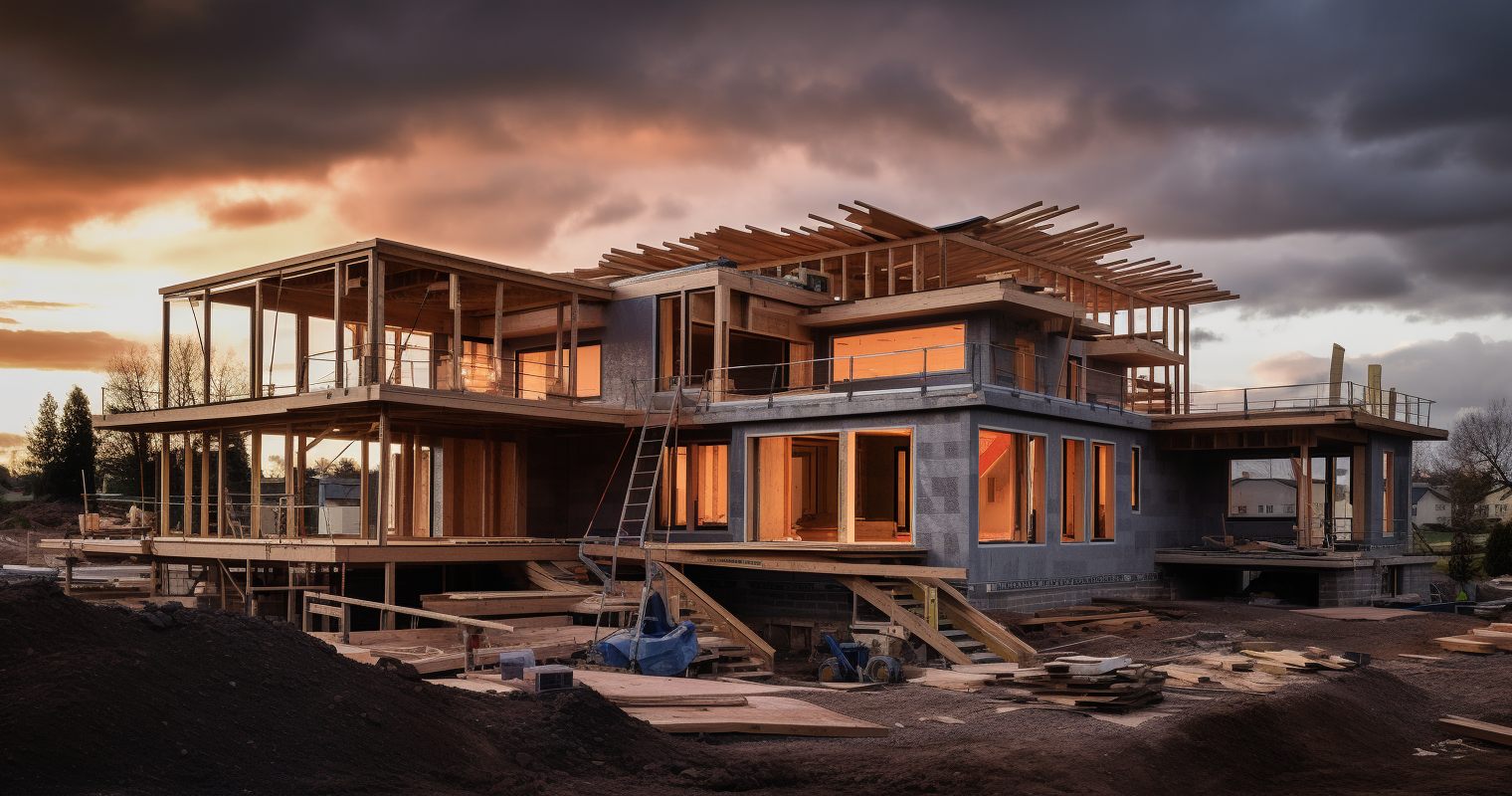
Building or renovating property in Bermuda requires planning permission from the Department of Planning in most cases, along with a separate building permit. The island has strict rules protecting listed buildings and historic areas, and non-Bermudians face additional restrictions when purchasing land. Understanding these processes before you begin will save time, money, and legal difficulty.
| Item | Details |
|---|---|
| Planning authority | Department of Planning, 5th Floor, Dame Lois Browne Evans Building, 58 Court Street, Hamilton HM 12 |
| Permitted Development Permit (PDP) processing time | Approximately 5 working days (as of 2024) |
| Full planning application objection window | 14 days from date advertised in the Official Gazette (as of 2024) |
| Key planning legislation | Development and Planning Act 1974; Bermuda Plan 2018; Development and Planning (General Development Order) 1999 |
| Architect professional body | Institute of Bermuda Architects (IBA) — www.iba.bm |
| Online planning portal | planningenergov.gov.bm |
Do I need planning permission in Bermuda to build or renovate?
Yes — planning permission is required for the vast majority of building and renovation work in Bermuda. The Department of Planning administers the system under the Development and Planning Act 1974 and the Bermuda Plan 2018. There are two main routes: a full planning application (DAP1) and a faster Permitted Development Permit (PDP) for certain smaller works.
An application for a Permitted Development Permit (PDP) may be submitted for development described by the Development and Planning (General Development Order) 1999. If approved, a PDP would effectively grant both planning permission and a building permit for a development. This makes it the simpler, faster route for qualifying projects.
The General Development Order sets out five different classes of development deemed to have planning permission. Class I covers development within the curtilage of a residential building — including enlargements or alterations, installation of skylights, swimming pools, hard surfacing, pergolas, and barbecues. Class II covers development within the curtilage of a non-residential building, including enlargements, alterations, and hard surfacing.
A PDP application is not publicly advertised and does not require the formal approval of the Development Applications Board (DAB) or the Director of Planning, so the processing time is substantially less than a full DAP1 application. The Department aims to process the majority of PDP applications within 5 working days.
For larger or more complex projects — new builds, significant extensions, change of use, or any work affecting listed buildings or Historic Areas — a full DAP1 application is required. This is publicly advertised and assessed by the Development Applications Board. The procedure for a full planning application is as follows:
- Check whether your proposed development falls under the Permitted Development Permit (PDP) route via the Department of Planning website (www.planning.gov.bm), or contact the Department for pre-application advice.
- If a full DAP1 application is required, prepare architectural drawings and supporting documentation in accordance with the Submission Checklist issued by the Department of Planning.
- Submit your application through the Department of Planning’s EnerGov Customer Self Service Portal, or in person at the Department of Planning, 5th Floor, Dame Lois Browne Evans Building, 58 Court Street, Hamilton HM 12, between 8:45 am and 4:30 pm on weekdays.
- Any person wishing to object must do so within 14 days of the date advertised. Once submitted, your application will be publicly advertised in the Official Gazette.
- The Development Applications Board (DAB) reviews the application and assesses its impact under the policies of the Bermuda Plan 2018.
- If the application involves a listed building, Historic Area, or St. George’s Preservation Area, additional consultation with the Historic Buildings Advisory Committee (HBAC) or the St. George’s Preservation Authority will be required.
- Applications proposing development which does not fall within the scope of the Bermuda Residential Building Code 2014 must have drawings forwarded to the Bermuda Fire and Rescue Service (BFRS) by emailing [email protected] prior to submission.
- Once planning permission is granted, a separate building permit application must be submitted before work begins (see the permits section below).
- If your application is incomplete or non-compliant, the applicant has one opportunity to make a complete and compliant revision, which must be submitted within 21 calendar days of the review being issued by the Department of Planning.
For general enquiries, contact the Department of Planning: General Enquiries: (441) 297-7756 | Building Control: (441) 297-7755 | Development Control & Enforcement: (441) 297-7810 | Forward Planning: (441) 297-7778 | Building Inspection Requests 24-hour line: (441) 297-7828.
What are the rules for listed buildings, conservation areas, and preservation orders?
Bermuda has a well-developed heritage protection framework that applies to listed buildings, Historic Areas, and properties subject to Preservation Orders. If your property falls into any of these categories, planning rules are considerably stricter and the standard permitted development shortcuts do not apply.
The Development and Planning (General Development Order) 1999 does not apply to Listed Buildings or to Historic Areas as defined by Part V Sections 30 and 31 of the Development and Planning Act 1974. This means that even minor works that would ordinarily be treated as permitted development will require a full planning application if the building or its setting is protected.
Even relatively minor alterations to a historic building could harm its special character, and therefore planning permission is required for any material alteration to the external appearance of a Listed Building or to a building located within a Historic Area. This is much stricter than regulations applying to unlisted buildings and reflects the importance Bermuda places on its architectural heritage.
A General Development Order will only be applicable to proposals that affect the interior of listed or Historic Area buildings, or for minor development within the curtilage of a site that does not affect the historic building itself.
For structures with a Protection Order placed upon them by the St. George’s Preservation Authority, the same strong presumption in favour of preservation applies as for listed buildings. The same is also true for structures located within the St. George’s World Heritage Site (St. George’s Historic Area).
Planning permission is required for any changes to the exterior of a building affecting its appearance in the St. George’s Preservation Area. The town of St. George’s is a UNESCO World Heritage Site, and its preservation framework is accordingly robust.
For buildings located within other Historic Areas (outside St. George’s), the same protective presumption applies to features on primary elevations or visible from public thoroughfares. For secondary or rear elevations hidden from public view, a less restrictive approach to materials may be adopted, though exact replication remains desirable.
With regard to the Building Code, the Bermuda Residential Building Code 2014 states that its provisions relating to listed buildings are not mandatory. Any variance to the code for such work requires the support of the Historic Buildings Advisory Committee (HBAC), and must satisfy the Building Official that the intent of the Code in terms of public health, safety, and welfare is maintained.
The Bermuda National Trust also holds and protects a number of significant historic properties across the island. If you are unsure whether your property is listed or falls within a protected area, check the Listed Buildings Register on the Department of Planning website before proceeding with any work.
Any breach of heritage requirements is likely to result in enforcement action being taken against the owner and/or occupier, with the view to the reinstatement of windows, doors, or other features to an appropriate design. Unauthorised works to a protected building can be very costly to remedy.
How can I find a reliable builder in Bermuda?
Finding a trustworthy, competent builder in Bermuda requires careful research. The island’s construction industry is active but relatively small, and word-of-mouth recommendations carry significant weight. The following strategies will help you identify reliable contractors.
- Ask your architect for recommendations. Architects registered with the Institute of Bermuda Architects work regularly with local contractors and can usually recommend builders whose quality and reliability they have observed first-hand.
- Request references and visit completed projects. Any reputable builder should be willing to provide references from recent clients and examples of comparable completed work. Where possible, visit finished projects in person to assess build quality.
- Obtain at least three competitive quotes. This is standard practice on the island. Make sure each quote covers the same scope of work so that comparisons are meaningful.
- Verify licences and permits. Confirm that the builder holds a valid contractor’s licence issued by the relevant Bermuda government authority, and check that they carry adequate liability insurance and workers’ compensation cover.
- Use the Bermuda Yellow Pages contractor directory. The Bermuda Yellow Pages lists established construction companies on the island, including long-standing firms.
- Check the Official Gazette. Reviewing recently approved planning applications in the Official Gazette can help identify active, reputable construction businesses working on permitted projects.
- Get everything in writing. Ensure you have a detailed written contract specifying scope of work, materials, payment schedule, and completion dates. The Institute of Bermuda Architects has been involved in promoting standardised construction contracts in Bermuda, and your architect can advise on suitable contract forms.
There is currently no single dedicated professional trade body for building contractors in Bermuda equivalent to, say, the Federation of Master Builders in the UK or the Housing Industry Association in Australia. This makes personal recommendations and licence verification all the more important. The Department of Planning’s Building Control section can advise on whether a contractor’s recent permit history is in good standing. Contact them at (441) 297-7755 or email [email protected].
The Institute of Bermuda Architects (IBA) has been involved in the introduction of standardised construction contracts in Bermuda, so speaking to an IBA-registered architect about contract frameworks before engaging a builder is strongly advisable, particularly for larger projects.
What permits and licences are required for building or renovating?
In addition to planning permission, a separate building permit is required before any significant construction or renovation work can begin. These are two distinct approvals, and both must be in place before work starts. The process is as follows:
- Obtain planning permission or a Permitted Development Permit (PDP). Residential and commercial building permits must be accompanied by valid planning permission that has been granted and is still in its approval period. A PDP combines both planning permission and building permit approval for qualifying smaller works.
- Prepare a complete set of drawings. A complete set of relevant drawings — architectural, structural, MEP (mechanical, electrical, plumbing), and so on — is required as detailed by the Submission Checklist.
- Submit the building permit application via the EnerGov portal. Applications are submitted through the Customer Self Service Portal. Ensure all contacts listed have verified CSS accounts.
- Obtain Department of Health sign-off where applicable. Permit applications will proceed to initial review only after all required items, including sign-off from the Department of Health where applicable, have been received.
- Pay the permit fee invoice. Once the application passes initial screening and fee verification, an invoice is issued. If payment is not received within seven calendar days, the application will be automatically rejected.
- Await review and respond to any comments. The Department of Planning will review the submission for completeness and compliance with the Bermuda Building Code. If the application is incomplete or non-compliant, comments will be issued via the CSS system.
- Arrange building inspections. Once a permit is issued, inspections must be requested at key stages of construction. Contact the Building Inspection Requests 24-hour line: (441) 297-7828.
Certain specific types of work also trigger mandatory permit requirements regardless of scale. The installation, renewal, renovation, or change to any mechanical system containing more than 6.6 pounds (3 kilograms) of refrigerant, and the installation of any fuel-burning system other than a cooktop or oven, require a building permit even if the fuel-burning system piping is not being altered.
The Building Official, who is the Director of Planning, grants building permits. Technical Officers in the Building Control section review applications for compliance with the Building Code and issue the permits on behalf of the Building Official. For listed buildings, any variance from the Building Code must additionally be supported by the Historic Buildings Advisory Committee (HBAC).
Note that performing works without a building permit can result in retroactive permit fees being imposed. Internal renovations to non-listed buildings that do not result in changes to elevations or new units require a permit; if such works were done without building permit approval, a retroactive building permit fee will be applied.
How can I find a local architect in Bermuda?
Engaging a locally registered architect is strongly recommended for any significant building or renovation project in Bermuda. Local architects understand the island’s unique planning framework, building code, heritage requirements, and the practicalities of construction in a small island environment — including the challenges of importing materials.
The professional body for architects in Bermuda is the Institute of Bermuda Architects (IBA):
| Detail | Information |
|---|---|
| Full name | Institute of Bermuda Architects (IBA) |
| Website | www.iba.bm |
| Role | Representative body for registered architects in Bermuda |
| Membership | Approximately 57 registered architects and 125 allied designers and support staff (as of 2024) |
The Institute of Bermuda Architects succeeded the earlier Association of Bermuda Architects as the representative body for architects in Bermuda in the early 1970s, following the enactment of the Architects Registration Act 1969.
Whilst “Architect Member” is restricted to registered architects, associate membership has been available for many years to others within the local architectural and design community, including interior designers, architectural technologists/technicians, and draughtspersons.
In addition to promoting the local profession, the IBA is the collective voice for architects in matters relating to local government departments, the introduction of standardised construction contracts in Bermuda, and for securing collective pension, health, professional indemnity, and workers’ compensation policies for its members.
It is worth being aware that Bermuda’s architectural regulatory framework is currently under review. The Institute of Bermuda Architects and members of the former Architectural Association of Bermuda have jointly committed to seeing the 1969 Architects Registration Act repealed and replaced with the 2016 Draft Architectural Professions Act, which they describe as outdated, exclusionary, and unconstitutional. The proposed new Act would, among other things, strengthen consumer protections by mandating professional indemnity insurance and implementing a clear, accessible process for public complaints.
The IBA website provides a member directory allowing you to search for registered architects by specialism. You can also consult the Bermuda Yellow Pages architect listings for a broader overview of practices operating on the island. When engaging an architect, always confirm they are registered in Bermuda, carry professional indemnity insurance, and have relevant experience with the type of project you are planning — whether residential, commercial, or involving a historic property.
What are the common pitfalls when buying land in Bermuda?
Purchasing land in Bermuda involves a number of risks and complexities that differ significantly from buying property in larger jurisdictions. Being aware of these potential pitfalls before you proceed can prevent costly and time-consuming problems later.
- Non-Bermudian restrictions on land purchase. Non-Bermudians face strict legal restrictions on purchasing property and land in Bermuda. The Bermuda Immigration and Protection Act controls what non-Bermudians can buy, and an Annual Rental Value (ARV) threshold applies. Always consult a qualified Bermudian attorney before agreeing to any purchase, as restrictions change and penalties for non-compliance are serious.
- Planning permission is not guaranteed. Buying land on the assumption that planning permission will be granted is one of the most common and costly mistakes. Always obtain formal pre-application advice from the Department of Planning before exchanging contracts. What appears to be a buildable plot may be subject to environmental protections, flood risk designations, or zoning restrictions under the Bermuda Plan 2018 that prevent development.
- Listed building and Historic Area status. Check at the outset whether any building on the land, or the land itself, falls within a Historic Area or is subject to a Preservation Order. As outlined above, these designations impose very significant constraints on what you can build or alter, and could fundamentally affect the viability of your project.
- Boundary disputes and survey issues. Bermuda’s land registry records can be complex, and boundaries are not always clearly defined on older title documents. A survey may be required, particularly if the site is topographically challenging or it is necessary to confirm the position of boundaries. Always commission an independent land survey from a qualified surveyor before completing a purchase.
- Coastal and environmental restrictions. Many of Bermuda’s most attractive plots are near the coastline or within ecologically sensitive areas. Coastal development is tightly regulated, and proximity to mangroves, nature reserves, or protected marine areas can severely limit what can be built. Check environmental designations under the Bermuda Plan 2018 before purchase.
- Infrastructure and utility connections. Bermuda has no mains water supply — all properties rely on rainwater collected in roof tanks, and many areas depend on cesspits rather than mains sewage. Establishing the cost and feasibility of utility connections, including electricity from BELCO, is essential before committing to a land purchase.
- Retroactive permit issues. If purchasing land or a property where previous building works were carried out, always check whether all existing structures have valid planning permission and building permits. Unauthorised works can result in enforcement action being taken against the new owner, as well as retroactive fees.
- Legal and conveyancing costs. Property transactions in Bermuda attract stamp duty, legal fees, and — for non-Bermudians — a licence fee. Always engage a Bermuda-qualified attorney to carry out full due diligence, including a title search, before exchanging contracts.
For up-to-date zoning maps and land use designations, consult the Department of Planning website. For legal advice on purchasing land, the Bermuda Bar Association can provide a list of qualified attorneys.
Frequently asked questions
Do I always need planning permission for internal renovations in Bermuda?
Not always — some internal renovations to non-listed buildings fall within permitted development and can be approved via the faster Permitted Development Permit (PDP) route rather than a full planning application. However, internal works to listed buildings or buildings in Historic Areas are subject to additional scrutiny, and even internal changes may require full planning permission and the approval of the Historic Buildings Advisory Committee. Always check with the Department of Planning before beginning work.
How long does a full planning application take to process in Bermuda?
Processing times for full DAP1 planning applications vary depending on complexity, the volume of applications being handled, and whether consultations with additional bodies (such as the HBAC or the St. George’s Preservation Authority) are required. A Permitted Development Permit (PDP), by contrast, is aimed to be processed within approximately 5 working days. For complex full applications, it is advisable to build several months into your project timeline. Check the Department of Planning website or call (441) 297-7756 for current guidance on processing times.
Can I carry out building work without a permit in Bermuda?
No. Carrying out building work without the appropriate planning permission and building permit is a breach of Bermuda law and can result in enforcement action, including orders to demolish or reinstate work at your own expense, as well as retroactive permit fees. If you purchase a property where previous unauthorised works have been carried out, liability can pass to you as the new owner. Always ensure all permits are in place before work begins.
Is there a listed buildings register I can search in Bermuda?
Yes. The Department of Planning maintains a Listed Buildings Register, which is available via the Historic Environment section of the Department of Planning’s website at planning.gov.bm. The Bermuda National Trust also maintains information about protected buildings at bnt.bm. Always check both sources if you are considering buying or renovating an older property.
Do architects in Bermuda need to be locally registered?
Yes. Architects practising in Bermuda are required to be registered under the Architects Registration Act 1969. The Institute of Bermuda Architects (IBA) is the professional body, and its member directory can be found at www.iba.bm. Note that the regulatory framework is under review, with proposals to replace the 1969 Act with a more comprehensive Architectural Professions Act. Always confirm that your chosen architect is currently registered and holds professional indemnity insurance.
What building code applies in Bermuda?
The Bermuda Residential Building Code 2014 is the primary standard governing residential construction and renovation on the island. It covers structural integrity, fire safety, mechanical and electrical systems, and other technical requirements. The Building Control section of the Department of Planning reviews building permit applications for compliance with this Code. For listed buildings, certain provisions of the Code are not mandatory, but any variances must be approved by the Historic Buildings Advisory Committee and satisfy the Building Official that health, safety, and welfare standards are maintained.
What happens if I object to a neighbour’s planning application?
Planning applications are publicly advertised in the Official Gazette and on the Department of Planning’s EnerGov Customer Self Service Portal. Anyone wishing to object must do so within 14 days of the application being advertised. Letters of objection should be emailed to [email protected], referencing the relevant PLAN or SUB number. Further guidance on the objection procedure is set out in the Development and Planning (Applications Procedure) Rules 1997, available on the Department’s website.
Are there any grants or incentives available for restoring a historic building in Bermuda?
Bermuda’s Department of Planning and the Bermuda National Trust both support the preservation of historic buildings, and there may be flexibility in building code requirements for listed building restoration as noted above. However, formal grant programmes for private owners of historic buildings are limited. It is worth contacting the Bermuda National Trust directly at bnt.bm and consulting a local attorney about any available tax or duty concessions that may apply to heritage restoration projects.