
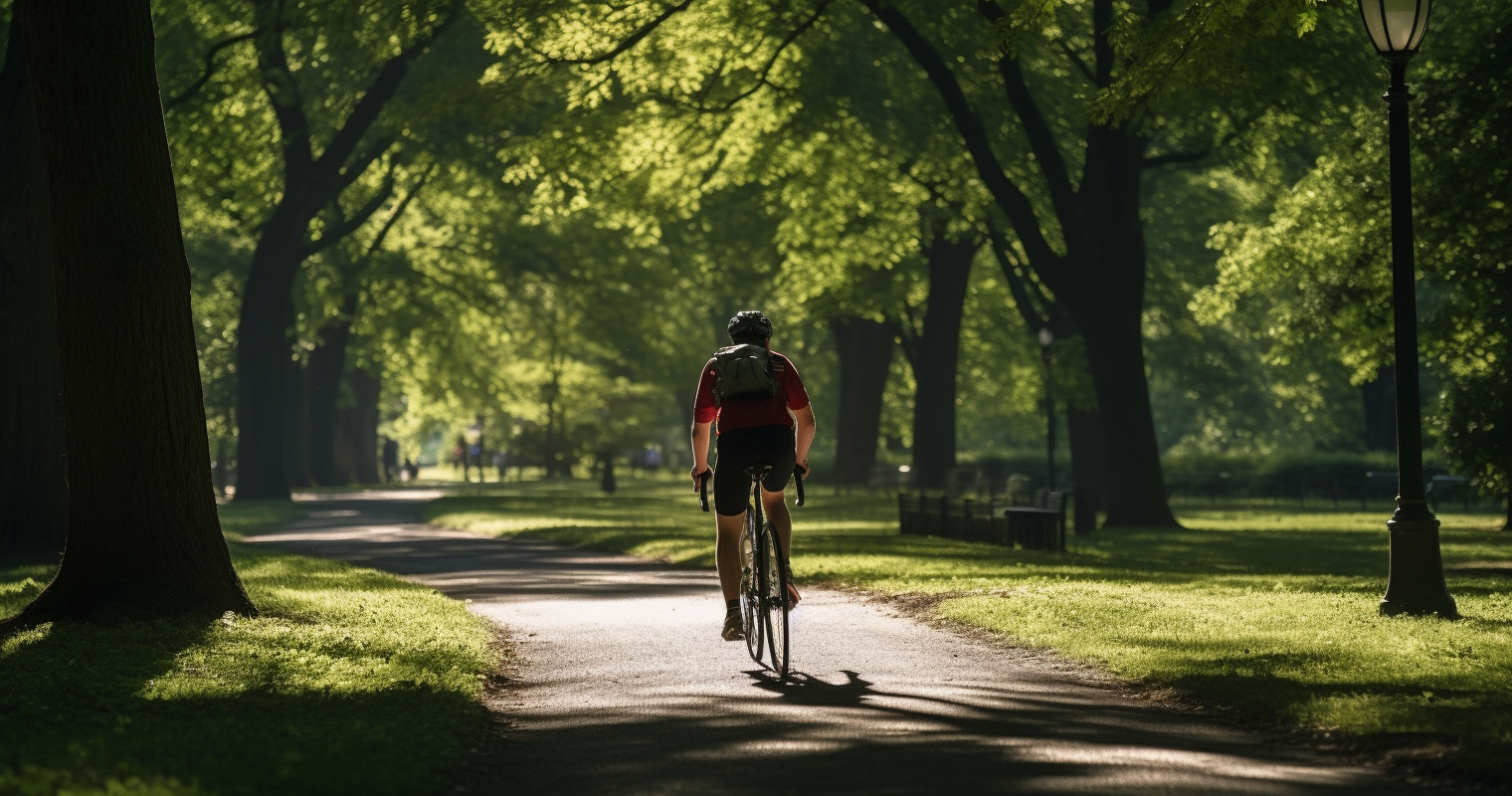
Cycling in the Bahamas is on the rise, though it remains largely a leisure and sporting pursuit rather than a practical mode of daily transport. Dedicated cycle infrastructure is scarce — Nassau being no exception — and road widths combined with unpredictable driver behaviour can make regular commuting by bike difficult. That said, the predominantly flat landscape, year-round warmth, and picturesque coastal roads create genuinely appealing conditions for recreational and sporting cyclists, particularly across the quieter Out Islands.
| Item | Details |
|---|---|
| Cycling culture | Primarily recreational and sport; limited as everyday commuter transport |
| Dedicated cycle lanes | Rare, especially outside Nassau; most cycling is on shared roads |
| Bike licensing | Required if ridden on public roads (Road Traffic Department, as of 2025) |
| Helmet law | Not legally mandated for cyclists; strongly recommended |
| Road fatalities (2024) | 66 fatal road traffic victims in 2024 (Bahamas Government, as of 2025) |
| Customs duty on bikes | General import duty rates 0%–220%; average 5%–35%; VAT 10% (as of 2025) |
How popular is cycling in the Bahamas — is it a common way to get around?
Cycling has been steadily gaining traction in the Bahamas as both a leisure pursuit and a means of getting around, yet it falls well short of being a mainstream commuting option. Compare this to cycling-centric countries such as the Netherlands or Denmark, where a substantial proportion of daily urban journeys are made by bike and the road network is built to accommodate them — the Bahamas has developed no equivalent culture of cycling for work or routine errands.
Across Nassau and Freeport, the vast majority of residents depend on private cars, taxis, or the locally operated minibuses known as “jitneys” to go about their daily lives. Cycling tends to be associated instead with fitness goals, sport, and leisure. There is, however, a committed sporting community that speaks to genuine enthusiasm for the activity. The Enjoy Cycling Club runs a range of weekly group rides across New Providence, attracting both resident and visiting cyclists who take the sport seriously.
The club is involved in sponsoring and participating in national and international cycling events, among them The Potcake Man Triathlon, Ride For Hope, and The Bahamas Invitational Championships. This vibrant competitive scene points to a passionate core cycling community, even where conditions for everyday utility cycling are not well suited. Expats who cycle for fitness or competition will find a sociable and welcoming network waiting for them; those aiming to give up the car entirely for day-to-day errands would be wise to set realistic expectations before arriving.
What is the cycling infrastructure like in the Bahamas?
Dedicated cycling lanes are uncommon throughout the Bahamas, and virtually absent beyond Nassau. In practice, cyclists share road space with motor vehicles for the great majority of their journeys. This stands in marked contrast to countries such as Germany or the Netherlands, where protected cycle paths form a fundamental part of urban planning. Cycling infrastructure in the Bahamas is still in early stages of development, and the road network was built with cars and trucks as the primary users in mind.
On islands like New Providence in particular, roads often have narrow verges or no designated cycle space whatsoever, placing the onus on riders to stay alert to surrounding traffic at all times. Potholes are an additional hazard on some stretches of road. Cyclists arriving from cities with well-maintained cycle networks should be prepared for a considerably more variable riding surface, especially on routes that see less regular maintenance.
New Providence and Grand Bahama are both relatively flat, lending themselves well to casual riding. Eleuthera and Long Island remain largely level but introduce some gentle undulations that provide a modest additional challenge. Across the archipelago, the landscape is defined by coastal roads, bright sandy shores, and tropical greenery, with routes frequently following paved carriageways that offer sweeping views over clear turquoise water.
The Road Traffic Department and the Ministry of Energy and Transport hold primary responsibility for road infrastructure oversight. Expats who wish to track developments in planned cycling provisions should contact these bodies directly, as well as local municipal offices in Nassau and Freeport, to access the most current information on any new route planning or cycling-specific improvements.
Is cycling safe in the Bahamas?
Road safety is a matter of genuine public concern in the Bahamas, and government officials have addressed the issue at a senior level. The Transport Minister noted that “sadly, in 2024, the number of fatal road traffic accident victims rose to 66 — a significant increase compared to the 51 fatalities reported in 2023.” The Ministry of Energy and Transport and the Road Traffic Department have both expressed being “seriously alarmed” by these figures. Although the statistics cover all road users rather than cyclists specifically, the rising trend serves as an important reminder that vigilance on a bicycle is essential.
Roads are often narrow, with limited or no hard shoulders, and driver behaviour can at times be erratic. Nassau and the broader New Providence area experience heavy traffic, particularly during peak hours. Grand Bahama is generally a calmer proposition. The Out Islands carry very little traffic by comparison, making them substantially safer and more pleasant places to ride. For expats settling in Nassau, heightened alertness is especially warranted in congested urban areas.
No mandatory helmet law exists for pedal cyclists in the Bahamas — the helmet provisions within the Road Traffic Act relate specifically to motorcyclists — but wearing a properly fitted helmet is strongly advised as a matter of personal safety. The Royal Bahamas Police Force encourages all road users, whether on foot, by bike, or in a vehicle, to respect and accommodate one another, and stresses that road safety is a shared responsibility. For the most up-to-date safety data and guidance, refer to the Royal Bahamas Police Force Traffic Safety page and the Bahamas Government portal.
Solo cycling is generally considered safe in most areas, and particularly so across the Out Islands where crime rates remain low. Cyclists riding in Nassau should favour well-used routes, exercise extra caution during early morning and evening hours, and always fit working front and rear lights when riding in any reduced-visibility conditions.
What are the rules of the road for cyclists in the Bahamas?
Cyclists in the Bahamas are subject to the Road Traffic Act (Chapter 220) and its associated regulations, administered by the Road Traffic Department. The Bahamas drives on the left-hand side of the road — as do the UK, Australia, and Jamaica, among others — and cyclists must comply with this requirement along with the full range of general traffic rules that apply to all road users on public roads.
Under the Road Traffic Regulations, any cycle used in a public place must be fitted with a bell or other officially approved audible warning device. This is an enforceable legal requirement, akin to similar bell regulations found in Germany and France. Cyclists must also use front and rear lights when riding after dark — this is accepted safety practice regardless of whether it is explicitly codified for bicycles in every detail, and local cycling organisations such as the Enjoy Cycling Club treat working lights as a non-negotiable requirement for group rides.
Key rules cyclists should follow include:
- Ride on the left-hand side of the road at all times.
- Comply with all traffic signs, signals, and road markings.
- Carry a functional bell or audible warning device on your bicycle when riding in any public place.
- Use front and rear lights whenever cycling at night or in conditions of poor visibility.
- Do not ride under the influence of alcohol — laws governing drink-driving in the Bahamas apply to all road users, cyclists included.
- Yield to pedestrians at designated crossings and on any shared pathways.
There is no nationwide prohibition on pavement (sidewalk) cycling for adults, though local regulations in particular areas may impose restrictions. The Road Traffic Act grants police officers the authority to stop and direct cyclists, and traffic directions applicable to non-motorised vehicles — including bicycles — may be issued by officers. No national age restrictions specifically targeting cycling on public roads are currently published, but checking with the Road Traffic Department for any updates is always advisable. The Transport Policy and Planning Unit was established by the Government of the Bahamas to build policy and planning capacity across the transport sector more broadly.
Do I need to register my bike or have insurance to cycle in the Bahamas?
This is among the most important — and frequently overlooked — obligations for cyclists in the Bahamas. The official Road Traffic Department FAQ states clearly that a bicycle must be licensed if it will be operated on a public road. This is a more stringent requirement than exists in many other countries, where bicycle registration is typically voluntary or absent altogether. If you intend to ride your bicycle on any public road in the Bahamas — even on an occasional basis — you are legally required to licence it through the Road Traffic Department (as of 2025).
To licence a bicycle, the owner must provide a valid form of identification, which may include a passport, driver’s licence, National Insurance Board (NIB) smart card, or birth certificate. The licensing process takes place at the Road Traffic Department’s offices. Consult the Road Traffic Department website for current licensing fees and any revised requirements, as these are subject to periodic change.
Third-party insurance is not a statutory requirement for cyclists in the Bahamas — insurance obligations under the Road Traffic Act are directed at motor vehicle operators. Nevertheless, personal accident insurance or travel insurance that includes cycling coverage is strongly advisable. Given the road conditions and traffic environment described above, having some level of personal liability or medical cover before you ride makes sound practical sense, and many expat health insurance policies can be extended to include sporting activities if these are declared at the time of application. A licensed insurance provider in the Bahamas will be able to advise on the current options available.
Are there public bike-sharing or rental schemes in the Bahamas?
The Bahamas does not currently operate a formal, municipally run docked bike-share programme of the kind seen in, for example, London’s Santander Cycles or Dublin’s Bleeperbike system. However, a healthy rental market aimed at visitors and residents exists, with the most established options found in Nassau and Grand Bahama.
Cycles Bahamas (cyclesbahamas.com) is a well-established rental operator based in Nassau, providing bicycle hire to both visitors and local residents. It also serves as the home base of the Enjoy Cycling Club, with a meeting point at Harbour Bay Shopping Centre on East Bay Street. Rental pricing is best confirmed directly with the operator, as rates are subject to seasonal variation.
Bike hire is readily accessible on New Providence and Grand Bahama. On the Out Islands, availability is more variable and advance planning is advisable, as rental options may be limited or require booking ahead of time. Contacting your accommodation provider or the local tourism office is a sensible first step when planning a cycling trip to a more remote island. Some resorts on Paradise Island and Cable Beach incorporate bicycle hire into their on-site activities offerings — it is worth enquiring about this at the time of booking.
E-bike rental is an expanding trend across many destinations worldwide, and while a small number of e-bike hire options have begun to emerge in parts of the Caribbean, no large-scale e-bike scheme is currently established across the Bahamas. Visitors and expats with a particular interest in electric bikes should contact local rental operators in advance to establish what is currently available. The Bahamas Tourism official website provides a useful starting point for exploring the latest transport and activity options across the various islands.
Where can I buy or service a bike in the Bahamas?
Nassau is the principal hub for bicycle sales and servicing in the Bahamas. The range on offer is more restricted than in larger markets — such as the dense networks of specialist cycle shops found across Germany or the Netherlands — but functional bicycles and basic components can be sourced locally. Despite the relatively limited infrastructure for cyclists, the Bahamas does provide options to suit a variety of riding styles and budgets.
Cycles Bahamas (trading as Cycles Unlimited) on East Bay Street in Nassau is one of the most recognised specialist retailers and repair centres on New Providence. Expats accustomed to large-format cycling retailers carrying broad brand ranges with immediate access to spare parts may find the local market somewhat restricted by comparison. Specialist components or high-specification bikes often need to be imported, meaning lead times can be extended. Bringing essential consumables with you — in particular tyres, inner tubes, and brake parts specific to your bicycle — is strongly recommended.
On the Out Islands, dedicated bicycle shops are scarce or entirely absent, and repairs may have to be entrusted to a general mechanic or arranged by shipping parts from Nassau. Expats relocating to the smaller islands should arrive well equipped, carrying a comprehensive repair kit along with a quality floor pump, multi-tool, and a supply of spare inner tubes before departing Nassau.
Consumer protections in the Bahamas fall under the Consumer Protection Act, and goods purchased from registered retailers carry standard warranty entitlements. The market for second-hand bicycles operates primarily through informal channels and social media groups. Any used bike should be thoroughly inspected — or assessed by a competent mechanic — before purchase to avoid unexpected problems.
Can I bring my bike when I move to the Bahamas, and are there any import rules?
Importing a bicycle into the Bahamas as part of a relocation is entirely feasible, but customs duties will apply and must be accounted for in your overall moving budget. The Bahamas operates a customs duties framework administered by the Bahamas Customs and Excise Department. Unlike some jurisdictions that grant full personal effects relief on household goods brought in by new residents, the Bahamas levies duties on the majority of imported items.
Bahamas customs duty rates for 2025–2026 range from 0% to 220%, with a typical average of 5% to 35%. Beyond the headline duty rate, VAT, environmental levies, and processing fees must all be factored in to arrive at the true total import cost. Bicycles are classified as consumer goods under the Tariff Act, and it is worth identifying the precise tariff code applicable to your specific type of bicycle — standard pedal cycles, e-bikes, and children’s cycles may each attract different rates.
VAT in the Bahamas currently stands at 10% (as of 2025). The customs processing fee is set at 1% of the item’s declared value, subject to a minimum charge of $10 and a ceiling of $750. The environmental levy varies by item category and ranges from a fixed amount of $1 to $500.
The following steps outline how to import a bicycle as a personal effect when relocating to the Bahamas:
- Determine your bicycle’s customs tariff classification using the Tariff Search Tool on the Bahamas Customs Department website.
- Obtain a purchase invoice or valuation for your bicycle showing the price you paid.
- Prepare a Bill of Lading or freight invoice if shipping the bike as cargo.
- Complete the relevant Customs Entry Declaration form on arrival or through your freight forwarder.
- Pay all applicable duties, VAT, processing fees, and any environmental levy at the Customs office.
- Obtain your import clearance documentation, which you will need when registering your bike with the Road Traffic Department.
The core requirements for importing goods into the Bahamas are proof of authorisation for processing, proof of the value of the goods (invoices or receipts), and proof of freight charges (Bill of Lading or Freight Invoice), along with all relevant customs documentation. Always confirm current duty rates before shipping, as rates were revised when the Bahamas Tariff Act 2023 came into force on 1 July 2023, adjusting the applicable rates for a range of goods.
What are the best cycling routes or destinations in the Bahamas?
Cycling through the Bahamas opens up a compelling and distinctive way to experience the archipelago’s varied island landscapes. The topography is generally flat, characterised by coastal roads, stretches of white sand beach, and verdant tropical vegetation, with most routes following paved carriageways that deliver spectacular views over crystalline turquoise water. The low elevation and forgiving gradients across most islands make cycling accessible to a wide range of abilities.
For cyclists based in or visiting Nassau, the city itself offers a rich mixture of cultural and historical discoveries. Riding along Bay Street through the historical core of Nassau brings you past elegant colonial architecture, with landmarks such as the Queen’s Staircase and Fort Fincastle worth stopping to visit. The route also passes John Watling’s Distillery, offering a glimpse into local heritage.
Eastern Road is a particularly scenic option that traces the eastern coastline from near downtown Nassau heading out towards the island’s eastern fringe, rewarding riders with dramatic ocean vistas throughout. The western end of New Providence beyond the airport — on the opposite side of the island from Paradise Island — sees lighter traffic, and while road surfaces can be uneven in places, the route is entirely manageable for cyclists willing to embrace a slightly rougher ride.
Among the most celebrated touring routes across the wider archipelago is the Bonefish Bay Beach loop departing from Cockburn Town — a 33-mile (53 km) circuit estimated to take around three hours at a steady pace. This moderate-level ride delivers extensive coastal scenery and passes through authentic local communities. The Bike loop from Andros Town is another popular option: an easy 5.8-mile (9.4 km) circuit offering a short and accessible ride through the Andros Town area and well suited to a leisurely exploration.
Grand Bahama carries a distinctly unhurried character alongside its long stretches of unspoilt coastline. For a truly immersive Bahamian cycling experience, the Out Islands — or Family Islands — such as Eleuthera, Harbour Island, Exuma, and Long Island are outstanding choices. Traffic volumes on the Out Islands are minimal, lending themselves to a relaxed and comparatively safe cycling environment.
The Bahamas hosts a number of cycling events throughout the year that draw participants from across the world and provide an opportunity to take in the islands’ scenic beauty in a competitive setting. The Tour de Lootra, held in February each year, covers a distance of 40 km along a scenic course through Eleuthera. For route planning, resources are available through the Bahamas Tourism Board, the Enjoy Cycling Club, and community mapping platforms such as Komoot and Bikemap.
Frequently asked questions about cycling in the Bahamas
Do I need a licence for my bicycle in the Bahamas?
Yes — any bicycle that will be used on a public road must be licensed. This obligation extends to all riders, including expats and permanent residents. Licensing is carried out through the Road Traffic Department, and you will be required to provide valid identification to complete the application. Consult the Road Traffic Department’s website for the current fee schedule, as this is reviewed periodically.
Is wearing a helmet compulsory for cyclists in the Bahamas?
Helmet requirements under the Bahamas Road Traffic Act apply to motorcyclists rather than pedal cyclists. That said, given the nature of road conditions and traffic behaviour — particularly in Nassau — wearing a properly fitted helmet is very strongly advised. Many cycling clubs and organised sporting events also make helmet use a mandatory condition of participation.
Is cycling a practical option for commuting to work in Nassau?
Traffic in Nassau and across New Providence can be substantial, and many roads lack dedicated cycle space or adequate hard shoulders. Some residents do cycle to work, but doing so demands confidence riding in mixed traffic, careful planning of your route, and a readiness to cope with heat and humidity. Cycling tends to be more workable for shorter journeys in quieter residential areas than for longer cross-city commutes.
Which islands are the best for cycling as an expat?
The Out Islands offer very low traffic volumes, making them an excellent choice for cycling. Eleuthera, Exuma, Long Island, and Andros have all built reputations among touring cyclists for good reason. New Providence and Grand Bahama are both relatively flat and well suited to casual riders, though the busier streets of Nassau call for greater caution and attentiveness.
Will I have to pay customs duty if I bring my bike to the Bahamas when I move?
Import duties are very likely to apply. Customs duty rates in the Bahamas for 2025–2026 span from 0% to 220%, with a typical average of 5% to 35%. VAT, environmental levies, and processing fees must also be taken into account. The rate applicable to your bicycle will depend on its tariff classification. Always confirm the current duty position with the Bahamas Customs and Excise Department before arranging shipment.
Are there organised cycling clubs I can join after moving to the Bahamas?
The Enjoy Cycling Club runs a regular programme of weekly group rides on New Providence, with a gathering point at Harbour Bay Shopping Centre on East Bay Street. The club welcomes riders of varying abilities and organises both competitive road events and more social outings. It represents an excellent entry point for expats looking to become part of the local cycling community on arrival.
Is there a formal bike-share scheme in the Bahamas?
No large-scale, municipally operated docked bike-share scheme currently exists in the Bahamas of the type commonly found in European or North American cities. Rental services such as those offered by Cycles Bahamas in Nassau cater to both visitors and residents, and certain resort properties also provide on-site bike hire for their guests. Contact local tourism offices for up-to-date information on rental availability across individual islands.
What should I know about road conditions before cycling in the Bahamas?
Road surfaces vary considerably across the archipelago, and potholes are a recurring issue on some stretches. Traffic is light across the Out Islands, making for comparatively safe cycling conditions in those areas. When riding in Nassau, adopt a defensive riding style, keep to the left at all times, make sure your bicycle is fitted with a working bell and lights, and consider timing your rides for the early morning hours before traffic volumes increase. Always carry a basic puncture repair kit and a spare inner tube.