

End of life care in Barbados is delivered through a combination of public hospital services, community-based palliative support, and private home nursing — yet no standalone residential hospice facility currently exists on the island. Following a death in Barbados, a notice must be submitted within five days, with formal registration conducted by the Registration Department of the Supreme Court. Expats are advised to have essential legal documents prepared in advance and to notify their home country’s consulate without delay.
| Item | Details |
|---|---|
| Death notice deadline | Must be given within 5 days of death (as of 2025) |
| Death certificate fee | BDS $5 per copy; “Cause of Death” certificate BDS $10 per copy (as of 2025) |
| Registration authority | Registration Department, Supreme Court Complex, Whitepark Road, St. Michael |
| Residential hospice | No free-standing residential hospice currently exists; planned facility in Christ Church (as of 2025) |
| Palliative care body | Barbados Association of Palliative Care (BAPC) |
| Inheritance tax | Barbados does not levy inheritance tax on estates |
What end of life care options are available in Barbados, and how does the system work?
End of life care in Barbados is organised through a modest but evolving network of public institutions, charitable bodies, and private providers. The Queen Elizabeth Hospital (QEH) in Bridgetown, the island’s principal public hospital, offers in-patient medical care for those in the terminal stages of illness. Patients who prefer to remain at home can draw on support from charitable palliative care organisations and private nursing agencies that deliver community-based services.
At present, Barbados offers limited hospice and palliative services within the home setting and at the Queen Elizabeth Hospital, but there is no purpose-built residential hospice for terminally ill patients. As a result, the bulk of end of life care takes place either within a hospital environment or in the patient’s home, where family members provide day-to-day support alongside visiting healthcare professionals.
Private home-care agencies have become an increasingly significant part of this landscape. Providers such as Caribbean Home Help specialise in managing palliative care within the home, aiming to ensure patients receive tailored pain management, emotional support, and clinical care in familiar surroundings, close to those they love. This approach shares similarities with home hospice models found in countries like Canada or the Netherlands, though the scope of publicly funded assistance available in Barbados is comparatively limited.
What is palliative care in Barbados, and who is eligible for it?
Hospice and palliative care is best understood as comprehensive, family-centred, multidisciplinary care for individuals facing life-threatening illness of any kind, delivered in a supportive setting that prioritises pain relief alongside psychological, social, and spiritual wellbeing. This philosophy shapes both the public and charitable approaches to end of life support across Barbados.
In-home palliative care in Barbados is open to individuals living with terminal or life-limiting conditions, to families seeking nursing services at home, and to patients who require specialised private care focused on comfort and pain control. There are no formal age or nationality-based restrictions: both the charitable Barbados Association of Palliative Care (BAPC) and private providers extend support to residents irrespective of their origins or background.
The president of the BAPC has acknowledged that caring for people who are terminally ill places considerable financial and emotional strain on families, and that while many choose to nurse loved ones at home, care delivered in a dedicated facility by trained staff is generally preferable. The BAPC also administers a Community Homecare programme, and families are encouraged to reach out to the association for help and guidance.
Are there hospices in Barbados, and how do you access them?
Barbados remains one of the few Caribbean islands without a dedicated hospice facility. Nevertheless, well-advanced plans exist for a new residential hospice. If development proceeds as anticipated, construction of a state-of-the-art multi-million-pound centre for terminally ill cancer patients is expected to begin before the close of 2025.
The proposed facility is envisioned as a holistic care centre where patients could receive visitors at any hour and benefit from expert pain management programmes within calm, peaceful surroundings, offering the most dignified transition possible. The project is being led by the Barbados Association of Cancer Advocacy (BACA) with the backing of the BAPC.
In the meantime, those requiring hospice-style support can access the BAPC’s Community Homecare programme or turn to private agencies such as Caribbean Home Help or Infinity Nursing Solutions, which can provide registered nurses and carers for around-the-clock home-based support. The Living Water Community in Christ Church also extends care to people facing serious illness. Contact details for the BAPC are available at barbadospalliative.org.
Is palliative or hospice care covered by public health insurance or the national health system in Barbados, or does it need to be funded privately?
Barbados maintains a public healthcare system centred on the Queen Elizabeth Hospital and a network of polyclinics, all overseen by the Ministry of Health and Wellness. Basic in-patient medical care at the QEH is provided free of charge to residents, including those approaching the end of life. That said, the public system does not offer the same depth of specialist palliative support that well-resourced hospice programmes in countries with larger healthcare budgets — such as Germany’s statutory long-term care insurance framework or Canada’s provincially funded hospice services — are able to provide.
The charitable BAPC delivers some community-level support, sustained in part by donations and advocacy organisations. As of early 2025, the BAPC’s community programme was supporting 39 individuals ranging in age from 59 to 98, and the Barbados Association of Cancer Advocacy contributed BDS $2,500 toward its Community Homecare initiative. Whilst valuable, this voluntary sector provision remains limited in its reach.
Specialist palliative nursing at home — such as that offered by private agencies — must ordinarily be funded either personally or through international health insurance. Expats are strongly urged to hold comprehensive international health coverage that explicitly includes palliative and end of life care. Always verify the current terms of any policy directly with your insurer, as the extent of coverage differs considerably between providers and plan types.
What legal documents should expats have in place before the end of life in Barbados — such as a living will, advance directive, power of attorney, or healthcare proxy — and how do these work?
Expats residing in Barbados should make sure several critical legal documents are prepared and accessible well before they may be needed. These are important not only for ensuring that personal medical preferences are honoured, but also for enabling trusted individuals to manage your legal and financial affairs if you become unable to do so yourself.
A last will and testament is the most fundamental document. A will governs how your estate is allocated after death and, if you have minor children, can designate guardians for them. Any will prepared in Barbados should conform to the Wills Act, Cap. 247 of the Laws of Barbados. It is strongly recommended that you engage a qualified Barbadian attorney to draft or formally validate any will.
A power of attorney (POA) grants a nominated individual authority to handle your financial or legal affairs on your behalf. The Recording of Deeds section of the Registration Department is responsible for registering powers of attorney, deed polls, and related instruments. A durable POA — one that continues to be valid even if you lose mental capacity — is especially important for expats whose affairs may span multiple countries.
An advance directive (sometimes referred to as a living will) records your preferences regarding medical treatment in circumstances where you can no longer express them. While no single Barbadian statute governs advance directives in the manner of legislation in some other countries, such documents can be prepared with assistance from a local attorney and incorporated into a broader healthcare planning arrangement. A healthcare proxy (or healthcare power of attorney) designates a specific person to make medical decisions on your behalf. Discuss these matters with both your healthcare team and your attorney to ensure your intentions are clearly understood and properly documented.
Are documents such as advance directives or powers of attorney made in another country legally recognised in Barbados?
Barbados generally applies common law principles to questions of whether foreign legal documents will be recognised. A power of attorney executed overseas may be accepted in Barbados, particularly if it has been properly authenticated — for instance, through apostille certification under the Hague Apostille Convention, to which Barbados is a signatory. A document bearing an apostille from another contracting state should be accepted by Barbadian authorities without the need for further legalisation.
In practice, the legal standing afforded to a foreign advance directive or healthcare proxy depends on the specific circumstances and the professionals involved. Any treating physician and local Barbadian attorney should be informed of the existence of such documents and supplied with copies. It is strongly advisable to ensure foreign documents are rendered in clear, unambiguous terms where necessary, reviewed by a local lawyer, and held both by your treating doctors and your nearest local contact.
For the greatest degree of protection, consider having a supplementary Barbados-specific will and power of attorney drawn up alongside any documents originating from your home country. This eliminates any uncertainty under local law. Contact the Barbados Bar Association for a referral to a suitably qualified estate attorney.
What are the laws around euthanasia or assisted dying in Barbados?
Euthanasia and assisted dying are not lawful in Barbados. No legislation exists that permits a physician or any other individual to deliberately bring about a patient’s death, even where the patient has made such a request. Barbados upholds robust constitutional protections for the right to life, and any deliberate act intended to hasten death could be subject to prosecution under Barbadian criminal law.
This position is consistent with that adopted across the great majority of Caribbean jurisdictions, and stands in contrast to a small number of countries — including the Netherlands, Belgium, and Canada — where assisted dying is permitted under strictly defined conditions. Patients in Barbados who are suffering can receive palliative treatment directed at alleviating pain and improving comfort, but deliberately ending a life is not a legally available option. Anyone in distress should seek support from their medical team, the BAPC, or an appropriate counselling service.
What are the local customs, traditions, and religious practices around death and dying in Barbados?
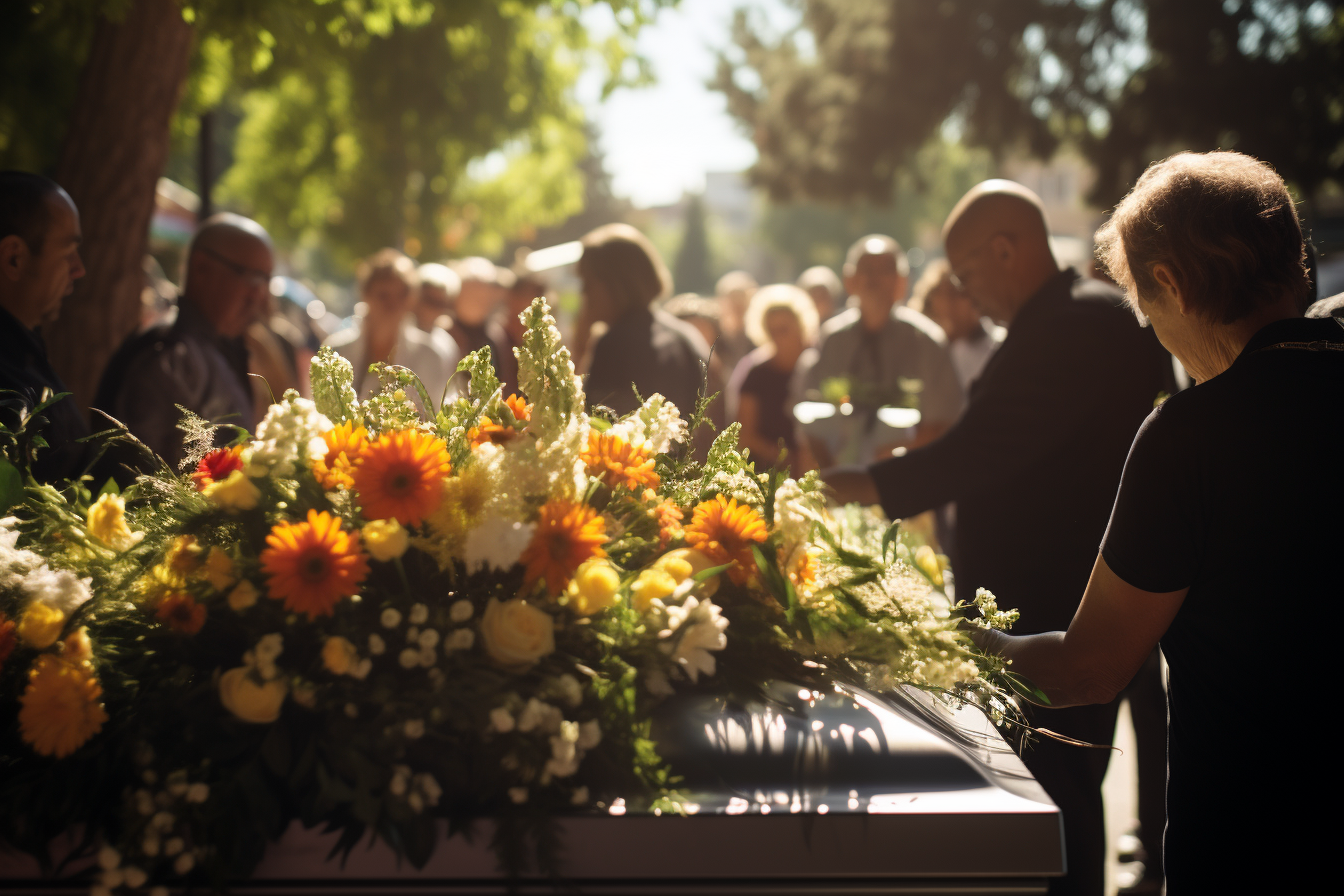
Barbados has a predominantly Christian population, with the Anglican Church having historically deep roots across the island. Other denominations — including Pentecostal, Methodist, Catholic, and Seventh-day Adventist — are also widely practised. Religious observance plays a central role in the way death is marked, and funerals are typically religious ceremonies attended by extended family, friends, and members of the broader community.
Wakes — gatherings held at the home of the deceased on the evening before the funeral — are a deeply rooted tradition in Barbadian culture. They offer community members the opportunity to pay their respects, extend condolences to the bereaved family, and come together to share food, music, and memories of the person who has died. This collective approach to mourning means funerals can be large, emotionally resonant social occasions.
The funeral service itself is usually held in a church, followed by burial in a cemetery. Music, hymns, and eulogies form an integral part of the ceremony. Mourning attire is traditionally black or dark-coloured clothing. In a small island community, news of a death tends to travel quickly, and it is considered a mark of respect for acquaintances to offer condolences to the bereaved family in person or by message. Expats should be aware of these community expectations and the considerable importance placed on ensuring someone receives a dignified and well-attended farewell.
What must you do when someone dies in Barbados? Who do you notify, how quickly, and in what order?
The steps below describe the required process following a death in Barbados. Acting promptly is essential, both from a legal standpoint and for practical reasons — particularly in a tropical climate where the care of remains is time-sensitive.
- Obtain a Medical Certificate of Cause of Death. A registered medical practitioner — either the treating physician or the doctor who attended the deceased — must certify the cause of death. Where the death is sudden, unexplained, or occurred under unusual circumstances, the matter must be reported to the police and the coroner may need to be involved before any certificate can be issued.
- Notify the police (if required). In the event of an unexpected, sudden, violent, or unexplained death, contact the Royal Barbados Police Force without delay. They will determine whether a coroner’s inquest is warranted. An inquest may delay both the release of the body and the issuing of a death certificate.
- Contact a licensed funeral home. A funeral director will arrange for the removal of the body from the place of death, ensure its proper storage, and guide the family through the administrative steps involved. Well-established Barbados funeral homes include Lyndhurst Funeral Home and Serenity Hills Funerals.
- Give formal notice of death. A Notice of Death must be submitted within five days of the death occurring. This is a legal requirement in Barbados.
- Register the death. Where the death falls within the jurisdiction of District “A”, registration must take place at the Registration Department, Whitepark Road, Bridgetown. Deaths in other parishes should be registered at the appropriate district office. The medical certificate of cause of death and any other relevant documentation should be brought to the registration appointment.
- Notify the deceased’s consulate or embassy (for foreign nationals). If the deceased was a foreign national, their country’s embassy or consulate in Barbados should be contacted as soon as possible. They will advise on reporting requirements in the home country and provide assistance with repatriation if needed.
- Notify relevant institutions. Inform banks, pension providers, insurers, landlords, and any government bodies — such as social security or immigration authorities — of the death. Certified copies of the death certificate will typically be required.
- Obtain copies of the death certificate. Registration of a death carries no charge; however, a fee of BDS $5.00 per copy applies to the death certificate, and BDS $10.00 per copy for the “Cause of Death” certificate. It is advisable to obtain multiple certified copies, as these will be required for estate administration, insurance claims, and repatriation purposes.
How is a death officially registered in Barbados, and what documents are needed?
Death registration in Barbados falls under the authority of the Registration Department of the Supreme Court, situated at the New Supreme Court Complex on Whitepark Road, St. Michael. The department is responsible for recording all vital events — births, deaths, and marriages — that occur in Barbados and for issuing certified documentary evidence of those events.
To register a death, you will generally be required to present the following: the medical certificate of cause of death, signed by a registered physician; the deceased’s identification documents (passport, national identity card, or equivalent); and a completed application form. Death certificates are priced at BDS $5 per copy, while certificates specifying the cause of death cost BDS $10 per copy. It is advisable to confirm current fees directly with the Registration Department, as charges are subject to revision.
The Registration Department also handles applications for grants of probate and letters of administration, making it the central authority for both the registration of deaths and the subsequent administration of estates. The department can be contacted by telephone at 1-246-535-9700 or by email at [email protected]. Applications may be submitted in person or sent by post to the address above.
What happens if a foreign national dies in Barbados — what are the specific steps for notifying their home country’s embassy or consulate, and what role does the consulate play?
When a foreign national passes away in Barbados, their home country’s embassy or consulate should be informed as soon as possible — ideally on the same day as the death or the following day at the latest. For many countries, the consulate is located in Bridgetown; for others, it may be accessible through a regional embassy, often based in Trinidad and Tobago. Your government’s official foreign affairs website will provide the correct contact details.
The consulate’s role is advisory and facilitative rather than administrative. It cannot override Barbadian law or local procedures, but it can offer invaluable practical assistance. In particular, the consulate can: supply a list of local lawyers and funeral directors; help communicate with the deceased’s family in their home country; issue an emergency travel document for a family member travelling to Barbados to assist; support the facilitation of repatriation; and notify the relevant authorities in the home country of the death, including recording it in the consulate’s own registers.
Family members and next of kin should also contact the deceased’s travel or health insurer at the earliest opportunity, as most international policies maintain a dedicated emergency assistance line to coordinate practical matters, including the repatriation of remains. All receipts and documents should be retained carefully, as these are commonly needed when submitting insurance claims.
How are funerals typically arranged in Barbados, and what are the usual options for burial or cremation?
Funerals in Barbados are organised through licensed funeral homes, which oversee the entire process from the initial collection of the body through to interment or cremation. Once a funeral director has been engaged, they will guide the family through the relevant legal requirements, assist with all necessary paperwork, and coordinate arrangements with the church or cemetery. Given the tropical climate of Barbados, it is advisable to contact a funeral home as promptly as possible after a death occurs, as the preparation of remains is time-sensitive.
Burial remains the most traditional and prevalent choice in Barbados, reflecting the island’s deeply Christian cultural heritage. Interments take place in cemeteries administered by parish councils or private operators across the island, and a church or chapel service typically precedes burial.
Cremation is increasingly chosen in Barbados for its practicality, flexibility, and comparative affordability, offering a dignified alternative to conventional burial while enabling families to select arrangements that suit their circumstances and preferences. Funeral homes such as Lyndhurst Funeral Home and Serenity Hills Funerals provide a range of cremation options. These include cremation accompanied by a full funeral or memorial service held before or after the cremation, as well as direct cremation — a straightforward and economical option without a formal service. Ashes may be retained by the family, interred, or scattered at sea with the appropriate permissions in place.
What are the approximate costs of a funeral in Barbados, and are there any state or insurance-based funds that can help cover them?
Funeral costs in Barbados depend on the type of service selected, the funeral home engaged, and whether burial or cremation is chosen. As a general indication (as of 2025), a basic direct cremation in Barbados typically begins at around BDS $3,000–$5,000 (approximately USD $1,500–$2,500), while a full traditional burial service encompassing the casket, church ceremony, and interment can range from BDS $10,000 to BDS $25,000 or above, depending on the choices made. These are approximate figures — families should request a detailed, itemised price list directly from the funeral home they select, as costs differ between providers.
Additional expenses to take into account include the cemetery plot, headstone or memorial marker, floral arrangements, printed orders of service, and — for foreign nationals — embalming and the documentation required for repatriation, which can substantially increase the overall cost.
Barbados does not have a comprehensive state-funded funeral assistance programme comparable to, for example, the UK’s Funeral Expenses Payment scheme. However, the Barbados National Insurance Scheme (NIS) does offer a death grant to eligible contributors and their dependants. The amount payable and the eligibility conditions may change over time; current terms should be confirmed with the National Insurance Department. Many international health and travel insurance policies include a repatriation or local funeral benefit — policy terms should be checked carefully. Pre-paid funeral plans are available through some Barbadian funeral homes and represent a worthwhile consideration for long-term residents.
What is the process for repatriating the remains of a foreign national from Barbados to another country?
Repatriating remains from Barbados is a multifaceted process that involves satisfying both Barbadian legal requirements and those of the destination country. A licensed funeral home with experience in international repatriation should be appointed from the outset, as they will manage the bulk of the documentation and logistics on the family’s behalf.
The process generally encompasses the following stages: securing the Barbadian death certificate and cause of death certificate; having the body embalmed to the standard required by the receiving country (most countries mandate embalming for human remains transported internationally); obtaining a Freedom from Contagion certificate from the Ministry of Health confirming that the body presents no public health risk; securing a Burial Transit Permit (sometimes referred to as an export permit for human remains) from the Barbadian authorities; and working with the receiving country’s consulate or embassy in Barbados to ensure all of their specific requirements are fulfilled.
The destination country may impose its own conditions — such as a particular type of sealed, zinc-lined casket, documentation in its official language, or apostille authentication of Barbadian paperwork. The home country’s consulate in Barbados will advise on these requirements. The overall process typically spans one to three weeks, depending on the circumstances surrounding the death, whether a coroner’s inquest has been initiated, and airline scheduling. The financial cost of repatriation can be considerable — often running to several thousand US dollars before airline freight charges are added — making travel insurance with a repatriation benefit an extremely important safeguard for expats living in Barbados.
What happens to the estate of someone who dies in Barbados — how does probate or estate administration work, and are there inheritance taxes?
When a person dies in Barbados leaving assets behind, those assets must ordinarily pass through a formal legal process before they can be distributed. If the deceased left a valid will, the executor named in that document applies to the Registration Department for a Grant of Probate. Where no will exists, or where no executor is available to act, an administrator is appointed by the court following an application for Letters of Administration. The Registration Department of the Supreme Court processes applications for both grants of probate and letters of administration.
The process involves lodging the will (if one exists), a sworn affidavit, a schedule of the deceased’s assets and liabilities, and the applicable court fees. Once satisfied, the court issues the grant, which authorises the executor or administrator to gather in assets, settle debts, and distribute what remains to the beneficiaries. The timeframe depends on the complexity of the estate and whether the grant is challenged; in straightforward cases, administration is typically completed within several months to a year.
Notably, Barbados imposes no inheritance tax or estate duty on the estates of deceased persons. This makes Barbados comparatively attractive from an estate planning perspective when set against jurisdictions such as the United Kingdom, which charges inheritance tax at 40% on estates exceeding the nil-rate band threshold. Expats should nevertheless be aware that their home country may still impose estate or inheritance tax on their worldwide assets, regardless of where they were residing at the time of death. Advice from a cross-border tax specialist and a Barbadian estate attorney is essential to ensure your estate plan is effective across all relevant jurisdictions.
If an expat dies without a will in Barbados, what happens to their assets under local intestacy laws?
When a person dies in Barbados without leaving a valid will — known legally as dying intestate — their estate is distributed in accordance with Barbadian intestacy law, principally set out in the Succession Act, Cap. 249 of the Laws of Barbados. The legislation establishes a hierarchy of beneficiaries, with a surviving spouse and children taking precedence, followed by other relatives in descending order of proximity.
In general terms, where the deceased is survived by both a spouse and children, the estate is divided between them according to the prescribed formula. Where there is no surviving spouse or children, the estate passes to other relatives — such as parents, siblings, or more distant kin. If no qualifying relatives can be identified, the estate may ultimately revert to the Barbados government through the legal process known as bona vacantia.
For expats, dying intestate in Barbados creates particular difficulties. Assets located in Barbados — such as real property, bank accounts, or a registered vehicle — are likely to be governed by Barbadian intestacy rules. Assets held in other countries may be subject to the intestacy laws of those respective jurisdictions. This can lead to an unintended distribution of assets that may bear little resemblance to what the deceased would have wished, and may significantly prolong administration owing to cross-border legal proceedings. Preparing a valid will — ideally one that addresses assets in each relevant jurisdiction — is therefore strongly recommended for any expat making their home in Barbados.
Frequently Asked Questions
Will my international health insurance be accepted for end of life care in Barbados?
The majority of reputable international health insurance policies are accepted by private healthcare providers and nursing agencies operating in Barbados. However, the extent to which palliative or hospice-type care is covered varies considerably from one policy to another. It is important to review your policy’s terms carefully before a claim becomes necessary, and to inform your insurer promptly upon receiving a terminal diagnosis. The public Queen Elizabeth Hospital provides care to all residents, but specialist palliative services outside the QEH will in most cases require either private funding or appropriate insurance coverage.
Do I need documents in Barbados’s official language, or are foreign documents in English valid?
English is the official language of Barbados, so documents originally prepared in English — for example, from the UK, Canada, Australia, Ireland, or the USA — do not require translation. Documents in any other language will need to be accompanied by a certified English translation. Where authentication of foreign documents is required, apostille certification under the Hague Convention is the recognised method for documents issued by contracting states.
How long does the process of repatriating remains typically take?
Where the death is straightforward — with a clear cause of death and no coroner’s inquest — repatriation typically takes between one and three weeks from the date of death. If a coroner’s inquest is ordered, for instance in cases of sudden or unexplained death, the process can be significantly longer, potentially extending to several weeks or even months. Appointing an experienced local funeral home and engaging both the consulate and insurer from the outset will help to minimise unnecessary delays.
What support is available to bereaved family members remaining in Barbados?
Several private home care and palliative care providers in Barbados offer bereavement support, helping families navigate their grief with compassionate guidance. The Barbados Association of Palliative Care also extends community-based support to those who have been bereaved. For families of faith, churches and religious communities across the island represent a meaningful source of pastoral care and consolation. The treating physician can provide referrals to professional counselling services. Expats who belong to international community networks or expatriate associations on the island may also find peer support and practical assistance through those connections.
Does the Barbados National Insurance Scheme (NIS) pay a death benefit?
Yes, the Barbados National Insurance Scheme pays a death grant to the estate or nominated beneficiary of a qualifying contributor. The amount payable is determined by the individual’s contribution record and the NIS rules applicable at the time of death. Eligibility for non-nationals depends on their history of contributions to the Barbados NIS system. Expats who have been employed and made NIS contributions in Barbados may qualify; those who have not contributed to the scheme are unlikely to be eligible. Current rates and eligibility criteria should be confirmed with the National Insurance Department.
Can a will made in another country be used to administer an estate in Barbados?
A foreign will may be recognised in Barbados provided it was validly executed in accordance with the law of the country where it was made. Even so, the executor will still be required to apply to the Barbados Registration Department for a Grant of Probate — or, where applicable under Barbadian procedure, to reseal a foreign grant. This process is generally more complex and time-consuming than administering a will drawn up under Barbadian law. Any expat holding significant assets in Barbados is strongly advised to have a Barbados-specific will prepared by a local attorney.
Is embalming required for burial in Barbados?
Embalming is not a statutory requirement for local burial in Barbados, although funeral homes may recommend it depending on the circumstances of the death and the time elapsed before the funeral takes place. For international repatriation, embalming is typically mandated by most receiving countries and by airlines carrying human remains. Your funeral director will advise on precisely what is necessary for your particular situation.
Who should I contact first if a family member dies unexpectedly in Barbados?
In the event of a sudden or unexpected death, emergency services should be called immediately — dial 211 for an ambulance, or 211/911 for the police. The police must be informed of any unexpected death, as the coroner may need to determine whether an inquest is required. Once the immediate legal obligations have been addressed, a licensed funeral home should be contacted to arrange for the care of the remains. The deceased’s home country consulate and their travel or health insurer should then be notified promptly. It is important to keep careful records of all contacts and documentation from the outset, as these will be needed for registration, insurance claims, and repatriation purposes.