
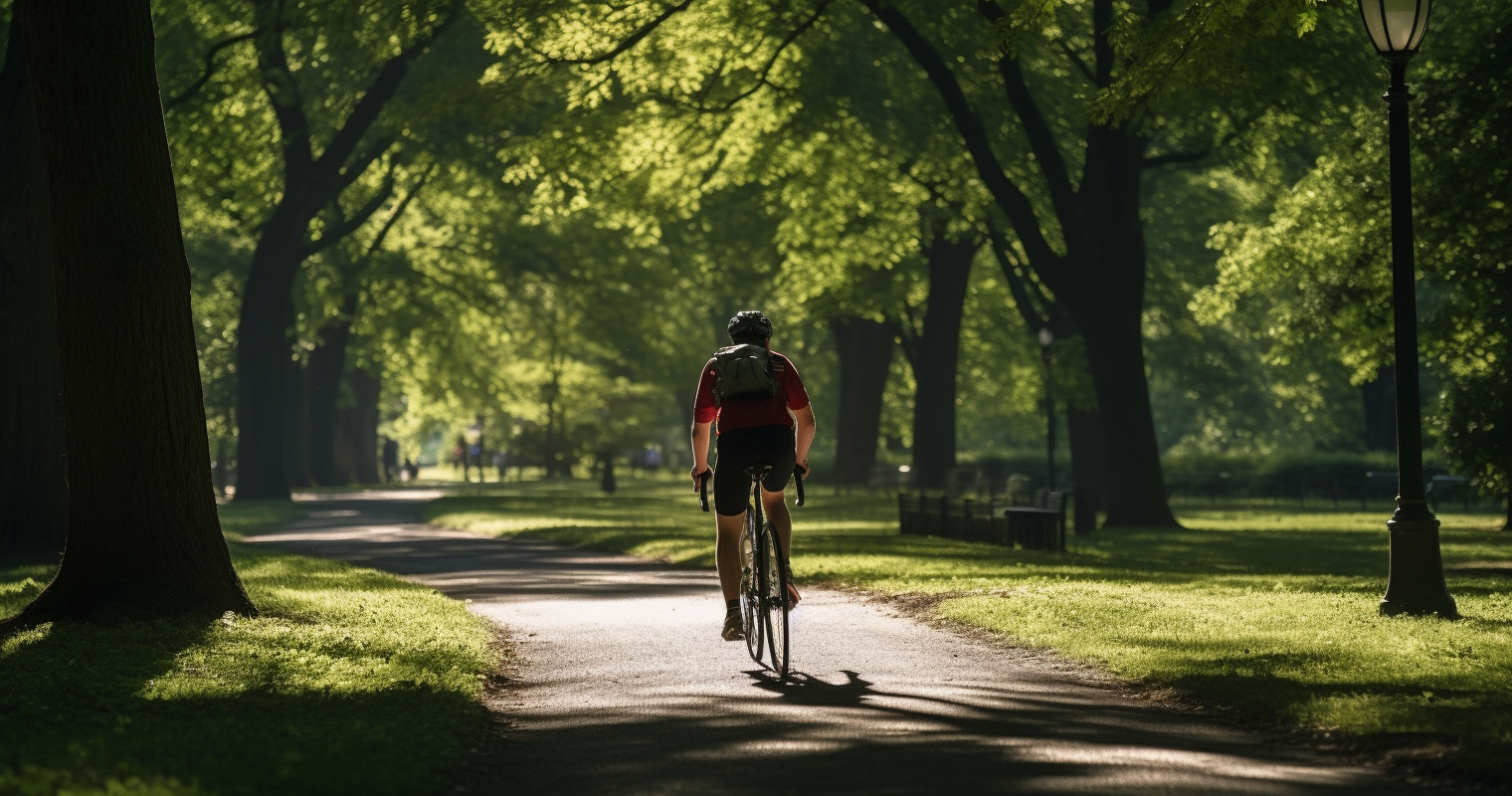
Cycling in Bermuda occupies a niche but growing role in island life. While cars and scooters dominate daily transport and dedicated bike lanes do not exist on public roads, the island’s compact size, low speed limits, and the celebrated Bermuda Railway Trail make cycling both a practical and scenic option for residents and visitors alike.
| Item | Details |
|---|---|
| Dedicated bike lanes | None on public roads (as of 2025) |
| Railway Trail length | Approx. 18 miles (29 km), non-contiguous |
| Island road speed limit | 35 km/h (approx. 22 mph) — though often exceeded |
| Bicycle rental cost | From approx. $40/day for a standard bike; ~$75/day for electric bikes (as of 2024) |
| Helmet requirement | Mandatory for all cyclists |
| Bikes on ferries | Permitted on public ferry services (free of charge) |
How popular is cycling as a form of transport in Bermuda?
Cars and scooters so completely dominate the island’s transportation that bicycles are often seen as a curiosity, particularly any form other than drop-bar road bikes or full suspension mountain bikes. Cycling as a mode of daily commuting remains uncommon, though the island’s compact geography makes it theoretically practical for shorter journeys.
On a recent visit, it became clear that cycling has blossomed in Bermuda, with a rich and growing scene bolstering the sport’s popularity on the island — a natural development given its compact size. The shift has been gradual, with cycling increasingly visible among fitness enthusiasts, tourists, and a small but dedicated community of local riders.
Bermudians are limited to one car per household and there are no rental cars on the island. This restriction, unusual by the standards of most countries, nudges both residents and visitors toward alternative modes of transport. Since tourists cannot rent cars on the island, biking is a cost-effective way to get around.
There are so relatively few people cycling in Bermuda today that there is, from what can be gathered, no effective cycling etiquette to speak of. This reflects the current state of cycling as more of a leisure and tourist activity than an embedded part of daily transport culture — though that picture may be changing as local clubs and events grow in prominence.
A key local quirk to be aware of: in Bermuda, “bikes” typically refers to the popular two-wheeled scooters, while bicycles are known as “pedal bikes” or “push bikes.” When booking a bicycle for rent, it is important to specify “pedal bike” to avoid being handed a scooter.
What are the rules and practicalities of cycling on Bermuda’s roads?
Cyclists in Bermuda must always stay on the left when riding, and wearing a helmet is mandatory. Like the road rules in the UK and Australia, Bermuda follows left-hand traffic — something worth keeping in mind if you are used to riding on the right.
Speed limits are low at around 20 mph (approximately 35 km/h), and drivers are accustomed to watching for people at the edge of the road, though drivers are generally patient and wait until it is safe to pass at a good distance. That said, speed limits are not always observed. Although the official speed limit on the island is 35 km/h, it is quite common to find locals driving cars or motorbikes at over 50 km/h.
Roads shared with motorists can get congested, particularly during the morning and evening rush hour to and from the City of Hamilton, and a number of roads are narrow, winding, and lack any shoulder. Riders who are not comfortable sharing the road in these conditions are strongly advised to stick to the Railway Trail or quieter parish roads, particularly on weekends.
A good idea is to cycle on Sundays when road traffic is less, as on weekdays there can be heavy traffic on some roads. Avoiding peak commuting hours on weekdays is the most important practical step for a safer and more enjoyable ride on Bermuda’s public roads.
Buses in Bermuda are not equipped with bike racks and bicycles are not allowed on board. However, you can take your bike aboard various public ferries free of charge, and then begin cycling from a different part of the island. This makes the ferry network a useful tool for planning one-way cycling routes across the island.
What is the cycling infrastructure like in Bermuda?
There are no bike lanes in Bermuda. Unlike cities such as Amsterdam or Copenhagen — or even many mid-sized cities in North America and Europe that have invested heavily in segregated cycling infrastructure — Bermuda’s road network provides no dedicated space for cyclists on public roads. This is a significant consideration for anyone planning to use a bicycle as a primary mode of transport.
The roads in Bermuda are narrow and twisty, and most don’t even have a sidewalk, much less a shoulder or bike lane. In practice, this means cyclists share the carriageway directly with motor vehicles. While the island’s low speed limits and generally patient driving culture mitigate some risk, the physical road environment remains a genuine challenge.
Cycling infrastructure in Bermuda is limited but centred on the Bermuda Railway Trail, a 35-kilometre (22-mile) multi-use path following the route of a former narrow-gauge railway. This trail is the backbone of the island’s cycling provision and the closest thing Bermuda has to a dedicated cycling corridor. Beyond it, infrastructure is largely absent.
The terrain on the island includes coastal paths, sections of the historic Railway Trail with both paved and dirt surfaces, and limestone formations. While generally low in elevation, the island features hills — such as the ascent to Gibbs Hill Lighthouse — providing varied challenges for cyclists. The mixed surface conditions mean that a mountain bike or hybrid is generally better suited to Bermuda than a lightweight road bike.
With a year-round average temperature of 70°F (21°C), Bermuda offers ideal weather for cycling. The absence of extreme cold or sustained rainfall for most of the year means that cycling remains viable year-round, even if summer heat and humidity can make longer rides demanding. Ideal seasons to ride are autumn, late spring, and early summer.
What is the Bermuda Railway Trail and how do cyclists use it?
The Railway Trail dates back to 1926, when Bermuda’s government granted the Bermuda Railway Company a 40-year charter. Private cars were not allowed on the island at the time, so the railway was the primary means of cross-island passenger and cargo transportation. Completed in 1931, it became known as the “Old Rattle and Shake” due to the bumpiness of the ride.
After the end of World War II, Bermuda saw a spike in automobile transportation. Unable to keep up with expensive maintenance costs, the railway was decommissioned in 1948. In 1964, the abandoned railway track was transformed into a public 18-mile nature trail, later recognised as a Bermuda national park.
By far the island’s finest bicycle path, the Railway Trail is an 18-mile, non-contiguous pedestrian and bicycle path. It consists of seven sections, each with its own character — some pass over oceanside bridges, while others meander through shady forests.
The trail begins east of the island at the St. George’s train station and ends west of the island at Somerset Village. Motorised vehicles are not allowed on the trail. This makes it the only truly car-free cycling environment available in Bermuda, and the safest option for families, beginners, and anyone unfamiliar with the island’s roads.
There are seven (some sources say nine) sections to the Railway Trail, ranging from one mile to three miles each, with its own distinct charm. There are paved sections, bridges, and some steep slopes. The trail is not continuous, so there are plenty of entry points scattered throughout the island, and it periodically intersects with busy roads.
There is no official map for the Railway Trail, but staff at the Visitor Services Centre in the City of Hamilton and at the Royal Naval Dockyard can help plan your route. Cycling apps such as Komoot and AllTrails also carry user-generated route data for the trail and surrounding roads.
What are the best cycling routes in Bermuda?
Beyond the Railway Trail, Bermuda offers a variety of road and mixed-surface routes across its parishes. A safe choice for beginning riders is the Bermuda Railway Trail; another good stretch is the length of South Road between Warwick and Southampton parishes, since it tends to be wider than most others and has spectacular ocean views for most of the ride.
For those seeking steep climbs, Devonshire and Smith’s parishes offer Collector’s Hill and Knapton Hill, both of which afford riders bird’s-eye views from their apex. Another challenging climb is Lighthouse Road in Southampton, which leads to Gibbs Hill Lighthouse — the oldest cast-iron lighthouse in the world.
For a more scenic and less exhausting cycle, Spittal Pond in Paget Parish is a wildlife sanctuary with bike paths running along seaside cliffs, and the stretch of South Road through Sandys Parish takes riders across Somerset Bridge — the smallest drawbridge in the world — then along Somerset Road to Fort Scaur Park.
The most popular touring cycling route, according to Komoot, is the Somerset Bridge–Glass Beach loop from Main Island, a 30.2-mile (48.6 km) trail that takes approximately three hours to complete, featuring coastal views and passing the historic Somerset Bridge.
There are around 30 “Tribe Roads” in Bermuda — narrow, often quiet roads that cross the parishes between the north and south shores — which can provide an excellent and scenic cycling experience. These are best explored on a mountain bike or hybrid, given their variable surfaces.
Ferries often accommodate bikes, allowing easy movement between different parts of the island to start or finish a ride. For routes like the Bermuda Railway Trail, there are numerous access points across the island. This means you can plan point-to-point rides and return by ferry rather than retracing your route.
How can I rent a bicycle in Bermuda?
A handful of cycle liveries and specialty shops rent bicycles in Bermuda, most available by the day or for the week. When enquiring, always ask for a “push bike” or “pedal bike,” since Bermudians use the word “bike” for motorised scooters.
Pedego Electric Bikes, based in St. George’s, offers electric bicycles including comfort cruisers, mountain bikes, city bikes, and child trailers. As of 2024, a day rental costs $75 USD and a weekly rental costs $400 USD. Electric bikes are a practical option for those who want to cover more ground without exerting themselves on hilly sections.
You will mostly find mountain bikes available for rental on the island, which allows you to go anywhere. Cycles can be obtained from most island hotels, but renting from a dedicated shop is generally cheaper. On average, a bicycle rental in Bermuda costs $30 to $45 per day depending on the type of bike.
Some hotels, including the Hamilton Princess, offer complimentary bicycles for guests’ use. It is worth checking with your accommodation before booking a separate rental, as this can represent a useful saving — especially for shorter stays.
Is there a cycling community in Bermuda?
There are several high-end bike shops, social and competitive cycling clubs, and the annual Bermuda “End-to-End” event, where participants can run, walk, or bike the island from end to end. The sport has spawned a growing microculture that brings locals and visitors together in a way that few visitors rarely get to see.
Those interested in joining a group cycle or race should contact the Bermuda Bicycle Association at bermudabicycle.org. Another good source of information for local cycling is Winner’s Edge, the island’s top bike shop, located on Front Street in the City of Hamilton.
As cycling becomes more prevalent, motorists are increasingly aware and respectful on Bermuda’s two-lane roads. This cultural shift is gradual but meaningful: the growing visibility of organised group rides and events is slowly normalising cycling as both a sport and a transport mode in a society that has historically been dominated by scooter culture.
Measuring just 21 square miles, with an excellent trail system, Bermuda’s compact size makes it well suited for cyclists who want to explore the whole country on two wheels. For expats settling on the island, the combination of a strong community, the Railway Trail, and the island’s inherent charm make cycling a genuinely rewarding way to get to know Bermuda beyond its main roads and tourist hotspots.
Frequently asked questions
Are there bike lanes in Bermuda?
No. There are currently no dedicated bike lanes anywhere on Bermuda’s public road network. Cyclists share the carriageway with motor vehicles. The Bermuda Railway Trail is the only car-free route on the island and is the safest option for those who prefer not to ride alongside traffic.
Is cycling a common way to commute in Bermuda?
Not particularly. Cars and scooters dominate daily transport in Bermuda, and cycling as a regular commuting method remains uncommon. However, the island’s compact size and the one-car-per-household rule do make cycling a viable alternative for some residents, and the community is growing.
Do I need a helmet to cycle in Bermuda?
Yes. Wearing a helmet is mandatory for all cyclists in Bermuda. Most bicycle rental shops provide one as part of the rental package, but it is worth confirming when you book.
Can I take my bicycle on Bermuda’s public ferries?
Yes. Bermuda’s public ferry service (Sea Express) accommodates bicycles on board, and this is free of charge. Bikes are not permitted on public buses, however, so the ferry network is the best way to combine cycling with public transport for longer or one-way routes.
What is the best time of year to cycle in Bermuda?
Bermuda enjoys a mild climate year-round, with an average temperature of around 70°F (21°C). Late spring, early summer, and autumn are generally considered the most pleasant seasons for cycling. Midsummer can be hot and humid, while the June-to-November hurricane season brings the possibility of disrupted weather.
What type of bicycle is best for riding in Bermuda?
A mountain bike or hybrid is the most versatile choice for Bermuda. The Bermuda Railway Trail includes both paved and unpaved dirt sections, and the island’s roads — particularly the Tribe Roads and parish back roads — can be uneven. Lightweight road bikes are less well suited to these mixed conditions.
Is the Bermuda Railway Trail suitable for families and beginners?
Yes. The Railway Trail is non-contiguous and can be accessed at multiple points around the island, meaning you can tackle just one or two sections at a time rather than the full 18 miles. It is free of motorised vehicles and is widely regarded as the safest and most scenic cycling option in Bermuda, suitable for all levels.
Where can I find out about organised cycling clubs or events in Bermuda?
The Bermuda Bicycle Association (bermudabicycle.org) is the main point of contact for group rides, races, and cycling events. The annual “End-to-End” charity event, in which participants ride the full length of the island, is a highlight of the local cycling calendar and welcomes both residents and visitors.