
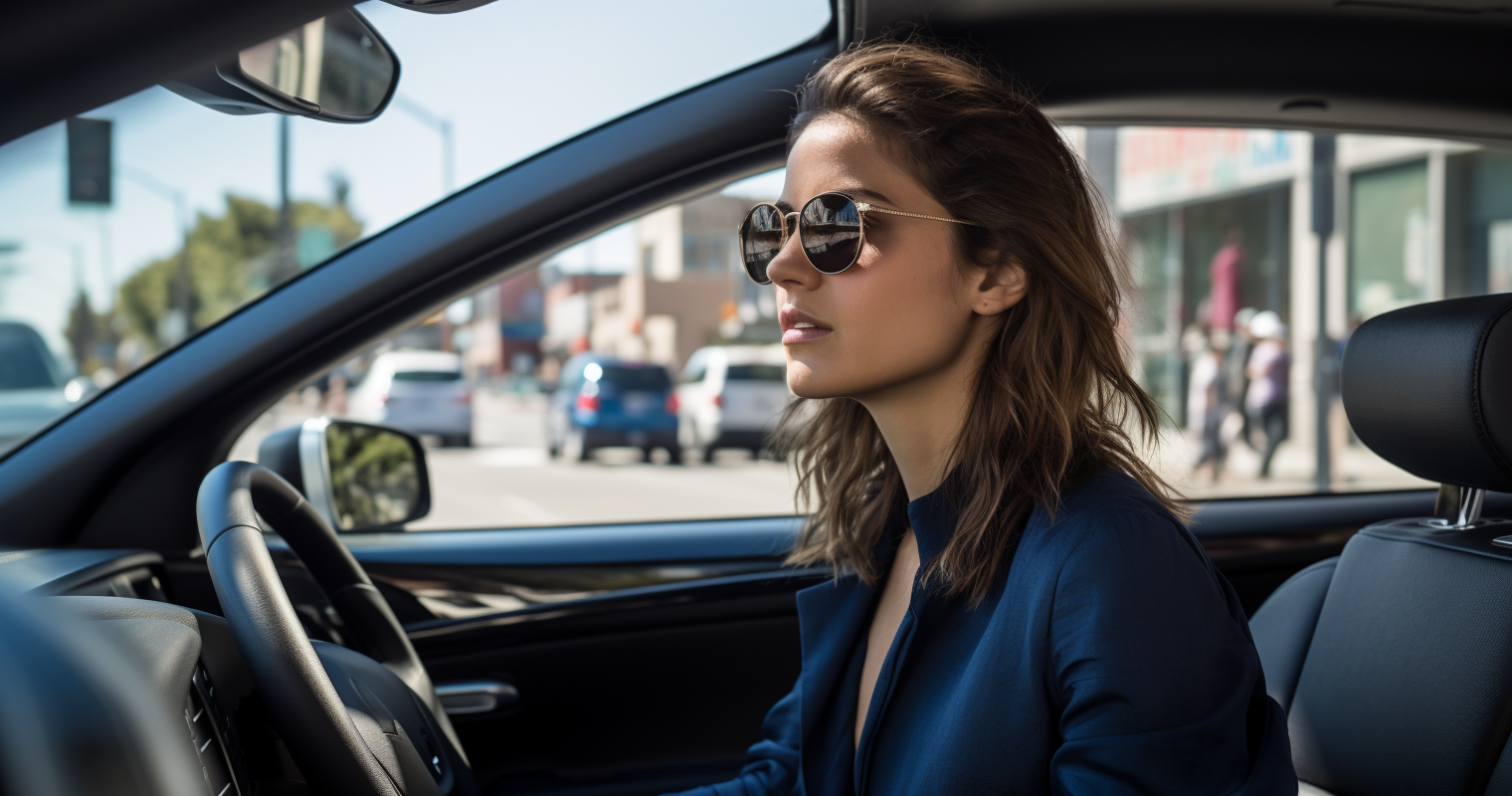
Driving in Bermuda means navigating narrow, left-hand roads with some of the lowest speed limits in the world — a maximum of 35 kph (21 mph) island-wide. Residents may own one car per household, while non-residents cannot rent or drive four-wheeled vehicles. Understanding local rules, road signs, and parking regulations before you get behind the wheel is essential for staying safe and legal.
| Item | Details |
|---|---|
| Side of the road | Left (as of 2025) |
| Speed limit — Hamilton city | 25 kph / 15 mph (as of 2025) |
| Speed limit — rest of island | 35 kph / 21 mph (as of 2025) |
| Blood alcohol limit | 0.05% BAC (as of 2025) |
| Emergency number | 911 |
| Cars per household | One registered vehicle maximum (as of 2025) |
What is road safety like in Bermuda?
Main roads, while generally in good condition, are extremely narrow and tend to be bordered by heavy vegetation or stone walls. This makes Bermuda’s roads markedly different from the wide, multi-lane highways found in many other countries, and even experienced drivers should take time to adjust before venturing out.
Traffic in Bermuda moves on the left side, and the roads are very narrow, often with no defined shoulder. Vehicles often stop on the side of the road, blocking one lane of traffic, which can catch new arrivals off guard. Patience and anticipation are key skills on Bermudian roads.
Road accidents — particularly involving motorbikes — are common and can result in serious injuries or death. Motor scooters present the greatest road peril in Bermuda; local operators tend to exceed the speed limit more than other drivers, and they will often pass on the left or right with no warning. Expats who are new to two-wheeled transport should treat scooter riding with considerable caution.
The Bermuda Police Service regularly urges all road users to exercise greater care, following concerning numbers of serious road traffic collisions. Speeding, impaired driving, and distracted driving — particularly the use of mobile phones — continue to be key contributing factors to collisions that result in injury or worse.
With schools on summer break and an increase in tourist arrivals, roads see significantly more activity during peak periods. Visitors unfamiliar with local traffic regulations, along with children travelling to summer camps or heading to the beach, are especially vulnerable. Resident expats should bear this in mind and reduce speed accordingly in residential areas.
The Bermuda Road Safety Council is committed to providing the motoring public with information and tools to make safe decisions when driving on Bermuda’s roads. Educated drivers are cautious drivers, and more cautious drivers means a better overall experience on the road for everyone. You can find their resources at roadsafety.bm.
What equipment are you legally required to carry in your car?
When driving in Bermuda, you should always carry your valid driving licence (and IDP if applicable), vehicle registration document, valid insurance certificate, and your passport or national ID. These are the core documents required by law and can be requested by police at any time.
Rental car drivers should also carry the rental agreement. Police may request these documents during routine checks. Always keep originals with you — photocopies are not accepted.
Seatbelts are mandatory for all occupants. Children must use appropriate restraint systems based on their age and height. Child safety seats should be used in the front and rear seats of the vehicle if the child is under 4 years old.
Winter tyres are not required in Bermuda — standard tyres are sufficient for normal driving conditions. The legal minimum tread depth is 1.6 mm. Studded tyres are prohibited in Bermuda. Ensuring your tyres are road-legal before driving is an important step, particularly as Bermuda’s roads can become slippery in wet weather.
Helmets are a legal requirement when riding any motorbike or scooter. For driving motorbikes, a helmet is required. This applies to both the rider and any passenger. Rental companies are required to provide helmets with scooter hires.
What do you legally need to do after a road accident in Bermuda?
If you are involved in a road traffic collision in Bermuda, you must stop your vehicle at the scene. Leaving the scene of an accident without reporting it is a criminal offence. Your immediate priority should be to check for injuries and call the emergency services if anyone is hurt.
The general emergency number in Bermuda is 911. These numbers are free to call and available 24/7. When calling, be prepared to state your location and the nature of the emergency. Bermuda’s roads can be difficult to describe precisely due to their winding nature, so note any nearby landmarks if possible.
You are required to exchange details with any other parties involved in the incident. This includes your name, address, vehicle registration number, and insurance details. If the police are not called to the scene, you are still legally obligated to report the accident to the Bermuda Police Service as soon as reasonably practicable, particularly where there are injuries or significant vehicle damage.
Hazard warning lights may be used when your vehicle is stationary to warn that it is temporarily obstructing traffic. Never use them as an excuse for dangerous or illegal parking. Switching on your hazard lights after an accident helps alert approaching traffic, especially on Bermuda’s narrow roads where visibility around corners is limited.
You should also notify your insurance company as promptly as possible following any collision. Failing to report an accident to your insurer in a timely manner may affect any claim you make. Keep a written record of the incident, including photographs of any vehicle damage, road conditions, and the positions of vehicles involved.
What are the main driving rules in Bermuda?
Side of the road
The rule of the road in Bermuda is to the left. Keep as near to the left as practicable, unless about to overtake or turn to the right. This is similar to the system used in the United Kingdom, Japan, and Australia, but drivers accustomed to right-hand driving should allow themselves extra adjustment time, particularly at roundabouts and junctions.
Speed limits
The maximum speed in the city of Hamilton is 25 kph (15 mph) and 35 kph (21 mph) on the rest of the island. These are among the lowest enforceable speed limits anywhere in the world and are strictly enforced. Unlike many countries where urban speed limits sit at 50 kph or above, Bermuda’s island-wide cap of 35 kph reflects the narrow, winding nature of its roads and the high density of cyclists, pedestrians, and scooters sharing the same routes.
Overtaking
Overtake on the right only. If you overtake, do not cut in. You should never overtake at corners, bends, the brow of a hill, or in any situation where your line of sight is restricted. A solid white line means you may cross the line to overtake if it is safe. You may also park opposite a solid white line unless indicated otherwise.
Drink-driving
The legal blood alcohol limit in Bermuda is 0.05% BAC. Penalties for drink-driving include heavy fines, licence confiscation, and potential imprisonment. This limit is lower than the 0.08% threshold used in some other jurisdictions, so it is advisable not to drink at all if you plan to drive.
Mobile phones
Using a hand-held phone while driving is prohibited. Hands-free systems are permitted. Penalties for mobile phone use while driving typically include fines. This applies whether the vehicle is moving or stationary in traffic.
Right of way
At roundabouts, yield to traffic already circulating. At junctions without signs, give way to traffic approaching from the right. Give priority to buses when you can do so safely, especially when they signal to pull away from stops.
One vehicle per household
All residents of Bermuda are allowed only one automobile (private car) per household. People are prohibited from having more than one registered vehicle per household. This is a unique rule with no direct equivalent in most other countries and applies strictly to residents. Under Bermudian law, non-residents are not allowed to own, rent, or drive four-wheeled vehicles.
Noise and conduct
The horn should be sounded only when it is really necessary. That said, many drivers in Bermuda use a short honk to say hello, so do not be alarmed by this local custom. Unnecessary engine revving and aggressive driving behaviour are discouraged by both law and social convention.
What are the most important road signs and how do traffic lights work?
Traffic signs are there to give guidance, direction, and warning, and when we follow them, our roads are safer. When travelling on the roads, be observant for traffic signs and be ready to adhere to them. Bermuda uses a sign system broadly similar to that used in the United Kingdom, given its status as a British Overseas Territory.
Bermuda has numerous traffic signs which are stated in the TCD Traffic Code Handbook. Upon receiving your driver’s or rider’s licence, a person should know what the many signs state, and every few years they should renew their knowledge of them. The handbook is available from the Transport Control Department (TCD) and is essential reading for new residents.
The key categories of road sign you will encounter include:
- Warning signs — Typically diamond-shaped or triangular with a red border, alerting drivers to hazards such as sharp bends, hidden entrances, school zones, and pedestrian crossings.
- Regulatory signs — Include stop signs, give way signs, no-entry signs, and speed limit indicators. Whether it is a speed sign, stop sign, concealed entrance sign, or give way sign, signs are there for your safety.
- Direction and information signs — Blue or green rectangular signs providing route guidance and distances to key locations such as Hamilton, St George’s, and the airport.
- Road markings — Yellow centre lines indicate lanes; double yellow lines prohibit parking. A solid white line means you may cross the line to overtake if it is safe.
Traffic lights in Bermuda operate on the standard three-colour system:
- Red — Stop and wait before the stop line.
- Amber — Prepare to stop; do not proceed unless stopping would be unsafe.
- Green — Proceed if the way is clear.
In some school zones, there may be a flashing amber light indicating that drivers must slow down and exercise particular caution. When an emergency vehicle such as an ambulance, fire engine, or police car approaches using flashing lights or sirens, do not panic. Consider the route of the emergency vehicle and take appropriate action to let it pass while complying with all traffic signs.
The full set of Bermuda road signs and their meanings is published in the official TCD Traffic Code Handbook, which is freely available online.
Where can you get up-to-date road traffic information?
Staying informed about road conditions, closures, and restrictions is important for daily life in Bermuda, particularly around public holidays when roads are frequently closed for events such as the Bermuda Day parade and cycle race. The following official and established sources are the most reliable:
- Government of Bermuda — Road Safety: The official government portal publishes road safety announcements, police advisories, and road restriction notices. Visit gov.bm/articles/road-safety.
- Transport Control Department (TCD): The TCD is the regulatory authority for all aspects of private and public transport in Bermuda. The Transport Control Department (TCD) — an agency of the Bermuda Government — administers the operation of all motor vehicles on the roads. Their page is at gov.bm/department/transport-control.
- Bermuda Road Safety Council: The Bermuda Road Safety Council is committed to providing the motoring public with information and tools to make safe decisions when driving on Bermuda’s roads. Their website at roadsafety.bm includes educational resources and updates.
- Bermuda Police Service: The BPS issues regular road safety advisories and publishes notices of planned road closures. Follow their official communications for real-time updates.
- Bermuda Weather Service: The Bermuda Weather Service offers real-time updates on conditions, which visitors and residents can use to plan safe travel during adverse weather. Visit weather.bm.
Parking rules vary by location. Look for designated parking areas and always check signs for time limits and payment requirements, especially around Hamilton city centre where restrictions are most actively enforced.
What are the parking rules and permit options in Bermuda?
General parking rules
Parking in Bermuda is governed by a combination of national road traffic law and local authority rules, particularly within the City of Hamilton. As a general rule, you must not park on double yellow lines, in front of entrances or driveways, at bus stops, near fire hydrants, or on any section of road where a no-parking sign is displayed. Vehicles parked illegally may be fined or towed at the owner’s expense.
Hazard warning lights may be used when your vehicle is stationary to warn that it is temporarily obstructing traffic, but never as an excuse for dangerous or illegal parking. Using hazard lights to justify a poorly parked vehicle is not a legal defence and may still result in a fine.
Parking in Hamilton
Hamilton is the commercial and administrative hub of Bermuda and the area where expats in professional sectors — particularly finance, insurance, and reinsurance — are most concentrated. Parking in the city centre is managed by the Corporation of Hamilton.
The EasyPark automated parking system is used in the City and can be topped up at City Hall reception and at retailers throughout the City. Monthly parking permits are available for long-term City Car Parks. For assistance with the barrier car parks, call 531-5252. Monthly permits offer the most convenient and cost-effective solution for expats commuting into Hamilton on a regular basis.
Applications for monthly parking permits in Hamilton can be made online via the Corporation of Hamilton’s parking page. Click to apply for monthly permits for long-term car parks. Access is via swipe card.
Parking in other expat-popular areas
Beyond Hamilton, expats are commonly settled in the parishes of Paget, Devonshire, Pembroke, and Warwick. In these residential areas, on-street parking is generally more available than in the city centre, but residents should still be aware of no-parking zones, particularly near schools and along main arterial roads. In the Town of St George’s — a UNESCO World Heritage Site popular with expats and tourists alike — parking is limited and signposted restrictions should always be observed.
Disabled parking
Bermuda provides designated disabled parking spaces in public car parks and on certain streets, identifiable by the standard blue wheelchair symbol used internationally. These spaces are reserved exclusively for vehicles displaying a valid disabled parking permit issued by Bermuda authorities.
Disabled parking permits in Bermuda are administered through the Transport Control Department (TCD). Applications typically require medical documentation confirming a mobility impairment. Expats with a disability who hold a foreign disabled parking badge — such as the Blue Badge used in the United Kingdom, or an equivalent from another country — should contact the TCD directly to determine whether their badge is recognised or whether a local permit needs to be obtained. Check the official TCD page for current application requirements, as procedures may be updated.
Parking in a designated disabled space without a valid permit is a serious offence and can result in a fine and towing. Expats who require accessible parking as a matter of daily necessity should apply for a local permit as early as possible after establishing residency.
Frequently asked questions
Can non-residents drive a car in Bermuda?
Under Bermudian law, non-residents are not allowed to own, rent, or drive four-wheeled vehicles. Non-residents are not permitted to drive or rent cars in Bermuda; however, small electric vehicles are available to rent. Taxis and the public bus and ferry network are the main alternatives for non-residents.
What is the speed limit in Bermuda?
The maximum speed in the city of Hamilton is 25 kph (15 mph) and 35 kph (21 mph) on the rest of the island. These limits apply to all motor vehicles, including scooters and electric minicars, and are enforced by the Bermuda Police Service.
Do I need an International Driving Permit (IDP) to drive in Bermuda?
Foreign visitors to Bermuda should carry an International Driving Permit alongside their valid national driving licence. An IDP translates your licence into multiple languages and is recognised internationally. Residents who obtain a Bermuda driving licence through the TCD do not require an IDP. Check the current requirements with the TCD before driving.
How many cars can a household have in Bermuda?
All residents of Bermuda are allowed only one automobile (private car) per household. This rule is strictly enforced, and those breaking the law face having their vehicle registration cancelled and prosecution. The Government can and will impound unlicensed and uninsured vehicles, or those not licensed to a specific approved property.
What is the blood alcohol limit for driving in Bermuda?
The legal blood alcohol limit in Bermuda is 0.05% BAC. Penalties for drink-driving include heavy fines, licence confiscation, and potential imprisonment. The safest approach is not to drink at all if you will be driving.
Where can I get a monthly parking permit in Hamilton?
Monthly parking permits are available for long-term City Car Parks in Hamilton. Applications can be submitted via the Corporation of Hamilton’s parking page. The EasyPark automated parking system is used in the City and can be topped up at City Hall reception and at retailers throughout the City.
What should I do if I am involved in a road accident in Bermuda?
Stop your vehicle, check for injuries, and call 911 if emergency services are needed. The emergency number is free to call and available 24/7. When calling, be prepared to state your location and the nature of the emergency. Exchange details with all other parties involved, and report the accident to the Bermuda Police Service if injuries or significant damage have occurred. Notify your insurer as soon as possible afterwards.
Are mobile phones allowed while driving in Bermuda?
Using a hand-held mobile phone while driving is prohibited in Bermuda. Hands-free systems — including Bluetooth, speakerphone, or mounted devices — are permitted. Penalties for mobile phone use while driving typically include fines. Pull over safely if you need to make or take a call without a hands-free setup.