
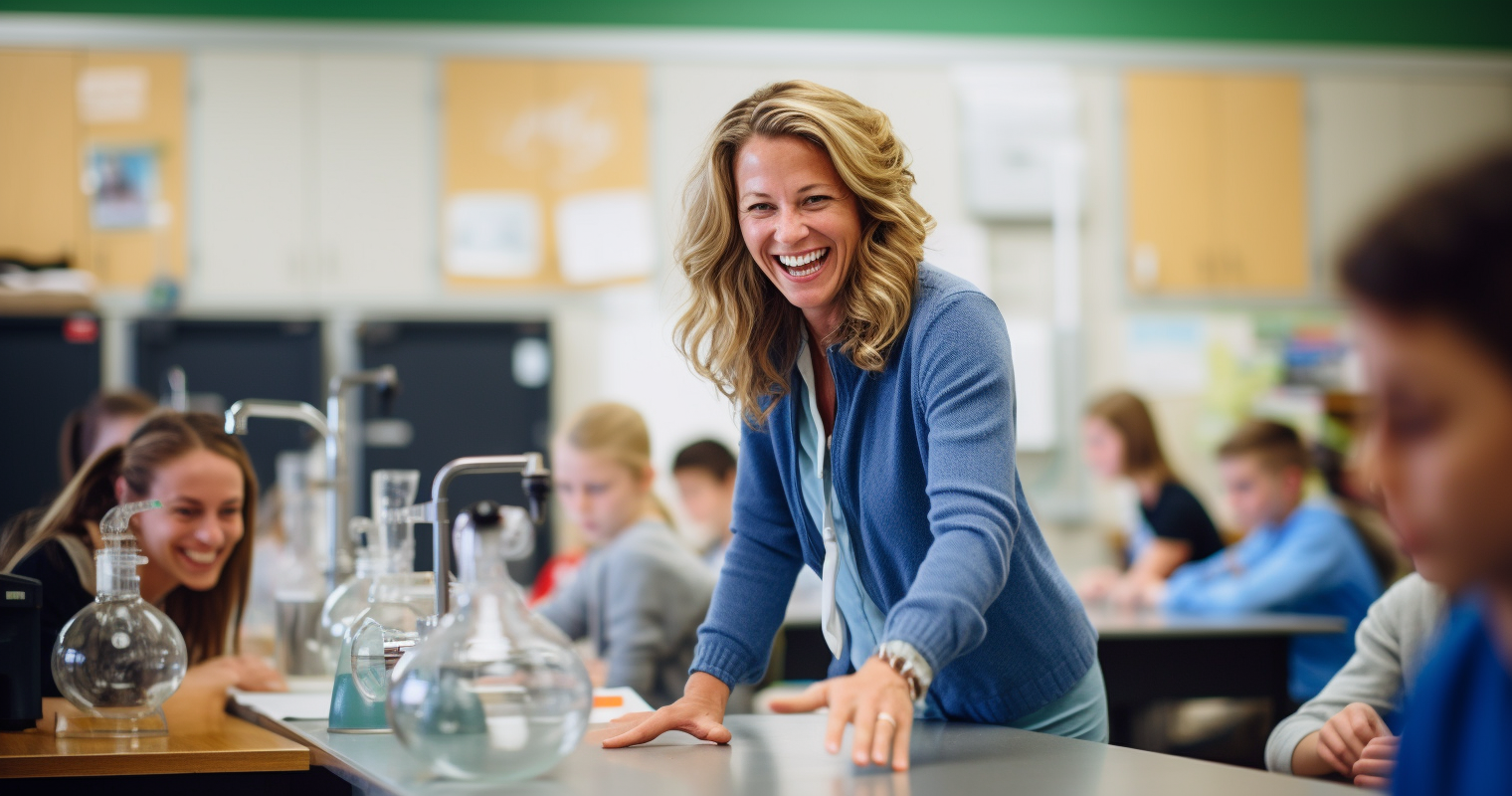
Education in Bermuda is compulsory between the ages of 5 and 16, with free public schooling available up to age 19. The system is structured across preschool, primary, middle, and senior school stages, and is currently undergoing significant reform to transition from a three-tier to a two-tier model. Private schools are well established and widely used, particularly by expatriate families.
| Item | Details |
|---|---|
| Compulsory school ages | 5 to 16 (as of 2024, per the Education Act 1996) |
| Free public education | Available up to age 19 |
| Academic year | September to June (inclusive) |
| Public school leaving qualification | Bermuda School Certificate (BSC) — requires 104 credits |
| Private school fees | Approximately $15,000–$25,000 per year (as of 2024/25) |
| Higher education | Bermuda College (associate degrees and certificates); universities overseas for bachelor’s degrees |
What is the quality of education in Bermuda?
The Department of Education aims to deliver a first-class education to ensure students reach their full potential. The public system has faced scrutiny over the years, and the government has responded with an ongoing programme of reform. The government has remained committed to education reform since 2017, with a focus on ensuring that public education is both modern and accountable, preparing children for success in an ever-evolving world.
The Ministry of Education has dedicated recent years to laying a foundation for comprehensive reform, including the opening of two Parish Schools that now serve students in Years 1 through 8, and the launch of Signature Learning Programmes at both CedarBridge Academy and The Berkeley Institute.
Private schools in Bermuda are widely regarded as offering strong academic outcomes. Warwick Academy, the oldest school on the island, is considered among the strongest academically, with 97% of its students achieving five or more GCSEs at grades 9–4 (A*–C) in 2023. Bermuda High School for Girls sits on a comparable academic level, with 97% of all iGCSE grades in 2022 falling within the 9–4 (A* to C) range.
While approximately 59% of Bermuda’s school children attend the public school system, an increasing number of Bermudians and residents are opting to send their children to private schools despite hefty tuition fees. Despite high fees, many families prefer private schools, primarily because the amenities, exposure to global learning, and overall education standards are generally considered superior, and students tend to be better prepared to qualify for boarding schools or universities abroad.
At what ages is education compulsory in Bermuda?
Compulsory education in Bermuda covers children between the ages of 5 and 16. Education is provided free of charge for students up to 19 years of age. This means that while schooling beyond 16 is optional, students who stay in the public system may do so without cost until they turn 19 or complete their senior school programme.
Under the Education Act 1996, children who are generally between the ages of five and 18 must attend school or be otherwise suitably educated. Depending on when a child’s birthday falls, the compulsory age for that child may begin earlier than five or extend beyond their 18th birthday.
For example, children entering primary school for the first time whose birthdays fall after school starts may be four years of age but close to five. Persons who turn 18 during the school year must remain in secondary school until the end of that school year, per Section 40 of the Education Act 1996. Homeschooling is a legal alternative to school attendance, but parents must register their child with the Ministry of Education and conduct periodic assessments of their child’s progress.
What types of schools are available in Bermuda?
Bermuda’s public school system is currently transitioning from a three-tier model (preschool, primary, middle, and senior) to a two-tier model (parish primary and senior). Here is a breakdown of each stage as it currently stands and is evolving.
Preschool (Age 4)
Preschool is an optional stage of education for children aged 4 years old. There are ten free public preschools in Bermuda for children of this age, and children must attend their local neighbourhood preschool. Class size is maintained at ten students per teacher. Private nursery and Montessori-style settings also accept children from a younger age.
Primary School (Ages 5–11, Years P1–P6)
Primary school is a compulsory stage of education lasting six years, with children entering at age 5. Children may only be admitted to schools in the same zone in which they are resident. The curriculum at this stage covers core academic subjects across literacy, numeracy, science, and the arts.
Middle School (Ages 11–14, Years M1–M3) — Being Phased Out
Middle school lasts for three years after the completion of primary education, catering to students aged approximately 11 to 14. Middle schools admit students based on educational preferences and primary school results. The curriculum includes core academic subjects alongside optional choices including business studies, arts, and technology.
It is important to note that middle schools are currently being phased out as part of a major reform programme. In response to public calls for an alternative to the middle school model, the government has embarked on phasing out middle schools and establishing a streamlined two-tier system, with Parish Primary Schools serving students from Years 1 through 8, and Senior Schools encompassing Years 9 through 13.
Senior School (Ages 14–18, Years S1–S4)
There are two public senior high schools: The Berkeley Institute and CedarBridge Academy. The senior cycle currently lasts for four years and leads to the Bermuda School Certificate. Both schools run Signature Learning Programmes, which offer specialised pathways in areas such as technology, hospitality, and more. As the reform progresses, a third senior school is planned at the Sandys Secondary Middle School site.
Special Educational Needs Provision
Classes for Autism Spectrum Disorder and Functional Skills will be available throughout the Bermuda Public School System, and each Parish Primary School will enhance its services including counselling, learning support, and behaviour support to promote student well-being and success. The private sector also includes the Bermuda Centre for Creative Learning, which specialises in supporting children with learning differences.
What syllabus and qualifications do Bermuda schools offer?
Upon completion of high school in the Bermuda Public School system, students graduate with the Bermuda School Certificate (BSC). To graduate, students must obtain 104 credits from the time they enter senior school. This qualification is the primary credential for public school leavers and is recognised locally for entry to Bermuda College and the workforce.
In addition to the BSC, students at Berkeley Institute and CedarBridge Academy have the option of sitting GCSEs and are encouraged to sit the SATs if they are planning on attending college or university in the United States. The senior schools have introduced Cambridge-aligned programmes as part of the reform programme, with teaching staff receiving specialist Cambridge curriculum training.
Private schools follow a variety of international curricula. Warwick Academy follows the IGCSE/GCSE of the UK National Curriculum for Years 10 and 11, and offers an International Baccalaureate (IB) Diploma for Years 12 and 13. There are three IB World Schools in Bermuda: Bermuda High School, Warwick Academy, and Somersfield Academy, all authorised to offer the IB Diploma. Somersfield also offers the Middle Years Programme, while Warwick also delivers the IB Career-related Programme.
Saltus Grammar School follows a hybrid curriculum adapted from the National Curriculum of England and North American curriculum. Mount Saint Agnes Academy follows the North American system. This diversity of curricula means that incoming families from many different educational backgrounds are likely to find an appropriate fit.
What are typical school hours and holidays in Bermuda?
The academic year in Bermuda runs between September and June (inclusive). This is broadly similar in structure to the school calendar found in the United Kingdom and North America. The school day in public schools typically runs from around 8:15 am to 3:00 pm, though hours can vary slightly between primary and senior levels. Check the Ministry of Education website for the most up-to-date daily timetable information.
The school year is divided into three terms, with breaks for Christmas, Easter (spring), and a longer summer break from late June to early September. There is also a mid-term break in each term, typically one week in October and one week in February or March. Public holidays observed in Bermuda — such as Bermuda Day in May and Cup Match in late July or early August — also result in school closures.
Proper school uniforms are compulsory for primary and secondary levels in all private and public schools. All public school students receive a student transportation pass from their school in order to ride free on buses and ferries. This makes the daily commute more manageable on the island, where private car use is limited.
How do you enrol in a Bermuda school?
Government schools offer free education to all students who register through the Ministry of Education. Enrolment in a public school is generally straightforward, but placement depends on your residential zone. For private schools, competition for places can be significant, particularly for the most popular institutions.
Step-by-step: Enrolling in a Bermuda public school
- Determine your zone: Children may only be admitted to schools in the same zone in which they are resident. Find your zoned school via the Government of Bermuda’s public school page.
- Gather documentation: Documentation such as birth certificates, academic records, medical clearances, and immunisation history is required during enrolment, so have these prepared in advance. You will also typically need proof of residence in Bermuda (e.g. a lease agreement or utility bill) and, for non-Bermudians, a valid work permit or residency document.
- Contact the Ministry of Education: Reach out to the Department of Education or your zoned school directly to initiate the registration process. The Ministry can be reached at 44 Church Street, Hamilton, or by phone at (441) 278-3300.
- Submit the enrolment form: Complete the school’s enrolment paperwork, attaching all required documentation. Public school enrolment is typically processed quickly once documents are in order.
- Confirm school placement: You will receive confirmation of your child’s place and details about school uniform requirements, term start dates, and any orientation programmes.
Enrolling in a private school
Private school fees typically range from $15,000 to $25,000 per year, depending on the year level and school. Many schools offer scholarships and bursaries, though application processes are competitive. Most private schools have their own admissions processes, which may include entrance assessments, interviews, and references from previous schools. It is advisable to apply well in advance — many schools open their admissions for the following September from the preceding autumn or early in the new year.
Middle schools in the public system do not usually admit students who have not matriculated from one of their associated ‘feeder’ schools, so mid-cycle transfers into the public middle school system can be more complex. In these cases, contacting the Ministry of Education directly for guidance is recommended.
What international and private schools are available in Bermuda?
Private schools in Bermuda are long established and are held in high regard by Bermudians and the expatriate community. Several of the schools are over a hundred years old, and Warwick Academy is one of the oldest schools in the Western World. Below is an overview of the main private and international schools currently operating on the island.
Warwick Academy
Warwick Academy was founded in 1662 and is commonly said to be the oldest school in continuous operation in the Western Hemisphere. The school caters to students aged 4 to 18 with an enrolment of approximately 820. It follows the IGCSE/GCSE of the UK National Curriculum for Years 10 and 11, and offers an IB Diploma for Years 12 and 13. Website: www.warwickacademy.bm
Saltus Grammar School
Saltus Grammar School is a co-educational, independent day school for students between the ages of 4 and 18. It is a member of NAIS and CAIS, and its curriculum is based on both the English National Curriculum and North American curriculum. Founded in 1888 as a boys’ grammar school, it became co-educational in 1990, and offers a comprehensive athletics programme alongside its academic offering. Website: www.saltus.bm
Bermuda High School for Girls (BHS)
Bermuda High School for Girls (BHS) is an all-girls school offering the IB programme, promoting academic excellence and holistic growth. The school offers co-educational opportunities in its Sixth Form. It is located in Pembroke Parish, close to Hamilton. Website: www.bhs.bm
Somersfield Academy
Somersfield Academy is one of three IB World Schools in Bermuda, authorised to offer the IB Diploma and the IB Middle Years Programme. The school offers Early Years education (ages 3–5) following the International Early Years Curriculum, Primary (ages 5–11) following the International Primary Curriculum, Middle Years (ages 11–14) following the International Middle Years Curriculum, and Secondary (14+) where IGCSE and British Curriculum are followed. Website: www.somersfield.bm
Mount Saint Agnes Academy (MSA)
Mount Saint Agnes Academy is a private Catholic school that has been providing education in Bermuda since 1890. Through programmes ranging from Early Learning to Grade 12, MSA offers its students an Alberta-accredited curriculum. Website: www.msa.bm
Bermuda Institute
The Bermuda Institute is operated by the Seventh-day Adventist Church to provide a spiritually oriented education for children. A belief in the existence of the Creator God is fundamental in the school’s philosophy. It is located in Southampton Parish. Website: www.bermudainstitute.org
Bermuda Centre for Creative Learning (BCCL)
The Bermuda Centre for Creative Learning opened in 2015 and is notable for its small class sizes and evidence-informed teaching, following the Orton-Gillingham approach to support development of numeracy and literacy. It caters to children with Autism Spectrum Disorder, ADHD, and Dyslexia. Website: www.bccl.bm
What options are there for higher education in Bermuda?
Bermuda College was formed in 1974 and is located in Paget Parish. It is a community college and the only post-secondary learning institution in the country. The College offers academic, professional, and technical courses, with qualifications including certificate, diploma, and associate degree credentials.
Bermuda College offers education in the fields of applied science and technology, business administration and hospitality, the liberal arts, and through a centre for professional and career education. Students can enrol in Bermuda College upon graduating from high school. The college’s website is www.college.bm.
Bermuda does not have any universities, and school-leavers typically go to university in the US, Canada, or the UK. They can also benefit from subsidised places at the University of the West Indies, to which Bermuda contributes funding. This arrangement gives Bermudian students access to degree-level Caribbean education at reduced cost.
Since 2017, Warwick Academy alone has sent students to prestigious universities in the US and UK, including Oxford, Cambridge, Stanford, Duke, and Fordham. Government scholarship and loan programmes exist to support Bermudian students studying abroad — check the Government of Bermuda website for current eligibility criteria and application deadlines.
Frequently asked questions
Is public education in Bermuda free for expatriate children?
The public education system is free and equally available to both the local population and non-Bermudians, including guest families. You will need to provide appropriate documentation, including proof of residency and your child’s immigration status.
Are there boarding schools in Bermuda?
There are no local boarding schools in Bermuda. Families seeking a boarding school option typically look at schools in the UK, USA, or Canada. Several Bermudian students attend boarding schools abroad, often from secondary level.
What language is used in all Bermuda schools?
All schools in Bermuda — both public and private — teach exclusively in English. There are no bilingual or foreign-language medium schools on the island. Families whose children are not yet fluent in English may wish to arrange language support before or alongside enrolment.
Can my child sit the IB Diploma in Bermuda?
There are three IB World Schools in Bermuda: Bermuda High School, Warwick Academy, and Somersfield Academy, all of which are authorised to offer the IB Diploma. All three are private fee-paying institutions. The IB Diploma is widely recognised by universities internationally and is an excellent pathway for students planning to study abroad.
Is there significant competition for places at private schools?
Yes. The most popular private schools in Bermuda — particularly Warwick Academy, Saltus Grammar, and BHS — are oversubscribed in some year groups, and early application is strongly advised. Many schools offer scholarships and bursaries, though application processes are competitive. It is worth contacting schools directly as early as possible to understand their admissions timeline.
What is the Bermuda School Certificate (BSC)?
Upon completion of high school in the Bermuda Public School system, students graduate with the Bermuda School Certificate (BSC). To graduate, students must obtain 104 credits from the time they enter senior school. This certificate is recognised locally for entry into Bermuda College and the workplace, though for overseas university entry, students are advised to also sit internationally recognised qualifications such as GCSEs or SATs.
What support exists for children with special educational needs?
Classes for Autism Spectrum Disorder and Functional Skills will be available throughout the Bermuda Public School System, and each Parish Primary School will enhance its services including counselling, learning support, and behaviour support to promote student well-being. In the private sector, the Bermuda Centre for Creative Learning specialises in supporting children with dyslexia, ADHD, auditory processing disorder, and other learning differences.
Are school uniforms required in Bermuda?
Proper school uniforms are compulsory for primary and secondary levels in all private and public schools in Bermuda. Each school has its own uniform policy and supplier. Details will be provided upon enrolment.