
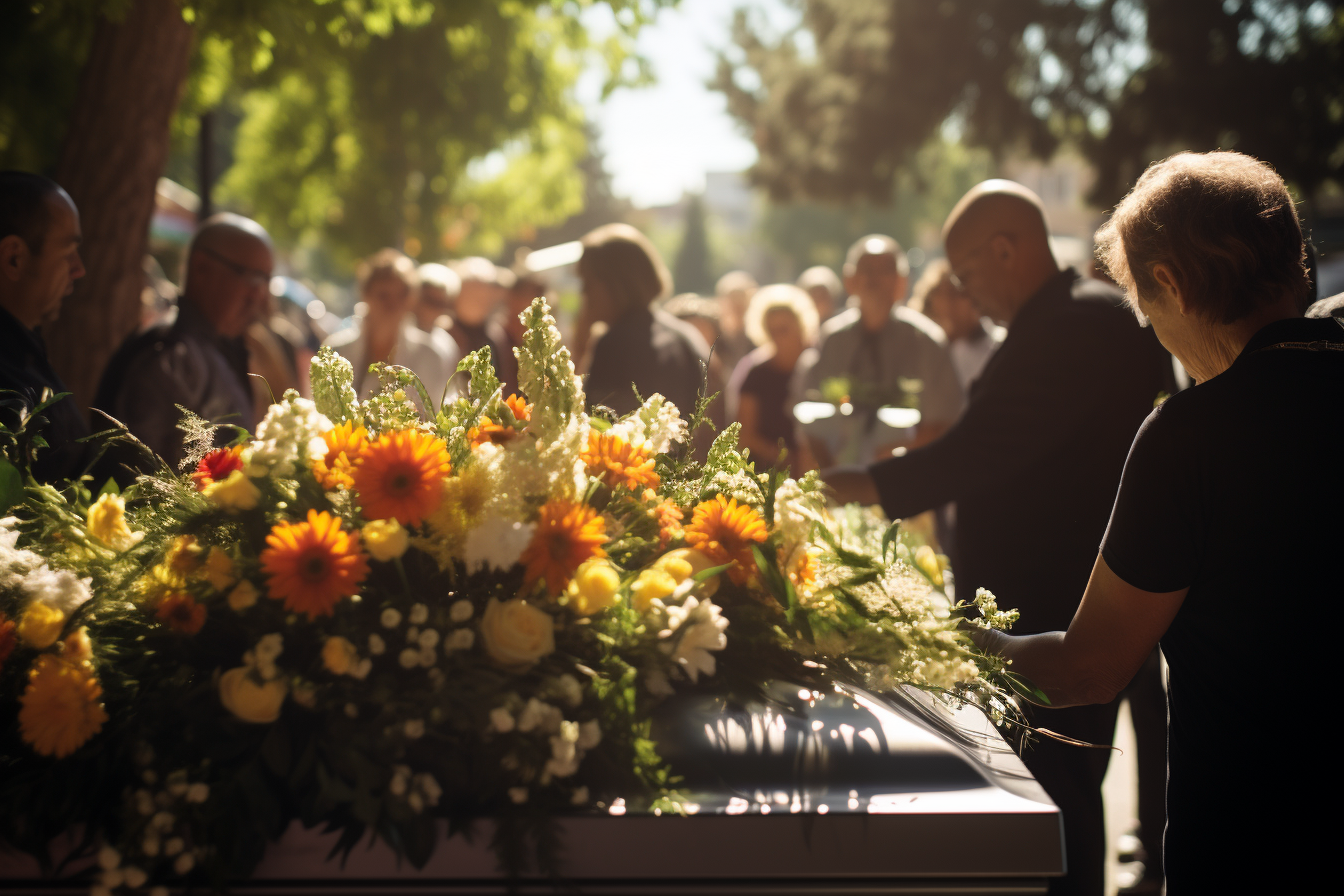
End of life care in Bermuda centres on Agape House, the island’s only hospice, which is operated by the Bermuda Hospitals Board in partnership with Friends of Hospice (now rebranding as Compassionate Care Partners). When a death occurs, it must be formally registered with the Registrar General under the Registration (Births and Deaths) Act 1949, with an autopsy required in all cases. Estate administration follows a probate process overseen by Bermuda’s Supreme Court.
| Item | Details |
|---|---|
| Bermuda’s only hospice | Agape House, located at King Edward VII Memorial Hospital |
| Death registration fee (as of 2023) | $35 (USD) via Form E to the Registrar General |
| Death certificate processing time (as of 2023) | Normally within 10 working days of receiving the Notice of Death |
| Autopsies | Required in all cases in Bermuda |
| Probate threshold for small estates (as of 2023) | Personal property with a gross value no greater than $50,000 may qualify for a simplified small estates process |
| Governing legislation | Registration (Births and Deaths) Act 1949; Succession Act 1974; Wills Act 1988 |
What hospice and palliative care is available in Bermuda?
Agape House is located on the grounds of King Edward VII Memorial Hospital, in an old Bermuda home with cedar beams and a great deal of charm, surrounded by manicured grounds and overlooking the Botanical Gardens. It is Bermuda’s only dedicated hospice facility, offering a calm and home-like environment that is quite different from a standard hospital ward.
The goal of hospice is to enable patients to continue an alert, pain-free life and to manage other symptoms so their last days may be spent with dignity and quality, surrounded by their loved ones. An interdisciplinary healthcare team of palliative care specialists work together to care for patients, providing complete palliative care aimed at relieving symptoms and giving physical, social, emotional and spiritual support.
At Agape House, staff treat the person rather than the disease, focusing on quality of life and individualised attention, and strive to provide family-centred care involving the patient, family, and caregivers in making decisions. Family members and caregivers are encouraged to participate actively in events and special occasions at Agape House.
The Friends of Hospice team works in collaboration with a medical team of palliative care specialists from the Bermuda Hospitals Board who care for patients at Agape House, while Friends of Hospice provides many complementary therapies and support services. Friends of Hospice is governed by a professional Board of Directors and supported by hundreds of committed volunteers, all focused on enhancing the quality of life for patients at Agape House, their family, friends and loved ones, and Connections programme participants.
Agape House first opened its doors in 1991 as Bermuda’s first hospice. Friends of Hospice was established in May 1994 as a non-profit organisation whose mandate is to support Agape House by fundraising, providing therapeutic and practical help, emotional support programmes, and volunteer services. The organisation has since rebranded as Compassionate Care Partners to reflect its broader mission, though its commitment to palliative care remains unchanged. You can find more information at friendsofhospice.bm.
In addition to inpatient hospice care at Agape House, home-based palliative care support is available through providers such as Bermuda In-Home Care. Palliative care is specialised medical care for people with serious illness, focused on providing relief from the symptoms and stress of that illness, with the aim of improving quality of life for both the patient and the family. This can allow individuals to remain in their own homes during the end-of-life period, which many patients and families prefer.
Planning ahead is strongly encouraged by hospice organisations in Bermuda. A Health Care Proxy document names the person who is responsible for making medical care decisions if you are unable to speak for yourself. A Durable/Enduring Power of Attorney specifies the trusted person who can handle financial matters if you are unable to manage them yourself, and this person will also need to know where all important documents are kept. The community group Final Steps is a group of volunteers who believe in the need for a healthier approach to mortality and dying, with a mission to encourage people to make meaningful choices now for the end of life by educating the community to choose, communicate and document what they want.
What are the local customs and practices when someone dies in Bermuda?
Bermuda is a diverse island with a rich blend of cultures, faiths, and traditions, and this is reflected in how families mark the end of a life. Augustus Funeral Home notes that Bermuda is an extraordinary island with a wealth of different faiths and religions, and experienced professionals are available to help arrange a final resting place for each family member according to their traditions. There is no single uniform set of funeral customs; rather, practices vary by family background, religion, and personal preference.
Church services and religious ceremonies are common. Funerals are often held in churches or chapels, with prayers, hymns, and eulogies forming a central part of the service. Given Bermuda’s strong Christian heritage, many services follow Protestant or Roman Catholic traditions, though the island’s multicultural population means a wide range of religious and cultural approaches are observed and respected.
Viewing and visitation before the funeral service is a widely observed practice. Many individuals who initially expressed hesitation have found solace in the grieving process by spending quality time with their departed loved ones prior to the funeral, as it is crucial to bid farewell and fully comprehend the irreversibility of death — the experience presents an opportunity to spend time with a cherished loved one and potentially leave mementos such as gifts, cards, letters, or other meaningful items. Funeral establishments provide private and tranquil viewing facilities, ensuring a comfortable and dignified farewell.
Both burial and cremation are practised in Bermuda. Burial at sea is also available, requiring a wood casket or a biodegradable burial shroud, and there are specially designated areas off the Bermuda coastline for this purpose. Given the island’s small size and limited land, cremation has become increasingly popular as a practical and meaningful option.
Repatriation — the process of taking home the body or remains of someone who has died in a foreign land — is also an important consideration for expats. There may be a personal desire for burial in a native country, or the need to transport the deceased back to Bermuda. Funeral homes such as Augustus provide a comprehensive global repatriation service to and from Bermuda, facilitating the overseas relocation of foreign nationals to their respective countries.
Community support plays a significant role in Bermudian mourning culture. Neighbours, friends, and wider community members traditionally offer practical help to bereaved families — bringing food, assisting with arrangements, and gathering to pay their respects. This communal spirit is deeply embedded in island life and can be a tremendous source of comfort to those who are grieving, including expats who may be far from their wider family networks.
What should you do when someone dies in Bermuda?
The administrative and legal steps following a death in Bermuda are governed primarily by the Registration (Births and Deaths) Act 1949, the Succession Act 1974, and the Wills Act 1988. The process involves notifying authorities, registering the death, obtaining a death certificate, and administering the estate. Below is a step-by-step guide to the key actions required.
- Contact a doctor or the hospital immediately. When a death occurs, a medical practitioner must be informed as soon as possible. The Registrar General is notified of a death by either a medical practitioner, hospital, funeral home, or by the Coroner’s Office or the Magistrate where an inquest is held on the body of the deceased person. If the death is sudden, unexpected, or occurs outside of a medical setting, contact the police and the Coroner’s Office promptly.
- Be aware that an autopsy is required in all cases. Bermuda requires autopsies in all cases. This is different from many other jurisdictions where autopsies are only required in circumstances such as sudden, unexplained, or suspicious deaths. Families should be prepared for this step, which may affect the timeline for releasing the body for funeral arrangements.
- Engage a funeral home. A licensed funeral director in Bermuda can help coordinate many of the immediate practical requirements, including liaising with the Coroner’s Office, preparing the body, and submitting the required forms to the Registrar General. Medical practitioners, Coroners, or funeral homes who ordinarily confirm the death of an individual are able to apply for the long-form certificate from the Registry General for the family of the deceased.
- Notify the Registrar General and submit Form E. The registration of a death and the issuance of a death certificate is a statutory requirement governed by the Registration (Births and Deaths) Act 1949, and pursuant to section 11 of the Act, the Registrar General must first be notified that a person has died in Bermuda. The notification of a death is made via an application on the prescribed Form E, known as the particulars of death, submitted with a fee of $35.00 (as of 2023). It is important to ensure the deceased’s full legal name is provided, as if the full legal name is not on the Form E, the death certificate cannot be produced and can often result in a delay.
- Obtain the death certificate. Death certificates are normally processed within ten working days after receiving the Notice of Death. Additional copies can be ordered directly from the Registry General for a fee, and are normally issued within two working days. They can be issued on an express basis, in less than two working days, upon payment of an additional fee. You will need multiple certified copies of the death certificate for insurance claims, banking, estate matters, and other administrative purposes. The Government of Bermuda’s Registry General can be accessed via gov.bm.
- Notify relevant institutions and government bodies. Inform banks, pension providers, insurance companies, the deceased’s employer, and any government departments (such as the Department of Immigration if the deceased held a work permit, or the Social Insurance office) of the death as soon as the death certificate is available. If the deceased was a foreign national whose home country has consular representation in Bermuda, notify the relevant consulate. The consul prepares a Report of Death based on the Bermuda death certificate, which is then forwarded to the next of kin for use in estate and insurance matters.
- Apply for probate or letters of administration. After someone passes away, the estate representative must make an application to the Supreme Court for a Grant of Probate (if there is a will) or a Grant of Letters of Administration (where there is no will). Required documents are the Application, the Oath and the Affidavit of Value. If the estate is modest, a simplified route may apply: if the deceased’s Bermuda estate consists only of personal property with a gross value no greater than $50,000 and the deceased holds no interest in real property, a small estates application may be made leading to the sealing of a Certificate in Lieu of Grant (as of 2023).
- Understand the stamp duty obligations on the estate. A tax known as “stamp duty” must be paid on the value of a deceased’s net estate that exceeds the legislated exemption amount in place at the date of death. The net estate calculation is an element of the Affidavit of Value, being the deceased’s gross Bermuda assets at the date of death less applicable deductions and exemptions, such as the value of the designated primary family homestead and any legacy or benefit to a surviving spouse. Note that Bermuda does not have an inheritance tax or estate tax, meaning heirs do not pay taxes on the property or assets they inherit.
- Distribute the estate. Estate administration is the process required to deal with a person’s affairs after their death, starting with identifying their assets and debts and culminating with distributing the estate to beneficiaries — and this process applies whether or not the deceased has left a will. If there is no will, Bermuda’s intestacy rules determine who inherits. Be aware that under Bermuda law, cohabiting partners have no automatic right to their partner’s estate if they die without a will, as couples in a common-law marriage cannot apply for financial provision under the Succession Act 1974’s intestacy rules.
- Arrange repatriation of remains if required. If the deceased’s family wishes to transport the body to another country for burial or cremation, the funeral director will coordinate the necessary documentation. A U.S. Consular Mortuary Certificate is required to ensure orderly shipment of remains and to facilitate U.S. Customs clearance for those being repatriated to the United States. Other countries have their own documentation requirements; check with the relevant consulate for guidance specific to the destination country.
Frequently asked questions
Is there an inheritance tax in Bermuda?
Bermuda does not have an inheritance tax or estate tax, meaning heirs do not have to pay taxes on the property or assets they inherit from the deceased. However, certain assets may be subject to property taxes or transfer taxes, particularly if real estate is involved. Stamp duty on the net value of the estate may also apply; consult a Bermuda-based solicitor for up-to-date guidance.
Do I need a will to protect my assets in Bermuda?
A will protects your loved ones from lengthy probate delays and often helps reduce the taxes paid on your assets. A do-it-yourself will is available from the Stationery Store in Hamilton and is legal if properly signed, dated and witnessed, but you must be mentally competent, as determined by your doctor, at the time the will is made. The average cost of having an attorney in Bermuda write your will is approximately $1,500.
What happens if someone dies without a will in Bermuda?
When a person dies intestate (without a will), their estate is distributed in accordance with the Intestates’ Estates Act 1975, divided among the spouse and children, or in their absence, other family members. Importantly, cohabiting partners — regardless of the length of the relationship — have no automatic right to inherit under Bermuda’s intestacy rules, making a valid will especially important for unmarried couples.
How long does it take to get a death certificate in Bermuda?
Death certificates are normally processed within ten working days after receiving the Notice of Death. Additional copies can be ordered from the Registry General for a fee and are normally issued within two working days, or on an express basis in less than two working days upon payment of an additional fee.
Are autopsies mandatory in Bermuda?
Bermuda requires autopsies in all cases. This is a notable difference from most other jurisdictions, where autopsies are typically only required for sudden, unexplained, or suspicious deaths. Families should be aware that this will affect the timeline before funeral arrangements can be finalised.
Can I be buried at sea in Bermuda?
Burial at sea is possible, requiring a wood casket or a biodegradable burial shroud. There are specially designated areas off the Bermuda coastline for burial at sea, and funeral homes can assist with showing families those areas and helping with the arrangements. This is a distinctive option that reflects Bermuda’s island setting and maritime heritage.
How does an expat repatriate remains from Bermuda?
Repatriation is the process of taking home the body or remains of someone who has died or been buried in a foreign land. Bermuda funeral homes provide a comprehensive global repatriation service, facilitating the overseas relocation of foreign nationals to their respective countries. You will need to work with your funeral director and, where applicable, your home country’s consulate or embassy in Bermuda to ensure all documentation is in order before the remains can be transported.
What is Agape House and how do I access it?
The Friends of Hospice team works in collaboration with a medical team of palliative care specialists from the Bermuda Hospitals Board who care for the patients at Agape House, while Friends of Hospice provides many complementary therapies and support services. Referrals are typically made through a doctor or the Bermuda Hospitals Board. For further information, visit bermudahospitals.bm or call the Hospice clinical coordinator on 239-2025.