

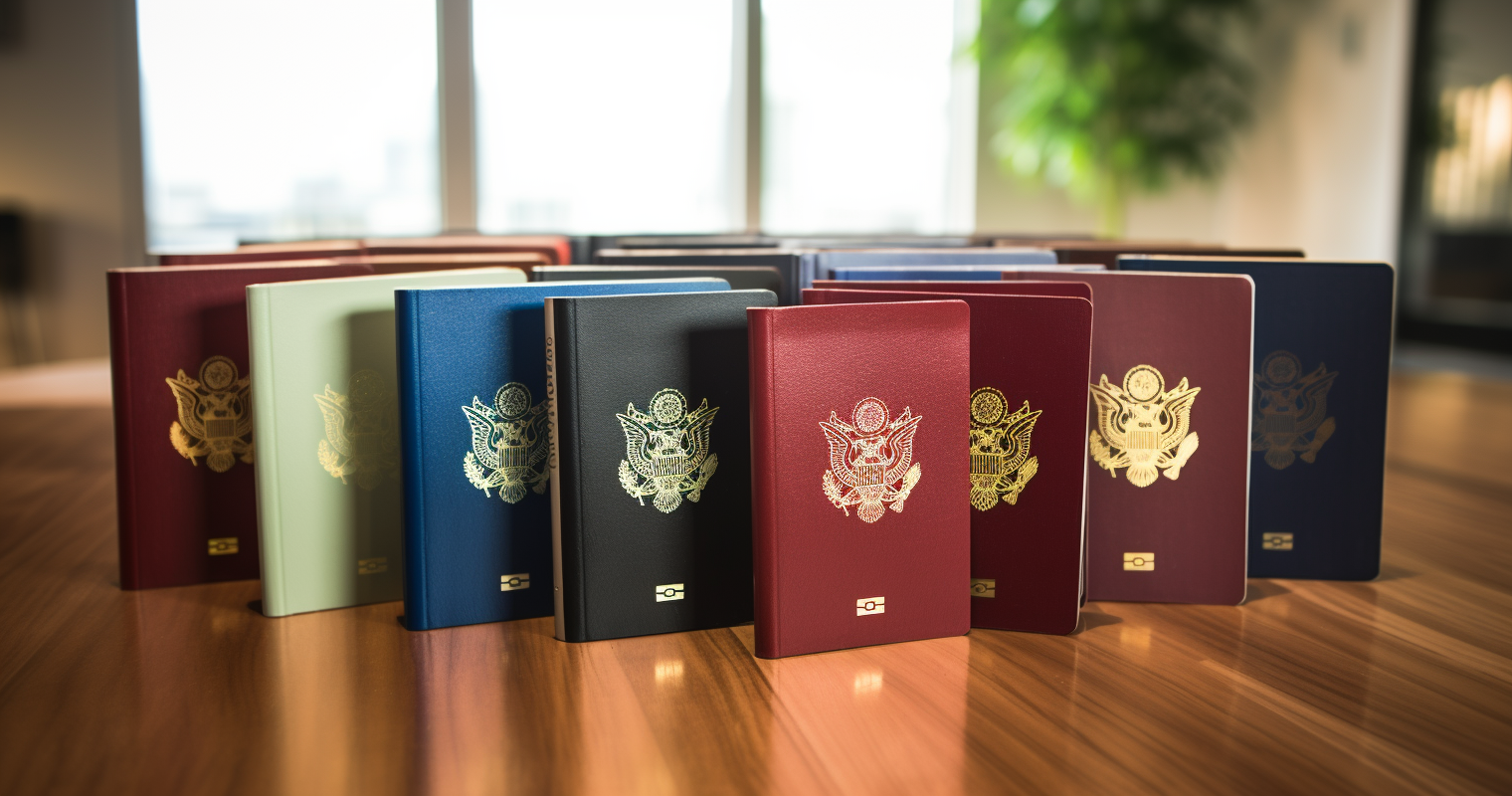
Brazilian citizenship is available to any foreign national who satisfies the legal criteria, with the principal pathway being naturalisation following a minimum of four years of lawful permanent residency. Shorter qualifying periods exist under particular circumstances, such as being married to or having a child with a Brazilian national. Brazil fully embraces dual nationality, so you are not obliged to surrender your current passport in order to acquire Brazilian citizenship.
| Item | Details |
|---|---|
| Standard residency requirement | 4 years of permanent legal residency (as of 2025) |
| Reduced residency (marriage/child) | 1 year, if married to or parent of a Brazilian citizen (as of 2025) |
| Application fee | No fee for the application itself; document costs may apply (as of 2025) |
| Processing time | Typically 6–18 months after submission (as of 2025) |
| Language requirement | Portuguese proficiency, usually demonstrated via the CELPE-Bras exam |
| Dual citizenship | Permitted — no renunciation required |
| Official application platform | Naturalizar-se (gov.br) |
Who is eligible to apply for citizenship in Brazil?
Brazilian nationality law specifies the conditions under which a person may be recognised as a national of Brazil. The foundational legal instrument governing these conditions is the 1988 Constitution of Brazil, which entered into force on 5 October 1988. The framework recognises several separate routes to citizenship, each of which is described below.
Citizenship by Birth (Jus Soli)
With only narrow exceptions, virtually every person born on Brazilian territory acquires citizenship automatically at birth. This applies even to children of foreign parents, provided those parents are not present in Brazil in an official capacity representing their home country. Brazil’s birthright citizenship policy is among the most inclusive in the world — considerably broader, for instance, than countries like Germany or the UK, where citizenship by birth is tied to the immigration status of the parents.
Citizenship by Descent (Jus Sanguinis)
Brazilian nationality law recognises both the principle of jus soli and that of jus sanguinis. Jus soli — the right of the soil — confers citizenship on the basis of birth within the state’s territory. Jus sanguinis — the right of blood — confers citizenship on the basis of having at least one Brazilian parent.
Unlike many countries where jus sanguinis permits claims through distant ancestry, Brazilian nationality by blood is transmitted directly through parentage — either a Brazilian mother or father, or both. Two main scenarios arise: where a child is born abroad to a Brazilian parent serving the Brazilian government in an official capacity, such as a diplomat or military officer, the child is considered a Brazilian citizen from birth. Where a child is born abroad to a Brazilian parent not serving in such a capacity, Brazilian citizenship may be acquired either by registering the child at a Brazilian consulate, or — once the individual has reached adulthood — by relocating to Brazil and making a formal declaration of the intention to be a Brazilian citizen before a competent authority.
Ordinary Naturalisation
The conditions for ordinary naturalisation are: at least four years of residence in Brazil, the ability to communicate in Portuguese, the absence of any criminal convictions, and civil capacity under Brazilian law, meaning the applicant must be at least 18 years of age and of sound mind. This is broadly comparable to the five-year residency requirements applied in the United Kingdom and the United States, though Brazil’s four-year threshold is somewhat more accessible.
The four-year period may be shortened in certain situations. It is reduced to one year where the applicant has a natural or naturalised Brazilian child, or has a Brazilian spouse or partner and the couple is not legally or de facto separated at the time citizenship is granted. The requirement is reduced to two years where the applicant has made or is capable of making a significant contribution to the country.
Nationals of Portuguese-speaking countries may qualify for citizenship after just one uninterrupted year of residence in Brazil, provided they also demonstrate good moral character under Brazilian law. This preferential treatment reflects the close cultural and linguistic ties between Brazil and the broader Lusophone community.
Extraordinary Naturalisation
Any foreign national with no criminal record who has maintained uninterrupted permanent residence in Brazil for 15 consecutive years may apply for citizenship through the extraordinary naturalisation route. Brief trips abroad — not exceeding 90 days per year and no more than 12 months in total — do not interrupt the qualifying period. No criminal conviction is permitted, though evidence of formal rehabilitation may be considered. Notably, this route does not require applicants to demonstrate Portuguese language proficiency, making it a viable pathway for long-established residents.
Special Naturalisation
Special naturalisation is available to the spouse or partner of a person employed abroad in the service of the Brazilian state, or to an individual who has worked continuously for more than ten years in a Brazilian diplomatic mission or consulate. To qualify, the applicant must have been legally married for at least five years and must possess civil capacity. No residency period is required for those who have been married to a Brazilian diplomat for more than five years, or who have worked for over ten years in a Brazilian diplomatic post.
Provisional Naturalisation (for Minors)
Provisional naturalisation is available to foreign nationals under 18 years of age who settled in Brazil before reaching the age of 10. This provisional status may be converted to full, permanent citizenship within two years of the individual turning 18.
Marriage or Civil Partnership
Marriage to a Brazilian citizen does not immediately confer citizenship, as is the case in some other countries, but it does shorten the residency requirement for naturalisation. An applicant seeking to benefit from this provision must still demonstrate a stable marital relationship, lawful residence in Brazil, and a basic command of Portuguese.
Investment Route
A further option is residence by investment, whereby qualifying investments in Brazilian real estate or other eligible assets can serve as the basis for obtaining a Brazilian residence permit. To pursue the investor pathway, you must invest a minimum of BRL 500,000 in a new or existing Brazilian business, or purchase real estate worth at least BRL 1 million (BRL 700,000 for properties located in the north or north-east regions), and then complete four years of residency with no more than six months spent outside the country in any given year before a citizenship application may be submitted. Investment thresholds are subject to revision, so always consult the official government source for current figures.
What are the steps involved in applying for citizenship in Brazil?
The naturalisation application is submitted entirely online through the Naturalizar-se platform. The body with overall responsibility for the process is the Ministry of Justice and Public Security (Ministério da Justiça e Segurança Pública — MJSP), with the Federal Police (Polícia Federal) handling the initial stages. The following outlines each step in the process.
- Confirm your eligibility. Identify which naturalisation route is applicable to your situation — ordinary, extraordinary, special, or provisional — and ensure that you satisfy all associated requirements, including the minimum period of residency, language ability, and a clean criminal record.
- Assemble your documentation. You will typically need a current passport, evidence of residence in Brazil, a criminal record clearance, proof of income or professional activity, and a Portuguese language proficiency certificate. A CPF (Cadastro de Pessoas Físicas) — the national taxpayer identification number — is also necessary for most official processes, including citizenship applications. Foreign documents will normally need to be apostilled and rendered into Portuguese by a sworn public translator registered with a Brazilian Commercial Board.
- File your application digitally. Applications must be submitted through the Naturalizar-se platform, with all required documents uploaded electronically. Submission must occur within 20 days of initiating the process to prevent automatic cancellation. The platform enables you to monitor the status of your application throughout.
- Complete the personal information questionnaire. A second detailed questionnaire must be completed as part of the online application on the Naturalizar-se platform.
- Federal Police assessment and interview. The Federal Police manages the first stage of processing, collecting fingerprints and potentially requesting a recorded interview or supplementary documents. This stage is used to verify identity, review documents, and confirm compliance with residency requirements.
- Review by the Ministry of Justice. The Ministry of Justice issues a final opinion on the application and forwards it to the National Secretary of Justice, who takes the definitive decision on whether to grant naturalisation.
- Publication in the Official Journal. The Ministry of Justice and Public Security forwards the decision, which is then published in the Official Journal, accessible online. This publication constitutes formal confirmation of the citizenship decision.
- Collect your identity documents and passport. Following approval, a copy of the Official Journal announcement serves as sufficient proof of naturalisation to apply for a Brazilian identity document (RG) and passport through the Federal Police.
Fees (as of 2025): No fee is charged for the application itself, though costs may be incurred when obtaining certain supporting documents. Always consult the Ministry of Justice and Public Security website for the latest information, as charges for ancillary documentation can vary.
Processing time (as of 2025): The typical processing window is 6 to 18 months from the point of submission, depending on the naturalisation route, the completeness of the documentation provided, and the current workload of the Ministry of Justice. Cases requiring additional documentation or more complex assessment may extend beyond this range.
What tests, interviews, or ceremonies are required?
Portuguese Language Proficiency
The CELPE-Bras is the sole official Portuguese language examination recognised by the Brazilian Ministry of Education, and is the only accepted language assessment for citizenship purposes. Brazilian law obliges naturalising citizens to demonstrate a working command of Portuguese, and since 2022 the CELPE-Bras has been a formal prerequisite for citizenship applications.
Proficiency may alternatively be evidenced by completion of a Portuguese language course for immigrants at a Brazilian university, or by having completed primary, secondary, or higher education in Brazil or another Portuguese-speaking country. While this bears some resemblance to the A2-level English requirement applied in UK naturalisation, Brazil does not prescribe a fixed proficiency band — the standard expected is the ability to communicate effectively in everyday Portuguese.
The CELPE-Bras is open to candidates of any nationality and is held twice a year, in April and October. It can be sat at test centres in Brazil and in numerous other countries, including the United States, Germany, Chile, Colombia, and Japan, with logistical support from the Brazilian Ministry of Foreign Affairs. Candidates who pass receive a digital Certificate of Proficiency in Portuguese for Foreigners indicating their level, which is valid indefinitely for citizenship and most official purposes.
Those who have resided in Brazil for more than 15 years, or who are nationals of Portuguese-speaking countries, are exempt from the language proficiency requirement. Minors who have converted provisional naturalisation to permanent status must meet the requirement of having no criminal conviction or of having been formally rehabilitated, but are not required to demonstrate Portuguese language ability.
Background Check
Applicants must supply a criminal record certificate issued by federal and state courts covering each place of residence in Brazil over the previous four years, as well as a criminal record certificate or equivalent document from their country of origin, duly legalised or apostilled and translated into Portuguese. Refugees are exempted from the requirement to produce a criminal record from their country of origin.
Federal Police Interview
The Federal Police gathers fingerprints from applicants and may arrange a recorded interview or request further documentation. This interview is not a formal examination in civics or national history — its purpose is to confirm identity, verify residency, and review supporting documents. Brazil does not impose a separate civics or history test as part of its naturalisation process, distinguishing it from countries such as the United States, where a structured civics examination is required, or Australia, where applicants must pass a test on Australian values and history.
Ceremony
No citizenship ceremony is required. Since 21 November 2017, naturalisation certificates are no longer issued automatically, though citizens may request one if they wish. The formal point at which citizenship takes effect is the publication of the decision in the Official Journal.
What are the benefits of citizenship in Brazil?
Naturalised Brazilians are issued an identity document (RG) and a Brazilian passport, and enjoy full civil and political rights in Brazil, including the right to vote and to stand for election. The key practical benefits are detailed below.
Travel Freedom
As of 2023, Brazilian passport holders enjoyed visa-free or visa-on-arrival access to 169 countries and territories, placing Brazil’s passport 17th in the world according to the Henley Passport Index. This affords strong international mobility across South America, Europe, and many other regions. Passport rankings fluctuate regularly, so it is advisable to check current figures for the most accurate picture.
Mercosur Benefits
Brazil is a full member of Mercosur, and all Brazilian nationals hold Mercosur citizenship. This status provides simplified access to residency rights across all member states and most associate states of the bloc, opening up straightforward residency pathways throughout much of South America, including Argentina, Uruguay, Paraguay, and Bolivia.
Public Services
The Sistema Único de Saúde (SUS) provides all Brazilian citizens with universal healthcare, covering everything from preventive treatment to complex procedures, free of charge regardless of income. Unlike systems such as the NHS in the United Kingdom, which extends healthcare to legal residents, Brazil’s SUS is constitutionally guaranteed to citizens. Brazilian citizens are also entitled to free education at public schools and universities, from primary level through to higher education at federal institutions recognised for their academic standing.
Employment Rights
In most respects, naturalised citizens enjoy identical rights to those born in Brazil, with limited exceptions for certain government functions. The exercise of specific offices — such as President of the Republic — is reserved exclusively for those with original Brazilian nationality. For the vast majority of private-sector and public-sector positions, however, naturalised and native-born citizens are treated on equal terms.
Voting Rights
Citizens have the right to participate in Brazil’s democratic process through voting. Voting is compulsory for Brazilian citizens aged 18 to 70, which is a meaningful distinction from many other countries — citizenship therefore carries a civic duty as well as a right.
Economic and Social Security
Acquiring Brazilian citizenship means becoming a full member of Brazilian society, with all the rights and responsibilities that entails — including an identity card, voting rights, and access to health and social security provision. Citizens are fully entitled to benefit from Brazil’s social security system, including pension rights accumulated through contributory employment.
Does Brazil allow dual citizenship, or will you have to renounce your existing nationality?
Yes, Brazil fully permits dual citizenship. Regardless of whether you acquire Brazilian citizenship through birth, descent, marriage, or naturalisation, you are legally entitled to retain your original nationality. This has been Brazil’s formal policy since a constitutional amendment was adopted in the mid-1990s.
In 2023, a further constitutional amendment removed the possibility of losing Brazilian nationality as a consequence of acquiring another citizenship. This means that the dual nationality framework is now even more firmly embedded in Brazil’s constitution, offering solid protection for those who naturalise in Brazil without wishing to relinquish their birth nationality.
Brazil recognises only two scenarios in which citizenship may be lost: voluntary renunciation of Brazilian nationality, or acquiring another nationality with the explicit intention of forfeiting Brazilian citizenship. Even in these circumstances, Brazilian citizenship can in many cases be reinstated by making an application through the Ministry of Justice and Public Security.
Since May 2016, Brazil has not required naturalising citizens to renounce their previous nationality. It is important to note, however, that the rules of your existing country of nationality are entirely independent of Brazil’s approach. Some countries do not permit their nationals to hold a second citizenship, or attach conditions to doing so. You should consult your home country’s official immigration or foreign affairs authority before proceeding, to determine whether taking on Brazilian citizenship will have any consequences for your existing nationality.
How long does it typically take to become a citizen of Brazil?
The overall timeline from arrival in Brazil to receiving citizenship varies considerably according to individual circumstances, including which naturalisation route applies and how promptly all procedural steps can be completed. The following provides a realistic overview.
| Route | Minimum residency before applying | Typical processing time | Estimated total |
|---|---|---|---|
| Ordinary (standard) | 4 years permanent residency | 6–18 months | ~5–6 years |
| Married to / child of Brazilian citizen | 1 year permanent residency | 6–18 months | ~2–3 years |
| Portuguese-speaking country national | 1 year permanent residency | 6–18 months | ~2–3 years |
| Exceptional contribution (science, arts, etc.) | 2 years permanent residency | 6–18 months | ~3–4 years |
| Extraordinary (long-term resident) | 15 years continuous residence | 6–18 months | ~16+ years |
From the point of application, the process typically takes around two years to conclude. For those on the shorter pathways, the full journey from residency application to citizenship generally amounts to three to four years. It is worth noting that the qualifying residency period is measured from the date on which the applicant commenced permanent residence in Brazil to the date of the naturalisation application.
You should also allow additional time to secure a permanent residence permit before the citizenship clock begins, to compile supporting documents — including apostilled materials from your home country — and to sit the CELPE-Bras exam if this is required in your case. Always refer to the Ministry of Justice and Public Security website for current processing times, as these are subject to change depending on application volumes.
What are the main reasons an application for citizenship in Brazil might be refused?
The Ministry of Justice and Public Security has discretionary authority when assessing naturalisation applications, and a number of factors may result in a refusal. The most frequently cited grounds include the following:
- Criminal record. Ordinary naturalisation requires that the applicant has no prior criminal conviction either in Brazil or in their country of origin, and that they possess civil capacity under Brazilian law. A serious criminal conviction — or failure to declare one — is among the most common grounds for refusal or subsequent cancellation of citizenship.
- Insufficient or interrupted residency. Demonstrating continuous and genuine residence in Brazil is essential. Simply owning property in the country does not satisfy this condition. Prolonged absences during the qualifying period — beyond the permitted limits — can either restart the residency clock or lead to an application being rejected.
- Failure to satisfy the Portuguese language requirement. Without a passing result in the CELPE-Bras examination, an application may be delayed or refused outright.
- Incomplete or incorrectly prepared documents. Missing paperwork, foreign certificates that have not been apostilled, or documents that have not been translated into Portuguese are common administrative causes of rejection or delay.
- Failure to demonstrate civil capacity. Applicants must be legally capable under Brazilian law, which ordinarily means being at least 18 years old and not subject to legal incapacity.
- Misrepresentation or fraud. Submitting false information or falsified documents will lead to automatic refusal and may carry legal consequences.
Where an application is refused, applicants generally retain the right to challenge the decision through administrative channels within the Ministry of Justice and Public Security. In certain circumstances, it may also be possible to seek judicial review through the Brazilian court system. Given the complexity of the appeals process, consulting a qualified Brazilian immigration lawyer is strongly advisable if your application does not succeed.
Where can you find reliable, up-to-date information about citizenship in Brazil?
The requirements, fees, and processing times associated with Brazilian citizenship are subject to change, and only official government sources should be treated as authoritative for current and accurate information. The primary sources to consult are listed below:
- Naturalizar-se platform (Ministry of Justice): The official online portal for submitting and tracking naturalisation applications. Available at gov.br — Naturalizar-se.
- Ministry of Justice and Public Security (MJSP): The authority responsible for processing all naturalisation applications in Brazil. Its official website is gov.br/mj, where policy guidance, legislative texts, and official notices relating to naturalisation are published.
- Federal Police of Brazil (Polícia Federal): Responsible for the preliminary processing stage, including biometric data collection and residency verification. Information on residency registration and document requirements can be found at gov.br/pf.
- CELPE-Bras (INEP/MEC): The body responsible for administering the Portuguese language proficiency examination. Registration details, exam dates, and test centre locations are available at celpebras.inep.gov.br.
- Brazilian Consulates and Embassies: For those claiming citizenship by descent or registering a birth abroad, the relevant Brazilian consulate should be the first port of call. A directory of Brazilian consular posts is available at gov.br/mre (Ministry of Foreign Affairs).
- UNHCR Brazil: Refugees and asylum seekers can find guidance tailored to their circumstances and entitlements on the UNHCR Brazil naturalisation page.
No third-party website — including this article — should be treated as a substitute for the official sources listed above. Always verify current requirements, fees, and timelines directly with the relevant Brazilian government authority before submitting your application.
Frequently asked questions
Do children born in Brazil automatically become Brazilian citizens?
Children born in Brazil to foreign parents are generally recognised as Brazilian nationals from birth, provided those parents are not present in Brazil in an official capacity on behalf of their home country. In practice, this means that almost every child born on Brazilian soil acquires citizenship at birth, irrespective of their parents’ nationality or immigration status.
Can citizenship be lost or revoked after it has been granted?
A 2023 constitutional amendment removed the possibility of Brazilian nationality being lost as a result of acquiring another citizenship. Citizenship may still be forfeited through voluntary renunciation or where it was obtained by fraud or misrepresentation. Involuntary revocation is, in practice, exceedingly rare.
What happens to my application if I move abroad during the process?
Departing Brazil while a naturalisation application is under review can undermine that application, as continuous residence is a fundamental requirement. Extended absences during the qualifying residency period may cause the clock to restart. Within the required residency period, applicants must spend more than nine months per year in Brazil, or the countdown resets to zero. Before travelling abroad for a significant length of time during the application process, you should consult the Ministry of Justice or a qualified immigration lawyer.
Does my spouse or child automatically gain citizenship when I naturalise?
Naturalisation does not extend Brazilian nationality to the spouse or children of the person naturalising, nor does it entitle them to enter or settle in Brazil outside the standard legal requirements. Each family member must submit their own application and independently fulfil the relevant conditions, though having a naturalised Brazilian spouse or parent may reduce the qualifying residency period applicable to them.
Is there a civics or history test required for Brazilian citizenship?
No. Brazil does not require applicants to sit any formal examination in civics or national history. Unlike Australia’s citizenship test or the structured civics interview used in the United States, Brazil’s process centres on Portuguese language proficiency via the CELPE-Bras, verification of documentation, and a criminal background check. The Federal Police may conduct a recorded interview for clarificatory purposes, but this does not constitute a structured knowledge assessment.
Can I apply for citizenship if I have a spent or rehabilitated conviction?
Those who have already undergone formal rehabilitation under applicable Brazilian legislation may still be eligible for citizenship. If you have a criminal conviction — whether incurred in Brazil or elsewhere — it is advisable to take legal advice before applying, since the effect on eligibility will depend on the nature of the offence and whether rehabilitation has been formally granted.
Is there an investment route to citizenship in Brazil?
Brazil does not operate a direct citizenship by investment scheme of the kind offered by certain Caribbean nations, where citizenship can be granted immediately upon a qualifying investment. However, residence by investment is possible, enabling foreign nationals to obtain a Brazilian residence permit by investing in qualifying assets such as real estate, after which the standard naturalisation timeline applies. Current investment thresholds should always be verified through official government sources, as these figures are subject to revision.
What is the CELPE-Bras and do I have to take it?
The CELPE-Bras is the sole certificate of Portuguese language proficiency as a second language that is officially recognised and administered by the Brazilian Ministry of Education. The majority of ordinary naturalisation applicants are required to pass it. Exemptions apply to those who have lived in Brazil for more than 15 years or who are nationals of Portuguese-speaking countries. The examination is held twice annually and can be taken at accredited centres both in Brazil and in numerous countries around the world.
Can refugees apply for Brazilian citizenship?
Ordinary naturalisation is open to refugees and immigrants aged 18 or over who have held permanent residence in Brazil for at least four years. This period is reduced to one year where the applicant has a Brazilian child, or is married to or in a stable relationship with a Brazilian citizen. Refugees are also exempt from the requirement to provide a criminal record certificate from their country of origin.
Will becoming a Brazilian citizen affect my existing nationality?
Brazil will not require you to renounce your existing nationality. Whether citizenship is acquired through birth, descent, marriage, or naturalisation, you are legally entitled to retain your original nationality under Brazilian law. However, whether holding Brazilian citizenship affects your standing under the law of your home country is an entirely separate matter, governed by that country’s own rules. Some states restrict or prohibit dual nationality, so you should consult your home government’s immigration or foreign affairs authority before submitting an application.