

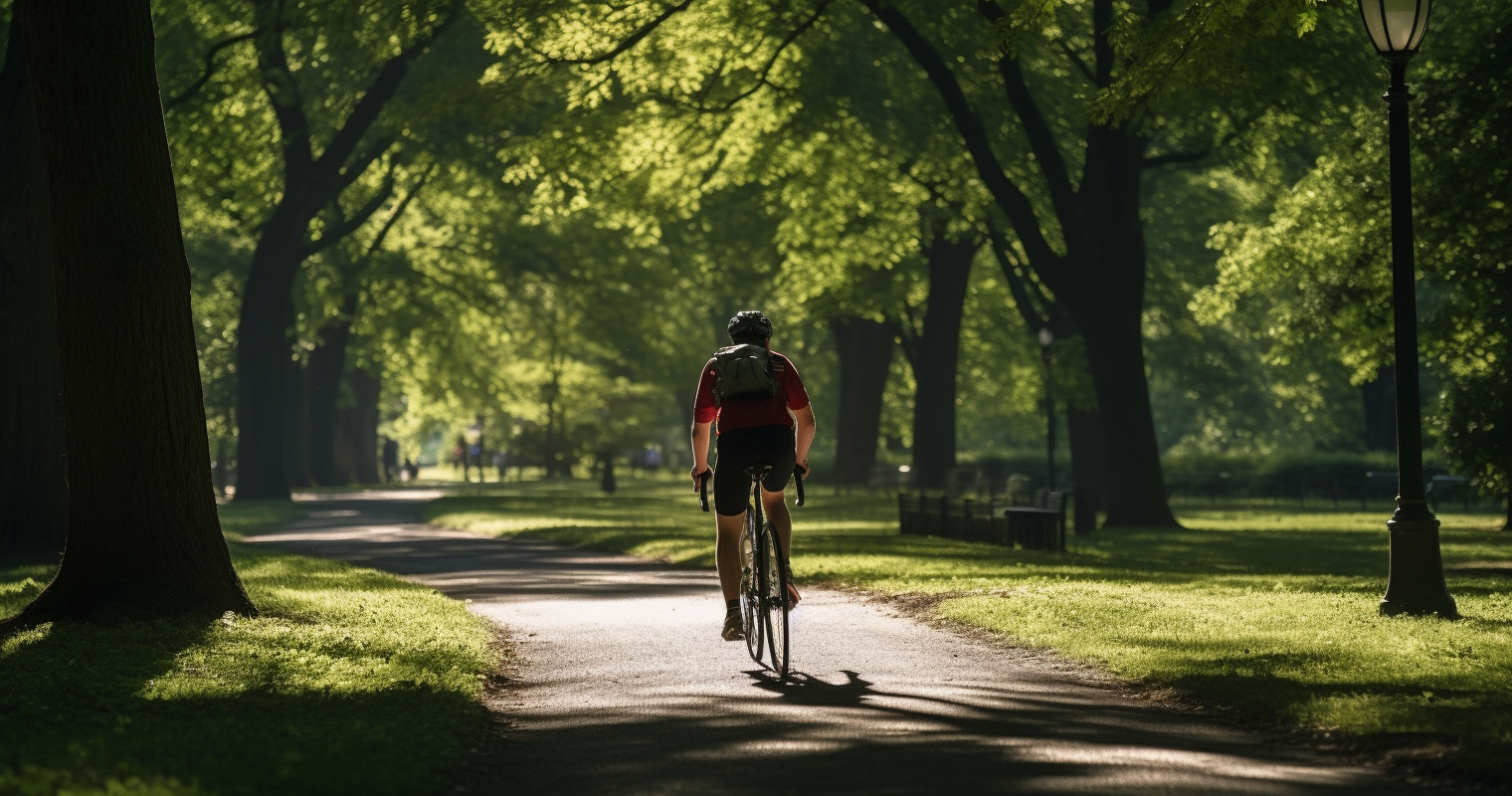
Brazil presents cyclists with a complicated but genuinely improving picture. Cycling infrastructure is expanding at pace in major urban centres such as São Paulo, Rio de Janeiro, Fortaleza, and Curitiba, and a growing culture of two-wheeled travel is taking hold — though the country remains some distance behind dedicated cycling nations like the Netherlands or Denmark. Beyond city limits, dedicated facilities are thin on the ground, road safety is an ongoing challenge, and the automobile still commands a powerful cultural position. In well-connected urban zones, cycling is a practical everyday option; in rural areas, it belongs largely to the realm of sport and recreation.
| Item | Details |
|---|---|
| Helmet law | Mandatory for all cyclists under the Brazilian Traffic Code (CTB) |
| Minimum overtaking distance | 1.5 metres required by law (as of 2021) |
| Bike registration | Not mandatory for standard bicycles |
| Bike-share operator | Tembici (operates in São Paulo, Rio de Janeiro, Brasília, Fortaleza, Curitiba, and others) |
| Import duty on bicycles | High tariffs apply; personal effects exemptions may apply when relocating — check Receita Federal for current rules |
| Key legal framework | Código de Trânsito Brasileiro (CTB); updated cyclist protections introduced in 2021 |
How popular is cycling in Brazil — is it a common way to get around?
Cycling occupies a nuanced and evolving position within Brazilian society. A mid-twentieth-century national project that placed automobile manufacturing at the heart of economic development entrenched the car’s dominance over urban space — a legacy whose effects are still felt today. Attitudes toward cycling, especially as a commuting tool, are shifting, but remain shaped by that history.
Brazil’s relationship with car culture has produced a society slow to challenge road hierarchy in the way that countries like the Netherlands did through grassroots advocacy. Whereas cycling is woven across all demographics in nations such as Denmark, Brazil’s pattern has historically been more stratified: lower-income residents have often cycled out of financial necessity, while recreational and sporting cycling has found its audience among a growing middle class.
Rapid and unequal urban expansion across Brazilian cities created deep mobility challenges for millions of residents — a situation thrown into sharp relief by the COVID-19 pandemic, which simultaneously exposed these inequities and demonstrated cycling’s potential as a resilient, affordable transport solution. The crisis triggered meaningful investment in cycling infrastructure in cities across the country, and public attitudes are genuinely beginning to change.
Since the Federal Mobility Law of 2012, which places public transport, pedestrians, and cyclists ahead of motor vehicles in the urban hierarchy, municipal governments have been gradually reshaping policy in line with these priorities. Expats arriving from countries with established cycling cultures will notice that Brazil is still in an earlier phase of this transition — but the direction of travel is clear and the pace is accelerating.
What is the cycling infrastructure like in Brazil?
Cycling infrastructure in Brazil is concentrated in its larger cities and differs substantially from one region to the next. Real progress has been made in recent years, yet the level of connectivity and protection available falls short of what cyclists would find in established European cycling nations such as Germany or the Netherlands, where segregated lane networks are extensive and integrated with public transport.
São Paulo — a megacity in Brazil’s southeast — has confronted its longstanding mobility crisis partly by building over 500 km of cycling infrastructure over the past decade and a half. Rio de Janeiro published a Cycling Expansion Plan in 2022 outlining proposals to add more than 1,000 kilometres of new infrastructure to the existing network of 425 kilometres.
Curitiba, in southern Brazil, already maintains 285 km of bike lanes and has set a target of 400 km by 2025, supported by the Tembici self-service bicycle network. Fortaleza, in the northeast, has developed one of the country’s most coherent cycling lane networks, positioning the bicycle as a credible transport mode rather than an afterthought.
Quantity has not, however, always translated into quality. São Paulo’s rapid expansion of cycle lanes within a single political term produced infrastructure that, in many cases, did not reduce space allocated to motor vehicles. Some lanes were constructed on footpaths, displacing pedestrians, while others ended abruptly, leaving riders without a safe onward route. This fragmentation is a recurring problem across Brazilian cities, and it is worth investigating the specific infrastructure in your neighbourhood thoroughly before committing to cycling as a daily commute.
Rio de Janeiro’s transport authority CET-Rio has been actively developing cycle routes designed to link public transport nodes — metro stations, rail stops, BRT corridors, and ferry terminals — to the broader cycling network. This multimodal integration approach is gaining traction in several major cities and offers a genuinely practical framework for everyday travel combining bike and transit.
Away from major urban centres, dedicated cycling infrastructure is largely absent. Rural and peri-urban roads frequently lack shoulders or any meaningful separation from motor traffic, making long-distance cycling a demanding undertaking that requires thorough route planning. Expats are advised to consult the Ministério das Cidades and their local municipal transport authority for up-to-date route maps and information on planned developments.
Is cycling safe in Brazil?
Road safety is a legitimate concern for cyclists in Brazil, and the risks are most pronounced outside dedicated infrastructure. Car-dominated urban design contributed to more than 30,000 annual road fatalities nationwide around the turn of the century. Over the two decades since, those figures have begun to decline, and city centres in several Brazilian cities have become safer, more vibrant, and more walkable and cycle-friendly environments.
Fortaleza stands out as a compelling example of what deliberate investment can achieve. By making cycling infrastructure and traffic safety central pillars of municipal policy, the city reduced yearly road deaths by more than 50% between 2013 and 2022. Conditions elsewhere across the country remain more variable, however, and complacency would be misplaced.
Studies have confirmed that cycling plays a significant role in how many Brazilians travel to work, but also highlight that municipalities frequently exhibit inadequate traffic controls, gaps in relevant legislation, and persistent violations of the Brazilian Traffic Code by both motorised and non-motorised road users. Driver behaviour around cyclists is unpredictable in many areas, particularly in cities without strong enforcement traditions.
Amendments to the Brazilian Traffic Code that took effect in 2021 classified passing a cyclist at close range as a high-risk infraction, establishing a legally required minimum gap of 1.5 metres and a mandatory speed reduction — obligations that apply on both urban roads and highways, regardless of whether a bike lane is present. The principle is comparable to equivalent laws in France and Spain, though the consistency of enforcement varies considerably across Brazilian municipalities.
As of late 2025, many drivers remain unaware that this rule classifies dangerous overtaking as a very serious violation, carrying a significant financial penalty, seven demerit points on the driver’s licence, and the potential for accelerated licence suspension. Cyclists in Brazil should ride defensively, make use of protected infrastructure wherever it exists, and treat unprotected roads with appropriate caution. For current road safety data, visit the Secretaria Nacional de Trânsito (SENATRAN) and the Observatório Nacional de Segurança Viária.
What are the rules of the road for cyclists in Brazil?
Cycling in Brazil is regulated by the Código de Trânsito Brasileiro (CTB — Brazilian Traffic Code), which is administered nationally by the DENATRAN/SENATRAN. The CTB sets national standards, though individual municipalities retain the authority to layer additional local rules on top of the national framework.
- Helmets: The CTB makes helmet use compulsory for all cyclists. This aligns Brazil with countries like Australia and New Zealand — where helmets are a legal requirement — rather than with much of Europe, where wearing one is strongly advised but not legally mandated.
- Lighting: Front and rear lights must be used when cycling after dark or in conditions of reduced visibility. Reflective equipment is additionally required for night riding.
- Road position: Article 58 of the CTB specifies that cyclists must ride along the edge of the carriageway where no dedicated shoulder or cycle lane is available.
- Highway riding: The CTB does not explicitly prohibit cycling on highways, though some state-level authorities have sought to restrict access to particular roads. Verify current rules locally before planning any long-distance highway routes.
- Single file: Article 247 of the CTB requires cyclists to ride in single file wherever there is no shoulder or dedicated lane.
- Overtaking distance: Motorists must maintain a minimum lateral gap of 1.5 metres and reduce their speed when passing a cyclist.
- E-bikes: In June 2023, CONTRAN (the National Traffic Council) introduced clearer regulatory definitions for e-bikes, mopeds, and self-propelled personal mobility devices. Sports e-bikes designed for use on public roads or highways are capped at a maximum motor-assisted speed of 45 km/h.
- Alcohol: Brazil enforces a strict zero-tolerance alcohol policy for drivers of motor vehicles. While the rules for cyclists are enforced less uniformly across all areas, riding under the influence is inadvisable and may attract the attention of police.
For the complete and current text of the law, visit the SENATRAN website or read the CTB text on Planalto.gov.br. Local rules — especially those governing footpath cycling and shared pedestrian zones — can vary between municipalities, so check with your local Prefeitura (city hall) for area-specific regulations.
Do I need to register my bike or have insurance to cycle in Brazil?
Standard bicycles in Brazil are not subject to mandatory registration. As cycling advocates have pointed out, bicycles carry no licence plate and no Renavam identification number, meaning they cannot be fined or tracked through the motor vehicle system in the same way as cars or motorcycles. This stands in contrast to motor vehicles, which must be registered with the state transport department (DETRAN).
There is equally no legal obligation for cyclists to carry third-party liability insurance. Unlike motor vehicles, which have historically required compulsory DPVAT insurance, no comparable scheme exists for bicycles. That said, given traffic conditions in Brazil’s cities and the very real risk of theft in many urban areas, voluntary personal accident cover and bicycle theft insurance are strongly advisable.
A growing number of Brazilian insurers and fintech platforms have developed bicycle-specific policies that can cover theft, accidental damage, and personal liability. Premiums depend on the value of the bicycle and the city in which you live. To compare regulated providers, consult the SUSEP (Superintendência de Seguros Privados), Brazil’s insurance regulatory authority. If you are relocating with a high-value machine, arranging cover before you arrive — or as soon as you settle in — is a sensible precaution.
Are there public bike-sharing or rental schemes in Brazil?
Brazil has a well-established and expanding bike-share ecosystem, particularly in its larger cities. The leading operator is Tembici, a Brazilian urban mobility company that runs hire systems across multiple cities under locally branded identities. With backing from one of Brazil’s largest banks, Tembici has grown to nearly 30,000 bicycles across Latin America, operating in 13 cities — primarily in Brazil but also in Colombia, Chile, and Argentina.
In São Paulo the system trades as Bike Sampa; in Rio de Janeiro it operates as BikeRio. Rio holds a regional first, having launched BikeRio back in 2011. Brasília runs its own Tembici-powered programme with 500 bikes and 70 stations, and Curitiba similarly relies on Tembici to anchor its self-service cycling network.
In São Paulo, bikes can be unlocked through a smartphone app, at designated cash payment points, using the Bilhete Único public transport card, or by credit card at docking station terminals — an approach that keeps the system accessible to a broad cross-section of users. Pricing and subscription options change regularly, so check the Tembici official website for the latest plans and city-specific details.
Fortaleza has gone further than most Brazilian cities in making cycling affordable through public subsidy. The city operates Mini Bicicletar, a bike-share programme targeted at children up to the age of 10, run by the same operator as the wider municipal system, with the city subsidising 70% of costs and making it effectively free to users. This level of public financial commitment remains unusual in Brazil, where most shared micromobility schemes receive little or no support from local authorities.
Tourist-focused bike rental is available in coastal cities and popular visitor destinations. Florianópolis, for example, has built a notable rental network serving both commuters and tourists. Always check the relevant municipal transport authority or the operator’s own website for current pricing before using any scheme.
Where can I buy or service a bike in Brazil?
Brazil has a domestic bicycle manufacturing sector, centred principally on the Zona Franca de Manaus (Manaus Free Trade Zone) in the Amazon region. Producers based within the Manaus industrial zone benefit from significant tax incentives, and the area saw a marked upturn in e-bike production between early and late 2024. As a result, locally assembled bicycles — including electric models — are available at more competitive prices than fully imported equivalents.
In cities such as São Paulo, Rio de Janeiro, Curitiba, Belo Horizonte, and Porto Alegre, specialist cycling retailers stock a range of road, mountain, hybrid, and e-bikes alongside clothing and accessories. Smaller cities tend to have fewer dedicated options, though general sports stores and large supermarkets commonly carry entry-level machines. Pre-owned bikes can be found through online marketplaces such as OLX and Mercado Livre, though buyers should exercise caution regarding a bicycle’s origins given theft rates in some urban areas.
Historically, decades of protectionist industrial policy constrained the bicycle market and concentrated it among a very small number of domestic manufacturers. That landscape has changed considerably, but premium international cycling brands and specialist components can still be costly and harder to source than in European markets. If you depend on specific groupsets or frame standards, bringing key spare parts with you when you relocate — or confirming availability before departure — is advisable.
Consumer rights in Brazil fall under the Código de Defesa do Consumidor (CDC — Consumer Defence Code), which establishes statutory warranty entitlements on retail purchases. New goods carry a mandatory minimum warranty of 90 days for non-durable items and 12 months for durable goods — broadly comparable to minimum warranty protections in EU countries. Always request a nota fiscal (receipt) as proof of purchase.
Can I bring my bike when I move to Brazil, and are there any import rules?
Importing a bicycle to Brazil when you relocate means navigating the country’s intricate customs and tariff regime, which is administered by the Receita Federal do Brasil (RFB) — the federal body responsible for taxation and customs.
Brazil has traditionally imposed steep import tariffs on bicycles. Import duties were reduced from 35% to 30% in March 2021, with further reductions to 25% in July and 20% in December of that year. Tariff rates are subject to ongoing revision, and additional taxes — including IPI (tax on industrialised products) and ICMS (state-level VAT) — can substantially increase the total cost of importing goods. These combined levies on fully assembled imported bikes protect domestic manufacturing but constrain consumer choice.
The critical question for anyone relocating is whether their bicycle qualifies as a bem de uso pessoal (personal-use item) within the permitted bagagem (baggage) allowance. Under Brazilian customs rules, individuals transferring their legal residence to Brazil may be eligible to import personal effects — including items for personal use — free of duty, subject to specific conditions and value limits. High-value bicycles, multiple machines, or items that could be interpreted as having a commercial purpose may attract duties and closer customs scrutiny. These rules are subject to periodic change; check the Receita Federal official website for the current baggage concession rules before shipping your bike, and consider engaging a licensed customs broker (despachante aduaneiro) for more complex situations.
If purchasing locally after arrival, domestically assembled bicycles — particularly from Manaus-based manufacturers — represent good value and sidestep the import process entirely. For specialist or high-end machines, many expats find it more economical to source a bike through Brazilian retailers or domestic online platforms than to ship one from abroad.
What are the best cycling routes or destinations in Brazil?
Brazil’s remarkable geographic variety — stretching from Atlantic coastlines and highland Cerrado plateaus to Amazon rainforest and the wine valleys of the Serra Gaúcha — makes it an exceptional setting for recreational and touring cyclists who plan their trips carefully.
Rio de Janeiro is celebrated for its waterfront cycling paths, none more iconic than the beachfront route running along Copacabana and Ipanema, with further options in the Barra da Tijuca district. Traffic-calmed intersections and street improvements in the city centre have created more welcoming conditions for riders. The expanding cycling network increasingly links to metro stations, ferry terminals, and other transit hubs, enabling practical multimodal journeys.
Florianópolis, in the southern state of Santa Catarina, has established itself as a significant cycling destination. With a network extended to 263 km underpinning rental programmes that serve both residents and visitors, the island city’s combination of ocean beaches, lagoons, and forested trails draws both road cyclists and mountain bikers in numbers.
Vale Europeu in Santa Catarina — taking in towns such as Blumenau and Pomerode — offers a distinctive cultural and scenic cycling experience through communities shaped by German and Italian immigration. Cicloturismo loops through this valley have attracted enthusiasts drawn to e-bike packages, illustrating how cycling tourism is finding an audience even in cities that were once considered too small for specialist offerings.
Chapada Diamantina in Bahia and Chapada dos Veadeiros in Goiás provide spectacular off-road and gravel cycling opportunities in Brazil’s interior highlands, with dramatic canyon landscapes and rich biodiversity. Both areas demand a solid level of fitness and a degree of self-sufficiency, as support services are limited.
For route planning and cycling tourism information, consult the Embratur (Visit Brasil) tourism authority and the Confederação Brasileira de Ciclismo (CBC), Brazil’s national cycling federation, which oversees competitive cycling and maintains connections with regional clubs and federations.
Frequently asked questions about cycling in Brazil
Is cycling a realistic option for commuting in Brazilian cities?
In areas of major cities such as São Paulo, Rio de Janeiro, Fortaleza, and Curitiba that are well served by cycling infrastructure, riding to work — especially as part of a multimodal journey combining bike and public transport — is increasingly practical. Quality varies considerably even within individual cities, however, and some stretches of any given commute may involve unprotected roads with heavy motor traffic. Investigate the specific area you are moving to and test your intended route before settling on cycling as your main means of getting around.
Are helmets really required by law in Brazil?
Yes. The Brazilian Traffic Code (CTB) makes helmets compulsory for all cyclists, on roads and cycle paths alike. This puts Brazil in the same camp as Australia and New Zealand, where helmets are a legal requirement, rather than with most of Europe, where they are recommended but not mandated. Always wear a helmet both to stay within the law and to protect yourself.
How safe is cycling from a road safety perspective?
Revisions to the Brazilian Traffic Code in 2021 established that passing a cyclist without leaving at least 1.5 metres of lateral space constitutes a high-risk infraction, requiring drivers to slow down whenever they overtake a moving bicycle. Enforcement is gradually improving but remains inconsistent. Riding defensively, keeping to protected infrastructure wherever it is available, and making yourself conspicuous with bright or reflective clothing are all strongly recommended. Avoid high-traffic roads without dedicated lanes, particularly during peak commuting hours.
Do I need insurance to cycle in Brazil?
No mandatory insurance exists for cyclists in Brazil. However, voluntary bicycle cover — including protection against theft, accidental damage, and personal liability — is widely recommended, particularly in urban environments where bike theft is a real concern. Visit the SUSEP website for a directory of regulated insurers offering bicycle-specific policies.
Can I use bike-share schemes as a visitor or new arrival?
Tembici, supported by one of Brazil’s largest banks, operates nearly 30,000 bicycles across Latin America and is active in 13 cities. Systems in São Paulo (Bike Sampa), Rio de Janeiro (BikeRio), and elsewhere can be accessed through a smartphone app or at docking station terminals. Registration typically requires a Brazilian CPF tax number and a valid payment method. New arrivals should visit the Tembici website to check registration requirements and current subscription plans.
Is it safe to leave a bike parked in the street in Brazil?
Bicycle theft is a genuine hazard in Brazilian cities, as in many large urban centres around the world. Always secure your bike with a robust lock — ideally a D-lock combined with a heavy-duty chain — and avoid leaving it unattended for long periods in areas without supervision. Covered bicycle parking is provided at some metro and train stations in cities with more developed cycling networks.
Are there cycling clubs or communities for expats in Brazil?
Yes. All major cities have active cycling scenes, and events such as ciclofaixas — temporary car-free cycling corridors opened to riders on weekends in cities including São Paulo — regularly attract thousands of participants. Expat communities in São Paulo, Rio de Janeiro, and other large cities frequently have dedicated cycling subgroups. The Confederação Brasileira de Ciclismo (CBC) can point you toward affiliated local clubs in your area.
What e-bike rules do I need to know in Brazil?
CONTRAN introduced new legislation on 15 June 2023 establishing clearer definitions and rules for e-bikes, mopeds, and self-propelled personal mobility equipment. Standard pedelec e-bikes (EPAC) providing motor assistance up to 25 km/h are treated in broadly the same way as conventional bicycles. Sports e-bikes used on public roads are subject to a maximum motor-assisted speed of 45 km/h. Devices that exceed the defined power or speed thresholds are reclassified as mopeds and become subject to registration and licensing requirements. Full technical details are set out in the CONTRAN Resolution 996/2023.