
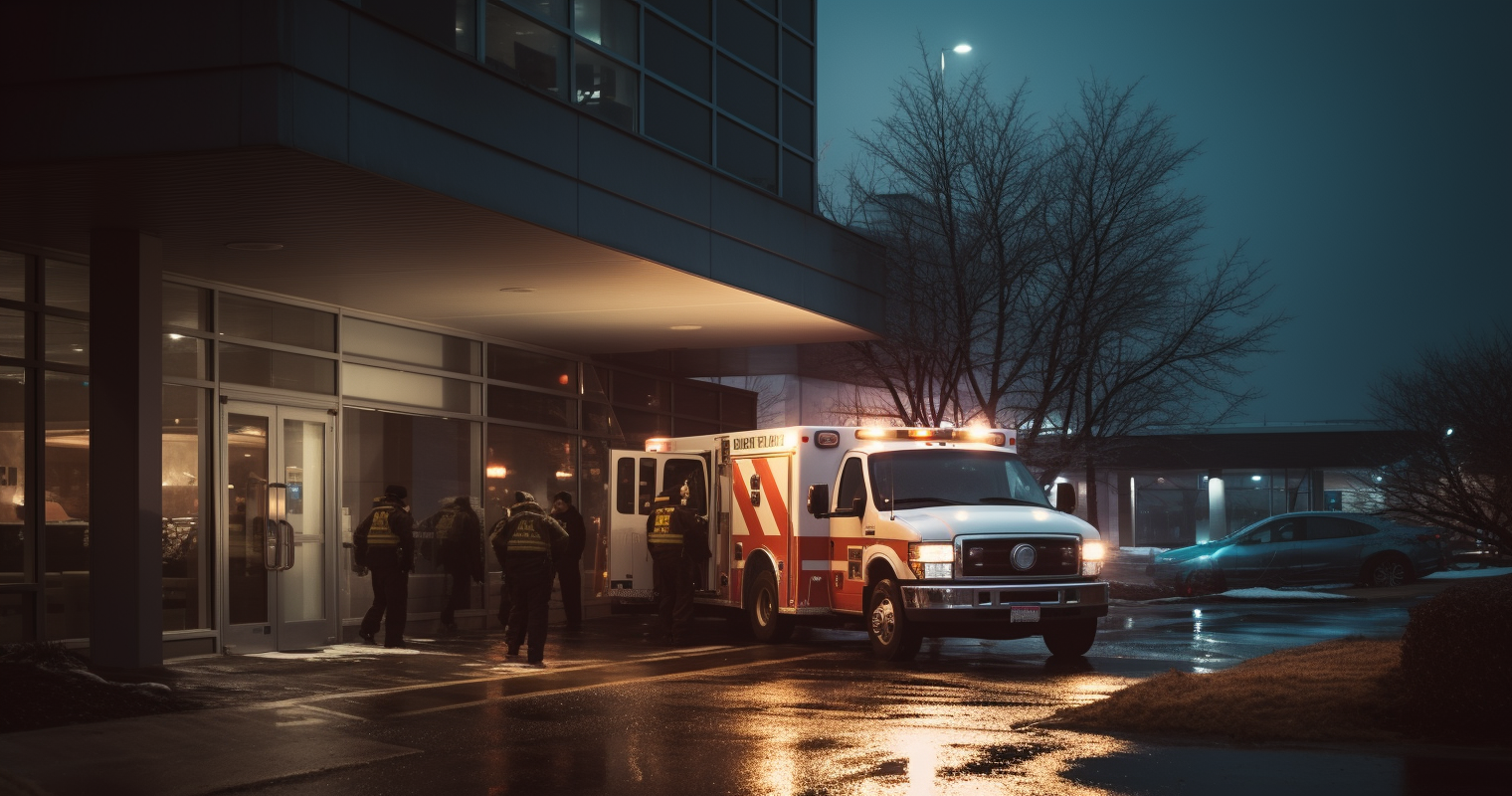
Brazil maintains distinct emergency numbers for each service: 190 for police, 192 for ambulance (SAMU), 193 for fire, and 199 for civil defence. All calls are free of charge. Under the publicly funded SUS (Sistema Único de Saúde) system, emergency medical treatment at public hospitals is available at no cost to anyone on Brazilian soil — including visitors — though quality and capacity differ considerably across regions, and the majority of expats opt for private health insurance.
| Item | Details |
|---|---|
| Ambulance (SAMU) | Dial 192 — free, 24/7 (as of 2025) |
| Police | Dial 190 — Military Police; 112 and 911 also redirect to 190 (as of 2025) |
| Fire service | Dial 193 (as of 2025) |
| Civil Defence | Dial 199 (as of 2025) |
| Emergency treatment cost | Free at public hospitals for everyone, including tourists, under SUS (as of 2025) |
| Private insurance | Strongly recommended for expats — basic plans from approx. R$200/month (as of 2025); verify current rates with insurers |
Brazil’s emergency numbers — are they different for each service?
In contrast to nations that rely on a single number for all emergency services — such as 112 across much of Europe or 911 in the United States — Brazil assigns separate numbers to each emergency service. The most widely known is 190 for the Military Police, but 192 for ambulances, 193 for the fire brigade, and 199 for civil defence are equally important. Every one of these numbers is free to call around the clock.
Legislation passed in 2013 introduced 112 and 911 as additional pathways into the Brazilian emergency system; calls to either number are automatically routed to the same lines as 190. So if you are more comfortable with European or North American emergency numbers, dialling 112 or 911 will still connect you — but learning the dedicated number for each service will always produce a faster outcome.
If you call 190 (Military Police) and describe a situation that falls outside police responsibilities, the operator will generally redirect your call to the appropriate service or help where they are able. Even so, dialling the right number from the start will always be quicker. All emergency lines in Brazil are free, available every day of the year, and accessible from any phone — including a mobile with no remaining credit.
| Service | Number | Notes |
|---|---|---|
| Military Police | 190 | Also reachable via 911 or 112 |
| Ambulance / SAMU | 192 | Public emergency ambulance service |
| Fire Service | 193 | Also covers gas leaks, rescues, floods |
| Civil Defence | 199 | Natural disasters and civil emergencies |
| Federal Highway Police | 191 | Road incidents on federal highways |
| Ministry of Health hotline | 136 | Health information and SUS contact channel |
Calling for emergency medical help in Brazil — what to do and what to expect
To request an ambulance in Brazil, call 192. This number connects you to SAMU (Serviço de Atendimento Móvel de Urgência — Mobile Emergency Care Service), a public ambulance service that operates around the clock. When the operator answers, provide a clear account of what has happened, give your exact location, and share any details you have about the person’s condition.
As the public ambulance service, SAMU will transport patients to a public hospital. The quality of vehicles and equipment differs from one area to another; the service comes at no cost but can occasionally be slow or inconsistent, particularly in smaller towns and remote regions. Response times in large cities such as São Paulo and Rio de Janeiro are generally more reliable than in outlying areas, though they cannot be guaranteed.
If you are living in a Brazilian city, a sensible precaution is to find the emergency contact number for a nearby private hospital and store it in your phone ahead of time. Private hospitals frequently operate their own ambulance and emergency services, which tend to be more efficient and dependable. Large private facilities may be contacted directly for dispatch. If your health insurance policy covers private care, call your insurer’s emergency line at the same time — they can often arrange assistance more promptly.
Dealing with a mental health crisis in Brazil
Brazil has dedicated support resources for anyone experiencing a mental health crisis. The Centro de Valorização da Vida (CVV) — the Life Appreciation Centre — runs a free, round-the-clock emotional support and suicide prevention helpline. The CVV is reachable by dialling 188 (as of 2025; confirm current details at cvv.org.br). The service is entirely confidential and free from any telephone in Brazil.
For urgent mental health needs, SUS emergency rooms are open 24 hours a day and triage patients according to the severity of their situation. Any person who presents at a public or private hospital emergency department in crisis is legally entitled to an assessment and treatment. You do not need to call a specialist line first — going directly to any hospital emergency department (UPA) is entirely appropriate when someone is in acute distress.
For ongoing or non-urgent mental health support, the SUS network includes CAPS (Centros de Atenção Psicossocial — Psychosocial Care Centres), community-based mental health facilities available at no cost to residents. Finding staff who can communicate in languages other than Portuguese is difficult outside the major cities, so expats should, where possible, research facilities with multilingual capacity before a crisis arises. Your embassy or private insurer may be able to suggest appropriate referrals.
Where to seek emergency medical treatment in Brazil
Emergency care in Brazil is available through the Mobile Emergency Care Service (SAMU), Accident and Emergency Units (UPA — Unidades de Pronto Atendimento), and both public and private hospital emergency departments. If you call SAMU, you will ordinarily be taken to a public hospital under the SUS system, though private hospitals are widely available throughout urban areas.
Both public and private hospitals maintain emergency departments that operate 24 hours a day. UPAs are intermediate-level urgent care units positioned between basic health posts and full hospital emergency departments; they handle pressing but non-life-threatening cases and help ease the demand on major hospital emergency rooms.
The standard of emergency care can be uneven, particularly at smaller facilities. Most major urban centres have at least one private hospital, and tourist-heavy areas tend to have more options. To locate the nearest public facility, visit the Brazilian Ministry of Health website or ask at a local pharmacy — pharmacies throughout Brazil are common and staff can usually point you toward the nearest care unit. In an emergency, calling 192 remains the most direct route to appropriate help.
Is emergency medical care in Brazil free or does it cost money?
The SUS (Sistema Único de Saúde) is the largest government-operated public healthcare system in the world measured by beneficiaries and geographic coverage. It is entirely free at the point of use for any person, including foreigners. This constitutional entitlement dates to 1988 and has been enshrined in legislation since 1990.
Established by the 1988 Brazilian Constitution, SUS guarantees free medical care to every person on Brazilian territory — citizens, residents, and tourists alike. In an emergency, even short-stay visitors or undocumented individuals are entitled to all necessary treatment. In practical terms, this means that if you walk into — or are brought by ambulance to — a public hospital emergency department, you will be treated without any direct charge.
The situation is more complex for non-emergency care. Emergency treatment is available to everyone including tourists, but free routine services are primarily intended for residents. Visitors may face charges for consultations, tests, or medication, particularly outside major cities. For residents and registered expats there is no waiting period to access SUS — registration can be completed at a doctor’s surgery or hospital using your CPF taxpayer number and your National Migratory Registry Card.
Private health insurance premiums vary considerably — entry-level plans begin at around R$200 per month, while premium plans can reach R$1,200–4,200 or more per month (as of 2025; verify current pricing directly with insurers, as rates shift with age and coverage level). Private facilities will typically require proof of insurance or an upfront payment before providing non-emergency treatment.
Should expats carry travel or health insurance for emergency care in Brazil?
Although emergency treatment at public hospitals is free to all under SUS, most expats choose to carry private health insurance for practical reasons. The sheer scale of SUS operations brings with it significant challenges: while the system offers universal access in principle, long queues and capacity constraints are persistent issues, further compounded by funding and staffing pressures. As a result, most foreign nationals living in Brazil rely on the private system for their day-to-day healthcare needs.
Public hospitals in Brazil are legally obliged to provide emergency care to foreigners, but waiting times can be considerable and language support is often limited. Private hospitals offer faster service, greater comfort, and are more likely to have staff who can work in languages other than Portuguese — though you will need to pay upfront or produce proof of travel insurance.
European EHIC/GHIC cards carry no validity in Brazil. You will need a Brazilian private plan, international health insurance, or both. Always check with your home insurer before assuming any overseas coverage applies to you. Short-term visitors are strongly advised to take out travel insurance that includes medical coverage and medical evacuation. For longer-term expats, the most practical approach is to register with SUS (for free vaccinations and as an emergency safety net) while also maintaining a private plan for routine healthcare — a combined approach that makes the most of both systems.
Does Brazil have bilateral health agreements with other countries?
Brazil is not party to the kind of reciprocal healthcare arrangements familiar within the European Union — such as the EHIC scheme — or under certain Commonwealth frameworks. Most national health systems, including the NHS and Medicare, do not cover treatment received abroad, and European EHIC/GHIC cards are not valid in Brazil. There is no equivalent card or agreement that would entitle foreign nationals to free or subsidised non-emergency private care in Brazil on the basis of their citizenship.
What Brazil does provide is its constitutional guarantee through SUS: the system covers every person on Brazilian territory, including tourists. In an emergency, any public hospital will treat you regardless of your nationality or registration status. This is a principle of universal access rather than a bilateral arrangement — it applies to all nationalities equally.
Brazil has signed various bilateral social security agreements with a number of countries, which may affect pension entitlements and contributions but do not typically create reciprocal health entitlements comparable to those found within the EU system. Always consult your home country’s foreign ministry or social security authority for the most current information, as these agreements are subject to change. Do not assume that any bilateral arrangement eliminates the need for travel or international health insurance when visiting or living in Brazil.
How Brazil’s emergency healthcare stacks up against systems expats may be familiar with
Brazil operates a mixed public-private healthcare model, but with an unusually large public component. The Sistema Único de Saúde (SUS) is the world’s largest government-administered public healthcare system. In that respect, the principle of universal access at the point of care is comparable to that of the UK’s NHS — treatment is free regardless of a person’s ability to pay, and no insurance documentation is needed at a public facility.
Unlike the NHS, however, which functions as a broadly uniform national service, SUS is decentralised, with individual states and municipalities responsible for delivering care. This means the quality of services varies substantially by location. In rural regions, resources can be far more limited than in the major cities — a contrast that may catch those accustomed to more standardised systems off guard.
Brazil’s two-tier model, in which roughly a quarter of the population pay for private cover, resembles arrangements found in countries such as Australia, where a public Medicare safety net coexists with private insurance offering quicker access and wider choice. In Brazil, though, the gap between public and private provision tends to be more pronounced. Expats arriving from countries where the public and private sectors offer broadly similar standards should recalibrate their expectations accordingly.
For ambulance services specifically, the contrast is telling: rather than a single national service providing a consistent standard of care, SAMU’s capacity, equipment, and response times vary from state to state and city to city. Where SAMU networks are well resourced, the service is comparable to public ambulance systems in other countries; in less well-funded areas, the shortfalls can be considerable.
Beyond medical emergencies — how police and fire services operate in Brazil
The number for the fire service in Brazil is 193. You can call the fire brigade for fires, animal-related incidents, gas leaks, chemical accidents, and natural disasters such as flooding. Brazil’s military firefighters are classified as a reserve force of the Brazilian Army and are responsible for firefighting as well as search and rescue operations. The structure and regulations of each state’s firefighter corps vary, as do uniforms and internal rules, though all operate along broadly military lines.
Brazil has several distinct police forces, which can be bewildering for those used to a single national service. The Federal Police investigates crimes against the state; the Civil Police serves as each state’s criminal investigation bureau; and the Military Police, operating within the Brazilian military framework, maintains public order. For most day-to-day situations involving crime or disorder, dialling 190 will connect you to the Military Police, who act as the primary first-response force.
The Civil Police differs from the Military Police in that it is tasked with actively investigating crimes through forensic work and criminal inquiries, with each state maintaining its own force. If you fall victim to a crime, you will generally need to file a report (Boletim de Ocorrência) at a Civil Police station. In some cities this process can now be completed online. For incidents on federal motorways, call 191 to reach the Federal Highway Police.
Expats should bear in mind that encounters with police in Brazil may differ considerably from what they are accustomed to at home. Officers on street patrol are almost always Military Police; it is advisable to stay calm, comply with any requests, and — if you do not speak Portuguese — make this clear as early as possible. Carrying identification at all times is strongly recommended.
Country-specific emergency risks expats should know about in Brazil
Brazil faces significant and recurring natural hazard risks. The country contends with major challenges from floods, landslides, and wildfires, and has in recent years adopted SMS and other digital platforms to send out early warnings. As of 2023, Brazil had approximately 1,900 cities with identified risk zones, and more than 1,500 cities had declared states of emergency as a consequence of disasters triggered by heavy rainfall or drought. The southern and southeastern states are especially vulnerable to flooding and landslides.
In May 2024, catastrophic rains and floods devastated 90% of the state of Rio Grande do Sul, representing one of the most severe natural disasters in Brazil’s recorded history. Events of this kind illustrate how rapidly conditions can worsen, particularly in flood-prone regions. If you live in or near areas at risk of flooding or landslides, registering with your local Civil Defence (Defesa Civil) and signing up for SMS alerts is essential.
Disaster management in Brazil is coordinated by the National System of Protection and Civil Defence (SINPDEC). SINPDEC brings together federal, regional, state, and municipal bodies alongside sectoral agencies and community organisations. The civil defence emergency number is 199. At state level, bodies such as Defesa Civil do Rio Grande do Sul and Defesa Civil de Santa Catarina issue alerts during disaster events. Brazil has adopted SMS and other platforms for emergency notifications, though research has shown that the completeness and clarity of these messages can be inconsistent — expats should not rely solely on official alerts and should monitor local news closely during periods of severe weather.
Beyond weather-related hazards, Brazil carries notable disease risks that expats should factor into their preparations. The Brazilian Ministry of Health strongly recommends yellow fever vaccination for visitors to the North and Central-West regions. This is particularly important for those travelling to those areas for ecotourism purposes, and the vaccine should ideally be administered at least 10 days before departure. Dengue fever is endemic and widespread; outbreaks occur seasonally, particularly during the wet season from November to April. Expats should use insect repellent, wear protective clothing, and eliminate standing water around their homes.
Urban security is a further practical consideration. Crime rates differ markedly between cities and neighbourhoods. Violent crime, including robbery, poses a real risk in certain parts of major cities. Enrolling in your embassy’s traveller or citizen registration scheme (see below) will ensure you receive official security alerts relevant to your location.
How expats can prepare for emergencies before they happen in Brazil
Advance preparation is the single most effective way to manage an emergency well. The following steps are strongly recommended for anyone living in or planning an extended stay in Brazil:
- Register with your home country’s embassy or consulate. Most countries operate a registration scheme for nationals abroad — for example, the UK’s FCDO operates the LOCATE scheme, the US offers the STEP (Smart Traveler Enrollment Program), and most other countries have equivalent services. Registration allows your embassy to reach you in an emergency, provide support during natural disasters or civil unrest, and notify next of kin if required. Always verify the current registration process at your own country’s official embassy website.
- Obtain your CPF (Cadastro de Pessoa Física) and register for SUS. There is no waiting period to join SUS. You can register at a doctor’s surgery or hospital using your CPF taxpayer number and your National Migratory Registry Card. Holding a SUS card will smooth your access to public healthcare if an emergency arises.
- Take out comprehensive health insurance. Even without SUS registration, you will receive emergency treatment as a visitor. However, all short-term visitors should consider travel medical insurance to enable access to private facilities or medical evacuation without worrying about costs.
- Store all emergency numbers in your phone. Keep 190 (police), 192 (ambulance), 193 (fire), 199 (civil defence), and the contact number for your nearest private hospital readily accessible. Store your insurer’s 24-hour emergency line as well.
- Register with your local Civil Defence (Defesa Civil). Sign up for SMS alerts in your municipality, particularly if you live in an area prone to flooding or landslides. Find out whether your local Defesa Civil operates a WhatsApp or app-based warning system.
- Put together a personal emergency kit. This should include copies of all key documents (passport, visa, CPF, SUS card, insurance paperwork), a modest amount of emergency cash, a basic first aid kit, an adequate supply of any prescription medications, and emergency contact numbers written on paper in case your phone is lost or unavailable.
- Learn essential Portuguese emergency phrases. Almost all emergency operators in Brazil work in Portuguese. Being able to say “I need an ambulance”, “I am having a heart attack”, “there is a fire”, and your home address in Portuguese could save crucial time when it matters most.
- Identify your nearest hospitals in advance. Locate both your nearest public hospital emergency department and your nearest private hospital before you ever need them. If possible, visit them ahead of time so you are not searching during a crisis.
Official sources for current emergency information in Brazil
The sources listed below are the most reliable starting points for accurate, up-to-date emergency and safety information for Brazil. Always consult these sources directly, as contact details, procedures, and services change over time:
- Brazilian Ministry of Health (Ministério da Saúde): www.saude.gov.br — for SUS registration, public hospital locations, disease alerts, and vaccination guidance.
- SAMU (Mobile Emergency Care Service): Dial 192 or consult your state’s SAMU website for local service information.
- National Civil Defence (Defesa Civil Nacional / SEDEC): Part of the Ministry of Integration and Regional Development — issues national disaster alerts and guidance. State-level Defesa Civil agencies publish local alerts; locate your state’s agency website for regional information.
- CVV (Centro de Valorização da Vida): www.cvv.org.br — free 24-hour emotional support line, dial 188 (as of 2025; verify current details).
- Your home country’s embassy in Brazil: Provides citizen registration, emergency consular assistance, and official travel advisories. Consult your country’s foreign ministry travel advice pages — for example, the UK FCDO Brazil advice, or the US State Department Brazil advice.
- ANVISA (Brazilian Health Regulatory Agency): www.gov.br/anvisa — for information on medications, vaccines, and health regulations in Brazil.
- PAHO/WHO Brazil: www.paho.org/en/brazil — for disease outbreak alerts and public health emergencies affecting Brazil.
Frequently asked questions
What is the equivalent of 911 in Brazil?
Brazil does not operate a single all-services emergency number. The primary emergency numbers are 190 for the Military Police, 192 for ambulance (SAMU), 193 for firefighters, and 199 for civil defence. That said, 911 and 112 were incorporated into the Brazilian emergency system by law in 2013, and calls to either number are redirected to the same lines as 190.
Will I be turned away from a Brazilian hospital if I have no insurance or can’t pay?
In a genuine emergency, any public hospital is required to treat you regardless of your nationality or registration status. Even short-stay tourists and undocumented individuals are entitled to all necessary emergency treatment. You cannot lawfully be denied emergency care at a public hospital. Private hospitals may require proof of insurance or an upfront payment before providing non-emergency treatment.
Does the European Health Insurance Card (EHIC or GHIC) work in Brazil?
No. European EHIC/GHIC cards carry no validity in Brazil. These cards apply only within the EU and a small number of associated countries. Separate travel or international health insurance is essential for any visit to Brazil, regardless of the healthcare entitlements you hold at home.
How do I find an English-speaking doctor in a Brazilian emergency?
In an emergency where no language support is available, contact your private insurance provider, embassy, or hotel staff and ask for recommendations on facilities with multilingual personnel. Outside Brazil’s major cities, it can be very difficult to find doctors who work in languages other than Portuguese. Public hospitals under SUS generally have limited language capacity. Private hospitals in cities such as São Paulo and Rio de Janeiro are more likely to employ multilingual staff. Many international health plans also include telephone translation services, which can prove invaluable in such situations.
Is SAMU (192) free to use?
Yes. SAMU is a public ambulance service provided at no charge. All emergency numbers in Brazil are free to call and operate 24 hours a day, 7 days a week. You will receive no bill for calling 192 or for the ambulance response. Note, however, that SAMU will ordinarily transport you to a public hospital; if you want to be taken to a private hospital instead, contact that hospital’s own ambulance service or your insurer directly.
What natural disasters should I be aware of as an expat in Brazil?
Brazil is highly exposed to floods, landslides, and wildfires. As of 2023, approximately 1,900 cities had identified risk zones. The southern and southeastern states face the greatest risk of flooding and landslides during the wet season. Devastating wildfires affected large parts of the country in 2024. Expats should register with their local Defesa Civil agencies for SMS alerts, keep a close eye on national weather forecasts, and follow guidance from their home country’s embassy during major events.
Is there a mental health crisis line in Brazil?
Yes. The CVV (Centro de Valorização da Vida) runs a free, confidential, round-the-clock emotional support and suicide prevention service. As of 2025, it can be reached by dialling 188 from anywhere in Brazil. The service is also accessible by phone, chat, and email through cvv.org.br. In an acute mental health crisis, presenting directly at any hospital emergency department (UPA) is also appropriate — SUS emergency rooms operate 24 hours a day and triage patients according to the severity of their need.
Do I need to speak Portuguese to use emergency services in Brazil?
Language barriers can present a serious challenge when accessing emergency services in Brazil, particularly in rural areas where Portuguese is the only language spoken by healthcare providers and emergency operators. Emergency call handlers work almost exclusively in Portuguese. Before any emergency occurs, it is strongly advisable to learn key Portuguese phrases for common emergency scenarios, keep a written note of your address and medical history in Portuguese, and — if you hold private insurance — save your insurer’s multilingual emergency line in your phone.