
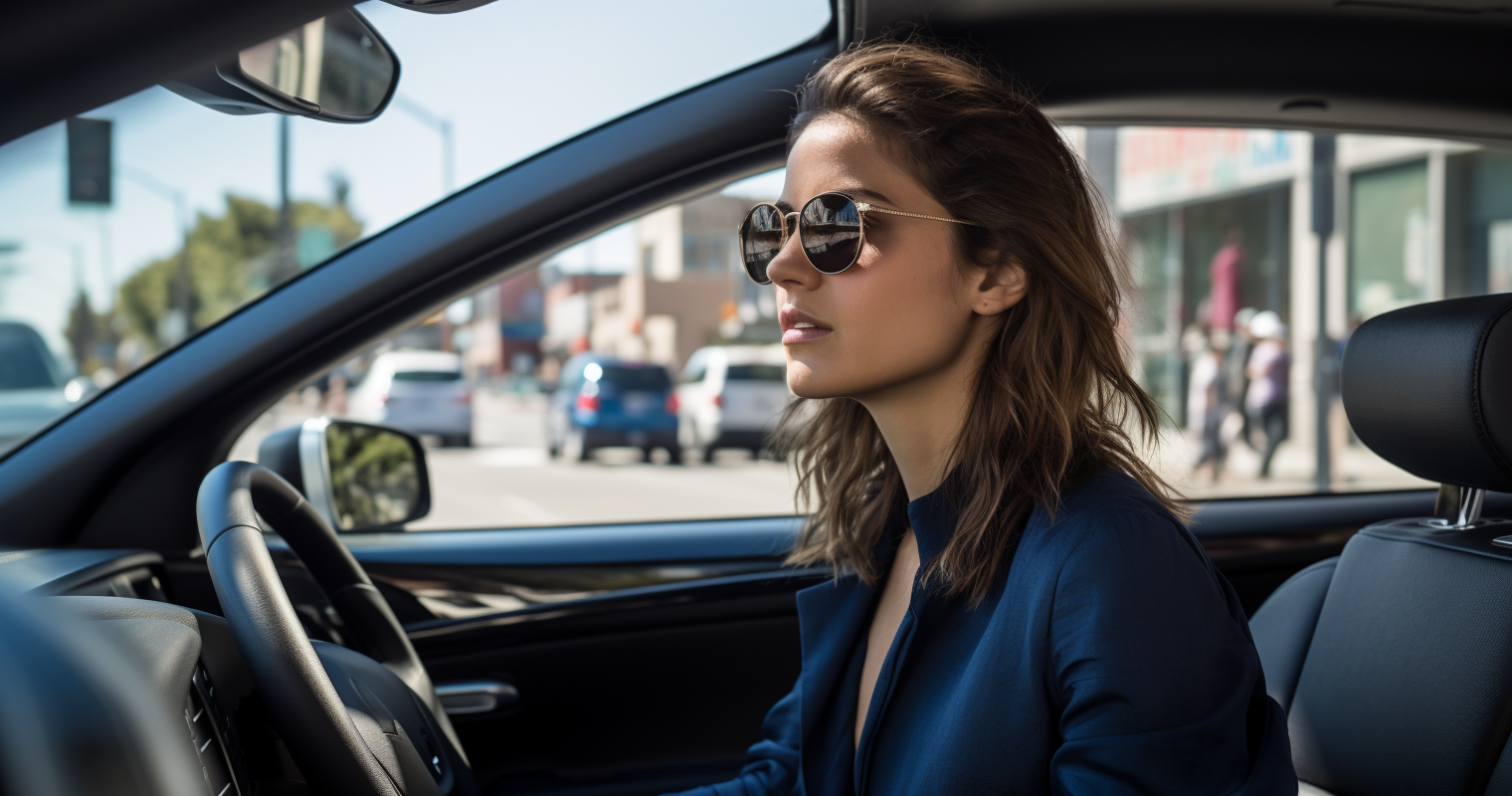
Getting behind the wheel in the Cayman Islands means keeping to the left side of the road, respecting speed limits between 15 and 50 mph, and ensuring your insurance is always valid and in force. The road network is well looked after, and you will never encounter a toll booth. Anyone settling in the islands for more than six months is required to swap their overseas licence for a local one, administered through the Department of Vehicle and Drivers’ Licensing (DVDL).
| Item | Details |
|---|---|
| Drive on | Left-hand side of the road |
| Speed limits (as of 2025) | 15 mph (school zones), 25–30 mph (urban), up to 50 mph (highways) |
| Drink-drive limit (as of 2025) | 0.07% BAC (70 mg per 100 ml of blood) |
| Mobile phone fine (as of 2025) | CI$150 automatic fine for handheld use while driving |
| Speeding fine (as of 2025) | CI$20 per mph over the limit; court appearance if fine exceeds CI$500 |
| Foreign licence validity | Up to 6 months (Geneva Convention countries); must exchange thereafter |
| Toll roads | None |
| Emergency number | 911 |
Is the Cayman Islands safe to drive in?
Road safety is taken seriously in the Cayman Islands, but every new resident should arrive with a clear picture of the risks involved. The Cayman Islands National Road Safety Strategy 2023–2038 aims to cut road fatalities by 30% before 2028, with an ultimate ambition of zero deaths by 2038. That long-term vision reflects a genuine need for progress: in 2022 alone, 2,915 road traffic collisions were recorded, resulting in 32 serious injuries and 14 fatalities across the islands.
On a per-capita basis, the rate of road deaths — particularly in Grand Cayman — compares unfavourably with many other developed nations. One significant contributing factor is the extraordinary diversity of the islands’ population: residents come from more than 120 countries, bringing with them widely varying driving habits and expectations. Roundabouts, for instance, are an uncommon feature in many parts of the world, and a substantial number of drivers encounter them for the first time here.
The National Roads Authority (NRA) holds responsibility for developing and maintaining the road network. Grand Cayman’s roads are excellently surfaced, clearly marked, well-lit, and largely flat — a standard far above that found in many parts of Central America or Southeast Asia. That said, drivers should exercise extra care after dark, as shoulders can narrow considerably on some routes without much warning.
A large proportion of road users are transient workers on fixed-term permits, which means the island’s driving population is constantly turning over — a reality that makes consistent road safety culture difficult to sustain. Drink-driving, despite firm penalties, continues to be among the primary causes of serious crashes. New arrivals should adopt a defensive approach from day one, especially when navigating roundabouts, and should not assume that all other drivers will behave predictably.
Following an iRAP road safety assessment, the NRA committed to a series of infrastructure improvements, including fluorescent pedestrian crossing signs, guardrails on highways, anti-skid road surfaces, rumble strips, illuminated pedestrian crossings, and speed radar warning signs. The rollout of these enhancements is ongoing across the island group.
Which side of the road do you drive on in the Cayman Islands?
Traffic in Grand Cayman moves on the left, consistent with the islands’ status as a British Overseas Territory and its alignment with UK driving conventions. Vehicles are typically right-hand drive. If you have spent your driving life in a right-hand traffic country — the United States, Canada, most of continental Europe, or the majority of Latin America — you will need to make a conscious effort to adapt.
The trickiest moments for drivers making this transition tend to arise at junctions and roundabouts, where instinct can draw you toward the wrong lane. A practical tip is to remind yourself that the driver’s seat should always be positioned closest to the centre line of the road. Most people find they settle into the pattern within the first day, though the early hours behind the wheel call for patience and care. Cayman’s clearly marked roads make orientation considerably easier than in countries where left-hand driving is combined with poor road markings.
As traffic volumes grow, more single-lane roads are being widened and upgraded. On a dual carriageway, keep to the left lane as your default, use the right lane for overtaking or for taking right exits at roundabouts, and move back to the left lane when it is safe to do so. Establishing this lane discipline early will ease the adjustment considerably.
What are the main driving rules in the Cayman Islands?
Speed limits across Grand Cayman run from 15 mph in school zones up to 50 mph on highways, with most urban roads set between 25 and 30 mph. Limit signs are circular with a red border and show distances in miles per hour — a format familiar to drivers from the UK and Ireland, though quite different from the kilometre-based systems used in most of the world. The financial consequences of speeding are steep: a fixed penalty of CI$20 is levied for each mile per hour above the posted limit, and if the accumulated fine exceeds CI$500, the driver must appear before a court where a licence suspension of at least 12 months may be imposed. (As of 2025; always check the National Road Safety website for current figures.)
Speed limits in school zones fall to 15 mph, and amber warning lights outside school premises flash during drop-off and collection periods — roughly 7:30–8:15 am and 2:00–3:15 pm. Penalties for exceeding the speed limit in these zones are especially severe.
Holding a mobile phone while driving attracts an automatic CI$150 fine. Under the Traffic Act (2021 Revision), a device used while driving must be hands-free and securely fixed to the vehicle, and must require no more than a single button press to answer or end a call. Using your phone to contact 911 in a genuine emergency is permitted, as is using it when the vehicle is parked well clear of the flow of traffic — but not at a red light. In 2024, the Royal Cayman Islands Police Service (RCIPS) issued 324 penalties for mobile phone use at the wheel.
The legal blood-alcohol concentration limit is 0.07% (70 mg of alcohol per 100 ml of blood). Anyone found driving — or simply occupying the driver’s seat — while exceeding this threshold faces a 12-month driving ban and a CI$1,000 fine, or up to six months in prison. This threshold is marginally tighter than in the United States, where the limit stands at 0.08%. Always check current penalties with the Royal Cayman Islands Police Service (RCIPS).
Seatbelts are compulsory for all occupants across cars, trucks, oversized vehicles, and special vehicles, subject to limited exemptions. Every child travelling in a vehicle must be belted, and those under 14 are required to sit in the rear seats. A rear-facing child seat must never be placed in a position protected by an active front airbag.
Roundabouts are a defining feature of Cayman’s road network — Grand Cayman has more than two dozen, including several with three lanes. If you are unfamiliar with their operation, study the rules before you drive. You must yield to traffic already circulating (approaching from your right), select the correct lane for your intended exit at the point of entry, and signal clearly throughout. The DVDL has published an official instructional roundabout video on YouTube explaining lane positioning in detail.
School buses have priority when loading or unloading children and must not be overtaken during this process. At four-way stops — which appear at several locations across the island — the first vehicle to come to a complete stop has priority to proceed. Speed camera detection devices are prohibited; any driver found using one faces an immediate fine and confiscation of the equipment.
What equipment are you legally required to carry in your car?
Whether you are behind the wheel of a hire car or your own vehicle, you must be able to present a valid driving licence — one that is current and recognised in its country of issue — along with proof of insurance. Failure to produce either at a roadside check is likely to result in an on-the-spot penalty.
In contrast to France, where every driver must carry a breathalyser, or various European countries that mandate a warning triangle, high-visibility vest, and first aid kit, the Cayman Islands does not currently require private motorists to carry a specific emergency equipment package. Nevertheless, keeping such items in your vehicle is strongly recommended for your own safety, particularly if you encounter a breakdown on a narrow road with limited shoulder space after dark.
Where a vehicle is transporting an overhanging load, the overhang must be marked with a red flag measuring at least 1 ft × 1 ft; if the overhang exceeds 3 ft, a police escort is required. All vehicles must also meet the roadworthiness standards set by the DVDL. Insurance certificates and vehicle registration documents are the two items traffic officers are most likely to ask for at a roadside stop, so keep them accessible at all times. Visit dvdl.gov.ky for the most current vehicle compliance requirements.
What are the most important road signs in the Cayman Islands?
Road signage in the Cayman Islands follows conventions closely modelled on the United Kingdom system. Speed limit signs are circular with a red border; hazard warning signs are triangular; and directional instruction signs — such as those for roundabouts — are circular with a blue background. Drivers familiar with the UK or Commonwealth road sign conventions will find this immediately recognisable, and the system broadly complies with the Vienna Convention on Road Signs and Signals used internationally.
Drivers arriving from right-hand traffic countries are often caught out by roundabout signs, which indicate that vehicles already on the roundabout have priority and must be given way to on your right. With more than two dozen roundabouts on Grand Cayman — several of them three-lane — understanding these signs is essential. Pay careful attention to lane-designation markings and advance signs as you approach each roundabout, because the lane you select on entry will determine which exits are available to you.
Speed limit signs display figures in miles per hour within a red-bordered circle. Drivers used to kilometre-per-hour systems should be particularly careful: 50 mph represents the maximum permitted highway speed, not 50 km/h. School zones are identifiable by dedicated signs accompanied by flashing amber lights that activate during school arrival and departure periods. Standard international traffic signals are used throughout the islands — red for stop, amber for prepare to stop, and green for proceed — without the dedicated green filter arrows found at some junctions elsewhere. Most turning movements are handled at roundabouts rather than traffic-light-controlled intersections.
Recent years have seen new road safety features introduced, including fluorescent yellow-green lighted pedestrian crossing signs, speed radar indicator signs, and sharrows (road markings denoting shared use for cyclists). These are becoming an increasingly common sight on Grand Cayman’s roads. The complete official Road Code can be found at the National Road Safety Road Code page.
What must you do if you have a road accident in the Cayman Islands?
Under the Traffic Act (2023 Revision), any collision involving injury to a person, an animal, or damage to property obliges all drivers involved to stop and exchange names, addresses, dates of birth, vehicle registration numbers, and insurance details — or to report the accident to police within 24 hours. This duty falls on every driver present, regardless of who is at fault, and is broadly consistent with accident-reporting obligations in most developed jurisdictions.
If the collision is minor, move your vehicle to the roadside if it is safe to do so, wait for the police, and photograph all damage while it remains visible. Share your details with every other party involved. It is important not to make any admission of fault at the scene, as such statements can have serious consequences for insurance claims and any legal proceedings that follow.
Dial 911 for police, fire, or ambulance services in an emergency. For non-urgent matters or to report a collision, contact the RCIPS on their non-emergency number: (345) 949-4222. Once the immediate situation is resolved, you should notify your insurance provider promptly — most policies contain a condition requiring notification within a short time frame. As of 2025, always verify current accident-reporting procedures at rcips.ky or through the DVDL, as requirements may be updated from time to time.
Where can you find up-to-date road traffic information for the Cayman Islands?
The Cayman Islands does not currently operate a dedicated real-time national traffic information portal of the kind maintained by larger nations — such as Traffic England in the UK or Live Traffic NSW in Australia. Even so, there are several dependable ways to keep track of road conditions, planned works, and live incidents across the islands.
For everyday navigation, both Google Maps and Apple Maps offer live traffic overlays across Grand Cayman and perform reliably. Waze, a community-driven navigation app widely used throughout the Caribbean, is particularly popular among residents for sidestepping congestion on key routes through George Town during the morning and evening peaks. The islands also have their own rideshare service — Island: GO! — which can be downloaded as an app for those who prefer not to drive.
For official communications, the Cayman Islands Government posts announcements about roadworks and infrastructure changes via its central portal at gov.ky. The National Roads Authority (NRA), which is responsible for road maintenance, publishes updates on significant ongoing works. Local radio stations — in particular Cayman 27 and Z99 — broadcast regular traffic bulletins during busy travel periods and serve as a useful complement to digital navigation tools.
The DVDL website at dvdl.gov.ky remains the primary official resource for licensing and regulatory guidance. Readers should verify that any links they follow are still active, as government web addresses are occasionally changed when sites are restructured.
How does parking work in the Cayman Islands?
Parking across the Cayman Islands is generally straightforward and unhurried. There are no toll roads anywhere on the islands, and free on-street parking is widely available throughout most areas — a welcome contrast to the paid-parking zones that characterise dense urban centres in Europe or North America. Demand for spaces is highest in George Town and along the Seven Mile Beach corridor, particularly during peak tourist and business hours.
Traffic wardens actively patrol and issue tickets for parking violations, and vehicles left in an unsafe position or causing an obstruction are liable to be towed. Always respect clearly marked no-parking zones, loading bays, and designated disability bays. Disabled parking spaces are typically identified by the blue badge symbol familiar internationally, and using one without a valid badge is treated seriously by both the authorities and the wider community.
Residents who require a disabled parking badge can obtain an application form directly from the DVDL or download it as a PDF from the DVDL website. A licensed physician must complete the relevant medical sections, indicating whether a temporary or permanent badge is appropriate. Once approved, the fee is CI$5 for a tag or CI$75 for a licence plate. (As of 2025; check dvdl.gov.ky for current fees.) Visitors to the islands may use their internationally recognised disabled parking badge for the duration of their stay, but those settling long-term should apply for a Cayman Islands badge through the DVDL rather than continuing to rely on a foreign permit.
Can you drive in the Cayman Islands on a foreign or international licence?
Holders of a full, valid domestic driving licence from a country party to the Geneva, Vienna, or Paris Convention on Road Traffic may use that licence for up to six months from their arrival. The complete list of qualifying countries is published on the DVDL website at dvdl.gov.ky. International Driving Permits (IDPs) are accepted in the Cayman Islands but must always be accompanied by the valid home-country licence — an IDP is not a standalone document.
Section 29 of the Traffic Act (2024 Revision), which gives effect to the Geneva Convention on Road Traffic, permits driving in the islands for up to 12 months under the Traffic (International Circulation) Regulations, 2012. Once that 12-month window closes, the licence must be exchanged for a Cayman Islands licence to continue driving lawfully. This is a stricter requirement than in a number of other jurisdictions — many EU member states, for example, allow foreign licences to remain in use for considerably longer before a local exchange is necessary.
When the time comes to convert your licence, you must first sit and pass the written theory test. Regardless of how many years you have been driving on your foreign licence, Cayman requires you to demonstrate a working knowledge of local road rules and signage before the exchange is completed.
The theory test is conducted at the DVDL and consists of 40 multiple-choice questions presented on a touchscreen terminal. Candidates have 40 minutes to complete the test and must score at least 80% to pass. The fee is CI$25 at the time of writing — verify the latest figure at dvdl.gov.ky. The DVDL advises candidates to prepare using its official Road Code booklet (available on its website), alongside the Traffic Act (2021 Revision), the Traffic Act 2024 (Amendments), and the Traffic Regulations 2012.
The licence exchange is a full exchange: your foreign licence will be surrendered as part of the process, and you will be required to provide a letter confirming your driving entitlement. To arrange an appointment, contact the DVDL by phone on (345) 945-8344 or by email at [email protected]. The DVDL has three offices in Grand Cayman; its principal office is at 990 Crewe Road, George Town.
The step-by-step process for converting your foreign licence to a Cayman Islands licence is as follows:
- Check eligibility: Confirm that your home country is listed as a Convention country on the DVDL website at dvdl.gov.ky.
- Drive on your foreign licence: You may drive legally for up to six months (Geneva/Vienna/Paris Convention countries) or confirm your permitted period with the DVDL if your country is not listed.
- Obtain a letter of entitlement: Request a letter confirming your driving licence details from your home country’s licensing authority if required by the DVDL.
- Book your theory test: Contact the DVDL by phone at (345) 945-8344 or email [email protected] to schedule your written theory exam.
- Sit and pass the theory test: Complete the 40-question multiple choice exam at a DVDL location, achieving at least 80% correct answers. Take your passport as identification.
- Submit your exchange application: Attend a DVDL office with your valid foreign licence, passport, and proof of residency or immigration status. Your foreign licence will be relinquished at this stage.
- Receive your Cayman Islands licence: Your new local licence will be issued upon successful completion of all requirements. Cayman Islands driving licences are valid for ten years.
Frequently Asked Questions About Driving in the Cayman Islands
Is car insurance mandatory in the Cayman Islands?
Every driver in the Cayman Islands must hold valid insurance covering the vehicle they are operating. Getting behind the wheel without it is a criminal offence. Established insurers on the islands offer motor policies tailored to both long-term residents and newly arrived expats. Rental vehicles typically come with basic cover included, but you should always review the excess amount and the scope of the policy before setting off.
Are there toll roads in the Cayman Islands?
No toll roads exist anywhere in the Cayman Islands. You can travel freely across Grand Cayman, Cayman Brac, or Little Cayman without encountering any road charges — a distinct advantage for those relocating from toll-heavy countries such as France, Italy, or parts of the United States.
What are the penalties for drink-driving in the Cayman Islands?
Anyone found driving or seated in the driver’s position while their blood-alcohol concentration exceeds the 0.07% legal limit faces a mandatory 12-month driving ban and a CI$1,000 fine, or a custodial sentence of up to six months. A conviction may also jeopardise a work permit holder’s immigration status. Given that drink-driving remains a leading contributor to fatal and serious collisions on Cayman’s roads, enforcement is rigorous and penalties are applied firmly.
What is the minimum driving age in the Cayman Islands?
You must be at least 18 years old to hold a full driving licence in the Cayman Islands. Car hire companies require renters to be a minimum of 21, and drivers under 25 will face a young driver surcharge on rental agreements. Seventeen-year-olds may begin working toward a learner’s licence and are permitted to drive while accompanied by a qualified driver holding a full Cayman licence.
Are there any winter driving requirements in the Cayman Islands?
Being a tropical Caribbean territory, the Cayman Islands experiences no winter conditions and has no requirements for winter tyres, snow chains, or cold-weather equipment. The most significant weather-related driving hazard is heavy tropical rain, which can rapidly make road surfaces slippery. In wet weather, switch on your headlights, reduce your speed, and leave a greater gap between your vehicle and the one ahead. Heavier downpours can also cause potholes to develop on secondary roads, so a cautious pace helps protect both you and your vehicle.
Can I use Google Maps or a GPS device while driving in the Cayman Islands?
Navigation apps and GPS devices may be used provided the device is fixed securely to the vehicle and you are not holding or physically interacting with it while moving. The Traffic Act (2021 Revision) requires any device operated while driving to be hands-free and mounted, with calls answerable using a single button press. This principle extends to navigation apps. Google Maps operates reliably across Grand Cayman and the outer islands.
Do I need a special permit to drive with children in the car?
No special permit is needed, but a number of specific rules apply. All children travelling in a vehicle must wear a seatbelt, and those under 14 must be seated in the rear. A rear-facing child seat must never be installed in a seat position covered by an active front airbag. Children under two must travel in a car seat secured by a seatbelt, and that seat must not be rear-facing if positioned in front of a live airbag. These rules are actively enforced and fines are issued for violations.
How does the demerit points system work in the Cayman Islands?
The Traffic (Amendment) Act 2024 introduced a demerit points framework in the Cayman Islands, under which a driver’s licence can be suspended or revoked once a set number of points has been accumulated within a defined period. This is conceptually similar to systems operating in the UK, Australia, and Canada. The full schedule of offences, associated point values, and thresholds for licence action is being implemented under the revised Traffic Act. Visit the DVDL website for the most current details on how points are allocated and the process for appealing a decision.