
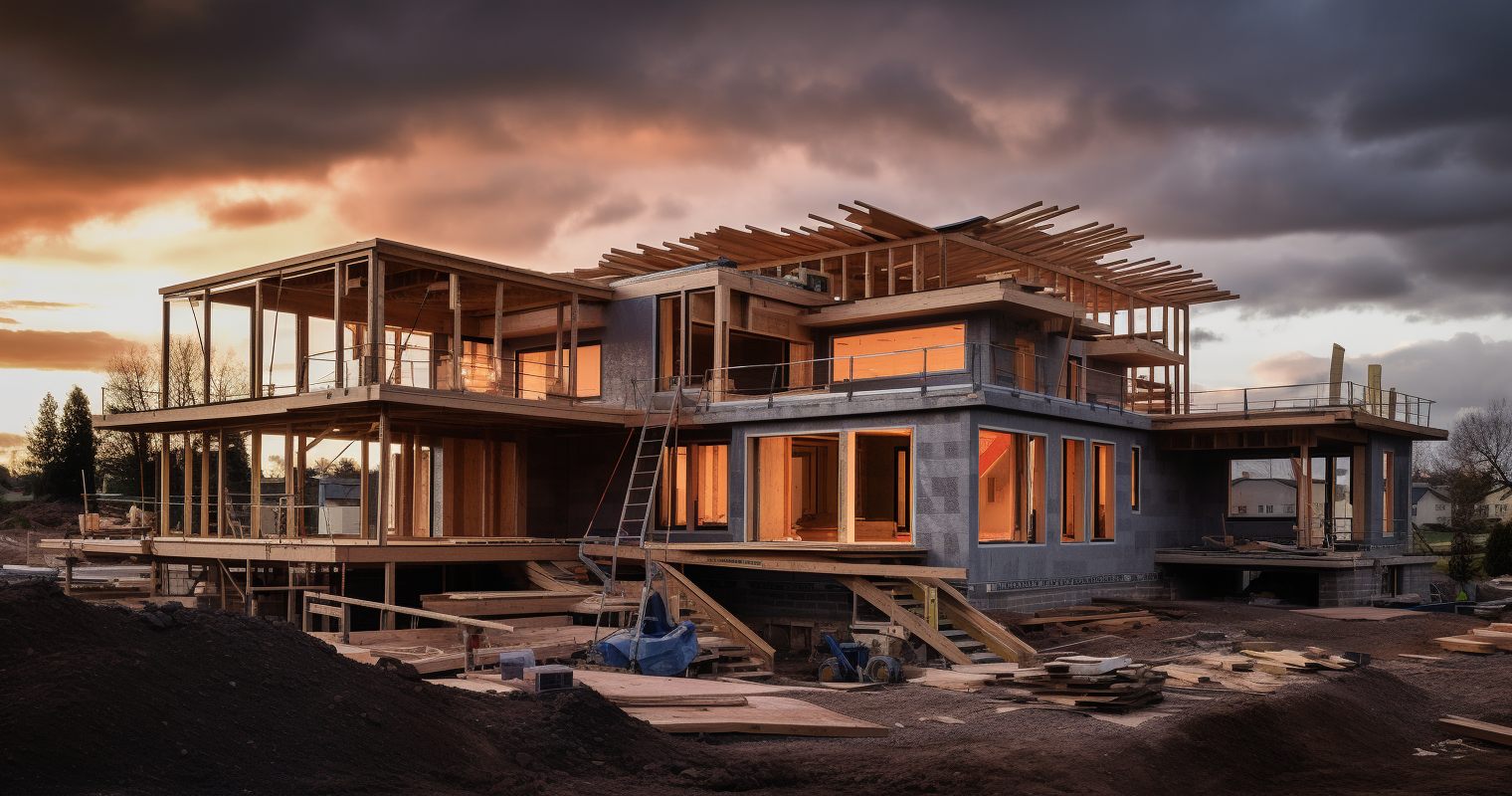
Anyone seeking to build or renovate property in Costa Rica will need to secure a construction permit — the Permiso de Construcción Municipal — for virtually all substantial work. This permit is issued by the relevant local municipality in coordination with the Colegio Federado de Ingenieros y Arquitectos (CFIA). The entire process is tightly regulated, draws in several government agencies, and may take anywhere from two to nine months to complete. In most circumstances, foreign nationals hold essentially the same ownership and construction rights as Costa Rican citizens, the key exceptions being land within the maritime zone and areas along national borders.
| Item | Details |
|---|---|
| Primary permit required | Municipal Building Permit (Permiso de Construcción Municipal), as of 2025 |
| Permit fees (approx.) | ~2.52% of assessed project cost: CFIA 0.027%, municipality ~1%, INS labour risk ~1.5%, as of 2025 |
| Typical total timeline | 2–9 months depending on project size, location, and complexity, as of 2025 |
| Plans regulator | CFIA (cfia.or.cr) — all plans must be signed by a CFIA-registered professional |
| Environmental body | SETENA — environmental permits required for many coastal and near-protected-zone projects |
| Foreign ownership | Foreigners have same rights as nationals outside maritime zones (coastal 200m), border areas, and protected lands, as of 2025 |
Do you need planning permission to build or renovate in Costa Rica?
The Permiso de Construcción Municipal — the Municipal Building Permit — is the principal authorisation that must be obtained before beginning any construction project in Costa Rica. Granted by the local municipality, it confirms that a proposed project satisfies all applicable codes and regulations. This requirement covers new construction, extensions, and substantial renovation work. Minor cosmetic interior alterations — such as repainting walls or swapping out fixtures — may not trigger a formal permit, but any structural modification, additional room, or new structure almost certainly will. Before commencing any work, always check with your local municipal engineering department to confirm what applies in your case.
The Uso de Suelo, or Land-Use Permit, is a foundational document for any construction project in Costa Rica. Issued by the local municipality, it sets out precisely how the land in question may be used — whether for residential, commercial, tourism, or agricultural purposes. Obtaining the Uso de Suelo certificate before signing any purchase agreement is strongly recommended.
Unlike planning frameworks in countries such as France or Germany, where a single national code governs procedures, Costa Rica’s regulations differ across each of the country’s 81 municipalities. What is entirely permissible in one municipality may face restrictions in an adjacent one, so checking with the specific local authority is always essential — assumptions based on neighbouring areas can be costly.
A number of municipalities now accept online applications, though processing times vary considerably — ranging from as little as two weeks in Escazú to three months or more in more rural municipalities. In general, obtaining all construction permits takes between two and six months depending on a project’s complexity. Larger or technically complex projects — particularly those exceeding 500 m² or situated near environmentally sensitive areas — may take considerably longer.
Step-by-step: applying for a building permit in Costa Rica
- Obtain a Land-Use Permit (Uso de Suelo) — Submit an application to your local municipality to establish the permitted uses for the specific plot before any design work is commissioned. Each property in Costa Rica carries a designated land use defined by the municipality’s Regulatory Plan, which determines what type of construction is allowed on that land.
- Hire a CFIA-registered architect or engineer — Legislation requires that any building permit application be submitted by a licensed architect or engineer. That professional must hold current registration with the College of Engineers and Architects of Costa Rica (CFIA), as they will be responsible for preparing and certifying your construction drawings.
- Prepare full technical plans — Comprehensive construction drawings and blueprints must be produced by the licensed professional and cover all aspects of the project, including floor plans, structural calculations, and electrical and plumbing layouts. Since 2024, the CFIA requires all technical plans — structural, electrical, and plumbing — to be lodged simultaneously to accelerate processing.
- Obtain CFIA digital approval via the APC platform — All documentation must be uploaded to the APC (electronic project administration) platform and approved by both the licensed architect or civil engineer directing the project and a licensed electrical engineer. CFIA plan registration and digital log approval via the APC platform generally takes around two business days.
- Gather supporting certificates — These include proof that municipal property taxes are current, together with certification from the Costa Rican Social Security agency (CCSS) confirming that all contributions are up to date or, where no CCSS affiliation exists, a certificate confirming no outstanding debts.
- Obtain water and electricity availability letters — A letter confirming electrical availability, issued by the electricity company serving the site, verifies that a utility connection is accessible and identifies any improvements required. A water availability letter from AyA or the relevant water authority is also typically required.
- Submit the municipal permit application — Lodge the complete documentation package with the municipal engineering department, either through the online portal where available or in person at the office. Once all approvals are in order, the municipality generally issues the construction permit within two to four weeks.
- Obtain INS workers’ insurance — After the municipality receives the documentation it will issue a form enabling you to arrange the mandatory workers’ risk insurance coverage through the INS (Instituto Nacional de Seguros), protecting construction workers in the event of an on-site accident. This policy typically takes five business days to process once the required documentation is submitted.
In terms of costs, permit fees are officially calculated by the CFIA using construction value tables expressed per square metre, based on the project type and specifications. As of 2025, the CFIA charges 0.027% of project cost for plan registration; the INS workers’ risk policy amounts to approximately 1.5% of project cost; and the municipality levies a construction right fee generally equal to 1% of project cost — together totalling around 2.52% of the total assessed project value. Always confirm current fees directly with the CFIA and your local municipality, as these figures are subject to revision.
As of 2025, the government has strengthened environmental review processes, expanded digital municipal systems, and raised penalties for construction carried out without permits. Consequences under the law can range from significant fines to criminal prosecution. Do not be tempted to start work before all authorisations are in place.
What are the rules around listed buildings, conservation areas, and heritage protection in Costa Rica?
Costa Rica does not operate a system directly comparable to the UK’s listed building regime or France’s Monuments Historiques classification, but meaningful legal protections do exist for heritage structures and environmentally sensitive land. The Centro de Investigación y Conservación del Patrimonio Cultural, which forms part of the Ministry of Culture and Youth (Ministerio de Cultura y Juventud), is responsible for identifying and safeguarding buildings and sites of national heritage significance under Law 7555, the Law of National Heritage.
Properties registered under Law 7555 as historic heritage assets are subject to strict controls on demolition, alteration, and renovation. Any significant works to a designated building require advance authorisation from the Ministry of Culture. Violations can result in fines and compulsory restoration at the property owner’s expense. Before purchasing a property located in a historic town centre, or one that appears to date from the early twentieth century or earlier, ask your notary-lawyer to carry out a check against the Heritage Registry.
The National Environmental Technical Secretariat (SETENA) oversees environmental impact assessments for certain categories of construction project. Where a project is likely to generate significant environmental impact — such as development within protected areas or in the vicinity of watercourses — SETENA approval will be required. Depending on the scale and location of the project, this could take the form of a full Environmental Impact Assessment (EIA) or a simpler D1/D2 declaration, verifying that construction will not damage sensitive ecosystems such as mangroves, rivers, or protected forest areas.
Felling trees on your property may require a dedicated permit, particularly for protected species or those located within designated ecological reserves. This is broadly analogous to Tree Preservation Orders in the UK, though administered through different channels — specifically SINAC (the National System of Conservation Areas) and the Ministry of Environment and Energy (MINAE). Properties situated within 50 metres of a river or stream are subject to additional constraints and may require special permits before any development can proceed.
Protected land adjoining national parks or biological reserves cannot be privately owned and may be subject to strict usage limitations or government expropriation. Before purchasing any rural or coastal land, it is essential to commission a thorough legal and environmental due diligence review that includes a SETENA consultation and a check against the SINAC protected areas register. For authoritative guidance on heritage and environmental restrictions, contact the Ministry of Culture (mcj.go.cr) and SETENA (setena.go.cr).
What permits and licences are required when building or renovating?
In addition to the Municipal Building Permit, a construction project in Costa Rica typically requires approvals from a range of other bodies. The sheer variety of permits that must be secured before breaking ground is one of the principal challenges facing developers and home-builders. Identifying which approvals are relevant to your particular project at an early stage will save both time and money.
- CFIA plan approval — The Federated College of Engineers and Architects (CFIA) plays a central role in reviewing and endorsing construction plans. CFIA approval certifies that the project meets Costa Rica’s current construction regulations.
- Environmental permit (SETENA) — Depending on the scale and location of your project, you may be required to submit either a full Environmental Impact Assessment (EIA) or a simpler D1/D2 declaration. Beachfront developments frequently trigger Category B environmental studies, which must be carried out by qualified environmental engineers.
- Water and sewerage permit — The Water and Sewerage Permit (Permiso de Agua y Alcantarillado) is necessary for connecting the property to the municipal water supply and sewerage network, ensuring compliance with applicable water and sanitation standards. This permit is issued by AyA (Instituto Costarricense de Acueductos y Alcantarillados).
- Electrical permit — An Electrical Permit (Permiso Eléctrico) is required for all electrical installations in a Costa Rican property. ICE (the Costa Rican Electricity Institute) manages the connection of electrical services.
- Ministry of Health approval — The Ministry of Health must approve buildings that include sanitary facilities. For projects not classified under a specific category, the Ministry of Health review typically takes two to four weeks.
- Fire department sign-off — For larger residential developments — generally those comprising four or more units — or commercial projects, approval from the Cuerpo de Bomberos (fire department) is also required.
- INS workers’ insurance (Póliza de Riesgos del Trabajo) — This policy must be in force before construction begins and is issued by the Instituto Nacional de Seguros (INS).
- Occupancy permit — Once construction is complete, the responsible professional submits a completion-of-work declaration to the CFIA and the municipality. The occupancy permit, definitive utility connections, and construction registration for municipal tax purposes can then be requested.
Developing a property larger than 500 m² requires approval from at least half a dozen separate entities, and bringing a subdivision or condominium to market introduces further layers of oversight — to the point where you may need to retain at least seven state-certified professionals, including an architect, a civil engineer, a topographer, an environmental engineer, an archaeologist, an anthropologist, and a biologist. Always engage a CFIA-registered professional who is familiar with which permits apply to your specific project type and location. Confirm current requirements and applicable fees directly with the relevant municipal, regional, or national authority.
How do you find a reliable, trustworthy builder in Costa Rica?
Construction permit applications must be handled by a CFIA-registered professional because the law requires a designated technical director to sign the plans, oversee the works, and accept legal and structural responsibility for the project. While this requirement applies to the design professional — the architect or engineer — the actual building contractor carrying out the physical construction is not subject to the same mandatory CFIA registration. This gap creates a risk that less reputable operators will offer to build without proper professional oversight, which can expose you to serious legal and structural complications.
The prevalence of professionals entering the industry in Costa Rica has generated challenges, with legal disputes and financial losses arising for project owners in some instances. Foreign buyers are especially vulnerable because they may be unfamiliar with the local market, have limited Spanish language fluency, or be uncertain about what contractual terms are considered reasonable and customary.
How to vet a builder
- Verify the CFIA registration of the supervising professional — You can confirm a professional’s status directly through the official CFIA registry at cfia.or.cr. Insist that any contractor you engage operates under the supervision of a named, verifiable CFIA-registered architect or engineer.
- Request references from completed local projects — Ask for the contact details of previous clients and follow up by actually calling them. Where possible, visit completed projects in person to assess the quality of workmanship first-hand.
- Use a written contract in Spanish — Verbal agreements carry little legal weight. A properly drafted written contract should set out the scope of works, materials specifications, payment schedule, completion date, penalties for delays, and dispute resolution procedures. Engage a local bilingual lawyer to review it before you sign.
- Use staged payments — Never pay the full project cost in advance. A sensible and widely used arrangement is to release payments in stages, each tied to verified completion of defined milestones. For larger payments, consider using an escrow arrangement through your lawyer.
- Confirm INS insurance — The contractor must hold a valid INS workers’ risk insurance policy before construction begins. Request sight of the policy certificate before work starts.
- Watch for common red flags — Exercise caution with contractors who demand very large upfront payments, are unable to supply references, press you to bypass permits to “save time”, or quote prices that appear unrealistically low. As of 2025, the government has tightened penalties for unpermitted construction — any contractor who suggests circumventing the permit process is placing you at serious legal risk.
There is no single trade body in Costa Rica dedicated to general building contractors equivalent to, for example, the Federation of Master Builders in the UK. However, the Cámara Costarricense de la Construcción (CCC) — the Costa Rican Construction Chamber — represents construction companies and industry stakeholders. Website: construccion.co.cr. The CCC can offer guidance on industry standards and assist in identifying reputable firms.
How do you find a qualified local architect in Costa Rica?
The Federated College of Engineers and Architects (CFIA) is the regulatory body charged with upholding professional standards in the practice of engineering and architecture throughout Costa Rica. Professionals must be registered with the CFIA in order to practise legally. Without CFIA registration, no professional can lawfully sign construction plans, supervise a build, or bear legal responsibility for a project. This is a firm statutory requirement rather than an optional credential — unlike in some countries where professional body membership is purely voluntary.
The CFIA controls and regulates professional practice across the engineering and architecture disciplines, granting practitioners the licence they need to operate within their registered field. You can search the CFIA directory of registered professionals directly on their website to confirm that any architect or engineer you are considering holds a current, valid licence before engaging them.
Contact details for the CFIA are as follows: Website: cfia.or.cr — Email: [email protected] — Telephone: (506) 2103-2200 — Location: Curridabat, Route 2, next to Indoor Club, 2346-1000, San José, Costa Rica.
Projects that proceed without CFIA-approved professionals risk fines, hold orders, or compulsory suspension of works. Before appointing any architect, ask for their CFIA membership number and independently verify it on the CFIA website. Do not rely solely on a business card or verbal assurance.
For expats who are not fluent in Spanish, it is worth enquiring specifically whether a prospective architect has experience working with international clients and can communicate effectively in your language. While there is no legal obligation for architects to speak any particular language, many practitioners in popular expat locations — including the Central Valley, Guanacaste, the Pacific Coast, and the Southern Zone — have experience with overseas clients and may offer bilingual services. Ask whether they have previously advised foreign buyers and can help navigate the permit process from an international perspective. Bear in mind that English-only project documents can delay municipal approval — all official submissions must be in Spanish.
The CFIA facilitates recognition of qualifications obtained abroad for the purposes of authorising practice, within the framework of applicable bilateral or multilateral agreements to which Costa Rica is party. Foreign-qualified architects or engineers wishing to practise in Costa Rica must have their credentials formally recognised and must register with the CFIA — overseas qualifications alone are not sufficient to legally sign plans. For most expat projects, the most practical approach is to retain a locally qualified, CFIA-registered professional.
What are the common pitfalls when buying land to build on?
Acquiring land for construction in Costa Rica carries specific risks that may not be apparent to buyers accustomed to countries with centralised land registries and established conveyancing traditions. Carrying out thorough due diligence before committing to any purchase is not optional — it is essential.
Title, boundaries, and ownership history
Verifying the property title is a critical step in any Costa Rican real estate transaction. A clear and legally recognised title is the foundation of secure ownership. The process begins with a comprehensive title search at the National Registry (Registro Nacional), which will disclose information on current ownership, property boundaries, and any encumbrances or liens registered against the property. Engaging a professional land surveyor is also strongly advisable to establish the precise boundaries and dimensions of the plot independently. Do not rely on the vendor’s representations or an informal sketch map.
Zoning and land-use restrictions
A significant number of projects have been delayed for a year or more simply because a buyer omitted the Uso de Suelo step before submitting architectural drawings. Always obtain Uso de Suelo certification from the municipality before exchange of contracts to confirm that the land can legally be used for your intended purpose. Local municipalities establish zoning laws that determine permitted land uses and applicable development standards.
Environmental and ecological restrictions
Protected land adjacent to national parks or biological reserves cannot be privately owned and may be subject to strict usage limits or state expropriation. Properties situated within 50 metres of a river or stream face additional constraints and may require special permits before any development is permitted. Commission an independent environmental assessment and consult both SETENA and SINAC before acquiring any land in rural, coastal, or forested settings.
Maritime zone restrictions
The first 50 metres measured from the high tide line constitutes public domain and cannot be owned by any private party. The following 150 metres — known as the concession zone — can only be held under a government concession. Foreigners may hold up to 49% of the concession-holding entity through a Costa Rican corporation, unless they have maintained residency in Costa Rica for more than five years. Any property presented as “beachfront” within the concession zone is not freehold land in the conventional sense; what you are acquiring is a government concession that is subject to revocation. Make sure you understand precisely what form of tenure you are obtaining before proceeding.
Utilities availability
As of 2025, water availability represents the most significant development bottleneck in Guanacaste and other rapidly growing areas. Before purchasing rural or coastal land, confirm with AyA (water and sewerage authority), the local electricity distributor, and the relevant telecoms providers whether connections are available to the plot or can feasibly be extended to it, and at what cost.
The role of the notary-lawyer
In Costa Rica, property is transferred from vendor to purchaser by executing a property transfer deed (escritura) before a Notary Public. Unlike common law jurisdictions such as the United States and Canada — where the role of a Notary Public is largely confined to authenticating signatures — the Costa Rican Notary Public exercises broad powers conferred by the state, must hold a law degree, and is empowered to draft and interpret legal documents as well as certify their authenticity. Engage a qualified, independent bilingual notary-lawyer — not one put forward solely by the seller or a real estate agent — and instruct them to conduct a full title check at the National Registry before you commit to the purchase.
What are the rules around foreign ownership and financing for construction projects?
Foreign nationals may purchase and hold land in Costa Rica with full legal entitlement, without any requirement for citizenship or permanent residency — even visitors on a 90-day tourist visa may buy property. Costa Rica’s approach to real estate ownership is notably open, with foreigners enjoying the same ownership rights as nationals in most circumstances. There is no legal requirement to hold standard residential property through a local company or joint venture, though many buyers opt to do so through a Costa Rican Sociedad Anónima (SA — a form of limited company) for asset protection and estate planning purposes. Seek advice from a local lawyer on whether this structure is appropriate for your individual situation.
Restrictions to be aware of
The principal restrictions relate to maritime zones (the first 200 metres from the coastline), border areas lying within 50 kilometres of the frontiers with Nicaragua and Panama, and protected lands encompassing national parks and indigenous territories. The border-area restriction is grounded in national security considerations. Protected areas — including national parks, biological reserves, and indigenous territories — are either entirely off-limits to private ownership or subject to severe restrictions on foreign acquisition.
Financing construction
Foreign nationals may in principle apply for mortgage and construction loan products from Costa Rican financial institutions, but in practice the process is considerably more involved than it would be for residents. Local banks typically require proof of legal residency, a Costa Rican tax identification number (DIMEX or NITE), a well-documented credit history, and substantial supporting paperwork. Historically, interest rates on Costa Rican mortgage products have been higher than those prevailing in Europe or North America. As a result, many expat buyers fund construction from personal savings, overseas remittances, or equity released against foreign property rather than relying on Costa Rican bank financing. The Superintendencia General de Entidades Financieras (SUGEF) is the banking sector regulator; visit sugef.fi.cr for a list of regulated lenders.
Inheritance and estate planning
Costa Rican inheritance law differs materially from the systems in many other countries. Foreign nationals should obtain specific legal advice on how property held in their personal name or through a corporate vehicle will be treated upon death, particularly where heirs are resident in other jurisdictions. Holding property through an SA can in some cases simplify succession, but brings its own tax compliance and administrative obligations. Take independent legal advice tailored to your personal circumstances before making any structural decisions.
What official sources should you consult when planning to build or renovate?
Requirements, fees, and procedures in Costa Rica change regularly — sometimes at national level and sometimes on a municipality-by-municipality basis. Always consult official sources directly, and ask your notary-lawyer or CFIA-registered architect to verify current requirements before committing to plans or expenditure.
| Body | Role | Website |
|---|---|---|
| CFIA (Colegio Federado de Ingenieros y Arquitectos) | Regulates architects and engineers; approves construction plans; APC digital platform | cfia.or.cr |
| Your local municipality (Municipalidad) | Issues Municipal Building Permit, Land-Use Permit, and carries out inspections; 81 municipalities across the country | Varies — search by canton name |
| SETENA (Secretaría Técnica Nacional Ambiental) | Environmental impact assessments and approvals | setena.go.cr |
| Registro Nacional (National Registry) | Land title searches, ownership records, property boundaries | registronacional.go.cr |
| AyA (Instituto Costarricense de Acueductos y Alcantarillados) | Water and sewerage availability letters and permits | aya.go.cr |
| INS (Instituto Nacional de Seguros) | Mandatory workers’ risk insurance for construction sites | ins-cr.com |
| Ministry of Health (Ministerio de Salud) | Health and sanitation approvals for construction projects | ministeriodesalud.go.cr |
| MINAE / SINAC | Ministry of Environment; national conservation areas and tree permits | sinac.go.cr |
| Ministry of Culture (Ministerio de Cultura y Juventud) | Heritage building designations under Law 7555 | mcj.go.cr |
| SUGEF | Banking and financial services regulator | sugef.fi.cr |
| Cámara Costarricense de la Construcción | Construction industry chamber; industry standards | construccion.co.cr |
When researching land boundaries and cadastral information, the National Registry’s property search portal (registronacional.go.cr) is the definitive reference. The cadastral mapping function (Catastro Nacional) enables you to cross-reference surveyed plot boundaries against the registered title. Discrepancies between surveyed and registered boundaries are a recognised issue in Costa Rica and must always be investigated thoroughly before any purchase is finalised.
Frequently asked questions about building and renovating in Costa Rica
How much does it typically cost to build a house in Costa Rica?
Building costs vary considerably depending on location, materials, and the quality of finishes. Entry-level residential construction generally falls in the range of $800 to $1,200 per square metre, mid-range specifications typically run $1,200–$1,800/m², and high-end or imported-finish builds can surpass $2,000/m² (as of 2025). These figures do not include land acquisition, professional fees, permits, or utility connection costs. Permit-related charges alone can add approximately 3–5% to overall project cost. Always request detailed written quotations from several contractors and allow for a contingency reserve of at least 15–20%.
How long does the entire build process take from land purchase to moving in?
For a straightforward residential build in Costa Rica, a realistic timeline from land purchase through permit approvals to practical completion is 18 to 30 months. With careful preparation and an experienced professional team in place, it may be possible to break ground within six to nine months of acquiring the land. That said, challenging sites, remote municipalities, environmental review requirements, or gaps in documentation can all push timelines significantly beyond these estimates. Build generous time contingencies into your financial and personal planning from the outset.
Is there a language barrier when dealing with planning authorities?
All official permits, construction plans, contracts, and legal instruments must be prepared and submitted in Spanish. Municipal offices operate exclusively in Spanish, and submitting documents in English can significantly delay the approval process. Hiring a bilingual CFIA-registered architect or engineer and a bilingual notary-lawyer is essential. Even buyers who are competent in conversational Spanish will find that the technical and legal vocabulary of construction permitting is highly specialised — professional translation and locally experienced advisers are not a luxury but a practical necessity.
What happens if I build without a permit in Costa Rica?
As of 2025, the authorities have strengthened their enforcement of unpermitted construction and increased the associated penalties. Legal consequences can include substantial fines and, in serious cases, criminal prosecution. The municipality carries out periodic site inspections to verify that ongoing work conforms to the approved plans; where irregularities are found, construction may be suspended until all issues are resolved. In the most serious cases, you may be ordered to demolish any unpermitted structures entirely, at your own expense. Under no circumstances should work begin before all required authorisations are in place.
Are qualifications from other countries recognised for architects or engineers working in Costa Rica?
Legal practice as an architect or engineer in Costa Rica requires CFIA registration. Without it, a professional cannot lawfully sign construction plans, direct a build, or accept legal liability for the project. The CFIA supports recognition of qualifications obtained abroad within the framework of applicable bilateral or multilateral agreements to which Costa Rica is party, but in practice foreign-qualified professionals must undergo a formal credential recognition procedure and complete CFIA registration before they can legally practise — a process that can take many months. For the great majority of expat construction projects, the most practical solution is to appoint a locally qualified, CFIA-registered professional from the outset.
Can I manage my own construction project as a foreign national?
As the project owner, you are entirely free to drive decisions on design, materials, and budget, but you cannot lawfully serve as the technical director of a construction project in Costa Rica unless you hold CFIA registration. Even where a contractor is executing all the physical work, the CFIA-registered architect remains the Technical Director and carries ongoing legal and professional responsibility for verifying and supervising the construction. That architect must maintain the CFIA digital project log and provide continuous supervision throughout the build, ensuring that all work is executed in accordance with the approved designs, plans, and current regulations.
What should I do if I have a dispute with my builder or contractor?
If a dispute arises, begin by reviewing the written contract carefully and systematically documenting all issues through photographs, written correspondence, and dated records. Costa Rica has a civil court system with a dedicated process for resolving contractual disagreements, although litigation can be protracted and expensive. Where the dispute involves a CFIA-registered professional, a formal complaint may also be lodged with the CFIA, which has disciplinary authority over its members. Many expats find that mediation facilitated by a bilingual lawyer is both quicker and less costly than formal court proceedings. This is a further reason why a detailed, well-drafted written contract — including clearly specified dispute resolution mechanisms — is indispensable before any construction work begins.
Are there any restrictions on buying land right on the beach?
Under Costa Rica’s Maritime Zone Law (Ley de la Zona Marítimo Terrestre), the first 50 metres measured from the high tide line is designated as public domain and cannot be privately owned by anyone. The subsequent 150-metre band — the concession zone — may only be held under a government concession, and foreigners may hold a maximum of 49% of the concession-holding entity through a Costa Rican corporation, unless they have resided in Costa Rica for more than five years. Concessions are subject to expiry and can be revoked by the government. Any transaction involving beachfront property demands particularly rigorous legal scrutiny — instruct an experienced local property lawyer to verify the concession status, its expiry date, and any conditions attached before you proceed.