

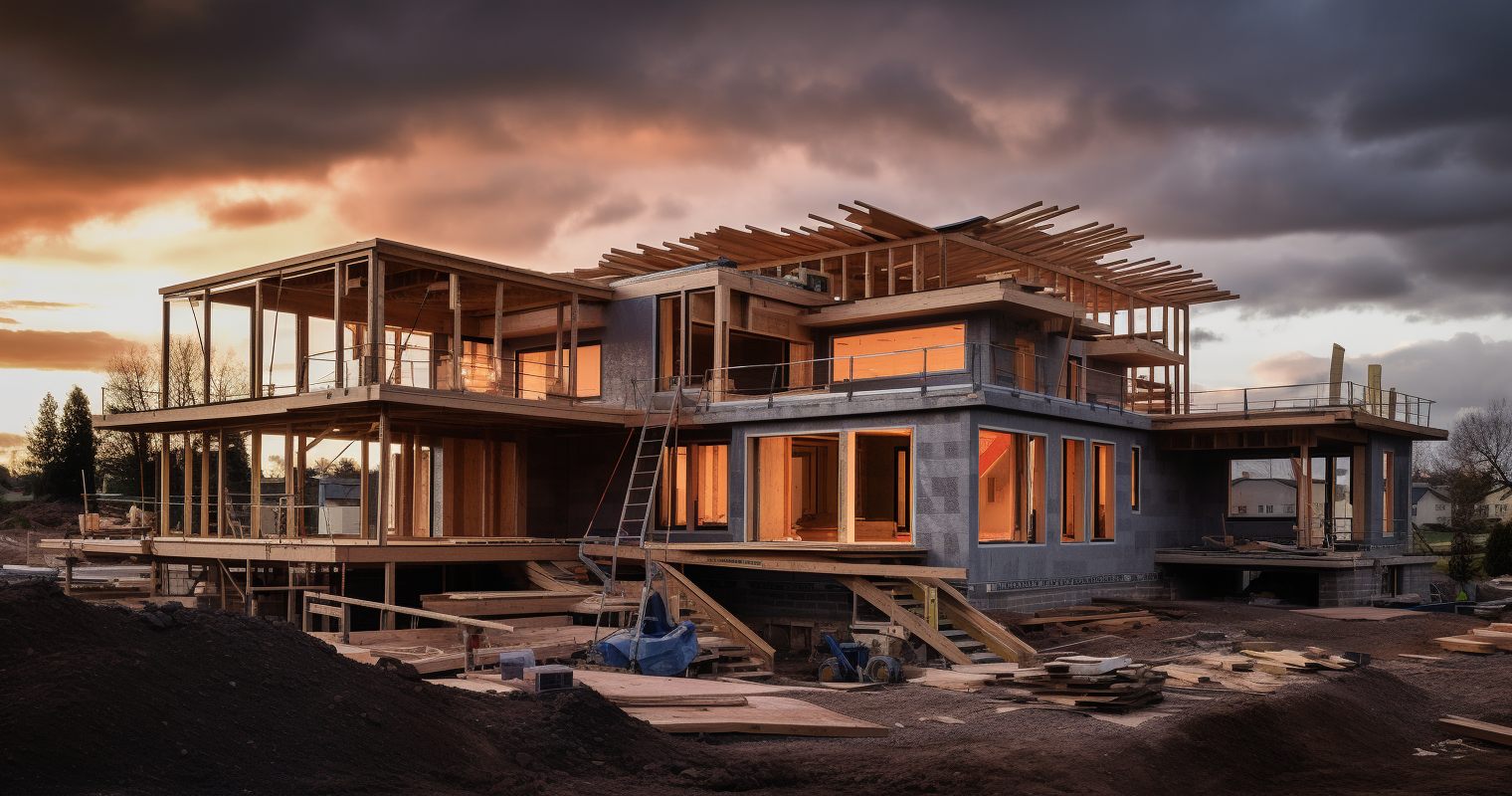
Building or renovating property in Croatia means working through a structured, regulation-heavy permit process governed principally by the Zakon o gradnji (Building Act) and the national spatial planning framework. A planning permit — called a građevinska dozvola — is compulsory for most new construction and substantial renovation works. Foreign nationals are generally able to purchase land and commission building projects, although the rules on ownership differ according to nationality and the type of land in question.
| Item | Details |
|---|---|
| Building permit name | Građevinska dozvola — mandatory for most new construction and significant renovation |
| Permit processing time | Up to 60 days standard; as of 2026, simpler projects may be issued within 30 days under new legislation |
| Application system | eDozvola / ePermit — national online system managed by the Ministry of Physical Planning, Construction and State Assets |
| Location permit validity | 2 years from the date it becomes final; building permit application must be submitted within this period |
| Fines for illegal construction | €20,000–€30,000 as of 2026 under the new Building Act |
| EU/EEA buyers | Same property rights as Croatian citizens (except agricultural land and protected zones) |
| Non-EU buyers | Require reciprocity agreement and ministerial consent before land registry registration |
| Heritage buildings | Around 13% of buildings in Croatia fall within protected cultural-historical complexes |
Do you need planning permission to build or renovate in Croatia?
A building permit (građevinska dozvola) is an official state authorisation that grants the right to begin construction or reconstruction of a house or other structure. For the vast majority of construction projects in Croatia, securing this permit before breaking ground is a legal requirement — commencing work without one is not permitted. This obligation encompasses new builds, substantial extensions, and major structural renovation works.
While Croatia’s permit framework is nationally legislated, local municipalities retain considerable independence over zoning decisions and urban planning matters. In contrast to more centrally administered systems such as those found in France or the Netherlands, Croatia’s process has historically differed from one county or municipality to the next — although ongoing reforms are pushing the system toward greater consistency nationwide.
Croatia’s updated construction laws are now active, introducing faster permit issuance, stricter penalties for building without authorisation, changes to spatial planning rules, and zero-emission building requirements. For less complex structures, a construction permit may now be granted on the basis of an initial design alone, and in many instances permits will be issued within 30 days — a substantial improvement on what was previously possible. The standard processing window for building permits nonetheless remains up to 60 days and may be longer depending on the local authority and the nature of the project.
Roughly 60% of new construction projects in Croatia require a full building permit, while certain minor renovation works may only call for a notification or a simplified approval process. It is always advisable to confirm with the relevant local authority whether your particular project triggers the full permit procedure or is eligible for a lighter-touch route.
Step-by-step: how to apply for a building permit in Croatia
- Check the spatial plan (prostorni plan). The first step before any construction or reconstruction project is to establish what type of building activity is permitted on your land. This means reviewing the designated purpose of your plot within the spatial plan of your city or municipality. Spatial plans are accessible digitally through the Croatian information system of spatial planning. Understanding whether construction is even lawful on your plot is essential — on certain parcels, building is entirely prohibited.
- Obtain a location permit (lokacijska dozvola) if required. Among the various approvals needed for lawful construction, the location permit, building permit, and use permit are the most significant. The location permit remains valid for two years from the date it becomes final, and the building permit application process must begin within that window. Applications for a location permit are submitted to the competent office for construction and physical planning or through the ePermit system.
- Commission a main project (glavni projekt). The main project is a set of coordinated technical drawings and designs demonstrating that the proposed construction satisfies the fundamental requirements and conditions set out under Croatian law. It must be produced by licensed Croatian architects and engineers and encompasses architectural, structural, electrical, and mechanical components.
- Gather supporting documentation. You will need to provide proof of ownership or the legal right to build, a geodetic survey, evidence of payment of administrative fees and utility contributions (komunalni i vodni doprinosi), and formal consents from public utility providers covering water, electricity, and sewage.
- Submit the application via eDozvola/ePermit. Applications for building permits may be lodged electronically or presented in person at the competent administrative body. The ePermit platform ensures that permits are processed according to uniform procedures across Croatia, allowing applicants to complete all necessary steps digitally and monitor their application’s progress at any point. Foreign investors typically work through an authorised local representative who handles the electronic process on their behalf.
- Await approval and obtain a use permit (uporabna dozvola) upon completion. The relevant authority examines the submitted materials to verify compliance with spatial plans, building regulations, and technical standards. Once construction is finished, you must obtain a use permit before the building may lawfully be occupied, sold, or registered.
Administrative fees differ according to the size, category, and location of the project. Always confirm the current fee schedule with the Ministry of Physical Planning, Construction and State Assets or your local county office, as charges are updated periodically.
What are the rules around listed buildings, conservation areas, and heritage protection in Croatia?
Approximately 13% of buildings in Croatia are listed structures, and restoring or reconstructing such buildings of particular architectural or historical importance requires specific licences. This is a notably high proportion — broadly comparable to the densely protected historic townscapes found in Italy — and reflects Croatia’s remarkable wealth of Roman, Venetian, and medieval heritage, especially concentrated along the Adriatic coastline.
Heritage protection in Croatia is underpinned by the Law on the Protection and Preservation of Cultural Heritage. The Law on the Protection and Preservation of Cultural Property, adopted by the Croatian Parliament in December 2024, establishes a comprehensive legal framework for safeguarding the country’s cultural assets.
The Register of Cultural Goods of the Republic of Croatia is a publicly accessible record maintained by the Ministry of Culture and Media. It comprises three separate lists: the List of Cultural Goods, the List of Cultural Goods of National Significance, and the List of Cultural Goods under Preventive Protection. The Directorate for the Protection of Cultural Heritage, operating under the Ministry of Culture and Media, is responsible for managing this Registry, which is available as a Geoportal at geoportal.kulturnadobra.hr.
If your property is a protected cultural asset or falls within a cultural and historical unit, additional authorisations will be required before any works may be carried out. Properties under special protection will be recorded in the Register of Cultural Goods, which can be searched through the Ministry of Culture and Media’s online search function.
Prior to beginning any construction or repair works that could alter the character or integrity of a historic building, you must obtain authorisation from the competent conservation department or, in the capital, the City Office for Protection of Cultural Monuments and Nature of the City of Zagreb. An authorisation is also needed when demolishing an unprotected structure located within a cultural and historical unit.
Property owners who carry out works on a protected cultural asset without the necessary authorisation, or in breach of the authorisation granted, may face criminal liability. The Ministry of Culture and Media operates a network of 19 local conservation departments distributed across the country. These offices can clarify the extent of any protection zone applicable to your property and advise on what authorisations are required for the works you intend to carry out.
In relation to the sale of cultural heritage, a statutory right of pre-emption exists in favour of municipalities, cities, counties, and the Republic of Croatia. Only once those authorities have declined to exercise that right may an owner sell a listed heritage property to a third party, and only under the same terms that were offered to those public bodies. Checking the heritage registers thoroughly before acquiring any older property in Croatia is strongly recommended.
What permits and licences are required when building or renovating in Croatia?
In addition to the core building permit, a construction project in Croatia typically requires a range of supplementary approvals. The principal ones are outlined below. Fees and processing times for each should be confirmed directly with the issuing authority, as they are subject to periodic revision.
- Location permit (lokacijska dozvola). Required for larger or more complex projects. This permit defines the form and dimensions of the building plot, the positioning of the structure, its size and footprint, and the conditions and method for connecting to the public road and municipal infrastructure.
- Environmental impact assessment (EIA). An EIA evaluates the acceptability of a proposed intervention from an environmental standpoint and identifies any necessary protective measures. The procedure takes place in the early stages of project planning, before a location permit is issued. The authority responsible for overseeing this process is the Ministry of Environmental Protection and Green Transition.
- Utility connection permits. A building permit will only be granted where it is feasible to connect the plot to the road network, to the public wastewater drainage system (or a permitted private drainage arrangement), and to a low-voltage electricity supply. Individual consents from utility providers for water, electricity, sewage, and gas connections are necessary and are typically gathered via the eDozvola system.
- Conservation department authorisation. Necessary where the property or its surrounding zone is recorded in the Register of Cultural Goods. Full details are set out in the heritage section above.
- Use permit (uporabna dozvola). Granted following completion of construction and a formal on-site inspection, provided all required documents have been lodged. Without this permit, the building cannot lawfully be occupied, sold, or registered in the land book.
- Waste management plan. Documentation detailing how construction waste will be handled must be included as part of the main project submission.
Engaging Croatian architects, engineers, and legal professionals who specialise in the building permit process can save considerable time and help avoid costly misunderstandings, given their familiarity with municipal requirements and documentation standards. This is particularly valuable for foreign nationals who are unfamiliar with Croatian administrative procedures.
How do you find a reliable, trustworthy builder in Croatia?
Croatia has been a member of the European Union since 2013, meaning its building regulations conform to EU standards while retaining certain local specifics. The construction sector is regulated at national level, and contractors carrying out licensed work must operate within that framework. The principal professional body for civil engineers and contractors is the Croatian Chamber of Civil Engineers (Hrvatska komora inženjera građevinarstva — HKIG), which maintains a register of certified practitioners. Contact details: Ulica grada Vukovara 271/IV, 10000 Zagreb; website: www.hkig.hr.
Before engaging a builder, take the following practical steps to assess any contractor thoroughly:
- Verify registration. Request the contractor’s registration number and confirm their listing on the relevant professional register. Directories of certified designers and engineers are available through the ePermit service and on the websites of the Croatian Chamber of Architects, the Croatian Chamber of Civil Engineers, the Croatian Chamber of Electrical Engineers, the Croatian Chamber of Mechanical Engineers, and the Croatian Chamber of Chartered Geodetic Engineers.
- Check insurance. Any reputable builder should hold both professional liability insurance and public liability cover. Request documentary evidence of this coverage before signing any agreement.
- Request written references. Ask for the contact details of previous clients, particularly those who commissioned comparable projects. Where possible, arrange to visit completed work in person.
- Insist on a written contract. All work, timelines, materials, and payment terms should be set out clearly in a comprehensive written agreement, ideally drafted or reviewed by a Croatian solicitor. Verbal arrangements afford very limited legal protection should disputes arise.
- Structure payments in stages. Tie payments to verified project milestones rather than handing over large sums at the outset. Paying the full contract value before work has begun should be avoided entirely.
- Be alert to unregistered tradespeople. Illegal construction remains a widespread issue in Croatia, and structures built without the appropriate permits are classified as illegally constructed. Employing unregistered workers who perform unpermitted work can expose you to legal liability, even if you were unaware that proper authorisation was absent.
Frequent problems encountered by foreign property owners include contractors who quote low initial prices but add inflated charges during the project, those who take payment and fail to return, and renovation work later discovered to have been carried out without the necessary permits. Always retain a qualified Croatian lawyer to examine contracts and appoint a licensed architect or project manager to oversee works on your behalf if you are unable to be present in Croatia throughout the construction period.
How do you find a qualified local architect in Croatia?
The main project required for a building permit must be prepared by certified architects (arhitekti) and engineers (inženjeri). To practise architecture in Croatia, registration with the Croatian Chamber of Architects (Hrvatska komora arhitekata — HKA) is mandatory. This statutory body regulates the profession and maintains the official directory of qualified architects.
Croatian Chamber of Architects (Hrvatska komora arhitekata — HKA)
Address: Ulica grada Vukovara 271/2, 10000 Zagreb, Croatia
Website: www.arhitekti-hka.hr
Email: [email protected]
Membership enquiries: [email protected]
The Chamber facilitates the submission of various requests, including membership applications, and enables architects qualified abroad to apply for registration for temporary or occasional service provision in Croatia, renewals, and recognition of foreign professional qualifications.
If you are already professionally established in another EU/EEA country, you are permitted to offer architectural services on an occasional and temporary basis without needing to register a business presence in Croatia or join the Chamber, and without being subject to a prior vetting requirement. The deadline for receiving a certificate confirming recognition of a foreign professional qualification under the general system is 90 days.
When searching for an architect as a foreign client, the following practical considerations are worth bearing in mind:
- Ask whether the architect has prior experience working with international clients and handling permit applications on behalf of overseas investors. The permit process can be demanding for foreign parties, and a well-practised local firm can offer comprehensive guidance on zoning, material selection, and energy efficiency to reconcile your vision with local regulatory requirements.
- Confirm that the architect is listed in the HKA directory and holds a current practice certificate.
- Establish whether the architect or their practice can work effectively in a language you are comfortable using. While no legal requirement exists for architects to communicate in any particular language, clear and consistent communication throughout a complex project is indispensable.
- The list of certified architects and engineers is also published on the website of the Ministry of Physical Planning, Construction and State Assets.
What are the common pitfalls when buying land to build on in Croatia?
Acquiring land in Croatia with the aim of building on it presents a distinct set of risks that go beyond those involved in purchasing an existing property. Thorough due diligence before any purchase agreement is signed is absolutely essential.
Zoning and spatial planning
Reviewing the relevant spatial plan (prostorni plan) is a critical first step — every municipality in Croatia has a spatial plan that sets out what may be built, where, and to what extent, including maximum heights, footprints, setback distances, and the permitted use of buildings. Croatian land is categorised into various designations, including building land, agricultural land, and forest land, among others. Confirming that your intended plot is zoned as building land is essential if you plan to construct or extend, because the zoning designation legally controls what types of development or alterations may take place — land designated as agricultural typically prohibits residential construction.
Requesting a zoning certificate
Before committing to a purchase, always obtain a zoning certificate (uvjerenje o namjeni zemljišta) from the municipality in which the property is located. This document explicitly states the official designated use of the land. Having a legal expert review it is vital to confirm that the designation aligns with your intended purpose, particularly where construction is planned.
Title, cadastre, and ownership history
Croatia operates two parallel land records: the land book (zemljišna knjiga) held by the courts and the cadastral register (katastar) administered by the State Geodetic Administration. Mismatches between the two systems are common and can give rise to significant legal complications and delays. Always obtain a current land registry extract and verify that it corresponds with the cadastral record before signing any purchase agreement. A qualified Croatian notary (javni bilježnik) and a Croatian property lawyer should be engaged to conduct comprehensive title due diligence.
Restrictions near protected areas and the coast
The Law on Nature Protection imposes special rules on the sale of immovable property located within national parks, nature parks, reserves, and similar areas, and foreign nationals are not permitted to acquire property in such zones. Land in proximity to the Adriatic coast is also subject to separate maritime domain regulations, which may restrict the type and location of construction permitted near the shoreline.
Agricultural land restrictions
At present, foreign individuals from outside the European Union are not permitted to buy agricultural or forest land directly in Croatia. One commonly used legal alternative is to establish a Croatian-registered company to hold such land. If your aim is to own a vineyard, olive grove, or comparable agricultural holding, be prepared to take these additional legal steps.
Utility availability
Particularly in rural and coastal areas, the availability of mains water, electricity, sewage connections, or road access should never be assumed. Before committing to a purchase, verify the availability and cost of connecting to all essential services. A building permit will only be issued where connection to the road network, the public wastewater drainage system (or an approved alternative), and a low-voltage electricity supply is feasible.
Illegal construction history
Illegal construction is a persistent issue in Croatia, and any structure built without the appropriate permit or in breach of applicable laws is classified as illegally constructed. A legalisation process exists to allow owners of such buildings to seek to bring them within the legal framework — a step that is necessary before those buildings can be used, sold, inherited, or otherwise dealt with legally. Always verify the legal status of any existing structures on land you are considering purchasing.
What are the rules around foreign ownership and financing for construction projects in Croatia?
Croatia’s framework for foreign property ownership is broadly permissive within the EU context, but the specific rules depend on your nationality and the category of land involved.
EU, EEA, and Swiss citizens
Citizens of EU and EEA member states enjoy the same property acquisition rights as Croatian nationals, as a result of harmonisation with EU legislation. If you hold citizenship of an EU or EEA country (Iceland, Liechtenstein, or Norway) or of Switzerland, you may purchase Croatian apartments and houses on the same basis as Croatian citizens, with one significant exception — agricultural land is governed by separate rules.
Non-EU nationals
For citizens of countries outside the EU and EEA, acquiring property in Croatia is more involved. Such buyers must obtain approval from the Croatian Ministry of Justice, which assesses whether a reciprocity agreement exists between Croatia and the applicant’s country of origin. The process is navigable with proper legal assistance, though approvals can take several months to come through. The fundamental requirement is that both a reciprocity agreement and ministerial consent must be in place before ownership can be registered — without this approval, the purchase contract has no legal effect.
To summarise: EU, EEA, and Swiss citizens can purchase apartments, houses, and building plots on the same terms as Croatian citizens, while non-EU nationals must demonstrate that their home country has a reciprocity arrangement with Croatia and typically need ministerial approval before ownership is formally registered. If no reciprocity agreement exists between your country and Croatia, a purchase may be entirely blocked, making it essential to check your country’s status before beginning your property search.
Ownership structures and company formation
Croatian law permits all entities — both foreign and domestic — to establish and own businesses and to engage in all forms of commercial activity; the Constitution provides that all entrepreneurs have equal legal standing. Where direct personal ownership of agricultural land or certain other categories of land is restricted, registering a Croatian company (d.o.o.) is a widely used alternative approach, though this comes with its own administrative, tax, and governance responsibilities.
Financing
Access to Croatian mortgages and construction loans for foreign nationals varies between lenders and depends on residency status, income source, and nationality. EU citizens with Croatian residency generally have wider access to local credit products. Non-EU nationals and non-residents may encounter greater difficulty obtaining financing from Croatian banks and may need to rely on lending from their home country or through international lenders. Consulting a Croatian financial adviser and comparing available mortgage products before fixing a project budget is strongly recommended. The Croatian National Bank (Hrvatska narodna banka) is the financial sector regulator, and its website at www.hnb.hr provides guidance on the Croatian banking sector.
Rights once ownership is registered
Once ownership has been entered in the Croatian land book, both foreign and domestic owners have identical rights to use, rent, sell, or inherit the property — the difference lies primarily in the route to registration rather than the rights that follow from it.
What official sources should you consult when planning to build or renovate in Croatia?
Regulations, fees, and procedures in Croatian construction law change regularly — particularly in the wake of the package of new building laws that took effect in early 2026. Current requirements should always be verified directly with the relevant official body. Key sources of authoritative information include:
| Body | Remit | Website |
|---|---|---|
| Ministry of Physical Planning, Construction and State Assets (MPGI) | National authority for building permits, construction standards, certified professional lists | mpgi.gov.hr |
| eDozvola / ePermit system | Online portal for submitting and tracking permit applications nationally | eDozvola.mgipu.hr |
| Croatian Information System of Spatial Planning | Digital access to spatial plans and zoning information for all municipalities | ispu.mgipu.hr |
| Ministry of Culture and Media — Directorate for Cultural Heritage Protection | Heritage registers, conservation department contacts, listed building checks | min-kulture.gov.hr |
| Register of Cultural Goods Geoportal | Searchable GIS database of protected buildings and zones | geoportal.kulturnadobra.hr |
| State Geodetic Administration (DGU) | Cadastral data, land boundaries, geodetic surveys | dgu.hr |
| Land Registry (Courts / Ministry of Justice) | Ownership records, encumbrances, title verification | oss.uredjenazemlja.hr |
| Croatian Chamber of Architects (HKA) | Register of certified architects, foreign qualification recognition | arhitekti-hka.hr |
| Croatian Chamber of Civil Engineers (HKIG) | Register of certified civil engineers and contractors | hkig.hr |
| Ministry of Environmental Protection and Green Transition | Environmental impact assessments, nature protection rules | mingor.gov.hr |
| Invest Croatia | Investment guidance for foreign nationals, overview of permit procedures | investcroatia.gov.hr |
Alongside these national resources, always consult your local county office for physical planning and construction (Ured za prostorno uređenje i gradnju), as local rules and spatial plans are applied at the county and municipal level and may introduce requirements that go beyond the national baseline.
Frequently asked questions
How much does it cost to build a house in Croatia?
Construction costs in Croatia differ considerably depending on location, materials chosen, and the specification of the build. As of 2025, basic residential construction on the Dalmatian coast can range from around €1,000 to €2,500 or more per square metre once professional fees, permits, and utility connections are factored in. Costs tend to be lower in inland areas. These figures are indicative only — always obtain multiple detailed quotes from registered contractors and build in a contingency allowance of at least 15–20% to cover unforeseen expenses. A local quantity surveyor or architect can provide guidance on current market pricing.
How long does the full planning and construction process take in Croatia?
From the initial analysis of a site through to moving into a completed new build, the entire process typically spans anywhere from 18 months to several years, depending on the complexity of the project, the workload of the relevant municipality, and whether complications emerge with title, heritage protection, or environmental assessments. The standard processing window for the building permit itself is up to 60 days, though this may be extended depending on local conditions and project specifics. Under the 2026 reforms, more straightforward projects may now qualify for a 30-day turnaround.
Do I need to speak Croatian to manage a building or renovation project?
All official documentation, permit submissions, and communications with Croatian authorities must be in Croatian. If you do not speak the language, appointing an authorised representative — typically a qualified Croatian architect, lawyer, or project manager — to act on your behalf will be necessary. Foreign investors usually submit their applications through such a representative, who oversees the process electronically. Professional interpretation and translation fees should be factored into your project budget throughout.
What happens if building work is carried out without a permit in Croatia?
Under the updated Building Act, as of 2026, penalties for illegal construction range from €20,000 to €30,000. Where the local authority determines that a structure has been built in a manner not permitted under the spatial plan, it may issue a demolition order requiring removal within two weeks of the date of issue. Beyond fines and demolition, unpermitted buildings cannot legally be sold, mortgaged, or inherited, meaning the long-term financial implications of unlicensed construction can be extremely serious.
Are building standards or qualifications from other countries recognised in Croatia?
Professional qualifications from EU/EEA countries benefit from mutual recognition under EU rules. If you are already professionally active in another EU/EEA country, you may provide architectural and engineering services on an occasional and temporary basis in Croatia without registering a local presence. However, Croatian law governs technical construction standards, and these align with EU requirements while incorporating local specifics. Designs prepared to the technical standards of another country will need to be adapted to meet Croatian requirements, and a certificate validating the conceptual design is required when the project has been developed under foreign regulations.
Can I dispute a contractor’s work or demand compensation if the build goes wrong?
Property disputes proceeding through the Croatian courts typically take between one and three years to resolve, depending on the complexity of the matter, with legal costs varying from a few thousand euros for straightforward cases to tens of thousands for fully contested litigation. Alternative routes including mediation through the Croatian Mediation Association and arbitration for commercial disputes can deliver faster outcomes where both parties are willing to participate. The most effective safeguard is a thorough written contract containing clear remedies, staged payment terms, and a performance bond or retention clause. Always have a Croatian lawyer draft or review any contractor agreement before you sign.
Are there any grants or subsidies available for renovating historic properties in Croatia?
The Ministry of Culture and Media issues an annual public call for funding of programmes covering the protection, preservation, restoration, presentation, and maintenance of cultural heritage. Both private individuals and legal entities who own historic buildings are eligible to apply. Funding is disbursed through annual programmes. EU structural funds have also been used to support heritage projects within Croatia. Visit the Ministry of Culture and Media website at min-kulture.gov.hr for details of current calls and eligibility requirements.
What is the maritime domain and how does it affect coastal construction in Croatia?
The maritime domain (pomorsko dobro) is a constitutionally defined area of Croatian public land encompassing the sea, the seabed, and the adjacent coastal strip. It cannot be privately owned. Construction on or immediately next to the maritime domain is subject to stringent controls, and the boundary of this zone is not always clearly visible on the ground. If you are considering purchasing land or property close to the Adriatic coast, it is essential to verify the exact location of the maritime domain boundary with the relevant county port authority and a specialist Croatian lawyer before proceeding, as any encroachment onto the maritime domain can invalidate a building permit and result in a demolition order.