
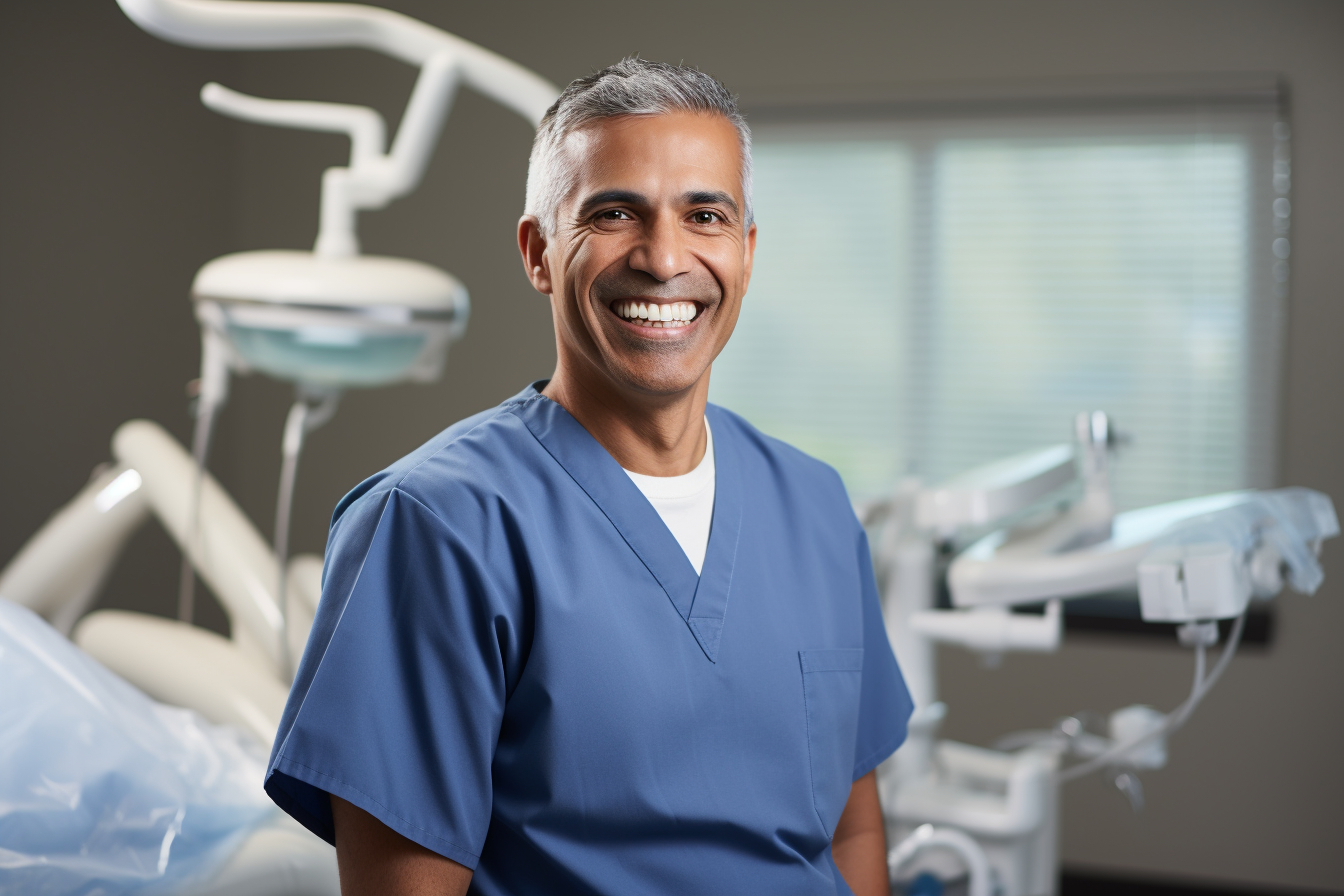
Cyprus runs a dual-track dental system that blends public and private provision. The national health scheme — GeSY (General Healthcare System) — limits its dental coverage to a single basic annual check-up for enrolled members; almost everything else, from fillings and crowns to root canal therapy and implants, falls outside that scope and must be funded privately. Fortunately, the private dental sector on the island is both highly regarded and considerably more affordable than in much of Europe, making the overall situation workable for the majority of expats living in Cyprus.
| Item | Details |
|---|---|
| Public dental coverage (GeSY), as of 2025 | One basic check-up and cleaning per year for registered beneficiaries |
| Most dental treatment | Paid privately out-of-pocket or via private insurance |
| Typical private check-up / scale & polish, as of 2025 | Approx. €30–€50 |
| Typical private filling, as of 2025 | Approx. €60–€80 |
| Dental implant starting price, as of 2025 | From approx. €635–€910 per implant (varies by clinic and city) |
| Regulatory body for dentists | Cyprus Dental Council (registration) + Cyprus Dental Association (annual licence) |
| GeSY enquiries | Call 17000 or +357 22 017 000 |
How dental care in Cyprus is structured — public, private, or both?
Healthcare in Cyprus is organised around two parallel systems: the publicly funded national scheme known as GeSY (also referred to as GHS), and an extensive private sector. GeSY was introduced in stages from 2019 and functions as a low co-payment model overseen by the Ministry of Health. Clinics and hospitals wishing to participate must obtain accreditation to do so.
GeSY extends coverage to the entire resident population, granting all enrolled beneficiaries access to care. The scheme blends elements of a National Health Service with a Social Health Insurance model, drawing its funding from contributions made by employees, employers, and the state, and engaging providers from both the public sector and contracted private facilities.
The rollout of GeSY brought a notable reduction in what households paid directly for healthcare — from roughly 45% of health expenditure in 2018, one of the highest proportions in the EU, down to around 10% by 2021. In terms of dental provision, however, GeSY is deliberately narrow in what it offers. Unlike the UK’s NHS, which has historically subsidised a wider range of dental procedures, or Australia’s public dental system, which targets children and lower-income adults, GeSY’s dental mandate is largely preventive. The overwhelming share of dental treatment in Cyprus is delivered through the private sector and paid for out of pocket or via private insurance.
The private healthcare sector in Cyprus is large, well-developed, and of a high standard. Many expats gravitate towards private care for its comfort, accessibility, and shorter waiting times, often backed by a private health insurance policy. The two systems are not mutually exclusive — residents can freely draw on public provision for basic needs and emergencies while using private clinics for more complex or time-sensitive treatment.
How expats can find and register with a dentist in Cyprus
Visiting a private dentist in Cyprus involves none of the formal registration steps associated with enrolling a GP under GeSY. You simply identify a practice, make an appointment, and turn up. The only scenario in which formal registration becomes relevant is if you wish to access GeSY’s annual dental check-up, for which you must first be an enrolled GeSY beneficiary.
Eligibility for GeSY enrolment generally extends to EU/EEA nationals who work or reside permanently in Cyprus, non-EU nationals holding a valid Cypriot residence permit, and qualifying dependent spouses and children. Once you have a social security number and are officially recorded as a resident, GeSY registration can be completed either online or in person.
For those seeking a private dentist, the Pancyprian Dental Association maintains a searchable directory of registered and licensed practitioners across all parts of the island, making it a reliable starting point. The Cyprus Dentists directory at cyprusdentists.com is another useful resource, listing practices in the main population centres of Nicosia, Limassol, Larnaca, and Paphos. Expat communities on social media are particularly helpful for sourcing personal recommendations, especially when looking for practices whose staff communicate in languages other than Greek.
Every dentist legally working in Cyprus must hold two credentials: an entry in the Register of Dentists maintained by the Cyprus Dental Council, and a current annual Professional Practice Licence issued by the Cyprus Dental Association. To confirm that a particular practitioner holds valid registration, contact the Cyprus Dental Council at [email protected] or consult the official government services portal at gov.cy.
Whether dental treatment is covered by public healthcare or social security in Cyprus
Preventive dental services were incorporated into the GeSY benefits package administered by the Health Insurance Organisation (HIO) from December 2020. The scope of that coverage, however, is tightly defined.
As a GeSY member, you are entitled to one free basic dental check-up each year with a registered dentist. This appointment covers preventive assessment and minor care. Anything beyond that — including fillings, tooth extractions, and orthodontic treatment — falls outside the public entitlement, requiring the patient either to pay privately or to draw on a private insurance arrangement. Crowns, dentures, and cosmetic dental work are not included within public system coverage at all.
The contrast with dental provision in other European countries is notable. In France, social security reimburses a portion of the cost of fillings and prosthetics according to set reference rates. In Germany, statutory health funds contribute a fixed subsidy towards dentures and basic restorative procedures. In Cyprus, the state’s dental role stops at prevention; restoration is firmly in the domain of private providers.
For the majority of expats, this means making financial provision for dental treatment outside the public system — whether through self-funding or by taking out a private health policy that includes a dental component. The Health Insurance Organisation (HIO) website is the authoritative source for current information on what the GeSY benefits package includes and excludes.
What dental treatment typically costs in Cyprus and how payments work
By European benchmarks, private dental treatment in Cyprus is widely regarded as good value. A scale and polish at a private clinic costs in the region of €30–€50, while a composite filling typically runs to €60–€80 depending on the extent of the work — figures that compare very favourably with equivalent procedures in Western Europe or North America (as of 2025).
More involved procedures carry proportionally higher price tags. Dental implants in Cyprus start from around €635 to €910 per implant, with an average entry-level price of approximately €741 per implant (as of 2025). Where a clinic is situated can influence what it charges — practices in major cities or areas with strong tourist footfall may price their services higher than those in smaller towns. Bear in mind that the total cost of an implant-based restoration often extends well beyond the implant itself, incorporating specialist consultations, pre-treatment 3D imaging, bone grafting where required, and the final crown. Always ask for a fully itemised estimate before any commitment.
The table below sets out indicative price ranges for common private dental procedures in Cyprus (as of 2025). Fees vary between individual providers, cities, and the complexity of each patient’s case, so confirm current charges directly with your chosen clinic.
| Treatment | Approximate cost range |
|---|---|
| Check-up / scale & polish | €30–€50 |
| Filling (composite) | €60–€80 |
| Tooth extraction | €50–€200 (varies by complexity) |
| Root canal treatment | From approx. €200+ (varies by tooth) |
| Dental crown | From approx. €250–€500+ |
| Single dental implant (implant + crown) | From approx. €635–€910+ |
At private clinics in Cyprus, payment is generally due directly to the practice at or shortly after the appointment; upfront settlement is the standard expectation. If you are covered by private dental insurance, a minority of insurers operate direct-billing agreements with specific clinics, but it is more typical for patients to settle with the clinic themselves and then submit receipts to their insurer for reimbursement. Clarify the billing and claims process with both parties before your appointment.
Cyprus has also developed a noteworthy dental tourism trade, with visitors travelling to the island expressly for dental treatment, drawn by the combination of competitive pricing and high clinical standards. All fees are set by individual clinics rather than regulated centrally, so it is always worth confirming current charges before you proceed.
Whether private health insurance covers dental treatment in Cyprus and if it is worthwhile
Private health insurance products available in Cyprus span a broad spectrum — from policies covering inpatient hospital stays only, through to comprehensive packages combining inpatient and outpatient care, with optional extensions for maternity, dental, optical, and emergency cover worldwide. Dental benefits are generally an optional bolt-on rather than a built-in feature of a standard policy.
When a private health policy includes dental cover as an add-on, it can bridge the gap left by GeSY’s narrow public entitlement — covering more extensive dental procedures, optical services, and wellness treatments that the public scheme does not provide. When assessing a dental add-on, pay particular attention to the annual monetary cap on dental claims, any waiting period before the dental benefit can be used (typically three to six months), and the policy’s categorisation of treatment as preventive, restorative, or cosmetic.
Certain categories of treatment are routinely excluded. Cosmetic dentistry, pre-existing dental conditions, vision correction, and chronic disease management that predates the policy start date frequently appear in the exclusions schedule. If you are currently mid-way through any dental treatment, check the terms very carefully before switching insurer. Orthodontic work and aesthetic procedures such as whitening and veneers are rarely covered under standard dental add-ons regardless of the insurer.
Cyprus private insurers operate under the Insurance Companies Control Service (ICCS) within the Ministry of Finance, applying EU Solvency II regulatory standards. The ICCS website provides registers of authorised insurers and intermediaries, which is useful for verifying the credentials of a provider or broker. Standard policy features include waiting periods, pre-existing condition clauses, no-claim discount structures, and lifetime benefit limits.
International health insurance policies from global providers are generally accepted at private clinics in Cyprus, though direct-billing availability varies and should be confirmed with your insurer before treatment begins. Many expats who have retired to Cyprus find that reasonable dental cover can be secured for less than €100 per month, depending on age and medical profile (as of 2025). Obtaining at least three comparison quotes and scrutinising the exclusions section carefully is strongly advisable.
The standard and quality of dental care in Cyprus
Private hospitals and clinics in Cyprus are broadly regarded as offering a high standard of care that is comparable to elsewhere in Europe, while remaining relatively cost-effective. This reputation holds equally in the dental sphere, where private practices in the island’s main towns provide a comprehensive range of modern treatments.
Practising dentistry in Cyprus requires registration with the Cyprus Dental Council. Registration in the Dentist Register is granted to individuals whose qualifications the Council recognises as meeting the standards established by the Dentists’ Registration Law. A significant proportion of Cypriot dentists hold degrees from European institutions — universities in Greece, the United Kingdom, Germany, and other EU member states are well represented — and the profession has a strong culture of ongoing professional development.
In areas with substantial expat populations — Limassol, Paphos, Larnaca, and Nicosia in particular — finding a dental practice where at least some staff speak fluent English alongside Greek is generally straightforward. A number of clinics actively market themselves to international patients and highlight their multilingual capabilities. Rural and inland parts of the island offer fewer choices, and specialist services such as orthodontics, periodontics, and oral surgery are more heavily concentrated in larger urban centres.
The island’s growing dental tourism sector is itself evidence of its clinical reputation. Urban practices at the established end of the market offer modern imaging technology, digital smile design, CAD/CAM crown fabrication, and implantology. As with any healthcare market, quality is not uniform across all practitioners, so reviewing verified patient feedback and confirming credentials before committing to significant treatment is always a sensible precaution.
Language and practical considerations for expats visiting a dentist in Cyprus
Greek is the official language of the Republic of Cyprus and the default language of dental consultations. That said, in tourist-frequented and expat-dense areas, English is commonly spoken to a high standard within dental clinics, and a good number of practices publish their information in both languages on their websites.
A working knowledge of Greek is in fact a statutory requirement for dentists registered in Cyprus. The Cyprus Dental Council may call applicants to interview in order to assess language proficiency, with a C1 level certificate cited as the desired benchmark. This means every registered practitioner has at minimum a functional command of Greek; many, particularly those who completed their training abroad, also speak fluent English.
If you are unsure whether a clinic offers consultations in a language you are comfortable with, call ahead before making your appointment. GeSY-contracted dental practices tend to use Greek-language paperwork and consent forms. Private clinics that cater to an international clientele are more likely to supply English-language treatment plans and documentation, though this varies by practice. When undergoing a complex or multi-stage procedure, it is reasonable to ask explicitly for a written treatment plan with individually itemised costs in your preferred language; established clinics will generally regard this as a routine request.
The culture of dental care in Cyprus — especially in private settings — tends to be communicative and patient-focused. Asking for each stage of treatment to be explained, seeking a second opinion, or requesting a written cost estimate before proceeding are all perfectly normal. In public health settings where Greek is the primary language, bringing along a bilingual friend or making use of a translation application can ease any communication difficulties.
What expats should do when facing a dental emergency in Cyprus
Dental emergencies — whether a severe toothache, an avulsed tooth, a fractured crown, or an abscess — demand swift action. In Cyprus, the most direct and reliable response is to call a private dental clinic, as the majority of established practices accommodate urgent cases at short notice.
The step-by-step process for accessing emergency dental care in Cyprus is as follows:
- Call a private dental clinic. Most reputable private dental practices in Cyprus make provision for urgent appointments and will work to see emergency patients quickly regardless of how their regular schedule looks. Dental crises can arise without warning, and experienced clinics are well-prepared for them. Store the contact number of a nearby clinic on your phone as soon as you arrive on the island.
- Search the Pancyprian Dental Association directory. If you have not yet identified a local dentist, the Pancyprian Dental Association website carries a listing of all registered and licensed practitioners across Cyprus’s towns. This is a reliable fallback for finding a qualified professional at short notice.
- For out-of-hours emergencies, go to the A&E department of your nearest public hospital. The public sector operates five district hospitals, one specialist paediatric and gynaecological hospital, three rural hospitals, and 38 health centres. Hospital emergency departments are equipped to address acute dental pain, prescribe appropriate antibiotics and analgesia, and manage acute infections — though they are not a substitute for definitive dental treatment.
- Use GeSY emergency provisions if you are registered. Under Cyprus’s public health framework, emergency medical care is available free of charge to all people without exception, including presentations at public hospital emergency departments. However, pain management and initial stabilisation are typically as far as the public system goes; any subsequent restorative dental work will need to be arranged through a dental clinic.
- Notify your insurer. If you carry private health or dental insurance, contact your insurer promptly. Some policy terms require advance authorisation even for emergency care, and most insurers operate a 24-hour assistance line for precisely these situations. Retain all receipts and request an itemised invoice from the clinic to support any subsequent claim.
Payment for emergency dental treatment at a private clinic is typically collected at the time of treatment, with reimbursement from your insurer sought afterwards. The cost of an emergency consultation, a temporary filling, or a straightforward extraction broadly aligns with standard private treatment rates. Keep all documentation carefully for insurance purposes.
Since 2023, the accident and emergency departments of certain private hospitals have joined GeSY, increasing the range of emergency services available to the public and helping to reduce waiting times — an expansion that gives GeSY-registered residents additional options when urgent care is needed.
Frequently asked questions about dental treatment in Cyprus
Does GeSY cover dental treatment in Cyprus?
GeSY entitles enrolled members to one free basic dental check-up annually with a registered dentist, encompassing preventive assessment and minor care. Anything further — fillings, extractions, orthodontic treatment — lies outside that public entitlement and must be funded privately. Standard restorative procedures, crowns, orthodontics, and implants are not part of the GeSY dental package.
How do I register for GeSY as an expat in Cyprus?
You must first secure your residency documentation (such as an MEU1, MEU3, or residence permit) and then create an account on the official GeSY Health Portal. During the online registration process you will choose a GP from the list of GeSY-approved doctors, who becomes your primary healthcare contact and referral point. For assistance, reach GeSY directly on 17000 or +357 22 017 000.
Are there English-speaking dentists in Cyprus?
Yes — particularly in the main expat and tourist centres of Limassol, Paphos, Larnaca, and Nicosia, many private dental practices employ staff who speak fluent English. It is worth phoning ahead to check language capabilities before booking. The Pancyprian Dental Association directory and expat community forums are both useful channels for identifying well-recommended practices.
How much does a filling cost at a private dentist in Cyprus?
As of 2025, a composite filling at a private clinic in Cyprus generally costs around €60–€80 depending on complexity — considerably less than comparable rates in Western Europe or North America. Always confirm the current fee schedule with your chosen clinic before your appointment.
How much do dental implants cost in Cyprus?
Entry-level pricing for dental implants in Cyprus starts at approximately €635 to €910 per implant, with an average starting figure of around €741 (as of 2025). Costs differ between clinics and locations. Supplementary procedures including bone grafts, sinus lifts, and pre-treatment 3D imaging will increase the overall total. Request a fully itemised quote before agreeing to proceed.
Is private dental insurance worth getting in Cyprus?
Given that GeSY’s dental provision amounts to a single annual check-up, serious consideration of a private dental insurance add-on — or a comprehensive health policy with dental coverage — is worthwhile, particularly if restorative work is likely. Policies range from basic inpatient cover to full plans with optional dental, optical, and maternity extensions. Examine exclusions, waiting periods, and annual benefit caps closely when comparing options.
What is the regulatory body for dentists in Cyprus?
Every dentist working in Cyprus must be entered in the Register of Dentists held by the Cyprus Dental Council and must hold a current annual Professional Practice Licence from the Cyprus Dental Association. To verify that a particular practitioner is properly registered, contact the Cyprus Dental Council at [email protected] or check through the official government services portal at gov.cy.
What happens if I need emergency dental treatment in Cyprus?
Your first step should be to contact a private dental clinic directly — most will prioritise urgent cases and can usually offer a same-day slot. For emergencies that arise outside clinic hours, attend the A&E department of your nearest public district hospital, where acute pain and infection can be treated. Emergency medical care is provided at no charge to all individuals without exception at public hospital emergency departments, though any follow-up restorative dental work will need to be arranged separately through a dental practice.
Latest: Expat Focus International Healthcare Update August 2026 →