
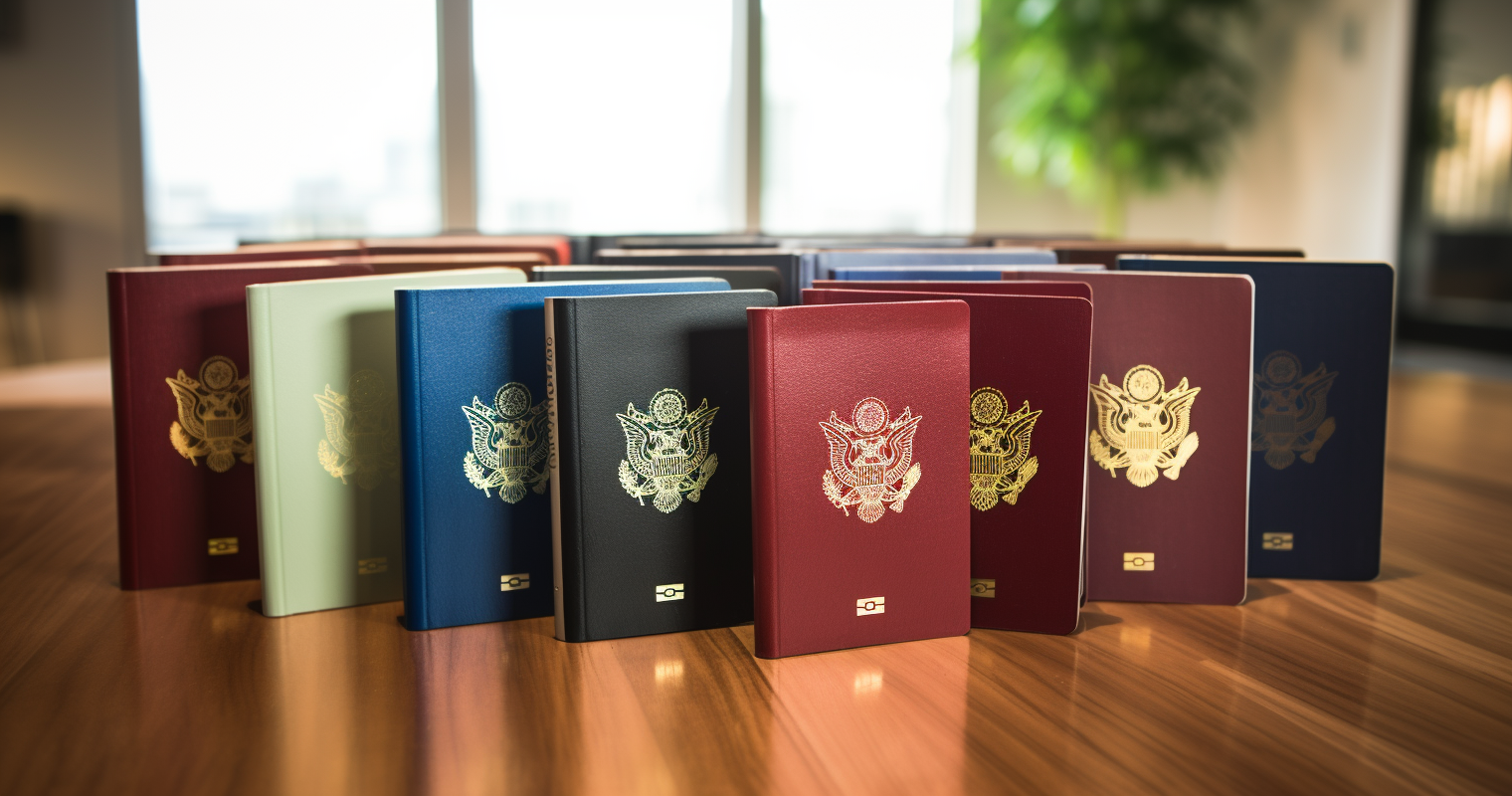
Czech citizenship can be obtained through naturalisation following a qualifying period of continuous residence — generally five years of permanent residence for non-EU nationals, or three years for EU/EEA nationals — through descent from a Czech or Czechoslovak parent or grandparent, or via a simplified declaration procedure available to descendants of former citizens. Since January 2014, the Czech Republic has fully embraced dual citizenship, meaning you are not required to give up your existing nationality when becoming Czech.
| Item | Details |
|---|---|
| Standard residency requirement (non-EU nationals) | 5 years of permanent residence (as of 2025) |
| Residency requirement (EU/EEA/Swiss nationals) | 3 years of permanent residence (as of 2025) |
| Language requirement | Czech language proficiency at B1 level |
| Application fee (adults, as of 2025) | CZK 2,000 (approx. €82); reducible to CZK 500 in special cases |
| Application fee (minors, as of 2025) | CZK 500; reducible to CZK 100 in special cases |
| Ministry processing time | Up to 180 days by law; often longer in practice |
| Dual citizenship permitted? | Yes, since 1 January 2014 |
| Czech passport ranking (2025) | 7th globally, 185 visa-free destinations (Henley Passport Index) |
Who is eligible to apply for citizenship in Czech Republic?
Czech nationality law is founded on the principle of jus sanguinis — “right by blood” — whereby descent from a Czech parent is the primary route to citizenship, with naturalisation serving as the other principal pathway. Several distinct avenues exist for those seeking to become Czech nationals, each governed by its own set of conditions.
Naturalisation after residency
Foreign nationals or stateless persons who have held a right of permanent residence for at least five years — reduced to three years for EU citizens — and who have genuinely resided in the Czech Republic for most of that period can pursue naturalisation, provided they can demonstrate good character and an adequate command of the Czech language. This general threshold is broadly in line with requirements in countries such as Germany and France, though it is shorter than the ten-year minimums imposed by certain other EU member states.
Where an applicant’s period of permanent residence falls short of these thresholds, they may still be eligible to apply if their combined total of permanent and prior temporary residence amounts to at least ten years of lawful presence in the Czech Republic.
Applicants must also show that they have genuinely lived in the Czech Republic for at least half of the required residence period, with individual absences not exceeding two consecutive months, or up to six consecutive months where there are compelling reasons.
Citizenship by descent
Any person born to a Czech citizen acquires Czech citizenship at birth. Children and grandchildren of former Czech or Czechoslovak citizens who lost their citizenship on or before 31 December 2013 are additionally entitled to reclaim ancestral citizenship through a declaration process, sometimes referred to as citizenship by descent.
This pathway enables the children and grandchildren of such former citizens to re-establish their ties to Czech nationality through a straightforward declaration, without any language examination, residency obligation, or requirement to surrender existing citizenships. Under legislation current as of December 2025, great-grandchildren are generally not eligible for the standard citizenship by declaration pathway. Proposed changes to broaden this eligibility are under discussion but have not yet been enacted into law.
Citizenship by marriage or registered partnership
Being married to a Czech citizen can accelerate the path to citizenship, although it does not confer citizenship automatically. Reduced residency thresholds apply for spouses of Czech nationals: EU citizens married to a Czech national require three years of permanent residency, while non-EU citizens in the same position require five years.
In certain situations, the residency requirement may be waived altogether — for instance, where the applicant shares a common household with a Czech citizen spouse or registered partner, where the applicant was born on Czech territory, or where the applicant was previously a Czech citizen.
Exceptional contribution route
The Czech Citizenship Act provides for a streamlined grant of citizenship to individuals whose naturalisation would constitute a meaningful benefit to the Czech Republic in areas such as science, education, culture, sport, or humanitarian work. Such applicants are not required to satisfy the usual statutory conditions — with the sole exception of holding a clean criminal record — and their contribution must be endorsed by the relevant public authorities, universities, or recognised public research institutions.
Disqualifying conditions
Applicants who have resided in the Czech Republic for fewer than ten years must demonstrate that they have never received a final, unconditional custodial sentence for either an intentional or unintentional offence — whether in their country of citizenship or in any country in which they lived continuously for more than six months during the ten years following their fifteenth birthday.
Czech law explicitly stipulates that citizenship may not be granted to anyone who poses a threat to the security, sovereignty, territorial integrity, or democratic foundations of the state, or to the life, health, or property of others.
What are the steps involved in applying for citizenship in Czech Republic?
The Ministry of the Interior holds exclusive authority to decide on the granting of Czech citizenship through naturalisation. However, applications are not submitted directly to the Ministry. Below is the complete process from beginning to end.
- Verify your eligibility. Confirm that you hold a valid permanent residence permit and have completed the necessary continuous residence period. Only holders of permanent residence cards may apply — those with temporary residence status alone are not eligible.
- Complete the required examinations. You must demonstrate Czech language proficiency at B1 level and pass the Czech facts exam before lodging your application. See the Tests section below for comprehensive details.
- Assemble your supporting documents. Required materials include certified copies of civil registry records (birth certificate, marriage certificate, divorce certificate, and death certificate of a deceased spouse or partner), along with a residence history certificate obtainable from the Department for Asylum and Migration Policy of the Ministry of the Interior. You will also need proof of passing the language and Czech facts exams (or documentation of exemption), a CV written in Czech, criminal record clearances, and evidence of income sources covering the preceding three years.
- Draft your citizenship application letter. You are required to compose a written statement in Czech — in a free-form style — setting out the reasons why Czech citizenship should be granted to you. No prescribed template exists for this letter.
- Submit your application in person. Applications must be lodged in person at the regional office of the Ministry of the Interior serving your area of residence. In Prague, this means attending the appropriate Municipal District Authority. No online submission option currently exists, as original documents and signatures are required.
- Pay the administrative fee. The processing fee for granting Czech citizenship to an adult is CZK 2,000 as of 2025. The Ministry of the Interior may reduce this amount for adults in deserving circumstances to as little as CZK 500. Always consult the official government portal for current figures, as these may be updated. The fee for a minor child is CZK 500.
- Regional authority review and onward submission. The Regional Authority completes the application together with the applicant, then forwards it along with all submitted documents, its own assessment, and the municipality’s opinion, to the Ministry of the Interior within 30 days.
- Ministry of the Interior examination. The Ministry reviews your file in full, conducting background checks through the police, tax authorities, and security services. Under the law, the Ministry must reach a decision within 180 days of receiving the completed application file. In practice, processing frequently extends beyond this period — consult the official source for current expectations.
- Receive the decision. The outcome will be delivered by post to your registered address. In the event of approval, you will subsequently be invited to take the Citizenship Oath.
- Take the Citizenship Oath. Completion of the Citizenship Oath is the final step in your journey to Czech citizenship. Once this has been taken, you may apply for a Czech citizenship certificate and passport.
All foreign-language documents must be officially translated into Czech by a court-appointed translator and may require an apostille or superlegalization. Always confirm the precise list of required documents with your local regional authority before submitting your application, as individual circumstances can affect what is needed.
What tests, interviews, or ceremonies are required as part of the citizenship process in Czech Republic?
The Czech Republic’s testing framework for naturalisation is broadly aligned with those of other EU member states — similar in structure to the civic knowledge and language assessments used in Germany or the Netherlands, for instance. There are two formal examinations and one mandatory ceremony.
Czech language exam (B1 level)
Applicants must demonstrate Czech language competence at B1 level. On the Common European Framework of Reference for Languages (CEFR), B1 is an intermediate standard: it means you can manage most routine conversational situations, follow the essential points of clear spoken Czech, and produce straightforward written texts on topics you are familiar with. The official exam website sets out when and where the language examination takes place, what sections it comprises, and how the exam day is structured.
Recognised alternative qualifications include a state Czech language exam completed at an authorised language school, a state final exam or doctoral defence conducted in a Czech-language university programme, or a Czech as a Foreign Language certificate at B1 level or above issued by a body certified by the Association of Language Testers in Europe (ALTE).
Czech life and institutions exam
Applicants must additionally show familiarity with the Czech constitutional framework and general cultural, historical, geographical, and social aspects of life in the Czech Republic. This is assessed through a formal examination. The official citizenship website details when and where this exam is held, its format, and the structure of the exam day. A practice test and a searchable database of test questions are also available on the official site.
Exam exemptions
Applicants who have completed at least three years of primary, secondary, or post-secondary schooling taught in Czech are exempt from the Czech Life and Institutions Exam. The same exemption applies to applicants who are under 15 or over 65 years of age at the time of application, and to those whose physical or mental condition prevents them from learning Czech. Identical exemptions extend to the language examination.
Background checks
As part of the review process, the Ministry of the Interior obtains background clearances from the police, tax authorities, and security services. Applicants with fewer than ten years of residence must additionally supply criminal record certificates from their country of nationality and from any country in which they resided for more than six months during the preceding ten years.
Citizenship oath
Successful applicants are invited to take the Citizenship Oath, which constitutes the concluding step in the acquisition of Czech citizenship. The oath is a formal pledge of loyalty to the Czech Republic and its legal order, administered before a representative of a regional or municipal authority. While comparable in purpose to naturalisation ceremonies held in France or Germany, the Czech ceremony tends to be a more modest, administrative occasion rather than a large public event.
What are the benefits of citizenship in Czech Republic?
As a permanent resident of the Czech Republic, you already enjoy most of the same entitlements as Czech citizens — including the freedom to work, operate a business, participate in the public health insurance system, and access social benefits. Acquiring Czech citizenship therefore represents a further enhancement of your status. Nevertheless, there are several meaningful rights that are reserved for citizens alone.
Right to vote and stand for election
Czech citizenship brings with it both the active and passive right to vote. You may cast your ballot in elections at every level — municipal, regional, parliamentary, and presidential — and you are also entitled to stand as a candidate. Non-citizen permanent residents can participate in some local elections but are excluded from national and presidential votes.
Right to remain and freedom from deportation
Czech citizens enjoy an absolute right to remain in the Czech Republic. They cannot be refused entry to the country’s territory and cannot be removed or deported under any circumstances. This guarantee of permanence goes far beyond anything that any residence permit can offer.
EU citizenship and freedom of movement
Every Czech citizen is simultaneously a citizen of the European Union. A Czech passport unlocks all the privileges of EU citizenship, including visa-free travel and the right to live, work, study, and conduct business in any of the 27 EU member states. For those arriving from outside the EU, this represents a particularly transformative benefit, opening up the entire European single market.
A powerful travel document
The Czech passport is one of the world’s most respected, ranking joint-seventh in the 2025 Henley Passport Index. Czech citizens can enter 185 out of 227 destinations worldwide without a prior visa, a position shared with Australia, Hungary, Malta, and Poland.
Consular protection abroad
When travelling in a country where no Czech embassy is present, Czech citizens are entitled to seek consular protection from the diplomatic mission of any other EU member state operating in that country. This provides a valuable safety net for anyone who travels extensively or lives outside Europe.
Access to certain employment
Czech citizenship is a prerequisite for various roles in the public sector, including positions in state administration, the judiciary, and security-related fields. Certain regulated professions and elected offices are similarly restricted to citizens. For anyone with ambitions in public service or state employment, acquiring citizenship removes a significant professional constraint.
Does Czech Republic allow dual citizenship, or will you have to renounce your existing nationality?
With effect from 1 January 2014, the Czech Republic has formally permitted multiple citizenship. This represented a substantial change in policy — prior to this reform, Czech citizens who acquired a foreign nationality automatically forfeited their Czech citizenship. That restriction no longer applies in either direction.
Since 2014, foreigners obtaining Czech citizenship are under no obligation to relinquish their original nationality. Czech citizenship may be voluntarily renounced, provided doing so would not render the individual stateless, but the Czech Republic does not require children born with another nationality to give it up upon reaching adulthood.
The involuntary deprivation of citizenship is constitutionally prohibited in the Czech Republic. This means that once you hold Czech citizenship, the state cannot strip it from you against your wishes — a protection that is stronger than that afforded in certain other countries where citizenship can be administratively revoked.
What about your existing nationality?
While Czech law places no constraints on holding multiple nationalities, your home country may have a different position on the matter. Since 2014, the Czech Republic has permitted dual citizenship, meaning your original nationality can be retained when you become Czech. However, it is essential to check whether your country of origin allows dual citizenship, as some states automatically withdraw citizenship when a person is naturalised abroad. You should seek confirmation from your home country’s immigration or foreign affairs authority before proceeding with an application.
By way of example: certain countries do not recognise multiple citizenships — adults who have acquired both Czech and Japanese citizenship by birth must, for instance, submit a declaration to Japan’s Ministry of Justice before turning 22, specifying which nationality they intend to keep. The rules differ from country to country, so independent verification is essential.
How long does it typically take to become a citizen of Czech Republic?
The total time required to obtain Czech citizenship varies considerably depending on the route taken. For those naturalising through standard residency, the process demands a long-term commitment. For applicants pursuing citizenship by descent, the timeline is considerably shorter but involves intensive document collection.
Naturalisation route
The minimum qualifying period before an application can even be lodged is either three or five years of permanent residence, depending on the applicant’s nationality. Before this, applicants typically need to build up enough temporary residence to become eligible for permanent residence status — a non-EU national must first obtain a national D visa, then spend four years on a residence permit before becoming eligible for the five-year permanent residence requirement.
Taking everything together, the realistic timeline is approximately ten years of residence followed by around one year of administrative processing — amounting to roughly eleven years from first arrival to citizenship. This places the Czech Republic among the countries with lengthier naturalisation pathways within the EU, though EU/EEA nationals benefit from the shorter three-year permanent residency threshold.
Once the application has been submitted, the regional or district authority forwards it to the Ministry of the Interior within 30 days. The Ministry is legally required to issue a decision within 180 days of receiving the application. In practice, however, the process usually takes considerably longer — the actual decision time can be two or three times the statutory 180-day limit. Always check the Ministry of the Interior’s official website for the most current processing time estimates.
Citizenship by descent route
Applying for Czech citizenship by descent typically takes around 8–12 months from the initial eligibility assessment to the point of being ready to apply for a Czech passport. The precise duration depends largely on how quickly the necessary documents can be gathered and how long the authorities take to process the application.
Once citizenship is granted by descent, your birth — and in some cases marriages or divorces — must be registered with the Special Registry Office in Brno before a Czech passport can be applied for. Between preparation, translation, and the registry’s own processing, this stage typically takes approximately 2–3 months in total.
What are the main reasons an application for citizenship in Czech Republic might be refused?
The Ministry of the Interior exercises broad discretionary authority when evaluating citizenship applications. Being aware of the most common grounds for rejection can help you submit a well-prepared application.
- Criminal record. Applicants who have resided in the Czech Republic for fewer than ten years must demonstrate that they have never been handed a final, unconditional prison sentence for an intentional or unintentional offence — whether in their country of nationality or in any country where they lived for more than six months during the ten years following their fifteenth birthday.
- Security concerns. Citizenship will not be granted to anyone who is considered a threat to the security, sovereignty, territorial integrity, or democratic foundations of the state, or to the life, health, or property of others.
- Insufficient or falsified residency evidence. Applicants who are unable to demonstrate genuine, uninterrupted residence for the required duration — or who have exceeded the permitted absence limits — will generally be refused.
- Failure to meet language or knowledge requirements. Applicants must produce valid proof of Czech language proficiency at B1 level and a pass in the Czech facts exam. Failure to provide the relevant certificates, or to qualify for an exemption, is a frequent cause of rejection.
- Financial dependency on the state. In the three years preceding the application, the applicant must not have placed a significant or unjustified strain on the state social security system. Long-term dependence on state social welfare benefits is defined as constituting such a burden.
- Incomplete or incorrectly translated documentation. Missing paperwork, untranslated materials, or documents lacking the required apostille certification are a common administrative cause of delays and refusals.
Is there an appeals process?
If your application has been rejected and you remain of the view that you satisfy the conditions for Czech citizenship, you may lodge an appeal against the negative decision under Section 152 of Act No 500/2004 Coll., Code of Administrative Procedure. This appeal must be submitted through the authority that issued the refusal, within 15 days of the date on which you were formally served with the decision.
Where the Ministry of the Interior has rejected a citizenship application, the applicant may reapply no sooner than two years after the date on which the rejection decision became final. Limited exceptions to this waiting period exist where the applicant has subsequently fulfilled the specific condition that gave rise to the original refusal.
Where can you find reliable, up-to-date information about citizenship in Czech Republic?
Requirements, fees, and processing timescales are subject to change. The only sources that should be relied upon for current and accurate information are official Czech government websites. Third-party blogs, online forums, and commercial immigration services can offer useful background context, but should never be treated as the definitive reference for legal requirements or fee schedules.
- Ministry of the Interior (Ministerstvo vnitra ČR): The principal authority for all matters relating to citizenship. Questions of state citizenship fall within the remit of the General Administration Division of the Department of State Citizenship and Registry at the Ministry of the Interior. Visit mv.gov.cz for the official English-language overview.
- Official Czech Citizenship Exam Website: The dedicated official site for citizenship examinations provides clear and thorough information for foreign applicants preparing to sit the Czech language exam and/or the Czech life and institutions exam. Visit cestina-pro-cizince.cz.
- Czech Government Services Portal: portal.gov.cz offers an official step-by-step guide to the conferment of Czech citizenship, including document checklists and fee information.
- Department for Asylum and Migration Policy (OAMP): Responsible for residence permit matters and able to provide the residence history certificate required for citizenship applications. Accessible via the Ministry of the Interior website.
- Your nearest Czech embassy or consulate: If you are applying from outside the Czech Republic — for example, for citizenship by descent — the relevant Czech diplomatic mission can advise on the declaration procedure and accept certain applications.
Always confirm current fees, processing times, and document requirements directly with these official sources before commencing your application, as this information is updated on a regular basis.
Frequently asked questions
Do children born in the Czech Republic automatically receive Czech citizenship?
Being born on Czech soil is not in itself sufficient to confer Czech citizenship. A child born in the Czech Republic to stateless parents, or to parents who cannot transmit their own citizenship, may be eligible for citizenship under specific circumstances, but the mere fact of birth in the country does not make a child a Czech citizen where both parents are foreign nationals without Czech nationality.
Can Czech citizenship be lost or revoked?
The involuntary loss of Czech citizenship is constitutionally prohibited. An individual may voluntarily renounce their Czech citizenship provided that doing so would not result in statelessness, but the state has no power to deprive a person of citizenship against their will.
What happens to a citizenship application if the applicant moves abroad during the process?
Relocating abroad while a naturalisation application is pending is likely to undermine eligibility, since applicants must demonstrate genuine and continuous residence in the Czech Republic. The requirement is that the applicant has truly been living in the country for at least half of the required residence period, with absences not exceeding two consecutive months — or six consecutive months where there is a compelling reason. If you are contemplating an extended period away, you should consult the Ministry of the Interior before departing.
Does marriage to a Czech citizen automatically grant citizenship?
Marriage to a Czech citizen can offer a faster route to citizenship but does not bestow it automatically. Spouses are still required to complete reduced residency periods — three years of permanent residency for EU nationals and five years for non-EU nationals — and must satisfy all other conditions, including the language requirement.
Are children of naturalised Czech citizens automatically Czech citizens?
In principle, any child born to a Czech citizen is a Czech citizen at birth. This means that once a parent has been naturalised as Czech, any child they have from that point onwards will be a Czech citizen from birth. For children who were born before the parent’s naturalisation, a separate application process is likely to be required.
Can I apply for Czech citizenship if I have a criminal conviction?
A criminal record presents a serious barrier to citizenship. Applicants who have been resident in the Czech Republic for fewer than ten years must show that they have never received a final, unconditional prison sentence for either an intentional or unintentional offence in their country of nationality or in any country where they lived for more than six months in the ten years since turning 15. Less serious convictions may be assessed individually, but significant criminal history is very likely to lead to rejection.
Is there a citizenship by investment route in the Czech Republic?
The Czech Republic does not operate a formal citizenship by investment programme of the kind found in certain Caribbean or Mediterranean countries. That said, the Czech Citizenship Act does make provision for a simplified grant of citizenship to individuals whose naturalisation would represent a significant advantage to the Czech Republic in fields such as science, education, culture, sport, or humanitarian endeavour. This is an exceptional pathway and bears no resemblance to a commercial investment scheme.
Do former Slovak citizens need to take the Czech language exam?
Current or former Slovak citizens are exempt from Czech language requirements for naturalisation. This reflects the linguistic closeness of Czech and Slovak and the two countries’ shared history as Czechoslovakia. Exemptions from the civic knowledge exam follow the same general criteria applicable to other applicants.
What is the youngest age at which someone can apply for Czech citizenship by declaration?
The citizenship by declaration route is available to persons aged between 18 and 21 who hold permanent residence in the Czech Republic, have a clean criminal record, and who were already living in the Czech Republic before the age of 10. The route is specifically intended for young adults who spent their childhood in the country but whose parents did not secure citizenship on their behalf while they were minors.
What is a “history of residence” and where do I get one?
A history of residence is a mandatory document that must be included with your citizenship application. It is issued by the Ministry of the Interior of the Czech Republic (OAMP) on request and provides an official record of all your registered periods of stay in the Czech Republic. It is used to verify that you have met the continuous residency requirement. You should request this document well ahead of your intended application date, as obtaining it may take some time.