

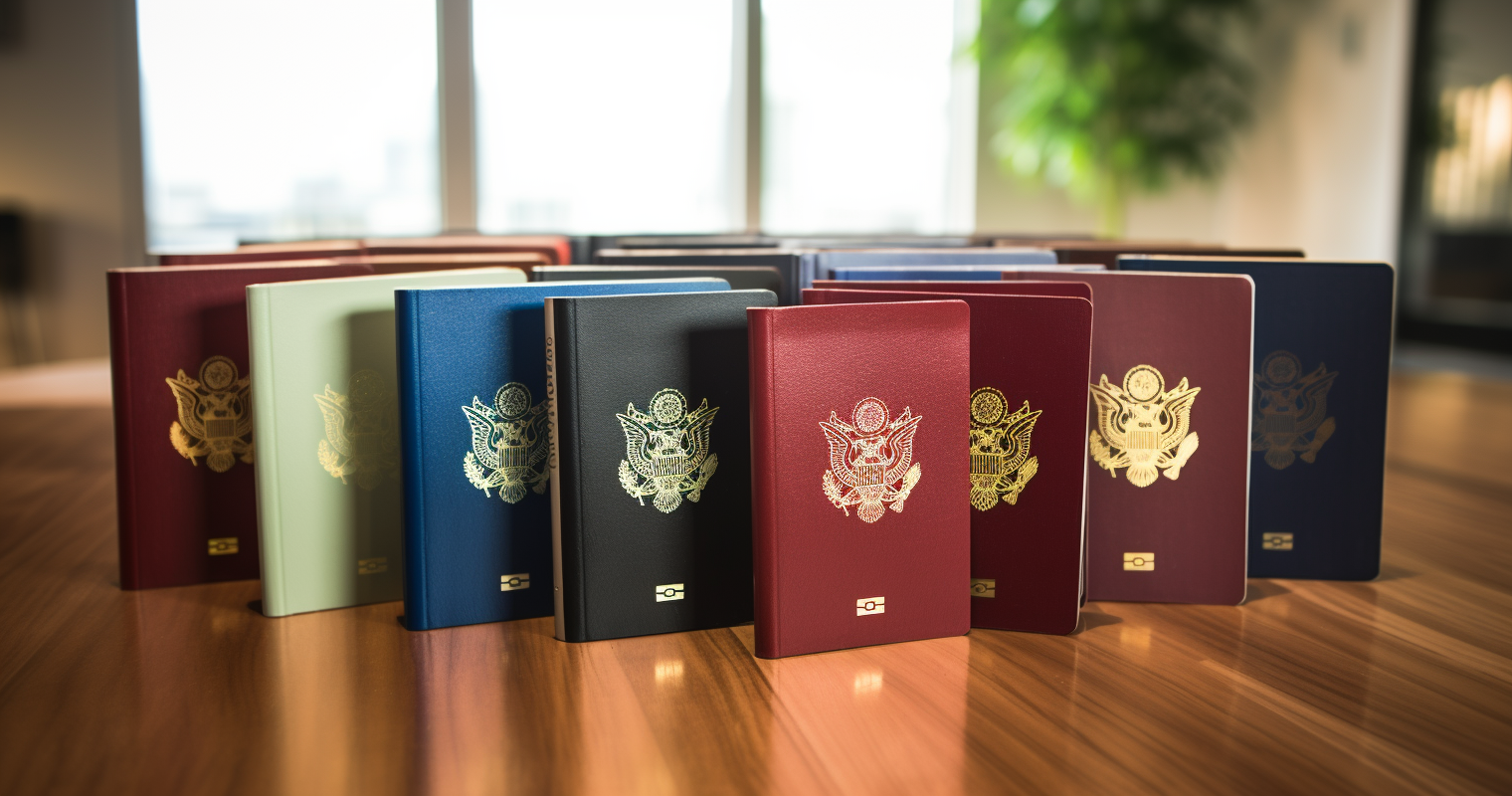
Danish citizenship can be acquired through naturalisation following a minimum of nine years of uninterrupted residence in the country, or through accelerated routes available to Nordic nationals, spouses of Danish citizens, and individuals of Danish heritage. Since September 2015, Denmark has fully recognised dual citizenship, which means most applicants are free to retain their current nationality — although their country of origin may impose its own separate rules on this matter.
| Item | Details |
|---|---|
| Standard residency requirement | 9 years of continuous residence (as of 2025) |
| Application fee (first-time) | DKK 6,000 (~€800), as of May 2025 |
| Re-application fee (second+ time) | DKK 3,000 (as of May 2025) |
| Processing time | Approximately 24 months (as of 2025) |
| Language requirement | Danish language test at B2 level (Prøve i Dansk 3) |
| Dual citizenship | Permitted since 1 September 2015 |
| Passport visa-free access | Approximately 174 countries (as of 2025) |
| Responsible authority | Ministry of Immigration and Integration (uim.dk) |
Who qualifies to apply for Danish citizenship?
Acquiring Danish citizenship through naturalisation requires satisfying a defined set of conditions relating to financial independence, continuous residence, command of the Danish language, and knowledge of Danish society. The overall framework is considerably more demanding than in many comparable nations — Denmark operates no points-based admission system like Canada’s, nor does it offer an expedited investor pathway as some EU member states do. Every available route requires meeting specific statutory criteria before Parliament can take action.
Naturalisation (the main route)
The standard requirement for naturalisation is nine consecutive years of residence in Denmark, with the final two years spent as a permanent resident. This threshold is notably higher than in comparable countries — Germany sets the bar at eight years, France at five, and Australia at as few as four — reflecting the rigour of Denmark’s integration framework.
Financial self-sufficiency over the preceding two years is also required; during the five years before application, an applicant must not have drawn on public financial support for more than four months in total. Outstanding public debts must be fully settled. Language ability is central to the application: candidates must pass the Prøve i Dansk 3 examination at B2 level, which evaluates reading, writing, listening, and spoken Danish.
Reduced residency for specific groups
Citizens of Finland, Iceland, Norway, or Sweden benefit from a reduced residency requirement of just two years. Recognised refugees, individuals treated as equivalent to refugees, and stateless persons are subject to an eight-year continuous residency requirement.
For applicants married to a Danish citizen, each year of marriage reduces the residency requirement by one year, with a maximum reduction of three years. Those who have received a significant portion of their general or professional education in Denmark — where the programme has a Danish character and lasted at least three years — may qualify after five years of continuous residence.
Citizenship by descent
Children born on or after 1 July 2014 automatically acquire Danish citizenship if their mother, father, or co-mother holds Danish nationality. From 1 January 2025, Danish citizenship is also transmitted through a co-father who is a Danish citizen. This rule applies irrespective of the child’s place of birth and regardless of whether the parents are married.
An adopted child under the age of 12 automatically becomes a Danish citizen when adopted by one or two Danish citizens holding a Danish adoption permit, with citizenship taking effect on the day the adoption is finalised.
Exceptional contributions
Danish citizenship may be conferred by a special act of Parliament on individuals who have made extraordinary contributions to the country — such as internationally acclaimed athletes, scientists, or cultural figures. These cases are infrequent and require parliamentary-level approval. Denmark operates no citizenship-by-investment programme; purchasing Danish nationality is simply not possible.
Disqualifying conditions
A criminal history may prevent an applicant from obtaining Danish citizenship. Individuals who have received a custodial sentence of one year or more, or a sentence of at least three months for offences against a person, are barred from citizenship. Fines exceeding DKK 3,000 impose a 4.5-year waiting period, meaning the applicant must wait 4.5 years from the date the fine is paid before becoming eligible to apply.
What steps are involved in applying for citizenship in Denmark?
All citizenship applications are handled by the Ministry of Immigration and Integration. In contrast to countries where a government agency renders the definitive decision directly, a foreign national seeking Danish citizenship must be named in a naturalisation bill, which is then voted on by the Danish Parliament. This legislative process is known as acquisition of Danish citizenship by naturalisation and unfolds across the following stages.
- Verify that you meet the requirements. Before beginning your application, confirm that you satisfy every condition: the applicable residency period, the language certificate, a passing score on the citizenship test, the employment and financial independence criteria, and a clean criminal and financial record. The Life in Denmark portal, operated by the Ministry, is the recommended starting point for this assessment.
- Complete the mandatory tests. You must hold a valid Prøve i Dansk 3 language certificate at B2 level and a pass certificate from the Danish Citizenship Test (Indfødsretsprøven) before submitting your application. The citizenship test is held twice annually, typically in June and November, and preparation should be based on the official study materials provided by the Danish government.
- Assemble your documentation. The required documents include a copy of your passport, a copy of your permanent residence permit, the original results from your Danish language examination, copies of your citizenship test results, and a completed self-support declaration. Any documents issued in a foreign language must be translated into Danish and apostilled or otherwise legalised — be sure to account for these costs in your planning.
- File your application digitally. Naturalisation applications must be submitted through the official online form, which requires MitID — Denmark’s national digital identification system. The majority of applicants are expected to apply electronically; paper-based submissions are reserved for particular circumstances, such as stateless applicants.
- Pay the application fee. From 1 May 2025, the fee for a first-time citizenship application is DKK 6,000. This charge applies to applicants seeking naturalisation through the standard route. Fees are reviewed annually and are non-refundable regardless of the outcome. Always confirm the current fee on the official Ministry website before submitting.
- Wait for the Ministry’s assessment. Immediately after submission, you will receive an acknowledgement by email, followed by formal confirmation from the Ministry of Immigration and Integration that your application has been registered. This confirmation will include your case number and an indication of the expected processing duration. As of May 2025, processing times stand at approximately 24 months.
- Inclusion in a naturalisation bill. Should you satisfy all the conditions for citizenship, your name will be included in a naturalisation bill for approval by the Danish Parliament. These bills are ordinarily introduced twice a year, in April and October.
- Participate in the citizenship ceremony. Once the Folketing has approved the bill granting you citizenship, you must attend a constitutional ceremony held in the municipality where you reside. At this ceremony, you sign a declaration affirming your commitment to uphold the Danish constitution and to respect Danish values, democratic principles, and the rule of law.
- Collect your citizenship certificate and apply for a passport. At the conclusion of the ceremony, you formally become a Danish citizen, acquire the right to vote in elections, and are entitled to apply for a Danish passport.
What tests, interviews, or ceremonies does the Danish citizenship process require?
Danish language test
A demonstrated command of Danish is an essential precondition for citizenship. Candidates must pass the Prøve i Dansk 3 at B2 level or above, covering the four skills of reading, writing, listening, and speaking. This standard is broadly comparable to the B2 threshold applied in Germany’s naturalisation process and sits above the B1 level used in some other European countries. The examination is taken at a language school or accredited test centre and carries its own fee, though applicants are strongly advised to complete a free online practice test before booking their sitting.
Danish Citizenship Test (Indfødsretsprøven)
Beyond language ability, applicants must pass the Danish Society Test, which measures familiarity with Danish society, culture, history, and democratic values. The test is composed of multiple-choice questions spanning a broad range of topics related to life in Denmark and how the country is governed. Of the total questions, 35 relate to the study materials, 5 address current affairs, and 5 focus on Danish values. A minimum of 36 correct answers is required to pass, including at least 4 out of the 5 questions on Danish values.
Free study resources are available on the official website www.danskogproever.dk. The format is structurally comparable to the Life in the UK Test or Australia’s citizenship test, but places a distinct emphasis on Danish constitutional values.
The constitutional ceremony
After Parliament approves your citizenship, you are required to attend a constitutional ceremony arranged by your local municipality. During the ceremony, you sign a declaration committing to observe the Danish constitution and to honour Danish values, the rule of law, and democratic principles. You must then shake hands — without gloves and with palms in full contact — with the mayor or a council member. Your citizenship certificate is presented at the conclusion of this ceremony.
Following a legislative change in December 2018, the handshake became a statutory component of the ceremony. Children and stateless individuals born in Denmark are not required to participate in a constitutional ceremony.
Background checks and declarations
There is no personal interview in the Danish citizenship process. Instead, the Ministry carries out comprehensive background checks covering criminal records, outstanding public debts, and compliance with residency and employment requirements. Where an application references a criminal offence not recorded in the Central Criminal Register, the case is referred to the Parliamentary Naturalisation Committee to determine whether citizenship should nonetheless be granted — for example where the offence was committed abroad. In such cases, the Ministry of Immigration and Integration seeks an opinion from the Director of Public Prosecutions on the penalty that would have applied under Danish law.
What advantages does Danish citizenship provide?
Danish citizenship carries a substantially different legal standing from permanent residency. While permanent residents may live and work in Denmark indefinitely, they are excluded from several significant rights and privileges that only citizens enjoy.
Voting rights and political participation
Citizenship entitles you to a Danish passport and grants the right to vote in parliamentary elections, while also providing a permanent and unconditional basis for residence in Denmark. As a citizen of an EU member state, Danish nationals benefit from freedom of movement throughout EU and European Free Trade Association (EFTA) countries and have the right to vote in European Parliament elections.
Consular protection and international travel
As of 2025, the Danish passport provides visa-free or visa-on-arrival entry to approximately 174 countries, making it one of the world’s most powerful travel documents for both leisure and business. When travelling in a non-EU country where Denmark has no diplomatic presence, Danish citizens are entitled to consular assistance from the embassy of any other EU member state operating in that country.
Freedom of movement within the EU
Under Article 21 of the EU Treaty, Danish citizens have the right to live and work freely in any EU member state. For those considering studying, working, or relocating elsewhere in Europe after obtaining citizenship, this represents one of the most tangible and immediate practical benefits.
Access to public services and higher education
Danish citizens are entitled to study at Danish universities free of charge, whereas non-citizen foreign nationals face tuition fees of around €5,000 per semester. Danish citizens with health insurance receive free treatment in public healthcare facilities and can access healthcare services in other EU countries under preferential arrangements. Danish citizens also have access to a range of social benefits, including state pension entitlements and various other allowances.
Eligibility for certain employment roles
There are categories of employment that are restricted to Danish citizens, and non-citizens are ineligible to represent Denmark in international competitions. Certain public sector and government positions require Danish nationality, as does the right to compete on behalf of Denmark in international sporting events.
Citizenship transmission to children
Children born to Danish citizens automatically acquire Danish citizenship from birth, regardless of where in the world the birth takes place. This provides families with lasting cross-generational legal security.
Does Denmark permit dual citizenship, or must you give up your existing nationality?
Denmark has accepted dual citizenship since 1 September 2015. This means Denmark will not ask you to renounce your Danish citizenship if you subsequently take on the nationality of another country, nor will it require you to surrender any existing foreign citizenship when you become Danish.
This represented a significant shift in policy — before 2015, those who were naturalised as Danish citizens were obliged to relinquish their previous nationality. Former Danish citizens who lost their Danish nationality as a result of acquiring a foreign citizenship prior to 1 September 2015 now have the opportunity to reclaim it by declaration. This declaration must be submitted between 1 July 2021 and 30 June 2026 inclusive.
However, Denmark’s openness to dual nationality does not obligate other countries to follow the same approach. Danish rules have no binding effect on the citizenship legislation of other states. Some countries require their nationals to renounce foreign citizenship upon naturalisation elsewhere, or automatically withdraw citizenship from those who acquire another nationality.
The ability to hold multiple nationalities is ultimately determined by the laws of every country involved, not by Danish law alone. For dual nationality to be possible, each of the relevant states must permit it under their own citizenship legislation. Before proceeding, you should verify the position with your home country’s official immigration or foreign affairs authority to understand whether becoming Danish would affect your existing citizenship.
How long does the process of becoming a Danish citizen typically take?
The route to Danish citizenship is among the most time-consuming in the EU, and prospective applicants should factor this into their long-term planning. The journey can be divided into three broad phases: accumulating qualifying residence, the application and processing period, and the parliamentary and ceremony stage.
The standard requirement is nine uninterrupted years of residence in Denmark. Throughout this period, applicants must simultaneously satisfy all employment, language, financial, and conduct requirements. Extended absences from Denmark, whether through long holidays or periods spent living abroad, can disrupt continuity of residence and potentially restart the qualifying clock.
Once eligible and having submitted an application, you should expect to wait approximately 24 months for the Ministry to complete its assessment, as of May 2025. Following a favourable outcome, your name must be included in a parliamentary naturalisation bill, which can add up to a further six months. Attendance at the citizenship ceremony, typically arranged by your local municipality, follows shortly after.
Taken together — nine or more years to reach eligibility, up to two years of administrative processing, and several months for the parliamentary and ceremonial stages — the realistic total timeline from arrival in Denmark to receiving a passport is well over a decade. Certain individuals complete the process more quickly, particularly those who arrived young or qualify under a reduced-residency route, but a planning horizon of approximately ten years is prudent.
Always consult the Life in Denmark official portal for the most current processing time estimates, as these are subject to change depending on application volumes.
What are the most common grounds for refusing a Danish citizenship application?
The requirements for Danish citizenship are demanding, and applications may be turned down for a variety of reasons. Familiarising yourself with the most frequent causes of refusal is the best way to avoid avoidable setbacks.
- Insufficient or interrupted residency. Applicants must have lived in Denmark continuously for at least nine years, with the final two years as a permanent resident. Significant gaps due to extended travel or periods living outside Denmark can break the qualifying period or require the count to restart.
- Criminal history. Any conviction resulting in a custodial sentence — whether suspended or served, and whether the offence was committed in Denmark or abroad — may be grounds for exclusion. Offences committed abroad are assessed against the penalty they would have attracted under Danish law. Even convictions that have been formally expunged from the official criminal register after the passage of time will still be taken into consideration during the citizenship assessment, regardless of how long ago they occurred.
- Outstanding public debt or excessive reliance on welfare support. Applicants must have no unpaid public obligations, including tax arrears, court-imposed fines, or maintenance payments. Having claimed social benefits beyond the permitted threshold within the qualifying period also renders an applicant ineligible.
- Failure to satisfy language or civic knowledge requirements. Applications will not be progressed without a valid Prøve i Dansk 3 certificate or a passing score on the Danish Citizenship Test.
- Incomplete or inaccurate documentation. The Ministry does not hold applications open while applicants gather missing paperwork — all required documents must be submitted simultaneously with the application itself.
Is there an appeals process?
Danish citizenship decisions cannot be appealed. Under the Danish Constitution, Parliament holds ultimate authority over naturalisation, so no administrative appeals mechanism exists. That said, rejected applicants are free to reapply at any time. When submitting a fresh application, you must indicate on the form that you have applied previously; on your first reapplication, no additional fee is charged.
In some circumstances, it may be possible to approach a member of the Parliamentary Naturalisation Committee directly. Certain applications — for example those seeking an exemption from the residency requirement — can be submitted to the Committee for its consideration.
Where can you find authoritative, current information about citizenship in Denmark?
The conditions, fees, processing times, and test schedules associated with Danish citizenship are subject to periodic revision. Only official government sources should be relied upon as authoritative — third-party websites, online forums, and immigration consultants may present information that is outdated or inaccurate.
- Ministry of Immigration and Integration (official citizenship authority): uim.dk/statsborgerskab/in-english/ — the principal authority responsible for processing all naturalisation applications and issuing the citizenship circular.
- Life in Denmark (official resident information portal): lifeindenmark.borger.dk — provides detailed guidance on eligibility conditions, step-by-step application instructions, and direct access to the digital application form.
- Official citizenship and language test portal: danskogproever.dk — the authoritative source for test schedules, official study materials, and practice resources for both the citizenship test and the Danish language examination.
- Nordic Co-operation Info-Norden: norden.org — particularly helpful for citizens of other Nordic countries exploring the declaration route to citizenship.
- Danish embassies and consulates abroad: For applicants currently residing outside Denmark, the nearest Danish diplomatic mission can provide assistance with descent-based citizenship cases and document verification.
Application fees are adjusted annually, and processing timeframes shift in response to application volumes. Always verify the current figures directly with the Ministry before lodging your application.
Frequently asked questions about citizenship in Denmark
Do children born in Denmark automatically receive Danish citizenship?
Denmark does not automatically confer citizenship on children simply because they are born on Danish territory (jus soli). The country principally applies the principle of jus sanguinis — citizenship by descent — which means at least one parent must hold Danish nationality for a child to acquire citizenship at birth. A child born in Denmark to two non-Danish parents does not automatically become a Danish citizen.
Can children be included in a parent’s citizenship application?
In general, children of foreign nationals under the age of 18 can only obtain Danish citizenship alongside one of their parents. For a minor to acquire Danish citizenship through a parent, the child must be unmarried, under 18, and legally resident in Denmark. If the processing of a parent’s application extends beyond the child’s 18th birthday, the child will need to submit their own separate application.
Can Danish citizenship be lost or revoked?
Citizenship may be revoked by a court if it was obtained through fraudulent means — for example through a sham marriage — or if the individual is convicted of crimes against national security. In September 2025, the Danish Supreme Court determined that citizenship cannot simply be stripped from individuals who, in good faith and over a sustained period, have built their lives as Danish citizens.
What is the “22-year rule” for Danish citizens born abroad?
Under the Danish Nationality Act, a person born abroad who has never resided in Denmark and has had no meaningful connection to the country will lose their Danish nationality upon turning 22, unless doing so would render them stateless. If you hold Danish citizenship through descent but were born and have spent your entire life outside Denmark, you should take steps to safeguard your nationality before reaching that age.
What happens to my application if I move abroad during the process?
Given that processing currently takes approximately 24 months, applicants must maintain their legal residence status in Denmark and continue meeting all citizenship requirements throughout that period. Relocating abroad during the application process would almost certainly break your qualifying residency and could lead to your application being refused. It is essential to remain resident in Denmark from the time of submission until citizenship is granted.
Is there a citizenship route for investors or people of exceptional wealth?
Denmark offers no citizenship-by-investment programme — acquiring Danish nationality through financial contribution is not possible. That said, investors may enter Denmark via a business or start-up visa. Entrepreneurs who establish a business in Denmark may be granted a residence permit for two years, which is renewable, and after nine years of qualifying residence they may apply for citizenship through the standard naturalisation route.
Are there exemptions from the language and citizenship tests?
Certain groups may qualify for exemptions or modified requirements. Applicants who have reached state pension age or who have been granted early retirement or a senior pension may be excused from specific conditions. Those unable to meet the employment requirement due to a disability may apply for a dispensation, provided they submit current medical documentation confirming a long-term physical, mental, sensory, or intellectual impairment.
Does marriage to a Danish citizen fast-track the citizenship process?
Marriage to a Danish citizen does not confer automatic citizenship but does shorten the qualifying residency period. Each full year of marriage reduces the continuous residence requirement by one year, with a maximum reduction of three years — bringing the minimum threshold from nine years down to six in the most favourable circumstances. All other conditions, including language proficiency, financial independence, and the civic knowledge test, continue to apply in full.
Can I reapply if my application is refused?
A refused application does not permanently bar you from citizenship. You are free to reapply at any time, and on your first reapplication you are not required to pay the application fee again — provided you indicate on the form that you have applied previously. A new online application must be completed in full, including all supporting documents, even those submitted previously. For a second or any subsequent reapplication, a fee of DKK 3,000 applies (as of June 2025).
What are the citizenship rules for Nordic citizens?
As a citizen of Finland, Iceland, Norway, or Sweden, you may pursue Danish citizenship through either a declaration route or the standard naturalisation process. The declaration route is available to those aged 18 or over who have not themselves been naturalised in a Nordic country. For Nordic citizens applying through naturalisation, the residency requirement is just two years — a considerably lower bar than the nine-year standard requirement applicable to other foreign nationals.
Will becoming a Danish citizen affect my existing nationality?
Denmark will not require you to renounce any existing citizenship in order to become Danish. However, whether you can hold both nationalities simultaneously is not a matter decided solely by Danish law — it also depends on the citizenship legislation of your current country of nationality. For dual nationality to be possible, each relevant state must permit it under its own rules. You should contact your home country’s embassy or official immigration authority to establish whether obtaining Danish citizenship would have any effect on your existing nationality.