
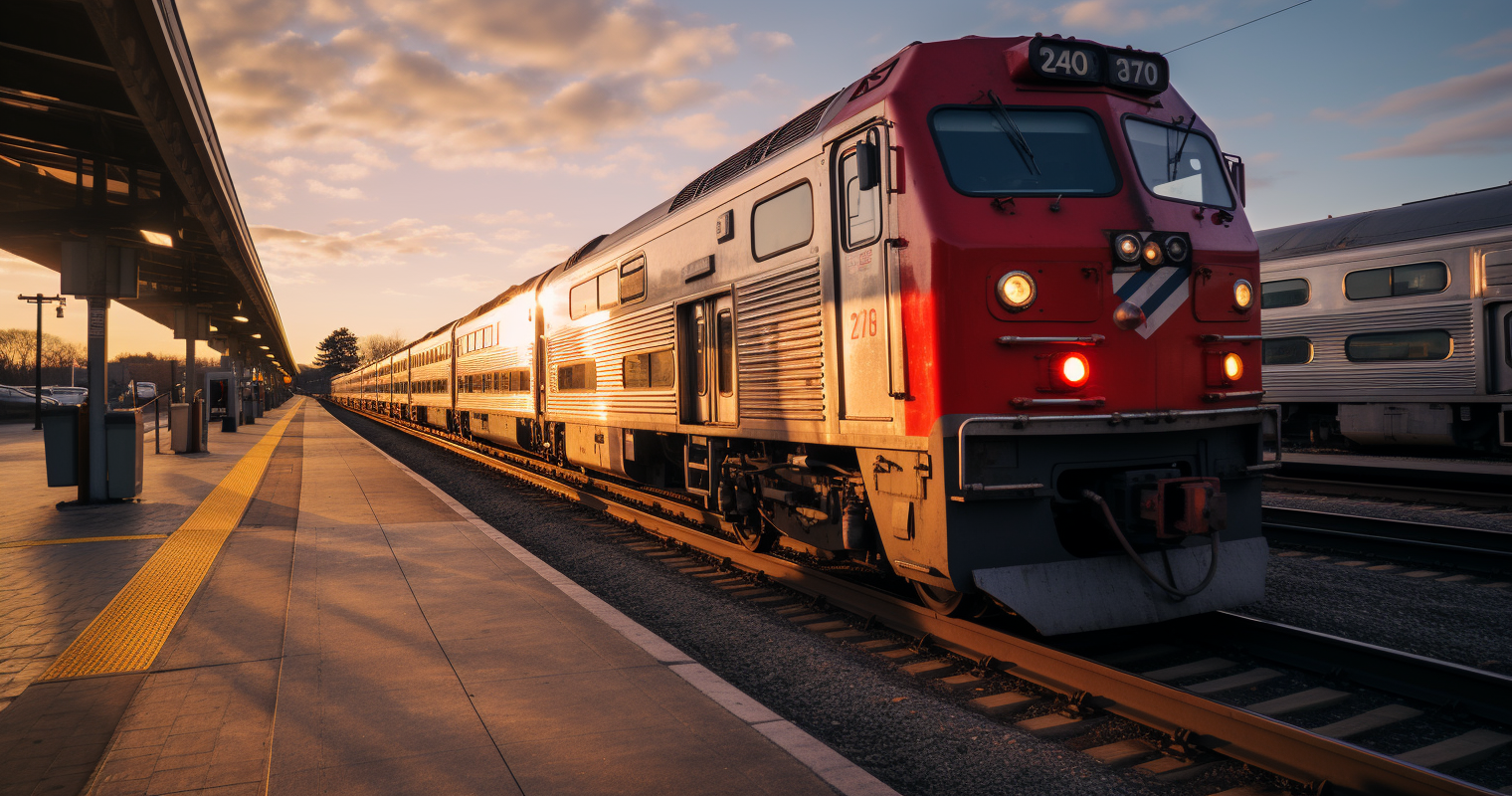
Rail travel in Ecuador is not a realistic choice for everyday commuting or getting between cities. The country’s national rail network — once hailed as a remarkable achievement of Andean engineering — shut down completely in 2020 when the state operator went into liquidation, and as of 2025 only a handful of short, tourism-focused services are running. When it comes to urban rail, Quito’s sleek underground metro and Cuenca’s modern tram stand out as the most relevant options for people living in either city.
| Item | Details |
|---|---|
| National rail network status (as of 2025) | Severely limited; national operator liquidated in 2020; only short tourist routes operating |
| Active intercity rail services | None — bus travel is the primary intercity public transport mode |
| Tourist train (Tren Tayta Imbabura, as of 2025) | Ibarra to Andrade Marín (15 km); round-trip fare US$15.00; runs Wed–Sun |
| Nariz del Diablo (Devil’s Nose) route | Test runs began July 2025; full service restoration expected later in 2025 — verify current status locally |
| Quito Metro Line 1 (as of 2025) | 22.5 km underground; 15 stations; single fare US$0.45; operated by Transdev/Metro de Medellín |
| Cuenca Tranvía (as of 2025) | 20.4 km light rail; 27 stations; operational since 2020; accessible low-floor trams |
What is the standard of rail travel in Ecuador?
Ecuador’s mainline rail network was once an audacious national undertaking, threading nearly 1,000 kilometres of narrow-gauge track through some of the most dramatic landscapes in South America. The 966 km, 1,067 mm-gauge system underwent extensive modernisation between 2010 and 2015, with 507 km completely overhauled and rebuilt at a cost of approximately US$385 million. Sadly, those improvements could not be sustained over the long term.
The economic fallout from the coronavirus pandemic brought all train operations to a halt in March 2020, after which the company formally entered liquidation. The assets of Ferrocarriles del Ecuador were transferred to the Ministry of Transportation and Public Works (MTOP). The collapse of the state enterprise was not entirely a surprise — the company had accumulated losses of USD 144 million between 2012 and September 2020, making it an unsustainable operation even before the pandemic struck.
Ecuador’s railways were never conceived as a mass transit system in the mould of Germany’s integrated national network or Japan’s bullet-train corridors. The country has 965 km of railway, all narrow gauge, and the infrastructure was built primarily to serve tourism rather than functional passenger movement between cities. As of 2025, rural and regional connectivity by rail is essentially non-existent, and the network offers no meaningful links between major population centres. Intercity travellers depend almost entirely on buses.
By 2024, some tourist-oriented services had cautiously resumed in Imbabura and Chimborazo provinces. These revival efforts are slow and disjointed, driven largely by local and provincial authorities rather than any coordinated national strategy. The situation bears little resemblance to a functioning national rail system — it more closely mirrors the piecemeal restoration of heritage railways managed by regional bodies, each operating independently of the others.
Are there different classes of rail travel in Ecuador, and what are the differences?
With no national rail operator running scheduled services, the familiar notion of travel classes — such as the standard and first-class tiers found on European or Japanese intercity trains — simply has no application to Ecuador’s mainline network today. The services that do exist are short tourist excursions, and their onboard experience is shaped entirely by that purpose.
The former flagship of Ecuador’s tourist rail offering was the Tren Crucero, a luxury train that once traversed almost the entire active length of the network. It ranked among the country’s premier tourist attractions, carrying passengers along the Quito–Guayaquil (Durán) corridor over a four-day, four-night journey of approximately 450 kilometres. The consist included four modern, air-conditioned first-class coaches, a dining car, a lounge car, and an observation car — ideal for anyone wanting to photograph the sweeping Andean scenery. On certain legs the locomotive was a restored steam engine; on others a diesel unit took over. The Tren Crucero is not currently in service.
The active Tren Tayta Imbabura service linking Ibarra with Andrade Marín runs as a single-class tourist outing aboard a diesel train. The round trip costs US$15.00 and lasts two hours and thirty minutes. The service operates Wednesday through Sunday, with departures from Ibarra station at 08:00, 11:00, and 14:00. There is no class hierarchy on this service — all passengers travel in identical conditions, and the whole experience is geared towards enjoying the scenery rather than moving people efficiently from one place to another.
Ecuador’s urban rail systems — the Quito Metro and Cuenca’s tram — operate on the same principle of classless travel. A single flat fare covers all passengers regardless of which carriage they board, consistent with the approach taken by most metro and light-rail systems around the world, from Paris to Santiago to Buenos Aires.
Where can I find rail timetables and ticket prices for Ecuador?
Tracking down reliable, current timetable and pricing information for Ecuador’s tourist trains takes some effort, since the official landscape shifted dramatically following the national operator’s liquidation. The government website that previously sold tickets went offline after all tourism train services stopped, and today it redirects to a site of uncertain provenance. Avoid any website claiming to be the former national rail booking portal unless you can independently confirm it carries official endorsement.
For the Nariz del Diablo route at Alausí, the local Alausí government operates its own point of sale through TicketExito, which is currently the most dependable official channel for that route. TicketExito can be found at www.ticketexito.com. Because services are prone to suspension at short notice, always check that the route is actually running before you travel.
For the Tren Tayta Imbabura out of Ibarra, your best starting points are the local municipality and the Ecuador Rail information resource at www.ecuadorrail.net, which brings together information on operating and planned routes. The Ministry of Transportation and Public Works (MTOP), which now oversees rail assets, can be consulted at www.obraspublicas.gob.ec.
Quito Metro timetable, route map, and fare details are published by the metropolitan operator at www.metrodequito.gob.ec. For Cuenca’s Tranvía, schedule and route information is accessible through the Moovit app and the city’s transit authority. Prices and timetables can change without much notice — always go directly to the relevant official source to confirm current details before making any plans.
How and where can I buy rail tickets in Ecuador?
How you buy tickets depends entirely on which rail service you are using. Ecuador has no unified national ticketing system, so each operator handles its own sales independently.
- Tourist trains (e.g. Tren Tayta Imbabura, Nariz del Diablo): Tickets are generally purchased at the station on the day of travel or, where the option exists, through local government-managed platforms such as TicketExito. Booking through your hotel or a local guide tends to be the most reliable approach, particularly while the operational status of certain routes remains uncertain. Booking ahead is wise at weekends and on public holidays, when local tourist demand is at its highest.
- Quito Metro: Single-ride tickets can be bought at vending machines or staffed ticket windows inside every station. Machines accept coins and sometimes bank cards but do not dispense change. Staffed windows can provide change, sell multiple tickets at once, and issue return tickets. All tickets take the form of a paper slip bearing a QR code, valid for one week from purchase.
- Quito Metro app tickets: The Metro de Quito app allows users to purchase QR-coded tickets digitally, though full registration is required. Most occasional visitors find it simpler to buy tickets at the station.
- Quito Metro card (Tarjeta Ciudad): Regular riders are better served by the rechargeable Tarjeta Ciudad card. It can be registered online or at any station, is issued free of charge, and requires a minimum first top-up of US$3.00.
- Cuenca Tranvía: Payment is made by card or ticket rather than cash on board. Single rides and stored-value top-ups are available at kiosks and vending machines located at major tram stops.
Unlike rail networks in parts of Europe or East Asia where booking well in advance can unlock substantially cheaper fares, Ecuador’s tourist trains charge a flat rate regardless of when you buy. There is no financial disadvantage to buying on the day, though availability on popular departures can be limited. QR-coded e-tickets are accepted on the Quito Metro; for tourist trains, physical tickets remain the norm.
What types of rail tickets are available in Ecuador, and are discounts available?
Ecuador’s rail ticketing structure is far simpler than anything you would encounter on the integrated networks of Western Europe or Japan. Without scheduled intercity services, there are no season tickets, open-return options, multi-journey rail passes, or dynamic pricing tiers of any kind. Every active service runs on a straightforward single-excursion ticket model.
The Tren Tayta Imbabura charges a fixed round-trip fare of US$15.00 as of 2025. This price covers the outward and return journey — there is no separately priced single. Always confirm the current fare directly with the operator or a local tourism office, since pricing is subject to revision.
On the Quito Metro, a single ride costs US$0.45 regardless of distance, as of 2025. Ecuadorian citizens can link their national identity document to function as a transit card. Concession fares for elderly passengers and people with disabilities are available through the Tarjeta Ciudad system. The precise discount rates and eligibility conditions are determined by the Metropolitan Company of Quito Metro (EPMMQ); consult the official website at www.metrodequito.gob.ec for up-to-date terms.
For the Cuenca Tranvía, stored-value cards cover both tram travel and some bus routes, and monthly or student passes can offer good value for regular commuters. Specific discount levels and eligibility requirements should be confirmed directly with the Cuenca transit authority, as these details change over time. No national rail passes apply to Ecuador’s current rail services, and no third-party interrail-style products cover the Ecuadorian network.
How suitable is the rail network in Ecuador for disabled passengers?
Accessibility across Ecuador’s rail services differs markedly from one system to another. The tourist train routes and the modern urban transit systems operate at very different standards, and anyone with mobility requirements should look into each service separately before committing to travel.
The Quito Metro was designed with accessibility built in from the ground up. Lifts, braille signage, and tactile flooring help passengers with disabilities move through the system independently. Metro Line One also incorporates features addressing the safety and comfort of women — including a police presence, comprehensive video surveillance, and panic buttons linked directly to metro security personnel. These standards are broadly on a par with accessibility provisions found in newer metro systems across Europe and Latin America.
Cuenca’s Tranvía has likewise been constructed to contemporary accessibility standards. Low-floor trams eliminate the step that poses a barrier on older rolling stock, while generous space for wheelchairs and pushchairs makes the service genuinely usable for passengers with mobility challenges. This design approach puts Cuenca’s tram in line with modern light-rail systems found in cities across Europe and the Americas.
The tourist train routes — including the Tren Tayta Imbabura and the Nariz del Diablo — are a different matter entirely. These services operate with older rolling stock, and the stations they serve are often basic rural facilities with limited infrastructure. The steep gradients and switchback sections characteristic of some routes add further practical challenges. If you have specific accessibility needs, contact the relevant local operator or tourism office directly before purchasing a ticket. The Ministry of Transportation and Public Works (MTOP) at www.obraspublicas.gob.ec is the government body responsible for rail matters and may be in a position to advise on what provisions are currently available.
Are there metros, underground trains, or urban rail systems in Ecuador?
Ecuador has two urban rail systems that are genuinely useful for residents on a daily basis: the Quito Metro and the Cuenca Tranvía. These represent an entirely different standard of rail travel compared to the fragile tourist train network, and for expats living in either city they are by far the most relevant rail services in everyday life.
Quito Metro
Full commercial operations on the Quito Metro launched on 1 December 2023, with local residents ceremonially opening each of the 15 stations. A complete end-to-end journey takes around 34 minutes — considerably quicker than covering the same distance by bus in typical city traffic. Sitting at roughly 2,850 metres above sea level, the Quito Metro holds the distinction of being the highest full metro system anywhere in the world.
Running entirely on electric power — drawn from a country where around 80 percent of energy generation is hydroelectric — the 22.5-kilometre system serves 15 stations and has the capacity to carry up to 400,000 passengers each day. Its 18 trains link the northern and southern ends of the city in approximately half an hour, a journey that previously consumed three times as long by road.
The system is clean, fast, and reliable, and it has brought a new standard of dignity to everyday commuters — particularly women who depend on public transport in the capital. Security is taken seriously: stations and carriages are covered by hundreds of CCTV cameras, and security staff work alongside national police throughout the network.
The Metro connects physically with six stations on Quito’s Metrobus-Q BRT network, giving lower-income residents who arrive on foot, by bicycle, or by bus seamless access to the system. This multimodal integration makes the Metro far more than a standalone service — it functions as the central pillar of the city’s public transport framework. Operations are managed by a joint venture of Transdev and Metro de Medellín, bringing extensive international metro expertise to the Ecuadorian capital. Official information is available at www.metrodequito.gob.ec.
Cuenca Tranvía
Cuenca — Ecuador’s third-largest city and a UNESCO World Heritage Site — launched the Tranvía de Cuenca in May 2020. The system covers 20.4 kilometres across 27 stations, linking the historic city centre with the newer residential and commercial districts on its outskirts.
Each tram can carry up to 350 passengers, with headways of roughly eight to ten minutes during peak periods. Reliable, clean, and accessible, the tram has become a preferred option for commuters and visitors alike who want a smooth ride through the historic centre without getting caught in road congestion.
The Tranvía has no direct connection to any mainline rail service — there are no intercity trains serving Cuenca at present. It does, however, integrate with the city’s urban bus network, making it a practical backbone of local transport for residents. Timetable and route details can be found through the Moovit app or directly from the city’s transit authority.
What practical tips should expats know about using the rail network in Ecuador?
The single most important thing for any expat arriving in Ecuador to grasp is that trains are not how people travel between cities. Long-distance buses are the backbone of intercity transport — frequent, affordable, and reasonably convenient. Rail is either a tourist attraction or an urban commuter tool; it functions nowhere in Ecuador as a national transit network in the way that rail systems do in Europe, Japan, or even neighbouring Colombia.
For tourist trains: Always check whether the service is actually running before making travel plans. Ecuador’s train services have a long history of stopping and starting again — even before the pandemic, the network teetered on the edge of financial collapse at regular intervals. Landslides, licensing disputes, and infrastructure failures can bring services to a halt with little or no advance notice. In practice, word from local tourism offices, your accommodation, or active expat community groups tends to be more reliable than official websites for gauging real-time operational status.
For the Quito Metro: Tickets are paper slips printed with a QR code and remain valid for one week — store them flat to prevent scanning errors. If you commute regularly, the rechargeable Tarjeta Ciudad card saves time over buying individual tickets every day. The Metro connects directly with Quito’s Metrobus-Q BRT corridors and a number of bus routes, making transfers straightforward. On weekdays the Metro opens at 05:30, making it viable for early starts. Saturday services begin at 07:00, and on Sundays and public holidays the first trains run from 07:00.
For the Cuenca Tranvía: Trams display clear signage in Spanish and route maps are posted at stops. Payment is made by card or ticket rather than cash on board. Google Maps and transit apps such as Moovit typically display tram and bus routes together with estimated arrival times, making journey planning straightforward.
Safety and etiquette: Keep bags closed and wallets in front pockets on crowded services, and avoid handling large amounts of cash in public. Tipping transport staff is not expected or customary. No dedicated quiet carriages exist on any of Ecuador’s rail services. A simple greeting — “buen día” or “gracias” — is always well received and reflects the warmth of everyday social interaction in the country. New arrivals should also be mindful of altitude: the Quito Metro operates at approximately 2,850 metres above sea level, and it is common to feel noticeably more fatigued than usual during the first few days after arriving in the city.
Frequently asked questions about rail travel in Ecuador
Is there any regular intercity train service between Quito and Guayaquil?
No. All train services were halted in March 2020 and the former national rail company subsequently went into liquidation. No intercity passenger trains currently operate between Quito and Guayaquil, or between any other major Ecuadorian cities. Long-distance buses, which run frequently and at affordable prices, are the only realistic option for overland travel between cities.
Is the famous Nariz del Diablo (Devil’s Nose) train running?
The Nariz del Diablo officially reopened in August 2025. However, this route has a track record of interruptions caused by landslides, licensing complications, and infrastructure failures, so it is essential to verify current operational status with the local tourism office in Alausí or through TicketExito before making the trip. Conditions may have changed since this article was written.
Are there any national rail passes available for expats living in Ecuador?
No national rail pass exists for Ecuador. Since intercity rail services are not operating, there is no product comparable to a European railpass or similar scheme. For regular travel on the Quito Metro, the rechargeable Tarjeta Ciudad card is the closest equivalent to a resident transit pass and is the most practical choice for everyday commuters.
How do I get a refund if a tourist train service is cancelled?
Refund policies vary depending on who operates the specific route. For tickets bought through TicketExito, the platform sets its own refund terms. For tickets purchased directly at a station or via a local tourism office, you will need to deal with the seller directly. Given the informal and frequently shifting nature of Ecuador’s tourist train services, it is wise to treat any ticket purchase as potentially non-refundable unless you have received a clear written refund policy beforehand.
Are trains safe to use at night in Ecuador?
Tourist trains run during daylight hours only. The Quito Metro operates until approximately 23:00 on weekdays and 22:00 on Sundays, and is regarded as safe thanks to comprehensive CCTV coverage and a consistent security presence. When making onward connections late at night, using a licensed taxi or a transfer arranged through your accommodation is advisable rather than waiting in poorly lit areas. The Cuenca Tranvía also runs through daytime and evening hours; apply the same common-sense urban caution you would in any city.
Does the Quito Metro connect to the international airport?
Metro Line 1 runs from Quitumbe in the south to El Labrador in the north. Although El Labrador is situated near the site of the former Mariscal Sucre Airport, Quito’s current international airport is located at Tababela — roughly 18 km east of the city centre — and is not served by the Metro. Airport transfers are made by taxi, private shuttle, or dedicated bus services. Check current connection options at the time of travel, as links to the airport may be subject to ongoing planning changes.
How do I handle disruption or delays on Ecuador’s rail services?
On the tourist train routes, disruptions caused by weather, landslides, or operational problems are not unusual and can materialise with very little warning. There is no formal compensation scheme for delays. The best strategy is to save the contact details of the local operator or tourism office and to keep your onward plans as flexible as possible. For the Quito Metro and Cuenca Tranvía, each operator maintains social media channels and in-station information displays that provide real-time service updates.
Is there a risk of strikes affecting rail services in Ecuador?
Industrial action can disrupt public services in Ecuador. The Quito Metro is run under a management contract by an international consortium — Transdev and Metro de Medellín — which has generally provided greater operational continuity than the former state rail company. Tourist train services operated by local municipalities or provincial governments tend to be more exposed to sudden changes driven by political or budgetary pressures than to formal industrial action. Keep an eye on local news outlets and expat community groups for advance notice of any planned disruptions.