
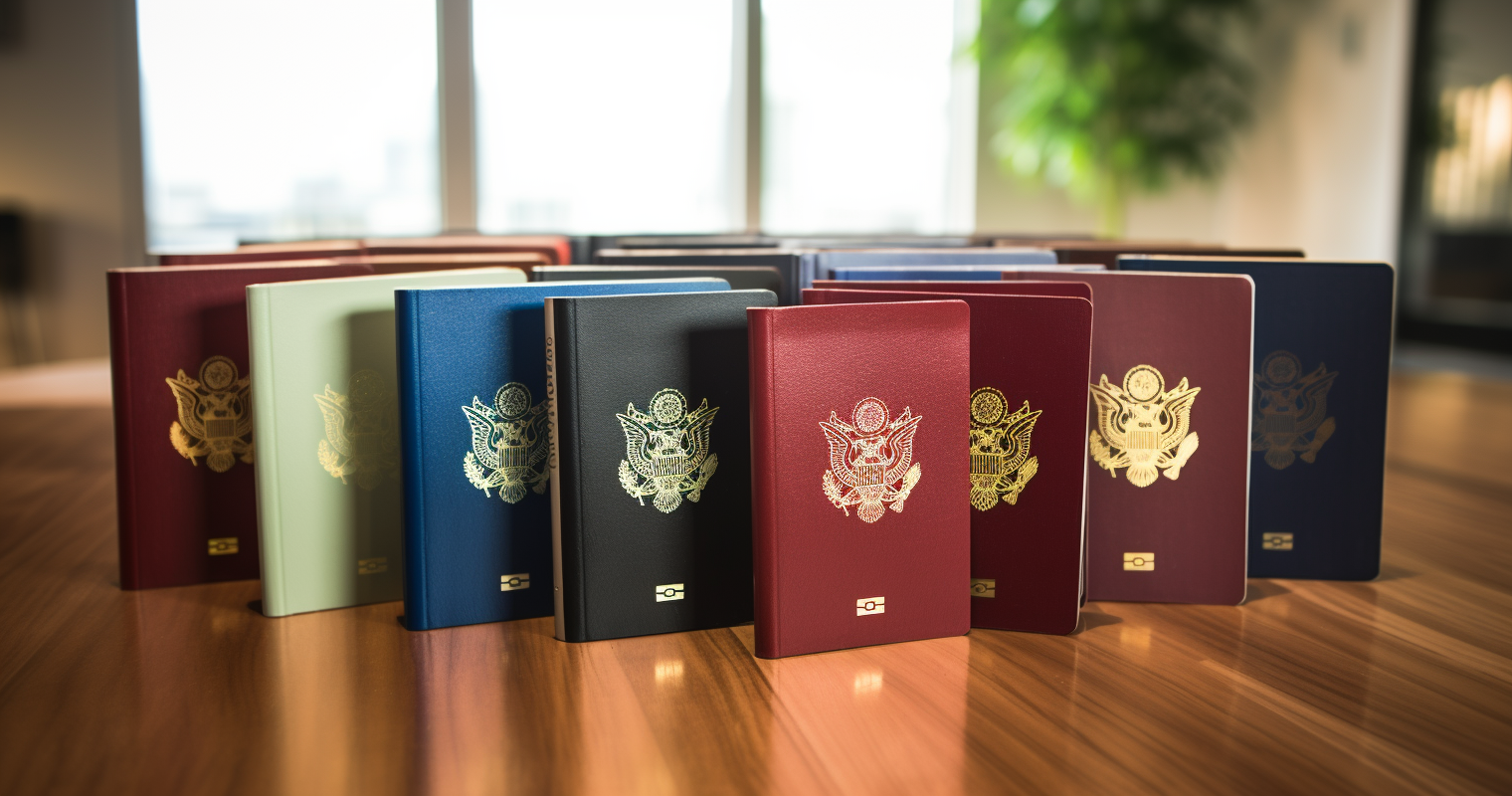
There are several pathways through which Egyptian citizenship may be acquired: naturalisation following ten years of uninterrupted lawful residence, citizenship derived through an Egyptian parent or grandparent, a route available primarily to foreign women who marry Egyptian nationals, or participation in an investment programme with a minimum financial threshold of USD 250,000. Egypt broadly accepts dual nationality, especially for those acquiring citizenship via investment, although specific obligations and notification requirements must be observed.
| Item | Details |
|---|---|
| Governing law | Egyptian Nationality Law No. 26 of 1975 (as amended) |
| Standard residency requirement (naturalisation) | 10 consecutive years of lawful continuous residence (as of 2025) |
| Marriage route waiting period | 2 years of registered marriage and cohabitation (as of 2025) |
| Minimum investment (citizenship by investment) | USD 250,000 non-refundable donation; other options from USD 300,000–USD 500,000 (as of 2025) |
| Government fee (investment route) | USD 10,000 mandatory state fee (as of 2025) |
| Processing time (investment route) | Typically 6–12 months (as of 2025) |
| Passport validity | 7 years |
| Responsible authority | Passports, Immigration and Nationality Administration, Ministry of Interior |
Who is eligible to apply for citizenship in Egypt?
Egyptian nationality is governed by Nationality Law No. 26 of 1975. Multiple routes to citizenship exist, encompassing birth and descent, residence-based naturalisation, marriage to an Egyptian national, and investment. The requirements differ substantially from one pathway to the next.
Citizenship by birth and descent
A child born in lawful wedlock to an Egyptian father automatically holds Egyptian nationality regardless of where the birth occurs. Amendments introduced through Law No. 154 of 2004 extended equal nationality rights to children born of Egyptian mothers, enabling them to acquire citizenship through either parent. A child born on Egyptian soil out of wedlock to an Egyptian mother where the father is unknown or stateless is likewise recognised as a citizen, as is any child born in Egypt whose parentage cannot be established.
Those who can demonstrate Egyptian ancestry through a parent or grandparent may qualify for citizenship by descent. This requires concrete documentary proof of lineage — typically birth certificates or comparable official records establishing the ancestral connection. Children born abroad to Egyptian parents must formally register their nationality with Egyptian civil or consular authorities to have their citizenship status officially recognised.
Naturalisation after residency
Foreign nationals who have maintained lawful and uninterrupted residence in Egypt for a minimum of ten consecutive years may apply for naturalisation, provided they have reached adulthood, can demonstrate a reliable source of income sufficient to sustain themselves and any dependants, and satisfy further criteria: good character, freedom from criminal convictions or security-related matters, a working knowledge of Arabic, and a medical certificate attesting to the absence of communicable disease.
The ten-year threshold is notably more demanding than comparable requirements elsewhere — France, for instance, requires five years of habitual residence, while Australia sets the bar at four years of lawful residence including one year as a permanent resident. Egypt’s standard thus represents a substantial long-term undertaking for most foreign applicants.
Reduced residency periods apply to certain groups: persons born in Egypt who hold citizenship of a Muslim country or a country where Arabic is the predominant language and have lived in Egypt for one year; foreign nationals born in Egypt who were resident at the time they came of age and apply within a year of reaching majority; persons born in Egypt whose father was also born there and has Arab or Muslim heritage, following five years of residence; and minor children who may be automatically naturalised when a parent acquires Egyptian nationality.
Citizenship by marriage
Marriage to an Egyptian national can serve as a route to citizenship. A foreign woman married to an Egyptian man may seek naturalisation after two years of genuine marriage and shared residence. She must formally declare her intention to naturalise to the Ministry of Interior, and the marriage must be bona fide.
Egyptian law contains no equivalent provision allowing a foreign man to obtain nationality simply by virtue of marriage to an Egyptian woman. Applications from foreign male spouses of Egyptian women are assessed individually, with no automatic entitlement, and the process tends to be considerably more restrictive. This distinction is significant for couples formulating their long-term residency and citizenship plans.
Citizenship by investment
Established under Law No. 190 of 2019, Egypt’s Citizenship by Investment Programme offers foreign nationals a state-sanctioned route to Egyptian nationality through an economic contribution. Four qualifying options are available: a non-refundable donation of USD 250,000 to the public treasury; acquisition of real estate valued at USD 300,000 held for a minimum of five years; a business investment of USD 350,000 accompanied by an additional USD 100,000 donation; or a refundable bank deposit of USD 500,000.
A mandatory state fee of USD 10,000 is payable under all investment options. Dual citizenship is permitted through this programme, and processing generally takes between six and twelve months. Applicants are not required to learn Arabic or establish residence in Egypt prior to applying. Foreign nationals of any nationality are eligible, and the screening process involves standard due-diligence and background checks.
Exceptional contribution route
Egyptian nationality may also be conferred upon individuals who have rendered outstanding services to the country — for example, through distinguished achievements in science, the arts, culture, or sport, or by significantly advancing Egypt’s standing on the world stage. Such grants are uncommon and lie entirely within the discretion of the authorities.
What are the steps involved in applying for citizenship in Egypt?
Once all required documents have been assembled and the relevant forms completed, the application package is submitted to the appropriate Egyptian authority. For the majority of citizenship pathways, this means the Passports, Immigration, and Nationality Administration within the Ministry of Interior in Cairo. Applicants living overseas may lodge their applications through the consular section of the Egyptian embassy or consulate in their country of residence. For citizenship by investment, applications are directed to a dedicated unit within the Cabinet or submitted via its designated online portal.
Always consult the official Egyptian Ministry of Interior website (emoves.moi.gov.eg) and your nearest Egyptian embassy or consulate for current fees, document requirements, and processing timelines, as these are subject to change.
- Identify your eligibility pathway. Establish whether you are applying under the naturalisation, marriage, descent, investment, or another recognised category. Each pathway carries distinct documentation requirements and involves different processing channels.
- Assemble your core documentation. You will need identity and travel documents (a valid passport, national identity card where applicable, and evidence of visas and residency permits); civil status records (full-form birth and marriage certificates, divorce or custody documentation where relevant, and proof of parental nationality for descent-based claims); evidence of residence and financial means (tenancy agreements, employment contracts, payslips, commercial registry extracts, tax filings, and bank statements); and law enforcement and medical records (police clearances from your home country and any other countries of prior residence, together with medical certificates if required).
- Translate and authenticate foreign documents. Every document originating outside Egypt must be rendered into Arabic by an accredited translator and then officially authenticated or legalised. This typically involves obtaining an apostille or consular legalisation before having the translation certified by the relevant authority.
- Obtain the official application form. The prescribed forms ask for comprehensive personal details, family background, and a full residential history. They are available from the Egyptian Ministry of Interior and from Egyptian embassies and consulates abroad.
- Lodge the completed application. Certain preliminary steps — such as pre-registration and fee payment — may be completed online, but the substantive stages of the process require in-person engagement with Egyptian authorities. For the investment route, at least one visit to Egypt in person is an obligatory part of the procedure. Following initial pre-approval, applicants are granted temporary residency to travel to Egypt and complete the outstanding stages, including finalising the investment and fulfilling any remaining documentary requirements.
- Undergo security and background vetting. The relevant authorities will conduct checks to confirm that the applicant does not pose a threat to national security. Document authenticity and applicant eligibility will also be verified, and medical assessments may be required.
- Await the ministerial or presidential decision. The Ministry of Interior will examine the application and reach a determination. If approved, the applicant receives a certificate of Egyptian citizenship as formal evidence of their nationality. Newly naturalised individuals are issued an Egyptian birth certificate and assigned a national civil registry number, integrating them into Egypt’s civil records system and enabling automatic transmission of nationality to future children.
- Apply for your national identity card and passport. The national identification card — the “Rakam Qawmi” — is issued by the Civil Status Organisation of the Ministry of Interior from age sixteen onwards and must be obtained by any adult before applying for a passport. An Egyptian passport carries a validity of seven years from the date of issue.
What tests, interviews, or ceremonies are required as part of the citizenship process in Egypt?
Formal citizenship examinations do not form a standard part of the Egyptian citizenship process. For most applicants, the procedure hinges on documentary submission and a character assessment, rather than on structured testing. This stands in contrast to systems such as those operated in Germany, the Netherlands, or Australia, where a written civics examination is a compulsory element of naturalisation.
For the standard naturalisation pathway, proficiency in Arabic is a stated legal requirement, alongside good conduct, a clean criminal record, and a medical certificate confirming the absence of communicable illness. However, no standardised formal language examination — comparable to, say, the IELTS requirement used in certain other countries’ naturalisation frameworks — exists in Egypt. Arabic language competence is evaluated as part of the broader documentary review and interview process rather than through a separate accredited test.
Applicants must furnish recent police clearances from both their country of origin and any other countries in which they have previously resided, as well as documentation evidencing lawful income through employment records, business activity, or adequate financial reserves. Security vetting plays a central role across all pathways, and the Minister of Interior retains the discretionary authority to grant or withhold nationality on grounds of security or the public interest.
Egypt has no formalised public oath or citizenship ceremony of the kind conducted in countries such as Canada, Australia, or the United Kingdom. Once the relevant decree has been issued, the applicant is informed through official channels, registered in the civil records system, and proceeds to obtain their national identity card and passport.
Applicants using the investment pathway are under no obligation to demonstrate Arabic proficiency or civic integration. Their process centres principally on due-diligence verification of investment funds and an in-person visit to complete documentation requirements.
What are the benefits of citizenship in Egypt?
Obtaining Egyptian citizenship confers full legal membership of the state: holders may reside permanently in Egypt, travel on an Egyptian passport, and enjoy the complete range of rights and responsibilities that citizenship entails, including voting and access to public services. For individuals currently relying on temporary or renewable visas, this represents a fundamental improvement in the security of their status.
Freedom of movement and permanent residence
Citizenship removes the need to apply for or renew a residency permit for long-term stays in Egypt. This eliminates the financial cost, administrative burden, and uncertainty that accompany repeated permit renewals — a practical advantage of considerable significance for long-term residents.
Travel access
As of 2025, the Henley Passport Index places Egypt at approximately 88th globally. Egyptian nationals benefit from visa-free or visa-on-arrival access to roughly 50–65 countries. In addition, Egyptian citizens are eligible to apply for the US E-2 Treaty Investor Visa, enabling them to invest and operate businesses in the United States — a meaningful advantage for investors from countries that do not have an E-2 treaty arrangement with the US.
Business and economic rights
An Egyptian passport removes many of the restrictions that foreign nationals face in commercial activity. Under local company law, foreign shareholders are capped at 49% ownership, whereas a citizen may hold 100% of a company — enabling participation across all sectors of the economy. Egypt also maintains free economic zones that offer advantages including exemptions from customs duties and taxes on imports and exports.
Access to public services
Citizens are entitled to Egypt’s public education and healthcare systems at no charge or minimal cost. Citizenship also confers the right to study at Egyptian universities under preferential fee arrangements compared with those charged to international students.
Political rights and civic participation
Egyptian citizens may participate in national and local elections and referendums. Citizenship also broadens employment eligibility, including access to public sector roles restricted to nationals. It should be noted, however, that dual nationals may be excluded from certain governmental and military posts, and may require specific authorisation before engaging in political activities.
Passing citizenship to children
Egyptian citizenship is transmissible by descent, meaning children born to an Egyptian citizen parent will automatically acquire Egyptian nationality. Citizenship acquired through the investment programme is likewise hereditary.
Does Egypt allow dual citizenship, or will you have to renounce your existing nationality?
Egypt broadly accepts dual nationality, permitting individuals to retain their original citizenship upon becoming Egyptian. The rules are, however, nuanced and carry specific obligations, making it essential to understand the full picture before taking any steps.
Notification requirements
Individuals who acquire a second citizenship are obliged to notify the Egyptian Ministry of the Interior within one year of obtaining foreign residency. Dual citizenship is permitted subject to this notification and to approval by the Ministry of Interior. Legal advice is strongly recommended to ensure that all reporting obligations are met.
Restrictions for dual nationals
Dual nationals who fall within the age range for military conscription are required to fulfil their military service obligations in Egypt. Egyptian men are subject to compulsory military service, though dual nationals frequently receive exemptions. Anyone considering renouncing their citizenship should first ensure that any outstanding military service obligations have been resolved.
Risk of losing Egyptian citizenship
Egyptian citizenship may be lost involuntarily in certain circumstances: voluntarily taking up a foreign nationality, committing particular offences, or establishing permanent residence abroad — in the last case, citizenship may lapse after six months. A presidential decree is required in all instances of citizenship loss. These provisions can create practical uncertainty, and any Egyptian citizen contemplating the acquisition of a second nationality is strongly advised to take legal counsel beforehand.
Your home country’s rules
It is equally important to examine the regulations of your existing country of citizenship. Many states do not automatically recognise or protect dual nationality, and acquiring a second citizenship may have consequences for your existing passport, entitlements, or obligations. Consult your home country’s official immigration or foreign affairs authority before proceeding — do not rely on general online sources, as the rules are jurisdiction-specific and may change at short notice.
How long does it typically take to become a citizen of Egypt?
The realistic timeframe for acquiring Egyptian citizenship varies considerably depending on the chosen route. Careful planning is essential, since both the qualifying period and the administrative processing time must be factored in.
| Route | Qualifying period | Processing time |
|---|---|---|
| Naturalisation (standard) | 10 years of continuous lawful residence | Several months to over a year; highly variable |
| Marriage (foreign wife of Egyptian man) | 2 years of registered marriage and cohabitation | Several months; variable |
| Citizenship by investment | No residency requirement | 6–12 months (as of 2025) |
| Citizenship by descent | Varies by specific category | Several months; variable |
Under the standard naturalisation pathway, applicants must have maintained continuous and lawful residence in Egypt for at least ten years before they become eligible to apply. This ten-year period begins only once lawful residency status is established — time spent on a tourist visa or in irregular immigration status does not count. Applications are then reviewed by the Ministry of Interior, and any favourable outcome must be formalised through a presidential or ministerial decree.
For those applying through the investment route, the process from application to passport typically takes six to twelve months. All investment sums must be paid in full within one year of receiving government approval, regardless of which investment option has been selected.
Processing timelines for naturalisation and marriage-based applications are not publicly standardised, and in practice they can run considerably longer due to security vetting, document verification, and administrative queues. Always verify the latest guidance on timelines with the official Ministry of Interior portal and your nearest Egyptian embassy or consulate.
What are the main reasons an application for citizenship in Egypt might be refused?
Egyptian citizenship applications may be declined on various grounds. Understanding these in advance will help you compile the most robust possible application file.
- Criminal record or security concerns. Good conduct and freedom from criminal convictions or security-related matters are explicit legal requirements. Any criminal history — whether in Egypt or abroad — is likely to lead to refusal. Security screening is thorough and involves a significant element of official discretion.
- Gaps in residency evidence. Breaks in residence permit records, inconsistencies in registered addresses, or missing financial, tax, or banking documentation are common sources of difficulty. Uninterrupted lawful residence must be demonstrable across the entire qualifying period.
- Incomplete or improperly authenticated documents. A defective chain of civil status records — with inconsistent spellings, dates, or transliterations across generations — or the submission of foreign documents without proper apostille, legalisation, or certified Arabic translation are among the most frequent causes of rejection.
- Failure to meet language or income requirements. Applicants must demonstrate good character, freedom from criminal convictions, sound mental and physical health, economic self-sufficiency, and an adequate command of Arabic. Weak evidence on any of these points can result in refusal.
- Insufficient proof of financial means. Unverifiable income sources or absent employment and business documentation will substantially weaken an application.
- Security or public interest grounds. The Minister of Interior retains broad discretionary authority to withhold nationality on security or public interest grounds, even where all formal requirements appear to have been satisfied.
- Expired documents. Police clearances and civil records frequently carry validity windows — ensure that all submitted documents are current at the time of filing.
Egypt does not operate a publicly transparent formal appeals mechanism for citizenship refusals. If your application is rejected, seek advice from a qualified Egyptian lawyer as promptly as possible. Consulting a legal professional before submitting your application — rather than following a refusal — is strongly advisable.
Where can you find reliable, up-to-date information about citizenship in Egypt?
Official government sources are the only sound foundation on which to base your citizenship planning. Requirements, fees, and processing times can change without prominent public announcement, and secondary sources — including immigration blogs and online discussion forums — may carry outdated information.
- Egyptian Ministry of Interior — Passports, Immigration and Nationality Administration: The Passports, Immigration, and Nationality Administration within the Ministry of Interior in Cairo is the primary authority for most citizenship applications. The official portal is available at emoves.moi.gov.eg.
- Egyptian embassies and consulates: For Egyptians and prospective citizens resident abroad, the principal point of contact is the Ministry of Foreign Affairs through its network of embassies and consulates. These missions receive applications and forward them to Cairo. Locate your nearest Egyptian embassy via the Egyptian Ministry of Foreign Affairs website.
- General Authority for Investment and Free Zones (GAFI): The investment citizenship programme is administered by GAFI. Further information is available at gafi.gov.eg.
- Official Egyptian government citizenship portal: Investment citizenship applications may also be submitted through the dedicated Cabinet unit. Consult GAFI or the Ministry of Interior for the current submission channel.
Always verify information against official sources before acting or making any financial commitments. If in doubt, engage a licensed Egyptian immigration lawyer or a qualified legal professional with expertise in Egyptian nationality law.
Frequently asked questions
Do children born in Egypt to foreign parents automatically get Egyptian citizenship?
Simply being born on Egyptian soil does not automatically confer citizenship on a child. Birthright citizenship applies only where a child is born in Egypt out of wedlock to an Egyptian mother and the father is unknown or stateless, or where a child is born in Egypt of entirely unknown parentage. Children born in Egypt to two foreign parents do not acquire Egyptian nationality automatically — however, children born to an Egyptian father or mother do acquire Egyptian nationality regardless of their birthplace.
Can Egyptian citizenship be lost or revoked?
Certain circumstances may lead to the involuntary loss of Egyptian citizenship: voluntarily acquiring a foreign nationality without prior authorisation, committing specified offences, or establishing permanent residence abroad — in the latter case, citizenship may be forfeited after six months. A presidential decree is required in every instance of citizenship loss.
What happens if I move abroad while my naturalisation application is being processed?
Uninterrupted lawful residence in Egypt is a fundamental requirement of the standard naturalisation route. An extended absence during the qualifying period — or potentially during the review of an application — could undermine your case by breaking continuity of residence. Legal advice should be sought before travelling for any significant period once an application has been submitted. This concern does not apply to the investment pathway, which carries no ongoing residency obligation.
Can a foreign man married to an Egyptian woman get citizenship through marriage?
Egyptian law makes no provision for a foreign man to obtain Egyptian nationality simply by marrying an Egyptian woman. Applications from foreign male spouses of Egyptian women are examined on a case-by-case basis and the process is considerably more restrictive than for foreign women married to Egyptian men. Such applicants would in most cases need to pursue the standard naturalisation route.
Are dependent children included in a citizenship by investment application?
The spouse and dependent children under the age of 21 of the principal applicant may be included in an Egypt Citizenship by Investment application. All included dependants receive Egyptian citizenship upon the main application receiving approval.
Is there a formal language test required for naturalisation?
A working knowledge of Arabic is a stated requirement for the standard naturalisation route. However, there is no formalised standardised examination equivalent to the language tests mandated by some European naturalisation systems. Arabic proficiency is assessed as part of the overall documentary review and interview process. The investment route imposes no language requirement whatsoever.
Can I apply for Egyptian citizenship from outside Egypt?
Those living abroad may submit applications through the consular section of an Egyptian embassy or consulate in their country of residence. That said, most routes — naturalisation in particular — require the applicant to have been physically present in Egypt throughout the qualifying period. For the investment route, at least one in-person visit to Egypt is a mandatory component of the application procedure.
Can Egyptian citizenship be passed on to children born abroad?
A child born in lawful wedlock to an Egyptian father automatically holds Egyptian citizenship regardless of where the birth takes place. Following the 2004 amendment to the nationality law, children born to Egyptian mothers are equally entitled to derive citizenship from their mother. Children born abroad to Egyptian parents must register with Egyptian civil or consular authorities to formally establish their nationality status.
Does holding Egyptian citizenship affect my tax obligations?
Egypt does not levy tax on the worldwide income of its citizens — a meaningful distinction from countries such as the United States, which taxes citizens on global earnings regardless of where they reside. However, your home country may have its own provisions regarding tax residency and the implications of holding a second citizenship. Always consult a qualified tax adviser familiar with both your home country’s and Egypt’s tax frameworks.
What is the Egyptian investment citizenship programme currently processing?
Egypt’s Citizenship by Investment programme approved 36 citizenship grants in 2025, introducing new in-person verification requirements that represent a departure from the previously available remote processing model. Egypt suspended the acceptance of new Syrian applications in December 2024 following destruction of Syria’s Immigration and Passport Department building in Damascus, as the damage prevents authorities from conducting adequate due diligence on Syrian documents issued after the building’s destruction. Applications from all other nationalities continue to be processed as normal, subject to standard due-diligence requirements.