
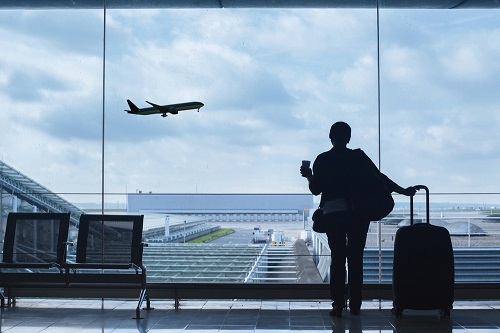
Sweden’s air travel infrastructure is well established, with Stockholm Arlanda Airport serving as one of Northern Europe’s principal international gateways. Domestic aviation plays a genuine role in connecting a country that stretches an extraordinary distance from north to south — from Malmö at its southernmost point to the Arctic city of Kiruna — while a blend of full-service and budget airlines ensures solid international links. For anyone relocating to Sweden, getting to grips with how the aviation network operates is an essential part of settling in.
| Item | Details |
|---|---|
| Main international hub | Stockholm Arlanda Airport (ARN) — approx. 37 km north of Stockholm city centre |
| Total airports | 33 airports; 30 handle domestic routes (as of 2026) |
| Airlines serving Sweden | 56 airlines, including 18 low-cost carriers (as of February 2026) |
| Primary domestic carrier | SAS (Scandinavian Airlines), in partnership with Braathens Regional Airways (BRA) |
| Arlanda Express to Stockholm centre | Approx. 20 minutes; trains run every 15 minutes |
| Passenger rights framework | EU Regulation 261/2004 — compensation up to €600 for delays, cancellations, and denied boarding |
| Aviation ticket tax | Abolished from 1 July 2025 |
What is domestic air travel in Sweden like, and which routes and destinations are covered?
Sweden ranks among the longest countries in Europe measured from north to south, spanning roughly 1,500 kilometres, which gives domestic aviation real practical importance — especially for those who live or work in the country’s northern half. Across the country’s 33 airports, international services currently depart from 15, while 30 handle domestic traffic. By European standards, this constitutes a reasonably dense internal network, even if it falls well short of the scale found in places like the United States or Australia.
On the lengthier routes — such as Stockholm to Umeå and beyond — flying is the primary means of getting around even for those travelling for leisure. For shorter journeys in the south, however, Sweden’s excellent high-speed rail services (the X2000) and intercity bus routes frequently offer competitive journey times once you factor in the time needed for airport check-in. In practical terms, air travel is indispensable for reaching the north, but plays a more supplementary role across the southern regions.
Destinations covered on domestic routes include Visby on the island of Gotland, Gothenburg, Malmö, and Luleå. From January 2025, SAS launched new services to Halmstad, Kalmar, and Sälen, considerably improving connectivity across the country. Northern cities such as Umeå, Kiruna, and Skellefteå are also on the domestic network. Gotland, which has no road or rail connection to the Swedish mainland, relies especially heavily on air links, making flights there more of a practical necessity than a lifestyle choice.
Domestic flights are now channelled through a single Stockholm airport — Arlanda — meaning travellers can for the first time use the same airport for both internal Swedish routes and international departures. This consolidation, which came into effect in early 2025, represents a tangible change for anyone who commutes domestically and then connects abroad.
Which airlines fly domestic routes in Sweden, and are budget carriers available?
Scandinavian Airlines (SAS) is the shared flag carrier of Denmark, Norway, and Sweden, with its headquarters in Solna, Sweden. As the region’s traditional national airline, SAS operates an extensive schedule of both domestic Swedish and international flights. After a period of financial difficulty, the airline completed its Chapter 11 restructuring in 2024 and departed Star Alliance on 31 August 2024, moving immediately to SkyTeam.
SAS’s growth in domestic operations has been driven by a strategic collaboration with Braathens Regional Airways (BRA). Seven BRA aircraft now fly on SAS routes from Arlanda, with a phased expansion programme bringing more destinations and higher frequencies over time. This arrangement — worth approximately SEK 6 billion across seven years — is designed to reinforce SAS’s domestic network by boosting daily departures to key cities.
In total, 56 airlines currently operate out of Sweden, 18 of which are low-cost carriers. Norwegian and Ryanair are the standout budget operators, together accounting for around 74% of all low-cost airline flights. Norwegian serves a mix of near-domestic and international destinations from Sweden, while Ryanair predominantly operates from secondary airports such as Skavsta (near Stockholm) and Västerås. Among all carriers, SAS, Ryanair, Norwegian, Lufthansa, Finnair, and KLM handle the bulk of Sweden’s international flights.
The domestic market remains fairly concentrated, with SAS and BRA as the dominant players. Expats who expect to fly regularly — particularly to remote locations in the north — may encounter limited competition on certain routes, which can have a real impact on both ticket prices and scheduling options.
How do you book a domestic flight in Sweden, and which platforms can you use?
Booking a domestic flight in Sweden is a simple process conducted almost entirely online. The most direct approach is to go straight to the airline’s own website — both SAS and Norwegian offer fully functional booking portals in both Swedish and English. Going direct can occasionally secure the lowest available base fare and also makes it easier to handle any subsequent changes or passenger rights claims.
Third-party aggregators are also popular among travellers in Sweden. Global tools such as Google Flights, Skyscanner, Kayak, and Momondo pull together domestic Swedish routes alongside international options, making it straightforward to compare prices across carriers. These platforms are particularly handy for identifying the most cost-effective travel windows and for uncovering routes that might not immediately spring to mind.
Advance booking is generally worthwhile for domestic travel, especially to popular seasonal destinations — seat availability on peak weekends to places like Åre during ski season or Visby in summer can tighten quickly, and fares tend to climb accordingly. On high-frequency corridors such as Stockholm–Gothenburg or Stockholm–Malmö, last-minute seats are usually available, though seldom at bargain prices. SAS also offers connecting domestic services between major Swedish cities routed via Stockholm.
Swedavia, the authority responsible for operating Sweden’s principal airports, maintains current information about airlines and direct flight routes on its website — a handy resource for confirming which carriers serve which airports. This can be found at swedavia.com.
What do domestic flights typically cost in Sweden, and how should expats budget?
Domestic airfare prices in Sweden vary widely depending on the route in question, how far ahead you book, and seasonal demand. On the busiest corridors — Stockholm Arlanda to Gothenburg or Stockholm to Malmö — promotional fares can begin as low as SEK 500–800 (roughly €45–75) when purchased well in advance, though standard economy tickets more commonly sit in the SEK 1,000–2,500 bracket (approximately €90–230). Check airline websites directly for current prices, as these figures move frequently.
On northern routes — Stockholm to Luleå, Umeå, or Kiruna, for instance — where the train is less of a rival, fares tend to run higher. A one-way economy ticket on these routes without advance planning can easily reach SEK 2,000–4,000 (approximately €185–370). Flights to Visby on the island of Gotland can see sharp price spikes during the summer high season.
One notable recent development affecting prices is the scrapping of Sweden’s aviation ticket tax. The Swedish government abolished this levy from 1 July 2025. The tax had originally been introduced in 2018 by a previous government with the aim of reducing air travel demand, but it was associated with weaker passenger growth and a slower post-pandemic recovery than Sweden’s Scandinavian neighbours experienced. Its removal is anticipated to exert some downward pressure on fares going forward.
Baggage costs are a routine consideration. SAS includes a carry-on bag in its fares but typically charges separately for hold luggage on domestic economy tickets. Budget operators such as Ryanair and Norwegian apply strict cabin bag and checked baggage rules with fees on top. Always review the specific fare conditions at the time of booking. For reliable, up-to-date pricing, consult flysas.com, norwegian.com, or a comparison platform.
What are Sweden’s main international airports, and which matter most for expats?
Stockholm Arlanda Airport (ARN), situated 37 km north of Stockholm, is Sweden’s largest and busiest airport and the country’s main point of entry for international travel. It connects passengers to more than 180 destinations worldwide. The airport is well served by ground transport, most notably the Arlanda Express high-speed train, which pulls into Stockholm Central Station in just 20 minutes. Flygbussarna runs regular coach departures to central Stockholm, and additional services are provided by Flixbus, SL, and Vy bus4you.
For expats arriving from North America, Stockholm Arlanda Airport operates several direct routes during the summer season, with Air Canada, United Airlines, and Delta Air Lines running services to Toronto, Montreal, and New York multiple times per week. Through its SkyTeam membership, SAS also facilitates global connections via partner airlines including Air France, Virgin Atlantic, KLM, and Delta Air Lines.
Gothenburg Landvetter Airport (GOT) is Sweden’s second-largest airport, located approximately 25 kilometres east of Gothenburg. It serves as the principal aviation hub for western Sweden and offers a range of European flights alongside some intercontinental services. The airport is recognised for its efficient operation and modern facilities. Flygbussarna coaches connect Landvetter to Gothenburg city centre in around 30 minutes.
Malmö Airport (MMX), also referred to as Sturup Airport, lies roughly 28 kilometres southeast of Malmö and ranks as the country’s third-busiest airport. It primarily caters to budget carriers serving European destinations. It is worth knowing that for travel to southern Sweden, flying into Copenhagen Airport in Denmark and crossing the Öresund Bridge into Malmö and the wider Skåne region is also a practical option — Copenhagen is a substantial international hub that frequently offers more route options than Malmö Airport.
For expats settling in northern Sweden, Luleå Airport is a key facility for the Norrbotten region, handling domestic connections and some international routes, and acting as the main gateway to Swedish Lapland. Kiruna Airport, the country’s most northerly commercial airport, serves the remote mining and tourism area of Lapland, with seasonal routes including Paris–Kiruna (Air France) and Copenhagen–Kiruna (SAS) having operated in recent years.
For budget-conscious travellers, Stockholm Skavsta Airport (NYO) offers an alternative to Arlanda, though it sits approximately 100 kilometres southwest of Stockholm. Lower-cost fares are often available here, but the additional travel time to and from the city needs to be factored into any comparison with flights from Arlanda.
What rules, restrictions, and practicalities at Swedish airports should expats know about?
For flights within Sweden, all passengers are required to present valid photo identification. A passport or a national identity card issued by a Schengen Area country are both acceptable. Non-EU/EEA nationals should travel with their passport and, where applicable, their Swedish residence permit. Unlike some countries where a driving licence may be acceptable for domestic air travel, Swedish aviation security regulations require a government-issued photo ID. Always verify the specific requirements with your airline ahead of departure.
At Arlanda, domestic and international flights share the same terminals, though gates are divided between Schengen and non-Schengen departures. This means that flying to a non-Schengen destination — such as the UK, the US, or most countries outside the EU — involves passing through passport control, whereas travel within the Schengen Area does not. On arrival in Sweden from outside the Schengen Zone, you will proceed through passport control and, where relevant, through customs.
As a general rule, arriving at least two hours before an international departure and 60–90 minutes before a domestic flight is the standard guidance at Swedish airports. Security queues at Arlanda can become noticeably longer during peak summer and holiday periods, and Swedavia recommends checking their website for live waiting times before you leave home. A new security control area equipped with CT scanners opened at Arlanda in early summer 2023, substantially upgrading the security experience.
For passengers arriving from outside the EU, standard customs regulations apply. Prohibited and restricted items include certain foodstuffs, plant material, and controlled substances. The Swedish Customs Authority, Tullverket, publishes comprehensive guidance at tullverket.se. Always check Tullverket’s official guidance for the most current rules on what you may bring into Sweden, as allowances and restrictions are subject to change.
How does Sweden’s air travel network shape day-to-day expat life?
Expats settling in the Stockholm, Gothenburg, or Malmö areas are unlikely to depend on air travel for their routine movement — Sweden’s rail and coach services are reliable and competitively priced for shorter journeys. The picture changes substantially for those moving to northern Sweden, however. Anyone based in cities such as Luleå, Umeå, Sundsvall, or Kiruna will find that domestic flights quickly become a regular fixture of life. Road journeys from these cities to Stockholm can take between 10 and 14 hours or more, leaving flying as the only sensible choice for frequent trips to the capital or for catching onward international connections.
On the longer routes — Stockholm to Umeå and further north — flying is the predominant means of travel even among leisure passengers. Expats in these parts of the country should include the cost of regular domestic flights in their financial planning, and should bear in mind that limited route options mean that flexibility with travel dates can translate into meaningful savings.
For international travel, Sweden is well connected, though the country’s airports do not operate at the scale of Europe’s largest aviation hubs such as Amsterdam, Frankfurt, or Paris. All the major European airlines offer daily connections to Sweden, ensuring that the continent is readily accessible. As of February 2026, Sweden has flights to 185 airports across 49 countries. Returning to European home countries is generally uncomplicated and affordable, particularly with advance booking. Long-haul options are more limited, with direct North American routes — including to Toronto, Montreal, and New York — available from Arlanda primarily during the summer.
Expats travelling internationally from northern Sweden will typically need to connect through Stockholm Arlanda, adding a domestic leg to their itinerary. The consolidation of domestic and international flights at Arlanda since 2025 helps to streamline these connections, allowing travellers to use the same airport for both legs of their journey — a genuine practical improvement for those based in the north.
What should expats understand about travel insurance and passenger rights when flying in Sweden?
As an EU member state, Sweden falls within the scope of EU Regulation 261/2004, which is widely regarded as one of the most robust passenger rights frameworks anywhere in the world. In place since 2004, this regulation sets out clear entitlements for travellers facing denied boarding, flight cancellations, or significant delays, including compensation of up to €600 per passenger.
The level of compensation ranges from €250 to €600 depending on the distance of the flight. Where delays are severe, airlines are also obliged to provide food and refreshments. To be covered, passengers must have checked in no later than 45 minutes before departure, and the regulation does not extend to disruptions caused by extraordinary circumstances beyond the airline’s control.
It is important to note that EU261 is currently being reviewed. The European Commission has put forward the first substantial reform of the regulation since its introduction, and the Council of the EU approved draft amendments in June 2025. However, the existing rules remain fully in force until any revised legislation is formally adopted. Expats would do well to monitor these developments, as compensation levels and the regulation’s scope could shift in the years ahead. The European Commission’s Your Europe portal offers authoritative and current guidance on air passenger rights.
In comparison to US Department of Transportation rules — which primarily mandate compensation in cases of involuntary denied boarding — EU261 provides considerably wider protection, covering cancellations and extended delays on all flights departing from EU airports, regardless of the airline’s country of registration. For expats arriving from regions with more limited passenger protections, flying within or from Sweden offers a noticeably stronger safety net.
Travel insurance remains highly advisable for expats, particularly for cover relating to medical emergencies while abroad, trip interruption, and lost or damaged baggage — areas that fall outside the scope of EU261. Comprehensive single-trip or annual multi-trip policies are readily available and extend peace of mind well beyond the statutory protections. Sweden’s Konsumentverket (Swedish Consumer Agency) also offers guidance for consumers navigating air travel disputes.
Frequently Asked Questions: Air Travel in Sweden for Expats
Do I need a passport for domestic flights within Sweden?
Valid government-issued photo identification is required for all domestic flights in Sweden. Passport holders and those carrying a national identity card from a Schengen country can use either document. Non-EU/EEA nationals should bring both their passport and their residence permit. A driving licence on its own is not generally accepted as valid identification for air travel. Check requirements with your specific airline before you travel.
Which is the best airport to fly into when moving to Sweden?
For most international arrivals, Stockholm Arlanda Airport offers the widest range of direct connections and the best onward facilities, making it the natural first choice for long-haul and European routes alike. Travellers relocating to Gothenburg or the western part of the country will find Landvetter Airport (GOT) more convenient. For southern Sweden and the Skåne region, both Malmö Airport and Copenhagen Airport — with onward travel into Sweden via the Öresund Bridge — are viable and practical options.
Is the train a better option than flying for getting around Sweden?
This depends significantly on where you are headed. For journeys of roughly 500 km or less — Stockholm to Gothenburg or Stockholm to Malmö, for example — the train is frequently competitive on both price and total journey time once airport check-in is taken into account. On longer routes northward, such as Stockholm to Umeå and beyond, flying is the dominant mode of transport for both business and leisure travellers alike. For cities like Luleå or Kiruna, flying is nearly always the most practical solution.
Are there direct flights from Sweden to North America and Asia?
During the summer season, Stockholm Arlanda Airport operates a number of direct routes to North America, with Air Canada, United Airlines, and Delta Air Lines running services to Toronto, Montreal, and New York. For Asia, ANA (All Nippon Airways) flies a direct route between Arlanda and Tokyo, and Norse Atlantic Airways has introduced a service to Bangkok. Long-haul routes are seasonal and change from year to year; consult Swedavia’s route map at swedavia.com for current schedules.
How do I get from Stockholm Arlanda Airport to the city centre?
The Arlanda Express high-speed train connects the airport to Stockholm Central Station in just 20 minutes, running every 15 minutes throughout the day. Flygbussarna coaches provide a more affordable alternative, also serving central Stockholm on a regular timetable. Additional services are available from Flixbus and SL. Taxis and ride-hailing apps are on offer but tend to be considerably more expensive, especially during busy periods.
How are expats protected if their flight from Sweden is cancelled or delayed?
EU Regulation 261/2004 applies throughout all 27 EU member states, including Sweden. Under this framework, passengers can claim compensation of up to €600 in cases of denied boarding, cancellations, or significant delays. The regulation covers all airlines departing from a Swedish airport, as well as EU-based carriers arriving into Sweden. Start by submitting a claim directly with your airline; if the matter remains unresolved, Sweden’s National Board for Consumer Disputes (ARN) can offer further assistance.
Is Gotland (Visby) well connected by air from the Swedish mainland?
Yes. Visby Airport is served by regular flights from Stockholm, and given that Gotland has no road or rail connection to the mainland, air travel and ferry services are the two principal ways of reaching the island. Prices and demand both peak sharply in summer, particularly through July and August. If you are visiting during this period, booking well ahead is strongly advisable. Outside peak season, the year-round ferry from Nynäshamn or Oskarshamn offers a more budget-friendly alternative.
What is Braathens Regional Airways (BRA) and should I expect to fly with them?
SAS has entered into a partnership with Braathens Regional Airways (BRA), under which BRA now operates a number of domestic routes on SAS’s behalf. This arrangement enables SAS to expand its domestic network with additional destinations and increased frequencies on key Swedish routes. In practice, if you purchase a domestic SAS ticket from Arlanda, your flight may be operated by BRA aircraft and crew under a wet lease arrangement. Booking, ticketing, and all passenger rights protections remain with SAS, so the experience for travellers is essentially seamless.