
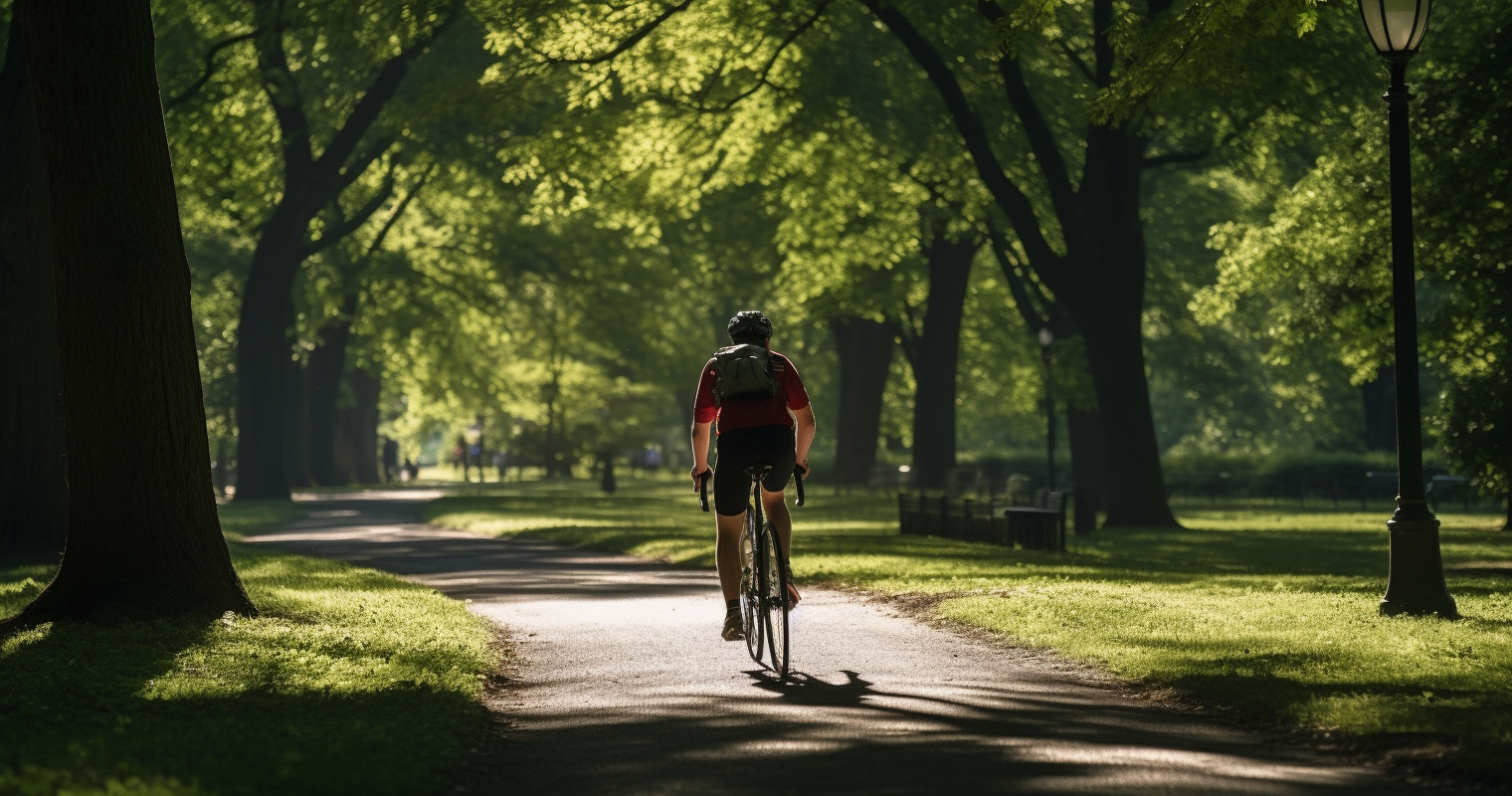
Hungary may catch many newcomers off guard with just how deeply cycling is woven into daily life — the country boasts one of the most robust cycling cultures on the continent. Roughly 16% of Hungarians rely on a bicycle as their main form of transport, and ongoing government investment is steadily extending the national cycling network. While quality varies depending on where you are in the country, conditions are improving year on year, making Hungary an appealing destination for expats who want to cycle both as a means of getting around and as a leisure activity.
| Item | Details |
|---|---|
| Cycling as primary transport (as of 2022) | 16% of the population; 40% cycle at least weekly |
| National cycle path network | 1,850 km built in the last decade; target of ~15,000 km by 2030 |
| Helmet law (as of 2025) | No universal mandatory helmet law for adults; proposed reforms would require helmets for under-14s |
| Reflective vest requirement | Mandatory when cycling in poor visibility or after dusk |
| MOL Bubi bike-share (Budapest, as of 2025) | 222+ stations; pass from ~500 HUF/month; 3.0 upgrade with e-bikes planned for 2026 |
| Children on main roads | Under-12s may not cycle on main roads |
How popular is cycling in Hungary — is it a common way to get around?
Cycling occupies a much more central place in Hungarian daily life than most newcomers anticipate. Representative national research carried out in 2022 found that 16% of Hungarians name the bicycle as their principal mode of transport. That figure takes on additional significance when viewed across Europe: a Eurobarometer survey placed Hungary in the top three EU countries for bicycle use, with only Denmark and the Netherlands ahead of it, the latter recording 22% of respondents who said the bike was their most-used form of transport.
The same 2022 research — available in English — further reveals that while 16% of Hungarians cite the bicycle as their primary transport, a full 40% get on a bike at least once a week. This degree of participation makes clear that cycling is far from a niche pastime: it is embedded in the rhythms of daily life, from school runs and shopping trips to work commutes, especially in flatter towns and across rural Hungary.
Surveys indicate that as many as 90% of Hungarian cyclists ride primarily to get somewhere rather than for recreation, with only 10% describing leisure as their main motivation. This makes Hungary an outlier compared with many Western European countries where cycling for pleasure predominates. The cultural normalisation of the bicycle as an everyday utility is closer in spirit to the Netherlands or Denmark — even if Hungary’s physical infrastructure has yet to reach those heights.
Cycling has continued to gain momentum in Hungary in recent years, with more people choosing two wheels for commuting, sport, and casual exploration. Expats arriving from countries where cycling is a minority activity are often pleasantly surprised: a shared cycling culture and fellow riders are readily found in most Hungarian towns and cities.
What is the cycling infrastructure like in Hungary?
Hungary has made meaningful strides in building out its cycling infrastructure, both in constructing new paths and in linking together and improving existing segments of the network. That said, the quality and coverage of infrastructure differs noticeably between major cities, popular lake destinations, and more remote rural areas, so your experience will depend considerably on where you choose to ride.
Over the past decade, 1,850 km of dedicated cycle paths have been laid, with a further 2,500 km designated as suitable cycling routes. The national government has set an ambitious target of expanding the total cycle path network to nearly 15,000 km by 2030, with the Ministry of Construction and Transport leading infrastructure delivery.
The overall state of cycling infrastructure can fairly be described as good but with clear scope for further development. Dedicated paths exist near all the country’s major leisure destinations, including the four principal lakes — Balaton, Tisza, Fertő, and Velence — yet the network still suffers in places from gaps between otherwise well-built sections. The most conspicuous shortfall is along the Danube corridor: aside from a handful of disconnected stretches between the Austrian border and Budapest, this central artery remains largely without dedicated cycling provision.
Budapest’s network of bike lanes is growing, with the most developed infrastructure found along key thoroughfares and near the riverfront. Beyond the capital, coverage is strongest around the four great lakes and along the EuroVelo long-distance routes. Path quality is uneven in places: newer sections are generally of a high standard, but some older stretches — particularly parts of the Lake Balaton circuit and certain quieter rural routes — can be disrupted by tree roots or deteriorating asphalt.
Signage is reliable on well-established routes such as EuroVelo 6, but can thin out on less-travelled rural paths or when navigating off the main marked corridors within cities. A GPS device or a capable map application is advisable. For up-to-date route maps and information on planned improvements, the Magyar Közút (Hungarian Public Road) website and the Magyar Kerékpárosklub (Hungarian Cyclists’ Club) — the country’s leading cycling advocacy organisation — are the most reliable resources.
Is cycling safe in Hungary?
The safety picture for cyclists in Hungary is varied. Investment in urban infrastructure has helped protect riders in Budapest and other cities, but conditions on some rural roads and in areas lacking dedicated lanes call for a greater degree of caution. Researchers have identified the implementation of meaningful road safety action plans as one of the priority areas needed to address ongoing risks for cyclists in Hungarian urban environments.
Attitudes among drivers towards cyclists depend heavily on location. In smaller towns and rural Hungary, where cycling is so commonplace, most motorists are well accustomed to sharing the road with bikes. In Budapest, driver behaviour has been improving but remains variable — particularly on busy main roads. Where no cycle lane exists, cyclists must share space with motor traffic and are best served by riding predictably and maintaining strong visibility. Assertiveness, rather than timidity, generally makes for safer riding in mixed traffic.
On the matter of helmets: unlike Australia and New Zealand, where all cyclists are legally required to wear a helmet, Hungary currently has no universal statutory requirement for adults to do so. Legislative proposals were under development by the Ministry of Construction and Transport as of early 2025, envisaging a phased approach in which helmets would initially become compulsory for those under 14 once a revised Highway Code comes into force. Riders should always verify the current rules before heading out.
Visibility rules are a legal obligation rather than simply good advice. Since 2007, cyclists have been required by law to wear a reflective safety vest when riding after dark or in conditions of poor visibility. Bikes must also be equipped with functioning lights and reflectors at night or in low-visibility situations. For up-to-date road safety statistics, the Institute for Transport Sciences (KTI) and the Hungarian Police road safety data portal both publish annual accident data.
What are the rules of the road for cyclists in Hungary?
Cycling in Hungary is regulated by the Highway Code, known in Hungarian as KRESZ (Közúti Közlekedési Szabályok és Elnevezések). The code applies to cyclists in the same way it applies to all other road users, and anyone riding a bicycle is expected to know and abide by its provisions. The Ministry of Construction and Transport was working on a new, modernised edition of the KRESZ as of 2025; riders should always consult the most current version before taking to the road.
Key rules for cyclists include:
- Lane priority: Where a cycle path or cycle lane is present, cyclists must use it; alternatively, if signs so indicate, the bus lane may be used. In the absence of such provision, cyclists must ride on the hard shoulder or on road surfaces suitable for cycling, keeping to the right side of the road.
- Pavements and pedestrian areas: Riding on footpaths is generally prohibited unless the path is explicitly marked as a shared route for cyclists and pedestrians.
- Traffic signals: Cyclists must comply with all traffic signals, give-way rules, and road signs in the same manner as any other vehicle operator.
- Children on main roads: Children under the age of 12 are not permitted to cycle on main roads; families planning rides must use designated cycle paths.
- Lighting: Cyclists are required to operate the lights prescribed by the Highway Code in conditions of darkness, dusk, or fog.
- Reflective vest: Wearing a safety vest or reflective clothing in poor visibility is a legal requirement.
- Dog-walking: Walking a dog while riding a bicycle is explicitly prohibited under the code.
- Helmets for adults: Currently advisable but not universally required by law for adults; proposals to mandate helmet use for under-14s were under legislative review as of 2025.
- Riding abreast: Under proposed revisions to the code, cyclists could be permitted to ride side by side outside urban areas when travelling in a group — though the current general expectation on roads shared with vehicles is single file.
Traffic police and transport authorities enforce cycling rules in Budapest and elsewhere; infringements such as ignoring traffic signals or riding in prohibited areas can result in fines, which vary by offence and may be collected on the spot. For a full and current account of legal requirements, consult the KRESZ via the Hungarian Legal Database (Jogtar) or the Hungarian Police website.
Do I need to register my bike or have insurance to cycle in Hungary?
Standard bicycles are not subject to any legal registration requirement in Hungary. Unlike motor vehicles, bikes do not need a number plate or an entry in any national register. Voluntary registration — for instance, recording your frame number with a local police station or through a private bike registration service — is frequently recommended as a practical deterrent to theft, but remains entirely optional.
Third-party liability insurance is similarly not a legal requirement for cyclists in Hungary, in contrast to the compulsory third-party insurance required for motor vehicles. Nevertheless, given the potential financial exposure if a cyclist causes injury or property damage to another person, taking out personal liability cover is a prudent step. This can often be arranged as part of a home contents insurance policy; many Hungarian home insurance packages include a personal liability component that extends to cycling incidents. Check directly with your insurer to confirm the scope of any existing policy.
Expats who cycle frequently may also find value in travel insurance or a dedicated cycling policy that covers theft or accidental damage to the bike itself. For current insurance requirements and consumer guidance, the Magyar Nemzeti Bank (MNB), Hungary’s financial regulator and overseer of the insurance sector, publishes relevant information for policyholders.
Are there public bike-sharing or rental schemes in Hungary?
Budapest operates a well-established public bike-sharing scheme. The MOL Bubi system has formed part of the city’s integrated public transport offering since 2014, run by BKK (Budapesti Közlekedési Központ — Budapest Transport Centre) and backed by the Hungarian energy company MOL.
The network currently comprises 222 stations spread across the city and a fleet of 2,460 bicycles, accessible to users through a dedicated mobile application. A MOL Bubi pass allows the simultaneous use of two bikes, and the first 30 minutes of any journey are provided free of charge; usage beyond that threshold is charged at 50 HUF per minute (as of 2025).
The system is in the midst of a substantial overhaul. A minimum of 5,000 new Bubi bicycles — among them 1,000 electric bikes — are scheduled to be introduced by June 2026, with the expanded fleet serving a considerably broader area of the city. It is worth noting that purchasing a subscription pass requires a registered address in Hungary; those who have not yet completed their address registration, or who prefer occasional use, can opt for the Pay As You Go arrangement instead. For current pricing and the latest information on the ongoing upgrade, consult the official MOL Bubi website or the BKK website.
Elsewhere in Hungary, formal bike-sharing schemes are less widespread, although cities including Győr and Debrecen have been evaluated for e-bike sharing readiness — with Budapest and Győr rated among the best-positioned for sustainable cycling transport. Private hire shops fill much of the gap, and are particularly well represented around the major tourist lakes — Balaton, Tisza, and the Danube Bend area. Most rental outlets offer daily and multi-day hire packages that typically include a helmet and lock, with identification and a deposit or payment authorisation usually required at the point of hire.
Where can I buy or service a bike in Hungary?
Purchasing a bicycle in Hungary presents few difficulties, with a lively market catering to all budgets and preferences. Budapest is home to a wide range of dedicated cycle retailers, from small independent workshops to larger outlets carrying well-known international brands. The city has developed a growing cycling scene fuelled by younger urbanites choosing two wheels for daily transport and a thriving community of bike couriers and messengers.
Budapest’s cycling culture has also given rise to a distinctive tradition of upcycling: older frames are stripped back and rebuilt into practical commuter bikes, often converted to single-speed configurations for their simplicity, ease of maintenance, and light weight. This makes the capital an interesting hunting ground for a characterful used bike at an accessible price. Online platforms such as Jófogás — Hungary’s answer to Facebook Marketplace or Gumtree — are the go-to channels for second-hand bike transactions.
In larger regional cities such as Debrecen, Pécs, Miskolc, and Győr, specialist bike shops exist but are thinner on the ground than in the capital. Smaller towns may offer limited dedicated cycling retail, though general hardware or outdoor shops sometimes stock entry-level bikes and basic accessories. Cyclists seeking quality components or specialist parts are best served by Budapest’s shops or reputable online retailers.
Hungary’s membership of the European Union means that standard EU consumer protection rules apply to new bike purchases from registered retailers, including a two-year statutory guarantee broadly equivalent to warranty protections across other member states. Repair services are widely accessible in cities; look out for establishments displaying the bringabarát (cyclist-friendly) accreditation, a quality mark associated with Hungary’s national cycling tourism network.
Can I bring my bike when I move to Hungary, and are there any import rules?
For those relocating from another EU member state, bringing a bicycle to Hungary is entirely unrestricted. As part of the EU single market, goods — including personal possessions such as bikes — move freely between member states without customs formalities or duties.
If you are moving from outside the EU, different rules come into play. Personal belongings, including bicycles, may qualify for a transfer of residence exemption from import duties and VAT, subject to meeting the relevant conditions. As a general rule, you must have been living outside the EU for at least 12 months, the items must have been in your personal use for at least six months prior to import, and they must be brought into Hungary within 12 months of your establishing residence there.
Where the transfer of residence exemption does not apply, a bicycle imported from a non-EU country would normally attract EU customs duty — currently set at 14% under the EU Common Customs Tariff as of 2024 — plus Hungarian VAT at 27%. These rates and the conditions of available exemptions are subject to change, and individual circumstances can affect the outcome. Before shipping your bike, always verify the current position with the National Tax and Customs Administration of Hungary (NAV), which publishes guidance on transfer of residence relief and personal effects imports. For more complex situations, engaging a licensed customs agent is advisable.
What are the best cycling routes or destinations in Hungary?
Hungary is threaded with internationally recognised long-distance cycling corridors and offers superb leisure riding across a variety of landscapes. The country’s predominantly flat topography — particularly across the Great Hungarian Plain — makes it welcoming for cyclists of every level of experience and fitness.
EuroVelo 6, the Atlantic–Black Sea route, is rightly considered the flagship cycling route in Hungary, tracing a 420-kilometre passage along the Danube. The presence of this major international corridor raises the standard of infrastructure and services in the region, and it serves as an ideal entry point for anyone wanting to experience long-distance touring in Hungary.
The Budapest–Balaton bike path (BuBa) is a more recent addition to the national cycling map, guiding riders through vineyard landscapes, along the shores of Lake Velence, through the historic city of Székesfehérvár, and onwards to Lake Balaton. The shores of Balaton, the sweeping scenery of the Danube Bend, and the forested hills around Buda all provide memorable settings for longer cycling excursions.
All four of Hungary’s great lakes are outstanding cycling destinations in their own right. Lake Balaton, Lake Velence, Lake Tisza, and Lake Fertő each offer circuits with solid supporting infrastructure and service provision. Recent years have brought considerable new investment, including the completion of the Lake Tisza circuit via a new dedicated cycling bridge — a development that has significantly boosted bicycle tourism in the region.
EuroVelo 11 — the East Europe Route — follows the course of the Tisza, Hungary’s second-longest river, and passes through the celebrated wine country of Tokaj. EuroVelo 13 — the Iron Curtain Trail — charts a course along the western and southern edges of Hungary, tracing the border with neighbouring countries. Between them, these routes offer a compelling blend of history, scenery, and cultural interest that is difficult to match elsewhere in Central Europe.
For route planning, the Hungarian Tourism Agency and the EuroVelo Hungary page are excellent starting points. The Magyar Kerékpárosklub also produces route maps and cycling tourism materials. Bicycles can be taken on trains within Hungary for a modest surcharge, on services marked with a bicycle symbol on the timetable, with bikes stored in dedicated spaces at the ends of carriages. This flexibility makes it straightforward to combine rail travel with cycling for more ambitious cross-country adventures.
Frequently asked questions about cycling in Hungary
Is cycling in Budapest safe for everyday commuting?
Budapest’s network of dedicated bike lanes has been steadily growing, with the strongest provision along major corridors and near the Danube. Cycling to work is a practical option for many journeys, especially on the flat terrain of the Pest side of the city; the hillier Buda side demands more physical effort. Riding on marked cycle lanes and quieter residential streets offers the safest experience, while busier main roads call for greater rider confidence. Both road quality and driver behaviour towards cyclists are on an improving trajectory as cycling’s popularity continues to grow.
Do I legally need to wear a helmet when cycling in Hungary?
As things stand, there is no universal legal requirement for adult cyclists to wear a helmet in Hungary. Proposals for a new Highway Code include a provision to make helmets compulsory, beginning with riders under 14 years of age. This legislative reform was in preparation as of 2025. Regardless of the legal position, helmets are strongly recommended for all cyclists and are standard practice among experienced riders.
What are the lighting rules for cyclists in Hungary?
When riding in darkness or conditions of poor visibility, cyclists are required by law to have functioning lights and reflectors fitted to their bikes. Since 2007, a safety vest or reflective clothing has also been legally required after dusk and during bad weather. Front and rear lights combined with a reflective vest are both a statutory obligation and a basic necessity for riding safely at night.
Can I use the MOL Bubi bike-share as a new resident?
Purchasing a subscription pass for MOL Bubi requires a registered address in Hungary. Once you have completed your address registration, you can sign up for a monthly or annual pass through the MOL Bubi app. Prior to registration, or for occasional journeys, the Pay As You Go option is open to all users. A major system upgrade — Bubi 3.0, incorporating electric bikes — is planned for 2026; the official MOL Bubi website is the best place to check current pricing and availability.
Can children cycle freely in Hungary?
Children under 12 are not permitted to ride on main roads in Hungary, meaning that families need to plan routes along dedicated cycle paths. Young riders are welcome on cycle paths and shared routes throughout the country. Helmet use is strongly encouraged for children and is expected to become a legal requirement for under-14s under the proposed new traffic rules. Parents should supervise young cyclists at all times and keep to paths away from heavy motor traffic.
Is it easy to transport my bike on trains in Hungary?
Bikes can be carried on trains within Hungary for a small supplementary charge, on services indicated by a bicycle symbol in the timetable. Bicycles are stored in the dedicated spaces at the ends of carriages. For the transport of a larger number of bikes, a request should be submitted at least one week before travel. The MÁV (Hungarian State Railways) website is the authoritative source for timetables showing which services accept bicycles.
Are there cycling incentives for commuters in Hungary?
Hungary’s National Cycling Strategy includes a vision for financial incentives to encourage cycling to work and school, as part of the broader government ambition for cycling by 2030. At present, Hungary does not have a widely established employer-based cycle benefit scheme comparable to the UK’s Cycle to Work programme, but the direction of national policy is moving towards greater support for cycle commuters. For the most current guidance, check with your employer and the relevant ministry for transport.
Where can I find official cycling route maps for Hungary?
The most reliable official sources for cycling route information are the EuroVelo Hungary page, the Hungarian Tourism Agency, and the Magyar Kerékpárosklub (Hungarian Cyclists’ Club). Google Maps has also introduced a cycling route planner for Hungary, covering the full extent of Budapest’s cycle network and approximately 80% of routes across the rest of the country. For forthcoming infrastructure developments, the Ministry of Construction and Transport and Magyar Közút both publish details of their planned pipeline of cycling projects.