
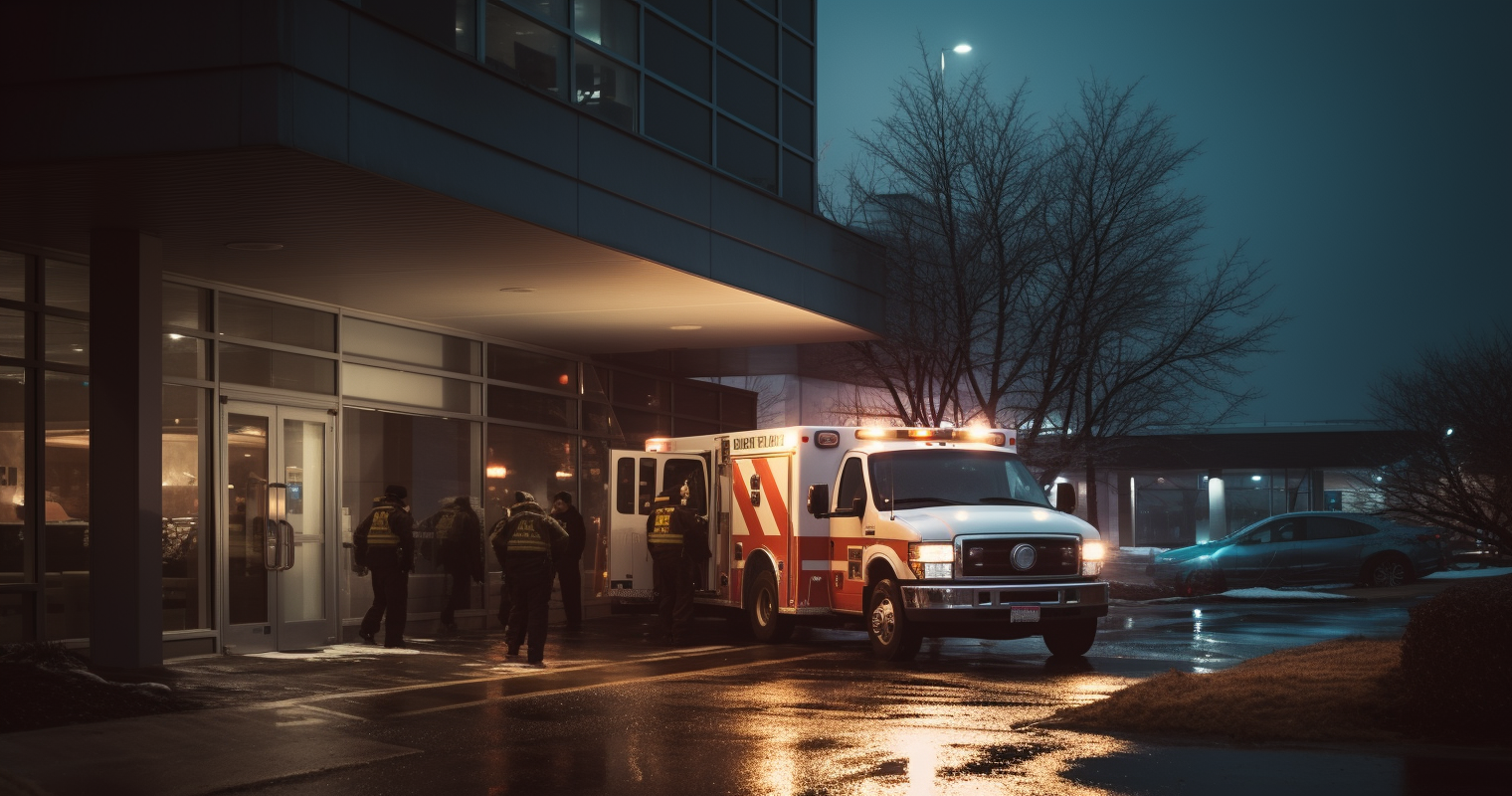
Iceland operates a single emergency number — 112 — covering all urgent services, including police, fire, ambulance, and search and rescue. Calls are free of charge, around the clock, from any location in the country. Emergency treatment is available to all people regardless of their status, though what you ultimately pay depends on your residency and insurance: EEA nationals holding a valid European Health Insurance Card (EHIC) are charged at the same rate as local residents, while visitors from outside the EEA are generally expected to cover the full cost themselves.
| Item | Details |
|---|---|
| Single emergency number | 112 (police, fire, ambulance, search & rescue) — free, 24/7, as of 2025 |
| Non-emergency medical advice line | 1700 (National Health Line, 24/7) |
| After-hours medical clinic (Reykjavík) | Læknavaktin, tel. 1770 |
| Mental health helpline | Red Cross Helpline 1717 (free, 24/7, Icelandic and English) |
| EEA/EHIC holders | Pay the same co-payment rate as local residents |
| Non-EEA visitors without insurance | Expected to pay full cost; non-residents typically billed on discharge |
| Ambulance cost-sharing | Government funds ~85% of ambulance costs; ~15% charged to the individual as a co-payment, as of 2025 (verify with Icelandic Health Insurance) |
| Main national hospital (Reykjavík) | Landspítali University Hospital, tel. +354 543 1000 |
What is Iceland’s single emergency number, and does it cover every service?
Iceland uses one unified number for all urgent situations. Whether you need the police, fire brigade, or an ambulance anywhere in Iceland, the number to dial is 112. As with much of Europe, this single number handles all three core services, meaning you do not need to memorise separate contacts for separate situations — one call connects you to whoever is required.
The most frequent reasons people dial 112 include requests for police attendance, ambulance dispatch, response to illness or injury, and assistance with accidents. The number also handles search and rescue operations, domestic violence incidents, child protection concerns, and fire department callouts. This makes 112 a genuinely wide-ranging contact point, going somewhat beyond the scope of comparable systems in many other countries.
Beyond a voice call, 112 can also be reached through the online chat on the 112.is website, or through the dedicated 112 Iceland app. In an emergency, pressing the red button within the app sends a text containing your GPS coordinates directly to the emergency centre — a potentially vital function when you are in a remote area with a weak signal. Even if a voice call cannot connect, the app may transmit enough data over a faint signal to alert responders to your exact whereabouts.
If you are outside Iceland and need to contact the emergency centre, dial +354 570 2112. For satellite connections, the number is +354 809 0112. For non-urgent police matters in the capital, the Reykjavík Metropolitan Police can be contacted on 444-1000.
How do you summon emergency medical help in Iceland, and what can you expect when you do?
If someone is seriously injured or acutely ill, dial 112 immediately. This number works everywhere in Iceland, and operators are trained in English and experienced in assisting both residents and travellers. Calls are answered by emergency telecommunicators who assess the situation and send the right response.
When you call 112, your phone number and location are displayed on the telecommunicator’s screen where available. The operator will ask about the nature of the situation and gather further details as needed. The system contains hundreds of structured processes — covering everything from locating the incident to guiding a caller through an emergency birth in a vehicle. These procedures help the telecommunicator determine the appropriate priority and, once sufficient information has been gathered, automatically alerts the relevant responders.
Do not end the call yourself — the telecommunicator will indicate when they have everything they need. Once the conversation is over, continue monitoring the injured or unwell person and prepare for the arrival of emergency services. Call 112 again if their condition deteriorates, ensure any doors are unlocked, and watch out for approaching responders.
For non-urgent medical guidance, the National Health Line is available on 1700, or you can use the online chat at Heilsuvera.is. The after-hours medical clinic Læknavaktin operates on 1770. If you require a doctor outside regular clinic hours — on evenings, overnight, or at weekends — Læknavaktin is located at Smáratorg 1, 200 Kópavogur, roughly ten minutes from central Reykjavík.
All emergency ambulance services across Iceland are provided by the Icelandic Red Cross, with vehicles typically stationed alongside local fire brigades. Around 77 operational land ambulances are spread across the country, based at fire stations. Ownership and equipment are the responsibility of the Icelandic Red Cross, while fire service staff handle the crewing. In larger centres such as Reykjavík, ambulances are operated by full-time, paid Emergency Medical Technicians.
What steps should you take during a mental health crisis in Iceland — is there a dedicated helpline, and can you attend a hospital emergency department?
Iceland offers multiple avenues of support for anyone experiencing a mental health crisis, from immediate emergency response through to round-the-clock telephone assistance. If there is an immediate risk to life — either your own or someone else’s — call 112 without delay. For acute suicidal thoughts, whether your own or those of someone you know, 112 is the correct first call.
For distress that does not immediately endanger life, the Red Cross Helpline is the primary resource. Operating every day of the year and available around the clock, it provides free, confidential support in both Icelandic and English to anyone experiencing grief, anxiety, fear, depression, or thoughts of suicide. Dial 1717 to speak to a Red Cross volunteer. Online chat is also available through the same service.
For urgent mental health concerns, Landspítali University Hospital’s emergency psychiatric service accepts walk-in patients without an appointment or referral. Staff carry out an initial assessment and direct patients to further evaluation or treatment as appropriate. The department focuses on short-term care for acute mental health crises, with particular emphasis on ensuring appropriate follow-up support is arranged upon discharge.
Children experiencing mental illness or acute mental health difficulties can access specialist emergency services during regular opening hours at BUGL, Landspítali University Hospital, Dalbraut 12, on telephone 543 4300 or 543 1000. For those affected by trauma, support is available at the Landspítali Trauma Centre in the accident and emergency unit on 543 2085, or through the Red Cross Helpline 1717. Always confirm current contact details and hours directly with Landspítali, as these are subject to change.
Where can emergency medical treatment be sought in Iceland — public hospitals, private facilities, urgent care clinics, or elsewhere?
Iceland’s healthcare infrastructure is almost entirely publicly funded and managed, which means that privately run hospitals are essentially absent from the landscape. This stands in contrast to many countries where a parallel private sector provides additional emergency options alongside the public system.
Among the principal hospitals in Iceland are the National University Hospital of Iceland in Reykjavík (Landspítali), Reykjalundur Hospital in Hveragerði, and Akureyri Hospital serving the northern region. These institutions offer a comprehensive range of services including consultations, diagnostics, specialist treatment, surgery, and emergency care.
The National Hospital’s Emergency Room can be reached on +354 543 1000 and is situated at Landspítali University Hospital in Fossvogur, Áland 6, 108 Reykjavík. It handles emergency medicine as well as medical and psychological care for victims of sexual abuse or assault, alongside legal support services.
For non-emergency appointments with a general practitioner, health clinics (heilsugæslustöð) are open during regular hours, typically Monday to Friday from 8am to 4pm. Outside those hours, Læknavaktin in Reykjavík — reachable on 1770 when dialling within Iceland — serves as the out-of-hours clinical option. Most parts of Iceland additionally maintain an on-call doctor and nurse service for after-hours needs.
While healthcare provision in Reykjavík and other significant urban centres is well developed, rural areas may have limited or no local facilities. Anyone living or travelling outside the capital is advised to identify their nearest hospital or health centre in advance. The official Ísland.is accidents and emergencies page offers guidance on locating care throughout the country.
Is emergency medical care free in Iceland, or will you be charged — and does this differ between residents and visitors?
Iceland’s publicly funded healthcare system means that emergency treatment cannot be withheld from anyone in the country, resident or otherwise. That said, the financial implications of receiving care vary significantly depending on your residency status and insurance arrangements.
Immigrants to Iceland become eligible for public health insurance after six months of legal residency. The system operates on a co-payment basis, with taxes covering approximately 84% of costs and patients responsible for the remaining 16%. As of 2024, a standard general practitioner visit during working hours costs ISK 500. Certain treatments such as laboratory tests or allergy assessments carry additional charges, though the total monthly ceiling for adults is ISK 34,950. Always verify the current figures with Icelandic Health Insurance (Sjúkratryggingar Íslands), as these amounts are subject to revision.
Ambulance services are government-funded to roughly 85% of their cost, with 15% charged to the patient as a deterrent co-payment. In emergencies, you may proceed directly to a hospital emergency department. Presenting your ID entitles you to treatment at the standard patient contribution rate. Inpatient care is generally free upon presenting ID, with fees applying primarily to outpatient services.
Non-residents are expected to meet the full cost of their care and should be prepared to settle their bill in full before leaving the hospital or clinic. While medical costs in Iceland tend to be lower than equivalent care in the United States, they can still be substantial if treatment is extensive. Credit cards are accepted. This makes adequate insurance coverage essential for anyone who is not covered by the public system.
Do expats in Iceland require travel or health insurance to access emergency care — and what happens if they arrive without cover or the means to pay?
Citizens from outside the EU/EEA are not enrolled in Iceland’s public healthcare system during their first six months of residency and are legally required to hold private health insurance throughout this initial period. This is a firm legal obligation rather than a suggestion — expats relocating from beyond the EEA should arrange private cover before departing for Iceland or immediately upon arrival.
Icelandic Health Insurance (Sjúkratryggingar Íslands) automatically extends to all individuals who have been lawfully resident in Iceland for six months. Those arriving from outside the EEA must maintain supplemental private insurance for that initial six-month window before transitioning into the public system. Expats moving from another Nordic country may apply for Icelandic Health Insurance as soon as their legal address is registered in Iceland.
Emergency care will not be denied to anyone, but those without insurance or the ability to pay are exposed to real financial liability. People not covered under EEA rules can still receive medical assistance but will be billed for the full cost. They may subsequently seek reimbursement from their home country’s insurance provider or from their own private policy, subject to the relevant terms and conditions.
It is also worth considering medical evacuation insurance. Evacuation can be extraordinarily costly — often exceeding $50,000 depending on the circumstances and destination. While some health policies cover reasonable hospital expenses abroad, very few extend to medical evacuation. Anyone residing in or travelling through Iceland, particularly in remote regions, should factor this into their coverage planning.
Are there bilateral health agreements that entitle certain nationals to reduced-cost or free emergency treatment in Iceland?
Iceland is a participant in the European Economic Area healthcare framework, which represents the most significant reciprocal health arrangement for visitors. The European Health Insurance Card (EHIC) is issued free of charge and confirms your insurance status in your home country, granting access to medical care on the same terms and at the same cost as insured residents of any of the 28 EU member states and the four EFTA states: Norway, Iceland, Switzerland, and Liechtenstein.
EU and EEA nationals presenting a valid EHIC during a temporary stay in Iceland are entitled to treatment at the same rates charged to local residents. Always bring both your EHIC and passport if you need to seek care. Presenting the EHIC triggers the standard fixed charge; without it, you may be invoiced at the full, higher non-resident rate.
Iceland also participates in the Nordic cooperation framework. Nationals of Denmark, Finland, Norway, and Sweden benefit from particularly streamlined access to Icelandic public health insurance. Those relocating to Iceland from another Nordic country can apply for Icelandic Health Insurance as soon as their legal address has been registered in Iceland.
No equivalent arrangement exists for nationals of countries outside the EU/EEA, such as the United States, Canada, or Australia. Those not covered by EEA rules may still receive treatment but will be charged in full and must then pursue reimbursement through their own insurance. If you are unsure whether your country has any specific bilateral agreement with Iceland, consult the Icelandic Health Insurance website or contact your home country’s embassy in Reykjavík for the latest information.
How does Iceland’s emergency healthcare measure up against systems expats may already know?
Iceland’s healthcare model is built on the principle of universal access for all residents. The country maintains an exceptionally high standard of medical care, which contributes to its appeal as a destination for both expats and travellers. In broad structural terms, the Icelandic system most closely resembles the NHS in the United Kingdom or the Nordic systems of Denmark, Sweden, Norway, and Finland — funded through taxation, universally accessible to qualifying residents, and with minimal out-of-pocket expenses for those enrolled.
Unlike countries where upfront payment or private insurance is the default expectation at the point of care — as is the norm in the United States — Iceland provides emergency treatment to all who need it. The critical distinction lies in cost recovery: those covered by the public system pay only a modest co-payment, while visitors lacking EHIC coverage or insurance may face the full bill. This is broadly analogous to how French or German public insurance schemes handle visiting tourists — care is provided, but reimbursement depends on what coverage the patient carries.
Iceland’s public healthcare system is globally well regarded. The most commonly cited limitation is the wait time associated with non-emergency procedures. Expats accustomed to self-referring to specialists should note that in Iceland, the appropriate initial port of call for a non-urgent illness is your nearest health centre (Heilsugæsla), where a doctor can provide onward referral to a specialist if warranted.
Psychological and psychiatric services are available throughout the system, though inpatient mental health capacity frequently operates near its limits, meaning non-emergency admissions may involve a wait. This contrasts with the emergency psychiatric service at Landspítali, which operates as a walk-in facility for acute crises, requiring neither an appointment nor a referral.
What emergency services exist beyond healthcare — how do police and fire services operate in Iceland?
For any urgent police, fire, or other emergency situation in Iceland, the number to call is 112. Both police and fire services are coordinated through this single number, which is operated by Neyðarlínan — Iceland’s national emergency response centre. The system functions much like the UK’s 999 or the continental European 112, directing each caller to whichever service their situation requires.
Iceland has one of the lowest crime rates in the world, with violent incidents being rare. Exercising ordinary caution is generally sufficient to keep you safe. Theft and violent crimes targeting visitors are extremely uncommon. The Icelandic police conduct their routine operations unarmed, which may differ notably from the norm in the countries many expats come from.
As noted earlier, ambulance services throughout Iceland are provided by the Icelandic Red Cross, with vehicles distributed across almost every community and typically co-located at fire stations. Vehicles are owned and equipped by the Red Cross and staffed by fire service personnel — a practical arrangement given Iceland’s small population spread across a vast and often challenging landscape.
Search and rescue (SAR) forms a particularly distinctive part of Iceland’s emergency services. The national SAR body, ICE-SAR (Landsbjörg), coordinates hundreds of volunteer teams throughout the country and is activated through the 112 system for incidents in the highlands, on glaciers, in mountainous terrain, and along the coastline. If you are planning hiking, off-road driving, or any activity in backcountry areas, becoming familiar with ICE-SAR and the Safe Travel Iceland website (safetravel.is) is strongly advisable.
What country-specific emergency risks exist in Iceland — such as natural disasters, extreme weather, or endemic diseases?
Iceland presents a range of environmental hazards that are unfamiliar to most newcomers and which all expats should be aware of. Known as the Land of Fire and Ice, Iceland is home to dozens of active volcanoes, all of which are continuously monitored. Volcanic eruptions, earthquakes, glacial outburst floods (jökulhlaup), and ashfall are genuine risks — most notably in the southern and southwestern parts of the country.
Iceland’s Department of Civil Protection and Emergency Management is the government body charged with monitoring and responding to natural threats. It maintains continuous surveillance of both volcanic activity and extreme weather patterns. When any threat to human life is identified, affected areas are rapidly evacuated and closed to public access. The national alert system is administered by the Civil Protection Department under the National Commissioner of the Icelandic Police.
The Safe Travel Iceland website (safetravel.is) provides live alerts covering volcanic events, severe weather, and road closures. The Icelandic Meteorological Office (vedur.is) publishes weather forecasts and hazard notifications. For road conditions, road.is is the authoritative official source. All expats are strongly encouraged to bookmark all three, especially during autumn and winter when conditions can deteriorate with very little warning.
Iceland does not carry the endemic infectious diseases or dangerous wildlife that characterise tropical regions. The principal health hazards are environmental in nature: hypothermia, frostbite, disorientation in remote terrain, and burns from geothermal features such as hot springs. Anyone venturing into rural or highland areas should always inform someone of their itinerary and check in regularly. The 112 Iceland app’s check-in function is specifically designed to support this practice.
How should expats prepare for emergencies before they occur in Iceland?
The most effective approach to emergency preparedness is to act before anything goes wrong. The checklist below covers the essential steps to take before and shortly after arriving in Iceland:
- Store 112 in your contacts and download the 112 Iceland app. The emergency number can be reached by voice call, through the online chat at 112.is, or via the app. The app automatically transmits your GPS location and is particularly valuable in remote areas where a voice call may not connect but a brief data signal might be sufficient to send your coordinates.
- Register with your home country’s embassy or consulate in Reykjavík. Many governments offer registration programmes — such as the US State Department’s STEP scheme or the UK’s LOCATE service — that allow embassies to reach you in the event of a major emergency or natural disaster. Consult your government’s travel advisory website for instructions.
- Secure appropriate health insurance before you arrive. Nationals from outside the EU/EEA have no access to Iceland’s public healthcare system during their first six months of residency and must hold private health insurance during this period. EEA nationals should ensure their EHIC is current before travelling.
- Locate your nearest hospital or health centre. While healthcare provision is strong in Reykjavík and other major towns, rural facilities can be limited or absent. Identify the nearest facility as soon as you settle in, particularly if your home is outside the capital.
- Bookmark key official safety and alert websites. These include safetravel.is, vedur.is (weather), road.is (road conditions), and the Civil Protection Department’s alert page. Check road.is and vedur.is before any journey, and ensure someone knows your plans whenever you are heading into isolated terrain.
- Register your address and obtain your kennitala (personal ID number). Once legally resident, registering with the National Registry (Þjóðskrá) and acquiring your kennitala is essential for accessing public services including healthcare. Bring identification such as your passport, driver’s licence, or EHIC, and if enrolled in Icelandic Health Insurance, know your kennitala at all times.
- Make a note of non-urgent medical contact numbers. Save 1700 (National Health Line, 24-hour advice), 1770 (Læknavaktin, after-hours clinic), and 1717 (Red Cross mental health helpline) alongside the main 112 emergency number.
- Familiarise yourself with evacuation procedures for your area. If you are living in a volcanic or flood risk zone — including parts of the Reykjanes peninsula or areas near Katla or Hekla — study the Civil Protection Department’s evacuation maps and designated alert zones. Official alerts are issued via national radio (RÚV), the Civil Protection website, and the Íslendingaapp.
Where can expats find official and current emergency information for Iceland?
In matters of safety and emergency preparedness, always consult official sources rather than informal blogs or online forums. The following are the most important authoritative resources for expats living in or relocating to Iceland:
- 112.is — The official site of Iceland’s national emergency centre, Neyðarlínan. Includes access to the online chat service, links to download the 112 Iceland app, and practical guidance on how to call across different scenarios.
- Ísland.is — Accidents and Emergencies — The Icelandic government’s official digital portal covering emergency services, healthcare access, and crisis resources.
- Icelandic Health Insurance (Sjúkratryggingar Íslands) — The authoritative source for information on health insurance entitlements, co-payment rates, and reimbursement procedures.
- Safe Travel Iceland (safetravel.is) — Provides live updates on volcanic activity, severe weather, and travel safety conditions, including a travel plan registration tool.
- Icelandic Meteorological Office (vedur.is) — The official source for weather forecasts, hazard warnings, and natural phenomena alerts.
- road.is — Current road conditions and closure information from the Icelandic Road and Coastal Administration.
- Department of Civil Protection and Emergency Management — The government authority responsible for natural disaster preparedness, alert level declarations, and evacuation procedures.
- Your home country’s embassy in Reykjavík — For registration services, emergency consular support, and country-specific travel advisories. The US Embassy, British Embassy, and other missions publish regularly updated guidance for their nationals residing in or visiting Iceland.
Frequently asked questions: emergencies in Iceland
What number do I call in any emergency in Iceland?
The single number you need to know in Iceland is 112 — the national emergency line for police, fire, ambulance, and search and rescue. It can be dialled for free from any phone, at any hour, from anywhere in Iceland. You can also access it through the 112 Iceland app or via online chat at 112.is.
Will I receive treatment in an emergency even if I have no insurance and cannot pay upfront?
Everyone is entitled to emergency assistance when they dial 112, regardless of status or ability to pay. However, hospital treatment in Iceland is not free for non-residents — those without public insurance cover are expected to settle their bill in full before leaving the facility. You will not be denied urgent care, but a significant invoice may follow.
Does the EHIC card work in Iceland?
Yes. The EHIC entitles EU and EEA nationals visiting Iceland to medical treatment on the same terms and at the same rates as residents insured in any of the 28 EU member states or the four EFTA states: Norway, Iceland, Switzerland, and Liechtenstein. Always carry your EHIC together with your passport when seeking care. Presenting the card means you pay the standard fixed co-payment; without it, you risk being billed at the full non-resident rate.
Is there a mental health crisis line in Iceland?
Yes — the Red Cross Helpline on 1717 is available free of charge at any hour of the day or night, offering confidential support to anyone experiencing grief, anxiety, fear, depression, or suicidal thoughts. For emergencies where there is an immediate risk to life, call 112. You may also present directly to the emergency psychiatric service at Landspítali University Hospital without a referral or prior appointment.
How long does an ambulance take to arrive in Iceland?
Arrival times vary considerably by location. In Reykjavík and larger towns, response times are broadly comparable to those in other European capitals. In rural and remote regions, the considerable distances involved mean that waiting times can be substantially longer. Given Iceland’s sparse population, challenging weather conditions, and the number of airstrips available, most air ambulance transport is carried out using fixed-wing aircraft — a service the Icelandic government has contracted out since 2001. Always dial 112 promptly and follow the operator’s guidance while waiting.
What are the most significant emergency risks for expats living in Iceland?
The greatest risks in Iceland are environmental rather than criminal. The country is home to dozens of active volcanoes, all under continuous monitoring by the Department of Civil Protection and Emergency Management, which also tracks severe weather patterns and other natural threats. Additional hazards include harsh winter conditions, avalanches, glacial flooding, and injuries sustained in remote terrain. The risk of infectious disease is low by global standards.
Do I need to register with my embassy when moving to Iceland?
Registration is not a legal requirement but is strongly recommended. Enrolling with your embassy enables your government to reach you in the event of a natural disaster, civil emergency, or other situation requiring consular support. Most countries offer a free online registration facility — consult your home government’s foreign ministry or travel advisory website for the relevant tool. The American Citizen Services Unit at the US Embassy in Reykjavík, for example, offers a broad range of support services to American nationals living in or visiting Iceland, and equivalent services are available through embassies of other countries.
Where can I find real-time alerts about volcanic activity or severe weather in Iceland?
The two primary official sources for live hazard information are the Safe Travel Iceland website (safetravel.is) and the Icelandic Meteorological Office (vedur.is). Formal alert levels for volcanic events and civil emergencies are issued by the Department of Civil Protection and Emergency Management. National broadcaster RÚV transmits emergency alerts on radio. All expats are strongly advised to monitor these channels regularly, and especially during winter months and any periods of heightened volcanic activity.