
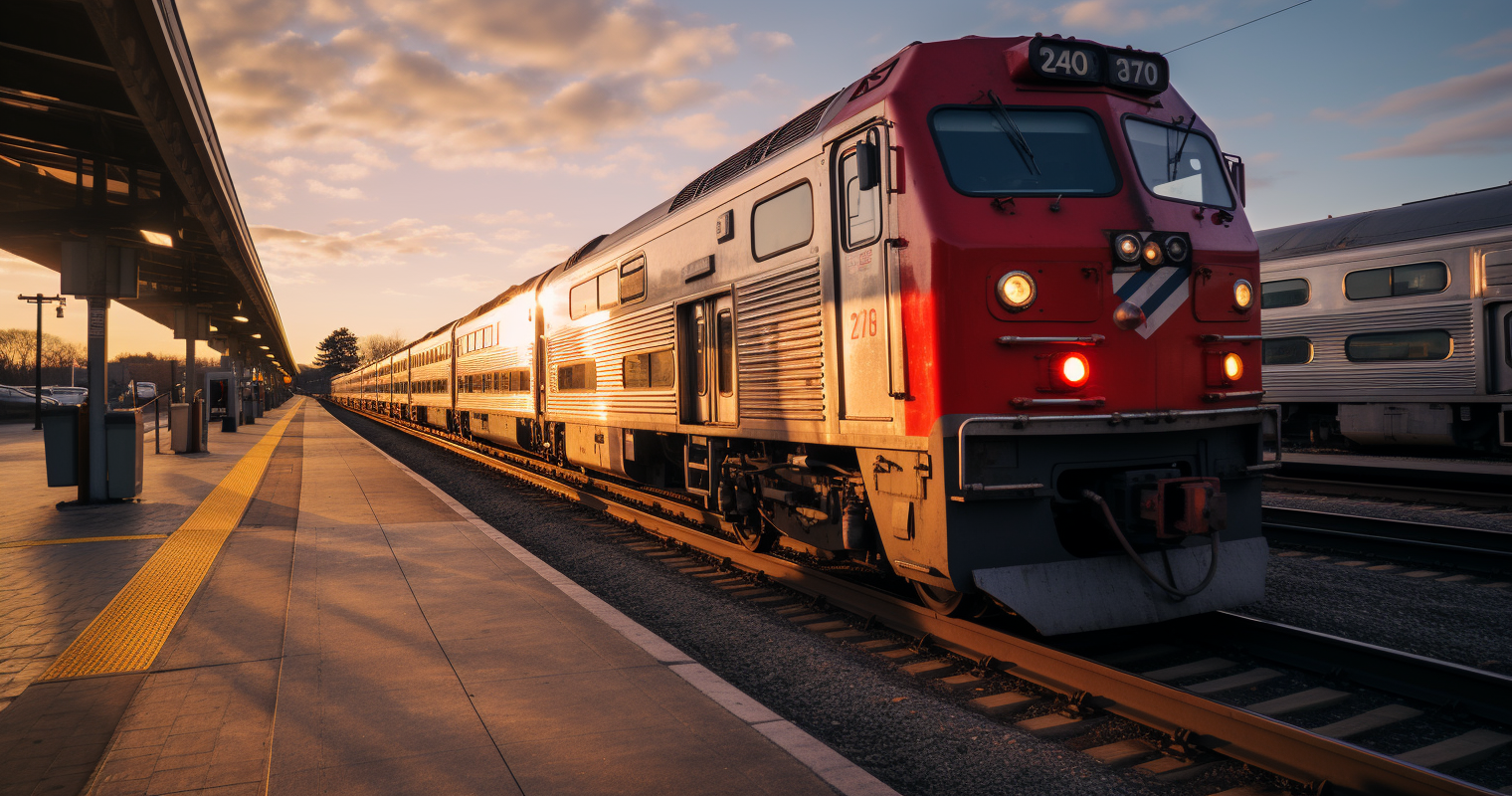
Ireland’s national rail network, run by Iarnród Éireann (Irish Rail), links Dublin with major cities and towns throughout the island, supplemented by urban services such as the DART and Luas in the capital. While the network serves intercity and suburban commuters well, its reach into rural areas is more restricted than in larger European nations. The TFI Leap Card and the ability to book tickets online well in advance make routine rail travel straightforward for those settling in Ireland.
| Item | Details |
|---|---|
| National rail operator | Iarnród Éireann (Irish Rail) — irishrail.ie |
| Network size | Over 2,400 km of railway lines connecting major cities and towns |
| Advance booking window | Up to 90 days in advance online |
| Key discount card | TFI Leap Card — up to 30% savings on commuter fares vs. cash (as of 2025) |
| Free travel eligibility | All permanent residents aged 66 and over qualify for free travel on state rail services |
| Urban rail (Dublin) | DART, Luas (Red and Green lines), and commuter rail — integrated with TFI Leap Card |
What is the overall standard of rail travel in Ireland?
Iarnród Éireann (Irish Rail) is a subsidiary of the state-owned Córas Iompair Éireann (CIÉ) and operates under the oversight of the Department of Transport. It runs passenger rail services across the country, including Dublin’s DART commuter line, and is the sole national passenger rail operator within the Republic of Ireland.
The network spans more than 2,400 km of track, serving major urban centres such as Dublin, Cork, Galway, and Limerick. For a country of Ireland’s scale, this provides a reasonable intercity spine, though the network is considerably less dense than those found in Germany, France, or Japan, where high-speed lines and regional branches extend into far more communities. In practical terms, Ireland’s rail infrastructure functions as a hub-and-spoke arrangement with Dublin at its centre.
Iarnród Éireann’s InterCity services link the main population centres, departing from Dublin’s Heuston and Connolly stations to destinations including Belfast, Sligo, Ballina, Westport, Galway, Limerick, Ennis, Tralee, Cork, Waterford, and Rosslare Europort. Journey times are generally comfortable, and most InterCity trains are equipped with catering trolleys and Wi-Fi.
Rail lines radiate from Dublin to the larger cities but bypass much of the countryside — Bus Éireann reaches many more rural locations, though these are not covered by rail passes. People living outside the main corridors will typically need to combine rail and bus services for longer journeys. For those based in Dublin or commuting into the capital, however, the combination of rail, DART, and Luas makes for a genuinely practical everyday transport arrangement.
Irish Rail has invested significantly in upgrading both its rolling stock and infrastructure in recent years, and the fleet includes modern intercity and commuter trains. Punctuality is broadly acceptable, though delays are not uncommon on busier commuter corridors during rush hour.
What classes of rail travel are available in Ireland, and what are the differences between them?
InterCity services are divided into first class and standard class carriages. These are the only two classes operating on the Irish rail network — there is no business class or premium economy tier, and class distinctions do not extend to DART or Luas services.
Standard class provides seating without any additional amenities, while first class offers more generous seating along with complimentary food and drinks. First class carriages tend to be quieter and less busy, which appeals to passengers on longer intercity journeys who want extra comfort or need a productive environment for working while travelling.
On certain Iarnród Éireann services, passengers holding a standard class ticket may upgrade to first class by paying a supplement per single journey on that route, subject to availability. This flexibility means you can decide at the time of travel whether the premium is worthwhile without having to commit to a first class fare when booking.
As a general guide, first class fares are approximately 50 percent higher than their standard equivalents. Whether the additional cost is justified depends on the route and its duration. For a short trip such as Dublin to Kildare, standard class is entirely comfortable; on a two-hour journey to Cork or Galway, the additional space and amenities in first class can make a meaningful difference. First class is exclusively available on InterCity routes and is absent from DART and commuter rail services.
Where can you find rail timetables and ticket prices in Ireland?
The official Iarnród Éireann website at irishrail.ie is the primary source for timetables and fares, offering a live journey planner, route-specific schedules, and a fares calculator. This should always be your first reference point, as prices and timetables are updated regularly and subject to change.
The Transport for Ireland (TFI) website at transportforireland.ie serves as the national transport authority’s portal and publishes fare information for all TFI-branded services, encompassing the DART, Luas, commuter rail, and bus. Since Iarnród Éireann fares differ according to service type — DART, Commuter, or Intercity — the TFI site is a useful companion resource, particularly for understanding Leap Card pricing and zonal fares.
Commuter rail network maps, timetables, and fare details for all services are also hosted on the Iarnród Éireann website. Luas-specific timetables and pricing are published at luas.ie, while the Leap Card website at leapcard.ie offers guidance on Leap-specific fares and zone-based pricing structures.
Citizens Information, Ireland’s state public information service, maintains a reliable and regularly updated overview of rail services at citizensinformation.ie. Third-party booking platforms such as Omio may list some Irish Rail routes, but it is always advisable to verify fares through the official Iarnród Éireann or TFI websites before travelling, as prices on third-party sites may not be current.
How do you buy rail tickets in Ireland, and can you book in advance?
Tickets for Iarnród Éireann services are available through several purchasing channels. Prepaid tickets can be obtained from ticket offices, vending machines, and online. The journey planner on irishrail.ie is the most convenient method for intercity travel, especially when comparing fares or planning ahead.
- Online via irishrail.ie: Use the journey planner to search routes, choose your travel date, and pay by card. This is the recommended approach for InterCity travel, particularly when booking in advance. Tickets may be purchased up to 90 days before departure.
- Download as a QR ticket: QR tickets are issued in PDF format or can be saved to the wallet app on an Apple device. Further guidance on adding QR tickets to an Apple device is available through Iarnród Éireann’s QR ticket guide.
- Collect at a ticket machine: Passengers can collect pre-purchased tickets from a Ticket Vending Machine at any Iarnród Éireann station within the Republic of Ireland before boarding their service.
- At the station ticket office: Staffed counters at major stations are open during operating hours and can issue tickets for all standard services. These are also the only outlets where certain pass types — such as the Trekker and Explorer passes — can be purchased.
- Via the TFI Leap Top-Up App: New prepaid tickets are available through the TFI Leap Top-Up App. Weekly, monthly, and annual Dublin commuter zone tickets can additionally be loaded onto a Leap Card via the app.
- TFI Leap Card tap-on/tap-off: For DART, commuter rail, and Luas journeys in Dublin, simply tap your Leap Card on the reader at the start and end of each journey. No advance booking is required.
Purchasing tickets online can deliver savings of up to 50% compared to walk-up fares at station windows, with the biggest discounts available when booking up to 90 days ahead. On popular intercity routes such as Dublin–Cork or Dublin–Galway during busy periods, advance booking is strongly advisable to secure both a lower fare and a guaranteed seat.
For ticketing queries and customer service, contact Iarnród Éireann directly via irishrail.ie or through the TFI customer care channels at transportforireland.ie.
What types of rail tickets are available in Ireland, and are there discount schemes?
Ireland’s rail ticketing system encompasses a wide range of options catering to occasional visitors, regular commuters, and all travellers in between. The main ticket types offered by Iarnród Éireann include:
- Single: Valid for one journey on the date specified on the ticket.
- Day Return / Open Return: Return tickets offering varying degrees of flexibility on the homeward leg.
- Flexible tickets: Permit changes or cancellations without additional charges.
- Non-flexible (advance) tickets: Cannot be amended or refunded, but are typically the most affordable option available.
- Weekly, monthly, and annual commuter tickets: Available for Dublin commuter zones through the TFI Leap app.
- Group tickets: Significant discounts are available on semi-flexible online tickets across all routes when booking for eleven or more passengers simultaneously.
- Rail passes (Trekker / Explorer): For travel exclusively within the Republic of Ireland, the Trekker Four Day pass (four consecutive days of travel) and the Explorer pass (five days of travel within a 15-day window) may be worthwhile. Both are sold only at Irish train station ticket offices and cannot be purchased online.
TFI Leap Card: The TFI Leap Card is the simplest way to pay for DART or commuter train journeys, offering savings of up to 30% compared to cash single tickets. The card operates on a tap-on/tap-off basis and is the standard payment method for regular commuters in the Dublin area — broadly comparable in function to London’s Oyster Card or Sydney’s Opal Card.
Fare capping: When a TFI Leap Card is used across multiple public transport modes — including Dublin Bus, Go-Ahead Ireland, Luas, DART, and commuter rail — throughout a day or week (Monday to Sunday), the fare is automatically capped. Once the daily or weekly cap is reached, no further travel credit is deducted for qualifying services. This is especially useful for residents who mix several modes of transport during the working week.
TFI 90-Minute Fare: The TFI 90-Minute fare covers journeys made on Dublin City Bus services, Luas, DART, and commuter rail in Zone 1 (TFI Dublin City) when paying with a TFI Leap Card. The adult fare starts from €2; the Young Adult or Student fare from €1; and the Child fare at 65c on the appropriate TFI Leap Card (as of 2025).
Taxsaver scheme (for employees): The Taxsaver scheme enables employees to reduce commuting costs by up to 52%, with more than 2,500 companies now purchasing monthly and annual travel tickets on behalf of their staff. Employers can also save up to 10.75% in PRSI contributions through the scheme. Tickets are arranged through your employer and can be loaded onto a personalised TFI Leap Card. Current pricing is available at taxsaver.ie, and fares are updated periodically.
Student and Young Adult discounts: The Young Adult and Student Leap Cards provide substantially reduced fares on Iarnród Éireann services. The Student Leap Card is available exclusively to full-time students in second and third level education, while the Young Adult Leap Card is open to all 19 to 25 year olds. The Student Leap Card also covers students in full-time education aged 16–18 or 26 and above.
Free Travel Pass (seniors and eligible groups): Free travel on state rail services is available to all permanent residents of Ireland aged 66 and over, with certain individuals below that age also qualifying. This is a valuable benefit for older newcomers to Ireland — eligibility criteria and application details are available through the Department of Social Protection.
Children: Children under 5 years of age travel free in standard class on any Iarnród Éireann service when accompanied by a passenger holding a valid ticket, provided they do not occupy seats needed by paying passengers. Children aged 5 to 8 may also travel free on Transport for Ireland services using a Child (5–8) TFI Leap Card. Always confirm current eligibility conditions and age thresholds at irishrail.ie and leapcard.ie, as these may be subject to change.
How accessible is the rail network in Ireland for disabled passengers?
DART trains can be boarded directly from the platform, and their wide doors and spacious interiors accommodate wheelchair users comfortably. This standard of step-free access is broadly on a par with modern metro systems in other European capitals, though access quality varies more noticeably across the wider national network, particularly at older stations in rural areas.
The majority of mainline, suburban, and all DART stations have public address systems announcing train and service information for passengers with visual impairments. Onboard announcements and station information are delivered in both Irish and English, covering upcoming stops, platform changes, and service disruptions.
Special arrangements can be made for passengers with disabilities, though it is recommended that you contact the relevant station or Iarnród Éireann’s Mobility Impaired Liaison Office ahead of travel and provide journey details in advance. Pre-arranging assistance ensures ramp access and boarding support are in place at both departure and arrival stations. Contact details and the passenger assistance booking form are accessible via irishrail.ie.
All Luas trams and stops are fully wheelchair-accessible, and designated parking spaces for people with disabilities are provided at stops. Each tram makes audio announcements and features electronic displays showing progress along the route. The Luas network’s step-free design makes it one of the most accessible components of Ireland’s urban transport system.
Guide and assistance dogs are permitted to travel on all services without restriction. Passengers with reduced mobility using DART or commuter rail are encouraged to use the TFI Leap Card, which eliminates the need to queue at ticket machines or counters. For comprehensive accessibility information and assistance booking, visit transportforireland.ie.
Are there metro or urban rail systems in Ireland’s cities?
Ireland does not yet have a full underground metro system, but Dublin operates a well-developed network of urban and light rail services that together cover the city effectively. Outside Dublin, Cork has a suburban commuter rail network, though no light rail or metro services.
DART (Dublin Area Rapid Transit): The DART runs along Ireland’s east coast from Malahide in County Dublin to Greystones in County Wicklow. It is a frequent electric rail service, running roughly every 10–15 minutes during peak times, and connects some of Dublin’s most densely populated coastal suburbs. The DART is fully integrated with TFI ticketing and the Leap Card.
Luas: Dublin’s light rail tram network, the Luas, operates two lines. The Red Line connects Saggart and Tallaght via the city centre to The Point near the Docklands, while the Green Line runs from Broombridge through the city centre south to Brides Glen. The TFI 90-Minute fare applies across Dublin City Bus, Luas, DART, and commuter rail services, making transfers between modes seamless and cost-effective. Timetables and maps are published at luas.ie.
Dublin Commuter Rail: Commuter services operate across the broader Dublin area, running between destinations including Dundalk, Dunboyne, Longford, Portlaoise, and Gorey. These lines extend urban rail connectivity well beyond the DART corridor and are heavily used by commuters travelling from towns situated 30 to 90 minutes from the capital. The National Transport Authority has introduced a zonal ticketing structure for the Dublin Commuter Area, covering roughly 50 km from Dublin city centre.
Cork Commuter Rail: Iarnród Éireann also operates commuter services in the Cork area on routes between Mallow, Cobh, and Midleton. Leap Cards can be used for payment within the Cork area on these services.
Integrated journey planning across all Dublin services — DART, Luas, commuter rail, and bus — is available through the Transport for Ireland journey planner and the TFI Live app, which provides real-time departure information across modes.
What should expats know about using the rail network day-to-day in Ireland?
Finding your way around Irish rail stations is generally intuitive. Dublin’s two principal intercity termini — Heuston Station, which serves routes to the west and south, and Connolly Station, serving the north, east coast, and Belfast — are clearly signposted throughout. All station signage appears in both Irish and English, and onboard announcements are similarly bilingual, though English predominates in practice.
If you wish to reserve a specific seat on an InterCity train, this is usually available at no charge, though the reservation fee increases to €2.50 as the train fills up. Seat reservations are optional rather than mandatory on most routes, but on busy holiday weekends or around major sporting events, booking ahead with a reserved seat is strongly advised.
Luggage should be stored in the designated luggage racks, overhead compartments, or the spaces between seats, and must not obstruct other passengers. There are no formal luggage size or weight restrictions on standard passenger services — a notable advantage over budget airlines, particularly for those making lengthier moves or weekend trips with bulkier bags.
A number of stations offer park and ride facilities, encouraging commuters to leave their vehicles in station car parks and continue their journey by rail. These are particularly convenient for residents living in towns outside Dublin that have good road connections to a commuter rail station.
Iarnród Éireann and Aircoach operate a Train to Plane service, which allows you to purchase a combined ticket covering both your rail journey and a bus transfer to Dublin Airport. This can be booked directly on the Iarnród Éireann website by selecting your rail journey and adding the airport connection. It is a practical choice for residents who regularly travel internationally via Dublin Airport.
In terms of social norms, Irish train travel tends to be relaxed and unhurried. Quiet carriages are designated on some InterCity services and passengers are expected to respect them. Mobile phone use is common outside these zones, but playing audio without headphones or speaking very loudly is generally considered poor etiquette. Platform queuing is orderly, and fellow passengers are usually willing to assist with directions or queries at stations.
Travelling without a valid ticket, appropriate identification, or the required surcharge where applicable will result in a fine of €100 plus the relevant unpaid fare. Always ensure your ticket is valid before boarding, and if using a Leap Card, remember to tap on and tap off correctly at the start and end of each journey.
Frequently Asked Questions
Do I need to book a seat in advance on Irish trains?
Seat reservations are not compulsory on most Iarnród Éireann services, but they are strongly recommended on busy intercity routes, particularly on Fridays, public holidays, or around major events. Tickets can be purchased up to 90 days in advance online. For DART and Luas services, there is no seat reservation system — you simply board and find a free seat.
How do I get a TFI Leap Card, and where can I use it?
Adults travelling in the Dublin City and Commuter Zone can save an average of 30% by using a TFI Leap Card rather than purchasing a ticket at the station. The TFI Leap Card is accepted on DART, commuter rail, Dublin City buses, and Luas. You can purchase and top up a Leap Card at over 2,000 shops nationwide, online at leapcard.ie, or through the TFI Leap Top-Up app.
Is rail travel in Ireland expensive compared to other countries?
Standard intercity fares in Ireland can be relatively high when purchased last-minute at the station. However, advance online booking can reduce fares by up to 50%, and the TFI Leap Card offers savings of up to 30% compared to cash single tickets for commuter routes. The Taxsaver scheme for employees can reduce annual commuting costs by up to 52% (as of 2025). Always check irishrail.ie for current fares.
Can I travel between Ireland and Northern Ireland by train?
The Enterprise service operates between Belfast and Dublin and is jointly run by Iarnród Éireann and Northern Ireland Railways. The journey takes approximately two hours. When travelling within Ireland, you generally do not need to bring your passport, but for cross-border journeys to Northern Ireland, a valid ID such as a passport may be required.
Are there discounts for older residents or people on low incomes?
Free travel on state rail services is available to everyone permanently living in Ireland who is aged 66 and over. Certain people under that age are also entitled. This is administered through the Free Travel Pass scheme managed by the Department of Social Protection. The pass is valid on all services. Visit citizensinformation.ie for eligibility details and how to apply.
What is the TFI 90-Minute fare and how does it work?
The TFI 90-Minute fare allows free transfers between Dublin Bus, Luas, DART, commuter rail, and Go-Ahead Ireland services, applying to most journeys in the Dublin area involving multiple services within 90 minutes or a single trip. It requires a TFI Leap Card and is activated automatically when you tap on. This makes it highly cost-effective for anyone combining two or more modes of transport in a single trip around Dublin.
Can I bring my bicycle on Irish trains?
Information on carrying bicycles on trains is available on the Iarnród Éireann website. Bicycles are permitted on some intercity services in a dedicated space, but capacity is limited and advance booking of a bike space is required on InterCity routes. Bicycles are generally not permitted on DART services during peak hours. Always check the specific rules for your route at irishrail.ie before travelling.
What happens if I lose something on a train?
Property found on a service will be handed in to the nearest lost property office within one working day. Lost property is generally held for one month, and a handling fee may apply to return lost property. You can contact the lost property team by phone on 0818 294 015 or +353 1 575 6110, or by email at [email protected].