
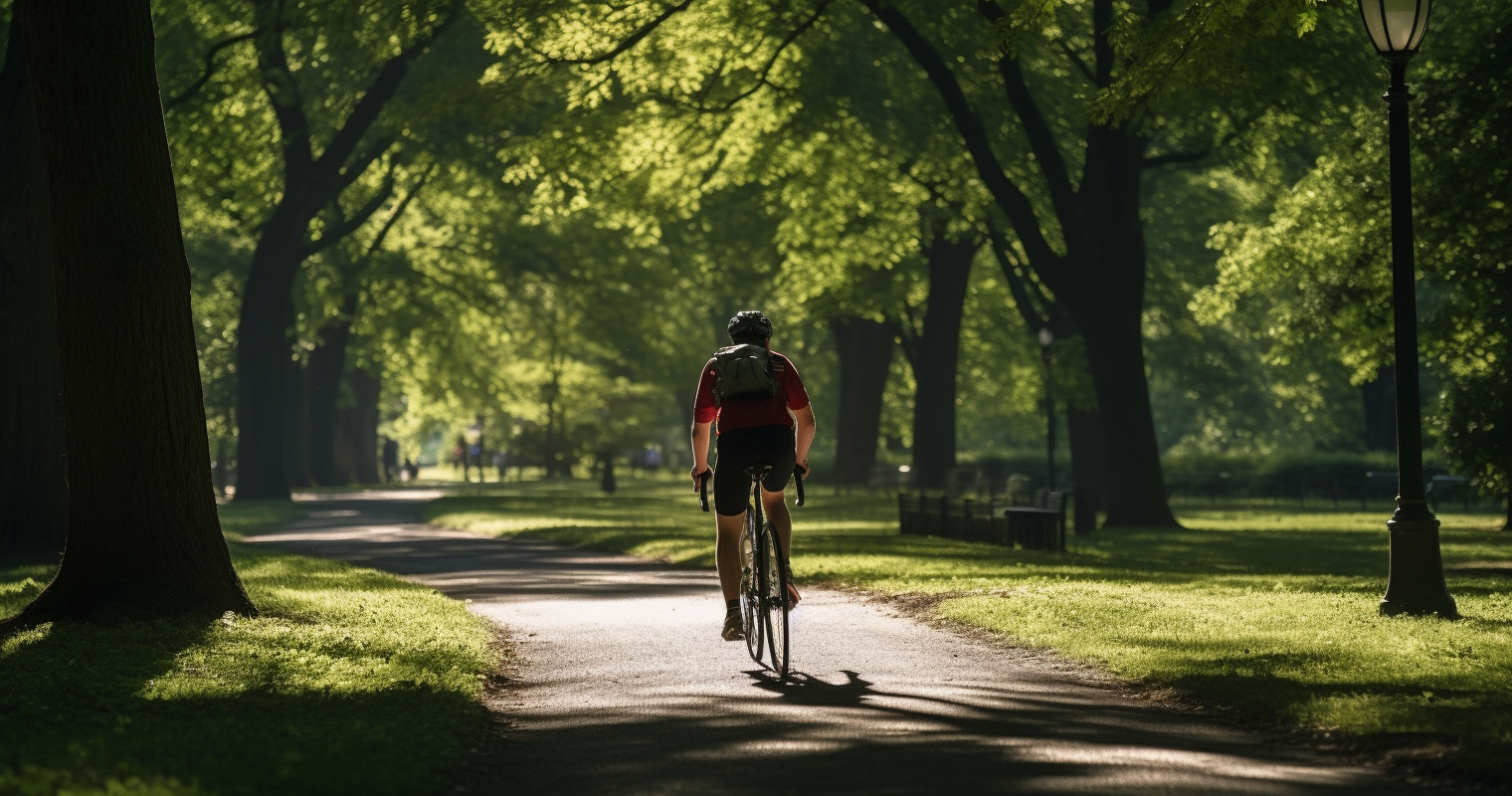
In Kuwait, cycling is enjoyed primarily as a recreational activity or sporting pursuit rather than as an everyday means of getting from place to place. The country is overwhelmingly reliant on the private car, cycling infrastructure is sparse, summer temperatures are punishing, and the roads present genuine hazards for those on two wheels. That said, a compact but dedicated cycling community has taken root, and certain coastal promenades, parks, and newer urban developments offer genuinely rewarding rides — above all during the milder winter season between October and March.
| Item | Details |
|---|---|
| Cycling culture | Primarily recreational and sporting; not used for daily commuting |
| Dedicated cycling infrastructure | Very limited; few formal cycle lanes; mainly park paths and coastal tracks |
| Helmet requirement | Legally required for all cyclists and passengers (Article 148, Kuwait Traffic Law) |
| Road speed limit for cyclists | Cyclists restricted to roads with speed limits of 80 km/h or less |
| Standard import duty on goods (incl. bicycles) | 5% of CIF value under GCC Single Customs Tariff (as of 2025) |
| Best cycling season | October to March (cooler temperatures; summer highs regularly exceed 45°C) |
How popular is cycling in Kuwait — is it a common way to get around?
Cycling as a mode of daily transport is essentially absent from Kuwaiti life. The combination of an extreme climate and an entrenched car culture means that the bicycle simply does not feature as a commuter option. Kuwait ranks among the most car-dependent nations anywhere in the world — a situation broadly analogous to parts of the United States or neighbouring Gulf states like the UAE, where the personal vehicle is the unquestioned default. In sharp contrast to cycling-oriented countries such as the Netherlands or Denmark, where bicycles account for more than a quarter of all daily journeys, cycling in Kuwait barely registers as a commuter choice.
Kuwait is a flat, arid country and is regularly cited as one of the hottest places on earth, with summer temperatures averaging above 57°C (135°F). This environmental reality makes year-round commuting by bicycle essentially untenable. Serious cyclists typically head out before sunrise, or confine their riding entirely to the cooler months stretching from October through to March.
Despite these obstacles, a growing recreational and sporting cycling scene has emerged. It is not a country anyone would instinctively associate with cycling culture, yet local enthusiasts have carved out a genuine community — with some organising long-distance tours and forging connections with cyclists worldwide. Structured group rides, charity cycling events, and club activities all exist, and interest in cycling as a fitness and wellness activity has climbed in step with broader health-conscious trends across the region.
Certain locations — particularly the Kuwait City waterfront and Al Shaheed Park — have become recognised spots for recreational riders. If you are relocating to Kuwait and cycling is part of your lifestyle, you will find a niche but enthusiastic community waiting. Just do not plan on pedalling to the office.
What is the cycling infrastructure like in Kuwait?
Kuwait’s cycling infrastructure is thin on the ground. Dedicated cycle lanes are few and far between, and the country’s approach to urban planning has been almost entirely centred on the motor vehicle. Rather than building the kind of integrated public transport systems — metros, bus networks, pedestrian-friendly streets — seen in many developed cities, Kuwait invested heavily in wide arterial roads that locked the population into car dependency for generations.
What passes for cycling infrastructure in much of Kuwait consists of multi-use paths that were originally designed for walkers and runners, and which have been repurposed for cyclists simply by painting a bicycle symbol on the surface. This represents an early and fairly rudimentary stage of cycling provision, one that many cities around the world have since moved well beyond — Kuwait has yet to follow suit in any meaningful way.
At Al Shaheed Park in central Kuwait City, a cycling track traces part of the park’s perimeter, though it runs alongside a loud, busy highway. Most cyclists find it too short — under a mile in length — too narrow, and too poorly positioned for any serious riding. Along the coast, a dedicated track connects Marina Mall to the Scientific Center in Salmiya, and riders can also travel along the paved seafront between Kuwait City and Salmiya.
A planned cycling route in Subhan secured approvals from several government departments but has been stalled for five years without any visible progress; the most recent reported update was a recommendation to escalate the matter to the Council of Ministers. Responsibility for roads and transport infrastructure lies with Kuwait’s Ministry of Public Works and related bodies — those interested in tracking planned cycling developments should keep an eye on official government communications and the Ministry of Public Works website.
The government has reported a 20% increase in cycling infrastructure investments, covering bike lanes and parking facilities, and in 2024 the Kuwaiti government announced a strategic push to invest in public sports infrastructure and encourage physical fitness. Whether this momentum translates into genuinely segregated cycling infrastructure is yet to be confirmed, but the overall direction appears more favourable than it has been in previous years.
Is cycling safe in Kuwait?
Road safety represents a real and pressing concern for anyone cycling in Kuwait. In 2024, the total number of traffic accidents across the country reached 65,991, resulting in 284 deaths — with 90% attributed to inattention or distraction at the wheel. In response, Kuwait introduced a new traffic law replacing legislation that had been in place since 1976, with significantly tougher penalties for reckless driving.
The foremost danger facing cyclists is the challenge of sharing roads with other vehicles — buses, heavy goods vehicles, inexperienced drivers, and motorists who frequently fail to acknowledge cyclists’ presence, let alone their legal right to be on the road. Kuwait’s traffic law does formally recognise cyclists’ entitlement to use public roads, but both the built environment and the prevailing driving culture fall well short of honouring that right in practice.
One of the most serious incidents involving cyclists in recent years unfolded on Arabian Gulf Road in 2023, when reckless driving left 15 cyclists injured and one unconscious; at least one victim was unable to continue working and ultimately left Kuwait more than a year after the crash due to ongoing injuries. While the incident raised public awareness of cyclist vulnerability and prompted the police to introduce additional protective measures, it also deepened anxiety within the cycling community.
Veteran cyclists in Kuwait often set out as early as 4:30 am, when the roads are at their emptiest, accompanied by a support vehicle that follows close behind to act as a buffer, and with rear-facing radar units mounted on handlebars to alert riders to approaching traffic. These precautions have become standard practice on any serious ride.
Helmets are a legal requirement (see the rules section below). Unlike Australia’s well-known helmet laws, which are broadly framed and actively enforced, Kuwait’s equivalent requirement sits within a traffic law framework that is applied unevenly in practice. Road safety data is published by Kuwait’s Central Statistical Bureau (CSB) — readers should consult the CSB and the WHO’s Kuwait Road Safety Country Profile (2023) for the most up-to-date figures.
What are the rules of the road for cyclists in Kuwait?
Article 148 of Kuwait’s Traffic Law sets out the requirements for cyclists. Riders must keep to the right side of the road and are not permitted to use pavements or footpaths. Where a designated cycle lane is present, it must be used. Cyclists are required to ride in single file and may not tow or be towed by motor vehicles. Carrying a passenger is prohibited unless the bicycle is specifically designed to accommodate one. Both the cyclist and any passenger must wear a helmet at all times. Cyclists are additionally restricted to roads where the posted speed limit is 80 km/h or below.
In practice, cyclists frequently report being harassed on the road — labelled as reckless by other road users or even issued fines by police officers — in part because of a widespread but mistaken belief that bicycles belong on pavements rather than roads, despite what the law actually says. This disconnect between legal entitlement and everyday enforcement is an important reality check for anyone new to cycling in Kuwait.
Kuwait maintains a complete prohibition on alcohol, so there is no parallel to drink-cycling laws found in countries such as Germany or the Netherlands, where specific blood-alcohol limits apply to cyclists — the substance is simply illegal throughout Kuwait. No published age restrictions specifically govern children cycling on public roads, but allowing unsupervised children to cycle on main roads would be regarded as hazardous and is firmly discouraged.
Lighting requirements for cycling in low-visibility conditions or at night are implicitly covered by general road safety standards. All riders are strongly advised to fit both front and rear lights for any riding done after dark or in poor visibility. For the definitive and current legal requirements, refer to the Kuwait Ministry of Interior, which is responsible for traffic law enforcement, or contact the General Traffic Department directly.
Do I need to register my bike or have insurance to cycle in Kuwait?
Kuwait operates no mandatory bicycle registration system. Whereas motor vehicles must be formally registered and insured through the Ministry of Interior, bicycles are treated as non-motorised personal items and attract no registration obligation whatsoever. This is consistent with the approach taken across most of the region and mirrors the situation in many European countries, where bicycle registration is voluntary at most.
There is likewise no legal requirement to hold third-party liability insurance as a cyclist in Kuwait. However, given the road safety environment outlined above — high accident rates, limited legal protections for vulnerable road users — it is strongly advisable to ensure you have personal accident coverage, either through a dedicated policy or as part of a broader expat health insurance plan. Many expat health insurance products available in Kuwait include personal accident provisions; review your policy documents carefully to confirm that cycling is covered as an activity.
For the most current guidance on any regulatory developments affecting cyclists, consult the Kuwait Ministry of Interior or a licensed Kuwaiti insurance broker. The Insurance Regulatory Unit of Kuwait is the official authority overseeing the insurance industry.
Are there public bike-sharing or rental schemes in Kuwait?
Kuwait does not currently have a large-scale, government-backed public bike-share programme of the kind found in London (Santander Cycles), Paris (Vélib’), or Dubai (Careem Bike). The lack of dedicated cycling infrastructure makes a city-wide, dock-based system impractical at this stage of development.
Some areas — particularly around the Kuwait City waterfront and parks such as Al Shaheed Park — have seen limited cycling facilities emerge, and informal or commercially operated bike rental options exist at certain recreational locations. Hire bikes can occasionally be found at beach and park sites on a casual, privately run basis, but there is no unified city-wide scheme with consistent pricing or app-based booking functionality.
For the most current information on rental availability, it is worth checking with local sports retailers, park management, and expat community networks on arrival, as provision in this area tends to shift. If a formal bike-share programme is ever launched, announcements would most likely come through the Ministry of Public Works or Kuwait Municipality. Local news sources such as the Kuwait Times are worth monitoring for updates on urban mobility initiatives.
Where can I buy or service a bike in Kuwait?
The bicycle retail landscape in Kuwait has broadened considerably in recent years, driven by growing interest in fitness and recreational sport. The Kuwait bicycle accessories market has been valued at USD 75 million, underpinned by rising urban micromobility interest, increased health awareness, and expanding e-commerce options for cycling equipment and gear.
Several well-established sports retailers stock bicycles and accessories. Pro Sports Kuwait carries an extensive range online and in store, encompassing BMX, city, gravel, children’s, electric, mountain, and road bikes from brands including Trek, Reid, and Dahon. Decathlon Kuwait offers bikes and cycling products from brands such as Btwin and Triban, with free delivery on orders above KD 19 and free returns within 30 days. Sun & Sand Sports is another major regional retail chain with a Kuwait presence, stocking a variety of cycling equipment.
Repair and servicing options are more restricted than in markets with large cycling populations. Independent specialist bike shops are thin on the ground compared with cycling-heavy countries, though major retailers like Decathlon typically provide basic servicing. Expat cycling networks — accessible via Facebook groups and platforms such as Expat.com — are a valuable resource for tracking down trusted local mechanics and sourcing second-hand bikes. Used bicycles are also listed on local classifieds platforms.
Consumer protection in Kuwait falls under the remit of the Ministry of Commerce and Industry. Purchases from established retailers will generally come with a manufacturer’s warranty broadly comparable to what you would expect from a major sports retailer elsewhere in the world — though warranty claims on imported goods may sometimes need to be handled via the local distributor rather than the brand directly.
Can I bring my bike when I move to Kuwait, and are there any import rules?
- Check whether your bike qualifies as a personal effect. Personal belongings shipped to Kuwait as part of a household relocation (transfer of residence) may be eligible for customs duty relief. The conditions attached to any such relief depend on your residency status and the specific circumstances of your move. Seek advice from a licensed customs broker before dispatching anything.
- Understand the standard duty rate. Since April 2003, Kuwait has applied the GCC Single Customs Tariff, which levies a standard import duty of 5% on the CIF (cost, insurance, and freight) value of most goods (as of 2025). Bicycles are generally classified as consumer goods and would typically attract this 5% rate unless a specific exemption is applicable.
- Be aware of accessory tariffs. Import tariffs on bicycle accessories in Kuwait can reach as high as 20%, which can substantially inflate costs. If you are shipping a bike accompanied by a full complement of accessories — lights, helmets, tools, spare components — make sure to account for this in your budget.
- Use a licensed customs broker. All import declarations must be submitted through customs brokers licensed by the Kuwait General Administration of Customs, which maintains offices at every air, sea, and land entry point.
- Allow adequate clearance time. Air freight consignments are typically processed within two to three working days of arrival, or within two days where documents are submitted in advance. Sea freight timelines vary according to port schedules and vessel arrivals.
- Verify the latest requirements before shipping. Customs rules are subject to change. Always confirm current requirements with the Kuwait General Administration of Customs or a licensed broker before your bicycle leaves its country of origin.
Kuwait implemented the GCC Integrated Customs Tariff on 1 January 2025, introducing 12-digit tariff codes and expanding the number of tariff lines from 7,800 to more than 13,400, enabling more granular product classification. Make sure your customs broker applies the correct tariff code to your bicycle when lodging the import declaration.
What are the best cycling routes or destinations in Kuwait?
Despite the scarcity of formal infrastructure, Kuwait’s cycling community has established a number of well-regarded routes and destinations. The vast majority are best experienced between October and March, when temperatures drop to manageable levels.
- Sheikh Jaber Al-Ahmad Causeway (Jaber Bridge): This track extends approximately 36 kilometres, linking Kuwait City to Subiya, and suits experienced riders seeking a long, uninterrupted ride with sweeping views across the Arabian Gulf. The surface is smooth and well maintained. Cycling was permitted from the time the bridge opened; the structure crosses the Gulf of Kuwait and appears almost to float upon the water. Carry ample water, as shade is virtually non-existent along the route.
- Jaber Al-Ahmad City Track: Situated within the recently developed Jaber Al-Ahmad City, this approximately 15-kilometre track is well suited to beginners and intermediate cyclists who want a safe, smooth surface in a controlled environment.
- Arabian Gulf Road (Corniche) Seafront: The coastal path running from Marina Mall to the Scientific Center in Salmiya, and continuing towards Kuwait City, offers attractive views of the city skyline and is among the most popular spots for recreational cycling. Riders should remain alert at vehicle access points, as this stretch has also been the scene of serious accidents.
- Mishref Oasis Park Track: Mishref’s Oasis Park has a dedicated cycling track that serves as a regular gathering point for organised rides, particularly among expat cycling groups that congregate there on a weekly basis.
- Al Shaheed Park, Kuwait City: A cycling loop runs around a section of Al Shaheed Park in downtown Kuwait City. While modest in length, it offers a traffic-free environment suitable for leisurely riding and is conveniently situated for those living in the city centre.
For route planning and community-generated maps, platforms such as Bikemap catalogue hundreds of user-created cycling routes across Kuwait. The Kuwait Cycling Federation and local cycling clubs are also excellent sources of up-to-date route information and organised ride schedules — search for active groups on social media to access the latest calendar of rides. The Kuwait Tourism Authority may also carry information on outdoor leisure and active tourism routes.
Frequently Asked Questions
Can I realistically use a bike to commute to work in Kuwait?
For most people, the honest answer is no. Kuwait is a deeply car-dependent country with minimal cycling infrastructure, ferocious summer heat, and road conditions that were not designed with cyclists in mind. Cycling to work is not a social norm and comes with genuine safety risks. If your place of work is very close to home and you are willing to ride in the early hours during the cooler winter months (October–March), short commutes might be manageable — but the overwhelming majority of expats depend on a car or taxi for their everyday travel needs.
Are helmets legally required when cycling in Kuwait?
Yes. Kuwait’s traffic law requires both cyclists and any passengers they carry to wear helmets at all times. This is a statutory obligation, not a guideline. Always wear an approved helmet whenever you ride on public roads or paths.
Is it safe to cycle on Kuwait’s main roads?
The most serious challenge facing cyclists is sharing the road with motor vehicles, given that Kuwait’s road environment and driving culture frequently fail to respect cyclists’ legal right to be there. Major arterial roads are regarded as genuinely dangerous for cyclists. Experienced local riders typically go out at dawn, travel with a following support vehicle, and use handlebar-mounted radar systems. Casual road cycling on highways is strongly discouraged.
When is the best time of year to cycle in Kuwait?
The period from October through to March offers the most tolerable conditions for cycling. In summer, temperatures routinely climb past 55°C (131°F), making outdoor physical activity hazardous. Even during the cooler season, beginning rides in the early morning hours helps avoid both the worst of the heat and peak traffic volumes.
Are there cycling clubs or groups I can join as an expat in Kuwait?
Yes — several clubs and informal groups organise regular rides in Kuwait, and connecting with one of these is the best way for newcomers to begin cycling safely. Most groups bring support vehicles on longer routes, pool knowledge of the safest roads and timings, and help recent arrivals get their bearings. Look for clubs through Facebook, the Kuwait Cycling Federation, and expat community forums once you have arrived.
Do I need to register my bicycle or buy insurance to cycle in Kuwait?
Bicycle registration is not required in Kuwait, and there is no legal obligation to hold cycling-specific insurance. That said, given the road safety conditions — high accident rates and limited protections for vulnerable road users — it is strongly advisable to ensure cycling is covered under a personal accident or expat health insurance policy. Review your policy terms carefully to confirm that cycling is included as a covered activity.
Can I bring my bicycle with me when I relocate to Kuwait?
Kuwait applies a standard import duty of 5% on the CIF value of most goods under the GCC Single Customs Tariff (as of 2025). Personal belongings imported as part of a household relocation may qualify for duty relief depending on your individual circumstances — verify this with a licensed customs broker and the Kuwait General Administration of Customs before shipping. Bear in mind that tariffs on bicycle accessories can be considerably higher, so factor this into your planning.
Where is the best place to buy a bike after arriving in Kuwait?
Major sports retailers including Decathlon Kuwait, Pro Sports Kuwait, and Sun & Sand Sports all carry a range of bicycles and accessories. The improving availability of road bikes in Kuwait makes it easier than ever to find the right bike for your needs. For second-hand options, expat community groups on social media and local classifieds platforms are good starting points. Specialist independent bike shops are limited in number, so for servicing and repairs, large retailers and the expat cycling community are the most practical resources to turn to.