
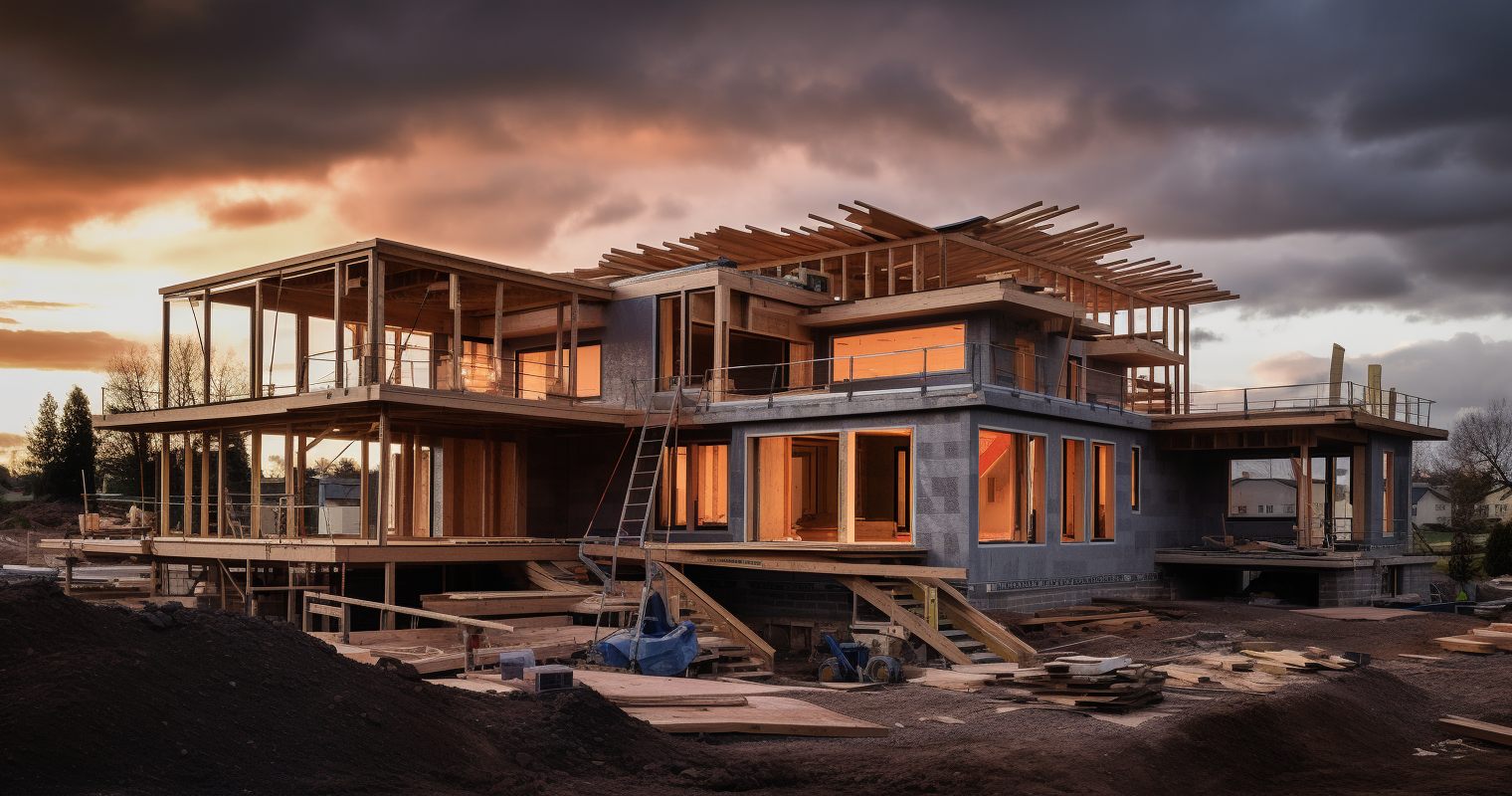
Any construction, renovation, or demolition work on property in Luxembourg will generally require a construction permit (autorisation de construire), granted by the relevant local municipal authority. The entire framework is closely regulated, shaped by each municipality’s General Development Plan (PAG), and foreign nationals encounter no legal barriers to owning land or commissioning building work. Bringing a registered architect and a qualified notary on board from the very beginning is strongly recommended.
| Item | Details |
|---|---|
| Main permit required | Construction permit (Autorisation de construire), issued by the local municipality |
| Permit fees (example, as of 2025) | Approx. €50 for minor works; €200 for medium outbuildings; €400 for new houses or major alterations — fees vary significantly by municipality |
| Permit validity once works begin | Works must begin within one year of permit being granted (renewable under certain conditions) |
| Architect requirement | Compulsory to use a registered OAI architect for major works |
| Foreign ownership restrictions | None — Luxembourg imposes no nationality-based restrictions on purchasing land or property (as of 2026) |
| Heritage authority | National Sites and Monuments Department (SSMN), under the Ministry of Culture |
| Key planning framework | General Development Plan (PAG) — each municipality must have one |
| Energy performance certificate (EPC) | Required for all newly constructed and existing buildings; valid for 10 years |
Do you need planning permission to build or renovate a property in Luxembourg?
In Luxembourg, virtually any activity involving the construction, transformation, or demolition of a building is subject to a building permit. Works that fall under this requirement include: new construction, transformations, extensions, modifications to walls, load-bearing elements and roofing, changes of use of a building, installation of awnings or advertising material, demolition, and backfilling and excavation operations.
Certain smaller-scale projects — such as garages below 20 m² or swimming pools not exceeding 10 m² — may qualify for a simplified declaration of works rather than a full permit. That said, the threshold for exemption differs between municipalities, and some minor works may be entirely exempt from any authorisation requirement. If there is any doubt about whether your planned project needs a permit, speak to your local municipal authority before a single spade enters the ground.
When assessing an application, the local authority checks that the proposed project conforms with the municipality’s General Development Plan (PAG). This document defines which areas may be built upon, what building heights are permissible, how far structures must be set back from plot boundaries, and a range of other urban planning rules. The PAG is therefore central to whether planning permission will be granted or refused.
Both the General Development Plan (PAG) and any applicable Special Development Plan (PAP) are public documents, and can frequently be viewed online via Luxembourg’s national geographic portal. Consulting these documents before purchasing land or finalising a design is one of the most valuable steps you can take in the early stages of any project.
Unlike the permitted development rights system in the United Kingdom — where standard extensions or loft conversions can often proceed without a formal application — Luxembourg’s exemptions are narrower and differ between communes. The process bears closer resemblance to the full planning consent regime in Ireland or Canada, where most meaningful alterations require formal approval from the local authority.
The step-by-step process for applying for a building permit is as follows:
- Consult the PAG and PAP — Before anything else, applicants must understand what rules apply to their particular plot and seek early advice from an architect, so as to establish clearly what is and is not achievable.
- Engage a registered architect — For major works, using a registered architect is a legal obligation. Your architect will produce the necessary technical drawings and compile the required documentation.
- Prepare your application — The submission must include all details relating to the owner’s civil status, documents connected to the land (cadastral extract, location and construction plans), and a thorough description of the intended works.
- Submit to the local municipality — The permit application is lodged with the local mayor and must contain detailed project descriptions, plans, and current photographs of the site.
- Await assessment — Before reaching a decision, the municipality verifies that the proposed construction complies with all relevant regulations, including the PAG, building rules, and public roads and sites requirements.
- Receive the permit and begin works — Once the permit is issued, construction must start within one year (renewable in certain circumstances). If that deadline is missed, a fresh application will be needed.
Permit costs in Luxembourg vary considerably depending on the nature and scale of the project. By way of illustration in one Luxembourg commune (as of 2025), fees are grouped by project type: roughly €50 for minor works such as renewing façade cladding, installing awnings, or erecting garden sheds under 16 m²; approximately €200 for medium-sized structures such as a new shed larger than 16 m² or a barn; and around €400 for houses, apartments, or major alterations to existing buildings. Always verify the current fee schedule directly with your municipality, as charges differ from one commune to another.
It is wise to initiate administrative procedures well ahead of your intended construction start date, since the approval process can take some time. For projects in sensitive areas or those requiring heritage or environmental consultation, build in additional time accordingly.
It is equally important to observe any conditions attached to your permit — such as environmental measures, stormwater management requirements, or health and safety provisions. Breaching these conditions can lead to penalties, fines, or in serious cases an obligation to demolish non-compliant structures.
What are the rules around listed buildings, conservation areas, and heritage protection in Luxembourg?
Luxembourg operates a formal system of heritage protection broadly comparable to the listed building regimes found in France or Germany, albeit with its own distinct legal basis. The preservation of properties belonging to the state, the City of Luxembourg, or private individuals is governed primarily by the Law of 18 July 1983 on the conservation and protection of national sites and monuments.
Protection at the national level takes the form of classifying a building as part of the national cultural heritage or placing it on a protected area of national interest. At the communal level, protection is achieved by incorporating a building into a protected area of communal interest within the commune’s General Development Plan (PAG).
The Minister for Culture holds responsibility for national heritage protection, exercised either through formal classification as a national monument or by inclusion in the supplementary inventory. Once a building receives national protection, any alterations require the prior authorisation of the Minister for Culture. All such requests are examined by the SSMN, which administers the authorisation process.
The National Sites and Monuments Department of the Grand Duchy of Luxembourg (SSMN) is responsible for the preservation, restoration, and enhancement of the country’s built heritage — whether religious, feudal, fortified, or industrial in character — with the exception of archaeological heritage. The SSMN acts as contracting authority for state-owned buildings and can also support restoration and enhancement projects for heritage belonging to individuals and municipalities, ensuring that state subsidies are disbursed appropriately.
Classification of a building gives rise to significant constraints on property rights: all general works on classified property — other than purely conservational interventions — are prohibited without prior ministerial authorisation, and no new construction may be undertaken on a classified building without that same prior consent.
As part of Luxembourg’s ongoing heritage conservation programme, 1,877 buildings were under protection as of 2021, a considerable increase from around 700 in 2008. The SSMN’s website at www.ssmn.public.lu provides public access to the inventory and detailed information on protected properties.
In order to preserve the historic and architectural character of Luxembourg City and prevent visual discordance in its townscape, special building and alteration restrictions may apply within conservation areas. These restrictions focus on façades and rooflines. The City may contribute financially to some of these works, which are in all cases subject to prior authorisation.
Any owner of a property classified as a “structure to be conserved” in a municipality’s general urban development plan is required — until that municipality formally adopts an architectural heritage inventory — to notify the Minister of any proposed total or partial demolition or transformation. From the date of that notification, the Minister has three months in which to initiate an individual classification procedure.
Always verify the PAG for your specific commune and consult the SSMN before purchasing any property you intend to modify substantially. To avoid unforeseen complications, contact the Service Urbanisme (Urban Planning Department) before committing to either a land purchase or construction plans.
What permits and licences are required when building or renovating in Luxembourg?
The primary authorisation needed to carry out construction work on real estate in Luxembourg is the construction permit (Autorisation de construire). Both private individuals and legal entities must obtain this from the relevant local administration before any work commences.
This mandatory permit covers the construction, arrangement, transformation, or expansion of houses as well as residential or commercial buildings. Certain activities, installations, or constructions additionally require a specific authorisation known as the commodo/incommodo procedure. Luxembourg law provides a categorised list of these classified establishments, ranked according to their potential for pollution or other hazardous effects.
A separate permit is also required for construction in a “green zone.” A substantial portion of Luxembourg’s rural landscape falls within protected green zones where the construction of residential buildings is either prohibited or subject to severe restrictions. Always confirm the zoning classification of any land before proceeding with a purchase.
Luxembourg’s building regulations address the solidity, safety, hygiene, durability, and convenience of public spaces, sites, structures, buildings, and their surroundings. They also govern the procedures for issuing building permits, set out standards for construction site management, and establish rules for fire prevention and the handling of buildings at risk of collapse.
The Ministry of Environment, Climate and Sustainable Development is the central Luxembourg authority for land development and environmental regulation. Three agencies within this ministry — the Environment Agency, the Nature Conservation Agency, and the Water Management Agency — together with local authorities, are responsible for implementing environmental policy.
In addition to the construction permit itself, you should be aware of these further requirements:
- Utility connection permits — Separate applications are needed for utility marking, construction works in public spaces, occupation of public thoroughfares, and connections to water and district heating networks.
- Drainage and sewerage plans — Detailed plans of all levels of the structure showing drainage layouts must be included in submissions, and waste water and rainwater drainage systems must be kept separate.
- Environmental authorisation — Where a project involves classified activities or is located near protected natural zones, an environmental permit from the appropriate authority may be required.
- Energy performance certificate (EPC) — Sellers and landlords are required to provide an energy performance certificate in any sale or letting. EPCs are required for all newly built and existing buildings, are issued by qualified experts, and remain valid for ten years.
- Energy subsidies and Klimabonus — State financial assistance is available for energy-efficient installations such as photovoltaic systems and heat pumps, applicable to both new builds and existing properties. Contact Klima-Agence for guidance on the grants currently available.
A permit is needed not just for the main dwelling but also for any standalone structure — for example, a detached garage. Each municipality may set its own additional requirements, potentially adding further steps to the authorisation process. Always ask the municipality for a definitive list of required documents before lodging your application.
How do you find a reliable, trustworthy builder in Luxembourg?
Luxembourg’s construction framework is enshrined in law: before engaging any contractor, gather all relevant information from the appropriate authorities to confirm that you are fully compliant with every applicable rule. Failure to do so can result in works being halted or, in serious cases, an obligation to demolish whatever has already been built.
Builders operating commercially in Luxembourg must hold a valid business permit (autorisation d’établissement) issued by the Ministry of the Economy. This permit confirms that the contractor possesses the professional qualifications, financial standing, and integrity required to operate lawfully. You can check whether a contractor holds a valid permit through the Guichet.lu portal or by contacting the Ministry of the Economy directly.
The principal trade and professional federation for the Luxembourg construction industry is the Fédération des Artisans (FDA), which represents craftspeople and building tradespeople across all construction disciplines. Contact details:
- Website: www.fda.lu
- Address: 2, Circuit de la Foire Internationale, L-1347 Luxembourg
- Phone: +352 42 45 11 1
For larger construction firms, the Groupement des Entrepreneurs du Bâtiment et des Travaux Publics (GEBTP), affiliated with the Chambre de Commerce, represents major building and civil engineering companies. The Chambre de Commerce can be reached at www.cc.lu.
When assessing any potential builder, follow these practical steps:
- Verify the business permit — Request sight of the contractor’s autorisation d’établissement and cross-check it with the issuing authority’s records.
- Check insurance — Confirm that the builder carries adequate professional civil liability insurance (assurance responsabilité civile professionnelle) specifically covering work carried out in Luxembourg.
- Insist on a written contract — Demand a detailed written agreement specifying the scope of work, materials to be used, payment schedule, start and end dates, and penalty clauses for delays. Verbal arrangements carry very little weight if a dispute arises.
- Structure payments in stages — Never pay the entire project cost upfront. Instead, tie payments to independently verified completion of clearly defined project milestones.
- Ask for references — Request contacts from previous clients and, where feasible, visit completed projects to inspect the quality of work firsthand.
- Be wary of unsolicited approaches — A common scam affecting foreign property owners involves contractors who approach you speculatively, offer an attractively low price, request a large upfront deposit, and then either deliver poor-quality work or vanish altogether. Always make contact yourself and rely on contractors recommended by established trade bodies, your notary, or your architect.
For disputes with contractors, Luxembourg’s Inspection du Travail et des Mines (ITM) oversees compliance with labour law on construction sites, while civil disputes may be referred to the courts or to mediation services. If you have engaged an architect as project supervisor, they can provide an additional layer of oversight over the contractor’s performance.
How do you find a qualified local architect in Luxembourg?
The Order of Architects and Consulting Engineers (OAI) is the official professional body established under Luxembourg law to uphold the rights and duties associated with the public interest functions performed by the five OAI professions. Any architect — whether an individual or a firm — wishing to practise independently in the Grand Duchy of Luxembourg is legally required to be registered with the OAI.
The OAI was formally established in March 1990 under the Law of 13 December 1989. Its mandate is to ensure that the rights and duties tied to public interests across the five OAI professions are properly upheld. Those five professions are: architects, interior designers, consulting engineers, urban designers and master planners, and landscape architects and landscape engineers.
The OAI maintains a publicly searchable members’ directory, allowing you to find registered architects by specialism, location, and language. This can be accessed at www.oai.lu. Contact details for the OAI:
- Website: www.oai.lu
- Address: 6, boulevard Grande-Duchesse Charlotte, L-1330 Luxembourg
- Phone: +352 42 24 03
- Email: [email protected]
One of the defining characteristics of Luxembourg’s architecture and engineering sector is a high degree of internationalisation: every Luxembourg-registered architect has studied abroad, and many non-nationals — both expats and cross-border workers — are active within the industry. Luxembourg stands out as the only country in Europe where cross-border architectural and engineering practice is already an established reality, with a quarter of architects working in Luxembourg originating from neighbouring countries.
Luxembourg’s position at the heart of Europe and at the confluence of multilingual cultures fosters creativity, technical expertise, and innovation through interregional and international exchange. The formation of multilingual and multicultural project teams is actively encouraged. In practice, this means that finding an architect who can work in French, German, Luxembourgish, or English is straightforward, particularly in and around Luxembourg City and the larger urban centres.
As of 2025, approximately 520 architectural firms were established in Luxembourg, ensuring a healthy level of competition and broad choice across the market. When selecting an architect, prioritise demonstrated experience in the type of project you have in mind — renovating older buildings demands different skills from new-build work — and ideally choose someone with strong familiarity with the PAG and heritage regulations specific to your municipality.
For projects involving protected buildings, it is especially important to select an architect with proven experience working alongside the SSMN and navigating heritage authorisation procedures. Your architect should also be in a position to represent you in communications with the local municipality — an advantage that is particularly significant if you are not yet fluent in French, German, or Luxembourgish.
What are the common pitfalls when buying land to build on in Luxembourg?
Acquiring land with the intention of building in Luxembourg presents specific risks that differ meaningfully from purchasing an existing property. Taking professional advice before signing any document is essential.
Verify buildability before committing — The PAG defines the areas that may be developed, the permitted building heights, the setback distances from plot boundaries, and the full range of town-planning rules that apply. It is the single most important determinant of whether planning permission will be granted. Never assume that land being marketed for sale is automatically buildable — always confirm the zoning classification with the municipality before proceeding.
Check land boundaries with the cadastral authority — Before beginning any project, contact the Administration du Cadastre et de la Topographie (ACT), which can officially demarcate the boundaries of your land and verify that they correspond with the cadastral map. If you are considering subdividing or allotting land, you will also need to engage a certified surveyor to carry out an official survey.
Luxembourg’s cadastral extract, obtainable through the ACT, is the definitive document for verifying parcel boundaries, ownership, and any registered rights before a purchase. The ACT is accessible at www.act.public.lu.
Understand green zone restrictions — A specific permit is required to build in a “green zone,” and a large portion of Luxembourg’s countryside is designated as such. Construction of residential buildings is prohibited or severely restricted in these zones. Even if land looks rural and unoccupied, always establish its zoning classification before purchase.
Check for environmental and flood-risk issues — The assessment process for development plans involves consultation with the Ministry of the Environment (regarding biotopes and environmental impact), the Water Management Administration (covering surface water retention and flood zones), and the Roads Administration (for road access permissions). Ask your notary or architect to establish whether the land falls within a flood zone or carries any environmental designation that might restrict development.
Confirm utility availability — Particularly in rural locations, do not take for granted that mains water, electricity, gas, or sewerage connections will be readily accessible. Connecting to infrastructure networks can be expensive, and some plots may have to rely on private wells or septic systems. Check the status of all utility connections with the relevant providers before committing to a purchase.
Use a qualified notary — All property transactions in Luxembourg must pass before a notary (notaire), who verifies title, checks for any mortgages or charges registered against the property, and confirms that the transaction complies with Luxembourg law. Although the Luxembourg notary performs a public function with duties to both parties, you should still obtain independent legal advice for complex transactions. The Luxembourg Chamber of Notaries can be found at www.notariat.lu.
Contract structure — The standard sequence in Luxembourg runs as follows: make an offer and negotiate terms, gather key documents (energy certificate, co-ownership records if applicable, proof of funds), sign the compromis de vente, finalise financing arrangements, and allow the notary to prepare the deed. The compromis de vente is a binding preliminary contract, and withdrawing from it once signed will normally carry financial penalties. Ensure all planning and buildability checks are fully complete before reaching this stage.
What are the rules around foreign ownership and financing for construction projects in Luxembourg?
Foreign nationals may purchase the same categories of residential property as Luxembourg citizens, including apartments, houses, duplexes, penthouses, and off-plan new-build purchases (known as VEFA). Luxembourg does not impose any nationality-based restrictions, quotas, or special permits on foreign buyers of residential real estate, and this principle applies equally to the purchase of building land.
There is no requirement to operate through a local company or to form a joint venture in order to commission construction work as a foreign individual. You may engage an architect and a contractor directly in your own name. However, if you are purchasing property through a corporate structure — for instance as an investment vehicle — you should seek specialist legal and tax advice, since different rules may govern company-owned real estate.
Regarding residency, there is no obligation to be a Luxembourg resident in order to purchase land or property there, although non-residents may be subject to different tax treatment — for example, in relation to capital gains upon eventual sale. EU citizens generally enjoy equivalent property rights to Luxembourg nationals under EU law. Non-EU nationals should confirm any relevant visa or residency implications with their own legal adviser.
Luxembourg’s major banks — including Spuerkeess (BCEE), BGL BNP Paribas, and ING Luxembourg — offer mortgages and construction loans to both residents and non-residents, though conditions for non-residents may be more demanding in terms of deposit requirements and supporting documentation. Construction loans in Luxembourg are typically structured as phased drawdown facilities, releasing funds at defined stages of the build — a format comparable to the self-build mortgage products available in Ireland or Canada.
Construction and renovation works of this kind may also qualify for state financial aid, subject to certain conditions, including a renovation subsidy for works undertaken for reasons of safety or health, to improve living conditions, or to enhance the building’s energy performance. Consult the Guichet.lu portal for a comprehensive overview of available state subsidies.
For authoritative guidance on investment conditions and financial regulation in Luxembourg, refer to the Commission de Surveillance du Secteur Financier (CSSF) at www.cssf.lu, and the Banque Centrale du Luxembourg (BCL) at www.bcl.lu.
What official sources should you consult when planning to build or renovate in Luxembourg?
The official bodies and resources listed below should be your first point of reference at every stage of a build or renovation project. Always check directly with official sources for the most up-to-date requirements, since rules, fees, and procedures are subject to change.
| Body / Resource | Role | Website |
|---|---|---|
| Your local municipality (commune) | Issues building permits; holds the PAG and PAP; primary contact for all planning applications | Find via guichet.public.lu |
| Guichet.lu (Government portal) | Central portal for all administrative procedures, forms, and official guidance in Luxembourg | guichet.public.lu |
| Administration du Cadastre et de la Topographie (ACT) | Land registry and cadastral authority; confirms land boundaries and ownership | act.public.lu |
| National Sites and Monuments Department (SSMN) | Heritage authority; manages classified buildings and protected areas | ssmn.public.lu |
| Ministry of Housing and Spatial Planning | National housing policy; urban development frameworks | gouvernement.lu |
| Ministry of Environment, Climate and Sustainable Development | Environmental permits; green zone designations; flood risk | gouvernement.lu |
| Order of Architects and Consulting Engineers (OAI) | Regulatory body for architects; public member directory | oai.lu |
| Klima-Agence | Free energy-efficiency advice; guidance on subsidies and Klimabonus grants | klima-agence.lu |
| Fédération des Artisans (FDA) | Trade body for construction craftspeople and contractors | fda.lu |
| Chambre des Notaires (Chamber of Notaries) | Find a qualified notary for property transactions | notariat.lu |
The Department of Municipal Planning and Urban Development manages the relationship between the state and municipalities in organising communal territory. It assists the Minister acting as supervisory authority for municipal planning and urban development, with particular responsibilities for approving development plans and coordinating municipal activities relating to planning matters.
The General Development Plan (PAG) is a body of graphic and written regulations encompassing the entire municipal territory, dividing it into distinct zones that regulate land use. The overarching aim is the thoughtful distribution and placement of human activities across these zones in order to secure the sustainable development of the municipality. Every municipality in Luxembourg is legally required to maintain a General Development Plan covering its entire territory.
Frequently asked questions about building and renovating in Luxembourg
How much does it typically cost to build a new house in Luxembourg?
Luxembourg’s construction costs rank among the highest in Europe, driven by elevated land prices, strong labour costs, and demanding building standards. As a broad indication, construction costs for a new residential build typically fall in the range of €2,500 to €4,500 per square metre, depending on specification, location, and the quality of finishes selected. These figures do not include land acquisition, architect fees, notary fees, or permit costs. Obtain several detailed quotations from registered contractors and set aside a contingency reserve of at least 10–15%. Consult local architects and builders for current market rates, as construction costs can shift significantly over time.
How long does the planning permission process take in Luxembourg?
Starting administrative procedures well ahead of your intended construction date is advisable, as approval can take time. For uncomplicated residential applications that comply with the PAG, processing times of two to four months are typical, although projects involving complexity, heritage consultations, or proposed amendments to the PAP may take considerably longer. Contact your local municipality for an indication of typical timescales within your specific commune.
Is there a language barrier when dealing with planning authorities in Luxembourg?
Luxembourgish, French, and German are all official administrative languages, and most municipal offices and government departments are accustomed to handling matters in French and German, with some having English-speaking staff. All formal documents, applications, and permits will be issued in one of the three official languages, however. If you are not comfortable working in any of these languages, engaging a registered architect or a bilingual professional adviser is strongly recommended, since errors in documentation can cause delays or lead to refusals.
What happens if I carry out building work without a permit in Luxembourg?
Proceeding without the required authorisations can lead to penalties, fines, or an obligation to demolish non-compliant structures. If you are found to be in breach of the applicable rules, you may be required to halt the works immediately or even dismantle what has already been completed. Unauthorised works can also create serious legal and practical complications when you later attempt to sell the property. Always secure all necessary authorisations before starting any construction.
Are overseas building qualifications or standards recognised in Luxembourg?
Architects and engineers who obtained their qualifications in other EU member states can generally have those credentials recognised under EU mutual recognition directives, subject to registration with the OAI. Qualifications from outside the EU are assessed individually by the relevant authorities. Regarding building standards, Luxembourg applies its own national building regulations alongside EU-harmonised technical standards (Eurocodes) — compliance with standards from a non-EU jurisdiction is not automatically accepted. All construction must meet Luxembourg’s applicable regulations regardless of where the designer or builder trained.
Can I renovate a listed or heritage building in Luxembourg?
Where a building is not subject to a national protection measure, the applicant may obtain a certificate from the communal administration confirming the applicable communal protection measure for the building in question. In such cases, any works must serve the conservation or restoration of the building’s original appearance. For buildings classified at the national level, prior authorisation from the Minister for Culture is required for all works other than purely conservational maintenance. On the positive side, the SSMN can support restoration and enhancement projects for heritage buildings owned by private individuals and municipalities, and can ensure that state subsidies are made available for those purposes.
What is the role of the notary in a land purchase in Luxembourg?
In Luxembourg, the notary (notaire) is a legally trained public official whose involvement is mandatory for every property transaction. The notary checks title, searches the land registry for any encumbrances or easements, verifies that the deed complies with Luxembourg law, and registers the transfer with the relevant authorities. Notary fees are regulated and are borne by the buyer as part of closing costs. The typical total closing cost for purchasing an existing home in Luxembourg stands at around 8.5% of the purchase price as of 2026, though this can range from approximately 7.5% to 10% depending on the transaction, covering registration duties, notary fees, and associated costs.
What should I do if I have a dispute with a builder in Luxembourg?
If a dispute arises with a contractor, begin by setting out your concerns in writing, making specific reference to the terms of your signed contract. Should this approach fail, you may turn to the relevant trade body — for craftspeople, the Fédération des Artisans (FDA) at www.fda.lu — which may be able to offer mediation. More formal disputes can be taken before Luxembourg’s civil courts. Having a written contract in place from the outset and retaining all correspondence, invoices, and site photographs as supporting evidence are essential precautions. Legal assistance is available through Luxembourg’s Bar Association (Barreau de Luxembourg) at www.barreau.lu. Residents who are unable to meet the cost of legal proceedings may be eligible for legal aid (assistance judiciaire) — check eligibility via guichet.public.lu.
Are there grants or subsidies available for renovation projects in Luxembourg?
Yes. Renovation works in Luxembourg can qualify for state financial assistance, subject to specific conditions. Support available includes a renovation subsidy for works carried out for reasons of safety or health, to enhance living conditions, or to improve a building’s energy performance. An interest subsidy to reduce monthly loan repayments and a state guarantee scheme for those who have difficulty assembling the necessary collateral for a loan are also on offer. Contact Klima-Agence for free, tailored advice on all available energy efficiency and renovation grants, including the current Klimabonus scheme.