
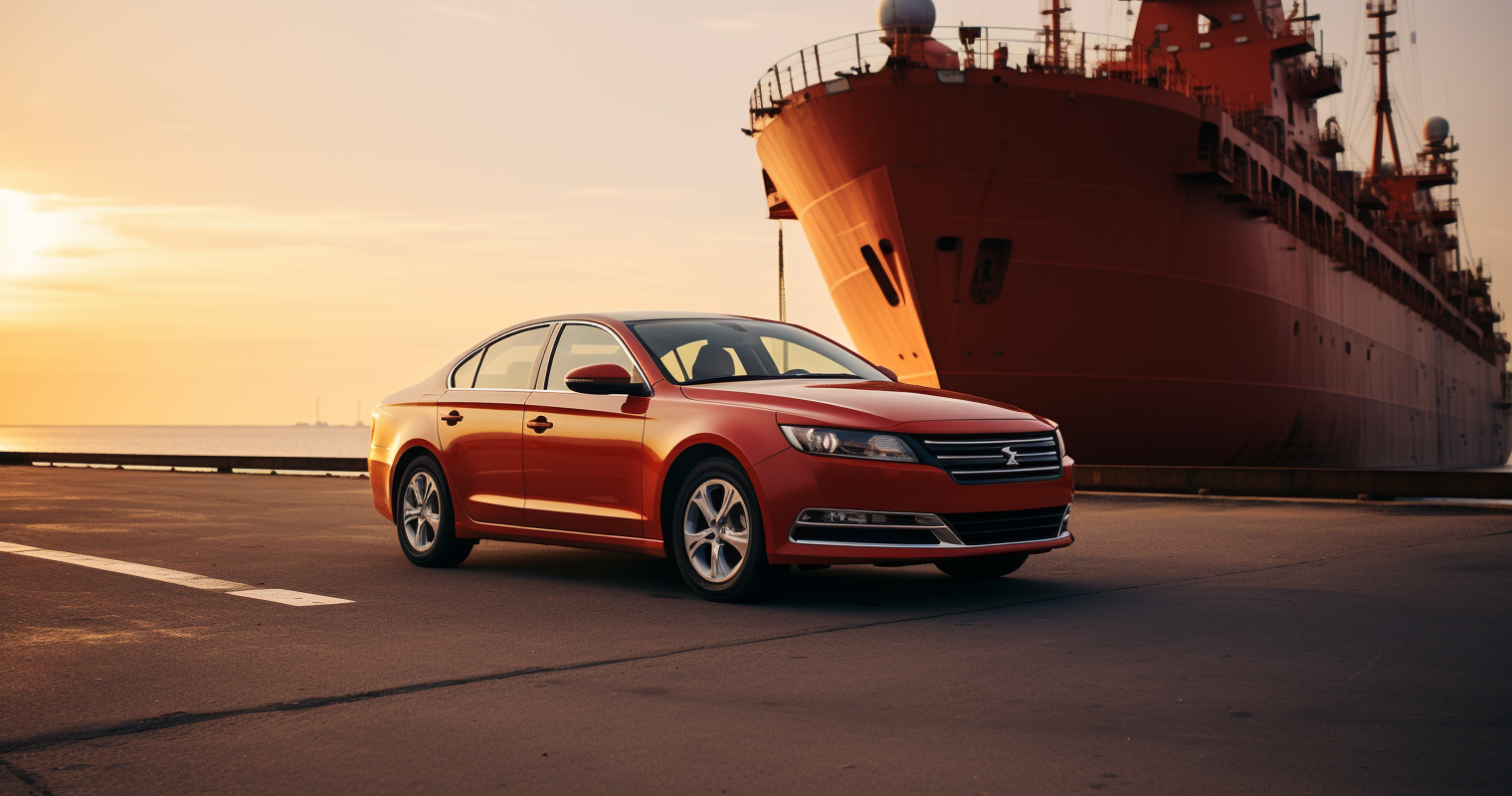
Purchasing or importing a car in Monaco is entirely achievable, though it involves following a defined set of administrative procedures. Traffic in Monaco moves on the right, so left-hand drive vehicles are the standard. Vehicle registration is administered by the Driver and Vehicle Licensing Office (Service des Titres de Circulation), and both Monaco residents and, in certain circumstances, non-residents may register a vehicle there — as long as they can establish a genuine connection to the Principality, for example by owning or renting a property along with a designated parking space.
| Item | Details |
|---|---|
| Driving side | Right-hand side (left-hand drive vehicles standard) |
| Registration authority | Service des Titres de Circulation (Driver and Vehicle Licensing Office), 23 Avenue Albert II, Monaco |
| Roadworthiness inspection (Contrôle Technique) | Required for vehicles over 4 years old; certificate must be no more than 6 months old at point of registration |
| Import duty (vehicles from outside EU channels) | Approximately 6.5% (as of 2024/2025 — verify with French Customs/Direction Générale des Douanes) |
| VAT rate applicable in Monaco | 20% (French VAT rules applied, as of 2025 — confirm with Monaco’s Direction des Services Fiscaux) |
| Licence exchange deadline for residents | Within one year of obtaining official resident status (from day 186 of residency) |
| Registration certificate & plates turnaround | Available within 72 hours of appointment at the Driver and Vehicle Licensing Office |
How do I buy a new car in Monaco as a foreigner?
Monaco’s automotive sector is well established, with authorised dealerships representing virtually all major European and prestige marques. The steps involved in purchasing from a dealership closely resemble those followed elsewhere in Western Europe: choose a vehicle, agree on pricing, and sign a purchase invoice. That said, whether you can subsequently register the car in Monaco depends heavily on your residency or property status within the Principality.
Residents of Monaco who can substantiate their status — either through a national identity card or passport accompanied by proof of address (such as a utility bill from the SMEG or a tenancy agreement), or through a valid residence permit — are entitled to register a new vehicle locally. Those who have not yet obtained residency may still qualify for registration if they can show that they own or lease a property together with a dedicated parking space in Monaco (see the non-resident section below).
When buying from a dealership, you will generally be asked to supply: a valid passport or national identity document; evidence of your Monaco address or your tenancy or ownership agreement; the dealer’s purchase invoice; and, for new vehicles sourced from within the European Community, the original VAT certificate issued by Monaco’s Department of Tax Services (Direction des Services Fiscaux). Where the vehicle originates from outside the EU, you will instead need customs clearance documentation from the French Customs Authority (Direction Générale des Douanes et Droits Indirects).
Financing arrangements — including hire purchase and long-term rental contracts, known respectively as LOA and LDD — are available in Monaco. Those wishing to use a long-term rental or hire purchase arrangement must demonstrate that they reside in, practise a profession in, or operate a commercial or industrial enterprise within the Principality, and must also submit the relevant rental contract to the Driver and Vehicle Licensing Office. Expats who have not yet secured Monaco residency may find that dealers suggest a cash purchase or financing through a Monaco or French bank, since access to local credit products can hinge on residency status. Always verify current lending eligibility directly with your dealership or bank.
All documents submitted must be in French. Where a document is in another language, it must be accompanied by a French translation prepared by a sworn translator accredited by the Monaco Court of Appeal or a French Court of Appeal. If documents are drafted in a foreign language using non-Latin characters, a certified translation is equally required.
How do I buy a used car in Monaco?
Pre-owned vehicles can be acquired through Monaco-based dealerships or from private sellers. The administrative process broadly mirrors that for purchasing a new car, but prudent buyers should always carry out thorough checks on the vehicle’s history and legal standing before any money changes hands.
Prior to purchase, you should:
- Check that the serial number stamped on the vehicle matches the one recorded in the seller’s registration documents (Certificat d’Immatriculation), and confirm that the seller is the legally registered owner.
- Obtain a Certificat de Situation (also called a non-gage certificate), which can be obtained from the prefecture where the car was last registered. This document reveals whether any financial charges or liens are outstanding against the vehicle — the equivalent of a finance check search in many other countries — and is indispensable for ensuring that no debt is secured against the car you intend to buy.
- Check that no outstanding fines, unpaid road taxes, or enforcement notices are attached to the vehicle.
Roadworthiness certificate: Vehicles more than four years old must be accompanied by a valid roadworthiness certificate (Contrôle Technique) issued within the previous six months. If the seller cannot produce a current certificate, you should arrange one before the transaction is finalised — this is broadly comparable to the UK’s MOT or Germany’s TÜV inspection.
Documentation at the point of sale: The seller is required to provide a completed sale certificate (Certificat de vente ou de cession d’un véhicule d’occasion, form STC005), the vehicle’s Certificat d’Immatriculation, and, where applicable, a valid Contrôle Technique certificate. The invoice must identify both seller and buyer, describe the asset being sold including the vehicle serial number, and where possible record an odometer reading.
After the purchase: When ownership of a Monaco-registered car changes hands, the transfer must be formally recorded within one month, following which a new Certificat d’Immatriculation will be issued to the incoming owner. This process is handled by the Service des Titres de Circulation.
Can I import a vehicle into Monaco, and how does the process work?
Monaco is a sovereign microstate completely encircled by France. Although it is not an EU member, it applies French customs regulations and is treated as part of the EU customs territory for most practical purposes. This means that importing a vehicle from another EU member state is generally a more straightforward process than bringing one in from outside the EU. In every case, you must hold a Monaco residence permit — or, in specific circumstances, be able to demonstrate another qualifying connection to the Principality — before a vehicle can be registered there.
A foreign-plated car may only be re-registered in Monaco if its owner holds a valid Monaco residency permit. The vehicle must also comply with the standards established by Monegasque authorities. Because traffic moves on the right in Monaco, right-hand drive vehicles — commonplace in markets such as the United Kingdom, Japan, or Australia — are not outright forbidden, but they do not conform to European type-approval norms with respect to headlight beam direction and may require adaptation before registration can proceed.
Step-by-step import process:
- Confirm eligibility: Verify that you hold a valid Monaco residence permit or can otherwise demonstrate a qualifying link to the Principality, such as property ownership together with a parking space. Non-residents lacking such a connection are not entitled to register an imported vehicle in Monaco.
- Obtain a Certificate of Conformity (COC): Secure a Certificate of Conformity from the vehicle’s manufacturer, confirming that the car satisfies European type-approval requirements. Without a COC, individual type approval will be necessary — a more demanding and expensive process.
- Clear customs (for non-EU sourced vehicles): If the vehicle originates from outside the European Union, you must obtain a signed, dated receipt confirming the payment of customs duties, issued by the Douane — the French Customs Authorities. Monaco follows French customs procedures; contact the Direction Générale des Douanes et Droits Indirects for current requirements and duty rates.
- Obtain a Contrôle Technique: Arrange a Technical Inspection Certificate at a licensed inspection centre. For vehicles more than four years old, this certificate must have been issued within the preceding six months and must be obtained at the Centre de Contrôle Technique des Véhicules de Monaco (Zone de fret, 8 Avenue Albert II, 98000 Monaco; tel: +377 98 98 43 58).
- Arrange insurance: Take out a motor insurance policy with an approved insurer before the vehicle is driven or registered in Monaco.
- Pay any applicable vehicle tax: Settle any outstanding vehicle tax at the Tax Office (Direction des Services Fiscaux). For current VAT guidance, consult the Direction des Services Fiscaux.
- Register with the Service des Titres de Circulation: Present all required documentation — including the purchase invoice, COC, Contrôle Technique certificate, customs declaration, insurance policy, and proof of tax payment — to the Service des Titres de Circulation. The Office will then issue Monaco registration plates and a Vehicle Registration Certificate.
Vehicles aged over 30 years may, at the owner’s request, be registered as a vintage car with restricted use. Always confirm the most up-to-date eligibility criteria and documentary requirements through the official Monaco government portal.
What are the costs involved in importing a car to Monaco?
Bringing a vehicle into Monaco entails several distinct financial components. Because Monaco follows French customs rules, the framework parallels that of an import into France — though within a jurisdiction that applies its own administrative fees. Buyers are strongly advised to request a written cost breakdown from a freight agent or customs broker before any shipment is arranged.
| Cost item | Approximate rate / notes |
|---|---|
| Import duty (vehicles from outside EU) | Approximately 6.5% of the vehicle’s customs value (as of 2025). Confirm with the French Customs Authority. |
| VAT | Monaco applies French VAT rules; the headline rate cited is 20% (as of 2025). Confirm with Monaco’s Direction des Services Fiscaux. |
| Homologation / individual type approval | Required if no EU Certificate of Conformity exists; costs vary widely by vehicle and testing centre |
| Contrôle Technique (roadworthiness test) | A modest fee payable at Monaco’s vehicle testing centre; check current schedule with the Centre de Contrôle Technique des Véhicules |
| Registration fees | Calculated according to the vehicle’s fiscal power (engine rating), age, and category; confirm the current fee schedule with the Service des Titres de Circulation |
| Shipping costs | Variable; depends on origin country, shipping method (RoRo or container), and distance |
| Modifications (if required) | Headlight beam conversion for right-hand drive vehicles, speedometer recalibration to km/h, fitting of required safety equipment (warning triangle, reflective vest) |
| Translation fees | Any foreign-language documents must be translated by a sworn translator recognised by the Monaco or French Court of Appeal |
It is advisable to cross-reference the official registration requirements published on the Monaco government portal with customs and import guidance from a local freight agent, and to obtain a written breakdown of customs duty, VAT liability, and Monaco administrative fees before shipment takes place. Professional legal or customs advice is recommended, as publicly available summaries cannot provide a universal calculation applicable to every import scenario.
Unlike some larger countries that offer concessional import arrangements for vehicles brought in as part of an international household removal, Monaco does not appear to publish a widely advertised standalone exemption scheme for privately imported cars. Anyone relocating to Monaco and wishing to bring their own vehicle should contact the Direction Générale des Douanes et Droits Indirects and Monaco’s Direction des Services Fiscaux in advance of shipping to enquire about any available personal effects or removal goods relief and the conditions attached.
How do I register a vehicle in Monaco?
All vehicle registration in Monaco is administered by the Service des Titres de Circulation (Driver and Vehicle Licensing Office), situated at 23 Avenue Albert II, MC 98014 Monaco CEDEX (email: [email protected]). The procedure applies equally whether you are registering a vehicle purchased locally or one that has been imported.
Eligibility: Monaco residents may register a new vehicle by establishing their residency via a national identity card or passport together with a utility bill from the SMEG or a tenancy agreement, or through a valid residence permit. Non-residents may also apply for registration, but must demonstrate in their own name that they hold a title deed or lease for a property and at least one dedicated parking space in the Principality for each vehicle to be registered.
Documents required (new vehicle):
- Completed registration application form (available on monservicepublic.gouv.mc)
- Proof of identity (passport, Monaco identity card, or Carte de Séjour)
- Proof of address in Monaco
- Purchase invoice from the seller
- For EU-sourced vehicles: original VAT certificate from Monaco’s Department of Tax Services; for non-EU vehicles: original customs duty receipt (846A form) issued by French Customs
- Certificate of Conformity (COC)
Additional requirement for used vehicles over 4 years old: A copy of a Contrôle Technique report passed within the previous six months is required for vehicles with a gross vehicle weight rating (GVWR) of 3.5 tonnes or less that are more than four years old.
Document language: All submitted documents must be in French. Any document drafted in a foreign language must be accompanied by a certified French translation prepared by a sworn translator accredited by the Monaco Court of Appeal or a French Court of Appeal. Translations produced in the country of origin must be legalised or apostilled.
The application process:
- Forward a copy of your complete application to the Driver and Vehicle Licensing Office by post or by email to [email protected] for an admissibility review.
- Within a maximum of 10 days, you will be notified by telephone or email of the next steps — either the application will be deemed admissible and you may submit the originals with payment, or additional information will be requested.
- Book an appointment at the Driver and Vehicle Licensing Office (online, by email, or by telephone).
- On the day of your appointment, bring all original paperwork and your chosen method of payment.
- Your registration certificate and registration plates will be ready within 72 hours, collected at an appointment arranged at the conclusion of the interview.
All registrations are entered into the official register and result in the issuance of a certificate along with a pair of front and rear registration plates bearing a sticker. The plates are white with blue lettering and display the red and white Monaco coat of arms on the left side, together with the current year to confirm that vehicle tax has been settled.
What insurance do I need to drive legally in Monaco?
Motor insurance in Monaco operates entirely through private-market providers — there is no state-run insurer. Policies are offered by commercial companies, many of which are associated with or operate as branch offices of major French insurers, reflecting Monaco’s close legal and economic relationship with France. The market is competitive, and cover is available ranging from the statutory minimum of third-party liability through to fully comprehensive policies.
Third-party liability insurance is a legal requirement for any vehicle driven in Monaco, as it is throughout the EU and across most of Western Europe. This form of cover addresses damage or injury caused to other parties and constitutes the minimum legal standard; it does not extend to damage sustained by your own vehicle. Given that Monaco holds one of the highest concentrations of luxury cars per capita anywhere in the world, the majority of expat vehicle owners there tend to opt for comprehensive cover.
The obligation to hold insurance for land-based motor vehicles has been enshrined in Monegasque law since Ordinance Act No. 666 of 20 July 1959, which first introduced this requirement.
Safety equipment: Drivers are required to keep a warning road triangle and a reflective safety vest in the vehicle at all times — an obligation shared with France, Italy, Spain, and various other neighbouring countries.
No-claims history: Many insurers operating in Monaco and France will take into account a foreign no-claims bonus (bonus-malus) when setting your premium, particularly where it is supported by a letter on official headed paper from your previous insurer. However, the extent to which foreign no-claims records are accepted varies between providers — it is worth asking this explicitly when gathering quotes. There is no automatic mutual recognition of no-claims status comparable to that found within some regional insurance frameworks.
For current regulatory guidance on insurance requirements, refer to the Monaco Department of Finance and Economy, which oversees the financial services sector in the Principality.
What driving licence do I need in Monaco as an expat?
Monaco accepts a broad range of foreign driving licences, though the rules vary depending on whether you are a visitor or have formally established residency in the Principality. Responsibility for driving licences, as with vehicle registration, rests with the Service des Titres de Circulation (Driver and Vehicle Licensing Office).
Visitors and short-term stays: Non-residents and visitors may drive in Monaco on a valid foreign driving licence accompanied by an International Driving Permit (IDP) for the duration of their stay, provided the IDP remains in force. Monaco is a contracting party to both the 1949 Geneva Convention and the 1968 Vienna Convention on Road Traffic and recognises IDPs issued under either.
Residents — the exchange requirement: Anyone holding a foreign driving licence recognised by the Principality of Monaco who has obtained official resident status and is present in the Principality for 185 days or more per calendar year is required to apply for a licence exchange at the Driver and Vehicle Licensing Office. Official resident status is conferred on the 186th day following arrival in Monaco.
From the date on which official resident status is granted, you have one year in which to submit your exchange request. Failure to do so within that period means your foreign licence will cease to be valid, and you will lose all entitlement to drive in the Principality. However, residents who have missed this one-year window are not required to retake both the theoretical and practical driving tests from scratch.
Recognised licences: Since September 2019, the range of states whose licences are accepted by Monaco for exchange purposes has been broadened to encompass more than 120 countries. Exchange is available provided the licence is currently valid and each category was obtained following a practical driving test. The complete list of recognised states and categories can be found in the Journal de Monaco or through the official Monaco public services portal.
Unrecognised licences: Holders of a foreign driving licence not recognised by Monaco must enrol with a driving school and pass both the theory and practical driving examinations.
Documents required for exchange: Your valid foreign driving licence; proof of Monaco residency; a passport-format photograph; a French translation of your licence by a sworn translator (required for non-EU licences); and, if applicable, a medical certificate for drivers aged over 70. A fee applies to this procedure in accordance with the current applicable rates — verify the current fee schedule with the Driver and Vehicle Licensing Office.
How do I sell a car in Monaco?
Transferring ownership of a Monaco-registered vehicle follows a clear administrative procedure. The seller remains legally responsible for the car until the transfer has been formally recorded with the Driver and Vehicle Licensing Office, so it is essential to complete the process without unnecessary delay.
The seller’s obligations: Any owner of a vehicle registered in the Principality must, at the time of sale or transfer, notify the Driver and Vehicle Licensing Office and request that the vehicle be recorded in the new owner’s name. While the registration of the sale may proceed in the seller’s absence, the seller must satisfy themselves that the transfer has been duly recorded.
Documents the seller must prepare:
- A completed sale or transfer certificate (Certificat de vente ou de cession d’un véhicule d’occasion, form STC005)
- The vehicle’s Certificat d’Immatriculation (registration certificate)
- For vehicles over four years old, a valid roadworthiness certificate (Contrôle Technique) from an inspection conducted within the previous six months
- The registration plates, if the vehicle is being sold and will leave Monaco
A Notice of Transfer of Ownership should be submitted to the Service des Titres de Circulation within 15 days of the sale. Until this transfer is formally logged, the seller may remain liable for any traffic penalties, toll charges, or road tax obligations subsequently incurred in relation to the vehicle. Always retain a copy of the signed sale certificate as evidence of the date on which the transfer occurred.
Tax implications: Monaco imposes no personal income tax or capital gains tax on individuals. Consequently, private sellers do not ordinarily face any capital gains liability when selling a vehicle in the Principality. If, however, a vehicle is sold in the course of a commercial activity, different rules may apply. Confirm the current position with the Direction des Services Fiscaux.
The buyer may request a copy of the European Certificate of Conformity (COC) that may be necessary for registering the vehicle in another country, provided that document was included in the vehicle’s registration file in the Principality. The buyer may also request an apostille of the certificate for export purposes, which is a requirement for registration in certain foreign jurisdictions such as Italy.
Are there any ongoing costs or obligations for vehicle ownership in Monaco?
Keeping a vehicle registered in Monaco entails a limited set of recurring obligations. Compared with many larger European countries — which may impose complex annual vehicle excise duties graduated by engine size, emissions band, or fuel type — Monaco’s framework is relatively uncomplicated, though it does include an annual tax sticker and periodic roadworthiness checks.
Annual vehicle tax (sticker): Monaco registration plates display a date sticker on the rear of the vehicle confirming that vehicle tax has been paid. The Driver and Vehicle Licensing Office issues invoices for annual car stickers to all owners of vehicles registered in the Principality. This is comparable in function to the annual vehicle excise duty levied in many European countries, though in Monaco it is collected as part of the registration renewal cycle. Contact the Service des Titres de Circulation for the current rate schedule, since fees differ according to vehicle category and fiscal power (engine rating).
Periodic roadworthiness inspection (Contrôle Technique): Cars over four years old must hold a Contrôle Technique certificate issued within the preceding six months for registration purposes. The inspection must be carried out at the Centre de Contrôle Technique des Véhicules de Monaco. In concept this parallels the UK’s MOT, Germany’s TÜV, or Ireland’s NCT — a government-mandated periodic check covering mechanical safety, lighting, braking systems, emissions, and structural condition. Always ensure your inspection certificate is current, since an expired certificate can lead to the vehicle being deregistered.
Deregistration risk: Failure to renew your annual car sticker or to complete the required technical inspection within the prescribed deadlines will result in the vehicle being deregistered and rendered unfit for use on public roads.
Insurance renewal: Motor insurance must be renewed annually or in line with the terms of your policy. Keep your insurance certificate up to date and carry it in the vehicle at all times, alongside your Certificat d’Immatriculation.
Non-residents with Monaco-registered vehicles: Non-resident vehicle owners are equally subject to periodic technical inspections. If a non-resident can no longer demonstrate the qualifying link to Monaco — such as continued ownership or rental of a property and parking space — registration cannot be maintained and the vehicle will need to be deregistered.
Frequently Asked Questions
Can a non-resident register a car in Monaco?
Yes. Non-residents may register a vehicle in Monaco provided they can establish in their own name that they hold a title deed or a lease for a dwelling together with at least one dedicated parking space in the Principality for each vehicle. The spouses and children of qualifying property holders who are accommodated at the same address may also benefit from registration on submission of an appropriate accommodation certificate. Verify the current eligibility criteria with the Driver and Vehicle Licensing Office.
Are right-hand drive vehicles allowed in Monaco?
Monaco’s traffic moves on the right-hand side of the road, and vehicles are expected to satisfy European type-approval standards — which are calibrated for left-hand drive operation, particularly with regard to headlight beam direction. Right-hand drive vehicles are not explicitly banned, but they would need to be modified — for example through a headlight beam conversion — to meet local requirements, and securing a Certificate of Conformity for such a vehicle can be a complex undertaking. It is advisable to consult the Service des Titres de Circulation before attempting to import a right-hand drive car.
How long does it take to register a vehicle in Monaco?
Once your appointment at the Driver and Vehicle Licensing Office has been completed and your documents are approved, your registration certificate and plates are made available within 72 hours. The overall timeline from initial submission to final registration can range from a few days to several weeks, particularly where the admissibility review stage requires additional documentation to be submitted.
How soon after becoming a resident must I exchange my foreign driving licence?
If your foreign licence is recognised by Monaco, you must submit an exchange request from the point at which you attain official resident status — which occurs on your 186th day of residence in the Principality. You then have one year from that date to make the application; if the deadline passes without a request being submitted, your foreign licence will no longer be valid in Monaco. The current list of recognised states and categories is available through the official Monaco public services portal.
Is there a removal goods or personal effects exemption for importing a vehicle to Monaco?
Monaco follows French customs rules, and while EU-level provisions exist for relief on goods brought in as part of an international household relocation, there is no prominently publicised dedicated vehicle exemption in Monaco’s publicly available guidance. Those moving to Monaco who wish to bring their own car should contact the Direction Générale des Douanes et Droits Indirects and Monaco’s Direction des Services Fiscaux before shipment to enquire about any applicable relief provisions and the conditions attached to them.
What happens if I miss the deadline to renew my annual vehicle tax sticker?
If you fail to renew your annual car sticker or to complete the periodic technical inspection by the required deadlines, the vehicle will be deregistered and prohibited from use on public roads. The owner must return the registration certificate and settle any relevant administrative fees as set out by ministerial decree. For current renewal deadlines and fee schedules, contact the Service des Titres de Circulation.
Can I use my foreign car insurance in Monaco temporarily?
Since Monaco is situated within France and participates in the Green Card international motor insurance system, vehicles from other participating countries may be driven in Monaco under their home country’s third-party liability insurance during a visit, provided that the policy’s territorial scope covers Monaco or France. Once you establish residency and register a vehicle in Monaco, however, you will be required to take out a policy with a Monaco-approved insurer. Check the territorial coverage of your existing policy with your current insurer before travelling.
Where can I find official information about vehicle registration in Monaco?
The principal source for all registration, licensing, and roadworthiness information is the Prince’s Government official portal: monservicepublic.gouv.mc. For customs and import duty questions, contact the Direction Générale des Douanes et Droits Indirects. For VAT and fiscal matters, contact Monaco’s Direction des Services Fiscaux. For driving licence and insurance enquiries, the Driver and Vehicle Licensing Office is reachable at [email protected].