
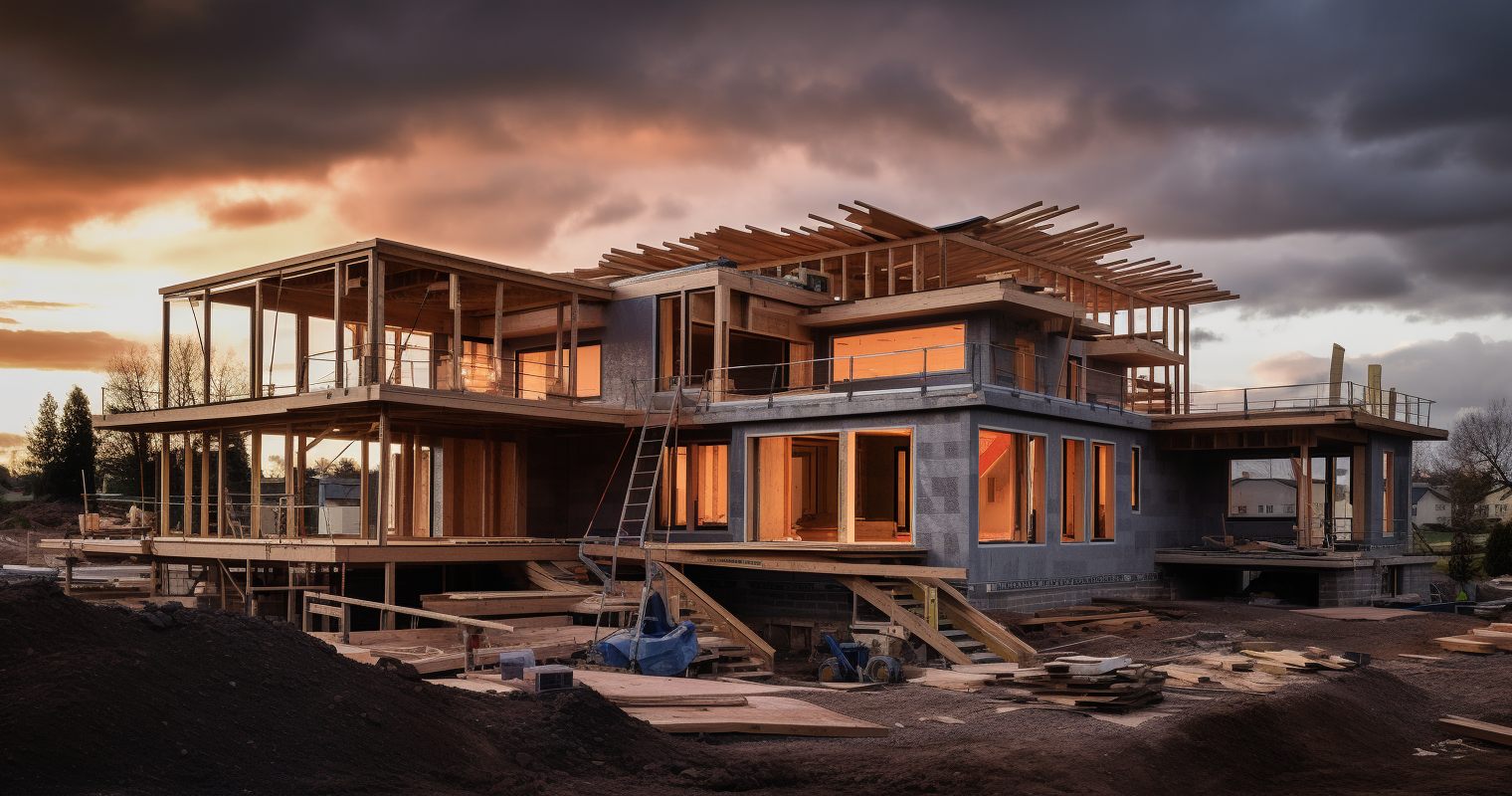
Anyone wishing to build or renovate property in Qatar must obtain a building permit from the Ministry of Municipality before commencing virtually any form of construction work — this applies to new builds, extensions, and substantial renovation projects alike. The sector operates within a tightly regulated framework governed by the Qatar Construction Specifications (QCS) and aligned with the Qatar National Vision 2030. Non-Qatari nationals are subject to significant restrictions regarding where and in what manner they may acquire land, and every professional engaged on a project — architects and engineers included — is legally required to hold a current locally issued licence.
| Item | Details |
|---|---|
| Building permit authority | Ministry of Municipality — Building Permits Complex Department |
| Permit processing time | As of 2025, new AI-powered system targets 120 minutes for eligible applications (previously up to 30 days) |
| Inspection fee | QR 100 per inspection request (as of date of last verified schedule — confirm current figure with Ministry) |
| Insurance fee on permit | 0.05% per QR 1,000 of building value, capped at QR 10,000; refundable after completion certificate issued (verify current figures) |
| Foreign freehold ownership zones | 9 freehold zones (including The Pearl, Lusail, West Bay); 16 leasehold (usufruct) zones — total 25 designated areas as of 2025 |
| Land construction deadline | Foreign buyers must complete construction within 4 years of registering land in their name |
| Engineer/architect licence validity | 3 years for individual engineers; 2 years for consultancy offices (under Law No. 2 of 2014) |
| Property registration fee | Typically 0.25% of property value (as of 2025 — verify with Ministry of Justice) |
Do you need planning permission to build or renovate a property in Qatar?
In Qatar, obtaining a building permit is a legal prerequisite for nearly every type of construction activity — whether you are erecting a new structure, adding an extension, or undertaking substantial renovation works. This stands in contrast to some other countries, such as the United Kingdom, where a “permitted development” system allows minor residential alterations without formal authorisation. Qatar’s framework casts a wider net, requiring official approval even for relatively modest projects before any work can lawfully commence.
The Building Permits Complex Department within the Ministry of Municipality carries the statutory responsibility for granting building permits and verifying that all proposed developments conform to government regulations. The Department also plays an active role throughout the construction process, monitoring ongoing works to confirm they remain consistent with the issued permit and that applicable safety standards are being met. Applications must be submitted electronically via the Ministry’s Building Permit System, which has been substantially modernised in recent years.
A landmark development in this process was the Ministry of Municipality’s launch of an AI-Powered Building Permit System — a pioneering initiative reflecting the State’s commitment to digital transformation and the deployment of advanced technologies in public service delivery, in alignment with both the Qatar National Vision 2030 and the Third National Development Strategy. Under this upgraded system, building permits can be issued in as little as 120 minutes rather than the previous timeframe of up to 30 days, made possible by the system’s capacity to automatically read and interpret engineering drawings against approved standards and technical regulations.
The platform is directly linked to Qatar’s Geographic Information System (GIS) for land data and interfaces with the geospatial databases maintained by Ashghal (Public Works Authority) and Kahramaa (Qatar General Electricity & Water Corporation). This integration means that submitted plans are automatically cross-referenced against land records and utility infrastructure data as part of the review process.
A complete application package must be submitted when seeking a building permit. For smaller residential developments involving four villas or fewer, the documentation typically required includes:
- A copy of the title deed and ownership plan, initial architectural drawings, structural drawings, and a survey report.
- A copy of the Qatar ID card of the property owner (for individual applicants).
- A copy of a commercial permit or an authorised signatory document (for corporate applicants).
- A valid commercial licence for the appointed contractor.
- Completed application forms as prescribed by the Ministry of Municipality.
Regarding fees, an inspection charge of QR 100 applies per permit request (based on the most recently published schedule — always confirm the current rate directly with the Ministry of Municipality). An insurance fee calculated at 0.05% of the total building value per QR 1,000 is also levied, subject to a ceiling of QR 10,000; this fee is returned to the applicant once the building completion certificate has been issued. Fee schedules are subject to revision, and the Ministry’s official channels should always be consulted for the most up-to-date figures.
The Ministry of Municipality has produced a “Requirements and Services” Guidebook for the Building Permit System, detailing all engineering requirements, necessary documentation, and available services. Both the Building Requirements Guide and the Services Guidebook are accessible on the Ministry’s website. It is essential to obtain and review the most current edition before lodging any application, as requirements are revised periodically.
What are the rules around listed buildings, conservation areas, and heritage protection in Qatar?
Where a property sits within a designated conservation area, carries a preservation order, or is otherwise protected under heritage legislation, additional regulatory requirements come into play when building or renovating. These controls exist to safeguard the nation’s cultural legacy and ensure that historically significant structures are preserved for those who come after us. Qatar’s approach to heritage protection differs from the formal “listed building” frameworks found in countries such as France or the United Kingdom, and it is important to establish the precise status of any property before purchasing or embarking on development.
The principal authority for cultural heritage in Qatar is the Qatar Museums Authority, which holds responsibility for protecting and promoting the country’s historic sites and cultural assets. The Authority works alongside the Ministry of Municipality on matters that affect the built environment. The National Planning Council also publishes spatial data pertinent to protected zones and conservation designations. If you are contemplating the purchase or development of a property in an area of historic or cultural significance — such as parts of central Doha or land in the vicinity of archaeological sites — you should approach both the Qatar Museums Authority and the Ministry of Municipality for guidance before proceeding.
All building and renovation activity in Qatar must be carried out in a manner consistent with applicable law, including any heritage or conservation provisions that protect the country’s cultural identity, promote public safety, and support the sustainable development objectives set out in the Qatar National Vision 2030. Contravening heritage or conservation restrictions can trigger enforcement measures, which may include compulsory reinstatement, substantial financial penalties, and — in the most serious cases — criminal prosecution. A heritage status check through the relevant authority should be sought before entering into any purchase agreement or initiating works.
The Ministry of Municipality holds planning maps and land-use designations for the entire country. Prior to acquiring any land or property, it is strongly recommended to obtain a planning status report through the Ministry’s electronic systems in order to identify whether heritage protection, conservation restrictions, or other special-zone designations apply. The Ministry of Municipality can be reached via its official portal at www.municipality.gov.qa.
What permits and licences are required when building or renovating in Qatar?
In addition to the primary building permit issued by the Ministry of Municipality, construction and renovation projects in Qatar routinely require sign-off from several other regulatory bodies. The Guide of Requirements and Services for the Building Permit System sets out the full list of engineering documents, technical requirements, and third-party approvals that must be obtained from other service authorities when building applications are submitted. In practice, this means your appointed architect or engineering consultancy will need to coordinate the simultaneous pursuit of approvals across a range of agencies.
While the AI-powered permit system is directly integrated with Qatar’s GIS and linked to the databases of Ashghal and Kahramaa — so that utility connection requirements are checked as part of the building permit review — separate applications may still be required for individual utility connections, including electricity, water, and sewerage, through Kahramaa (Qatar General Electricity & Water Corporation) and Ashghal (Public Works Authority).
The key approvals typically required in addition to the building permit include:
- Civil Defence approval: The Civil Defence Department of the Ministry of Interior must review and approve fire safety provisions for most building types. This requirement is particularly stringent for multi-storey buildings and commercial developments.
- Utility connection permits: Kahramaa is the approving body for electricity and water connections, while Ashghal oversees the connection of new developments to the public road and drainage networks.
- Environmental clearance: Larger projects, or those situated near environmentally sensitive locations, may require clearance from the relevant environmental authority in accordance with Qatar’s broader sustainable development commitments.
- Building completion certificate: On completing construction, the developer must notify the Authority in writing and submit a copy of the Practical Completion Certificate together with a set of as-built drawings. Where the development has been built in accordance with all prescribed requirements, the Authority will issue the Final Certificate, permitting the building to be occupied.
All construction work must comply with the Qatar Construction Specifications (QCS) — the national construction standards in force on the date of permit issuance. QCS is technically comprehensive, covering structural design, materials specifications, fire safety, and environmental performance, among many other areas. Ensure that your architect and contractor have a thorough working knowledge of the current version of QCS before detailed design work begins.
All fees and processing timelines should be confirmed directly with the Ministry of Municipality and any other relevant approving body, as these are subject to change. Visit www.municipality.gov.qa for current requirements and to access the electronic building permit system.
How do you find a reliable, trustworthy builder in Qatar?
Qatar’s construction sector is subject to regulatory oversight, and contractors must hold a valid commercial licence to be lawfully engaged on building projects. A current contractor’s commercial licence is a mandatory document that must be included in every building permit application, effectively barring unlicensed builders from involvement in permitted works. Confirming a prospective contractor’s licence status before entering into any agreement is therefore an indispensable first step.
UPDA registration through the Urban Planning and Development Authority is a critical credential for engineers and other technical professionals engaged in construction and urban development. Although UPDA registration primarily applies to engineers, a reputable construction company should be able to demonstrate that the qualified engineers and technical personnel assigned to your project hold valid UPDA certificates. You should request evidence of this as a matter of course before proceeding.
The Qatar Society of Engineers (QSE) is the foremost professional body for engineers operating in Qatar. As a non-profit, autonomous organisation, the QSE works to advance the engineering profession and support the ongoing development of engineers across all disciplines through seminars, lectures, conferences, and continuing education programmes. While QSE membership is not a substitute for UPDA licensing, engaging contractors whose technical staff are active QSE members is a useful indicator of professional engagement and commitment to the field.
The Qatar Society of Engineers can be contacted at: Website: www.qatarse.org. Their registered address is in Doha, Qatar. For the most current contact details, including phone numbers and email addresses, consult the official website directly, as this information is periodically updated.
Practical steps for thoroughly vetting a contractor in Qatar include:
- Verify the commercial licence: Request the contractor’s commercial registration number and check its validity with the Ministry of Commerce and Industry.
- Confirm UPDA registration: Verify that the key engineers assigned to your project hold current UPDA certificates issued by the Ministry of Municipality.
- Obtain references: Request details of at least three recently completed projects of comparable scale. Where possible, visit finished sites in person and speak directly with former clients.
- Insist on a written contract: A comprehensive written contract — in both Arabic and your preferred language — is essential. It should clearly define the scope of works, materials to be used, a fixed or capped price, a payment schedule, a programme for completion, and provisions covering defects liability.
- Structure payments in stages: Never pay the full contract sum before work begins. Link payments to certified milestones — such as completion of foundations, structural frame, and fit-out — and consider engaging an independent engineer to certify each stage before funds are released.
- Check insurance coverage: Satisfy yourself that the contractor carries valid contractor’s all-risk insurance and employer’s liability insurance, and ask to be named as an additional insured on the relevant policies.
Foreign property owners frequently encounter contractors who lack the required licences, subcontract all works to undisclosed third parties, or demand large upfront payments without delivering. Exercise particular caution when faced with quotes that appear implausibly low, contractors who cannot produce evidence of a UPDA-registered engineer, or those who resist providing a formal written contract. It is always advisable to engage a qualified local lawyer to review any significant construction contract before signing.
How do you find a qualified local architect in Qatar?
Architects practising in Qatar are required by law to hold a current professional licence obtained through the Ministry of Municipality. UPDA registration — administered by the Urban Planning and Development Authority, a division of the Ministry of Municipality — is obligatory for engineers, including architectural engineers, who wish to engage in their profession lawfully in Qatar. The process verifies each applicant’s qualifications, practical experience, and competence against standards set by the Qatari government.
Law 19 of 2005 established a statutory register of engineers from both local and international engineering consultancy firms, setting out the rights and obligations of registered professionals. This legislation was subsequently amended by Law No. 2 of 2014, which prescribes a licence validity period of 3 years for individual engineers and architects, and 2 years for engineering consultancy firms. An engineer whose licence has expired will be liable to a fine of QR 1,000 for each month their registration remains lapsed.
To be eligible for UPDA registration, a candidate must hold a degree in engineering or a related discipline from a recognised institution and demonstrate a minimum of three years of professional experience in the relevant engineering field. Candidates must also pass a written examination administered by the UPDA, designed to assess technical knowledge and understanding of engineering principles appropriate to their discipline.
To locate a licensed architect in Qatar, you should:
- Contact the Ministry of Municipality (via www.municipality.gov.qa) to verify an architect’s UPDA registration number through the Ministry’s Register of Engineers.
- Search for member firms via the Qatar Society of Engineers at www.qatarse.org.
- Ask any prospective architect or design consultancy to present their UPDA registration certificate and commercial licence number before any engagement is formalised.
All architectural and engineering drawings forming part of a building permit application must be prepared and stamped by a UPDA-registered professional. Drawings produced by an unregistered architect — irrespective of how well qualified they may be in another jurisdiction — will not be accepted by the Ministry. Those familiar with professional registration frameworks such as ARB membership in the United Kingdom or state board licensure in the United States should be aware that these credentials carry no direct recognition in Qatar; UPDA registration is the sole accepted qualification. Many well-established Qatari architectural practices employ multilingual staff and have considerable experience working with international clients, which can significantly smooth the process for foreign property owners.
What are the common pitfalls when buying land to build on in Qatar?
Before committing to a property purchase in Qatar, thorough due diligence is not merely advisable — it is essential. This involves physically inspecting the land or property, carefully scrutinising the title deeds, and confirming that all relevant permits and approvals are properly in place. Engaging a reputable real estate firm can help ensure that every facet of this process is handled correctly. For land purchases in particular, a number of specific risks deserve close attention.
Foreign ownership restrictions: Non-Qatari nationals are limited to acquiring freehold properties in officially designated areas only. Under Law No. 16 of 2018 and Cabinet Decision No. 28 of 2020, foreigners may hold freehold or usufruct (99-year leasehold) interests in specific zones across Qatar, encompassing 25 designated areas in total — nine of which permit outright freehold ownership, including Lusail, The Pearl, and West Bay. Attempting to purchase land outside these zones as a non-Qatari is not legally possible, so confirming zone status before making any commitment is imperative.
Construction deadline obligations: Non-Qatari land purchasers are legally required to complete construction on their land within four years of the date on which the land is registered in their name. This is a binding obligation that must be factored into your planning from the outset — if you are acquiring land with a view to building at some point in the future, the clock starts running from registration, not from when you decide to break ground.
Zoning and land-use classification: Qatar’s National Urban Development Strategy establishes detailed zoning classifications dictating what type of development is permitted on any given plot — whether residential, commercial, industrial, or mixed-use. Before purchasing, verify the exact zoning classification of the plot with the Ministry of Municipality and confirm that your intended development falls within the permitted uses for that classification. You should not rely solely on the seller’s assurances in this regard.
Title deed and ownership verification: The Ministry of Justice and associated authorities are responsible for maintaining the records of approved locations and processing title registrations. Before proceeding, instruct a qualified local lawyer to verify the title deed through the Real Estate Registration Department of the Ministry of Justice, confirm the full ownership history, check for any encumbrances or mortgages registered against the plot, and ensure that the legal boundaries correspond to the physical situation on the ground.
Utilities availability: Not every plot of land in Qatar has ready access to mains water, electricity, and sewerage infrastructure. Before purchasing, consult Kahramaa and Ashghal to establish whether utility network connections are available in the vicinity and to understand the likely cost and timeframe for securing those connections, particularly if the plot is in an area where infrastructure has yet to be fully developed.
Environmental and contamination risks: While Qatar does not face the same scale of industrial contamination found in some older industrialised countries, commissioning a site investigation report — especially for plots with an unclear or unknown prior use — is still a prudent step to confirm that the land is suitable for residential construction.
Always retain a qualified local lawyer with expertise in Qatari real estate law to carry out comprehensive due diligence before contracts are exchanged. Legal documentation in Qatar is primarily in Arabic, meaning you will also require a certified translator for key documents. All legal processes necessitate Arabic-language documentation and registration through the Ministry of Justice.
What are the rules around foreign ownership and financing for construction projects in Qatar?
Qatar’s real estate market has been progressively opened to expatriates through Law No. 16 (2018) and Cabinet Resolution No. 28 (2020), granting foreigners the right to own or lease property in designated areas including The Pearl, Lusail, West Bay Lagoon, and Al Khor. Two principal forms of ownership are available to non-Qatari buyers: freehold and leasehold. Freehold ownership confers full legal title to both the property and the land on which it stands, whereas leasehold ownership grants the right to occupy and use the property for a period of up to 99 years, with the underlying land remaining under Qatari state control.
Foreigners who hold real estate in Qatar are entitled to sell it or lease it to others without restriction. The relevant laws confer comprehensive ownership rights, encompassing the right to sell, mortgage, and pass the property on by inheritance. It is worth noting, however, that inheritance of Qatari property by non-Qatari heirs may involve additional legal steps — consulting a specialist real estate lawyer to ensure that succession arrangements are properly structured under Qatari law is strongly recommended.
Residency benefits linked to property ownership: As part of Qatar’s strategy to attract overseas investment, residency permits are available to qualifying property buyers. Purchasing a property valued in excess of QAR 730,000 entitles the buyer to residency in Qatar without the requirement for a sponsor, while ownership of a property worth more than QAR 3.65 million may unlock additional benefits comparable to those available to permanent residents, such as access to healthcare and education services. These thresholds are established by official resolution and may be subject to revision — current figures should be verified with the Ministry of Justice.
Mortgages and construction financing: The Central Bank of Qatar regulates the domestic mortgage market. Both foreign nationals and expatriates can apply for mortgage financing through local or international banks operating in Qatar, though the range of products available through international banks may be narrower. Major lenders active in the residential mortgage sector include Qatar Islamic Bank, HSBC, Commercial Bank of Qatar, and Masraf Al Rayan. Typical eligibility requirements include residency in Qatar, evidence of a stable income sufficient to service the loan, and a record of continuous employment for a minimum of six months.
For those planning to self-build or commission new construction, financing options are considerably more restricted than in many other markets. Most Qatari banks offer standard mortgages on completed properties rather than dedicated construction finance facilities (sometimes referred to as stage-payment or drawdown loans in other jurisdictions). If you intend to build from scratch, it is important to discuss your financing needs with several different banks at an early stage and to seek advice from a qualified financial adviser who is well versed in the Qatari market.
Qatar does not levy an annual property tax, but charges are applied at the point of registration and on leasing transactions. The property registration fee is typically 0.25% of the property value, payable by the buyer. As of 2025, this figure should be confirmed with the Ministry of Justice, as registration fees may be revised by official decree.
What official sources should you consult when planning to build or renovate in Qatar?
Because regulations, fees, and administrative procedures in Qatar evolve frequently — particularly as a result of ongoing reforms under the Qatar National Vision 2030 — it is essential to go directly to official sources rather than relying on outdated secondary information. The following bodies and resources are the primary references for anyone planning to build or renovate in Qatar:
| Body / Resource | Role | Website |
|---|---|---|
| Ministry of Municipality — Building Permits Complex Department | Issues all building permits; maintains the Electronic Building Permit System and the Building Requirements Guide | www.municipality.gov.qa |
| Ministry of Justice — Real Estate Registration Department | Registers all property transactions and title deeds; oversees foreign ownership approvals | www.moj.gov.qa |
| National Planning Council (NPC) | Publishes national spatial planning data, building permit statistics, and the National Urban Development Strategy | www.npc.qa |
| Ashghal (Public Works Authority) | Oversees road access, drainage, and public works connections to new developments | www.ashghal.gov.qa |
| Kahramaa (Qatar General Electricity & Water Corporation) | Utility connections for electricity and water | www.km.com.qa |
| Qatar Museums Authority | Heritage and cultural site protection | www.qm.org.qa |
| Qatar Society of Engineers (QSE) | Professional body for engineers and architects; member directory | www.qatarse.org |
| Ministry of Commerce and Industry | Commercial licence verification for contractors and companies | www.moci.gov.qa |
Monthly building permit data is published through a cooperative arrangement between the National Planning Council and the Ministry of Municipality, making the NPC website a valuable resource for tracking broader trends within Qatar’s construction sector. Building and renovating property in Qatar demands close adherence to an array of regulations and guidelines, and staying current with the latest legislative changes — and obtaining professional advice where necessary — is fundamental to ensuring full compliance throughout your project.
Frequently asked questions
How long does the building permit process take in Qatar?
Qatar’s AI-powered building permit system targets permit issuance within 120 minutes for eligible applications, a dramatic improvement over the previous standard timeframe of up to 30 days. This accelerated turnaround is achieved through the system’s automated capacity to read and interpret engineering drawings against approved technical standards. That said, the 120-minute target applies to straightforward applications where all documentation has been correctly submitted. Projects of greater complexity, those requiring coordinated approval from multiple agencies such as Civil Defence, or applications submitted with incomplete documentation may require substantially more time. A sensible contingency allowance should always be built into your project programme.
Can I use a builder or architect from my home country to work on my Qatar property?
Not without local credentials in place. UPDA registration is a legal requirement for engineers and architects wishing to practise their profession in Qatar. Professional qualifications recognised in other countries — including ARB registration in the United Kingdom or AIA membership in the United States — are not accorded direct recognition in Qatar. Any architect or engineer contributing to a permitted project must hold current UPDA registration issued by the Ministry of Municipality. Foreign professionals can apply for UPDA registration by satisfying Qatar’s qualification and experience criteria and successfully passing the qualifying examination, though arranging this takes time and should be initiated well in advance of any project start date.
What happens if I carry out building work without a permit in Qatar?
Where a developer fails to comply with the requirements of a Notice to Comply by the specified deadline, daily fines are imposed for each day the breach continues. Persistent non-compliance may attract escalating penalties, administrative sanctions, and potential criminal liability. Work undertaken without a valid permit may be subject to demolition or mandatory reinstatement at the owner’s expense. Penalties for practising engineering without a licence have also been strengthened — the maximum fine for engaging in engineering practice without proper licensing has been raised to QR 100,000.
Are UK or US building standards recognised in Qatar?
No. Every construction project in Qatar must comply with the Qatar Construction Specifications (QCS), which constitutes the country’s own comprehensive national building standard, in force as at the date the relevant building permit is issued. While QCS draws on international good practice, it is not interchangeable with the UK Building Regulations Approved Documents or the US International Building Code; those frameworks cannot be substituted for QCS compliance. Your appointed architect and contractor must design and build to QCS requirements regardless of their country of origin or professional training background. The Building Requirements Guide issued by the Ministry of Municipality provides a detailed account of all applicable design and planning standards.
How do I resolve a dispute with a contractor in Qatar?
Disputes between property owners and contractors may be pursued through Qatar’s civil courts or, where the contract provides for it, through arbitration. Qatar has a well-established arbitration framework, and the Qatar International Centre for Conciliation and Arbitration (QICCA) handles commercial disputes. Where the contractor holds a valid licence, allegations of professional misconduct can also be reported to the Ministry of Municipality and the relevant engineering authority. It is important to retain a qualified Qatari lawyer at the earliest possible stage of any dispute rather than waiting for the situation to deteriorate. Having an original contract that is comprehensive, in Arabic, and accompanied by a certified translation will considerably strengthen your position in any legal proceedings.
What is the process for registering a completed property in Qatar?
Ownership is formally transferred and recorded through the Real Estate Registration Department of the Ministry of Justice. Once construction has been completed and the building completion certificate has been issued by the Ministry of Municipality, the title deed can be registered in the owner’s name. The buyer is required to submit an application to the Ministry of Justice accompanied by the necessary documents, which typically include a copy of the passport, the sales agreement, and proof of payment. All documentation must be in Arabic or supported by certified Arabic translations.
Are there any restrictions on renovating a property I own in a designated expat zone?
Yes. Even within freehold zones such as The Pearl or Lusail, all building and renovation activity remains subject to the planning and design regulations set out in the Building Requirements Guide issued by the Ministry of Municipality. Master-planned developments within these zones frequently impose their own additional community rules or homeowners’ association guidelines governing external modifications, façade changes, and landscaping works. It is essential to check both the Ministry’s overarching requirements and any applicable community-level regulations before commencing renovation — non-compliance can result in enforcement action from both the Ministry of Municipality and the management body of the development.
Can purchasing property in Qatar affect my residency status?
Yes, it can. Qatar offers residency permits to qualifying property investors as part of its broader strategy to attract overseas capital. Purchasing a property valued above QAR 730,000 enables the buyer to obtain residency in Qatar without the need for a sponsor. For properties valued in excess of QAR 3.65 million, additional entitlements equivalent to those available to permanent residents — including access to healthcare and education — may be available. These thresholds and associated conditions are established by official resolution and are subject to change. Always confirm the current rules governing investment-linked residency with the Ministry of Justice or a qualified immigration lawyer before making any purchase decision that is contingent on residency expectations.