
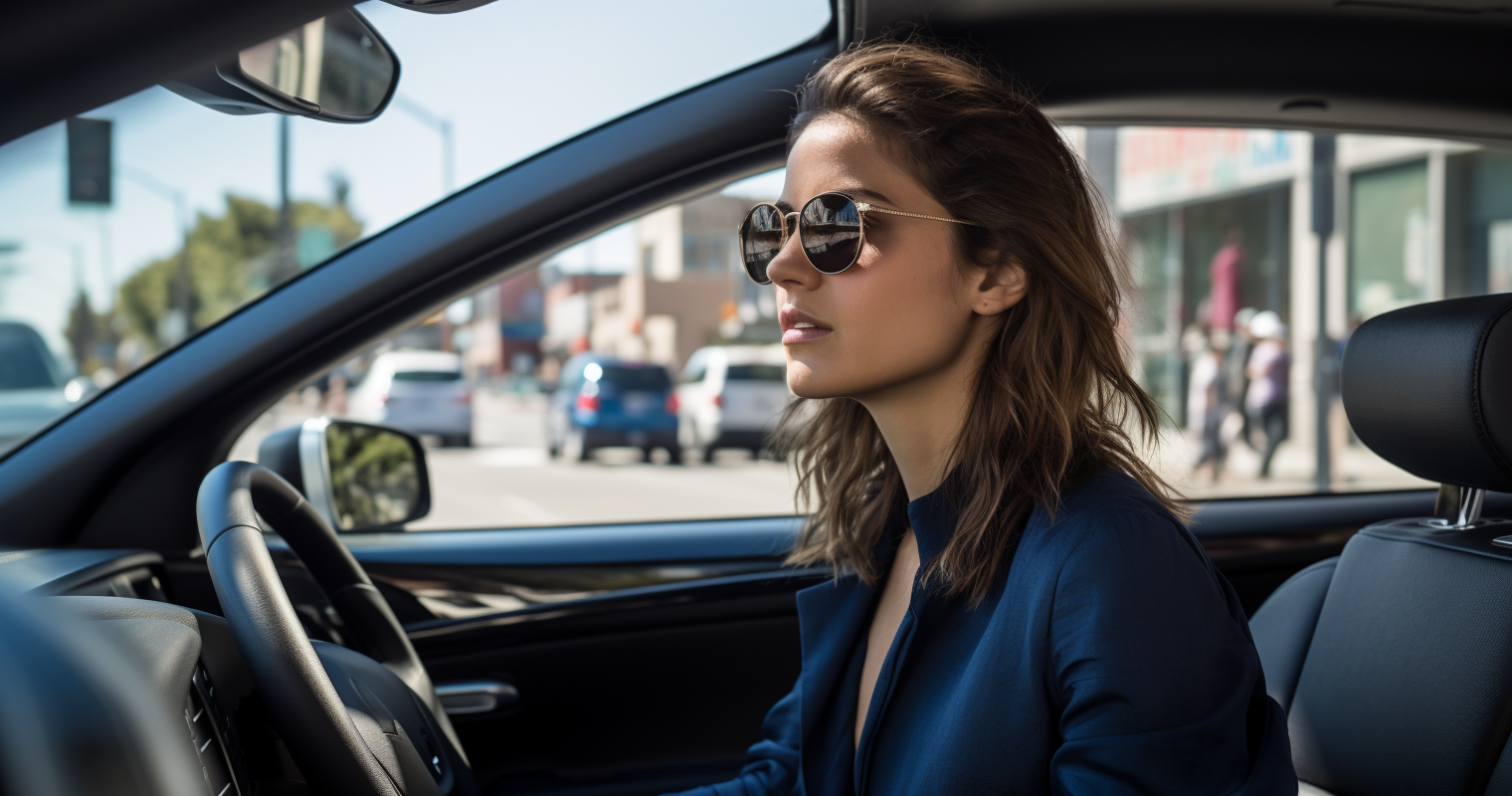
Getting behind the wheel in Slovakia means driving on the right-hand side of the road, complying with a strict zero-tolerance policy on alcohol, and ensuring your vehicle carries all required safety gear, including a warning triangle, first-aid kit, and high-visibility vest. An e-vignette is compulsory for motorway use. Foreign driving licences are typically recognised for up to six months, after which residents must swap theirs for a Slovak equivalent.
| Item | Details |
|---|---|
| Drive on | Right-hand side of the road |
| Speed limits (as of 2024) | 50 km/h urban; 90 km/h rural; 130 km/h motorway |
| Drink-driving limit (as of 2024) | Zero tolerance (0.00% BAC) |
| Motorway toll | Electronic e-vignette required; purchase online or at petrol stations |
| Mandatory car equipment | Warning triangle, first-aid kit, high-visibility vest(s), spare wheel or equivalent |
| Foreign licence validity | Up to 6 months; exchange required for longer-term residents |
Is Slovakia safe to drive in?
Slovakia’s road safety record sits broadly in line with the European Union average. In 2020, traffic collisions claimed 247 lives across the country — a rate of 45 fatalities per million inhabitants, marginally above the EU average of 42. Encouragingly, more recent data points to a downward trend in road deaths. For the most current figures, consult the European Road Safety Observatory or Slovakia’s Ministry of Transport.
Between 2010 and 2019, the number of road deaths in Slovakia fell by roughly one third — a reduction broadly comparable to the wider EU trend over the same period. While this represents genuine progress, there remains scope for further improvement, especially beyond major cities. Slovakia is actively investing in its road network, with many previously substandard routes now being upgraded and connections radiating from Bratislava expanding year on year.
Roads in and around Bratislava generally include four-lane highways and are well maintained. Outside developed areas, however, most routes are two lanes wide, and aggressive overtaking by some drivers on these roads can create serious hazards. Visitors accustomed to the consistent standards of motorway-heavy Western European countries such as Germany or Austria may find Slovakia’s rural road network narrower and less predictable, particularly in the mountainous parts of the country.
Driving at night outside built-up areas is not advisable, given poor lighting and winding, narrow roads. Heavy snowfall is a regular feature of Slovak winters from November through to March, and snow clearance on rural routes is not always prompt — mountain roads in the north are especially susceptible to treacherous winter conditions. Anyone relocating from a warmer climate should plan carefully around these seasonal factors.
What side of the road do you drive on in Slovakia?
Traffic in Slovakia travels on the right-hand side of the road, with overtaking carried out on the left. This is standard practice across most of continental Europe, so drivers already used to right-hand traffic will find little adjustment necessary.
If you are arriving from a country that drives on the left — such as the United Kingdom, Ireland, Japan, or Australia — you will need time to adapt. Common errors during the adjustment period include pulling out of side roads on the wrong side, misjudging your lane position after roundabouts, and defaulting to the left after pulling away from a rest stop. Driving slowly at first and consciously thinking through each manoeuvre can help prevent these mistakes.
Drivers bringing vehicles originally built for left-hand traffic also need to consider headlight alignment. Unless your headlights can be adjusted for right-hand driving, you are legally required to fit headlamp beam deflector stickers to prevent your lights from dazzling drivers coming towards you. These stickers are inexpensive and readily available at motoring accessory shops and border crossing points.
What are the main driving rules in Slovakia?
Road traffic in Slovakia is governed by the Slovak Road Traffic Act (Act No 8/2009). All road traffic rules are based on international road traffic rules, including those on road signs and markings. The rules below reflect the position as of 2024; always verify current requirements with the official Slovak government portal or the Ministry of Transport.
Speed limits
The standard speed limits are 50 km/h within towns and villages, 90 km/h on roads outside built-up areas, and 130 km/h on motorways. Expressways have a limit of 110 km/h. Posted signs can reduce these limits near schools, pedestrian crossings, and residential zones. Both fixed speed cameras and mobile enforcement units operate throughout the country.
Drink-driving
Slovakia applies an absolute zero-tolerance rule on alcohol for drivers. Penalties are severe and frequently include loss of licence; in more serious cases, a custodial sentence may be imposed. This stance is considerably stricter than many neighbouring countries — Germany and France, for instance, permit a blood alcohol level of 0.05% — and visitors from those countries should be aware that no amount of alcohol is acceptable before driving in Slovakia.
Mobile phones
Using a handheld mobile phone while the engine is running is prohibited; calls are only permitted via a hands-free system. As of 2024, the fine for holding a phone at the wheel starts at around €100. Check current penalty levels with the Slovak Police at www.minv.sk.
Seatbelts and child safety
Wearing a seatbelt is compulsory for all occupants, both front and rear. Any passenger below 150 cm in height must travel in an approved child safety seat, and children under 12 years of age are not permitted to sit in the front seat. Animals are also prohibited from the front seat. The height-based rule is notable — parents should ensure their child uses an appropriate seat even if the child is older than 12 but has not yet reached 150 cm.
Headlights
Lights must be switched on at all times in Slovakia, regardless of weather conditions. In clear conditions during daylight hours, daytime running lights are generally sufficient, but dipped headlights are required at night and whenever visibility is reduced.
Right-of-way
At unmarked junctions, vehicles and trams approaching from the right have priority. Drivers are required to give way to all emergency vehicles displaying flashing blue lights, including police cars, ambulances, and fire engines. When passing tram stops, trams should be overtaken on the right side.
Radar detectors
Radar warning devices and satellite navigation systems with speed camera alert functions are banned in Slovakia. The prohibition applies whether or not the device is switched on at the time of inspection.
What equipment are you legally required to carry in your car in Slovakia?
All vehicles with more than two wheels driven on Slovak roads — whether registered locally or abroad — must carry a prescribed set of safety equipment. The mandatory items are a warning triangle, a first-aid kit, high-visibility clothing, and a spare wheel or equivalent.
- Warning triangle: A reflective warning triangle must be carried in every vehicle and deployed in the event of a breakdown or accident.
- First-aid kit: A first-aid kit is required in all vehicles, with the exception of small-engine vehicles under 50cc with a top speed of 45 km/h. Since 2019, a kit may continue to be used beyond its printed expiry date provided all items remain undamaged and complete.
- High-visibility vests: Reflective vests — in any colour other than green — must be worn by all occupants who leave the vehicle during a roadside emergency. Vests must be stored within easy reach of the driver inside the cabin. One vest per occupant is required, which is a more demanding standard than some other countries, where only the driver needs to be covered.
- Spare wheel or equivalent: Vehicles registered in Slovakia must carry a spare tyre. For foreign-registered vehicles, a puncture repair kit or run-flat tyres may be acceptable, but carrying a spare is strongly advisable.
- Headlamp beam deflectors: If your headlights cannot be manually adjusted for right-hand driving, headlamp converter stickers are a legal requirement to prevent glare for oncoming drivers.
A fire extinguisher is mandatory for trucks over 3.5 tonnes, buses, and tractors, but is not required by law for ordinary passenger cars — unlike in some other countries. Failure to carry any of the mandatory items may attract a fine of approximately €60. Unlike France, Slovakia does not require drivers to carry a breathalyser in the vehicle. A spare set of bulbs is recommended, though not legally required. Always verify the latest requirements with the Slovak Ministry of Transport at www.mindop.sk before travelling.
What are the most important road signs in Slovakia?
Slovakia’s road signage is governed by the Slovak Road Traffic Act (Act No 8/2009) and Decree No 30/2020 on road signs and markings. As a signatory to the Vienna Convention on Road Traffic, Slovakia uses a sign system that will look familiar to anyone with experience driving elsewhere in continental Europe — red triangles warn of hazards, red circles prohibit, blue circles issue mandatory instructions, and blue rectangles or squares provide information.
A number of signs and conventions nevertheless catch foreign drivers off guard in Slovakia:
- Priority road signs: A yellow diamond-shaped sign indicates that you are on a priority road and have right of way at junctions. A black diagonal bar through the same diamond signals the end of priority road status. Drivers unfamiliar with the Central European priority road system may misread junctions as give-way situations when they are not — or fail to yield when they should.
- Tram priority: Trams are to be passed on the right. Signs specific to trams are common in Bratislava and Košice; pay particular attention to signs marking tram stops, where pedestrians have right of way.
- Motorway vignette signs: Green signs bearing a motorway symbol mark the start of a tolled section. A valid e-vignette must be purchased before entering.
- Zone signs: Residential zones — indicated by a blue sign depicting a house and pedestrians — impose a 20 km/h speed limit and require drivers to give way to pedestrians throughout the entire zone.
Traffic lights in Slovakia follow the standard European sequence: red means stop, combined red and amber signals prepare to move, green means go, and amber alone means stop if it is safe to do so. Drivers coming from systems without a combined red-amber phase should be ready to pull away promptly when this signal appears, as local drivers will anticipate it. Vehicles displaying flashing yellow or orange lights — typically road maintenance crews or slow agricultural machinery — indicate that other traffic should reduce speed and proceed with caution.
What must you do if you have a road accident in Slovakia?
All drivers involved in a road accident in Slovakia are bound by specific legal obligations. The competent authority for road incidents is the Slovak Police (Polícia Slovenskej republiky). The procedures below reflect the position as of 2024; always check for any updates with the Slovak Police at www.minv.sk.
- Stop immediately. You are legally required to remain at the scene of any accident in which your vehicle is involved, no matter how minor it may seem. Departing the scene without stopping constitutes a criminal offence.
- Make the scene safe. Activate your hazard lights, put on your high-visibility vest before stepping out of the vehicle, and position your warning triangle at a sufficient distance behind the vehicle to alert approaching traffic.
- Call emergency services if needed. The police emergency number is 158; for an ambulance dial 155; for the fire brigade dial 150. The pan-European emergency number 112 connects to all services. If estimated damage exceeds €4,000, you are obliged to call the police.
- Exchange information. You must exchange your name, address, vehicle registration number, and insurance details with every other party involved. Foreign nationals are entitled to receive a formal accident record from the police, detailing the time and location of the incident, information on all vehicles involved, and a description of the damage sustained.
- Do not admit liability. As is the case in most jurisdictions, avoid making any admission of fault at the scene; responsibility is determined by the police and the respective insurers.
- Notify your insurer. Inform your insurance company as soon as possible after the incident. Vehicles from EU countries generally need only their standard vehicle documents to enter Slovakia, but carrying the International Insurance Certificate (Green Card) is advisable as it simplifies insurance matters following an accident.
- Obtain a police report. For any collision, the police must be notified and an official accident report obtained for use with your insurance claim.
Where can you find up-to-date road traffic information for Slovakia?
Keeping track of current road conditions is especially important during the winter months, when closures and diversions can occur at short notice. Several official and third-party resources are available to help.
- Slovak Road Administration (NDS/SSC): The National Motorway Company (NDS) and the Slovak Road Administration (SSC) both publish live traffic updates and road condition information, including details of roadworks, closures, and webcam feeds. These are the most authoritative official sources.
- Slovak government portal: The slovensko.sk portal brings together official transport and road information for residents and visitors alike.
- Mapping and navigation apps: Google Maps and Waze are both widely used across Slovakia and offer real-time traffic data, incident reports, and routing. Waze in particular benefits from an active user community across Central Europe, making it well suited for quickly identifying local disruptions.
- Radio traffic bulletins: Slovak Radio (Slovenský rozhlas) and commercial stations including Rádio Expres broadcast regular traffic updates, which are particularly useful on motorway routes and during public holiday periods.
- E-vignette portal: The official e-vignette website at www.eznamka.sk also carries relevant motorway information. Always confirm that any link you use remains active and official, as web addresses can change over time.
In winter, it is well worth consulting the SSC road conditions map before embarking on longer journeys. Mountain passes and secondary roads can become impassable with little warning, and the mountainous north of the country is particularly vulnerable to dangerous conditions during the colder months.
How does parking work in Slovakia?
Pay-and-display parking is available throughout Slovak cities, and finding free parking in urban centres can be difficult. Arrangements differ from one municipality to the next, so it is worth acquainting yourself with the specific rules in your city or district. The guidance below is general in nature; always check with your local authority for current rates and permit procedures, as these are subject to change.
Paid parking zones
Pavement parking is permitted in some areas and is always indicated by appropriate road signs. Where such parking is allowed, drivers must leave at least 1.5 metres of clear footpath for pedestrians. In some zones, parking requires a ticket purchased from a local newspaper or tobacco kiosk (trafika). In larger cities such as Bratislava and Košice, parking meters and mobile payment apps are increasingly common — check posted signage to identify accepted payment methods in any given zone.
Parking enforcement
Illegally parked vehicles are likely to be wheel-clamped, which carries a fine of approximately €65 at the time of publication. Towed vehicles attract a substantially higher penalty of around €225. Parking restrictions can vary by time of day and day of the week, so always read local signs carefully. Confirm current fine levels with your local municipality, as these figures may be updated.
Resident parking permits
City centres with designated residential parking zones allow local residents to apply for a permit through their municipal authority. In Bratislava, residents can register via the city’s official city portal. The application generally requires proof of registered address and vehicle registration documents. Fees and processing times differ by district — contact the relevant local authority directly for up-to-date details.
Disabled parking
Disabled parking bays are identified by the international wheelchair symbol. Slovakia participates in the EU disabled parking permit scheme, so an EU-issued disabled parking badge is recognised in Slovakia and vice versa. Holders of disabled parking permits issued by countries outside the EU should check with the Office of Labour, Social Affairs and Family (Úrad práce, sociálnych vecí a rodiny) to establish whether their permit will be honoured and whether a Slovak equivalent is needed. Applications for Slovak disabled parking permits are processed through the same authority. Always verify current requirements directly, as rules governing recognition of non-EU permits can change.
Can you drive in Slovakia on a foreign or international licence?
Foreign nationals may drive in Slovakia using their foreign driving licence or an International Driving Permit (IDP) for a period of up to six months. Once that period has elapsed, they are required to obtain a Slovak driving licence. This six-month window applies to those taking up long-term residence, not merely to tourists passing through.
EU/EEA licence holders
A driving licence issued by any EU or EEA member state is fully valid in Slovakia for as long as it remains current in the country that issued it. There is no requirement to exchange it for a Slovak licence, though you may choose to do so after establishing permanent residency. This mirrors the general EU principle of mutual recognition — a German licence, for example, is accepted throughout the EU without any exchange procedure.
Non-EU licence holders
Drivers from outside Europe whose licence is not printed in the Roman alphabet will need an International Driving Permit in addition to their national licence. Licences in non-Slovak or non-Roman-alphabet scripts must be accompanied by a translation. An IDP is issued by the driving authority in your home country and should be obtained before you travel, as it cannot be arranged once you are abroad.
Exchanging your licence
Once you have been resident in Slovakia for more than six months, exchanging your foreign licence for a Slovak one becomes a legal requirement. Licensing matters are administered through the District Transport Authority (Dopravný úrad) in accordance with the Slovak Road Traffic Act. The exchange process typically involves submitting your current licence, proof of identity, proof of Slovak residence, a medical certificate confirming fitness to drive, and payment of an administrative fee. Consult the Ministry of Transport or your local District Transport Authority directly for up-to-date fee information and the precise documents required, as these can change. Drivers holding licences from countries with bilateral recognition agreements with Slovakia may not need to sit any driving tests; others may be required to pass a practical or theoretical examination. Clarify your particular situation with the relevant authority before submitting your application.
Frequently Asked Questions About Driving in Slovakia
Do I need to buy a vignette to use Slovak motorways?
Using Slovakia’s motorway network requires a valid toll vignette. Since 2016, the country has operated an electronic e-vignette system, which means there is no physical sticker to affix to your windscreen. Instead, you register your vehicle’s number plate when purchasing. E-vignettes can be bought at www.eznamka.sk, at petrol stations, post offices, and border crossing points. Options include 10-day, 30-day, and annual vignettes. Purchase must be completed before entering a motorway section — driving without one can result in a substantial fine.
Are winter tyres compulsory in Slovakia?
Winter tyres are legally required in Slovakia whenever ice or snow is present on the road. In certain mountain areas, chains are also necessary. The obligation is triggered by road conditions rather than fixed calendar dates, unlike countries where seasonal tyre rules apply automatically within defined months. Being involved in an accident on a snow-covered road while fitted with summer tyres may result in you being held responsible, regardless of other contributing factors.
What insurance do I need to drive in Slovakia?
Third-party liability insurance is mandatory for all vehicles driven in Slovakia. For cars registered in EU member states, a standard domestic policy typically meets the minimum cover required across the EU. Slovakia is part of the Green Card System, an international arrangement that enables countries to recognise each other’s vehicle insurance. Physical green cards are no longer obligatory, but drivers should confirm their policy extends to all countries on their route. If you are driving a vehicle registered outside the EU, check the position with your insurer before travelling.
What are the penalties for drink-driving in Slovakia?
Slovakia’s zero-tolerance approach to alcohol at the wheel means any detectable level of blood alcohol can result in prosecution. Penalties are severe and commonly lead to licence revocation; repeat or aggravated offences can result in a custodial sentence. Refusing to submit to a breathalyser test may attract a fine of up to €1,300. There is no threshold below which alcohol consumption before driving is permissible in Slovakia.
Can I use my phone for navigation while driving in Slovakia?
Handheld use of a mobile phone while the engine is running is prohibited; hands-free systems are the only permitted option. Using a phone secured in a dashboard mount for navigation is generally acceptable, provided you do not physically interact with it while the vehicle is moving. Even briefly touching the screen to dismiss an alert can attract a fine. A dedicated satellite navigation device or a properly mounted phone operated by voice commands is the safest solution.
What should I do if I am stopped by police in Slovakia?
Police roadside checks occur periodically and all drivers are required to comply when signalled to stop. Officers may pull over any vehicle for a routine inspection, even in the absence of any suspected violation, primarily to check that documentation is in order. You will be required to produce your identity document (passport or national ID card), your driving licence, and your vehicle documents — including the technical certificate and proof of valid insurance. Behave politely and cooperatively. If a traffic offence has been committed, an on-the-spot fine of up to €650 may be issued.
Are there special rules for driving with children in Slovakia?
All passengers under 150 cm in height must travel in an approved child safety seat, and no child under 12 may sit in the front seat. A suitable restraint system is compulsory for any occupant below the 150 cm height threshold. One exception applies: if two rear seats are already taken by child seats, an older child aged three or above may travel in the remaining rear seat using only the standard seatbelt. The height-based rule is worth noting, as a child who has passed their twelfth birthday but has not yet reached 150 cm still requires an appropriate booster seat.
Is it safe to drive in Bratislava city centre?
Navigating central Bratislava by car presents a number of challenges: the historic core has narrow streets, peak-hour traffic can be heavy, and the city operates an extensive tram network with its own set of priority rules. Central parking is scarce and costly. Many expats based in or around Bratislava opt to use the public transport network — trams, buses, and the metro — for everyday journeys and keep the car for trips out of the city. When driving in the centre, pay close attention to tram stops, cycle lanes, and the right-of-way rules that govern uncontrolled junctions where vehicles approaching from the right take priority.