
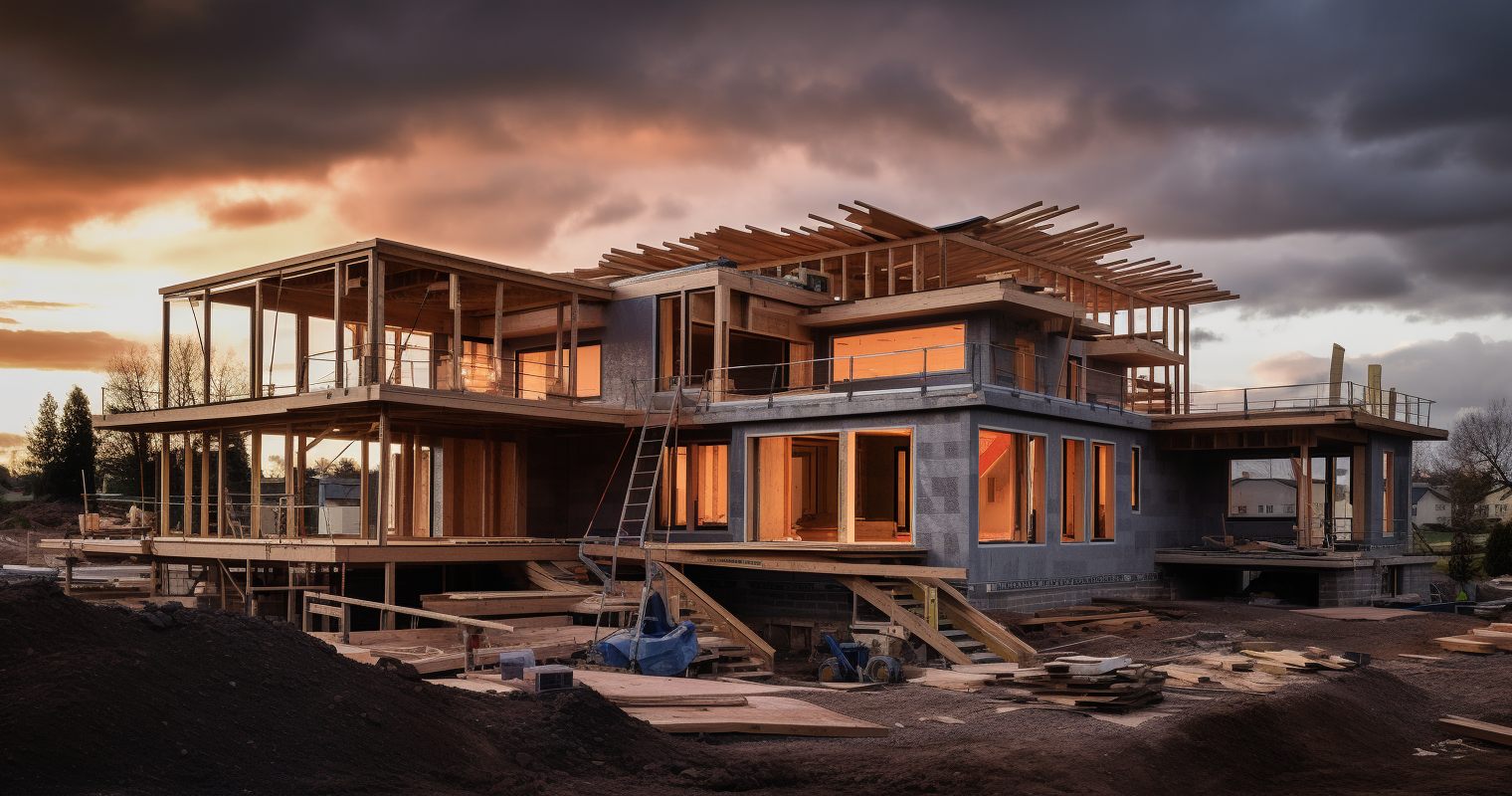
Constructing or renovating a property in Taiwan requires a construction permit (建造執照) for most new builds, major extensions, and significant structural modifications — issued by the relevant municipal or county authority. The process is governed primarily by the Building Act and administered by the Construction and Planning Agency under the Ministry of the Interior. Foreign nationals are generally permitted to own and develop property in Taiwan under reciprocity rules, though restrictions apply to particular categories of land, and professional advice is indispensable before embarking on any project.
| Item | Details |
|---|---|
| Primary legislation | Building Act (建築法); governed by the Construction and Planning Agency (CPA), Ministry of the Interior |
| Construction permit fee (as of 2024) | Up to 1‰ (per mille) of total construction cost; verify current rates with your local municipal authority |
| Permit examination timescale (as of 2024) | Competent authority must complete examination within 10 working days of receiving complete documentation |
| Heritage protection authority | Bureau of Cultural Heritage, Ministry of Culture — boch.gov.tw |
| Foreign land ownership | Permitted on a reciprocal basis under Article 18, Land Act; certain land types (military, forestry, frontier) restricted |
| LTV ratio for commercial property loans (as of 2024) | Typically 50%–70%; stricter Central Bank conditions apply to residential mortgages |
Do you need planning permission to build or renovate a property in Taiwan?
In Taiwan, the equivalent of planning permission is the construction permit (建造執照, jiànzào zhízhào). No person may erect, occupy, or demolish any building without first obtaining a building permit issued by the municipal or county (city) authority responsible for construction oversight — unless a specific exemption under the Building Act applies. In its rigour, Taiwan’s system is broadly comparable to the planning control frameworks of countries such as Germany or Japan, where formal advance approval is the norm for most significant building work rather than any post-completion notification arrangement.
Minor internal alterations that leave the main structure, position, height, and floor area unaffected may be treated with greater flexibility. Where a proprietor undertakes works that do not change the principal structure or location, do not increase height or area, and do not modify building equipment, as-built plans and elevation drawings may be prepared and submitted to the authority for verification after the works are completed. This limited exemption covers cosmetic or non-structural interior modifications only — it is narrowly defined, and you should always confirm the position with your local building authority before commencing any work.
The Construction and Planning Agency, Ministry of the Interior, publishes monthly building permit statistics and serves as the central regulatory body for Taiwan’s construction sector. Day-to-day permit decisions, however, are made at the municipal or county level, so precise procedures, timescales, and fee schedules may differ between localities. Always verify current requirements directly with the appropriate local government office.
How to apply for a construction permit — step by step
- Engage a licensed architect. The process of obtaining a construction permit typically begins with engaging a licensed architect to produce a building plan that satisfies local zoning laws and regulatory requirements. In Taiwan, only a registered architect may legally prepare and lodge permit applications on a client’s behalf.
- Prepare the required documentation. To apply for a construction licence or miscellaneous licence, the proprietor must submit a letter of application, certificates of land rights, working drawings, and specifications.
- Ensure drawings meet minimum standards. Required drawings must include a location map, a site plan at a scale of not less than 1:1,200, and plan, elevation, and sectional views at not less than 1:200. Structural calculation statements and building equipment details are also mandatory.
- Submit to the competent authority. Applications are lodged with the municipal or county (city) bureau of construction. Your architect will ordinarily manage this process and handle direct liaison with officials.
- Await examination. Once the authority has received a complete submission, it must conclude its examination within 10 working days. This is the statutory maximum for a straightforward application; complex or environmentally sensitive projects may require considerably more time.
- Pay the permit fee. On issuing the permit, the competent authority charges the proprietor the prescribed fees: for a construction licence or miscellaneous licence, up to 1‰ of the construction cost may be levied; where a design modification is involved, up to 1‰ of the value of the altered portion may be charged. As of 2024, confirm the exact fee schedule with your local authority, as rates vary between municipalities.
- Obtain an occupancy permit on completion. Once construction is finished, a usage (occupancy) licence must be applied for before the building can be lawfully occupied. A usage application fee is payable at this stage.
The overall cost and duration of the process depend on the scale and complexity of the works and whether any environmental considerations are involved. In practice, developers need to retain a local architecture firm to prepare all application documentation, and the process may run to many months or longer — particularly where the site falls within an environmentally sensitive area, in which case an environmental assessment and supplementary procedures will be required.
What are the rules around listed buildings, conservation areas, and heritage protection in Taiwan?
Taiwan operates a well-developed formal heritage protection framework with designations broadly analogous to listed building status in other countries, governed by the Cultural Heritage Preservation Act (文化資產保存法). This Act is the principal legislation on the protection of historic monuments in Taiwan. It was substantially amended in 2016 and further supplemented by the Cultural Fundamental Act in 2019, shifting the philosophy from individual case-by-case restoration towards comprehensive landscape-level preservation.
“National monument” (國定古蹟) represents the highest tier of designation awarded to historic sites in Taiwan, followed by municipal and county (city) monuments. Beyond monuments, the Act also protects tangible cultural heritage across several categories: Monuments — architectural works of outstanding universal value in terms of history, art, or science; Historic Buildings — structures where significant historical events occurred, or which hold historical, artistic, or scientific merit; and Commemorative Buildings — buildings associated with individuals who made important contributions to history, culture, or the arts.
Monuments are classified as national, municipal, or county (city) monuments and are reviewed, designated, and publicly announced by the authority with jurisdiction. Where designation is made by a municipal or county (city) government, the relevant authority reports to the central competent authority for formal recording. This tiered system means you may need to check registers at both central and local government levels to establish whether a given property is protected.
Monuments must be preserved in their original appearance and using their original construction methods. This is a demanding requirement — considerably stricter than, for example, the UK system, where certain alterations to listed buildings may be approved with consent. If you discover during construction or renovation that a structure may qualify for heritage protection, the law requires you to halt work immediately. Where any structure meriting monument, historic building, commemorative building, or human settlement designation is uncovered during construction or other land development activity, all development must stop at once and the discovery must be reported to the competent authority.
The central body responsible for heritage protection is the Bureau of Cultural Heritage (BCH), Ministry of Culture. The Bureau is responsible for preserving and restoring historic buildings, sites, communities, artefacts, and cultural landscapes, as well as conserving Taiwan’s traditional arts, folk culture, and other cultural legacies. It is the nation’s highest authority on national cultural heritage management. Consult the Bureau and verify local government registers before acquiring or planning any works on a property that may carry historical significance.
- Bureau of Cultural Heritage (BCH), Ministry of Culture: www.boch.gov.tw — Address: No. 362, Fuxing Rd., Section 3, South District, Taichung City, Taiwan
- Ministry of Culture: www.moc.gov.tw
What permits and licences are required when building or renovating in Taiwan?
Beyond the primary construction permit, building and renovation projects in Taiwan typically necessitate a range of additional approvals. Other permits and licences you may need to secure when building or renovating a property in Taiwan include building permits, electrical work permits, plumbing permits, and fire safety permits. The precise combination required depends on the nature and scale of your project.
Architects and engineering consultants may be needed to identify building compliance issues and assess whether the property is suitable for its intended purpose. Fire safety technicians are required to verify that fire-safety equipment and facilities comply with applicable laws and regulations. Fire safety sign-off is a separate and mandatory process in Taiwan and must not be overlooked, especially for larger residential or commercial developments.
Taiwan’s building regulations now incorporate substantial environmental and energy efficiency requirements. Building regulations in Taiwan integrate energy efficiency standards, green building certification, and net-zero transition objectives under the direction of the Ministry of the Interior (MOI) and the Bureau of Energy, Ministry of Economic Affairs (MOEA). The country enforces two core national energy standards — one for residential and one for non-residential buildings — supported by the EEWH Green Building Rating System, which functions as a mandatory or semi-mandatory sustainability standard for large or publicly funded projects.
Under the Renewable Energy Development Act as amended in June 2023, where new construction, expansion, or reconstruction of a building reaches a certain scale, and subject to considerations of solar access and applicable exemptions, the builder is required to install a solar photovoltaic (PV) system of a specified minimum installed capacity on the building’s rooftop. Consult your architect and the relevant municipal authority to determine whether this obligation applies to your project.
Taiwan pioneered Asia’s first national green building system, known as EEWH (Ecology, Energy Saving, Waste Reduction, and Health). Administered by the Architecture and Building Research Institute (ABRI) under MOI, EEWH evaluates buildings across nine categories including energy conservation, waste reduction, biodiversity, indoor environmental quality, and CO₂ reduction. While EEWH certification is not compulsory for all private residential projects, it is required for government-funded or large-scale developments, and you should clarify at the permit stage whether it applies to your specific project.
- Construction and Planning Agency (CPA), Ministry of the Interior: www.nlma.gov.tw
- Architecture and Building Research Institute (ABRI), MOI: www.abri.gov.tw/en — 13F., No. 200, Sec. 3, Beisin Rd., Sindian District, New Taipei City 231007, Taiwan. Tel: +886-2-8912-7890; Email: [email protected]
How do you find a reliable, trustworthy builder in Taiwan?
Taiwan’s construction industry operates under the Construction Industry Act, which sets out licensing and registration requirements for contractors. Builders engaged on any project of meaningful scale should hold a valid contractor registration certificate (營造業登記證) issued by the relevant competent authority. One way to identify reputable builders is to consult professional organisations such as the Taiwan Construction Industry Association, which maintains a member directory on its website where you can search for contractors by location and area of specialisation.
For expatriates, the language barrier can make it considerably harder to vet contractors thoroughly. Retaining your licensed architect in a project supervision role is strongly advisable — they can verify contractor credentials, review contracts, and monitor on-site compliance with approved drawings. Your architect bears legal accountability for ensuring the build meets regulatory standards, making this relationship pivotal to a successful outcome.
Practical steps for vetting a contractor
- Verify registration. Request the contractor’s current 營造業登記證 (contractor registration certificate) and confirm its validity with the issuing municipal authority.
- Check references. Ask for contact details of recent clients — ideally including any foreign property owners they have worked with — and follow up directly.
- Demand a written contract. All agreements should be documented in writing, ideally in bilingual form. The contract should specify materials, timelines, payment milestones, penalty clauses for delays, and a dispute resolution mechanism.
- Use staged payments. Never pay the full project sum in advance. Structure payments to coincide with verified completion of clearly defined stages — foundation, structural frame, roof, internal fit-out, and final sign-off.
- Confirm insurance. Reputable contractors carry construction liability insurance. Request written evidence and verify that the policy is current.
- Beware common scams. Expatriates can be targeted by unlicensed operators offering unusually low quotes, or by intermediaries who collect fees before subcontracting to unqualified workers. Always deal directly with the registered contractor and arrange a site visit before signing anything.
Key professional and regulatory bodies for Taiwan’s construction industry include:
- Taiwan Construction Industry Association (中華民國營造業公會): www.tcfa.org.tw
- Construction and Planning Agency (CPA), Ministry of the Interior (MOI): www.nlma.gov.tw — the central regulator for building construction, licensing, and safety standards.
How do you find a qualified local architect in Taiwan?
Architecture in Taiwan is a licensed profession regulated under the Architects Act (建築師法). Architects are bound by the Architects Act and the regulations made under it. Only registered architects holding a valid licence issued by a Taiwanese competent authority may lawfully prepare permit applications, supervise construction projects, and certify completed works. Because an architect’s official seal is a legal prerequisite for any building permit submission, appointing one is a regulatory obligation rather than a matter of preference.
Foreign architects and professional engineers wishing to provide professional services in Taiwan must either secure licences issued by the Taiwanese authority or be qualified in a country that has a mutual recognition arrangement with Taiwan. In practice, this means that an architect you have previously worked with abroad will almost certainly be unable to practise in Taiwan without a local licence. You will need to appoint a Taiwan-registered architect for all permit-related work.
The professional body for architects in Taiwan is the Architects Association of the Republic of China (中華民國建築師公會全國聯合會). This national federation coordinates provincial and city-level architects’ associations, which maintain directories of registered members. When searching for an architect, look for membership of the relevant municipal association — for example, the Taipei City Architects Association (台北市建築師公會) for projects located in Taipei.
For expatriates, it is worth specifically seeking an architect with experience working alongside foreign clients, as they will be better equipped to manage expectations around timelines, bureaucratic procedures, and language differences. Many established firms in Taipei, Taichung, and Kaohsiung have English-speaking staff, though this is less common outside major urban centres. Ask prospective architects directly whether they have handled projects for foreign nationals and request examples of comparable completed work.
- Architects Association of the Republic of China (National Federation): www.arcaa.org.tw
- Architecture and Building Research Institute (ABRI), MOI (for technical standards and building research): www.abri.gov.tw/en — Tel: +886-2-8912-7890
What are the common pitfalls when buying land to build on in Taiwan?
Purchasing land for development in Taiwan carries a distinct set of risks beyond those associated with buying a completed property. Several of these risks are particularly pronounced for foreign buyers who are unfamiliar with Taiwan’s land registration and zoning frameworks. Engaging a qualified local lawyer (律師) and a licensed land agent (地政士, also known as a scrivener) before committing to any purchase is not merely advisable — it is essential.
Zoning and land-use classification should be the first thing to confirm. Taiwan operates a detailed urban planning and zoning system under the Urban Planning Act, classifying land for residential, commercial, industrial, agricultural, and protected uses. Not all land assigned to a particular use category can in fact be developed — agricultural land (農地), forest land, and land within protected zones is subject to specific constraints. Confirming that your intended use is permitted before signing any purchase contract could prevent a costly and irreversible error.
Separate registration of land and buildings is a distinctive feature of Taiwan’s property system. Ownership of land and of the building situated on it are registered with the land office as separate legal interests. Taiwanese law permits land and the building standing on it to be owned by different persons. Where the building owner does not hold title to the underlying land, they must enter into a lease agreement or register a right of superficies in order to lawfully occupy and use the land. This differs considerably from systems in many other countries that treat land and building as a single asset. Always verify precisely what is being conveyed to you.
Title registration and history. Under Taiwanese law, the transfer of real estate takes no legal effect until it is duly registered with the land office. Registration transcripts setting out title details and any registered encumbrances or restrictions are publicly available through a national electronic registration transcript website. Always obtain a registration transcript before exchanging contracts and have your lawyer review it for mortgages, easements, or other encumbrances.
Seismic risk and ground conditions. Taiwan sits within a highly active seismic zone. Building on land with poor ground conditions, on steep slopes, or in flood-prone areas carries significant structural risk. Always commission a ground survey and consult official hazard maps — available from local municipal authorities — before purchasing. Taiwan’s Building Act incorporates strict earthquake-resistance requirements for new construction, and your architect must incorporate these into the structural design.
Utility connections. In rural or mountainous areas, connection to mains water, electricity, and sewerage infrastructure is not guaranteed. Verify with the relevant utility provider that connections are available and can be secured at reasonable cost before committing to a purchase.
Indigenous land protections. Whenever government bodies or private parties engage in land development, resource utilisation, ecological conservation, or academic research on indigenous land, in tribal areas, or on public land adjacent to indigenous land or tribal areas, the relevant indigenous peoples or tribes must be consulted and their consent or participation secured. If land is located in or near an indigenous territory, specialist legal advice is essential.
The transaction process itself follows defined steps: after signing a sale and purchase agreement, the seller and buyer — assisted by a scrivener — must file transfer tax returns (deed tax for buildings and land value increment tax for land) with the tax authorities, pay the applicable transfer taxes, and file a title transfer application with the land office. Your scrivener (地政士) handles land registration matters, while your lawyer reviews the purchase contract and advises on legal exposure.
What are the rules around foreign ownership and financing for construction projects in Taiwan?
Foreign nationals may own property and commission construction in Taiwan, but must navigate a reciprocity-based framework alongside specific land-use restrictions. Only foreigners whose home countries, under treaties or their own domestic laws, grant equivalent rights to ROC nationals may acquire land in Taiwan (Article 18, Land Act). Most major countries satisfy this reciprocity condition, but you should confirm your home country’s status with the Ministry of the Interior or the relevant local land office before proceeding.
Certain categories of land are entirely unavailable to foreign buyers. Land designated for forestry, hunting reserves, salt production, mineral extraction, water resources, military bases and installations, and land adjacent to national frontiers may not be transferred to, used as collateral by, or leased to foreigners. The permitted uses of land leased or purchased by foreign nationals are restricted to residences, business premises, office buildings, retail premises, factories, churches, hospitals, schools for the children of foreign nationals, diplomatic and consular buildings, and facilities of organisations engaged in public welfare activities.
For corporate purchasers, the legal structure employed matters significantly. A foreign company cannot own real estate in Taiwan unless it is duly registered in Taiwan. Establishing a locally registered entity — a subsidiary or branch — is therefore the standard route for corporate investment in Taiwanese construction projects.
On the financing side, foreign nationals can in principle access mortgage products from Taiwanese banks, though the conditions are more onerous than those available to residents. Some banks impose additional requirements, such as a local guarantor or a larger down payment, to manage the risks associated with lending to non-residents. These conditions can vary considerably between financial institutions, making it sensible to survey multiple lenders before committing to a loan.
For commercial property development, foreign investors typically seek financing from commercial lenders such as banks or other financial institutions; however, due to the elevated risks associated with commercial assets, loan-to-value (LTV) ratios offered by commercial lenders in Taiwan generally fall between 50% and 70%. On the residential side, the Central Bank of Taiwan has tightened its position in recent years: the Central Bank amended the Regulations Governing Loans Secured by Real Estate Mortgages Extended by Financial Institutions in 2024, imposing stricter conditions on financial institutions offering residential mortgages, and the maximum mortgage for private entities purchasing residential real estate was reduced from 40% to 30% of the lesser of the appraised value and the transaction price of the property.
It is important to note that owning property in Taiwan does not automatically confer residency rights or any visa privileges. Foreign buyers who wish to reside in Taiwan must apply for a visa or a residency permit through the appropriate government channels entirely separately from their property acquisition. Real estate ownership neither influences nor accelerates this process.
What official sources should you consult when planning to build or renovate in Taiwan?
Taiwan’s regulatory environment for construction involves multiple government bodies operating at both central and local levels. Before commencing any project, consult the official sources listed below — and always check directly with the relevant authority, as rules, fees, and procedures are subject to change.
| Authority | Remit | Website |
|---|---|---|
| Construction and Planning Agency (CPA), Ministry of the Interior | Central regulator for building permits, construction standards, and the Building Act | www.nlma.gov.tw |
| Architecture and Building Research Institute (ABRI), MOI | Building research, EEWH green building certification, technical standards | www.abri.gov.tw/en |
| Bureau of Cultural Heritage (BCH), Ministry of Culture | Heritage designation, monument and historic building registers, conservation controls | www.boch.gov.tw |
| Ministry of Culture | Overall cultural policy including the Cultural Heritage Preservation Act | www.moc.gov.tw/en |
| Ministry of the Interior (MOI) | Land Act, building regulations, urban planning oversight | www.moi.gov.tw/english |
| Laws & Regulations Database of the ROC | Full text of all national legislation in English, including the Building Act and Cultural Heritage Preservation Act | law.moj.gov.tw/ENG |
| Local land offices (地政事務所) | Land title registration, registration transcripts, title transfer; one in each municipality | Contact your local municipal government |
| Local municipal/county building authority | Construction permit applications, occupancy permits, local zoning rules and fee schedules | Contact your local city or county government |
| Taipei City Dept. of Land Administration (example) | Taipei-specific land and property administration queries for foreign buyers | english.land.gov.taipei |
Frequently asked questions
How much does it typically cost to build a house in Taiwan?
Construction costs in Taiwan differ considerably depending on location, design complexity, and the materials specified. Basic residential builds in regional cities may start at around NT$20,000–35,000 per square metre, while high-specification builds in Taipei or using premium finishes can substantially exceed this range. Always obtain at least three itemised quotations from registered contractors, and budget an additional 15–20% contingency to cover cost overruns, permit fees, professional fees, and utility connection charges. Confirm current market rates with a local quantity surveyor or architect.
How long does the building permit process take in Taiwan?
For a straightforward application supported by complete documentation, the statutory examination period is 10 working days. In practice, however, the full timeline from permit application to occupancy licence for a new residential build — accounting for document preparation, any requests for revision, the construction period, and the final occupancy licence process — typically extends to many months or more than a year for larger projects. Schemes near environmentally sensitive areas or subject to an Environmental Impact Assessment (EIA) can take considerably longer still.
Is there a language barrier when dealing with Taiwanese building authorities?
The majority of official communications, application forms, and permit documentation are in Mandarin Chinese. While some municipalities in Taipei and other major cities offer limited English-language services, you should not depend on this availability. Appointing a licensed Taiwan-registered architect is both a legal requirement and a practical necessity — they will handle all official submissions and correspondence in Chinese on your behalf. A bilingual lawyer is also strongly recommended for reviewing contracts and resolving any disputes that may arise.
Can I use my home country’s building qualifications or standards in Taiwan?
Foreign-qualified architects and engineers are generally unable to practise in Taiwan without obtaining a local licence or being qualified in a country that has a mutual recognition arrangement with Taiwan. Building standards and codes from other jurisdictions — including those from the US, UK, Australia, or Canada — do not apply directly; all construction must comply with Taiwan’s own Building Act, structural codes, and local regulations. Your Taiwan-registered architect will be responsible for ensuring the design conforms to all applicable local requirements.
What happens if I build or renovate without a permit in Taiwan?
Undertaking construction without the required permit constitutes a serious breach of the Building Act. The competent authority may order an immediate halt to construction, require the demolition of any unpermitted works at the owner’s expense, and impose financial penalties. Unauthorised structures cannot be issued a legal occupancy licence, making them extremely difficult or impossible to sell, mortgage, or insure. If you become aware that a property you own contains unpermitted additions, seek specialist legal and architectural advice promptly regarding the options for regularising the situation.
What happens if I have a dispute with my contractor in Taiwan?
Contractor disputes in Taiwan are most commonly handled through direct negotiation, mediation, or civil litigation. A comprehensive written contract — covering scope of works, materials, timelines, payment milestones, and a dispute resolution clause — represents your strongest form of protection. Where negotiation proves unsuccessful, the Taiwan Construction Industry Association and local consumer protection bodies can assist with mediation. Engaging a local lawyer to pursue civil remedies is the appropriate course for more significant disputes. Including an arbitration clause in your contract can offer a faster resolution pathway than court proceedings.
Are there any particular risks for expats when renovating an older property in Taiwan?
Older buildings in Taiwan may have been constructed before current seismic safety standards were introduced — particularly those predating the regulatory updates that followed the devastating 1999 Chi-Chi earthquake. Before purchasing or renovating an older property, commission a structural survey from a qualified engineer to assess its earthquake resilience. In addition, older properties situated in heritage areas, or those over 50 years old on public land, must be evaluated for cultural heritage significance before any substantial works begin. Carrying out unauthorised alterations to a designated or potentially designatable building can result in severe penalties.
Can purchasing property in Taiwan help me obtain residency?
No — acquiring property in Taiwan, whether a completed building or land intended for development, does not automatically confer residency rights or assist with any visa application. Residency in Taiwan is governed separately through the National Immigration Agency and must be pursued through the appropriate visa or Alien Resident Certificate (ARC) channels, entirely independently of your property ownership status. If you intend to reside in Taiwan while overseeing a construction project, ensure that your visa conditions permit this before commencing any work.